

Key Takeaways
Stop confusing a familiar comfort zone with a genuinely safe one
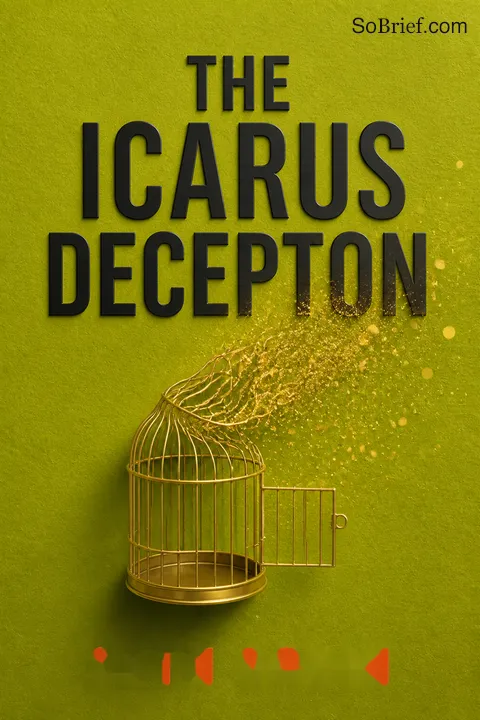
The old warning is incomplete. In the Icarus myth, Daedalus cautions his son against flying too high, but also against flying too low, where the sea would spoil his wings. Godin argues that culture repeats the first warning and neglects the second: fear of standing out keeps people from work they could contribute. The danger is not only reckless ambition. It is settling for so little that others lose the benefit of what you might make.
The fence has moved. Industrial jobs, credentials, and obedient career paths once seemed like reliable protection. Godin says the economic landscape has changed, while many people still treat familiar routines as safe. His fox-trap metaphor makes the point: people remain inside an enclosure even after the fence has been removed. Reassess what protects you now, rather than assuming comfort and safety still coincide.
What's striking is the distinction between felt safety and actual safety. Familiar systems can soothe anxiety while leaving a person exposed to changing conditions. The Icarus story therefore works as a useful corrective to advice that treats caution as automatically wise. Still, flying higher is not inherently better: financial obligations, health, and responsibilities matter. The practical lesson is not to romanticize risk, but to test whether a supposedly safe routine still serves its purpose.
Treat original, human work as your job, not a rare talent
Art is a way of working. Godin uses “art” broadly, not to mean painting or celebrity performance, but original human work that matters to someone else. It can be a nurse improving a patient's experience, a manager changing a stale meeting, or a creator making something new. The artist is not a special type of person. An artist is someone who chooses to make such work, especially when there is no reliable script.
Connection completes the work. A private idea may be promising, but Godin says it becomes art through contact with another person. Making it personal and taking the risk of being misunderstood are part of the contribution. Technical competence still matters, but competence is widely available. The added value lies in seeing something differently, caring enough to act, and offering the result to someone who may be changed by it.
This broader definition gives creative agency to people whose jobs rarely carry artistic labels. It also shifts attention from identity, “Am I an artist?” to conduct, “Did I make something that mattered to someone?” That is a productive test because it asks for evidence in the world, not a flattering self-image. The definition can become so expansive that almost any effort qualifies, though. Originality, care, risk, and a real recipient keep the concept from dissolving into mere enthusiasm.
Build trust and connection, because competence alone is no longer scarce
Abundance changes the prize. In Godin's account, the industrial economy rewarded efficient production of reliable goods. The connection economy, enabled by networks and abundant choice, makes competent products and information easier to find. What becomes harder to obtain is trust, attention, surprise, and a sense of being understood. That is why a loyal customer base can matter more than owning a factory, and why a service interaction can create value beyond the basic task.
Connection takes human effort. Godin calls the personal work of listening, caring, and taking interpersonal risks “emotional labor.” A company handling electronic waste, for example, might appear to sell a standardized recycling process. Its founder instead treats the work as a chance to earn trust face to face and solve new problems. Online followers are not proof of connection; a stronger measure is whether people value the relationship enough to notice when it is absent.
The shift from output to relationships clarifies why a technically sound product can still feel interchangeable. Trust accumulates through repeated interactions, while a single impersonal exchange can squander it. The idea also warns against confusing visibility with loyalty: a large audience may provide reach without genuine attachment. Yet connection is not a substitute for competence. A caring interaction cannot rescue unsafe work or a poor product. The strongest offer joins reliable performance with a human reason to choose it.
Pick yourself, then put work where real people can respond
Stop waiting for the gatekeeper. Godin describes “tariki” as waiting to be selected or rescued by authority, and “jiriki” as choosing to act without that authorization. In a connected world, creators can publish, perform, or organize without first being chosen by a record label, broadcaster, or employer. The book compares the old music business, where most musicians were never signed and most signed acts earned little, with online distribution that let even small sales reach the artist directly.
Choose the venue, not just the dream. Sarah, a musical-theater performer, spends most of her time auditioning for prestigious stages. Godin asks whether she could create performances for different audiences instead. The point is not that self-publishing guarantees success. It removes one excuse and gives the work a chance to meet people. In a job, the same principle means initiating a useful project before a title or permission arrives.
Self-selection is powerful because it turns permission from a prerequisite into a possible consequence of visible work. It also changes the question from “Who will choose me?” to “Where can this contribution be tested?” That shift is especially useful when institutions control access to conventional venues. But removing gatekeepers does not remove discovery problems, income constraints, or the need to improve. Agency opens the door; it does not guarantee that an audience will walk through it.
Treat fear as exposure, not proof that you should retreat
Resistance appears near meaningful work. Godin borrows the term “resistance” for the inner alarm that produces delay, self-doubt, and the urge to make safer, smaller work. He connects it to the “lizard brain,” his shorthand for a quick, threat-sensitive part of the mind. Speaking publicly or sharing an unfinished idea can feel dangerous even when the likely consequences are limited. The book's point is not that every fear should be obeyed, but that fear alone does not show that an idea is wrong.
Separate critique from shame. After speaking to twelve thousand people, Godin saw many positive responses and one negative tweet. He found himself fixating on the single hostile reaction. His advice is to choose whose responses matter and not let anonymous disapproval dictate the work. Vulnerability means taking responsibility for what one makes; it does not require accepting every attempt to humiliate the maker.
The distinction between fear and evidence is valuable because imagined social catastrophe can block experiments whose actual costs are modest. Godin's example also shows how attention can overweight a sharp negative response. His claim that shame must be accepted to have power is less complete: social exclusion and institutional penalties can be real, not merely internal choices. A practical reading preserves agency without denying consequences: identify the actual risk, then decide whether it deserves authority over the work.
Practice seeing freshly, making skillfully, and beginning without a template
Notice before you label. Godin describes three disciplines behind art: perceive what is actually happening, learn how to make something, and face the blankness of an original start. Familiar labels help people act quickly, but they can also hide new possibilities. In 1993, Godin saw the early Web as slow, free, and disorganized, and wrote a book about online curiosities. Others, including the founders of Yahoo!, saw a platform with far greater potential. The difference, he argues, was not access to the technology, but the ability to see beyond an existing interpretation.
Making sharpens perception. Learning a craft turns spectators into participants. Steve Martin studied audiences and performed repeatedly for years before becoming widely successful. His early work did not instantly attract large crowds, but he kept observing, testing, and refining it. Domain knowledge supports this process, but it cannot replace practice or an open mind. When a familiar approach fails, study the audience, make another attempt, and revise what the evidence suggests.
This account joins observation with practice: makers notice details that passive viewers may overlook, while fresh observation prevents expertise from hardening into dogma. The missed-Web example is useful because it frames failure as a problem of interpretation, not simply effort. It also suggests a discipline: write down predictions and compare them with what happens. However, hindsight can make a successful opportunity seem more visible than it was. The point is not that better perception guarantees a win, but that assumptions should remain revisable.
Choose an audience, then use feedback without surrendering your aim
Do not design for everyone. Godin argues that a new work often matters first to a small group with a particular interest. The television series The Prisoner, created by actor Patrick McGoohan, confused many viewers when it first appeared, yet found an enduring audience. Broad approval is not the only sign of value. The artist's task is to decide whom the work is meant to reach and to make something that can genuinely move those people.
Use criticism as information, not command. If the intended audience does not connect, the maker can examine whether the work is unclear, poorly made, or aimed at the wrong people. But changing it to satisfy every critic can erase what made it distinctive. Godin distinguishes useful feedback about how the chosen audience experiences the work from demands to make it blandly acceptable to a larger crowd. The goal is learning, not applause on demand.
Audience choice is not an excuse to dismiss every objection. It is a method for interpreting feedback: a response matters more when it comes from someone the work intends to serve and speaks to the work's purpose. This can protect originality from indiscriminate crowd-pleasing while keeping the maker accountable to actual reception. The tension is productive. An artist needs enough conviction to resist dilution and enough humility to notice when the intended audience simply does not understand or value the work.
Make small brave contributions until initiative becomes your working habit
Grit is commitment with direction. Godin treats grit as more than enduring unpleasant work. It combines passion for a goal with perseverance, resilience, and the willingness to learn from setbacks. The connection economy may reward initiative, but the habit of waiting for instructions is deeply learned. The book's six daily practices include quiet reflection, learning without immediate payoff, inviting candid feedback, supporting other makers, teaching, and shipping something created.
Organize the next move. An “impresario” is someone who brings people and resources together to make an event or project happen, often without formal authority. This can be a colleague who starts a useful series or an employee who connects a team to a needed partner. The scale can begin small. Godin describes organizations that invite failure yet still find employees hesitant to act, a reminder that permission on paper does not instantly undo years of training in compliance.
Repeated initiative makes creative work less dependent on a sudden burst of courage. Small experiments also keep the price of failure manageable, allowing the maker to learn before making a larger commitment. The distinction between grit and mere endurance matters: persistence without a meaningful aim can become stubborn waste. Organizations have a role too. Telling employees to take risks is not enough if leaders punish mistakes, withhold decision-making power, or reward only predictable results.
Play to keep creating, not merely to win this round
A career can be an ongoing game. Godin contrasts a finite game, organized around a winner and an endpoint, with an infinite game, whose purpose is to keep playing and help others play well. In the connection economy, ideas and relationships can create value for more than one participant. This shifts success away from a single promotion, sale, or burst of applause and toward the ability to continue making useful work.
Integrity can create room to continue. When Godin's company was financially strained, a prospective client criticized its work and price. He closed his laptop and said the company might not be the right fit. The client then agreed to the sale, and the company made more sales in the following eight weeks than in the previous two years. The story is not a formula for every negotiation. It illustrates the value of refusing a deal that would require abandoning the work's standards.
The infinite-game lens helps explain why a short-term win can be costly if it destroys trust, energy, or the desire to continue. It also makes generosity strategically intelligible: helping others can strengthen the network that sustains future work. Still, integrity does not pay every bill, and a risky refusal can fail. The useful question is not whether compromise is always wrong, but whether a particular compromise preserves the capacity and purpose needed for the next round.
Analysis
The book's central move is to redefine art as a form of human contribution rather than a specialized profession. That definition gives the argument its reach: a performer, a nurse, an employee, and an entrepreneur can all make art when they do original work that risks rejection and creates a connection. The Icarus myth supplies the emotional frame. The common warning against overreaching, Godin argues, hides the equally costly habit of aiming too low.
The economic argument links this personal challenge to a historical transition. Industrial systems made standardization, predictable labor, and competence valuable. Networked markets increase choice and reduce the scarcity of competent output, making trust, attention, originality, and human connection more valuable. On that account, waiting for a gatekeeper is not merely psychologically limiting. It is an outdated strategy in a world where creators can reach audiences directly.
The most useful practical sequence is observe, make, share, and learn. The maker must see beyond habitual labels, acquire enough craft to act, begin without a guaranteed template, and put the result before an audience. Resistance and shame are not treated as illnesses to eliminate, but as predictable responses to exposure. Repeated small acts of initiative build the capacity to continue. The book's examples, from Steve Martin's years of experimentation to the founder who declined a humiliating sales pitch, make commitment concrete rather than mystical.
The argument is deliberately urgent, but its rhetoric can blur important differences. The claim that the connection economy rewards art is a broad tendency, not a guarantee of income or security. Access to time, money, health, and supportive networks is uneven, and self-selection cannot erase those constraints. Nor should all criticism be dismissed as conformity: audiences can reveal real failures of clarity, craft, or usefulness. The strongest reading is therefore not “risk everything” or “ignore the system.” It is to stop treating approval and predictability as prerequisites, make experiments proportionate to one's circumstances, and judge them by both their human value and their actual effects.
Review Summary
The Icarus Deception receives mixed reviews, with many praising its motivational message about embracing creativity and taking risks in the modern economy. Fans appreciate Godin's encouragement to make art and connect with others. Critics argue the book lacks originality, rehashing ideas from his previous works. Some find the writing style disjointed and the definition of "art" too broad. Overall, readers value the book's inspirational tone but debate its practical applicability and depth of insights.
People Also Read


Glossary
Art
Human work that connectsGodin uses art to mean original, personal work that matters to another person, not only fine art or entertainment. It involves caring, making something not merely copied, and accepting the possibility that an audience may not respond. In this view, service, leadership, invention, and everyday work can be art when they create a meaningful human connection.
Connection economy
Markets shaped by relationshipsThe connection economy is Godin's name for an economic environment shaped by abundant choices, information, and ways to reach people. Because competent products and services are widely available, he argues that trust, attention, remarkability, and human connection become especially valuable. Individuals can reach audiences without relying entirely on traditional organizations or gatekeepers.
Emotional labor
Effort that builds connectionEmotional labor is the difficult personal effort involved in caring, taking interpersonal risks, earning trust, and making work feel human. Godin contrasts it with repetitive physical or procedural effort, arguing that a small increase in care can create disproportionate value when it deepens a relationship or helps an idea spread.
tariki
Waiting to be chosenTariki is Godin's term for relying on an outside authority to select, approve, or advance a person. He compares this posture to a helpless kitten rescued by its mother. In his argument, the industrial economy encourages tariki by rewarding people who wait for instructions and permission.
jiriki
Choosing yourself to actJiriki is Godin's term for self-selection: taking initiative and authorizing one's own work instead of waiting to be chosen. He compares it to a young monkey that must hold on to its mother to move. In a connected economy, jiriki means making and sharing work without first receiving approval from a traditional gatekeeper.
kamiwaza
Godlike, unselfconscious actionKamiwaza is a Japanese term Godin uses to describe action performed with unusual purity, commitment, and freedom from self-conscious attachment to the result. It does not mean perfection or guaranteed success. It describes doing one's work fully, accepting vulnerability, and allowing the audience's response to follow rather than controlling it in advance.
resistance
Inner pressure to avoid artResistance is Seth Godin's adopted term for the fear, delay, self-doubt, and urge to retreat that arise when a person attempts meaningful creative work. It may appear as procrastination or as subtle pressure to make work safer and more conventional. Godin treats its presence as a cue to examine the work, not as proof that the work should stop.
grit
Committed persistence with purposeGrit is more than tolerating difficulty. In Godin's usage, it includes commitment to a meaningful goal, perseverance through obstacles, resilience that learns and adapts, and the willingness to keep working despite feedback. It can exist without visible external success, because its value is also in sustaining purposeful work.
impresario
Organizer who makes things happenAn impresario is a person who assembles people, resources, and opportunities to bring a project or event into being. Godin extends the term beyond traditional show business to describe anyone who initiates, connects, and finds a way forward without waiting for formal authority. The role emphasizes initiative and coordination more than title or funding.
infinite game
Play organized to continueAn infinite game is an activity undertaken not simply to defeat opponents or reach a final endpoint, but to continue playing and enable others to participate. Godin applies this idea to creative work and relationships: the aim is to keep contributing, learning, and connecting rather than sacrificing long-term purpose for a single victory.
FAQ
What's The Icarus Deception about?
- Exploration of Art and Humanity: Seth Godin argues that everyone has the potential to be an artist, with art being the act of creating something meaningful that connects with others.
- Connection Economy: The book discusses the shift from the industrial age to the connection economy, where creativity and personal connections are valued over compliance and productivity.
- Overcoming Fear and Shame: Godin encourages readers to confront their fears and the shame associated with vulnerability, asserting that true art requires taking risks and being open to failure.
Why should I read The Icarus Deception?
- Inspiration to Create: It serves as a motivational guide for anyone feeling stuck or unfulfilled, urging them to embrace their creative potential and make art.
- Understanding Modern Challenges: The book provides insights into the challenges of the modern economy and how to navigate them by fostering creativity and connection.
- Empowerment: Godin empowers readers to reject societal norms that discourage boldness and instead embrace their unique contributions to the world.
What are the key takeaways of The Icarus Deception?
- Everyone is an Artist: Godin asserts that "we are all artists now," emphasizing that art includes any act of creation that connects with others.
- Fly High, Not Low: The book reinterprets the myth of Icarus, suggesting that it is more dangerous to "fly too low" and settle for mediocrity than to take risks and aim high.
- Embrace Vulnerability: Godin highlights the importance of vulnerability in the creative process, stating that "art is what we do when we’re truly alive."
What are the best quotes from The Icarus Deception and what do they mean?
- "The world does not owe you a living": This quote emphasizes personal responsibility and the need to create value through one's own efforts rather than waiting for opportunities to come.
- "You are capable of making a difference": Godin encourages readers to recognize their potential to impact the world positively, reinforcing the idea that everyone has something unique to offer.
- "Art is the act of a human being doing generous work": This definition of art broadens its scope, suggesting that any meaningful contribution to society can be considered art.
How does Seth Godin define art in The Icarus Deception?
- Art as Connection: Godin defines art as any work that creates a connection with others, transcending traditional boundaries.
- Art Requires Courage: Creating art involves taking risks and facing fears, with vulnerability being a necessary component of the artistic process.
- Art is Personal: Godin emphasizes that art reflects the creator’s unique perspective, advocating for authenticity in artistic expression.
What is the connection economy as described in The Icarus Deception?
- Shift from Industrial Age: The connection economy represents a move away from mass production and compliance towards valuing creativity, innovation, and personal connections.
- Value of Relationships: In this new economy, relationships and connections are more valuable than products, emphasizing trust and engagement.
- Opportunities for Artists: Godin argues that the connection economy opens up unprecedented opportunities for individuals to express their creativity and connect with others.
What does Godin mean by "flying too low"?
- Settling for Mediocrity: "Flying too low" refers to accepting low expectations and not striving for greatness, which can be more dangerous than taking risks.
- Fear of Failure: This concept highlights the fear that keeps people from pursuing their true potential, leading them to conform and play it safe.
- Encouragement to Aim High: Godin encourages readers to aim high and take bold actions, suggesting that the rewards of creativity and innovation far outweigh the risks.
How can I overcome the fear of vulnerability as suggested in The Icarus Deception?
- Acknowledge the Fear: Recognizing and accepting fear is the first step towards overcoming it, as it is a natural part of the creative process.
- Focus on Connection: Shifting the focus from self-doubt to the impact of your work on others can help mitigate feelings of vulnerability and shame.
- Practice Generosity: Engaging in acts of generosity through your art can create meaningful connections, making the act of creation more fulfilling and less intimidating.
What role does shame play in the creative process according to The Icarus Deception?
- Shame as a Barrier: Godin identifies shame as a significant barrier to creativity, often stemming from societal pressures to conform and fear of judgment.
- Rejecting Shame: He encourages readers to reject shame and embrace vulnerability, stating that true art cannot flourish in an environment of fear and self-doubt.
- Creating a Safe Space: The book advocates for creating a supportive environment where individuals can express themselves freely without the fear of being shamed or criticized.
What is the significance of the title The Icarus Deception?
- Myth of Icarus: The title references the Greek myth of Icarus, who flew too close to the sun despite warnings, illustrating the dangers of overreaching.
- Challenging Conventional Wisdom: The “deception” refers to the societal belief that safety and conformity are the keys to success, which Godin argues limits creativity.
- Encouragement to Fly High: The title serves as a call to action for readers to embrace their ambitions and take creative risks, encouraging them to pursue their passions without fear of failure.
How does The Icarus Deception address fear and resistance?
- Understanding Resistance: Godin explains that resistance is a natural part of the creative process, often manifesting as fear of failure or criticism.
- Embracing Vulnerability: The book emphasizes that vulnerability is essential for authentic artistic expression, allowing for more meaningful connections.
- Strategies for Overcoming Fear: Godin provides practical strategies for overcoming fear, such as reframing failure as a learning opportunity and taking small steps toward creative goals.
How can I apply the concepts from The Icarus Deception to my life?
- Identify Your Art: Recognize what art means to you personally and how you can express your creativity in your daily life.
- Take Risks: Embrace the idea of taking risks in your creative endeavors, challenging yourself to step outside your comfort zone.
- Connect with Others: Focus on creating connections through your work, seeking feedback, collaborating, and sharing your art to foster meaningful relationships.
About the Author
Other books by Seth Godin







Download PDF
Download EPUB
.epub digital book format is ideal for reading ebooks on phones, tablets, and e-readers.








