

Plot Summary
The Bride Sol Refused
The marriage has been arranged to help a Jewish refugee enter Canada, but when Lily arrives in Montreal, Sol Kramer recoils and leaves her at the station. His brother Nathan, who has only just met her, decides to marry her instead. At their wedding, the new couple sit apart on a couch, barely touching as they begin a life neither knows how to inhabit.
Lily has crossed oceans with no family to return to and little reason to trust the future. Her name is already part of the danger: in Poland, she took the papers of a dead girl named Lily Azerov, along with the girl's notebook and a rough diamond. Before fleeing, she closed the dead girl's eyes.
A Stone Arrives
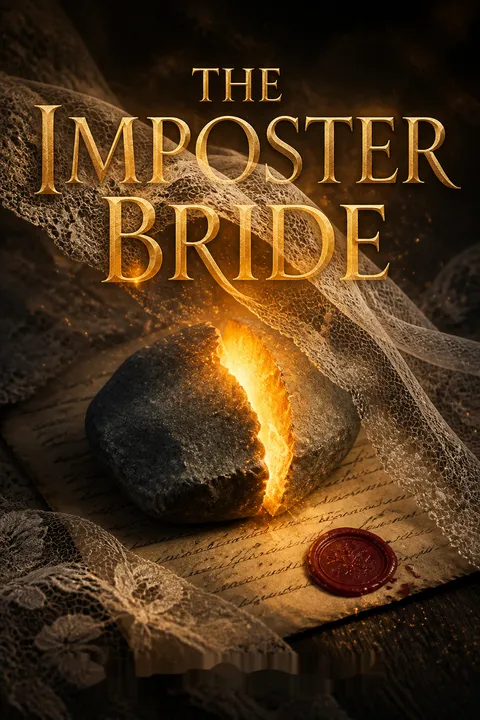
On her sixth birthday in 1953, Ruth Kramer finds a carefully wrapped parcel addressed to her. Inside is a pink stone and a card recording where and when it was found. Her father, Nathan, tells her it came from her mother, who left when Ruth was an infant. The family has described the departure as a sudden disappearance during a visit: Lily went out for milk and never returned.
Only later does Ruth learn that a full carton and prepared bottles were waiting in the refrigerator, and that her mother left a note for Nathan. For now, the stone changes everything. Ruth had treated motherhood as an empty place in her life; the package makes that absence active, and gives her a first imagined picture of the woman who remembered her.
Maps Made of Stones
More parcels follow, each carrying a stone and a card naming a Canadian lake, river, or town. Ruth records the places in a scrapbook and, with her aunt Nina's help, pins them on a map, trying to turn scattered evidence into a route. When her father and her aunt Elka's family move from their familiar duplex, Ruth protests because she fears her mother will no longer know where to find her.
Elka's mother, Ida Pearl, sees the fear beneath the tantrum and reassures Ruth that a phone book will lead her mother to the new address. Ruth moves, gains a room of her own, and continues spending her afternoons with Elka and Sol's growing family, but the map remains a private geography of hope.
Sol Learns His Misjudgment
The story returns to the summer of Lily and Nathan's wedding, where Ida Pearl and her teenage daughter, Elka, attend uninvited because Ida hopes the bride is her lost cousin. Sol meets Elka, takes her out, then fails to call again. Elka's mother forbids the match, but Elka goes anyway and tells Sol about Ida's work as a diamond cutter and the father who abandoned them.
When Elka later visits Sol's home with a carefully written rebuke, she finds him returning with Lily and flees in embarrassment. Sol reads her letter and recognizes the honesty he had missed. Their courtship grows into marriage, and they become central figures in Ruth's life. Ida's matchmaking instincts prove less reliable at home than in her shop.
The Teacher's Quiet Tears
At twelve, Ruth watches her teacher, Mr. Czernowitz, cry silently in class. When he later lashes out at her, Carrie passes a note accusing him of murder, and Ruth is forced to read it aloud. The teacher's face drains of color; he soon leaves the school, and Ruth carries a new, painful suspicion that children like her may have helped drive him away.
Around the same time, classmates learn that Ruth's mother sends rocks and mock her for it. At a family seder, Ruth finally says she will find her mother herself. Her father admits he does not know where she went, and her relatives offer help, but Ruth understands that the search belongs to her alone. The wish to be ordinary can no longer quiet her need to know.
The Name Beneath Lily
While searching western Canadian phone books, Ruth's grandmother Bella finds her looking for her mother and reveals that Lily Azerov was never the woman's real name. Ruth confronts Nathan, who admits he learned the truth only after Lily left and never knew her birth name. He also translates the notebook Ruth's mother left behind: it belonged to the original Lily Azerov, and its pages offer no simple key to Ruth's mother.
Nathan gives Ruth a rough diamond Lily had left with him, but warns her not to alter it. Ruth takes it to Ida, hoping to uncover its history. Ida confirms that Lily once brought her the same stone, then discourages Ruth from pursuing it, calling its history too painful to turn into a simple inheritance.
A Proposal Without Thunder
At McGill, nineteen-year-old Ruth meets Reuben in the library. He is studying biology despite wanting to pursue music, and his plainspoken warmth unsettles her less than it comforts her. He quickly imagines marriage, while Ruth is still trying to understand why she feels safe beside him rather than swept away.
Her friend Carrie challenges his certainty, and Nina warns Ruth not to mistake a conventional future for a cure to old grief. Yet Reuben's kindness proves concrete: when their elderly neighbor wanders outside unclothed, he covers her with a sheet and guides her home.
Ruth sees his care without embarrassment or display. Their relationship develops into an engagement, offering her a family life she genuinely wants, even as she remains aware that love and the desire to belong are not always the same thing.
The Notebook's First Witness
While preparing to marry Reuben, Ruth encounters David Czernowitz, the intense son of the teacher whose suffering once haunted her. She is drawn to him despite her engagement, and at a party touches his face in a moment she cannot explain away.
Soon afterward, she brings the Yiddish notebook to Ida, who had promised to read it when Ruth was engaged. Ida identifies its writer as her cousin Lily, whose family visited Krakow each summer while Ida remained in Antwerp working in her uncle's diamond shop. She reads passages about the girl's friendship, dreams, and flight through wartime Europe.
The notebook preserves a vivid inner life, but not a clear account of what happened to its author. Ida's old envy and grief surface as she reads, showing Ruth that the past is not merely missing information. It is also a wound carried by the living.
The Woman Before Lily
On the eve of Yom Kippur in 1946, Lily's guarded routine breaks when she speaks with Bella on the fire escape. She tells Bella that she had already lost a baby, Tonya, during the war, after choosing to keep the child with her rather than accept help from others.
Her father had been a ferryman on the Slutsk River; when borders made his old work illegal, he smuggled goods and people, and Lily learned the routes from him. Later, her companion Andre betrayed their bond and left her with the dead girl's identity papers, notebook, and rough diamond.
Lily believes he robbed the original Lily Azerov, but cannot prove he killed her. She reveals that her own name is Yanna Marissa. Bella listens without exposing her, though Yanna still cannot imagine building a life under the borrowed name.
Bella's Last Letter
In 1972, Bella dies during a family gathering to watch a hockey game. Her letter to Ruth, delivered after the funeral, explains what she learned from Yanna before Ruth was born: the woman had become unable to remain inside the identity and marriage she had constructed.
Bella believes Yanna stayed through the pregnancy because she knew the Kramers could give her child a safer home, then left when Ruth was three months old. Bella admits that she withheld the truth from Nathan and Ruth, partly to spare her son and partly because she did not know how to help.
Ruth cannot turn this account into a tidy gift of maternal sacrifice. When she later becomes a mother herself, caring for newborn Sophie awakens grief for the infant she once was, and for the mother she cannot remember.
The Wawa Goose
In 1982, a giant Canada goose in Wawa jolts Ruth into realizing that her mother's stones once marked real places she might still visit. Back home, she hires a collection agent to search under the newly revealed name, Yanna Marissa Eglitis, and writes to the woman he locates in Thunder Bay.
Yanna replies that she will meet her. Ruth arrives at a small house, where mother and daughter study each other's faces before either can manage ordinary conversation. On a walk by a northern lake, Yanna explains that she had lost Tonya, a five-month-old daughter, during the war and had been wrong to keep her in danger.
She also describes how she began again in Canada, married a surveyor, and raised a son. Their meeting brings recognition, not a repaired family life; Ruth leaves with a clearer sense of her mother, but they do not meet again.
Epilogue
In 2004, after Nathan's death, Ruth learns from her half-brother Anton that Yanna has died. The news opens a grief she had kept at a distance, and she travels to Israel in January 2005 to donate the original Lily Azerov's notebook and the uncut diamond to Yad Vashem.
She has carried her own mother's empty journal with her. Alone in Tel Aviv, she sets it open and prepares to write, beginning with the Montreal wedding where the borrowed name first entered her family's life.
The ending refuses the comfort of a final reunion. Ruth receives no second chance to fold Yanna into her own household, and the half-brother who calls with the news remains a stranger. Instead, Ruth gives the dead girl's notebook and diamond to an institution built to preserve lives that history tried to erase. Then she turns to the blank journal Yanna left behind. Writing becomes neither a cure nor an answer, but a form of custody: Ruth can carry the story forward without pretending that she owns every part of it. The return to the wedding also closes the book's circle while preserving its central uncertainty, since the first page she writes cannot make the past less painful or more complete.
Analysis
The novel makes identity less like a stable possession than a fragile agreement between a person and the people who recognize her. Lily's assumed name lets her cross borders and build a life, but every domestic kindness also presses her toward a self she cannot fully inhabit. Ruth inherits the consequences without inheriting the facts. Her search therefore becomes an effort to distinguish what happened from what a family needed to believe had happened.
The book's objects carry this tension in concrete form. The stones are genuine messages, but not explanations. The notebooks preserve a girl's private mind while refusing to turn her death into a solved mystery. The diamond can be valued, cut, or archived, yet none of those acts settles the question of ownership. Ida's work offers a useful model for reading the characters: attention matters, but so does humility about what cannot be known from a surface.
The family repeatedly confuses care with control. Bella withholds information to spare Nathan and Ruth; Ida tries to guide Elka by judging her choices; Nathan protects Ruth from a name he cannot replace with certainty. These actions are understandable, and their costs are real. The novel avoids casting disclosure as an uncomplicated virtue, just as it resists turning abandonment into either selfishness or noble sacrifice. Yanna's losses, including the earlier death of Tonya, make her choices legible without making them painless.
Ruth's eventual meeting with her mother does not restore the years they missed. Instead, it changes the scale of her uncertainty: she gains a voice, a face, and a partial history, while accepting that explanation cannot undo separation. Her final act of writing and donation gives the dead girl's record a public future and gives Ruth a beginning of her own. The book's hope lies not in repair being complete, but in telling the truth carefully enough that inherited silence no longer has to speak for everyone.
Review Summary
The Imposter Bride received mixed reviews, with praise for its exploration of identity, family relationships, and post-WWII Jewish experiences. Readers appreciated the complex characters and emotional depth, particularly Ruth's search for her mother. However, some found the narrative structure confusing and the ending unsatisfying. Critics noted the novel's strong prose and compelling premise but felt certain plot elements were underdeveloped. Despite these critiques, many readers found the book thought-provoking and engaging, highlighting its exploration of love, trauma, and the impact of war on future generations.
People Also Read

Characters
Ruth Kramer
The searching daughterRuth grows up surrounded by relatives who love her, yet her mother's absence gives her a private sense of being set apart. She is observant, intellectually curious, and drawn to evidence: stones, maps, notebooks, names in phone books. Her need to know is not simply a wish to retrieve a lost parent; it is an effort to understand what kind of story she inhabits. She can be guarded and self-conscious, especially when others make her family's history public, but she also shows tenderness toward people whose pain is ignored. Her work restoring manuscripts echoes her instinct to preserve fragile traces without assuming they can be made whole.
Lily
The guarded refugeeLily arrives in Montreal carrying the habits of a survivor: close attention to danger, a fierce reserve, and a capacity to conceal what she understands. She speaks several languages and reads people sharply, but ordinary domestic life feels unreal and difficult to enter. Her attraction to beauty and ritual, including clothes, stones, and careful gestures, coexists with grief that she cannot simply set aside. Lily wants safety and a future, yet remains deeply attached to what the war has taken from her. Her silences are not emptiness; they protect a private world whose losses are too complicated to explain to those who have not shared them.
Nathan Kramer
The steady providerNathan is a practical, ambitious Montreal businessman who takes responsibility seriously, especially for the people he loves. His father's death made him work young, and he responds to instability by building something tangible: a business, a household, a dependable daily life. He is gentler than his brother Sol and more comfortable acting than explaining what he feels. That quietness can make him seem emotionally distant, even when his loyalty is deep. In marriage and fatherhood, he tries to offer security, but he cannot force intimacy or repair another person's past. His restraint reflects both care and a reluctance to expose himself to pain.
Sol Kramer
The restless brotherSol is Nathan's younger brother, a salesman who believes instinct and charm can lift him beyond the limitations of his upbringing. He is sociable, competitive, and alert to status, yet his confidence is unstable; he often recognizes the cost of a choice only after making it. His early self-protection conflicts with a genuine desire for affection and respect. In Elka, he encounters a directness that challenges his polished self-image, while his feelings about Lily expose the difference between wanting a person and knowing how to treat one.
Elka Krakauer
The determined auntElka is Ida Pearl's only child, raised in the close, sometimes lonely orbit of her mother's shop. She is frank, humorous, and emotionally transparent, qualities that can look like impulsiveness to people who prefer caution. Without a father in her daily life, she longs for a home that feels secure and ordinary, but she is not passive about pursuing it. Her loyalty to Ruth is expressed through routine care: meals, school help, and a place in the family's noisy household. Elka's warmth offers Ruth a lived model of mothering, though it does not erase the questions Ruth carries about her own mother.
Ida Pearl Krakauer
The diamond-reading matchmakerIda Pearl is Elka's exacting mother, a jeweller and matchmaker whose opinions arrive with the precision of a cut. She has endured exile, economic hardship, and a failed relationship without surrendering her pride or practical intelligence. Her work with diamonds teaches her to look beneath surfaces, though she knows that judgment can be distorted by envy, fear, or desire. Ida protects Elka fiercely and often mistakes protection for control. Beneath her sharpness is a woman hungry for recognition and connection, particularly with those who understand the histories she rarely discusses. Her capacity to revise an opinion is as important as her talent for making one.
Bella Kramer
The family's quiet anchorBella is Nathan, Sol, and Nina's mother, a Russian Jewish immigrant whose early losses have made her practical without making her unfeeling. She remembers the dead, cooks for the living, and often measures care through work rather than open declarations. Bella can be blunt and guarded, particularly when family tensions threaten the fragile home she has built. Yet she is capable of meeting another person's pain without demanding that it become familiar to her. Her relationship with Ruth is affectionate but not sentimental; she offers books, warnings, and small acts of tenderness, while struggling to decide when protecting someone becomes another form of withholding.
Nina Kramer
The restless performerNina is Nathan and Sol's sister, a teacher and aspiring actress whose choices often seem impractical to her family. She values imagination and escape, and she is willing to risk disapproval in pursuit of a life that feels self-chosen. Her return from Palestine leaves her out of step with the domestic expectations around her, but Ruth finds in her an ally who can speak about longing without reducing it to a problem. Nina's warmth is genuine, even when her attention wanders toward the next performance or possibility.
Reuben
The patient partnerReuben studies biology but once hoped to devote himself to music, accepting his parents' practical guidance without turning the compromise into bitterness. He is calm, considerate, and modest about his own desires. His kindness appears most clearly in unshowy acts, such as helping an elderly neighbor when others might freeze or look away. With Ruth, he offers a steady presence rather than demanding that she explain every private sorrow. His reliability can seem conventional beside her attraction to mystery, but it is not shallow; he takes responsibility seriously and respects the life they build together.
David Czernowitz
The unsparing outsiderDavid is the son of Ruth's former teacher, a lean, intense man whose attention can feel like scrutiny. He is intellectually restless and skeptical of easy social rituals, and he does not soften his judgments to make a room more comfortable. That severity carries its own vulnerability, particularly around the legacy of his father's suffering. Ruth is drawn to his difference even while recognizing that attraction does not make him safe or suitable. He serves as a counterpoint to the settled life she is preparing to enter.
Andre
The wartime companionAndre is a man from Lily's wartime world who knows the borderlands, the routes through danger, and the social barriers that shape a person's future. His background as a butcher's son leaves him acutely aware of class and opportunity. He is resourceful and capable of practical tenderness, but his ambitions and loyalties are difficult for Lily to read. Their bond becomes one of the emotional pressures she carries into her new life.
Sonya Nemetz
The distant cousinSonya is Ida Pearl's sister in Tel Aviv. Her letters connect separated branches of the family and carry news of a stranger whose identity troubles her. She is perceptive, grieving, and more open to an unexpected human connection than her first suspicions suggest.
Plot Devices
The borrowed identity
A name that opens bordersA refugee adopts the identity papers of a dead girl to move through the unsettled postwar world and reach Canada. The name provides practical protection, but it also carries the dead girl's history into a new marriage and family. Years later, Ruth learns that the name used for her mother was not her mother's own, turning what seemed a simple abandonment into a question about survival, guilt, and the self. The device is not merely a disguise: it changes what other people can know, what the mother can tell, and what the daughter must search for.
The mailed stones
A distant mother's signalLily sends Ruth stones gathered from Canadian landscapes, each accompanied by a small card naming the place, date, and weather. The gifts are tangible proof that Lily remembers her daughter, yet they provide no explanation or promise of reunion. As a child, Ruth treats the cards as clues and builds a map of her mother's movements. As an adult, she sees how little the stones can say, while still recognizing the care involved in choosing, wrapping, and sending them. Their silence is the form their communication takes.
The two notebooks
Memory preserved, then begunOne notebook belongs to the dead girl whose name Lily adopts; its Yiddish entries preserve dreams and memories from before and during the war. The other is an unused journal Lily leaves behind. Ruth initially treats both as possible keys, while Ida and Bella recognize that a written record cannot supply every missing answer. The original notebook eventually enters a Holocaust archive, and Ruth begins writing in the blank one. Together, the books shift the story from private inheritance toward public remembrance and a new act of narration.
The rough diamond
A past no one can cut cleanlyThe uncut stone travels from the wartime encounter into Lily's new life and later into Ruth's hands. It links the story's two women jewellers, Ida and her absent cousin, while raising questions about who owned it and how it changed hands. Its value cannot be separated from the violence around its acquisition. Ida's craft offers a precise metaphor for the problem: a stone's brilliance depends on understanding its inner structure, but a wrong cut can destroy it. The diamond remains uncut when Ruth donates it, leaving its history open to future scrutiny.
Family silences
Protection that withholds truthNathan, Bella, Ida, and Elka each decide at different times what a child or relative should be told. Their motives include protection, shame, grief, and fear of reopening wounds, but the missing information does not stay harmless. Ruth grows up with a name for her mother that is not her mother's own, and Elka's early life is shaped by her mother's evasions about her absent father. The family treats silence as shelter; the novel shows it also creating its own inheritance, one that later generations must decide whether to preserve or break.
Download PDF
Download EPUB
.epub digital book format is ideal for reading ebooks on phones, tablets, and e-readers.








