

Key Takeaways
Let late life loosen your roles, not erase your worth
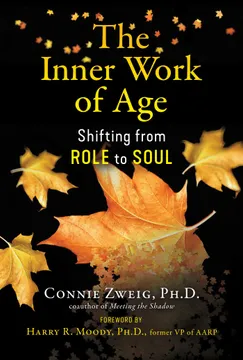
A deeper identity. The book treats aging as a developmental passage, not simply the body’s decline. Its central phrase, role to soul, describes shifting self-worth away from jobs, family duties, status, and appearance toward a deeper sense of value that does not depend on performance. This is not a demand to stop working or contributing. The question is how to live, whether the activity comes from fear and self-image or from a more grounded center.
A wake-up call. The Buddha story offers a model: Siddhartha encounters old age, illness, and death, then sees ordinary life differently. Zweig’s own dream of a stolen purse prompts a similar question: if familiar markers of identity disappear, what remains? Age can unsettle identity, but that disruption can also invite a more honest one.
The strength of this idea is its distinction between outward behavior and inward motivation. A person can keep a demanding job and still loosen the belief that productivity determines human value. That makes the proposal more flexible than a simple retirement ideal. Its spiritual language may not fit everyone, however. The underlying question remains accessible without belief in a soul: which parts of identity are chosen, and which are merely roles that once helped a person belong?
Name the hidden voice before it mistakes its script for you
Spot the pattern. In Jungian psychology, the shadow is material outside conscious awareness, including rejected feelings and neglected abilities. Shadow-work means noticing that material rather than letting it direct behavior unseen. A shadow character is a recurring inner pattern given a recognizable voice or image. It can be detected through repetitive thoughts, strong emotions, or bodily tension.
Make a pause. Zweig describes helping Joseph identify a Sisyphus-like character that insisted he must keep providing and working. It had once protected him from feeling like a bad child, but now blocked his creativity and freedom. The practice is to notice the thought, feeling, and sensation; give the pattern a name; trace its history; then consider what happens when it is obeyed. Recognition creates a little room to choose.
This method resembles a useful psychological distinction between having a thought and being defined by it. Naming a pattern can make an automatic response observable, which is often the first condition for changing it. The approach is most helpful when it increases curiosity rather than turning every impulse into a diagnosis. Some reactions are sensible responses to real threats or unfair conditions, not merely projections from an inner character.
Pair self-inquiry, stillness, and mortality awareness to inhabit the present
Three kinds of attention. The book joins shadow awareness, pure awareness, and mortality awareness. Shadow awareness brings neglected inner material into view. Pure awareness is the quiet witnessing of thoughts and sensations without treating them as the whole self. Mortality awareness means keeping life’s limits in view, so that time and choices feel real. Together, they offer depth, inner spaciousness, and presence.
Practice before crisis. Zweig recommends a regular contemplative practice, not only reaching for one when illness or grief arrives. A breath-focused meditation can help someone notice a painful thought without becoming identical to it. A simple mortality reflection asks what would be regretted if life ended today, and what change could be made now. The aim is not to deny pain, but to meet it with more awareness.
The combination matters because introspection alone can become rumination, while meditation alone can become a way to avoid unresolved feelings. Holding finitude in view gives both practices a practical direction: attend to what matters while there is time. Stillness is not a substitute for treatment, social support, or action. Its value is as a source of steadiness from which those responses can become more deliberate.
Challenge your inner ageist, then confront the systems that reward it
Bias turns inward. The inner ageist is the internalized belief that youth is better and older people are lesser. Zweig recounts feeling disgust and fear toward a vulnerable older woman, then recognizing that she was rejecting a feared image of her own future. Beatrice Wood tells a related story: when she stops dismissing an older hospital roommate and listens to her, the woman becomes a person rather than a stereotype.
Bias lives outside. The book cites a study of 25 Best Picture nominees in which people aged 60 or older made up only 11.8 percent of speaking characters, and most of those characters were men. It also describes discrimination in hiring and health care. Challenging private assumptions matters, but so does changing institutions that make age-based exclusion seem normal.
The pairing of personal reflection and public action is essential. If ageism is treated only as an attitude problem, the burden falls on individuals to think more positively while discriminatory practices remain untouched. If it is treated only as institutional, people may miss how everyday expectations shape what seems possible. Neither perspective is sufficient alone. The book’s balanced account of aging also resists replacing negative stereotypes with a new rule that every older person must remain energetic and productive.
Treat retirement and illness as thresholds, not automatic transformations
A passage, not a cure. A rite of passage is a transition that includes leaving an old identity, spending time in uncertainty, and beginning a new way of living. Retirement may expose how much identity rests on work. In one example, George fears becoming useless after leaving his insurance firm. As he explores that fear, he rediscovers watercolor painting, shifts to part-time work, and eventually retires with a new source of purpose.
Illness can interrupt the script. A client named Tom uses cancer as a prompt to change priorities, repair relationships, and reconsider habits. Another client undergoes treatment but returns unchanged to the routines that harmed her. These stories do not mean illness automatically carries a lesson. Financial insecurity, poor health, and unequal access to care shape what choices are possible.
The threshold metaphor gives disorienting change a helpful structure without promising a neat outcome. It also clarifies why external change alone may not alter identity: a person can retire and remain ruled by the old work persona. The account needs its own caution, which the examples invite. Serious illness is not a personal assignment that someone has failed by not transforming. Medical care, material resources, and the freedom to choose remain central.
Review the life you lived alongside the life you kept buried
Read the whole story. Life review is a deliberate reflection on major events, relationships, choices, and transitions. Gerontologist Robert Butler described it as a normal task of later life, not evidence of decline. Zweig suggests drawing a timeline by decade and noting key people, losses, beginnings, and turning points. Then ask what was expressed and what had to be suppressed for that version of the self to develop.
Find the hidden thread. This wider view can reveal an unlived life: feelings, talents, and ambitions set aside for family, work, or belonging. Rachel Naomi Remen once saw herself as a conventional doctor, then gradually recognized that intuition and service were central to her path. The point is not to prove that every event was destined. It is to understand the life more fully and decide what neglected part may still be lived.
A life review can loosen the grip of a single, simplified self-story. It can show that a choice made for survival, love, or duty also had costs, and that later meaning can coexist with earlier pain. The risk is forcing a tidy narrative onto a complicated life. Some events remain senseless or unresolved. A useful review makes room for ambiguity instead of turning every loss into evidence of a hidden plan.
Repair what you can without excusing harm or demanding forgiveness
Face unfinished business. Life repair is the work of addressing regret, resentment, guilt, and damaged relationships after reviewing the past. It may involve acknowledging harm, asking what one’s own patterns contributed, making amends, or forgiving. Zweig stresses that forgiveness is not forgetting, excusing, or pretending an injury did not matter. Sometimes repair is possible only within oneself, because the other person is unwilling, unavailable, or dead.
Keep accountability clear. Suzanne and Dan nearly break their marriage when his anger activates her old fear and her withdrawal deepens his sense of abandonment. Therapy helps each recognize their own reactions and speak more directly. The book explicitly warns against using this perspective to excuse abuse, especially abuse of children. Repair is an invitation to freedom from the past, not an obligation to reconcile with someone unsafe.
The strongest version of forgiveness is a choice about what to carry, not a verdict that the offender deserves reunion. That distinction protects the insight from becoming pressure on people who have been harmed. Taking responsibility for one’s part can restore agency, but it should not be confused with equal responsibility in unequal situations. Repair can mean setting a boundary, telling the truth, or grieving the relationship that cannot be made safe.
Become an Elder through conscious transition, not birthday arithmetic
A stage, not an age. Zweig defines an Elder as someone who has loosened the grip of ego, faced loss and mortality, and found ways to offer hard-won insight. This is not a title automatically granted by age. The passage includes releasing old identities, tolerating a period of uncertainty, and forming a new sense of purpose. Without this inner work, someone may become older while growing more rigid or resentful.
Find inner guidance. The Inner Elder is a person’s imagined or symbolic source of mature judgment, ethical direction, and compassion. In a visualization, Craig meets an elderly guide who tells him to stop fighting an already-ended battle and grieve what he has lost. Whether understood spiritually or as a way to access one’s considered values, the exercise asks: what guidance becomes possible when self-criticism quiets?
The distinction between age and Elderhood challenges a culture that treats older people as either burdens or inspirational exceptions. It also avoids claiming that wisdom comes automatically with experience. Experience becomes useful when reflected on and shared. Yet the ideal must remain an invitation, not another performance standard. People facing illness, poverty, disability, or caregiving demands may have limited time and energy for formal inner work, without being lesser elders.
Serve beyond ego, while checking whether helping has become control
Give without taking over. Sacred service is action guided by concern for others and a wider community. In karma yoga, ordinary work becomes spiritual practice when someone acts carefully, examines the motive, and loosens attachment to the result. The book’s synagogue story captures the exchange: a man cleans neglected synagogues to serve his community, and finds that the work reconnects him with his own tradition.
Watch the helper role. Service can also feed a need to feel superior, indispensable, or praised. A caregiver who expects gratitude or tries to control another person’s choices may be acting from a hidden agenda, even with good intentions. Zweig argues for inner reflection alongside activism, including work on climate, racial injustice, and ageism. The aim is not to avoid action, but to act with awareness of power, limits, and mutual dependence.
The distinction between service and rescuing is especially useful in caregiving, where affection can coexist with exhaustion, resentment, and control. Reflecting on motive does not invalidate the work; it can make care more respectful. But inward work cannot replace practical support. Caregivers need respite, resources, and shared responsibility, not only a more spiritual attitude toward overwork.
Let death sharpen completion, transmission, and attention to the living
Completion is not perfection. Life completion does not require reaching every goal or eliminating every regret. The book uses Moses, who dies before entering the Promised Land, to show another measure: he has passed knowledge and responsibility to Joshua and a new generation. A life can remain unfinished while still having been meaningful and complete in important ways.
Prepare with presence. Zweig describes her friend Sherry, who plans her care and burial while struggling between hope for a cure and acceptance of death. Her story emphasizes the right to make personal choices and the value of quiet attention to one’s own wishes. Mortality awareness can clarify what deserves time, what can be released, and what knowledge or love should be passed on. The book extends that concern to future generations and the damaged climate they inherit.
This account makes completion less like a final checklist and more like a relationship between generations. That can be freeing for people whose ambitions outlast their time. It also keeps legacy from collapsing into reputation: care, knowledge, and repair may matter even when a name is forgotten. At the same time, peaceful acceptance should not be demanded of the dying. Fear, changing wishes, and medical choices belong to the person, not to observers seeking a meaningful ending.
Analysis
The book’s central achievement is to place aging inside the story of identity. Retirement, illness, declining capacity, and mortality are not merely events to manage; they expose how heavily self-worth may rest on work, control, appearance, or usefulness. Zweig’s shadow-work gives readers a repeatable way to examine those attachments, while life review and repair connect private reflection to relationships, culture, and future generations. The book is unusually strong when it holds two truths together: later life can bring creativity and purpose, and it can also bring pain, dependency, and exclusion.
Its spiritual framework is also its main limitation. The movement from role to soul is meaningful for readers who recognize its language, but it is not a neutral description of human development. Some people will understand identity through relationships, community, or material conditions rather than an enduring spiritual essence. The book’s practices can still be useful if translated as attention, self-observation, and values-based action without adopting its metaphysics.
A second tension concerns agency. The author repeatedly notes financial and social inequalities, yet the detailed path of transformation can still sound like a task individuals should accomplish through reflection. Inner work cannot remove age discrimination, fund retirement, provide caregiving, or cure illness. Nor should suffering be judged by whether it produces wisdom. The most convincing reading treats introspection as one resource among several, not as a substitute for policy, medicine, or community support.
The practical invitation is therefore modest and demanding: notice the identities that no longer fit, investigate the fears guarding them, and make room for a different relationship to time. A reader need not become a mystic or an exemplar. The essential shift is from obeying a familiar self-story to meeting present reality with more honesty, choice, and care.
Review Summary
The Inner Work of Age receives an overall rating of 4.06/5, with readers praising its unique integration of Jungian shadow work and contemplative spiritual practices applied to aging. Many highlight the compelling concept of shifting from "role to soul" as particularly resonant. Common criticisms include the book being dense, repetitive, and occasionally preachy. Some readers found the political activism elements distracting from the core psychological content. Most agree it functions better as a workbook than a linear read, and is best experienced within a group setting.
Glossary
role to soul
Identity beyond social rolesA shift from defining oneself mainly through work, family duties, achievement, appearance, or social status toward a deeper sense of identity that does not depend on productivity. Zweig uses the phrase to describe an inward change, not necessarily a change in occupation or daily activity.
shadow-work
Bring hidden patterns to awarenessA reflective practice for noticing feelings, thoughts, desires, and abilities that have been rejected or kept outside awareness. The practitioner observes recurring inner patterns, names them, explores their origins and effects, and creates more freedom to respond rather than act automatically.
shadow character
Personified recurring inner patternA recognizable voice, image, or subpersonality that expresses a repeated unconscious pattern. Examples in the book include the Driver, the Inner Ageist, and the Victim. Naming a shadow character helps distinguish its message from the whole self and makes its influence easier to examine.
pure awareness
Awareness beyond mental contentsA contemplative state described as silent, open awareness that notices thoughts, feelings, and sensations without being defined by them. Zweig connects it with terms from several spiritual traditions, while presenting meditation as a way to experience more distance from the mind’s changing contents.
mortality awareness
Attention to life's limitsThe conscious recognition that life is finite and death is unavoidable. In the book, this awareness is meant to bring attention back to the present and clarify priorities, rather than encourage morbid fixation. It can prompt people to address regret, unfinished relationships, and choices they have postponed.
holy longing
Yearning for deeper purposeZweig’s term for the restlessness that can arise when familiar roles and goals no longer satisfy. It points toward self-understanding, spiritual practice, or service beyond narrow self-interest. The book treats this longing as a possible guide through late-life uncertainty, not as a demand to adopt a particular religion.
liminal time
In-between period of transitionA period between an old identity and a new one, when familiar roles have loosened but a fresh direction has not yet emerged. It can feel disorienting, empty, or frightening. The book presents this interval as a meaningful part of transition rather than proof that a person has failed.
life review
Reflective reading of one's lifeA deliberate review of significant experiences, relationships, choices, and turning points, often organized by decade. Zweig expands the practice to include not only what a person expressed, but also the feelings, talents, or dreams that were suppressed. The aim is perspective and insight, not a verdict on whether life succeeded.
life repair
Address emotional unfinished businessWork undertaken after life review to respond to regret, resentment, guilt, and relational injury. It can include apology, making amends, boundary-setting, grieving, or forgiveness. The term does not mean excusing abuse or requiring reconciliation with someone who is unwilling or unsafe.
Inner Elder
Inner source of mature guidanceA symbolic or imagined figure that represents a person’s capacity for mature judgment, ethical direction, compassion, and perspective. Zweig suggests that visualization or reflection can help people consult this inner resource when facing uncertainty. The concept can be understood spiritually or psychologically.
karma yoga
Service practiced without attachmentA Hindu spiritual approach in which everyday action becomes a path of practice. The person acts carefully for the benefit of others, examines motives, and releases excessive attachment to outcomes. Zweig applies the idea to caregiving, work, and activism as ways to join inner reflection with outward service.
divine messengers
Encounters that expose human limitsThe book’s term for experiences that confront people with the realities of aging, illness, and death. Drawing on the Buddha’s story, Zweig describes these encounters as potential interruptions to denial. They may prompt a reassessment of identity and priorities, though they do not guarantee personal transformation.
Download PDF
Download EPUB
.epub digital book format is ideal for reading ebooks on phones, tablets, and e-readers.








