

Key Takeaways
Build love through shared effort instead of waiting for a flawless match
Love is built together. The book rejects the idea that the right partner should make a relationship effortless. Attraction and early excitement can fade when disagreement, disappointment, or ordinary inconvenience arrives. Lasting love, the authors argue, grows through practicing communication, forgiveness, vulnerability, and cooperation with the person already beside you. Problems are not proof that a relationship is doomed; how partners meet them matters more than a conflict-free record.
Effort needs boundaries. A healing bond uses difficulty to understand patterns and improve how partners treat each other. A trauma bond, by contrast, repeats painful dynamics through fear or dependency without meaningful repair. The distinction is not simply whether a couple stays together. Safety, mutual effort, and changed behavior matter. The book explicitly warns that abuse is not a relationship challenge to solve through more inner work.
The distinction between difficulty and harm is crucial. Relationship research and clinical practice both treat repair after conflict as meaningful, but repair requires more than staying in the room: it involves listening, responsibility, and behavior that changes. The book usefully challenges the fantasy of effortless compatibility, while its emphasis on creating love should not become pressure to preserve every partnership. Shared effort can deepen a viable relationship; it cannot manufacture safety, mutual respect, or compatible life goals where those are absent.
Read recurring fights as learned alarms, not proof the relationship is doomed
Old learning enters the present. The authors suggest that family experiences shape what people expect from love, including for those who consciously reject their parents' example. A child raised around withdrawal, volatility, or criticism may carry those expectations into adult intimacy. The book calls subconscious imprints from past experience samskaras. A present-day disagreement can activate one of these old alarms, making a minor event feel like an earlier threat and producing a reaction larger than the moment warrants.
Connection can support healing. A partner can help reveal patterns that are difficult to notice alone. The authors distinguish interdependence, where people keep autonomy while giving and receiving support, from codependency and hyper-independence. Their invitation is to ask whether each person's words and actions reinforce a partner's fear or offer a different experience. Support matters, but each person remains responsible for their own healing.
This account has an affinity with attachment theory, which examines how early relational expectations can shape adult responses to closeness and threat. Seeing a fight as an alarm can create room for curiosity instead of blame. It is also a hypothesis, not a complete explanation: current stress, unequal responsibilities, incompatible needs, or a partner's actual misconduct may explain conflict better than childhood history. The past can clarify a reaction, but it should not automatically outrank evidence about what is happening now.
Name the wound beneath shame, blame, overload, and grief
Four wounds, four patterns. The book's Themes of Consciousness are a map of recurring emotional patterns and the beliefs beneath them, not permanent personality types. For these first four, the authors identify a core belief and common response:
1. Rejection: believing oneself unlovable, then pushing others away or seeking constant reassurance.
2. Judgment: believing someone must be wrong, then criticizing, perfectionizing, or people-pleasing.
3. Overwhelm: believing there is no point, then taking on too much or shutting down.
4. Loss: resisting change, then clinging to the past or suppressing grief.
Look for the need. A conflict about chores, affection, or a missed plan may carry shame, fear of failure, exhaustion, or grief beneath its surface. Naming that emotional need can make the argument easier to understand without excusing hurtful behavior.
The map is memorable because it links recognizable relationship behavior to a proposed underlying fear or need. That can help partners move from character judgments to questions about what is being protected. But a compact taxonomy can create false certainty: the same withdrawal might reflect fear, fatigue, depression, a sensory need, or a deliberate boundary. The themes work best as prompts for inquiry, not labels to assign to a partner. A useful explanation should remain open to correction by the person experiencing it.
Trace fear, craving, anger, and pride to the needs they defend
Four more wounds complete the map. The book calls a recurring underlying belief a Root Program Belief: an assumption that shapes expectations and reactions. Each theme can show up in contrasting ways. The authors call the outward strategy overcompensating and the inward or avoidant strategy undercompensating.
1. Distrust: fear of being hurt can become risk-seeking bravado or anxious monitoring.
2. Inadequacy: feeling incomplete can become compulsive novelty-seeking or suppressing genuine desires.
3. Violation: unmet needs for respect can become aggression or indirect resentment.
4. Insecurity: fear of being lesser can become competitiveness or blame-shifting and victimhood.
Notice the function. The outward behavior may look confident, passive, controlling, or detached, but the framework asks what vulnerability it protects. These patterns can change across situations, and people may move between strategies rather than fit neatly into one.
The paired strategies make an important point: opposite-looking behaviors can serve a similar protective function. One partner may demand reassurance, another may insist on needing nobody, and both may be managing vulnerability. This resembles broader psychological models in which avoidance and hyperactivation are different responses to perceived threat. The terminology can still overpathologize ordinary preferences, such as liking novelty or wanting time alone. Context and impact matter more than the label: does the behavior restrict either partner's agency, safety, or ability to communicate honestly?
Offer support without becoming responsible for a partner's healing
Compassion has limits. The book presents a caring partner as a potential source of safety: consistency may reassure someone who fears abandonment, and calm feedback may help someone who expects condemnation. Yet support is not the same as taking charge of another person's recovery. Each partner must recognize their behavior and participate in changing it. The authors advise seeking professional help for serious concerns and make clear that this book is not a substitute for therapy, medication, or addiction treatment.
Safety comes first. The book is explicit that abuse should not be explained away as an inner-child wound. It also points to persistent refusal of accountability, manipulation, and one-sided effort as reasons to reconsider a relationship. If one partner is unwilling to work on harmful behavior, understanding its origin does not create an obligation to stay.
This boundary is essential to the book's hopeful approach. Compassion can reduce shame and make honest reflection possible, but it becomes harmful when it asks one person to absorb repeated injury for the other's potential growth. The relevant evidence is not a compelling explanation of someone's past; it is whether they acknowledge impact, respect limits, and follow through on change. The book's safety warnings help counterbalance its emphasis on transforming a relationship from within. In abusive or dangerous situations, outside support and protection take priority over a couple's shared exercises.
Turn a trigger into a pause, an honest request, and changed behavior
A trigger is an alarm. In the book's specialized usage, it is a present event that reminds the mind or nervous system of an earlier painful experience, prompting a protective response. The Inner Work of Relationships Method turns that reaction into a sequence: notice the trigger, explore the belief and past association, explain the feeling without accusation, respond with care to the other partner, and choose a more useful behavior.
Repair must be concrete. The authors recommend pausing, noticing bodily sensations, naming the emotion, and asking what is needed before speaking. In conflict, partners can use first-person language, listen without preparing a counterattack, check that they understood each other, and agree on a next action. An apology is meaningful when it recognizes impact and is followed by changed conduct. Regular check-ins can catch small problems before resentment accumulates.
The method's strength is its conversion of self-awareness into observable interpersonal behavior. Naming a feeling can slow the move from emotion to accusation, while reflecting back a partner's meaning checks whether listening has actually occurred. This echoes useful principles in conflict mediation and emotion regulation. The method should not imply that every strong reaction is an inaccurate memory or that the person who feels hurt must manage the whole exchange. Sometimes the most accountable response is for the other partner to stop the harmful behavior, not to analyze the hurt person's trigger.
Earn ease through responsibility before adding ambition
The healing path has an order. After accountability, the book places ease, then motivation. Accountability means acting with honesty, owning consequences, and following through. Ease is not avoidance or permanent comfort; it is the ability to rest and enjoy life because responsibilities are being handled. The authors suggest practical supports such as agreeing on a time for a difficult conversation, compromising, and protecting time for recreation.
Ambition needs recovery. Motivation adds purpose, goals, and willingness to take on new challenges. The book warns that pursuing expansion before building dependable routines and rest can leave unfinished obligations or lead to burnout. Couples can clarify individual and shared aims, then review goals together. The underlying sequence is straightforward: meet commitments, create room to recover, and then decide what larger project deserves their energy.
This sequence resembles a useful distinction in behavior science between sustaining a baseline and pursuing additional goals. Ambition is easier to maintain when daily demands are manageable and recovery is real. The framework also offers a check against confusing busyness with progress. Its limitation is that responsibility is not always evenly distributed or fully within a couple's control. Caregiving, illness, financial insecurity, or inflexible work can make ease scarce. In those conditions, fairness and practical support may matter more than individual discipline or a shared vision statement.
Accept imperfect outcomes without abandoning accountability or curiosity
Acceptance is not surrendering standards. The authors place acceptance after accountability, ease, and motivation. It means making a genuine effort while not measuring personal worth solely by results. In a relationship, that can support forgiveness after a rupture and help partners stop treating every mistake as proof that love has failed. The authors caution that forgiveness without responsibility can excuse repeated harm, so acceptance should not replace boundaries or follow-through.
Understanding needs an open mind. After acceptance comes a search for the reasons and context behind behavior. Couples might investigate how their different needs, histories, or ways of communicating affect a disagreement. The book also warns that logic can become a defense: someone may explain a hurtful choice in elaborate detail without changing it. Understanding is useful when it increases honesty and better decisions, not when it disguises avoidance.
The distinction between accepting reality and approving every action is valuable. It allows a person to acknowledge what happened without either denying the damage or letting the event define a partner forever. The sequence also rightly treats reasoning as vulnerable to motivated interpretation. Yet acceptance should not depend on a prescribed developmental ladder: people can forgive, reflect, or set limits in different orders. The practical test is whether these capacities produce greater clarity and agency, rather than pressure to appear serene while important needs remain unmet.
Treat relationship stages as shifting patterns, not permanent identities
The categories describe seasons. A Karmic Couple is the book's term for partners caught in repetitive, reactive patterns. An Inner Work Couple is oriented toward shared accountability and healing. A Yoga Couple treats the relationship as a spiritual practice. These are descriptions of relationship dynamics, not fixed diagnoses. A couple can show trust in one area of life and insecurity in another, or move between constructive and painful patterns as circumstances change.
Track what is happening now. The authors suggest rating how frequently a theme appears, from never to consistently, rather than assuming one conflict defines the whole relationship. That makes the map more useful as a reflection tool: identify the pattern active in a particular situation, then ask what response might help. The goal is not to earn a superior label. It is to notice patterns early enough to act differently.
Treating the categories as a spectrum avoids the trap of turning a temporary conflict into an identity verdict. It also resembles dimensional approaches to personality and behavior, which often capture change better than rigid types. A frequency rating can make reflection more specific, though it remains subjective and may differ between partners. Disagreement about the rating is not proof that one person lacks awareness. The categories are most productive when used collaboratively, with examples and curiosity, rather than as shorthand for declaring one partner more evolved.
Make spirituality deepen love, never excuse harm or erase individuality
The final stage is spiritual. The book's Yoga Couple applies yoga's idea of union to partnership: love becomes a shared practice of presence, gratitude, and service, not only a feeling. A partner can act as a mirror for unnoticed habits, while the couple's spiritual beliefs may give shared meaning to ordinary life. The authors describe the far end of this journey through nonduality and jivamukti, a state of liberation understood as remaining engaged in life while less identified with passing thoughts and experiences.
This is an invitation, not a requirement. The book presents spirituality as one possible extension of inner work, not a universal relationship standard. Its own cautions matter: spiritual language should not be used to avoid accountability, tolerate abuse, or replace mental-health care. A couple may also find a satisfying relationship without treating it as a spiritual path.
The spiritual framing gives the book a broader destination than symptom reduction: intimacy becomes a practice of attention, humility, and care beyond the couple. For readers who share that worldview, ritual and service can make those commitments tangible. The claims about divine unity are matters of spiritual interpretation, not conclusions established by the relationship exercises themselves. Keeping that distinction clear preserves the framework's meaning without making metaphysical belief a test of maturity. Spiritual language is most constructive when it expands compassion while leaving consent, difference, and safety intact.
Analysis
The book's central contribution is an interpretive map for couple conflict. It asks partners to move from the visible dispute to the protective belief beneath it, then toward a response that changes how the pair relates. Its four-part arc moves from redefining love, through eight wounded patterns, into five healing capacities, and finally toward a spiritual account of union. That architecture makes a very long book easier to navigate: a reader can identify a recurring pattern, consider what it protects, and select a practice such as a pause, a direct request, or a repair conversation.
The most useful parts are behavioral rather than metaphysical. Accountability means owning impact and following through; ease includes rest rather than avoidance; acceptance does not erase the need for boundaries. The paired coping styles also help explain why apparently opposite responses, such as controlling a partner and withdrawing from one, can both protect against vulnerability. These are productive prompts for discussion, not validated clinical categories or diagnostic instruments. A partner should not be assigned a wound as though the framework were a psychological test. The book's inward focus also creates a risk. Repeated conflict may reflect old learning, but it can also arise from current inequity, incompatible priorities, illness, financial strain, or actual betrayal. Explaining a partner's harmful behavior through trauma can invite empathy, but empathy alone cannot establish safety or repair. The authors' warnings about abuse and professional care are therefore central safeguards, not peripheral disclaimers.
Finally, the progression toward enlightenment is best understood as the authors' spiritual worldview, not a necessary destination for every couple. The practical core stands without it: notice the pattern, distinguish explanation from excuse, communicate needs clearly, and judge repair by consistent action. That standard keeps the book's hope grounded in what partners can actually observe.
Review Summary
The Inner Work of Relationships receives overwhelmingly positive reviews, with readers praising its practical tools for self-discovery and relationship improvement. Many reviewers highlight its ability to foster understanding between partners, address communication issues, and heal past traumas. Therapists recommend it to clients, and couples find it helpful for deepening their connection. Some critics note repetitiveness and length, while a few question the originality of content. Overall, readers appreciate the book's insights into personal growth and relationship dynamics.
Glossary
Themes of Consciousness
Map of relationship patternsThe book's framework for organizing recurring emotional and relationship patterns into eight wounded themes, five healing themes, and spiritual themes. Each theme is associated with common triggers, beliefs, emotions, and coping responses. The authors present the themes as changeable and context-dependent, so they are intended as a guide for reflection rather than permanent personality categories.
samskaras
Imprints of past experienceA yoga-derived term the book uses for imprints left by past actions and experiences on the subconscious. These imprints are said to shape expectations, thoughts, and reactions, often without conscious awareness. In the relationship framework, a present interaction can activate an old imprint and make a past fear feel immediate again.
Root Program Beliefs
Underlying beliefs driving reactionsThe book's term for a basic assumption about oneself or relationships associated with a wounded theme. Examples include believing oneself unlovable or expecting that change will bring harm. The authors say these beliefs shape what a person notices, expects, and does, sometimes reinforcing the very pattern the person fears.
Overcompensating
Masking a wound through excessOne of the book's two broad coping styles. A person overcompensates by trying to cover or outmaneuver a painful vulnerability, such as responding to fear of rejection by pushing a partner away first. The specific behavior varies by theme and is presented as a protective strategy, not an inherent identity.
Undercompensating
Avoiding a wound through retreatThe book's term for coping by turning inward, withdrawing, suppressing needs, or avoiding situations associated with a painful belief. For example, someone who fears judgment may hide preferences or avoid disagreement. The authors contrast this strategy with overcompensating, while noting that a person may use either response in different situations.
Karmic Couple
Couple repeating painful patternsA label in the book for partners whose relationship is dominated by reactive cycles, defensiveness, and unresolved emotional patterns. The term draws on the authors' spiritual use of karma as a process of consequences and learning, not simply punishment. It describes a relationship pattern or phase, not a fixed identity or a prediction that the couple must separate.
Inner Work Couple
Partners practicing shared repairThe book's name for a couple committed to individual growth and relationship repair together. Such partners emphasize accountability, communication, cooperation, and support for each other's development. The term does not imply that conflict disappears; it describes a shared approach to addressing it and changing harmful patterns.
Yoga Couple
Relationship as spiritual practiceThe book's term for partners who treat their relationship as a path of spiritual growth. They understand intimacy, conflict, and daily life as opportunities for presence, humility, devotion, or service, according to their beliefs. This is presented as an optional spiritual orientation, not a requirement for a healthy or lasting relationship.
The Inner Work of Relationships Method
Five-step trigger responseA process for using a triggered moment as an opportunity for awareness and repair. Partners identify the trigger and its underlying belief, communicate vulnerably rather than blame, acknowledge each other's experience, and choose a healthier pattern. The method aims to turn automatic reactions into deliberate responses while preserving mutual support and accountability.
jivamukti
Liberation while engaged in lifeA yoga term the book uses for a person understood to be spiritually liberated while still participating in ordinary life. In the authors' relationship model, this points to experiencing life's changing events without treating them as the whole of one's identity. It is a spiritual concept, not a clinical outcome or a measure of relationship success.
FAQ
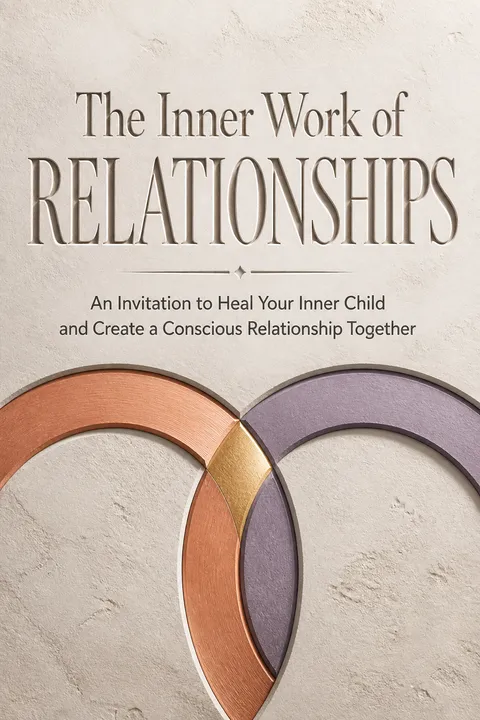
What is The Inner Work of Relationships by Mathew Micheletti about?
- Conscious Relationship Focus: The book guides couples and individuals to heal inner child wounds and consciously create fulfilling, loving relationships through ongoing inner transformation.
- Integration of Psychology and Spirituality: Micheletti blends Western psychology with Eastern philosophy and yogic principles, offering a holistic framework for relationship healing and growth.
- Themes of Consciousness: It introduces "themes of consciousness," which are developmental stages that shape self-esteem and relational patterns, ranging from wounded to enlightened states.
- Practical Tools and Guidance: Readers are provided with exercises, reflection questions, and actionable advice to identify and heal relational wounds, fostering deeper connection and self-awareness.
Why should I read The Inner Work of Relationships by Mathew Micheletti?
- Lasting Relationship Transformation: The book offers a roadmap for deep, sustainable change by addressing the root causes of relational dysfunction, rather than quick fixes.
- Comprehensive and Inclusive Approach: It welcomes all identities and relationship orientations, making it a versatile resource for diverse readers seeking emotional intimacy and mutual growth.
- Practical Methods and Exercises: Readers gain access to actionable tools, self-reflection questions, and communication strategies to foster accountability, ease, and understanding.
- Spiritual and Emotional Growth: Beyond psychological healing, the book invites readers to experience relationships as a spiritual practice, leading to inner peace and shared life purpose.
What are the key takeaways from The Inner Work of Relationships by Mathew Micheletti?
- Relationships as Mirrors: Relationships reflect our inner wounds, and healing these wounds is essential for creating conscious, loving partnerships.
- Inner Work is Essential: True love is not found but consciously created through humility, accountability, and emotional effort from both partners.
- Themes of Consciousness: Progressing through wounded, healing, and enlightening themes is central to personal and relational transformation.
- Practical and Spiritual Integration: The book combines actionable psychological tools with spiritual wisdom, guiding readers toward both emotional intimacy and spiritual union.
What are the eight wounded themes of consciousness in The Inner Work of Relationships by Mathew Micheletti?
- Eight Core Wounds: The book identifies Rejection, Judgment, Overwhelm, Loss, Distrust, Inadequacy, Violation, and Insecurity as the main wounded themes.
- Manifestation in Relationships: Each theme shows up as specific emotional triggers, root beliefs, and defense mechanisms that can sabotage intimacy and connection.
- Sequential Healing: Couples are guided to recognize and work through these themes in themselves and each other, moving from wounded to healing and ultimately enlightening states.
- Impact on Dynamics: Addressing these themes helps break cycles of volatility, avoidance, control, and other dysfunctional patterns.
What is the "Inner Work" method in The Inner Work of Relationships by Mathew Micheletti?
- Five-Step Process: The method involves (1) recognizing triggers, (2) identifying root beliefs and themes, (3) communicating vulnerably, (4) acknowledging and comforting your partner, and (5) uprooting old programs to embrace higher consciousness.
- Trigger Awareness: It encourages pausing during emotional reactions to explore the subconscious wounds being activated, allowing for conscious choice instead of automatic defense.
- Collaborative Healing: The process is designed for mutual understanding and support, turning triggers into opportunities for growth and intimacy.
- Progressive Self-Esteem: The method helps couples move through stages of consciousness, healing wounds and embodying empowered themes like accountability and love.
How does The Inner Work of Relationships by Mathew Micheletti define and differentiate Karmic Couples, Inner Work Couples, and Yoga Couples?
- Karmic Couples: These relationships are stuck in wounded themes, marked by unresolved trauma, emotional turmoil, and toxic cycles, often lacking stability.
- Inner Work Couples: Partners are committed to healing and growth, embodying accountability, ease, motivation, acceptance, and understanding, and breaking generational trauma cycles.
- Yoga Couples: The highest evolution, where love becomes a spiritual practice (yoga), partners see each other as teachers, and the relationship is a path to oneness and enlightenment.
- Progression Path: The book encourages couples to move from karmic to inner work, and ultimately to yoga couples, as part of their relational and spiritual journey.
What are the main inner child wounds discussed in The Inner Work of Relationships by Mathew Micheletti?
- Wound of Rejection: Rooted in feeling unlovable, leading to fear of abandonment, defensiveness, and intimacy issues.
- Wound of Judgment: Involves harsh self-criticism and projecting judgment onto others, resulting in guilt, shame, and perfectionism.
- Wound of Inadequacy: Characterized by feelings of not being enough, driving compulsive validation-seeking or repression of desires.
- Wound of Violation and Insecurity: Stemming from past boundary violations or fragile self-esteem, leading to anger, resentment, competitiveness, or withdrawal.
How does The Inner Work of Relationships by Mathew Micheletti explain the role of the inner child and ego in relationship dynamics?
- Ego as Wounded Inner Child: The ego is reframed as the voice of the wounded inner child seeking safety, love, and acceptance, often manifesting as defense mechanisms.
- Shadow Self Influence: The shadow, a mix of adult persona and wounded inner child, unconsciously drives behaviors and triggers in relationships.
- Cultivating Empathy: Viewing the ego as the inner child’s voice helps transcend blame and fosters curiosity and compassion toward oneself and one’s partner.
- Path to Healing: Recognizing and comforting the inner child is central to breaking dysfunctional cycles and building emotional intimacy.
What practical advice does The Inner Work of Relationships by Mathew Micheletti offer for couples when one partner resists doing Inner Work?
- Open Communication: Express needs transparently and listen actively to your partner’s concerns without judgment, creating a safe space for dialogue.
- Present Inner Work as a Gift: Frame the process as enhancing the relationship rather than fixing problems, highlighting mutual benefits like deeper connection.
- Patience and Gradual Steps: Avoid pressuring your partner; suggest manageable introductions such as reading the book together weekly.
- Seek Professional Guidance: If resistance persists, consider involving a therapist or counselor to facilitate the process.
How does The Inner Work of Relationships by Mathew Micheletti use the "Themes of Consciousness" framework?
- Developmental Stages: Themes of consciousness are progressive stages of self-esteem and awareness, shaping how individuals relate in partnerships.
- Wounded to Enlightening Themes: The framework moves from wounded themes (e.g., rejection, judgment) to healing (e.g., accountability, ease) and enlightening themes (e.g., love, true freedom).
- Contextual Application: Each theme is appropriate depending on the individual’s healing stage and relationship context; mastery of earlier themes supports healthy progression.
- Practical Exercises: The book offers tailored exercises and reflection questions to help couples identify their current theme and consciously evolve.
What is the significance of accountability, ease, and motivation in The Inner Work of Relationships by Mathew Micheletti?
- Accountability as Foundation: Taking responsibility for actions, emotions, and triggers without blame is crucial for healing and building trust.
- Ease as Natural Outcome: True ease arises from mastering accountability, characterized by calm confidence, playfulness, and non-confrontational communication.
- Motivation and Aspiration: Motivation represents the stage where couples pursue their full potential with passion and creativity, building on accountability and ease.
- Balanced Growth: The book emphasizes balancing effort and detachment, nurturing both personal and shared life missions while maintaining inner peace.
What are the best quotes from The Inner Work of Relationships by Mathew Micheletti and what do they mean?
- “The degree to which someone can grow is proportional to the amount they can accept about themselves without running away.” — Highlights the importance of self-acceptance and courage in personal growth and accountability.
- “We are not human beings having a spiritual experience. We are spiritual beings having a human experience.” — Emphasizes the spiritual dimension of relationships and life, inviting readers to see beyond the physical and emotional layers.
- “Love is a state of being. It is a way of perceiving the universe and everything in it as sacred, imbued with an inherent perfection, where nothing is separate, and everything is connected in the beauty of existence.” — Defines love as a profound consciousness that transcends individual ego and fosters unity.
- “When I became a man, I put away childish things, including the fear of childishness and the desire to be very grown up.” — Reflects the book’s theme of returning to childlike innocence with mature wisdom as a path to true freedom and happiness.
- “May all beings everywhere be happy and free, and may the thoughts, words, and actions of my own life contribute in some way to that happiness and to that freedom for all.” — Expresses the book’s universal message of love, compassion, and service.
About the Author
Other books by Mathew Micheletti

Download PDF
Download EPUB
.epub digital book format is ideal for reading ebooks on phones, tablets, and e-readers.








