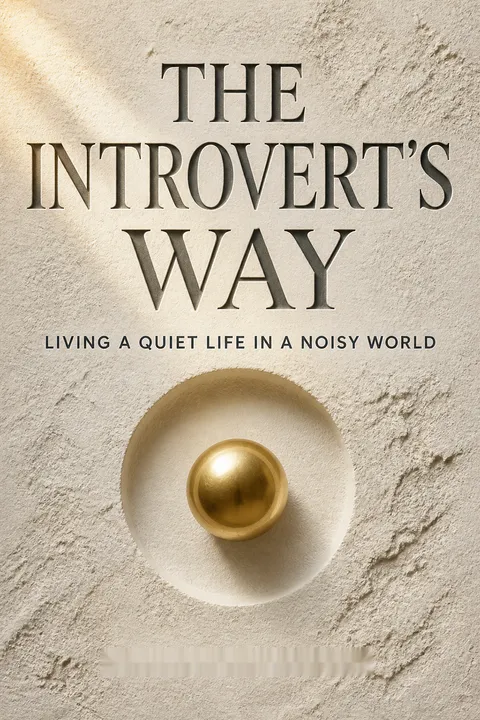


Key Takeaways
Stop treating introversion as broken extroversion; quiet is a legitimate way to function.
A different social rhythm. Introversion is not simply shyness, poor social skills, or dislike of people. The book describes it as a comparatively lower appetite for social contact and a tendency to feel depleted by too much outward engagement. Shyness is different: it involves feeling inhibited or uncomfortable in social situations. A confident introvert may give speeches, make friends, or work a room, then prefer to go home and be alone.
A changing definition. Psychologists have described introversion in different ways, from Jung's inward-directed energy to personality traits measured on a continuum. The author stresses that these ideas do not yet amount to one settled scientific definition. The practical point is simpler: being able to socialize does not invalidate a preference for less of it.
The distinction between preference and fear is useful because it prevents ordinary temperament from being mistaken for a problem that needs fixing. It also keeps the label from becoming too broad: avoiding a valued activity because of anxiety is not necessarily the same as choosing solitude because it feels restorative. Personality labels work best as descriptions, not verdicts. They can help people name their needs, but they should not substitute for asking whether a pattern is chosen, satisfying, and flexible.
Track what drains you, and what makes social effort worthwhile.
Energy is personal. Jung's idea that introverts direct energy inward gives many people a recognizable way to describe social fatigue, though the book notes that this psychic energy is difficult to define or measure. A useful refinement comes from cognitive scientist Jennifer Grimes: social effort is not only about how much energy goes out, but also about what comes back. Superficial chatter may exhaust someone without offering much reward; an absorbing conversation can require effort and still feel replenishing.
Design the recovery. At a four-day birding festival, Dembling joined daytime group activities and kept her evenings free. The breaks helped her stay present with people and make lasting friends. Rather than treating every invitation alike, notice which settings and people leave you energized, depleted, or both.
This account resembles a cost-benefit model of attention: the same effort can feel worthwhile or wasteful depending on its return. That makes energy tracking more precise than simply counting hours spent with people. The model also encourages practical experimentation, such as changing the length, setting, or company involved. Its limit is that social rewards are not always immediate. A difficult conversation or an unfamiliar group can matter despite being tiring, so short-term depletion alone cannot determine whether an experience is valuable.
Choose solitude without confusing it for loneliness.
Alone is a condition. The book distinguishes being physically without company from feeling lonely, which is an inner sense of disconnection or longing. An introvert may enjoy a quiet weekend, a solo movie, or a long drive and feel entirely content. Conversely, someone can feel lonely in a crowded room if no meaningful connection is available.
Notice the difference. The UCLA Loneliness Scale, as described in the book, asks about experiences such as feeling excluded or waiting for others to make contact. It does not define loneliness by the number of friends someone has. Still, solitude can become isolation when the person begins to feel persistently blue, disconnected, or unable to engage. The task is not to maximize company, but to recognize when quiet stops feeling nourishing.
Separating solitude from loneliness challenges a common assumption that visible company is the same as belonging. It also gives people a more useful check-in than counting invitations or contacts. The distinction has a boundary, though: people may normalize isolation because it is familiar or easier than reaching out. A person who feels low or disconnected may need to assess the pattern honestly, rather than use a preference for solitude to dismiss a genuine need for support.
Set party limits before exhaustion turns you into someone you dislike.
Choose your terms. Parties can be a kindness offered to friends, but they are not mandatory proof of affection. Before accepting, consider whether the host matters to you, whether the occasion is unusual, and whether the event may be enjoyable once you arrive. Saying no can be better than saying yes and repeatedly canceling. If staying home has become automatic, however, getting out may be worthwhile even when inertia says otherwise.
Keep an exit route. A short visit, a bathroom break, or a quiet corner can prevent overload. Arriving early may make a large gathering easier; arranging your own ride makes leaving easier. Alcohol may lower inhibitions, but relying on it to outlast a party can lead to behavior and regret that feel unlike you. The goal is to participate without ignoring your limits.
Boundaries are more effective when they are planned before fatigue narrows a person's options. A clear exit plan can reduce the pressure of attending because departure no longer requires a debate at the point of exhaustion. The advice also treats social participation as a choice with several possible forms, not a binary between total withdrawal and forced endurance. Still, discomfort is not always a signal to leave: sometimes a meaningful event deserves a manageable stretch beyond the familiar routine.
Treat small talk as an entry ramp, not a test of depth.
Ritual before intimacy. Small talk may feel empty to someone who prefers substantial conversation, but it helps people establish friendliness and ease into contact. The book compares it to a social lubricant: useful even when the content is not memorable. Trouble arises when light conversation becomes the whole event, as often happens at cocktail parties and networking gatherings.
Make it easier. Treat brief exchanges as acknowledgments rather than performances. Ask a question that could lead somewhere interesting, such as how someone chose a particular line of work. At a work event, set a modest goal, make a few useful connections, and follow up in writing if that suits you better. A defined task, like helping the host or taking photographs, can also make a gathering feel less like aimless mingling.
This reframing lowers the stakes of casual conversation. It shifts the aim from being fascinating to signaling attention and goodwill, a distinction that can make social entry less effortful. Small talk also provides low-risk information about whether another person is open to further exchange. Yet not every interaction needs to become deep, and not every polite exchange deserves pursuit. The practical skill is reading the moment, rather than treating either chatter or intensity as the only authentic form of connection.
Make your quiet legible before others write its meaning for you.
Silence gets interpreted. A reserved face or a pause may be read as boredom, anger, or rejection, even when the person is simply thinking or enjoying the scene. Dembling suggests first identifying what kind of quiet is present: a wish to be left alone, focused thought, contented observation, or feeling overwhelmed. These states are not interchangeable, even if they look similar from across a room.
Offer a small cue. If a friend seems worried, a brief explanation can prevent needless misunderstanding: quiet does not necessarily mean unhappiness or disapproval. Body language matters, too. Crossed arms, turning away, or an unintentional scowl may signal more distance than intended. No one owes the world a constant smile, but a small, truthful cue can make the intended message easier to read.
The insight connects communication to signal ambiguity: when one person's intent is hard to observe, others fill in the gaps with their own expectations. A short explanation can spare both sides from interpreting silence as a personal judgment. This is not a demand that reserved people perform cheerfulness. It is a reminder that communication is shared work, and that the occasional cue can protect boundaries while making connection easier for people who do not naturally read quiet as contentment.
Give ideas solitude, then deliberately carry them into shared work.
Quiet can incubate. The book calls the receptive mental space in which ideas develop the fertile void. Dembling describes long road trips as a setting where half-formed thoughts surfaced because the mind had room to wander. She also discusses flow, a state of deep absorption in a task. Solitude may suit some people entering that state, while others reach it through exchanging ideas with a group.
Do not claim a monopoly. The author rejects the idea that introverts are automatically more creative. Mozart and other sociable artists complicate that flattering story, and the book notes that collaboration can spark innovation. The practical lesson is to protect focused time when needed, then share or test the result. Quiet thought is valuable, but an idea that never meets other people may remain unfinished or unseen.
The useful distinction is between generating ideas and developing them with others. Many forms of work require both private concentration and feedback, so treating introversion as a complete creative method would be too simple. The book's account also invites attention to mental presence: an active inner life can support imagination, but it can crowd out awareness of the task or people nearby. The challenge is not to silence thought altogether, but to direct it when observation, collaboration, or rest matters more.
Build friendships slowly, but do not let selectivity become isolation.
Depth takes time. Dembling distinguishes close friends from acquaintances and online contacts, and describes friendship as reciprocal interest, trust, and the ability to be oneself. For someone who values depth, meeting a promising person is only the beginning. Repeated invitations and shared experiences let a connection grow. The author even recommends looking up old acquaintances, whose shared history can make the early stages less awkward.
Keep the circle resilient. A few close friendships can be deeply satisfying, but depending on one person for nearly all companionship can leave someone vulnerable when that person is unavailable or moves away. The book cites Dunbar's number, a proposed limit of about 150 relationships people can keep track of, while noting that this does not mean all are close friends. Introversion supports selectivity, not contempt for casual connections or people who socialize differently.
A layered social circle can preserve intimacy without demanding that every contact become a confidant. Acquaintances may provide practical support, shared interests, or a route toward closer friendship, even if the relationship never becomes deeply personal. This is a useful correction to the temptation to rank all contact by emotional intensity. The caution is equally important: selectivity can become a story that rationalizes never risking new connection. Friendship requires discernment, but it also requires showing up often enough to let trust form.
Negotiate alone time with loved ones instead of making them guess.
Affection and space coexist. In an introvert-extrovert relationship, neither partner can persuade the other to want the same amount of social activity. The book recommends explicit agreements: attend some events together, allow solo outings, plan quieter vacations, and arrange predictable time alone. A partner who understands that a break is recovery rather than rejection is less likely to feel shut out. In turn, the introvert can show up for occasions that matter to the other person.
Children need the same respect. A quiet child who prefers books, solitary play, or one close friend is not automatically unhappy or impaired. The relevant question is whether the child seems distressed, especially if a previously social child suddenly withdraws. Adults can support a reserved child's temperament while still helping them learn how to connect and recognize loneliness.
Explicit agreements turn a recurring personality conflict into a coordination problem: each person can state what they need and what they can offer. That approach is more durable than asking one partner to absorb all the adjustment. The same principle protects children from being treated as projects to socialize into a preferred mold. At the same time, acceptance should not mean ignoring distress. Respecting temperament and staying alert to meaningful changes can coexist without labeling every preference a symptom.
Count calm, focus, and satisfaction as happiness too.
One style is not the whole measure. The book examines research linking extroverted behavior with positive feelings. The study described asked participants to rate states such as talkativeness, enthusiasm, and energy, then compared those reports with similarly energetic descriptions of happiness. Dembling argues that this captures visible excitement more readily than quieter well-being, such as feeling peaceful, absorbed, or content with one's life.
Question the ruler. A person who feels calm rather than exuberant may be happy without looking happy to an observer. The author also points out that extroverted behavior and an introverted temperament can coexist: people can behave differently across situations without changing their underlying preference. This does not prove introverts are happier, or that social engagement is unimportant. It means that a fair account of well-being should not treat bubbly behavior as its only evidence.
The measurement question is larger than personality: what researchers choose to count can make one kind of experience more visible than another. A survey built around excitement may accurately measure excitement while saying less about contentment or life satisfaction. The distinction also prevents a false conclusion in the opposite direction. Quiet happiness should count, but so should loneliness, disengagement, and distress when present. A balanced view takes self-report seriously while resisting the urge to infer a person's inner life from their volume.
Analysis
The book's central work is not to prove that introverts are better. It is to dismantle the assumption that extroversion is the neutral standard and introversion a deficit. That shift matters because everyday judgments often confuse visibility with value: the person who speaks readily is presumed engaged, while the person thinking quietly is presumed aloof. Dembling counters those judgments with a practical account of attention, stimulation, relationships, work, and self-respect.
Its most useful model is not a rigid personality taxonomy but a sequence of questions: What kind of interaction is this? How much attention does it demand? What does it give back? What recovery does it require? The answers vary by person and context. A stimulating discussion with a trusted friend can nourish someone who finds a cocktail party draining. A quiet evening can restore one person and deepen another's isolation. This makes self-knowledge more valuable than rules about how often a person should socialize.
The book is also strongest when it treats accommodation as reciprocal. Introverts should be able to leave a party without shame, but they should not dismiss extroverts as shallow or expect loved ones to intuit every boundary. Small talk can be tedious and still perform a useful social function. Solitude can be restorative and still become avoidance. Introversion explains preferences; it does not automatically justify every choice.
Some of the book's neuroscience and personality research is presented as suggestive rather than conclusive, and its own account emphasizes that definitions remain unsettled. That uncertainty is a strength when it discourages diagnosis by stereotype, though it means claims about distinctive introvert brains or superior depth should be handled cautiously. The most durable conclusion is less dramatic and more humane: people flourish under different patterns of stimulation and connection, and a culture that recognizes only one pattern misreads many of its members.
Review Summary
The Introvert's Way receives mixed reviews. Many introverts find it relatable and affirming, appreciating Dembling's insights on introversion and tips for navigating social situations. Some readers find it repetitive and lacking in scientific depth compared to Susan Cain's "Quiet." The book is praised for its short chapters, humor, and validation of introverted traits. However, critics note its focus on the author's personal experiences and occasional sweeping generalizations. Overall, it's considered a quick, engaging read for introverts seeking understanding and affirmation.
People Also Read









Glossary
Introversion
Lower appetite for social stimulationA personality tendency associated in the book with preferring less frequent or less intense social engagement and needing time alone after substantial interaction. It is not equivalent to shyness, social incompetence, or dislike of people. The author presents introversion as a legitimate way of functioning, while noting that psychologists still debate how best to define and measure it.
Shyness
Social inhibition or discomfortA pattern of tension, inhibition, or discomfort in social situations. The book distinguishes shyness from introversion: an introverted person may want less social contact without fearing it, while a shy person may want connection but feel inhibited. The traits can occur together, but neither one necessarily implies the other.
Highly Sensitive Person (HSP)
Person highly responsive to stimuliElaine Aron's term for people who are especially responsive to sensory and emotional input, including subtle changes and other people's moods. The book notes that many introverts recognize themselves in this description, particularly in feeling overwhelmed by noise or busy settings. It also stresses that the relationship between high sensitivity and introversion remains unsettled.
Energy in/energy out
A model of social energyA way of describing the experience of introverts feeling depleted by extended outward engagement and restored by inward focus or solitude. The book traces the idea to Carl Jung but treats psychic energy as a useful experiential metaphor rather than a clearly defined, measurable substance. The author also emphasizes that social settings differ in how much value they return.
Fertile void
Quiet space for ideasThe receptive mental space in which ideas can take shape without competing demands for attention. The book associates this state with solitude, daydreaming, creative work, and periods of relaxed focus. It is not exclusive to introverts: collaboration may generate ideas, and people with different temperaments may find creative focus in different conditions.
Flow
Deep absorption in an activityA state of sustained engagement in a task, associated in the book with concentrated attention, diminished awareness of time, and doing the activity for its own sake. The author connects flow with creative work but does not claim introverts alone can access it. Some people reach it through solitary thought, while others find it through exchanging ideas or working together.
flâneur
Attentive observer of public lifeA French term for an idler or stroller that the book uses for someone who enjoys watching the life of a place without needing to participate constantly. Sitting in a park, cafe, or party can be an active form of attention: observing movement, conversation, habits, and atmosphere. The experience is presented as a genuine pleasure, not necessarily a sign of loneliness.
computer-mediated communication (CMC)
Communication through digital toolsCommunication conducted through tools such as email, texting, blogs, and social networks. The book describes CMC as useful for people who prefer time to think before responding and more control over when they engage. It can support friendship and work, but still consumes social attention and does not eliminate the value of face-to-face contact.
default-mode network (DMN)
Brain activity during mental restA term for neural activity associated in the book with the mind's activity when it is not focused on an externally assigned task. Dembling connects this internal activity with daydreaming and the busy stream of thought many introverts report. She uses the concept to distinguish inward mental activity from mindfulness, which involves attending to present experience.
Dunbar's number
Proposed limit on social relationshipsAnthropologist Robin Dunbar's proposed estimate of about 150 relationships a person can keep track of. The book uses the idea to distinguish a broad network from the much smaller group someone might regard as close friends. The number is presented as a theory about relationship capacity, not as a rule that defines how many friends a person should have.
FAQ
What's "The Introvert's Way: Living a Quiet Life in a Noisy World" about?
- Exploration of Introversion: The book delves into the nature of introversion, challenging societal norms that favor extroversion. It aims to redefine introversion as a valid and valuable way of being.
- Personal Experiences: Author Sophia Dembling shares her personal journey of understanding and embracing her introverted nature, offering insights and anecdotes that resonate with fellow introverts.
- Practical Advice: The book provides practical strategies for introverts to navigate a world that often misunderstands them, focusing on energy management and self-acceptance.
- Cultural Critique: It critiques the extrovert-centric culture, highlighting how introverts can thrive by embracing their unique strengths and preferences.
Why should I read "The Introvert's Way"?
- Validation for Introverts: If you identify as an introvert, this book offers validation and understanding, helping you feel less alone in a world that often prioritizes extroversion.
- Practical Strategies: The book provides actionable advice for managing social situations, conserving energy, and finding joy in solitude, making it a useful guide for everyday life.
- Cultural Insight: It offers a critique of societal norms, encouraging readers to question the extrovert ideal and appreciate the value of introversion.
- Empowerment: By reading this book, introverts can gain confidence in their natural tendencies and learn to assert their needs without guilt.
What are the key takeaways of "The Introvert's Way"?
- Introversion is Valid: Introversion is not a flaw or a lack of extroversion; it is a distinct and valuable way of being with its own strengths.
- Energy Management: Introverts need to manage their energy carefully, recognizing when to engage socially and when to retreat for solitude.
- Self-Acceptance: Embracing one's introverted nature leads to greater self-acceptance and happiness, rather than trying to conform to extroverted norms.
- Cultural Critique: The book encourages questioning societal expectations and finding personal fulfillment by living authentically as an introvert.
How does Sophia Dembling define introversion in "The Introvert's Way"?
- Inward Energy Flow: Dembling aligns with Jung's idea that introverts direct their energy inward, which can be draining in highly social situations.
- Not Shyness: She distinguishes introversion from shyness, explaining that introverts are not necessarily fearful of social interaction but may simply prefer solitude or small groups.
- Deep Thinking: Introverts are often deep thinkers who process information thoroughly, which can make them appear slow to respond in fast-paced environments.
- Preference for Solitude: Introverts often find joy and rejuvenation in solitude, which is a natural and healthy preference rather than a sign of antisocial behavior.
What practical advice does "The Introvert's Way" offer for managing social situations?
- Energy Management: Dembling emphasizes the importance of recognizing personal energy limits and taking breaks during social events to recharge.
- Setting Boundaries: She advises introverts to set clear boundaries with friends and family, explaining their need for alone time without guilt.
- Selective Socializing: The book suggests being selective about social engagements, choosing quality interactions over quantity to avoid burnout.
- Using Technology: Dembling highlights the benefits of using technology, like texting and email, to maintain connections without the pressure of face-to-face interaction.
What are some of the best quotes from "The Introvert's Way" and what do they mean?
- "Introverts are not failed extroverts." This quote challenges the notion that introverts are simply lacking extroverted traits, affirming that introversion is a complete and valuable identity.
- "Our presence is a gift, not a requirement." It emphasizes that introverts should not feel obligated to participate in social events if it drains them, highlighting the importance of self-care.
- "Just because I'm quiet doesn't mean I have nothing to say." This quote addresses the misconception that quietness equates to a lack of thoughts or opinions, advocating for the depth of introverted thinking.
- "Managing my energy is a favor to myself and everyone around me." It underscores the importance of energy management for introverts, suggesting that taking care of oneself benefits both the individual and their relationships.
How does "The Introvert's Way" address the cultural bias towards extroversion?
- Cultural Critique: Dembling critiques the extrovert-centric culture that values loudness and constant social interaction, arguing for the recognition of introverted strengths.
- Media Representation: The book discusses how media and societal norms often portray extroversion as the ideal, marginalizing introverted behaviors.
- Reclaiming Introversion: Dembling encourages introverts to reclaim their identity and assert their preferences, challenging the notion that extroversion is superior.
- Balance and Harmony: She advocates for a balance between introversion and extroversion, suggesting that both are necessary for a well-rounded society.
What does Sophia Dembling say about introverts and friendships in "The Introvert's Way"?
- Quality Over Quantity: Introverts often prefer a few deep, meaningful friendships over a large number of acquaintances, valuing depth over breadth.
- Selective Socializing: Dembling advises introverts to be selective about their social interactions, focusing on relationships that are fulfilling and energizing.
- Navigating Friendships: The book offers strategies for maintaining friendships, such as setting boundaries and communicating needs clearly to avoid misunderstandings.
- Online Connections: Dembling highlights the benefits of online communication for introverts, allowing them to connect with others on their own terms.
How does "The Introvert's Way" suggest introverts handle work environments?
- Leveraging Strengths: Dembling encourages introverts to leverage their strengths, such as deep thinking and listening skills, to excel in the workplace.
- Setting Boundaries: She advises setting boundaries to protect personal energy, such as taking breaks and finding quiet spaces when needed.
- Communicating Needs: The book suggests communicating preferences to colleagues and managers, such as a preference for email over phone calls or meetings.
- Finding Balance: Dembling emphasizes the importance of finding a balance between collaboration and independent work, allowing introverts to thrive.
What does "The Introvert's Way" say about introverts and family dynamics?
- Understanding Needs: Dembling discusses the importance of family members understanding and respecting an introvert's need for solitude and quiet time.
- Setting Boundaries: She advises introverts to set clear boundaries with family, explaining their need for alone time without feeling guilty.
- Navigating Gatherings: The book offers strategies for managing family gatherings, such as taking breaks and finding quiet spaces to recharge.
- Communicating Preferences: Dembling emphasizes the importance of communicating preferences to family members to avoid misunderstandings and maintain harmony.
How does "The Introvert's Way" address the concept of introvert energy management?
- Recognizing Limits: Dembling emphasizes the importance of recognizing personal energy limits and taking breaks during social events to recharge.
- Setting Boundaries: She advises introverts to set clear boundaries with friends and family, explaining their need for alone time without guilt.
- Selective Socializing: The book suggests being selective about social engagements, choosing quality interactions over quantity to avoid burnout.
- Using Technology: Dembling highlights the benefits of using technology, like texting and email, to maintain connections without the pressure of face-to-face interaction.
What are some common misconceptions about introverts addressed in "The Introvert's Way"?
- Introversion vs. Shyness: Dembling clarifies that introversion is not the same as shyness; introverts are not necessarily fearful of social interaction but may prefer solitude or small groups.
- Quietness Misinterpreted: The book addresses the misconception that quietness equates to a lack of thoughts or opinions, advocating for the depth of introverted thinking.
- Social Disinterest: Dembling challenges the notion that introverts dislike people, explaining that they often value deep connections over superficial interactions.
- Lack of Fun: The book refutes the idea that introverts don't know how to have fun, highlighting the different ways introverts experience joy and fulfillment.
Download PDF
Download EPUB
.epub digital book format is ideal for reading ebooks on phones, tablets, and e-readers.








