Plot Summary
Ceremony of the Guilds
Helward Mann, raised in the city's crèche, comes of age and is inducted into the mysterious guild system that governs the city of Earth. The ceremony is solemn and secretive, with Helward swearing an oath of absolute secrecy and loyalty, under penalty of death. The city's society is rigidly structured, with guilds responsible for every aspect of survival. Helward's father, a respected Future Surveyor, proposes him for apprenticeship, and Helward is both excited and apprehensive about the responsibilities and mysteries that await. The ceremony marks a profound transition, as Helward steps from the sheltered world of childhood into the adult world of duty, secrecy, and the unknown.
Apprenticeship and First Steps
Helward's apprenticeship begins with a jarring introduction to the world beyond the city's walls. He is taken outside before dawn, experiencing the cold, darkness, and the alien landscape for the first time. The sunrise reveals a sun that is not the sphere he was taught, but a strange, disk-like shape with spires. This moment is both awe-inspiring and unsettling, hinting at deeper mysteries. Helward is assigned to work with Track Malchuskin, learning the grueling labor of dismantling and relaying the city's tracks. The work is physically demanding, and Helward quickly realizes that life outside is harsher and more complex than he imagined.
Life Beyond the City
Helward's days are filled with backbreaking work alongside hired local laborers, whom the city's people call "tooks." The city's survival depends on constant movement, requiring tracks to be laid ahead and removed behind. The laborers are poorly treated, and Helward witnesses the city's exploitative relationship with the surrounding villages. He learns that time in the city is measured in "miles," a function of the city's movement toward an ever-shifting "optimum." The city's insularity and dependence on secrecy become more apparent, as does the tension between the city dwellers and the locals.
Tracks, Labor, and Secrets
As Helward becomes more adept at his work, he observes the city's reliance on local labor and the Barter guild's role in negotiating for workers and, disturbingly, for women. The city's population is dwindling, with a shortage of women and a preponderance of male births. To sustain itself, the city barters for women from the villages, who are brought in to bear children and then sent back. Helward's understanding of the city's precarious existence deepens, and he begins to question the morality and sustainability of its practices. The secrecy of the guilds, enforced by the oath, weighs heavily on him.
The City's Relentless Motion
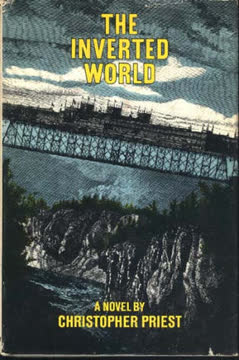
The city of Earth is not stationary; it is a massive, mobile structure that must constantly move northward to stay near the "optimum," a mysterious, ideal location. The city's movement is a monumental effort, involving winches, cables, and the coordinated labor of all guilds. The process is dangerous—cables can snap, tracks can buckle, and the city is always at risk of falling behind the optimum. The city's survival depends on this relentless motion, and any delay can be catastrophic. Helward witnesses the city being winched over a chasm on a hastily built bridge, a feat that costs lives and resources.
Victoria and the Oath
Helward's arranged marriage to Victoria, a fellow crèche graduate, is both a comfort and a source of tension. Victoria is intelligent and ambitious but frustrated by the city's rigid gender roles, which confine women to domestic and reproductive duties. She resents the secrecy of the guilds and the barriers it creates between her and Helward. Their relationship is strained by the oath Helward has sworn, which forbids him from sharing the city's secrets. The emotional distance between them grows, mirroring the larger social divides within the city.
Marriage and Discontent
Helward and Victoria's marriage is marked by mutual affection but also by unresolved tensions. Victoria's desire for agency and knowledge clashes with the city's patriarchal and secretive structure. She becomes increasingly disillusioned, questioning the necessity of the city's movement and the morality of its practices. Helward, caught between his love for Victoria and his loyalty to the guilds, struggles with guilt and confusion. Their personal struggles reflect the broader discontent simmering within the city, as more people begin to question the status quo.
The Machinery of Survival
Helward's apprenticeship takes him through all the major guilds: Track, Militia, Traction, Barter, and BridgeBuilders. He learns the intricate systems that keep the city alive: the nuclear reactor, the recycling of water and waste, the synthesis of food, and the complex logistics of movement. Each guild has its own culture and secrets, but all are united by the imperative of survival. Helward witnesses the city's dependence on external resources and the moral compromises required to maintain its existence. The city's insularity is both its strength and its weakness.
Down Past: The Inversion
As part of his final training, Helward is sent "down past," far south of the city, to escort three women back to their village. The journey is surreal and harrowing. The further south they travel, the more the world distorts: distances stretch, time warps, and the women physically transform, becoming squat and alien. Helward experiences a powerful, inexplicable force pulling him southward, and the landscape itself becomes unrecognizable. He realizes that the city's movement is not arbitrary—it is a desperate race to stay within a narrow band of reality where human life is possible.
The World's True Shape
At the southern extremity, Helward witnesses the true shape of the world: an inverted, hyperboloid landscape, with the ground curving impossibly and the sun and moon appearing as disks with spires. The city's "optimum" is the only region where reality is stable and familiar; elsewhere, the laws of physics and perception break down. Helward's return journey is disorienting—time has passed differently for him, and the city has moved far ahead. He is changed, both physically and psychologically, by what he has seen. The city's relentless motion is revealed as a necessity, not a choice.
The City Under Threat
The city faces new dangers as the local populations, increasingly organized and resentful, launch attacks. The city's defenses are strained, and the once-closed society is forced to adapt. The crèche is destroyed, children are killed, and the city's leadership is shaken. The attacks expose the city's vulnerability and the unsustainability of its exploitative practices. Amidst the chaos, Helward's personal life unravels—his father dies, his marriage ends, and he is left adrift. The city's survival is more precarious than ever, and the need for change becomes undeniable.
The Terminators' Challenge
A new faction, the Terminators, emerges within the city, advocating for an end to the city's movement and a settlement in the fertile lands. Their arguments resonate with many, especially as the city's hardships mount. The Navigators, the city's ruling council, are divided between tradition and reform. Public meetings become battlegrounds for competing visions of the city's future. Helward, now a respected guildsman, is torn between loyalty to the city's traditions and sympathy for the desire for change. The city stands at a crossroads, its identity and survival in question.
The Bridge to Nowhere
The city's path is blocked by a vast river, wider than any before. The BridgeBuilders, led by Victoria's father Lerouex, attempt to construct a bridge, but storms and the sheer scale of the task make it seem impossible. The city's resources are stretched to the limit, and the threat of being stranded grows. Some propose building a ship to cross the river, while others argue for halting the city altogether. The bridge becomes a symbol of the city's struggle—an act of faith against overwhelming odds. Helward and Lerouex confront the limits of engineering and the limits of hope.
The Arrival of Outsiders
Elizabeth Khan, a nurse from the outside world, arrives in a nearby village and becomes entangled with the city's people. Her perspective is radically different—she sees the city as a relic, its people as deluded, and its struggles as unnecessary. Elizabeth's interactions with Helward are charged with curiosity, attraction, and mutual incomprehension. She infiltrates the city as a "transferred" woman, observing its inner workings and reading Destaine's Directive, the city's founding document. Her presence challenges the city's insularity and forces a confrontation between two realities.
Elizabeth's Perspective
Elizabeth's experiences in the city reveal the gulf between the city's perception and the reality of the world. She sees the sun as a sphere, the world as Earth, and the city's struggles as self-imposed. The city's people, shaped by generations of isolation and the effects of the "translateration" field, perceive a distorted reality. Elizabeth's attempts to communicate and reason with Helward and others are met with confusion and resistance. The city's mythology and survival strategies are exposed as both necessary and tragic, products of a unique and isolating history.
The Final Confrontation
The Terminators, with Elizabeth's help, stage a public confrontation. Elizabeth reveals the truth: the city's perception of the world is a side effect of a long-running energy experiment by Francis Destaine, who created a field that distorts reality for those within it. The city is, and always has been, on Earth; its struggles are the result of a self-sustaining illusion. The city's reactor is not functioning—the field is powered by a natural phenomenon. The revelation shatters the city's identity, but many, including Helward, cannot accept it. The city's movement, once a matter of survival, is now a matter of belief.
Perception and Reality
In the aftermath, the city's people are divided. Some accept Elizabeth's explanation and the possibility of a new life; others, like Helward, remain trapped in their perception, unable to reconcile the truth with their lived experience. The city's journey, once a physical necessity, becomes a metaphor for the human struggle to find meaning and stability in a world that is always shifting. The story ends with Helward, still unable to accept Elizabeth's reality, swimming in the river, caught between two worlds—one of perception, one of truth.
Characters
Helward Mann
Helward is the protagonist, a young man raised in the city's crèche and inducted into the guilds. His journey is one of discovery, both of the world's physical mysteries and of his own limitations. Helward is earnest, hardworking, and loyal, but also deeply conflicted. His relationships—with his father, with Victoria, with Elizabeth—reveal his longing for connection and understanding. Helward's psychological arc is marked by increasing alienation: from the city's traditions, from his wife, and ultimately from reality itself. His inability to fully accept the truth about the world is both tragic and deeply human.
Victoria Lerouex
Victoria is Helward's wife, a product of the crèche and the city's rigid gender roles. She is ambitious and curious, chafing against the limitations imposed on women. Her relationship with Helward is loving but fraught, as the secrecy of the guilds and the city's patriarchal structure create an unbridgeable gap. Victoria becomes a leader of the Terminators, advocating for change and challenging the city's traditions. Her psychological journey is one of awakening and disillusionment, as she moves from hope to anger to a hard-won independence.
Malchuskin
Malchuskin is Helward's first mentor outside the city, a gruff and practical man who supervises the track-laying crews. He is cynical about the city's leadership and the guild system, but deeply committed to the work that keeps the city moving. Malchuskin's relationship with Helward is one of tough love, teaching him the realities of labor, exploitation, and survival. He represents the city's working class, caught between loyalty and resentment, and his psychological resilience is both admirable and tragic.
Clausewitz
Clausewitz is the chief of the Future Surveyors and a key figure in Helward's apprenticeship. He embodies the city's values of secrecy, discipline, and hierarchy. Clausewitz is both a mentor and an enforcer, demanding absolute loyalty and adherence to the oath. His psychological rigidity reflects the city's own, and his inability to adapt to change foreshadows the city's crisis. Clausewitz's relationship with Helward is complex, marked by respect, disappointment, and ultimately, distance.
Lerouex
Lerouex, Victoria's father, is the chief BridgeBuilder, responsible for the city's most ambitious engineering projects. He is a man of skill and pride, but also of growing doubt. The failure to build a bridge across the river becomes a metaphor for the limits of human ingenuity and the inevitability of change. Lerouex's relationship with Helward is professional but strained, complicated by family ties and the city's political turmoil. His psychological decline mirrors the city's own.
Elizabeth Khan
Elizabeth is a nurse from the outside world, whose arrival in the city brings a radically different perspective. She is intelligent, compassionate, and determined, unafraid to challenge the city's myths. Elizabeth's relationship with Helward is charged with curiosity, attraction, and mutual incomprehension. She becomes the city's conscience, exposing the truth about its origins and the nature of its reality. Her psychological resilience and empathy make her both a threat and a hope for the city's future.
Barter Collings
Collings is a member of the Barter guild, responsible for negotiating with the local populations for labor and women. He is pragmatic, skilled in languages, and aware of the city's moral compromises. Collings serves as a mentor to Helward, offering perspective and advice. His psychological flexibility allows him to navigate the city's complexities, but also leaves him morally ambivalent. Collings represents the city's capacity for adaptation and survival, but also its complicity in exploitation.
Gelman Jase
Jase is Helward's childhood friend and fellow apprentice, whose path parallels and diverges from Helward's. Jase is more cynical and adaptable, willing to question the city's traditions and explore alternatives. His experiences down past and his encounters with the city's enemies shape his outlook. Jase's relationship with Helward is marked by camaraderie, competition, and eventual estrangement, reflecting the broader divisions within the city.
Blayne
Blayne is a Future guildsman who becomes Helward's companion on northern surveys. He is intelligent, curious, and less bound by tradition than many of his peers. Blayne is willing to question the city's assumptions and engage with outsiders like Elizabeth. His psychological openness makes him a bridge between worlds, but also leaves him vulnerable to doubt and uncertainty.
Francis Destaine
Destaine is the legendary founder of the city, whose Directive shapes its laws and beliefs. A scientist and visionary, Destaine's creation of the translateration field is both a triumph and a curse. His writings, preserved as the city's sacred text, are a mixture of practical advice, philosophical reflection, and desperate hope. Destaine's psychological legacy is one of isolation, determination, and the tragic consequences of genius.
Plot Devices
The Oath and Secrecy
The oath sworn by guild apprentices is a powerful plot device, enforcing secrecy and loyalty under threat of death. It creates barriers between individuals, especially between Helward and Victoria, and serves as a metaphor for the city's insularity. The oath's psychological weight drives much of the conflict, as characters struggle with guilt, fear, and the desire for connection. The secrecy it enforces both protects and imprisons the city, shaping its culture and its fate.
The Inverted World
The central plot device is the world's inversion—a hyperboloid landscape where perception, physics, and time are warped by the translateration field. This device creates both external and internal conflict, as characters must navigate a reality that defies logic and experience. The city's movement toward the "optimum" is both a literal and symbolic journey, representing the search for stability, meaning, and survival in a world that is fundamentally unstable.
Guild Structure and Social Order
The city's guild system is a classic device for exploring social order, tradition, and resistance to change. Each guild has its own rituals, secrets, and power, and the rotation of apprentices through all guilds serves as both a narrative structure and a means of world-building. The guilds' rigidity is both a source of strength and a fatal flaw, as they struggle to adapt to new challenges and internal dissent.
Perception vs. Reality
The novel's use of unreliable perception—characters seeing the sun, the world, and even each other differently—creates ambiguity and tension. The arrival of Elizabeth, who perceives the world as it "really" is, forces a confrontation between competing realities. This device allows for deep psychological exploration, as characters must choose between the comfort of familiar illusions and the pain of truth.
Political Dissent and Revolution
The emergence of the Terminators and the public debates over the city's future provide a framework for exploring political and social change. The struggle between tradition and reform, between survival and morality, is played out in both public and private arenas. The device of public meetings, speeches, and confrontations allows for the dramatization of competing ideologies and the testing of individual loyalties.
The Outsider's Perspective
Elizabeth's role as an outsider allows the narrative to question the city's assumptions and expose its blind spots. Her interactions with Helward and others serve as a catalyst for self-examination and, ultimately, for the city's reckoning with its own history and identity. The outsider's perspective is a classic device for revealing the constructed nature of reality and the possibility of change.
Analysis
Christopher Priest's The Inverted World is a profound meditation on perception, survival, and the limits of human understanding. At its core, the novel interrogates the ways in which societies construct their own realities—through ritual, secrecy, and collective belief—and the costs of clinging to those constructions in the face of change. The city's relentless movement, driven by a misunderstood necessity, becomes a metaphor for the human condition: the search for meaning and stability in a world that is always shifting, always uncertain. The arrival of Elizabeth, with her radically different perspective, forces a confrontation between competing truths, exposing the fragility of the city's identity and the tragedy of its isolation. The novel's exploration of gender, power, and exploitation remains deeply relevant, as does its warning about the dangers of insularity and the refusal to question inherited beliefs. Ultimately, The Inverted World is a story about the courage—and the pain—of seeing the world as it truly is, and the enduring human struggle to reconcile perception with reality.
Last updated:
Review Summary
The Inverted World receives praise for its imaginative premise of a city moving on rails through a mysterious landscape, chasing an "optimum" while distorting space and time. Reviewers appreciate Priest's exploration of perception, reality, and physics through protagonist Helward Mann's journey. Many highlight the novel's "mind-bending" concepts, medieval-like guild system, and philosophical depth. While some find the pacing slow and characters underdeveloped, most consider it accessible, thought-provoking science fiction. The ending divides readers—some find it satisfying, others abrupt. Several note dated gender dynamics but commend the world-building and narrative structure alternating between first and third person.