

Plot Summary
Prologue
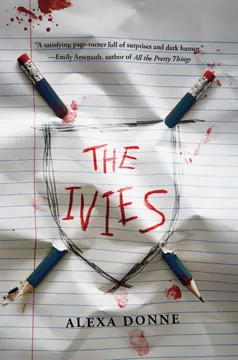
At Claflin Academy, five ambitious girls call themselves the Ivies and assign each other a different Ivy League target. Avery Montfort keeps a private list of classmates whose grades, leadership roles, and reputations can be quietly damaged to improve the girls’ odds.
Olivia Winters, a scholarship student who wants to become a journalist, accepts the group’s rules because their protection makes Claflin easier to survive. The arrangement turns friendship into a competition with a common enemy: everyone else.
The prologue makes the girls’ name both an aspiration and a disguise. Their club borrows the prestige of universities while operating like a small political machine, converting classmates into obstacles and friendship into a pact of mutual advantage. Olivia’s scholarship status sharpens the bargain: belonging gives her access to a world she could not otherwise enter, but it also asks her to adopt its methods. Her retrospective voice knows the group is cruel, yet still measures its success by the doors it opens. That tension frames the novel’s central question: when survival requires complicity, where does loyalty end and self-deception begin?
A Secret Harvard Application
On Claflin’s early-decision day, Olivia hides that she applied to Harvard rather than Penn, the university Avery assigned her. Penn’s binding offer would force Olivia to accept before she knew whether she could afford it; Harvard’s nonbinding early action gives her room to compare aid.
She has spent years telling herself that Penn is a practical compromise, although Harvard has been her ambition since childhood. The day also exposes the group’s brittle hierarchy: Margot already has a Princeton offer, while Tyler needles Avery about her legacy advantage.
When Harvard’s decisions arrive, Sierra celebrates Yale, but Avery learns she has been rejected. Olivia opens her own message later and discovers she has been accepted, leaving her with a dream she cannot safely share.
Olivia’s choice is both rebellion and insurance. The same financial precarity that makes Harvard’s uncertain aid dangerous also makes a binding Penn commitment unacceptable, so her deception is grounded in material need rather than simple vanity. Yet she has absorbed Avery’s system deeply enough to hide the application instead of challenging the rule openly. Avery’s rejection destabilizes the group’s central myth: legacy, wealth, and disciplined manipulation cannot guarantee admission. Olivia’s acceptance therefore brings little uncomplicated joy. It makes her newly successful and newly vulnerable, because the achievement violates the hierarchy that has granted her belonging.
The Party Erupts
At the school’s acceptance party, Olivia searches for another Harvard admit to explain Avery’s rejection. She learns Rebecca Ito applied to Stanford instead, while Emma Russo, Olivia’s roommate and Avery’s childhood friend, admits she got into Harvard too.
Emma changed her plan after deciding Brown did not fit her growing commitment to robotics, and she insists she will tell Avery herself. Olivia urges her to wait, knowing Avery is raw from rejection, but Emma refuses to hide. When Avery hears the news, she attacks Emma in front of the party.
Tyler and Olivia pull them apart, and Emma accuses Avery of never being happy for her. Avery throws a drink that drenches Olivia, then leaves with Margot. Emma storms away with Tyler, while Olivia escapes alone, concealing her own acceptance.
The fight converts a private admissions imbalance into public humiliation. Emma treats honesty as an uncomplicated virtue, but her timing ignores how much of Avery’s identity is built around being the inevitable Harvard choice. Olivia sees the danger and still cannot disclose her own news, a sign that her caution has become reflexive self-erasure. The violence also breaks the group’s carefully managed appearance of control: their rivalry is no longer an invisible campaign against classmates but a spectacle everyone can record. Olivia’s wet, exposed humiliation foreshadows how easily the group’s conflicts will become public evidence.
A Body in the Boathouse
Olivia wakes after a disturbing dream to find Emma’s bed empty, the dorm door ajar, and Emma’s party sweater left behind. A muddy footprint and a diamond earring beneath the dorm’s unmonitored study-room window convince her that Emma came back and went out again.
Olivia searches the campus but turns toward Tyler’s dorm rather than the boathouse, then returns without finding anyone. At morning crew practice, she and Sierra discover Emma facedown in the rowing tank. Police identify the body, and Detective Cataldo begins a homicide investigation.
Avery arrives devastated, but her first private reflection is that Harvard might reconsider her now that Emma is gone. That remark plants a frightening possibility in Olivia’s mind: Avery may have killed the friend who took her place.
Olivia’s missed chance to search the boathouse becomes a source of guilt, but the novel does not treat intuition as proof. Her nighttime walk gives her fragments, a sweater, an earring, an open door, that she cannot yet assemble. The discovery turns those fragments into a murder investigation and makes her both witness and potential suspect. Avery’s comment about Harvard sounds monstrous in the immediate aftermath, yet it also shows how completely admissions pressure has colonized her emotional vocabulary. Grief and ambition occupy the same breath, making Olivia’s suspicion psychologically understandable even when it remains unverified.
The Friends Fix Their Story
As Claflin cancels classes and Detective Cataldo interviews students, the remaining Ivies assemble in a bathroom to construct a shared account of Emma’s last night. They agree on the party times and minimize Avery’s threats during the fight.
Olivia objects that they should tell the truth, while Avery insists the group has nothing to fear and orders Olivia to report what the detective asks. Cataldo questions Olivia about the fight, the school’s admissions quotas, and her own movements; Olivia admits Avery threatened Emma but explains that she was away from the boathouse.
Ethan Kendall, Olivia’s co-editor at the student paper, tells her other students suspect the Ivies and offers to help investigate. Olivia accepts, partly because her friends are withholding information and partly because the police are watching her too.
The bathroom meeting is the point at which the Ivies’ loyalty becomes active obstruction. Their instinct is not to clarify what happened but to control what can be known, and Olivia’s refusal to follow that instinct begins her separation from the group. Cataldo’s methodical questions create a counter-authority to Avery’s social command, though Olivia is not yet sure which authority deserves trust. Ethan offers a different kind of partnership: inquiry rather than obedience. Olivia’s decision to work with him is therefore both an investigative choice and a first attempt to imagine a self outside Avery’s permission.
The Cost of Their Games
Olivia approaches classmates for details about Emma’s final hours and discovers that the Ivies’ private tactics have caused real damage. Rebecca explains that Margot undermined her relationship and Model UN prospects; Autumn says Sierra secretly added weight-gain powder to her rowing shakes, costing her a recruitment opportunity and forcing expensive retraining.
Autumn also believes Emma gave Jason Wang laxatives before the ACT, pushing him to change his college plans. She reveals that Avery pressured former Ledger editor Stina Perez by threatening to expose her sexuality to conservative parents, securing Stina’s recommendation for Olivia as editor.
Olivia had believed the group’s methods were limited to rumors and class schedules. Instead, she sees that people she considered collateral competitors suffered lasting consequences, often without knowing who had engineered them.
These revelations change Olivia’s moral position before they clarify the murder. She is not simply a comparatively innocent outsider among worse friends; she has benefited from the same system and helped it operate, even when she did not know every tactic. The harm is concrete: lost recruitment chances, damaged relationships, and a threatened student’s financial security. The episode also exposes how plausible deniability protects the perpetrators psychologically. Because each act can be framed as ordinary competition, the girls can avoid seeing the accumulated costs. Olivia’s investigative curiosity begins to resemble accountability, but she has not yet decided what she is willing to sacrifice for it.
Emma’s Hidden Phone
Remembering Emma once offered her an old iPhone, Olivia suspects the discarded device may still be in their room. She finds a lavender-cased phone hidden inside a Wheat Thins box, charges it, and unlocks it with the year Marie Antoinette died. Its messages reveal a secret lover saved as Beau, who arranged a meeting at two in the morning at their usual location.
Emma had returned to the dorm after the party, but the messages suggest she left again for a rendezvous. Olivia and Ethan trace the phone’s codes to a hidden lounge behind the boys’ boathouse locker room, a place Emma and the other Ivies had kept from Olivia. Searching there, they find Avery’s burned Harvard sweatshirt, evidence that she was present after the party.
The phone turns Olivia’s attention from the obvious conflict between Avery and Emma toward the concealed relationships beneath it. Emma’s life proves less legible than Olivia assumed, and the discovery wounds her as a roommate as much as it informs her as an investigator. The secret room deepens that exclusion: the Ivies did not merely fail to confide in Olivia; they built a private social world beside the one she thought they shared. Avery’s scorched sweatshirt is materially suggestive but not conclusive. The novel keeps evidence unstable, forcing Olivia to distinguish what an object proves from what fear wants it to prove.
Kaila’s Expulsion Story
Olivia and Ethan travel to Northampton to meet Kaila Montgomery, a former Claflin student now attending Wheatford. Kaila says Emma engineered her expulsion after their friendship collapsed.
She suspects Emma copied her SIM card, used a duplicate phone to place a false bomb threat, and secretly dosed her drinks with Adderall until she seemed unstable to school officials. Emma had lived with Kaila, making access to her belongings easy. Kaila has since completed a therapeutic wilderness program and no longer wants revenge, but she urges Olivia to protect herself from the Ivies.
Her account gives Olivia a concrete example of Emma using intimacy as access, yet Kaila has an alibi for the murder. The visit leaves Olivia with a more complicated question than who hated Emma: who knew how to exploit her secrets?
Kaila complicates the comforting distinction between victim and perpetrator. She describes genuine harm, yet her new composure suggests she has worked to make a life beyond the injury rather than let it dictate every choice. Her account recasts Emma as capable of elaborate manipulation, but it cannot establish that Emma’s past conduct caused her death. Olivia is drawn to Kaila because the former outsider recognizes the cost of Claflin’s social machinery. Their meeting also warns Olivia that proximity creates opportunity: a roommate can access a phone, a drink, or a private routine without appearing suspicious.
The Admissions Ledger
After locating a duplicate key among Emma’s belongings, Olivia uses her office access to enter the school’s locked technology room and open Emma’s laptop. A restored computer backup reveals a private group chat among Avery, Margot, Sierra, and Emma, confirming Olivia was deliberately excluded.
In Emma’s drive, Olivia finds a spreadsheet tracking clients, payments, test dates, and scores for a lucrative SAT and ACT cheating scheme. Avery and Margot appear among the names; Sierra does not. The ledger suggests Emma used Olivia’s access to the student-ID printer and may have befriended her partly for that reason.
When the school paper publishes Olivia’s Harvard acceptance, Avery confronts her in the dining hall. Olivia fires back with the group’s secrets, and Ethan’s involvement in printing the news leaves their trust fractured.
The spreadsheet is the novel’s sharpest collision between institutional privilege and individual fraud. Emma’s scheme borrows the legitimacy of Claflin’s own advantages, then sells it to students who want measurable proof of merit. Olivia’s discovery also turns her everyday job into a compromised tool: the key and printer that helped her earn spending money may have enabled the operation. Her public confrontation with Avery is emotionally necessary but strategically costly. By revealing what she has learned in front of classmates, Olivia stops performing the agreeable friend and exposes herself to the consequences of disclosure.
Beau Answers at the Memorial
At Emma’s candlelight memorial, Olivia sends a teasing message from the hidden phone, expecting to identify Beau by his reaction. During the silence, college counselor Joe Tipton checks his own phone with the stricken look of someone hearing from the dead.
Olivia recognizes him as Emma’s secret lover and moves to alert Cataldo. Before she can reach the detective, Tipton attacks her behind Bay Hall and takes Emma’s phone. Cataldo intervenes, and Avery helps Olivia reach medical care.
Tipton is arrested for assault, but later evidence leaves the murder case uncertain: Emma’s affair is difficult to prove, and someone has sent Tipton messages falsely claiming to have a sex tape and demanding a confession. The first apparent solution begins to look like another planted story.
The memorial reverses the purpose of public mourning: Olivia uses its silence as a surveillance tool, while Tipton’s reaction exposes a secret he had kept hidden in plain sight. His attack transforms a clue into immediate danger and confirms that Emma’s phone matters to someone beyond the police. Yet the arrest does not settle the murder. The anonymous threats and missing digital evidence prevent the emotional satisfaction of a neat culprit. The episode shows how evidence can implicate someone without explaining the whole crime, and how a true discovery can still be surrounded by false ones.
The Other Harvard Admit
At the FBI office over New Year’s, Cataldo tells Olivia that Tipton’s affair is real but the murder case remains circumstantial. She also shows Olivia blackmail messages Tipton received, which Olivia did not write.
At Avery’s party that evening, Ethan admits he became Emma’s replacement test-taker for boys, earned a cut of the fees, and secretly gained admission to Harvard. His hidden role explains why he had steered Olivia toward certain clues, while his decision to publish her acceptance had protected his own secret.
Olivia learns that Ethan’s ambition is as compromised as hers and ends their fragile romance. Alone in Tyler’s room, she finds his digital murder board, which lists himself, Avery, Tipton, and Olivia as suspects. Tyler has been investigating too, and the file makes his interest newly alarming.
Ethan’s confession destroys the safe category Olivia had assigned him: the principled outsider who could help her see clearly. He is intelligent and caring, but he has also profited from the scheme and manipulated information to protect himself. Their relationship fails not because attraction was false, but because trust cannot survive a ledger of concealed motives. Tyler’s murder board then complicates the image of the bereaved boyfriend. Investigation can be an act of grief, but it can also be an instrument for directing suspicion. Olivia has to keep reading people who may be both sincere and dangerous.
Tyler’s Essay Plan
Olivia discovers that Avery and Tyler once hooked up before their parents married, then learns from Margot that Avery knew Emma was involved with Tipton. When Olivia confronts Avery, Avery warns her to stop digging; Olivia recognizes the anonymous threats as Avery’s attempt to frighten her.
Outside, Tyler meets Olivia with a gun and accuses her of destroying his future by exposing Emma’s test scheme. Avery initially appears to side with him, then strikes Tyler’s gun hand with a cast-iron skillet and tells Olivia to retrieve the weapon.
Tyler confesses that he killed Emma after Cornell rejected him, believing she had taken his robotics leadership and the story he deserved. He wanted her death to furnish a powerful grief essay. Avery had called the police, and Olivia helps disarm Tyler before they arrive.
Tyler’s motive is not merely envy but a belief that achievement is something owed to him and withheld by a biased system. He converts genuine competition into a personal grievance, then treats murder as an application strategy. The essay motive makes his violence grotesquely ordinary: he imagines a death as material to edit, polish, and submit. Avery’s apparent betrayal of Olivia is a tactical performance, but the danger is real because Olivia cannot know that in advance. Her survival depends on action rather than a sudden moral conversion: she stays alert, questions Tyler, and seizes the gun when the opening appears.
Claflin Chooses Its Scapegoat
After Tyler’s arrest, his family hires a powerful defense team that smears Emma and turns the SAT scheme into a public scandal. Claflin traces the fake-ID activity to Olivia’s office login and bars her from returning, although it avoids recording a formal expulsion.
Harvard rescinds her acceptance, and her regular-decision applications end in rejection. A national article and documentary reduce her to the scholarship roommate who found Emma, while Tyler’s trial remains unresolved. Sierra testifies that Olivia was harmless to the group’s ambitions; Ethan, now in a Harvard sweatshirt, asks forgiveness, but Olivia refuses to restore their romance.
Avery later admits she failed Olivia and promises to tell the truth. Then Olivia receives a full scholarship offer from Smith through Kaila’s help. In a final filmed interview, she smiles for the camera and conceals how little she trusts the system.
The resolution refuses the fantasy that identifying a killer repairs the institution that helped produce the conditions around the crime. Tyler faces trial, but wealth shapes the public story, Claflin protects its reputation, and Olivia absorbs the cost of the scheme she exposed. Her Smith acceptance is a genuine opening, secured through Kaila’s intervention rather than the prestige network that failed her. Yet the final interview shows that survival has not purified Olivia. She still wants entry, recognition, and the life that elite institutions promise. Her closing performance suggests not simple cynicism but an unresolved strategy: she has learned how to read the game without believing its claims of fairness.
Analysis
The novel’s central institution is not simply the Ivy League but the imagined admissions marketplace surrounding it. Claflin’s students treat acceptance as scarce, quantifiable, and morally self-justifying, even when the quota system they fear is informal and uncertain. That belief makes sabotage seem like prudent risk management. The Ivies’ conduct is especially revealing because their methods are not separate from the school’s ordinary advantages: wealthy parents buy expertise and access, while the girls turn friendship, technology, and institutional blind spots into private leverage.
Olivia’s scholarship status gives the story its most unstable moral perspective. She recognizes that money determines which choices are safe, but she also wants the status and professional future the same system promises. Her complicity is real, yet never identical to the privilege of Avery or Margot. The distinction matters: the novel does not equate unequal starting positions, even as it refuses to let Olivia claim innocence merely because she has less. Her investigation becomes an ethical test because disclosure can expose wrongdoing while also destroying her own prospects.
The murder plot mirrors the admissions process through evidence that is partial, curated, and strategically presented. A phone, a sweater, an earring, a missing camera feed, and a digital suspect board each invite interpretation before they establish truth. Olivia’s strength is her ability to connect details; her danger is that fear and resentment can turn a plausible theory into certainty. The repeated reversals make investigation resemble the application game itself: everyone edits a story for an audience, and the most powerful people can make their version carry farther.
The ending denies simple catharsis. Tyler is exposed, but his family’s resources shape the trial, Claflin protects itself by casting Olivia out, and her acceptance is rescinded despite her innocence in the cheating scheme. Smith offers a new beginning through Kaila’s help, yet Olivia’s final performance for the documentary shows that she still desires entry into the system she distrusts. The book’s sharpest insight is that ambition can be both a route out of constraint and the mechanism by which constraint reproduces itself.
Review Summary
The Ivies is a thrilling YA novel set in an elite boarding school, following a group of ambitious girls competing for Ivy League admissions. Reviews praise its fast-paced plot, engaging characters, and twisty mystery. Many readers enjoyed the exploration of privilege, competition, and dark academia themes. Some found it predictable or lacking character development, while others appreciated its commentary on college admissions. The book polarized readers, with ratings ranging from 1 to 5 stars. Overall, it's described as an addictive, dramatic read reminiscent of Pretty Little Liars and Mean Girls.
Characters
Olivia Winters
Scholarship-born strategistOlivia is a scholarship rower and student journalist at Claflin, where she is acutely aware of the money and social fluency she lacks. Her drive toward Harvard and a journalism career is inseparable from her wish to prove she belongs among students whose advantages are inherited. She is observant, resourceful, and capable of manipulation, but often mistakes compliance for friendship because the Ivies offer protection as well as status. Her first-person account combines sharp judgment with self-suspicion: she can recognize cruelty in others while minimizing her own part in it. Olivia’s deepest conflict is not ambition versus goodness, but whether she can pursue opportunity without surrendering her judgment or becoming another person’s useful instrument.
Avery Montfort
Commanding legacy heiressAvery is the Ivies’ organizer, a polished Harvard legacy raised amid vast wealth and exacting expectations. She manages people through rules, favors, and the ability to anticipate what will unsettle them. Her confidence can look effortless, but her identity is closely bound to achievement and to her mother’s approval. Avery’s relationship with Emma is intimate and competitive, while her bond with Olivia mixes genuine affection with a need to control the terms of belonging. She is capable of cruelty and of vulnerability, often within the same conversation. Her character resists an easy division between villain and friend: the social power she wields is real, but so are the insecurity and loneliness concealed beneath its practiced authority.
Ethan Kendall
Gentle rival journalistEthan is Olivia’s co-editor at the Claflin Ledger, a thoughtful student with a patient manner and a genuine interest in reporting. His distance from the Ivies’ social hierarchy makes him seem like a refuge to Olivia, and their shared investigation draws out her humor and tenderness. He is ambitious too, however, and his instinct to turn a crisis into a story complicates the trust they build. Ethan’s courtesy is neither a sham nor a guarantee of integrity; he can care about Olivia while withholding consequential truths. Their connection exposes how easily attraction can become a substitute for evidence, and how affection does not remove the need to ask what someone stands to gain.
Emma Russo
Charming social operatorEmma is a talented, well-connected member of the Ivies whose warmth makes her easy to like and whose confidence helps her move among Claflin’s many social circles. She is Avery’s longtime friend, Olivia’s roommate, and a student involved in robotics, music, swimming, and theater. Emma is clever and adaptable, but she can also be self-centered, and she does not always grasp the damage her choices cause others. Her friendships are shaped by the group’s rules and by a strong appetite for independence. To Olivia, Emma initially represents the fun, openhearted side of elite school life; the closer Olivia looks, the more she must question how much of that image she ever truly knew.
Sierra Watson
Code-savvy Yale contenderSierra is a Black student, accomplished rower, and president of Claflin’s Girls Who Code chapter. Her technical skill gives the Ivies practical leverage, while her academic record and political awareness make her more than a quiet member of Avery’s circle. Sierra understands the racial assumptions that shape how classmates interpret college admissions, and she resents being treated as though her achievements require no effort. She is often the group’s most controlled presence, but that composure can also become a way of avoiding conflict. Her friendship with Olivia includes shared athletic routines and moments of solidarity, though its limits become clearer when loyalty to the group collides with honesty.
Margot Kim
Immaculate stage tacticianMargot is Claflin’s standout actress, a Korean American student with the poise to charm teachers and classmates while keeping her own motives private. She is socially perceptive, materially sheltered, and skilled at presenting a carefully composed version of herself. Her friendship with Avery is close, but her relationship with Olivia remains guarded; Margot can offer concern and turn sharply dismissive moments later. Theater is not only an activity for her but a useful model of how she navigates school, shifting expression to suit the audience. Her ambition and talent make her a powerful participant in the Ivies’ social system, while her controlled exterior leaves others guessing about what she actually feels.
Tyler St. Clair
Golden-boy engineerTyler is Avery’s stepbrother and Emma’s boyfriend, a handsome, socially assured student headed toward an engineering future. He is comfortable around wealth and accustomed to having his confidence rewarded. His relationship with Emma places him close to the Ivies’ rivalries, while his family connection to Avery adds another layer of competition and resentment. Tyler can perform charm and vulnerability with ease, making it difficult for classmates to know when he is sincere. Beneath his polished manner is a powerful investment in being recognized as exceptional. He interprets school leadership and admissions outcomes as measures of personal worth, which shapes his interactions with the students around him.
Detective Maureen Cataldo
Persistent homicide investigatorCataldo leads the investigation into Emma’s death, pressing students for timelines while navigating Claflin’s lawyers, administrators, and wealthy parents. She is methodical, skeptical, and attentive to what witnesses omit as well as what they say. Her questions can feel maternal one moment and strategically unsettling the next, particularly to Olivia, who is both a witness and a possible suspect. Cataldo recognizes that institutional access and social influence shape the evidence available to her. She does not accept Olivia’s theories automatically, but she continues to listen when Olivia uncovers new information.
Joe Tipton
Inexperienced college counselorTipton is Claflin’s young college counselor, newly arrived and unfamiliar with the school’s unwritten admissions customs. His casual manner makes him seem approachable to students, while his inexperience disrupts the carefully controlled process Avery expects. Tipton occupies an adult role in a world where students often manage their own ambitions, and that imbalance gives his choices particular weight. He is also eager to prove his competence, a desire that makes him vulnerable to flattery and bad judgment.
Kaila Montgomery
Rebuilt former insiderKaila is a former Claflin student and Emma’s onetime roommate, now attending Wheatford after time in a therapeutic wilderness program. At Claflin she was stylish, socially connected, and volatile under pressure; when Olivia meets her again, she is more self-aware and less interested in performing for other people. Kaila carries a complicated history with the Ivies and understands how quickly a school can turn a student’s distress into evidence against them. Her willingness to speak comes with caution, not easy forgiveness.
Rebecca Ito
Rival with receiptsRebecca is a high-achieving Claflin student and one of the Ivies’ most persistent competitors. She has watched the group’s tactics closely and is willing to tell Olivia what other classmates suspect, though she does not pretend to be neutral or forgiving. Her sharpness is a defense against a social order that repeatedly treated her as a target. Rebecca’s blunt account helps Olivia recognize patterns that seemed like isolated bad luck.
Autumn Hollander
Rower who paid dearlyAutumn is a crew athlete whose college prospects depend in part on earning a place on the varsity team. She is wary of Olivia and openly angry about the damage she believes the Ivies caused her. Her account is practical rather than theatrical: she describes the training, money, and lost opportunity required to recover from being pushed out. Autumn makes visible the real-world cost behind the group’s supposedly minor maneuvers.
Olivia’s mother
Grounded single parentOlivia’s mother is an elementary-school teacher and the first in her family to attend college. She encourages her daughter to aim high while insisting that ambition needs a practical plan, especially where tuition and debt are concerned. Her concern can feel limiting to Olivia, who wants her mother to celebrate achievement before calculating its cost, but she understands financial risk better than Olivia’s wealthy friends do. She offers a life beyond Claflin’s prestige economy.
Katherine Montfort
Demanding family benefactorKatherine is Avery’s wealthy mother, a Harvard legacy and influential donor whose expectations govern much of her daughter’s life. She treats school outcomes as matters that can be negotiated through access, advocacy, and money. Her relationship with Avery contains material support but little ease, leaving Avery to seek approval through achievement. Katherine’s power also shows how Claflin’s meritocratic language coexists with advantages available only to families like hers.
Carmen Fitzgerald
Reputation-minded headmistressClaflin’s headmistress manages the school’s public image and its powerful families. She presents student welfare as a priority, but often treats police access and public scrutiny as institutional risks to control. Her polished authority reflects the academy’s preference for order, especially when disorder threatens its reputation.
Paul
Night-shift security guardPaul patrols Claflin’s campus overnight and monitors its security cameras. He is friendly with Olivia and feels responsible when the camera system fails during the crucial hours. His position gives him access to information and infrastructure that students rarely consider, making him a useful witness in a campus where surveillance is supposed to guarantee safety.
Seth Feldstein
Resentful student witnessSeth is a Claflin student who resents the Ivies and their influence over school opportunities. He has a blunt manner and a strong sense that the group has harmed classmates while hiding behind plausible deniability. His party posts provide Olivia with a visual record of who moved through the gathering.
Stina Perez
Former Ledger editorStina is the outgoing editor of the Claflin Ledger whose recommendation helps determine Olivia’s editorial future. Her personal life intersects with Avery’s influence, illustrating how vulnerable students can be when school opportunities depend on another student’s approval.
Plot Devices
The Ivies’ List
Maps the competitionAvery’s private record tracks classmates’ grades, activities, college plans, and vulnerabilities. The group uses it to decide whom to undermine and which opportunities to protect for themselves. It turns an abstract fear of admissions competition into a concrete operating plan, while letting the girls treat classmates as entries rather than people. As Olivia uncovers more of the group’s history, the List becomes a record of what she knew, what she helped do, and what her friends concealed from her.
The Admissions Quota
Makes friends competitorsThe students believe Claflin can send only a few applicants to each elite university, even though the supposed quota is informal and uncertain. Avery’s one-school-per-girl rule presents the arrangement as a way to protect the group, but it also gives her control over everyone’s ambitions. The belief fuels Olivia’s secrecy, Avery’s panic after rejection, and the assumption that one student’s acceptance must have been stolen from another. It exposes how an unverified rule can still govern behavior once a competitive community treats it as fact.
The Hidden Phone
Unlocks Emma’s private lifeEmma’s old lavender-cased iPhone, hidden in a food box, holds messages that are absent from her everyday device. Olivia unlocks it using a date tied to Emma’s interest in French history, then follows its clues toward a secret meeting place and a concealed relationship. The phone broadens the suspect pool and proves that Emma had a life her roommate did not see. Its journey also becomes evidence that can be planted or manipulated, so the device serves as both a source of discovery and a trap.
The Camera Blind Spots
Erases the night’s routeClaflin’s security system fails along the route linking Bay Hall, Whitley, and the boathouse. The blind spots prevent investigators from establishing who moved across campus during the hours Emma died, while the dorm’s unmonitored study-room window offers another way in and out. Olivia’s own late-night walk appears on surviving footage, making her presence suspicious without proving what she did. The cameras transform a supposedly secure campus into a place where every route can be argued over and every missing image can support competing stories.
The Admissions Essay
Turns grief into currencyThe essay is the final high-stakes performance students believe can distinguish them when grades and activities are not enough. Olivia sees it as a chance to tell a personal story and earn opportunity; Tyler sees another person’s death as material for a compelling application. The contrast exposes the ethical boundary between shaping one’s experience and exploiting someone else’s. Throughout the book, students also use applications to measure status, so the essay becomes both a practical admissions tool and a distorted test of what each character believes is worth sacrificing.
Download PDF
Download EPUB
.epub digital book format is ideal for reading ebooks on phones, tablets, and e-readers.








