

Plot Summary
Prologue
On a sweltering August afternoon, thirteen-year-old Hannah Clarke and her friend Jane argue with younger boys over a football and a stolen sandal. Their teasing ends when a boy’s body crashes onto the steps beside them, crushing the metal railing.
Hannah recognizes her cousin Will beneath the wreckage. The scene leaves the girls with a death they cannot explain and introduces the question that will later pull an undercover investigation toward Palm Hill.
The opening binds the book’s later crime plot to a child’s immediate, physical memory: the damaged railing, the fall, and Hannah’s helplessness. What looks like a tragic accident becomes a lasting disturbance, not because Hannah understands its causes, but because she does not. That gap between witnessing an event and knowing what happened becomes central to the investigation. The scene also makes the story’s violence intimate. Before the adults begin talking about evidence, money, and procedure, the reader sees the human cost through the eyes of two girls who will carry the image with them.
The Trinity Infiltration
In June 2005, CHERUB sends thirteen-year-old James Adams to Trinity Day School with fellow agent Shakeel Dajani, called Shak, to investigate economics teacher George Stein’s suspected links to the environmental group Help Earth.
Wearing borrowed uniforms, they slip through a cut in the perimeter fence and break into Stein’s office during a lesson change. James copies the computer’s files and installs spyware, while Shak searches documents and makes impressions of Stein’s keys. Together they hide a listening device in the office light and another in Stein’s car.
Their surveillance work succeeds, but James’s impatience helps trigger an alarm when they try an exit door. The boys flee separately across the school grounds, leaving their cover intact but their escape painfully conspicuous.
The operation establishes CHERUB’s central contradiction: children can pass unnoticed precisely because adults underestimate them, yet their youth also makes impulse a persistent operational risk. James’s technical competence sits beside his impatience, so the mission succeeds through preparation but nearly falters through a casual decision. The planted devices convert an ordinary school office and car into sources of intelligence, making surveillance feel both ingenious and invasive. The episode also sets up the book’s larger pattern: information gathered quietly can expose wrongdoing, but agents must manage the human unpredictability that no plan can fully contain.
Eggs Under Fire
Back on campus, James is assigned to lead a night-long urban combat exercise with his sister Lauren, ten-year-old trainee Jake Parker, Bethany Parker, and Dana Smith, an older agent resentful of his rank. Dana persuades the frightened Jake to take part, then argues with Lauren over James’s plan.
Once the teams enter the mock town, James splits his people up to search for equipment. Opponents shoot him with painful simulated ammunition, and he retreats while Dana and Jake become separated from Lauren and Bethany.
At night, James uses recovered goggles to ambush Kerry Chang and Gabrielle O’Brien, but Kerry overpowers him and smashes his remaining egg. He wakes alone and injured. At the final count, Mr Large disqualifies Lauren’s eggs on a technicality, provoking James, Dana, and others to challenge his bullying.
The exercise exposes leadership as more than issuing a plan: James’s choices affect frightened teammates, and his first response to danger is escape rather than coordination. Dana’s rough encouragement helps Jake discover that he can function under pressure, while her conflict with Lauren reveals how rank can aggravate old insecurities. The painful ammunition makes the training deliberately bodily, stripping away the safe distance of a game. Mr Large’s arbitrary ruling then shifts the lesson from combat to institutional power. The trainees are asked to obey rules, yet the instructor bends them to punish a child he dislikes, forcing James to decide when defiance is more responsible than compliance.
One Punch Too Far
After the exercise, James’s girlfriend Kerry ends their relationship, and his embarrassment turns into violence when he strikes eleven-year-old Andy Lagan in the corridor. Andy has survived a traumatic childhood and is still recovering from it, so James’s friends refuse to excuse the attack.
His handler, Meryl Spencer, suspends him from missions, cancels his summer holiday, assigns months of cleaning, and requires anger-management sessions and a written apology. Lauren confronts him with a history of earlier outbursts and warns that she will cut ties if he lashes out again.
Isolated on campus, James recognizes that his temper repeatedly damages the relationships he wants to protect. A chance conversation with mission controller Zara Asker brings him an assignment that will remove him from campus and his punishment routine.
James’s punishment is not simply a consequence for one assault; it makes a recurring behavior visible to him. He has treated anger as a brief loss of control, while Lauren reframes it as a pattern with a history and foreseeable costs. Andy’s vulnerability sharpens the moral imbalance between the two boys and prevents James from reducing the incident to a harmless scuffle. Yet isolation alone cannot repair him. The mission offer provides relief, but also a test: James can leave the place where he caused harm without having changed, or he can begin taking responsibility for what his impulses do to others.
Palm Hill’s New Brothers
CHERUB sends James and seventeen-year-old agent Dave Moss to Palm Hill, posing as brothers recently released from care. They move into a shabby flat beside the Tarasov family, whose patriarch, Leon, is a local businessman suspected of unexplained new wealth.
James meets neighbour Hannah Clarke, who lets him into the building, then joins her, her friend Jane, and Leon’s daughter Liza at a gathering near the reservoir. He also befriends Leon’s son Max through their shared support of Arsenal.
When older boys from the neighbouring estate demand the group’s beer, James first tries to give them some, then breaks one boy’s arm when the intimidation continues. Police arrest James and the others. Sergeant Michael Patel strikes James’s head while putting him into the car, a detail that later strains the mission team’s trust.
The cover story gives James a precarious kind of freedom: he can form friendships, but he must keep his history and loyalties hidden. Palm Hill’s cramped, neighbourly life draws him in through ordinary exchanges, especially Hannah’s welcome and Max’s easy camaraderie. The fight shows how quickly his training and temper can combine. James initially tries to avoid violence, yet once he judges retreat futile, he uses a devastating technique and feels the horror of what his body can do. Patel’s assault adds a second danger, one carried not by a street bully but by an officer whose authority makes his conduct difficult to challenge.
Leon Offers Easy Money
After James is released because the injured boys refuse to give statements, Leon offers Dave and James paid work stealing cars from houses whose owners are on holiday. He presents the scheme as a quick way out of poverty, but Dave accepts only after negotiating a better fee.
On their first job, the agents break into a house to steal a Porsche Cayenne. An elderly resident confronts them, the alarm sounds, and the escape becomes a dangerous scramble past her husband, who throws a garden fork at the car.
Dave decides he will not steal another vehicle. Leon instead gives him a legitimate trial job at the car lot, where Dave can get close to the business. Meanwhile, Hannah tells James that Will was a troubled computer enthusiast who fell from their block’s roof.
Leon’s offer works because it addresses a real vulnerability in the brothers’ cover: they need money, furniture, and a plausible place in the neighbourhood. Dave’s willingness to bargain makes him useful to Leon, but the first theft exposes the gap between a controlled criminal plan and the danger imposed on actual residents. The frightened older couple transform the job from an exciting test into an encounter with people who could be hurt. Dave’s withdrawal is both practical and ethical. The legitimate position at the car lot gives the investigation better access, showing that refusing one form of complicity can still preserve a route toward the truth.
Will’s Hidden Disk
Hannah gives James furniture and an old computer that belonged to Will. When the computer overheats, James and Dave open it and find cannabis, cash, and a hidden CD containing an old casino accounting program.
The files identify London’s Golden Sun Casino and include passwords that point toward people with access to its systems. James compares the dates with police information about a major robbery and realizes the disk may explain Leon’s sudden wealth. CHERUB’s investigation expands beyond car crime.
Mission controller John Jones connects the casino records to Leon, police officer Michael Patel, Patel’s wife Patricia, and former officer Eric Crisp. The timing of their debts and later spending suggests the robbery enriched several people, while Will may have helped them use the stolen data.
The computer turns Will’s private belongings into a bridge between a neighbourhood tragedy and a coordinated crime. Its hidden contents carry two opposing meanings: they preserve evidence, but they also suggest that their owner feared what possession of it might mean. James’s ability to recognize the significance of an obscure program shows how his intelligence can redirect an investigation before adults have assembled the full picture. The discovery also changes the moral scale of the mission. Leon is no longer merely a prosperous local crook; the inquiry now touches police corruption and the possibility that Will was entangled in something far more dangerous than his family understood.
Evidence Behind the Roof
Millie Kentner initially doubts James’s account of Patel’s assault, believing her trusted deputy could not have struck a detainee. She changes her view after finding earlier complaints that describe similar conduct. At the same time, James and Dave examine Will’s death records.
James notices that Patel touched Will’s badly injured body, behavior that could have supplied an innocent explanation for forensic traces if Patel had been involved in a struggle. The team also learns that Will had recently earned money repairing Leon’s computers.
When CHERUB agents Lauren and Kerry search the Patels’ house, they copy financial records showing serious debts, but find little useful data on the family computer. A missing set of witness statements becomes significant when Jane recalls boys who saw the fall and says they had spoken to police.
This stage turns suspicion into a chain of questions rather than a single revelation. Millie’s willingness to revisit her judgment matters because professional loyalty has made her discount the experience of a younger agent. The missing statements expose a procedural wound: evidence can disappear not only through sophisticated sabotage, but through the ordinary authority of someone trusted to record it. James’s theory about Patel’s contact with Will’s body is plausible, not proof, and the distinction keeps the investigation intellectually honest. Across these clues, the story shows how institutions depend on records and testimony, while corruption can exploit the very routines meant to make truth verifiable.
The False Car Trap
John Jones builds a sting around the pair’s existing hostility. CHERUB secretly replaces the Patels’ BMW with an exact duplicate, then disables the copy and has John pose as an Auto Club mechanic. He tells Patel that the car is a dangerous cut-and-shut, making the police officer believe Leon sold him a death trap.
At the same time, the team plants microphones in the Patel home and prepares surveillance at Leon’s car lot. Patel’s wife, Patricia, urges him to demand their money back, and the couple’s recorded argument makes clear how personally they take the supposed betrayal. The plan nearly falters when the lot’s transmitter aerial is knocked loose, but Dave repairs it just before Leon arrives, restoring the audio link.
The sting succeeds by manipulating a relationship already shaped by shared secrets. A fabricated defect gives Patel a concrete grievance that overwhelms caution, while the duplicate car lets CHERUB manufacture evidence without changing the real vehicle’s safety. This is not a neutral investigative method: the agents deliberately provoke anger and exploit domestic anxiety about a child riding in a dangerous car. The technical failure at the car lot is a reminder that elaborate plans depend on fragile infrastructure and quick human repair. Dave’s intervention keeps the operation alive, but the coming confrontation will test whether engineered pressure can produce evidence strong enough to withstand legal scrutiny.
Dog Mess, Open Secrets
Before Patel can reach Leon, James confronts him outside the community centre and smears dog mess beneath the handle of Patel’s police car. Patel recognizes James and threatens him, worsening the anger that the sting is designed to kindle.
Across Palm Hill, CHERUB agent Chloe Blake poses as a vehicle inspector and tells Leon she has received a tip about his cars. Leon takes the visit as another betrayal by Patel. When Patel arrives at the lot demanding his money, he and Leon argue in front of Dave. Leon punches Patel, then drags him into the cabin.
Dave leaves the premises while the hidden microphones continue recording. Inside, Leon invokes their shared criminal history and links Patel’s loss of control to Will’s fall, while Patel denies the accusation about the car but does not challenge the murder claim.
James’s crude provocation is deliberately small, but it turns Patel’s authority against him: the officer is made to feel exposed, mocked, and unable to restore control. Chloe’s false inspection compounds the suspicion, so each man interprets the other’s actions through the lens of betrayal. The confrontation yields more than anger. Leon’s reference to Will and to a fixer who handled witness statements gives the investigation its first recorded connection between the old death and the men’s criminal partnership. Patel’s failure to deny that specific accusation is suggestive, not a confession. The scene’s ethical tension lies in how CHERUB manufactures the conditions for truth while risking that the truth will emerge through violence.
Falco’s Missing Statements
The recording of Leon’s outburst sends John and Kerry searching the old case file for the name Falco. They find Alan Falco, the retired officer who took statements after Will fell, and discover that key accounts were missing from the official record.
Millie tracks down Jane, who confirms the football-playing boys did give statements. Two of them, Kevin and Adrian, describe Patel arriving from the staircase rather than from his car; Adrian also recalls seeing a man on the roof. John and a Complaints Investigation Bureau officer confront Falco with the recording.
Falco negotiates for immunity and admits enough about his involvement to support the case. With the statements, the recording, and the financial trail assembled, Millie and the CIB arrest Patel, while officers arrest Leon.
The recovery of the boys’ testimony gives the investigation what its earlier clues lacked: independent witnesses who place Patel near the roof and challenge his account of arriving afterward. Their age does not diminish the value of their memory, although the missing statements show how easily adults can erase it from the formal record. Falco’s position is compromised, but his willingness to cooperate adds a route from suspicion to prosecutable evidence. The arrest sequence depends on collaboration between CHERUB, a disillusioned community officer, and the CIB, not on any one perfect clue. Accountability emerges here as cumulative work: testimony, recordings, documents, and institutional scrutiny reinforcing one another.
Leaving Palm Hill
After the arrests, James expects to be sent back into care because his cover as Dave’s dependent brother has collapsed. He says goodbye to Max and Liza, then ignores Hannah’s call as the mission team drives back toward campus. James is still estranged from most of his friends, but the contact list on his phone reminds him that those relationships remain possible.
He sends Kerry a message admitting that he loves her. Her reply does not promise a reunion; she says they need to talk. Back on campus, the immediate punishment and isolation begin to loosen as friends start speaking to him again. The case has ended, but James’s personal repair remains unfinished, dependent on patience rather than one dramatic apology.
The ending refuses to treat professional success as emotional resolution. James has helped expose a serious crime, yet he returns to the relationships damaged by his own behavior. His decision to ignore Hannah’s call is an act of self-protection, but it also closes a connection without explanation. The message to Kerry is more vulnerable because it offers feeling without demanding a response. Her cautious answer preserves uncertainty and gives both characters room to decide what comes next. James’s growth is therefore modest and credible: he has not mastered his temper or repaired every friendship, but he is beginning to risk honest communication instead of hiding behind bravado.
Epilogue
The investigation uncovers a wider network of corruption at Palm Hill police station. Leon pleads guilty to robbery and charges connected to covering up Will’s death, while Michael Patel is convicted of the casino robbery and Will’s murder.
Patricia receives a suspended sentence for laundering money; Eric Crisp remains missing, and Falco’s cooperation helps prosecute other corrupt officers. Millie transfers to a unit investigating police corruption. James returns to campus, where his friends gradually thaw toward him. Kerry is on better terms with him but does not agree to restart their relationship.
The epilogue widens the consequences beyond the arrests that close the main action. Corruption is shown not as one villain’s private scheme, but as a network sustained by officers who take bribes, alter evidence, or protect one another. Falco’s testimony helps justice while leaving him exposed to retaliation, and Millie’s transfer suggests that institutional repair requires people willing to move toward the problem rather than away from it. The personal ending is deliberately smaller: James regains contact with friends, but Kerry sets a boundary. Legal accountability can be imposed by courts; trust, the book insists, returns on its own slower schedule.
Analysis
The novel makes trust its practical subject. James’s work depends on entering other people’s lives under false identities, but the investigation succeeds only when people outside CHERUB are willing to trust one another with difficult evidence. James befriends Hannah and Max, while hiding the reason he came to Palm Hill; Millie trusts Patel and initially dismisses James’s report; and the old case file appears authoritative even though crucial statements have vanished. In each instance, trust is not inherently virtuous or foolish. It becomes dangerous when it is treated as a substitute for verification.
The book also distinguishes physical control from ethical control. James is trained to overpower larger opponents, but his attacks on the Grosvenor boys and Andy show that technical ability does not confer judgment. His skills can protect people, intimidate them, or injure them, depending on the decision made in the moment. The egg exercise and the mission both press him to act while tired, angry, or frightened. His most important development is not becoming more capable, but beginning to recognize that capability increases responsibility.
The child agents create a further tension between competence and vulnerability. James, Lauren, and their colleagues can hack computers, enter homes, and coordinate surveillance, yet they remain adolescents who tease, fall in love, sulk, and make reckless choices. The narrative does not treat their youth as a gimmick; it shows how their ordinary social access becomes intelligence access, and how that access can make genuine feeling difficult to separate from cover.
Finally, the resolution refuses a simple equation between exposure and repair. Leon and Patel face legal consequences, and the wider corruption investigation reaches beyond them. But Will’s death cannot be undone, Millie’s faith in her colleagues has been damaged, and James cannot instantly recover Kerry’s trust. The case can close through evidence and arrest. The relationships it disturbed require a slower kind of accountability.
Review Summary
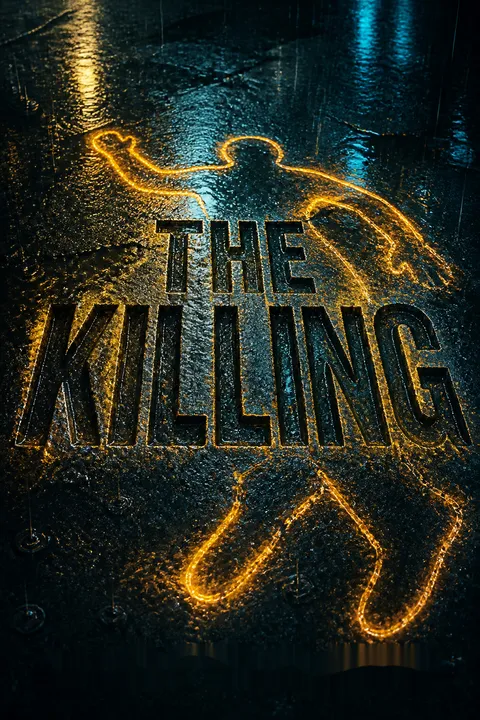
The Killing receives mostly positive reviews, with an average rating of 4.15 out of 5. Readers praise its thrilling plot, character development, and pacing. Some find it less action-packed than previous books in the series, while others consider it the best. Critics note James's flawed behavior and sexist attitudes. The book explores themes of teenage life, espionage, and complex moral dilemmas. Many readers appreciate the series' ability to engage young adults in reading, though some find the content mature for the target age group.
People Also Read
Characters
James Adams
Impulsive young field agentJames is a gifted thirteen-year-old CHERUB agent, a sharp computer operator and a capable fighter whose confidence often outruns his judgment. His mother’s death and childhood instability sit behind a habit of reacting physically when he feels hurt or cornered. He wants recognition, friendship, and the freedom to be treated as more than a child, yet his temper repeatedly threatens those wants. His bond with his younger sister Lauren is unusually candid: she can challenge him in ways his friends cannot. James is effective undercover because he can connect with ordinary teenagers, but closeness complicates his work. His central tension is learning that control is not weakness, and that courage includes facing the harm he causes.
Lauren Adams
James’s blunt younger sisterLauren is James’s ten-year-old sister and a remarkably capable CHERUB agent who has already earned a high rank. She is confident, funny, competitive, and impatient with being treated as a child, but she understands the emotional patterns beneath her brother’s bravado. Her directness can become cutting, yet it comes from a desire to make James see consequences he would rather minimize. Lauren is also a natural teammate, capable of handling dangerous assignments while remaining attentive to younger trainees. Her relationship with James combines sibling teasing with genuine moral seriousness, giving her a distinctive role as both family and witness to who he has been.
Dave Moss
James’s seasoned mission partnerDave is a seventeen-year-old CHERUB agent paired with James on the Palm Hill mission. More socially polished and composed than James, he can build trust quickly and exploit the expectations people project onto a handsome, confident young man. He is practical about risk and attentive to the cover story’s details, although he is willing to entertain Leon’s criminal offer long enough to gain access. Dave’s skills make him an effective undercover partner, while his easy manner sometimes disguises how carefully he is calculating. He treats James as a capable younger colleague rather than a child, but does not automatically take his emotional concerns seriously.
Kerry Chang
James’s formidable former girlfriendKerry is a skilled martial artist, experienced CHERUB agent, and James’s girlfriend at the beginning of the story. She is disciplined and competitive, with a directness that can become fierce when she feels ignored or taken for granted. Her standards for a relationship are practical: affection does not erase the irritation of carrying someone else’s schoolwork or constantly adjusting her plans around him. In the field, her confidence and combat skill make her a formidable opponent and partner. Kerry’s emotional independence matters as much as her physical strength; she can care about James while still refusing to let him dictate what their relationship should become.
Hannah Clarke
Neighbour carrying a hard memoryHannah is a fourteen-year-old Palm Hill resident whose humour, curiosity, and rebellious streak draw James close. She dislikes the restrictions imposed by her parents and resents their fear that she will repeat the troubled path of her cousin Will. The memory of witnessing his fall remains close, though Hannah does not always want to discuss it. She is attracted to James’s courage and easy company, but she also notices when he hides information or treats her as an obstacle. Her connection to James makes the undercover assignment emotionally complicated: she offers him genuine intimacy while he must conceal why he is in her neighbourhood.
Will Clarke
Gifted local computer tinkererWill is Hannah’s cousin, remembered as a clever and isolated young man who repaired computers and became increasingly troubled. His interest in technology gives him access to information that carries consequences beyond his own life. Hannah recalls both his humour and his loneliness, while neighbours reduce his story to drugs and bad decisions. The contrast between those accounts makes Will difficult to understand from a distance. His old computer, books, and hidden possessions preserve fragments of a life the adults around him may not have fully seen. He stands at the emotional center of the Palm Hill investigation without being present to explain himself.
Leon Tarasov
Palm Hill’s polished local crookLeon is a large, socially confident businessman whose pubs and used-car lot give him a respectable public face. He understands how to identify people’s needs and make assistance feel generous, while ensuring that his help creates obligation. Family loyalty is important to him, though he keeps criminal activity separate from the younger Tarasovs when it suits him. Leon is a practiced survivor who has spent decades close to the law without appearing vulnerable to it. His charm and bluster operate together: he can welcome newcomers with food and work, then turn threatening when his control is challenged.
Michael Patel
Respected community police officerMichael is Millie Kentner’s deputy and a police officer with a strong public reputation in the local community. He is accustomed to being trusted by colleagues and to using institutional authority in stressful situations. His home life with Patricia and their young daughter reveals ordinary pressures alongside his professional identity. The gap between the officer people see and the man James encounters makes him a source of unease for the agents. Michael’s importance lies partly in how difficult he is to suspect: a familiar face, a colleague, and a figure whose work has earned genuine respect.
Millie Kentner
Community officer turned investigatorMillie is a committed community police officer who has spent years trying to improve life around Palm Hill. Her dedication makes her effective, but it also binds her emotionally to the colleagues she supervises and trusts. When James reports Patel’s conduct, Millie initially defends him, partly because years of police work have taught her to expect false complaints. Her ability to reconsider that instinct is essential to her character. Millie wants both justice and a functioning community, goals that become difficult to separate as the investigation reaches into her own unit. She brings the procedural knowledge of an experienced officer to CHERUB’s unconventional methods.
John Jones
Strategic mission controllerJohn is an experienced former police and intelligence officer who takes charge when the Palm Hill case expands beyond its original scope. He coordinates CHERUB agents, police investigators, surveillance teams, and technical specialists. His strength is operational patience: he turns scattered clues into a plan and keeps the investigation focused when personal anger threatens to take over. John is firm with the young agents but understands that training cannot erase their age. He values evidence that can stand up in court, not merely a theory that feels convincing.
Dana Smith
Abrasive veteran traineeDana is an Australian CHERUB agent, an excellent athlete and a veteran who has not advanced beyond a grey shirt. Her tough manner and isolation make her prickly around younger agents who outrank her. During the egg exercise, she argues with Lauren and challenges James’s leadership, but she also helps frightened Jake find the nerve to participate. Dana’s contempt often masks a clear reading of danger and group dynamics. She is most useful when she stops treating every disagreement as a contest for status.
Jake Parker
Youngest trainee on Team DJake is nine, the younger brother of Bethany, and a prospective CHERUB agent receiving early preparation. He enters the night exercise frightened by the prospect of being shot with painful training ammunition. Dana’s blunt pressure helps him choose to stay, and the experience reveals that he can act under stress. Jake remains young and vulnerable, but he is not helpless. His presence forces James’s team to account for someone whose courage cannot be assumed simply because he is being trained.
Max Tarasov
James’s football-loving neighbourMax is Leon’s thirteen-year-old son and James’s first close connection among the Tarasov children. Their shared love of Arsenal gives them an easy point of contact, and Max brings James into the local routine of football, games, and hanging out. He is sometimes spoiled and quick to sulk, but he is also generous with invitations and eager for friendship. Max represents the ordinary life James is trying to enter, even as the mission requires James to treat his new friend as part of an investigation.
Sonya Tarasov
Leon’s wary teenage daughterSonya is Leon’s sixteen-year-old daughter, an independent-minded young woman who recognizes that her father’s generosity can come with danger attached. She is drawn to Dave but worries that his willingness to accept criminal work will put him and James at risk. Sonya’s criticism of Leon is unusually direct within a family accustomed to his authority. She is not an investigator, yet her perspective offers an important view of how the younger Tarasovs understand the household’s power and secrecy.
Pete Tarasov
Leon’s capable older nephewPete is eighteen, Leon’s nephew, and a practical presence at the family car lot. He knows vehicles and helps Dave repair the Mondeo, creating a credible path for Dave into legitimate work. Pete is loyal to the Tarasov family and sees a place for himself in its businesses, but he is also capable of noticing useful talent in others. His ordinary competence helps make the family operation feel like a real workplace rather than a simple criminal front.
Patricia Patel
Michael’s pressured wifePatricia is Michael’s wife and the mother of their young daughter, Charlotte. She carries the practical burdens of family finances and household life, and her concern for her child becomes acute when the car appears unsafe. Her relationship with Michael is affectionate but strained by money and domestic responsibilities. Patricia is less practiced than her husband at handling police pressure, which makes her an important human dimension of the investigation rather than simply a name in the financial records.
Alan Falco
Retired officer with old tiesAlan Falco is a retired Palm Hill police officer remembered by colleagues as an amiable, unremarkable man. His past work placed him close to the records surrounding Will Clarke’s fall. In retirement, he tends a greenhouse and appears to have settled into quiet domestic life. His mild exterior contrasts with the serious questions attached to his handling of evidence, making him a reminder that corruption can hide inside familiar, unthreatening routines.
Shak Dajani
James’s technical mission partnerShak is a CHERUB agent who joins James on the Trinity infiltration. He is attentive to timing, procedure, and the social details of their school disguise. His steady planning complements James’s technical skill and quick improvisation, though the two can irritate each other when the escape goes wrong. Shak’s role is small in the Palm Hill story but significant in establishing the intelligence work that frames the novel.
Kyle Blueman
James’s loyal best friendKyle is James’s fifteen-year-old best friend and an experienced CHERUB agent who values fairness and loyalty. During James’s punishment, Kyle helps prevent the group’s anger from turning into a physical attack, choosing social consequences instead. He understands that protecting Andy matters more than immediately forgiving James. Kyle’s steady judgment shows that friendship can involve setting limits rather than shielding someone from accountability.
Gabrielle O’Brien
Kerry’s close friend and agentGabrielle is one of Kerry’s closest friends and a capable CHERUB agent who trains and works alongside James. She is competitive and direct, particularly when she believes someone has acted selfishly. Her presence in the exercise and in James’s social circle gives Kerry support beyond her relationship with him. Gabrielle’s loyalty does not prevent her from judging James’s conduct for herself.
Plot Devices
CHERUB cover identities
Access through childhoodCHERUB uses young agents because adults rarely imagine that children are conducting intelligence work. On Palm Hill, James and Dave pose as brothers emerging from care, a cover that gives them plausible access to local teenagers and to Leon’s offers of work. Their invented poverty makes Dave’s interest in the car lot credible, while James’s age allows him to befriend Max and Liza. The same device creates emotional risk: Hannah, Max, and the Tarasov family respond to the people they believe the agents to be. The mission’s access depends on relationships that James cannot make fully honest without exposing the organization.
Hidden listening devices
Turn talk into evidenceThe agents place microphones in cars, homes, and the car lot, while a surveillance van uses a laser microphone to capture speech through glass. These devices allow the team to monitor conversations without confronting suspects too early. They also create a route from suspicion to usable evidence: the recording of Leon’s confrontation with Patel links the men to Will’s fall and to the lost witness statements. The devices are not magical or infallible. A damaged aerial temporarily cuts off the car lot’s signal, and the agents must repair it before the suspects arrive. Their usefulness depends on both technical care and interpretation.
Will’s concealed computer disk
Connect crime to memoryThe old computer Hannah gives James contains a disk hidden inside its case, alongside cash and cannabis. Its outdated casino software and access details connect Will’s computer repair work to the Golden Sun Casino robbery. The disk is a physical clue that outlasts the people who used it, but it does not explain by itself what Will knew or why he hid it. James and Dave must connect its contents to dates, debts, and Leon’s sudden purchases. The object also gives Will’s personal history a material presence: the computer that once defined him as a solitary tinkerer becomes evidence in a case the community had treated as closed.
The duplicate BMW
Manufacture a grievanceTo drive a wedge between Patel and Leon, CHERUB swaps the Patels’ car for a meticulously matched duplicate and disables the replacement. John then presents himself as a mechanic and claims the vehicle is a dangerous cut-and-shut. The deception gives Patel a convincing reason to confront Leon and demand his money back. CHERUB transfers the personal items so the car appears authentic, while microphones capture the reactions. The trick is dangerous because it relies on Patel believing that his family has been placed at risk. It functions as the central bait in the sting, not as proof of the underlying crimes.
Missing witness statements
Expose buried testimonyThe absence of statements from boys who witnessed Will’s fall initially looks like a gap in the old investigation. Jane’s memory establishes that the boys had spoken to police, and the team later finds indications that the accounts were taken but did not remain in the file. Locating Kevin and Adrian produces details that challenge Patel’s version of arriving at the scene and place another figure on the roof. The missing statements turn an administrative irregularity into a major investigative lead. They also show why testimony must be preserved and independently checked, especially when the people responsible for recording it may be compromised.
CHERUB Series Series


Download PDF
Download EPUB
.epub digital book format is ideal for reading ebooks on phones, tablets, and e-readers.








