

Plot Summary
North Shore's Untended Neighbors
At eleven, Michael Hesketh is sent to live with his exhausted Aunt Deedee after his mother is imprisoned for stabbing his abusive father. His younger sister returns to their mother; Michael stays behind in North Shore, a polished seaside town where small houses give way to mansions.
He watches Bunny Lampert, his tall neighbor, from a distance for years. Their first real meeting comes when Bunny finds him smoking in her side yard and invites him inside. Her father, Ray, takes them to dinner, drinks too much, crashes his car into a pole, then drives away.
With Bunny’s purse gone and no fare home, the teenagers walk four miles beside the ocean. Michael tells her about his family’s violence, and Bunny shares the turmoil behind her mother’s death. By dawn, they have become friends.
The friendship begins not with a shared hobby but with a practical crisis: Ray’s drunkenness strands Bunny and Michael on the road, outside the carefully managed interiors of their homes. Their walk lets each speak without the usual adult scripts of reassurance or concealment. Michael’s account of family violence and Bunny’s account of her parents’ conflict do not make them interchangeable; rather, they recognize different forms of fear in one another. North Shore’s manicured surfaces matter because both children have learned to live beside disorder that the town cannot see. Friendship starts when they stop treating each other as scenery.
Inside Bunny's Silent House
Once they are friends, Michael and Bunny avoid each other at school but spend afternoons in Bunny’s immaculate, lonely house, watching drag competitions and trying on different ways to move through the world.
Michael helps Bunny with beauty rituals she has never been taught; Bunny gives him a place to be openly gay without having to explain himself. Their play becomes a private language. Volleyball gives Bunny another refuge: she loves the court, though her father treats her height and athletic promise as a route to Olympic glory.
Then she grows rapidly, reaching six foot three, losing coordination and suffering constant pain. Doctors rule out a pituitary tumor, but the uncertainty and her changing body leave her convinced she is becoming a freak.
Their make-believe is not an escape from identity so much as a low-risk rehearsal for it. Michael can practice queerness with Bunny before he can claim it elsewhere; Bunny can explore femininity without having to submit to the narrow version expected by classmates. Volleyball offers a contrasting kind of selfhood, one organized by physical skill rather than appearance. Yet the sport is also entangled with Ray’s ambitions, so even Bunny’s strongest source of pleasure carries someone else’s expectations. Her unexplained growth turns a body she once trusted into a public problem, sharpening the insecurity that their private games had briefly softened.
Profiles in the Dark
Before he can imagine an ordinary romance, Michael uses Craigslist to study the gay world from a distance, then begins meeting men while still far too young to protect himself.
His first kiss, arranged with a stranger on a pier, is awkward and frightening; later encounters with older men offer physical contact without the demand to be known. With Ed, Michael discovers that he can enjoy humiliating and hurting someone, a discovery that unsettles him because it echoes the violence he witnessed at home.
He keeps these experiences from Bunny, who has become his closest friend, because secrecy allows him to continue without examining what he wants. He is learning desire through risk, while mistaking the ability to endure an encounter for evidence that it is safe.
Michael’s online life reveals how isolation can masquerade as sexual freedom. He has agency in choosing meetings, yet his youth, housing insecurity and shame sharply limit the choices available to him. The encounters let him feel desired while preserving the distance that intimacy would threaten. His pleasure in hurting Ed is especially disturbing because Michael recognizes a possible inheritance from domestic violence, but cannot yet connect recognition to a different way of acting. His silence with Bunny is not a rejection of their friendship; it is a compartment that protects the behavior from scrutiny. The cost is that desire develops without trustworthy guidance or language.
Anthony's Borrowed Future
At seventeen, Michael meets Anthony through an online profile that presents him as forty-five. Anthony is gentle, attentive and eager to know Michael beyond sex, so Michael, accustomed to furtive hookups, begins to imagine a real future with him. He borrows Bunny’s house as a private refuge and lies that it is his own. When Anthony notices, Michael breaks down and tells him about his family and unstable home.
Anthony responds with tenderness, gives him novels and poems, and makes their meetings feel like an opening onto a larger life. Michael becomes attached to the possibility that Anthony’s attention means he has been truly chosen. He does not yet know how much of Anthony’s life, age and availability has been left out of the story.
Anthony’s appeal lies partly in the contrast he provides: he asks questions, praises Michael and treats sex as compatible with tenderness. Michael therefore experiences attention as a promise of rescue, not merely as pleasure. The borrowed house makes that fantasy concrete; for a few hours, Michael can inhabit the wealth and privacy he assumes Anthony expects. His lie also shows how quickly he edits himself to remain desirable. The relationship is not reducible to simple predation or simple romance. Its emotional force comes from Michael’s real hunger for recognition, while the adult’s withheld facts create a profound imbalance that the boy is not equipped to evaluate.
Donna's Last Visitation
That summer, North Shore learns that Donna Morse and her three-year-old son, Spencer, have been killed by Donna’s abusive ex-husband, Luke. Spencer had been sent for court-ordered visitation. After killing the child, Luke beats Donna to death and then kills himself.
Bunny and Michael discuss the case by the pool, but their first instinct is to ask why Donna did not fight harder, why she let Spencer visit, and what made Luke want her so desperately. They turn her decisions into warnings about how to avoid becoming victims themselves.
Michael’s own father has been violent, yet he and Bunny still imagine that careful behavior could control a man’s violence. The murders expose how easily children mistake a victim’s choices for the cause of an attacker’s actions.
The murder becomes a grim rehearsal for the girls’ and boys’ private theories about safety. Michael and Bunny do not excuse Luke outright, but they concentrate on Donna’s decisions because those seem actionable: if a victim could have chosen differently, then violence might be preventable. This logic protects them from recognizing that an aggressor’s choices are the central cause. It also reflects what they have already learned at home, where children survive by tracking adults and anticipating danger. Donna’s story is therefore more than local tragedy. It exposes the psychological bargain that lets observers imagine they can remain safe by being smarter than the person harmed.
Bunny Strikes at School
After Bunny’s first drug-fueled date with Ryan Brassard, rumors spread that she behaved like a sexual aggressor and bit his ear. She tells Michael that she was confused, inexperienced and rejected after their kiss, but the school turns the episode into a story about her being monstrous.
On her eighteenth birthday, Bunny attacks teammate Ann Marie in the locker room, repeatedly smashing her head against a locker before suddenly stopping in horror. Ann Marie is rushed to hospital with a fractured face and a growing subdural bleed.
Ray tries to buy the family’s silence with medical payments and a promise of a house; Bunny is coached to describe the assault as an accident. Ann Marie’s condition worsens, and she dies weeks later, leaving Bunny’s future in the hands of prosecutors.
The attack collapses Bunny’s longstanding fear of being physically abnormal into an irreversible act. Her strength, once prized on the volleyball court, becomes a source of catastrophic harm. The gossip that precedes it matters, but it does not make Ann Marie’s injuries inevitable or excuse Bunny’s violence. Ray’s attempt to settle the matter privately teaches Bunny that money can manage consequences even when it cannot undo them. The difference between her sudden loss of control and the calculated story her father’s lawyer prepares becomes central: intention, memory and responsibility do not neatly align. The community’s judgment is swift, but its certainty does not make the events simple.
Two Intimacies Unmasked
When Bunny finally explains her attack, Michael learns that Ann Marie had been mocking him for kissing an older man she recognized from her father’s workplace. The revelation exposes Michael’s secret to school gossip and to himself: Anthony is not forty-five, but fifty-six, married to Laura and the father of a son.
Anthony’s messages confirm that he loves Michael but will not leave his family. At the hospital, Ann Marie’s mother, Ms. Harriet, tells Michael that Bunny’s mother, Allison, had an affair with a young preschool worker and drove sober into oncoming traffic after it ended.
Ray later insists the crash came from a defective tire. Meanwhile, Deedee discovers Michael’s relationship, moves him into a former closet and forbids him from seeing Anthony, though she lets him stay.
Several versions of intimacy fail at once. Michael’s private relationship becomes public through Ann Marie’s gossip, while Anthony’s carefully withheld family life shows that Michael has been loved inside strict limits he never consented to. Deedee’s response is both protective and punitive: she recognizes the danger of an adult relationship but expresses that concern through surveillance and sexual shame. Ms. Harriet’s account of Allison’s death is emotionally forceful, yet Ray’s later explanation complicates it, demonstrating how grief can convert uncertain evidence into a moral story. Michael is left with no clean authority to tell him what happened or what love should require.
Ray's Marble Kingdom Cracks
Suspended from school and shunned by classmates, Bunny loses volleyball, her friendship with Naomi and the future she had built around sport. Ray puts her to work in his real-estate office, where she sees how he manipulates a grieving homeowner into selling a handmade house to a developer. She also begins a secret relationship with Coach Eric, the assistant coach who still trains her.
Then Bunny finds years of unpaid tax notices, a lien on the family home and evidence that Ray has taken out debt in her name. Ray returns from cosmetic surgery with a swollen face and insists everything is under control. Drinking with him, Michael mocks Ray’s vanity and prejudice until Ray’s polished public persona is exposed as a brittle performance.
Bunny’s isolation makes Ray’s world feel like the only remaining structure, even as she begins to see its corruption. The office gives her a role after sport has been taken away, but the role teaches her that the family’s comfort depends on exploiting other people. Her secret affair with Eric repeats the pattern of wanting to be chosen by someone whose attention is compromised. Michael’s drunken attack on Ray’s hypocrisy punctures the hospitality that has long confused him, yet he is still living under Ray’s roof and relying on Ray’s money. The scene refuses a clean moral divide: seeing a bad person clearly does not immediately free anyone from dependence.
Rite Aid After Dark
After Michael studies how violence can grow from fear of difference, Tyler, Ryan’s friend, and other boys ambush him behind Rite Aid because he is gay. They beat him badly enough to injure his spleen, kidneys, ribs and liver.
Michael initially withholds names from detectives, uncertain whether he heard cousin Jason among the attackers and distrustful of a system that seems more concerned with evidence than his fear. During his hospital delirium, he imagines angels, television watchers and even Ann Marie speaking to him.
Bunny visits and reveals that Ray has opened cards and a mortgage in her name, leaving her hundreds of thousands of dollars in debt. She fears the construction project’s improperly installed electrical panels could kill residents. Michael suggests she burn them, and she acts on the idea.
The beating makes Michael’s theories about violence bodily rather than abstract. His attackers are not confused or overcome by passion; they are organized, joking and in control, which makes their cruelty harder for him to assimilate. His hallucinations register both trauma and the collapse of his confidence in what he can know. Bunny’s disclosure shifts the friendship again: she comes to him not only for comfort but for help confronting the damage her father has hidden in her name. Michael’s suggestion of arson is an impulsive moral shortcut, not a solution. The danger is real, but taking justice into their own hands will create further consequences.
Fire, Fraud, and Handcuffs
After Michael leaves the hospital, he stays at Ray’s house while recovering. Police arrive during breakfast with a warrant and arrest Bunny for second-degree murder, then search the home for evidence that she set fire to electrical panels at Ray’s unfinished apartment project.
Michael tells investigators the truth about the previous evening but conceals Bunny’s nighttime trip to the site. Ray cannot raise the enormous bail, and his lawyer Swanson scrambles to negotiate.
While they wait outside court, Ray tells Michael that Allison’s fatal crash was caused by a defective Ford Explorer tire, not suicide; Ray won a settlement through Swanson’s class-action case. The district attorney drops the arson charge and offers involuntary manslaughter. Ray’s finances and Bunny’s safety remain entangled with a plea that may still send her to prison.
The arrest converts a morally motivated act into a criminal case without resolving whether Bunny’s fire prevented a danger or merely added another offense. Michael’s lie for her is not a denial of what she did; it is a choice to protect a friend whose motives he partly understands. Ray’s account of Allison’s crash provides a counterweight to Ms. Harriet’s confident story, but it cannot recover certainty or make the family’s grief orderly. The legal negotiation exposes class as practical power: Ray’s lawyer, access and reputation shape what charges survive. Still, money cannot erase the consequences of Ann Marie’s death, nor can it restore Bunny’s stolen financial identity.
Three Years in Court
Before sentencing, Bunny signs over her Jeep to Michael, giving him a way to leave the town that has trapped them both. In court she pleads no contest to involuntary manslaughter and receives three years in state prison; the arson charge is gone. Michael soon admits to Rite Aid manager Terrence that Jason was among the men who beat him, then moves into Terrence’s crowded, affectionate household.
Tyler and the other attackers receive probation. Michael earns his GED, wins a full scholarship to Pomona College and begins a life built around books and study. His mother’s later marriage and rejection of his insistence that he is gay reopen old family wounds, but he keeps moving toward college rather than returning to the home that failed him.
The plea closes one crisis by opening another: Bunny accepts a sentence, while Michael must build safety without the friend who has been his chosen family. His gift of the Jeep is practical care, a means of movement that neither Ray’s money nor the court can supply emotionally. The unequal outcomes sharpen the novel’s critique of justice: Bunny is imprisoned, while the boys who nearly killed Michael receive probation. Yet Michael’s decision to name Jason to Terrence marks a change from silence toward trust, even though he does not initially tell the police. College offers not a magical cure but a stable setting in which selfhood can become something more than concealment or survival.
The Visits Grow Thin
Michael visits Bunny twice during her first prison summer and promises to keep coming, bringing cash for vending-machine food and books from college. Once classes begin, he becomes absorbed in Pomona and stops visiting. At their next meeting, Bunny is glassy-eyed and angry; she tells him that prison has taught her to expect friends and family to forget her.
Michael apologizes, thanks her for defending him, and recognizes that her imprisonment began with an attack meant to stop people exposing his relationship. The apology does not restore their old closeness. He dislikes the prison-hardened persona she has developed and leaves without returning. Bunny’s affectionate final letter reaches him, but he does not know how to answer it.
Michael’s failure is not a dramatic betrayal but a gradual withdrawal, which makes it easier for him to disguise as busyness. College gives him safety, peers and intellectual life, yet that freedom depends partly on turning away from the person whose loyalty helped make it possible. Bunny names the logic of prison isolation before Michael can: people begin to see a prisoner instead of a friend. His apology acknowledges the debt but cannot reverse the months of absence or recover shared experience. Their distance is not proof that the friendship was false. It shows how intimacy can be real and still be damaged by unequal circumstances and self-protection.
The Knockout Queen Returns
Years later, Michael finds videos of Bunny boxing professionally under the name the Knockout Queen. He watches her win repeatedly, then contacts her; their reunion is arranged in New York, where Ray joins them without warning.
Bunny is powerful and celebrated, but she loses track of her fight schedule and struggles to follow Michael’s life. Ray admits she has suffered repeated concussions and is still fighting despite a doctor’s concerns. Michael considers leaving rather than watch her compete, but stays for the bout. Bunny defeats her opponent, then breaks down from pain and exhaustion.
At dinner, her injury sharpens an old argument: she accuses Michael of studying life instead of acting, while he cannot accept the violence that has become her profession. Later, in the dark hotel room, they lie close and admit their shared hurt.
The reunion refuses the comfort of a simple return. Bunny has made her physical force into a profession, gaining recognition for a quality that once isolated her, but the concussions make success visibly costly. Michael’s desire to see her restored competes with the evidence that she is not the person he remembers, and his decision to stay at the match is a choice to witness rather than rescue. Their argument exposes a lasting divide: he converts feeling into interpretation, while she treats action as unavoidable. In the hotel, closeness does not settle their moral disagreement. It allows them to remain attached without pretending the damage has disappeared.
Analysis
The novel makes friendship the place where two adolescents can briefly escape the identities their families and town assign them. Michael is treated as a problem to manage, while Bunny is praised for the same physical force that later makes her frightening to others. Their bond does not erase that difference. It gives them a private language, but each still carries habits formed in unequal circumstances: Michael observes and hesitates; Bunny acts with a confidence that can become dangerous.
The book’s moral world resists tidy equations. Ray is dishonest and exploitative, yet loved and protected by his status. Bunny commits serious violence, yet remains a friend Michael cannot simply condemn. Michael’s mother acts within a violent marriage and is judged by institutions that overlook the conditions surrounding her choices. These examples do not mean that actions have no consequences. They show that blame is often distributed according to social power, gender and the story a community finds convenient. Donna’s murder and Ann Marie’s death expose how quickly observers scrutinize victims while treating perpetrators as inevitable.
Michael’s narration is both a strength and a limitation. He sees the hypocrisies in North Shore and understands that institutions cannot restore what has been lost, but his analytic gifts can become an alibi for distance. His delayed visits to Bunny are as consequential as any dramatic betrayal because they emerge from ordinary self-absorption. His growth depends not on solving every moral riddle but on admitting that understanding does not substitute for presence.
The final reunion preserves rather than resolves the conflict. Bunny’s success in boxing gives her a life beyond the town’s old judgments, while her injuries reveal what that success costs. Michael stays to witness her, even though he cannot control her choices or restore their shared past. The novel’s most difficult insight is that love can endure without becoming absolution, rescue or agreement. It can mean staying near someone whose actions remain troubling, and accepting that closeness does not make either person whole.
Review Summary
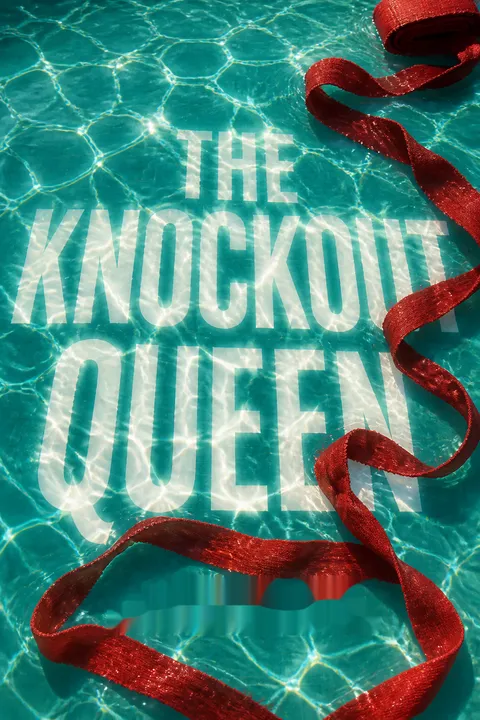
The Knockout Queen by Rufi Thorpe received mixed reviews, with many praising its dark, character-driven story and exploration of friendship, sexuality, and violence. Readers appreciated the complex characters of Bunny and Michael, and Thorpe's writing style. Some found the book emotionally powerful and funny, while others criticized its handling of sensitive topics and felt disconnected from the characters. The novel's unconventional approach to coming-of-age themes garnered both acclaim and criticism, with its raw honesty and provocative content dividing readers.
People Also Read










Characters
Michael Hesketh
The watchful narratorMichael is an observant, bookish boy growing up amid addiction, domestic violence and precarious housing. Gay and wary of being seen, he uses humor, impersonation and analysis to manage fear, often understanding an event more readily than he can act within it. Bunny becomes the first friend with whom he can practice an unguarded self. His empathy is genuine but complicated by passivity, shame and a tendency to treat pain as material for interpretation. As he moves toward education and greater independence, he must learn that naming what happened is not the same as participating in another person’s life.
Bunny Lampert
The powerful outsiderBunny is a towering athlete whose physical confidence coexists with deep uncertainty about desirability, femininity and belonging. She is generous, direct and unusually free of social calculation, yet she can be naïve about how others interpret her strength. Her father’s ambitions and her mother’s absence leave her with few models for understanding herself. Volleyball gives her a setting where her body makes immediate sense; friendship with Michael gives her a place to explore parts of herself that sport cannot hold. Bunny’s essential longing is not simply to be admired but to be recognized without being reduced to her size.
Ray Lampert
The smiling town-makerRay is Bunny’s father, a successful realtor, civic fixture and charismatic host whose generosity helps make him beloved in North Shore. He is proud of Bunny and capable of real warmth, but he also drinks heavily, craves admiration and treats appearances as tools for managing other people. His grand house and public projects express an ambition to build the life he believes will make him worthy. Ray’s contradictions are essential: he can love his daughter while making decisions that use her, and he can serve his community while placing his own interests first.
Aunt Deedee
The overburdened guardianDeedee takes Michael in when his family fractures, working exhausting jobs while trying to keep him in a safer school district. She is practical, depleted and often unable to offer the kind of emotional attention Michael needs. Her care appears in small acts, including protecting him from his mother’s homophobic boyfriend and teaching him how to use makeup, but fear makes her impose rules rather than invite trust. Deedee is neither a substitute mother nor an indifferent guardian. She is a poor, tired adult attempting protection with limited resources and imperfect language.
Anthony
The romantic escapeAnthony is the adult man Michael meets online and the first person to make the teenager feel that sex might coexist with tenderness and intellectual curiosity. He offers books, attention and a gentler model of intimacy than Michael has encountered elsewhere. At the same time, his choices are shaped by obligations and fears that Michael cannot fully see at first. Anthony’s charm is not a guarantee of ethical clarity. His relationship with Michael exposes the difference between feeling sincerely and making an honest, responsible place for another person.
Viv
Michael's troubled motherViv is Michael and Gabby’s mother, a woman whose life is shaped by addiction, romantic dependence and a violent marriage. Michael loves her but also carries anger over the ways she failed to protect her children and the decisions that divided the family. Her connection with him is marked by flashes of old closeness that neither knows how to restore. Viv’s character complicates any easy division between a loving parent and a harmful one.
Gabby
Michael's younger sisterGabby is Michael’s younger sister, raised for a time with their mother while he lives with Deedee. The siblings grow apart and struggle to understand the separate childhoods they have been given. Michael watches her through family visits and social media, protective but unsure how to reach her. Her relationship with their mother can make Michael feel excluded, while her own hurt reflects the cost of being separated from her brother.
Jason
The hostile cousinJason is Deedee’s son and Michael’s cousin, sharing a room with him during high school. He is blunt, physically casual and resistant to the disruption of having another teenager in his space. His hostility toward Michael’s sexuality turns an already crowded household into a place where Michael must monitor his safety. Jason’s behavior is not softened by the fact that he is family.
Ann Marie
Bunny's old rivalAnn Marie is a teammate and childhood acquaintance whose polished social confidence helps her thrive in North Shore’s high-school culture. She is preoccupied with appearance, popularity and the signals that make a girl seem desirable. Her long history with Bunny mixes early closeness with teasing and exclusion, giving their later interactions a painful intimacy. Ann Marie is more than a symbol of cruelty: she is a young person formed by the same competitive social world she helps enforce.
Naomi
The disciplined teammateNaomi is Bunny’s reserved volleyball teammate, an exceptional student and athlete who is determined to secure a future beyond their town. She speaks sparingly, observes sharply and has little patience for the high-school rituals that occupy other students. On the court, her discipline and Bunny’s physical power make them a formidable pair. Naomi’s ambition is a form of self-protection: she treats education and achievement as routes out of circumstances she does not intend to accept.
Terrence
The gentle managerTerrence manages Michael at Rite Aid and is a soft-spoken, devout Catholic and father of four. He listens closely to customers and employees, offering a kind of attention that Michael rarely receives from adults. His use of marijuana and his own weariness complicate Michael’s idealization of him, but his basic warmth is dependable. Terrence represents care expressed through action rather than through polished explanations.
Allison
Bunny's absent motherAllison is Bunny’s mother, remembered through photographs, gardening and the fragments of stories adults tell about her. Her absence shapes Bunny’s sense of family and leaves Ray as the central authority in the house. To Michael, the difference between candid images of Allison and the formal portrait in the hallway suggests how much a person can disappear behind a family’s official account.
Ms. Harriet
The unsentimental motherMs. Harriet runs the Catholic preschool Ann Marie attended and is known for a severe calm that unsettles children and adults alike. She is Ann Marie’s mother and Bunny’s former teacher, someone who can name behavior plainly but sometimes mistakes certainty for understanding. Her practical manner becomes a stark contrast to Michael’s habit of questioning every account. She is capable of sympathy, though her judgments can carry their own cruelty.
Coach Eric
The admiring coachEric is a tall assistant volleyball coach who brings warmth and praise to a team accustomed to Coach Creely’s reserve. Bunny develops a crush on him, and his attention becomes especially potent after she loses her place in school sport. He holds adult authority while also presenting himself as approachable, a combination that complicates Bunny’s efforts to tell admiration from care.
Coach Creely
The withholding coachCreely is Bunny’s demanding volleyball coach, whose rare approval keeps Bunny working for recognition. She represents the athletic system’s belief that discipline and performance can organize a life, even when emotional support is scarce.
Swanson
Ray's lawyer friendSwanson is Ray’s attorney and drinking companion, more comfortable with negotiation than trial work. His personal loyalty to Ray gives Bunny legal help, but his competence and judgment remain uncertain.
Donna Morse
A trapped young motherDonna is a former North Shore student and mother to Spencer, trying to build a life after a violent relationship. The town knows her mainly through gossip and tragedy, but Michael and Bunny’s response to her story exposes their assumptions about victimhood.
Luke
Donna's violent exLuke is Donna’s former partner and Spencer’s father. His history of violence makes court-ordered visitation a source of danger, while the town’s explanations reveal how readily people treat an abuser as a force of nature rather than a person making choices.
Ryan Brassard
Bunny's first dateRyan is the boy who asks Bunny out and becomes the subject of damaging school gossip. His discomfort with Bunny’s size and directness contributes to the story she begins telling herself about desirability and rejection.
Plot Devices
North Shore's changing houses
Class made visibleNorth Shore’s alternating modest homes and expensive new builds make class pressure part of the physical setting. Ray helps shape the town through real estate, development and civic projects, while Deedee struggles to afford rent in a district she believes will protect Michael’s future. The changing houses also provide a measure of what people conceal: a beautiful interior can hold loneliness, addiction or financial ruin. The setting makes wealth more than atmosphere; it determines whose mistakes can be softened and whose lives are treated as disposable.
Drag and realness
Identity rehearsalMichael and Bunny use drag shows, impersonations and clothing games to test how gender is performed and recognized. Their private experiments let Michael explore queerness and let Bunny approach femininity without submitting to schoolmates’ rules. These scenes also establish a language of artifice that recurs throughout the novel: a performed self can sometimes reveal truth, while a socially acceptable image can disguise fear or exploitation. The device connects their playful friendship to Michael’s larger question about whether people can ever be fully known.
The body as evidence
Power made physicalBodies repeatedly communicate what characters cannot safely say. Bunny’s height and strength shape her athletic identity and other people’s judgments; Michael’s bruises and internal injuries record the cost of homophobic violence; Ray’s drinking and cosmetic surgery expose his fear of decline. The body is not a reliable moral verdict, but the surrounding characters often treat it as one, reading size, gender, beauty and injury as proof of character. The device asks who gets to define what a body means and who is believed when bodily evidence is ambiguous.
Court and prison
Unequal accountabilityLegal proceedings turn private harm into categories, charges and sentences, but those categories do not produce a simple moral accounting. Bunny’s case moves through Ray’s influence and Swanson’s negotiations, while Michael’s assault investigation leaves him uncertain whether he can trust police and prosecutors. Prison extends punishment into the lives of friends and family through strict visitation rules and gradual separation. These institutions show how money, race, age and reputation affect what consequences follow, without suggesting that Bunny’s violence or the boys’ attack can be reduced to a single legal label.
Michael's unstable memory
Truth under pressureMichael narrates from adulthood, revisiting events whose meanings were unclear to him as a teenager. During his hospital delirium, he mistakes hallucinations for encounters and cannot be certain at first whether Jason joined the assault. Conflicting accounts of Allison’s death and the changing significance of Bunny’s actions extend that uncertainty beyond the hospital. The device does not make Michael dishonest; it shows how fear, shame and time shape what he can remember and how he interprets it. His reflections remain vivid but do not guarantee a final, complete explanation.
About the Author

Download PDF
Download EPUB
.epub digital book format is ideal for reading ebooks on phones, tablets, and e-readers.








