

Key Takeaways
Let genome science deepen awe without pretending it proves God.
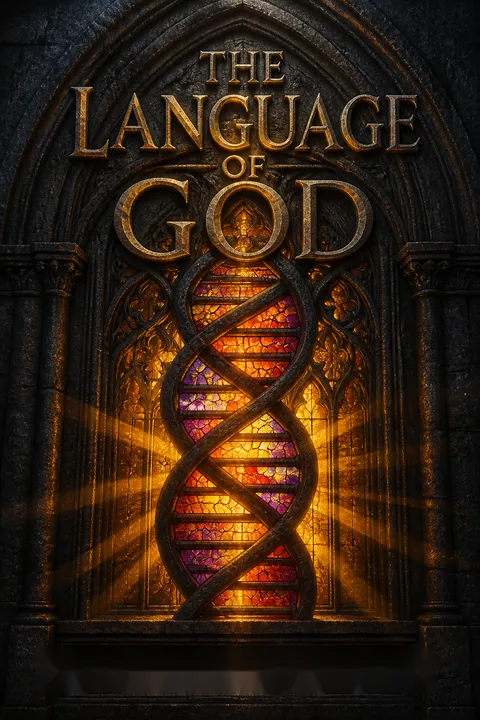
A book of life. Francis Collins led the public Human Genome Project, which assembled a first draft of humanity’s DNA sequence: about 3 billion chemical letters. Reading it aloud at one letter per second would take roughly 31 years. At the 2000 White House announcement, Collins welcomed the genome as both a scientific achievement and a reason for spiritual wonder. For him, discovering how life works did not make belief in God less rational; it made the natural world more astonishing.
A boundary matters. A DNA sequence reveals biological information, not a measurable signature of its divine author. Collins’s central claim is that science can investigate nature while faith addresses questions science cannot settle, including ultimate meaning and God’s existence.
The genome is a powerful image because it connects the intimate scale of heredity with the vast enterprise of scientific discovery. Yet a code is not, by itself, evidence of a coder in the theological sense. In biology, the word “code” describes reliable relations between DNA sequences and cellular processes. Collins’s argument is strongest when awe is treated as a human response to discovery, not as a scientific result. That distinction allows scientific explanation and religious interpretation to meet without either being misrepresented.
Treat conscience as evidence to examine, not a shortcut to certainty.
A question at the bedside. Raised without much religion, Collins moved from agnosticism to atheism while studying chemistry. Medical training disrupted that confidence. A patient with severe, untreatable angina asked what he believed, and Collins realized he had never seriously examined the evidence for or against God. Reading C. S. Lewis led him to consider the Moral Law: the felt obligation to distinguish right from wrong, even when self-interest points elsewhere.
A clue, not a proof. Collins saw selfless concern, including help offered without recognition or repayment, as a possible sign of a source beyond biology and culture. The claim is not that every moral judgment is universal or infallible, but that conscience deserves serious explanation.
Moral experience is philosophically significant because people often judge some actions wrong even when their community approves of them or rewards them. That can support reflection on whether ethics has a foundation beyond preference. It does not, on its own, establish that the foundation is God. Evolutionary accounts can explain parts of cooperation, kin care, and reciprocity, while leaving disputes about obligation and moral truth unresolved. Collins’s personal change is persuasive as an invitation to investigate, not as a demonstration that every honest inquiry must reach his conclusion.
Keep science authoritative about nature, not sovereign over every question.
A method with boundaries. Collins argues that science is the most reliable way to study the natural world. It builds explanations from observation, tests them against evidence, and revises them when they fail. But questions such as why the universe exists, what makes life meaningful, or whether anything follows death are not answered by measuring natural processes alone.
Avoid false separation. The book rejects both the claim that evolution requires atheism and the idea that science and faith must occupy sealed compartments. Scientific findings can shape religious interpretation, while spiritual beliefs can influence ethical choices. The two perspectives address different kinds of questions, although their boundaries are not always easy to draw.
This distinction resembles the difference between methodological naturalism and metaphysical naturalism. The first is a practical rule: scientific explanations should be testable through natural causes. The second is a larger philosophical claim that nature is all that exists. The first does not logically entail the second. Still, faith claims about historical events or the natural world can intersect with scientific evidence, so the boundary is not a license to ignore inconvenient findings. The useful question is not whether science or faith wins, but what kind of evidence each claim requires.
Read cosmic fine-tuning as a question, not a verdict.
A universe with a beginning. Observations of expanding galaxies, cosmic background radiation, and the distribution of elements support a universe that began about 14 billion years ago in a hot, dense state. Collins sees this beginning, and the precise values of physical constants that permit stars and life, as suggestive of a Creator.
Three interpretations. The apparent fine-tuning may reflect many universes with differing properties, extraordinary good fortune in a single universe, or deliberate creation. Collins finds a Creator plausible, but acknowledges that the evidence does not prove one. The Anthropic Principle names the basic observation that observers can arise only in a universe compatible with their existence.
Fine-tuning arguments make a genuine philosophical question vivid: why do the observed physical constants permit complex structures? But the probability is difficult to calculate when the range of possible constants, or the existence of other universes, is unknown. There is also a selection effect: any observer necessarily finds themselves in conditions that permit observers. That insight does not explain every feature of the universe, but it limits what can be inferred from our existence alone. The argument supports wonder and inquiry more securely than a conclusive choice between design and alternatives.
Accept evolution's evidence without treating it as atheism's proof.
A shared biological history. Collins presents evolution by natural selection as essential to modern biology. The human genome is about 99.9 percent identical across individuals, and Collins reports roughly 96 percent DNA similarity between humans and chimpanzees. Shared gene order, disabled genes in corresponding locations, and the fused structure of human chromosome 2 support common ancestry. Fossils and genetics provide independent lines of evidence for the relatedness of life.
Mechanism is not metaphysics. Evolution explains how populations change and diversify; it does not, by itself, decide whether God exists or whether life has purpose. Collins sees evolution as compatible with divine creation, while rejecting the idea that human spiritual significance can be read directly from DNA.
The strength of evolutionary theory lies in how many kinds of evidence converge: fossils, anatomy, genetics, and observable changes in populations. Common ancestry is not a casual guess, but a framework that makes sense of otherwise disconnected findings. That scientific strength does not establish atheism, because a biological mechanism and a metaphysical interpretation answer different questions. Conversely, belief in purpose does not weaken the evidence for evolution. The book’s claim that moral awareness exceeds evolutionary explanation is more debatable than its account of genetic evidence, and should be assessed separately.
Do not stake faith on scientific gaps or fragile design arguments.
A tempting shortcut. Young Earth Creationism reads the Genesis creation days as literal twenty-four-hour periods and therefore places Earth’s age below ten thousand years. Collins argues that this conflicts with evidence from geology, astronomy, and biology. Intelligent Design makes a different claim: some biological systems are supposedly too complex to have arisen through gradual evolution. Its proponents often cite the bacterial flagellum, a structure that helps some bacteria move.
A risky foundation. Collins describes research suggesting that components of seemingly irreducible systems can have other functions or evolutionary histories. More broadly, he warns against a “God of the gaps” approach, which uses current scientific ignorance as evidence for divine intervention. New discoveries may close those gaps, leaving faith tied to claims that no longer hold.
The distinction between believing in a Creator and endorsing a particular scientific argument for design is crucial. A failed argument about one biological structure does not refute every theological account of purpose. Likewise, gaps in current knowledge do not count as positive evidence for a supernatural cause. Scientific theories earn confidence by generating testable predictions, a standard that Intelligent Design has struggled to meet. Collins’s caution is useful to religious and secular readers alike: uncertainty should invite investigation, not be hurried into a conclusion that feels comforting.
Read Genesis with humility before forcing poetry into chronology.
An old interpretive problem. Genesis gives two creation accounts that do not align neatly as a single chronological report. Collins notes that the Hebrew word for “day” can carry more than a twenty-four-hour meaning, and that Augustine raised questions about the passage centuries before modern geology or Darwin. Some believers read the text literally; others understand it as theological or poetic instruction about God and creation.
Galileo’s warning. Church authorities once treated certain biblical passages as proof that Earth stood still. Evidence eventually established that Earth orbits the sun, and the conflict damaged the church’s credibility. Collins argues that scripture should not be turned into a scientific textbook when its purpose may be different.
Reading a sacred text responsibly requires attention to genre, historical context, and the purposes of its authors. That is not automatically a retreat from belief; it is a method of interpretation used across literature and history. Galileo’s story also shows how confidently reading scientific claims into scripture can make a religious tradition vulnerable to correction. The reverse caution matters too: labeling a passage metaphorical simply because a modern reader dislikes its implications can become an easy escape. Humility requires giving both evidence and text a serious hearing.
Let suffering remain morally serious, even when faith offers meaning.
Two kinds of evil. Collins distinguishes harm caused by human choices from suffering caused by natural processes, such as disease, earthquakes, and childhood cancer. Free will may help explain why people can hurt one another, but it does not make the victims responsible. Evolution and the physical laws that sustain life also carry risks and painful consequences.
Meaning is not an explanation. Collins recounts that his daughter was raped, an experience that made the problem of evil painfully personal. He could not explain why God had not intervened. He describes learning about forgiveness and his daughter’s later support for other survivors, but does not present those outcomes as making the assault acceptable. Faith offers a way to seek meaning in suffering, not a simple account of why each tragedy occurs.
The distinction between finding meaning after trauma and claiming that trauma was necessary is ethically important. A story of growth can help a survivor, but it must not become a demand that others transform pain into a lesson. Appeals to free will address some human-caused suffering, yet they do not resolve the full problem of preventable harm or natural disaster. Collins’s account is most humane where it allows grief and faith to coexist without treating a victim’s suffering as evidence of moral failure or as a neat solution to theology.
Treat miracle claims as possible, rare, and answerable to evidence.
Start with ordinary causes. Collins defines a miracle as an event that appears inexplicable under the laws of nature and is understood as supernatural. He argues that interpretation depends partly on prior belief: someone who rules out the supernatural in advance will never count an event as miraculous, while someone who allows the possibility may reach a different judgment.
Keep the evidentiary bar high. Collins uses Bayesian reasoning, a way of updating the probability of an explanation when new evidence arrives. He argues that a natural explanation should usually be preferred, especially when medical knowledge remains incomplete. A rare cancer recovery may be remarkable without proving divine intervention. For Collins, miracles are possible but should not be claimed for ordinary events or weakly documented cures.
Bayesian reasoning helps clarify why observers can disagree even when they see the same event: they may begin with different prior assumptions and assess the evidence differently. Making those assumptions explicit can improve the discussion. However, a calculation is only as sound as its estimates and the quality of the evidence, particularly in medicine, where diagnoses and prognoses can be uncertain. Collins’s low-prior approach offers a useful discipline: distinguish an event that is surprising from one that is genuinely unexplained, and distinguish both from a demonstrated supernatural cause.
Let service test moral conviction more than grand self-image.
A lesson in Nigeria. Collins went to a mission hospital in Eku expecting to make a broad difference, but felt overwhelmed by severe illness and limited resources. He treated a farmer whose tuberculosis had caused fluid to accumulate around his heart. With no ultrasound available, Collins drained the fluid using a risky procedure. The patient improved, then told Collins that his presence mattered because he had come to help him.
Care at human scale. Collins understood the encounter as agape, a form of selfless love that seeks no repayment. The experience challenged his fantasy of rescuing many people and focused him on the person directly before him. For the book, moral conviction becomes most concrete in acts of care, not in declarations about goodness.
The story makes an abstract ethical idea observable: attention, competence, and willingness to accept responsibility can matter greatly to one person, even when structural problems remain unsolved. It also guards against confusing impact with scale. Still, individual compassion cannot replace public health systems, clean water, or reliable access to care. The strongest reading holds both truths together: personal service matters, and institutions determine whether people can depend on care beyond a fortunate encounter.
Make genomic power serve patients, consent, and fair access.
Information changes lives. Collins recounts a family in which testing for a BRCA1 mutation revealed sharply increased risks of breast and ovarian cancer. Some relatives used the result to seek closer monitoring or consider preventive surgery; others faced anxiety, difficult family decisions, and concern about discrimination. The case shows why genetic information can help patients while also exposing them to privacy and psychological risks.
Ethics beyond discovery. Collins identifies autonomy, justice, beneficence, and nonmaleficence as principles that guide bioethics: respect choice, treat people fairly, seek their welfare, and avoid harm. He also discusses stem-cell research, where potential medical benefits must be weighed against moral disagreement about embryos. Scientific capability alone cannot decide how such power should be used.
Genomic medicine turns abstract ethics into practical questions: who receives a result, who controls it, and who can afford the prevention it makes possible? The four principles provide a common vocabulary, but they can conflict. Respecting a patient’s choice may clash with obligations to relatives who share inherited risks, while innovation may deepen inequalities if only some people can access its benefits. Collins’s appeal for scientists, clinicians, ethicists, and communities to deliberate together is important because technical expertise can identify what is possible, but cannot alone determine what is fair.
Analysis
The book’s most durable contribution is not a proof that Christianity is true. It is a case for intellectual compatibility: accepting evolution, cosmology, and genetics need not entail a materialist account of all reality. Collins supports that case with an unusually effective narrative arc. The scientist who once dismissed religion discovers that he had not fairly examined it, then carries his questions into medicine, genomics, and public life. The sequence gives abstract arguments a human stake.
The evidence is strongest where Collins reports biology. Common ancestry, genome comparisons, and the history of the Human Genome Project show how scientific theories earn credibility through converging evidence and correction. His argument that this evidence leaves room for God is also sound as a point of logic: a natural mechanism does not by itself exclude a divine purpose. Compatibility, however, is not confirmation. The Big Bang, fine-tuning, and moral experience may support religious interpretation for some readers, but none compels it. The book is clearest when it presents them as clues rather than demonstrations.
Its treatment of conscience is philosophically suggestive but less settled. Human altruism can be explored through evolutionary, psychological, and cultural accounts without reducing it to selfishness. Those explanations do not automatically answer whether moral obligations are objectively true. Collins identifies a live question, not a closed case.
The most valuable practical consequence is his resistance to both extremes: rejecting science to protect faith, and treating science as a total account of meaning. That balance does not dissolve every conflict. The problem of suffering remains especially resistant to tidy answers, and religious interpretations of evidence require the same honesty expected of scientific ones. The book’s strongest ethic is therefore epistemic as much as theological: follow evidence where it leads, admit what it cannot establish, and resist using uncertainty as a weapon against either inquiry or belief.
Review Summary
The Language of God receives mixed reviews. Some praise Collins' attempt to reconcile science and faith, appreciating his scientific explanations and personal story. Others criticize his arguments for God as weak and his understanding of theological issues as superficial. Many commend his call for a truce between science and religion. Some readers find the book informative and thought-provoking, while others consider it disappointing and flawed. Overall, reviewers acknowledge Collins' expertise in genetics but are divided on the effectiveness of his arguments for belief.
People Also Read





Glossary
Moral Law
Inner sense of rightCollins uses this term for the human experience of moral obligation, the sense that some actions are right or wrong even when self-interest points elsewhere. Following C. S. Lewis, he treats this shared experience as a possible clue to a moral source beyond individuals and cultures, not as a scientific measurement or a conclusive proof of God.
Anthropic Principle
Life-permitting conditions observedThe Anthropic Principle describes the observation that the universe’s physical properties permit the existence of observers like humans. Collins discusses it in relation to the apparent fine-tuning of physical constants, then considers different interpretations: many possible universes, unusual luck in one universe, or deliberate creation. The observation itself does not determine which interpretation is correct.
Young Earth Creationism
Literal, recent creation viewA form of biblical creationism that reads the creation days in Genesis as ordinary twenty-four-hour days and concludes that Earth is less than ten thousand years old. Collins argues that this view conflicts with extensive evidence from geology, cosmology, and biology. He distinguishes it from the broader belief that God created the universe.
irreducible complexity
Claim of inseparable componentsAn Intelligent Design argument that some biological systems depend on multiple interacting parts and would stop functioning if any one part were removed. Its proponents argue that such systems could not have developed through gradual evolution. Collins counters that components may have had earlier functions or been recruited through evolutionary change, so apparent complexity does not alone establish design.
BioLogos
Faith-compatible evolutionary viewCollins’s proposed name for a synthesis of Christian belief and evolutionary science. BioLogos holds that God created the universe and its laws, and that evolution and natural selection produced life’s diversity, including humans. It treats evolution as a scientific account of biological development, while locating claims about purpose, God, and human spiritual nature in theology.
God of the gaps
God inserted into ignoranceA religious argument that attributes a natural phenomenon to divine action because science has not yet explained it. Collins warns that scientific discoveries can close such gaps, undermining beliefs built upon temporary ignorance. He favors positive grounds for faith, such as moral experience or the order of nature, over claims that rely on an unresolved scientific problem.
somatic cell nuclear transfer
Reprogramming a cell nucleusA laboratory process in which the nucleus of a body cell is placed into an egg cell whose own nucleus has been removed. The egg’s contents can reprogram the transferred DNA, as in the creation of Dolly the sheep. Collins distinguishes this method from fertilization by sperm and egg, while noting that its possible uses raise separate ethical questions.
agape
Selfless, nonreciprocal loveA Greek term used by Collins, following C. S. Lewis, for love directed toward another without expectation of personal reward. He distinguishes it from affection, friendship, and romantic love, which can involve mutual benefit. Collins sees agape in costly acts of care, including the service he experienced while treating a patient in Nigeria.
FAQ
1. What is The Language of God by Francis S. Collins about?
- Science and faith integration: The book explores how scientific discovery, especially in genetics and genomics, can coexist with and even inspire belief in God.
- Personal journey: Collins shares his transformation from atheism to faith, using his experiences as a scientist and leader of the Human Genome Project.
- Addressing conflicts: It tackles common objections to faith, such as the problem of suffering, miracles, and the perceived conflict between evolution and religion.
- Rational faith: Collins argues that belief in God is a rational choice and that science and faith are complementary, not contradictory, worldviews.
2. Why should I read The Language of God by Francis S. Collins?
- Unique perspective: Collins is both a renowned geneticist and a committed Christian, offering a rare, balanced view on the science-faith dialogue.
- Bridging divides: The book provides thoughtful responses to both scientific skepticism and religious literalism, promoting respectful dialogue.
- Personal and universal relevance: Collins’s journey and arguments resonate with anyone grappling with questions about meaning, morality, and the origins of life.
- Practical implications: The book discusses real-world issues like genetic testing, medical ethics, and how faith can inform scientific practice.
3. What are the key takeaways from The Language of God by Francis S. Collins?
- Harmony is possible: Science and faith can be harmoniously integrated, each addressing different aspects of human experience.
- Evolution and belief: Accepting evolution does not preclude belief in a Creator; evolution can be seen as God’s method of creation.
- Moral Law argument: The universal human sense of right and wrong points toward a divine source, supporting the rationality of faith.
- Rejecting extremes: Both atheistic materialism and religious fundamentalism are critiqued as incomplete approaches to truth.
4. What is Francis S. Collins’s personal faith journey as described in The Language of God?
- From atheism to faith: Raised in a non-religious environment, Collins initially identified as an atheist, influenced by his scientific training.
- Moral Law discovery: Reading C.S. Lewis’s "Mere Christianity" and encountering the concept of a universal Moral Law led him to reconsider the plausibility of God.
- Personal encounters: Experiences with patients and deep reflection on suffering and meaning prompted his leap to faith.
- Christian commitment: Collins ultimately embraced Christianity, convinced by the life and resurrection of Jesus Christ.
5. How does The Language of God by Francis S. Collins address the relationship between science and faith?
- Complementary worldviews: Collins argues that science explains the "how" of the universe, while faith addresses the "why," allowing both to coexist.
- Truth cannot contradict truth: He insists that scientific and spiritual truths must ultimately be compatible, as both seek to understand reality.
- Critique of conflict: The book challenges the notion that science and faith are inherently at war, advocating for mutual respect and dialogue.
- Personal integration: Collins’s own life exemplifies how rigorous scientific inquiry can deepen, rather than diminish, spiritual faith.
6. What is the Moral Law argument in The Language of God and why is it important?
- Universal sense of morality: Collins describes the Moral Law as a shared human awareness of right and wrong that transcends culture and evolution.
- Evidence for God: He argues that this innate morality points to a personal, holy God who desires a relationship with humanity.
- Pivotal in faith journey: The Moral Law was central to Collins’s transition from atheism to belief, providing a rational foundation for faith.
- Challenge to materialism: The argument questions whether purely evolutionary or cultural explanations can fully account for human morality.
7. How does Francis S. Collins in The Language of God reconcile evolution and belief in God?
- Theistic evolution (BioLogos): Collins advocates for "BioLogos," the view that God created life through the process of evolution.
- No conflict with faith: He asserts that accepting evolution as a scientific fact does not negate belief in a purposeful Creator.
- Genomic evidence: The book highlights overwhelming genetic evidence for common ancestry among species, including humans and primates.
- Rejecting false dichotomies: Collins critiques both creationism and atheistic evolutionism, promoting a balanced, evidence-based approach.
8. What are the four main options for relating science and faith in The Language of God by Francis S. Collins?
- Atheism/Agnosticism: Science is seen as incompatible with faith; belief in God is rejected or suspended due to lack of evidence.
- Creationism: Faith is prioritized over science, leading to a literal interpretation of Genesis and rejection of evolution and an ancient earth.
- Intelligent Design: Complexity in biology is attributed to direct divine intervention, but Collins critiques this as scientifically untestable.
- BioLogos (Theistic Evolution): Science and faith are harmonized; God creates through evolution, which Collins advocates as the most satisfying position.
9. How does Francis S. Collins interpret the Genesis creation account in light of modern science in The Language of God?
- Non-literal reading: Collins views Genesis 1 and 2 as poetic and allegorical, not as strict scientific accounts.
- Historical context: He references Saint Augustine and other theologians who questioned literal interpretations long before modern science.
- Compatibility with science: The sequence of creation events can be seen as broadly compatible with scientific discoveries when not read literally.
- Respect for scripture: Collins encourages thoughtful engagement with scripture, seeing scientific inquiry as a way to honor God’s gifts.
10. What is the significance of the Human Genome Project in The Language of God by Francis S. Collins?
- Genome as God’s language: Collins describes the human genome as a 3-billion-letter code, calling it "the language in which God created life."
- Scientific achievement: Leading the Human Genome Project was both a milestone in biology and a source of spiritual awe for Collins.
- Evidence for evolution: The genome reveals high genetic similarity among humans and shared DNA with other species, supporting common ancestry.
- Implications for medicine and faith: The project opened new avenues for disease understanding and treatment, reinforcing the harmony between science and faith.
11. What ethical issues related to genetics and medicine are discussed in The Language of God by Francis S. Collins?
- Genetic testing dilemmas: Collins explores the benefits and psychological impacts of genetic testing, as well as concerns about privacy and discrimination.
- Stem cell research: The book discusses the moral debates around embryonic stem cells, cloning, and the status of embryos, advocating for careful ethical consideration.
- Human enhancement: Collins addresses the ethics of using genetics for enhancement, warning against genetic determinism and the potential misuse of technology.
- Free will and genetics: He emphasizes that while genes influence behavior, environment and personal choices remain crucial, preserving the concept of free will.
12. What is Francis S. Collins’s view on miracles and their compatibility with science in The Language of God?
- Miracles as rare events: Collins defines miracles as rare, purposeful events that cannot be explained by natural laws.
- Philosophical openness: He argues that openness to the supernatural is necessary to fairly assess claims of miracles, rather than dismissing them outright.
- Bayesian reasoning: Collins uses probability theory to explain how one might rationally evaluate miracle claims, balancing skepticism with openness.
- Consistency with science: He maintains that belief in miracles does not undermine the regularity of natural laws, as miracles are exceptions, not the rule.
Download PDF
Download EPUB
.epub digital book format is ideal for reading ebooks on phones, tablets, and e-readers.








