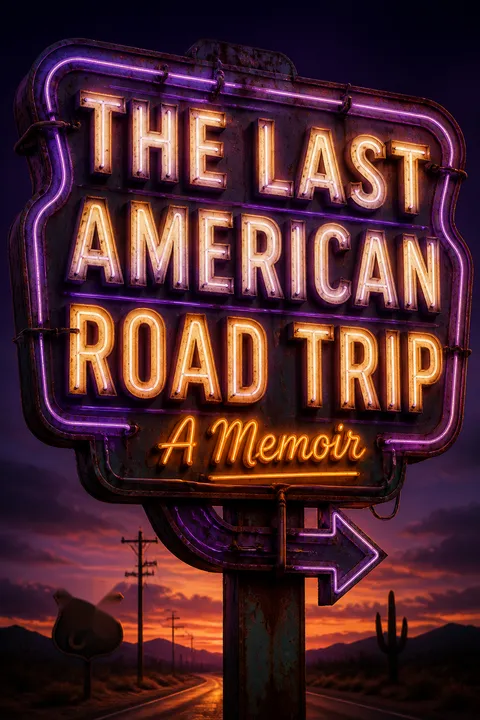


Key Takeaways
Love America honestly: cherish its people without excusing its institutions.
A family as witness. Since 2016, Sarah Kendzior has driven across the country with her husband and children, visiting parks, roadside attractions, cemeteries, and places of political violence. The family’s ordinary pleasures, singing in the car, sharing a meal, watching the moon, sit beside histories of slavery, dispossession, and state failure. The contrast is the point: affection for a place need not depend on pretending it is innocent.
Love without surrender. Kendzior argues that patriotism can mean protecting people and possibilities, not trusting every institution or excusing every crime. She refuses the idea that the country’s fate is settled, whether toward democracy or autocracy. Her road trip becomes a way to see how America broke, and to teach her children to value what remains without mistaking hope for denial.
What's striking is the distinction between attachment and allegiance. The book treats love of country less as a verdict on the government than as a relationship with neighbors, landscapes, and shared memories. That distinction can make criticism more demanding: if a place matters, its injuries cannot be dismissed as someone else's problem. The tension is that love can also deepen grief and make clear-eyed judgment harder. Kendzior’s answer is not emotional distance, but a form of care that keeps evidence in view.
Cross state lines to meet people, not confirm political stereotypes.
Borders change lives. After Missouri’s abortion ban took effect in 2022, Kendzior crossed the Mississippi into Illinois, where the law was different. The river had long served as a geographic marker in stories of slavery and freedom; suddenly, it marked a present-day difference in bodily rights. The trip made state boundaries feel less like abstract political labels and more like decisions with immediate consequences.
People exceed the map. Kendzior rejects the neat division of America into red and blue states. Missouri includes people whose views differ from its government, while voters in other states can also be politically sidelined. On family visits to Illinois, a flea market offered another small lesson: unlike online feeds, its old objects and chance encounters were not tailored to a visitor. Travel can reveal both the limits of political labels and the variety hidden inside them.
A map is useful for locating laws, but unreliable as a portrait of the people who live under them. This account separates a state government’s power from the presumed consent of every resident. That distinction matters wherever electoral systems, turnout, or district boundaries leave people governed by policies they oppose. Still, firsthand travel cannot by itself reveal how representative any one encounter is. Its value is narrower and more durable: it interrupts the confident assumption that a state’s label explains its inhabitants.
Treat Route 66 as evidence, not an escape hatch.
A road keeps receipts. Built in 1926 as a major route from Chicago to Los Angeles, Route 66 promised movement and reinvention. Its history was never equally free: Black travelers faced segregated businesses and relied on guides such as the Green Book to find safe stops. The highway also crossed Indigenous lands, even as roadside attractions marketed caricatures of Native life. Its nostalgic image hides these contradictions unless travelers look closely.
Ruins tell stories. By the time Kendzior retraces the road with her children, it is lined with ghost towns, faded attractions, and remnants of industries and dreams that did not last. She sees the evidence of history in both what remains and what has disappeared. Route 66 cannot deliver escape from the present, but its abandoned buildings and improvised memorials help visitors notice how a national myth was built, who it excluded, and what it left behind.
The road works as an archive precisely because its traces are untidy. Official history tends to organize the past into milestones; roadside remnants preserve mismatched memories, commercial fantasies, and evidence of exclusion in the same frame. That makes Route 66 a useful model for reading other familiar landscapes: ask who could travel freely, whose labor or land made the journey possible, and what the promotional story leaves out. Nostalgia is not inherently false, but it becomes misleading when it edits out the people who paid for it.
Protect shared landscapes as living inheritance, not scenery.
Wonder has a deadline. Kendzior’s family began visiting national parks partly because she feared their landscapes would be damaged before her children could see them. At Mesa Verde, ancient Pueblo dwellings stand amid an environment increasingly threatened by drought and fire. At Glacier National Park, visitors encounter evidence of glacier loss. These places are not timeless backdrops: climate change and human choices alter the very features that make them seem permanent.
The present is changing. In 2024, the family reached Badwater Basin in Death Valley and found a lake where a salt flat would usually lie. Heavy rain had revived the ancient Lake Manly, and strong winds had moved it. The surprise was beautiful and unsettling because it was tied to a changing climate. Kendzior’s “American Daydreams” are private visions of a past or future that might have been better. Parks offer such respite, while also making loss visible.
The parks hold two clocks at once: geological time, which dwarfs human lives, and ecological change, which can accelerate within a child’s lifetime. That combination makes them powerful settings for environmental learning, not merely recreation. Yet preservation has its own contradictions. Many parks occupy Indigenous lands, and greater popularity can threaten the places visitors come to admire. Protection therefore requires more than affection for scenery. It means attending to history, access, and the consequences of treating a beloved landscape as a limitless public amenity.
Tell children the truth, then let wonder keep them moving.
Answer the hard questions. Kendzior’s parents let her read freely and did not soften difficult history when she asked about it. She tries to extend that approach to her own children. On a trip to Los Alamos, her son connects the atomic bomb’s history to Godzilla, asking whether the people who created the weapon felt responsible for what followed. The question makes history more than a list of dates: it becomes a problem of consequence and choice.
Leave room for awe. The family’s conversations about war, rights, and political danger are balanced by comets, dark skies, and the Milky Way. The children are allowed to ask, disagree, and notice what their parents miss. This is not an attempt to make frightening events harmless. It is a way to give children both the information to understand their world and the curiosity to keep exploring it.
The method respects children as moral thinkers rather than passive recipients of reassurance. A truthful answer can help them distinguish what is known from what remains uncertain, a crucial skill in a media environment full of confident claims. Wonder matters here not as a distraction but as a counterweight: attention to beauty prevents danger from becoming the only lens through which a child sees the world. The balance is delicate. Candor without regard for a child’s capacity can overwhelm, so honesty also requires judgment about timing and context.
Remember victims when officials invite the country to move on.
History is not sealed. Bloody Island, once a Mississippi sandbar where prominent men settled disputes with duels, was erased by engineering and left without a public marker. Nearby, the Dred Scott case shows how law can turn injustice into official doctrine: the Supreme Court denied Black Americans citizenship and rights. For Kendzior, these stories show why a nation must examine its past rather than accept the comforting claim that its institutions have always worked as intended.
Commemoration matters. At the Oklahoma City National Memorial, 168 empty chairs honor those killed in the 1995 bombing. The site gives public form to grief and invites visitors to remember victims together. Kendzior contrasts that act with the institutional tendency to minimize failures, obscure evidence, or move on without accountability. Remembering is not a substitute for justice, but it resists the further injury of treating victims as forgettable.
Public memory is more than a record of what happened; it influences whose suffering counts and what institutions are expected to answer for. A memorial can make grief visible, while an absent marker can reveal how easily responsibility disappears from the landscape. The distinction between remembrance and accountability remains important: ceremonies can honor victims without changing the systems that produced harm. The book’s strongest implication is that memory should keep questions open, not turn a painful event into a reassuring story of closure.
Seek refuge in wonder, but do not confuse refuge with repair.
The underground offers shelter. Kendzior describes Missouri’s caves as places where the temperature and darkness steady a mind overwhelmed by events above ground. Their geological time offers a counterpoint to political and personal instability. But caves also hold the record of exploitation. At Mammoth Cave, Stephen Bishop, an enslaved man, mapped unexplored passages and guided visitors while remaining legally enslaved. The same refuge that comforted visitors could contain profound injustice.
Stay connected in danger. In a flooded, abandoned mine called Crystal City Underground, Kendzior and her family kayak through darkness. In a narrow passage, she loses sight of them, then finds them again and links hands across the water. The experience does not solve the crises outside. It gives the family a practical image of what they need: mutual care, imagination, and the ability to make meaning in a place others have abandoned.
A refuge is valuable partly because it restores attention and connection, but it cannot replace political or material change. The cave stories keep that distinction honest: natural beauty can coexist with enslavement, toxic industry, and commercial mythmaking. This resembles the difference between coping and repair. Coping helps people endure immediate pressure; repair addresses the conditions causing it. The family’s linked hands are moving not because they defeat the danger, but because they show how companionship can sustain action without pretending that endurance is enough.
Treat local repair as possible, but never automatic.
A river can recover. In 1969, pollution on Ohio’s Cuyahoga River became nationally visible when the water caught fire. The cleanup was not a single inspirational turnaround: local activism, volunteer work, lawsuits, and government regulation contributed to change. The river’s recovery helped make the area around it a national park. Kendzior visits in 2023 and sees a rare example of people refusing to accept environmental damage as permanent.
Progress has limits. The cleanup did not erase the broader problems of polluted water, neglected cities, or unequal access to healthy environments. Cleveland mayor Carl Stokes warned that environmental protection should not displace priorities such as housing, food, and clothing. His point complicates an easy victory narrative: environmental repair matters, but justice also depends on who benefits and whose needs remain unmet.
Cuyahoga offers a grounded alternative to both despair and triumphalism. Environmental decline is not always irreversible, but recovery depends on pressure, organization, and rules that constrain the institutions causing harm. The story also resists the idea that conservation competes naturally with human welfare. Clean water and secure housing belong to the same account of public well-being. A local success cannot guarantee national transformation, yet it can demonstrate that collective effort changes what once seemed inevitable.
Analysis
The book’s form is its argument. Kendzior does not present a single continuous expedition but a series of family journeys that loop through the Mississippi, Route 66, national parks, and Missouri caves. Each landscape becomes a meeting point for private memory and public history. A river can comfort and flood a neighborhood; a road can promise freedom while recording racial exclusion; a cave can shelter a family and preserve the history of enslavement. The family story gives these contradictions emotional scale without reducing them to abstractions.
The recurring tension is between escape and witness. The family seeks solitude, stars, and landscapes untouched by phones, yet the past and political present keep entering the trip. That interruption prevents travel from becoming a simple wellness cure. It also grounds the author’s claim that firsthand observation matters: local places resist the flattening effect of partisan maps and digital summaries. Children’s questions provide a further check on adult assumptions, especially when they ask whether something normal is also right.
The book’s most productive concept is the distinction between daydream and denial. Parks and caves create moments of relief, but the narrative refuses to treat relief as proof that danger has passed. Similarly, the Cuyahoga’s recovery shows repair is possible without claiming that one success resolves systemic problems. The result is an ethic of qualified hope: preserve what can be preserved, remember people whom official narratives neglect, and keep exploring rather than accept inevitability.
The method has limits. A memoir’s routes and encounters cannot stand for the full range of American experience, and its urgency sometimes presses complex political histories into a single, dark pattern. Readers should distinguish the author’s documented episodes from broader interpretations of motive and institutional continuity. Still, the book’s local specificity gives its argument force. It makes the reader look again at ordinary places, asking what their beauty conceals, what their ruins remember, and who is still living with the consequences.
Review Summary
Reviews for The Last American Road Trip are mixed, averaging 3.84/5. Admirers praise Kendzior's lyrical writing, her skillful blending of travelogue, family memoir, history, and political commentary, and her ability to evoke nostalgia for America's natural wonders and roadside attractions. Many found her passion for the country deeply moving. Critics, however, felt the political tone was heavy-handed and repetitive, the sense of place underdeveloped, and the overall mood excessively doom-laden. Several noted the book would resonate most strongly with existing Kendzior fans.
Glossary
American Daydreams
private refuge from expectationKendzior’s term for personal imaginings of a better past or possible future, without the pressure to make them come true. Unlike the American Dream, which she presents as a public promise tied to work and national success, daydreams offer private relief and can help people endure both real hardships and fulfilled nightmares.
American Circumstances
conditions that shape ordinary livesKendzior’s phrase for the material and social conditions people inherit, in contrast to the idea that everyone can freely pursue a chosen American Dream. It emphasizes constraints such as limited money, political powerlessness, and instability. The term helps explain why simply telling people to move or choose differently can ignore the circumstances that keep them where they are.
anticipatory retrospect
remembering before loss arrivesKendzior’s description of experiencing present moments as if they may soon become memories of a vanished world. She documents family trips and landscapes while they are happening because she fears that disaster, climate change, or political upheaval will make them impossible to revisit. The phrase captures how foreboding can sharpen attention while also burdening enjoyment.
Purple states
politics beyond red-blue labelsKendzior’s counter to dividing the United States into red and blue states. The image points to the political diversity within state borders and the gap between residents’ views and the policies imposed by state governments. It also rejects the assumption that people who live in conservative-led states necessarily support every law passed there.
Cave State of Mind
caves as refuge and archiveKendzior’s framing of caves as places that offer physical and psychological shelter from a destabilizing world while preserving traces of history. In her account, the underground can provide wonder, quiet, and a sense of geological time, but it also contains evidence of enslavement, mining, violence, and commercial mythmaking. Refuge does not make the surrounding history disappear.
karst topography
cave-forming soluble rock terrainA landscape shaped as water dissolves soluble rock, commonly limestone, gypsum, or dolomite. Over long periods, this process can create caves, caverns, and underground passages, while groundwater may form mineral deposits and other cave features. Kendzior uses Missouri’s extensive karst geology to explain why caves are widespread there and central to her family’s travels.
About the Author
Other books by Sarah Kendzior
Download PDF
Download EPUB
.epub digital book format is ideal for reading ebooks on phones, tablets, and e-readers.








