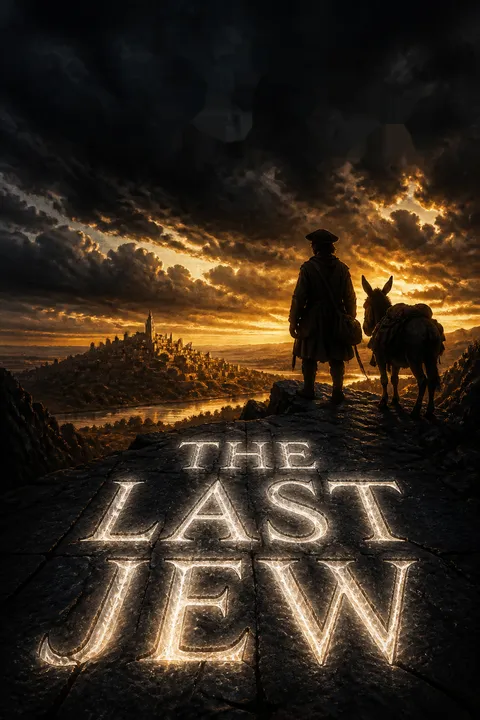


Plot Summary
The Relic and the Dead Boy
In Toledo, physician Bernardo Espina is called to examine Meir Toledano, the fifteen-year-old son of the Jewish silversmith Helkias. Meir has been beaten, sexually assaulted, stabbed, and killed; the leather bag he carried is empty.
The prior, Sebastián Alvarez, explains that Meir was delivering a silver-and-gold ciborium commissioned to hold a relic of Saint Anne, the Virgin Mary’s mother. The relic has vanished too.
Bernardo identifies the bone as part of a woman’s femur and accepts the prior’s demand that he investigate, though he knows his Christian conversion has not made him welcome among either Christians or Jews. Meir’s murder turns a commission of religious art into a dangerous inquiry into greed, prejudice, and the trade in holy objects.
The opening binds two kinds of value to one crime. Meir carries an object meant to make worship visible, while his body bears evidence of violence that religious authority will struggle to interpret honestly. Bernardo’s mixed identity makes him useful to the prior but does not protect him from suspicion; he is recruited precisely because neither community fully claims him. The relic’s disputed authenticity is less important than the power people attach to it. Once a sacred object can enrich a poor priory or elevate its prior, devotion and ambition become difficult to distinguish.
The Beautiful Inquisitor
Bernardo retraces Meir’s route and learns from a shepherd that two riders passed the boy, one a knight and the other a strikingly handsome friar. At the olive grove, the crushed grass, blood, and discarded cheese show that Meir was hunted, assaulted, and killed there.
Bernardo’s search stalls until the Inquisition summons him. Fray Lorenzo de Bonestruca questions him about his Jewish medical training and his work on circumcisions, treating his Christian faith as suspect despite Bernardo’s sincere conversion.
Bernardo is released, but the encounter convinces him that the friar is dangerous. Meanwhile, the Priory of the Assumption collapses after its sacristan and guards are murdered and the relic disappears. Bernardo sends his family away and flees, leaving Meir’s killers unidentified.
Bonestruca’s power begins with a face that invites trust, then turns that trust into a trap. His questioning converts ordinary medical knowledge into evidence of religious disloyalty, showing how the Inquisition can make a person’s skills incriminating simply by deciding what they mean. Bernardo’s flight is not a confession of guilt but a rational response to a system that does not require proof before it destroys. The failed investigation also establishes the novel’s central pattern: evidence exists, but institutions capable of acting on it are entangled with the crime.
Spain Closes Its Gates
In 1492, the Crown orders every Jew to leave Spain or convert. Helkias Toledano, still grieving Meir, plans to take his younger sons, Yonah and Eleazar, and his brother Aron’s family toward the coast. Their friend Benito Martín buys Helkias’s house and workshop for a fraction of their value, giving the family money and a chance to depart.
Before they can go, an anti-Jewish mob arrives, stirred up by Bonestruca’s accusation that Helkias’s ciborium was meant to harm Christians. Helkias sends Yonah to hide in a cliff cave and stays behind; when Yonah emerges, the house is wrecked and his father is dead. Eleazar and Aron have already fled. Benito offers Yonah Christian protection, but Yonah refuses baptism and rides away alone.
The expulsion transforms a political order into intimate catastrophe. Helkias’s decision to remain is an act of protection, but it leaves Yonah with survival as an inheritance rather than a home. Benito’s offer is generous and morally complicated: conversion could save the boy, yet it would also require him to surrender the name and practices through which he remains connected to his family. Yonah’s departure therefore begins not as an adventure but as a refusal to let fear make the final decision about who he is.
A Name Borrowed for Survival
Yonah rides south under the borrowed name Tomás Martín and earns food by hoeing onions on a great farm. He avoids exposing his circumcision and Jewish habits, but after a patrol returns he abandons the job rather than risk discovery.
In Ciudad Real, the alguacil hires him to clean a jail holding New Christians accused of secretly practicing Judaism. One prisoner is Bernardo Espina, now gaunt and awaiting trial. Yonah finally tells the physician that Helkias was murdered.
On Yom Kippur, he and a jailed butcher silently keep the fast, preserving a fragment of communal life inside their cells. Bernardo explains that Bonestruca and Count Fernán Vasca were likely involved in Meir’s murder and the relic theft. Before the auto-de-fé, Bernardo entrusts Yonah with his breviary for his son.
The false name gives Yonah practical cover but cannot erase what his body and memory retain. His encounter with Bernardo links the young fugitive to the opening crime, turning private bereavement into knowledge of a larger conspiracy. The jail also compresses the novel’s religious conflict into a daily routine: Yonah serves people whose alleged crime is the same practice he is hiding. Yom Kippur’s quiet observance is a small act of continuity, while Bernardo’s trust gives Yonah a responsibility that reaches beyond his own survival.
The Fire in Ciudad Real
The Inquisition tortures the prisoners, and a confession extracted from Isabel Peropan implicates the others, including Bernardo. At the auto-de-fé, Bernardo is garroted before his body is burned; the butcher Isaac de Marspera is roasted alive for refusing to hide his Jewish faith.
Yonah watches, then leaves the jail and rides into the countryside, no longer willing to accept conversion as his safest escape. He works on farms, has a brief affair with Margarita Vega, and flees when she identifies him as a converso and his circumcision puts him at risk.
Later, he helps a dying shepherd return his flock to its owner. Fernando Ruiz hires him to tend sheep, giving Yonah years of solitary work in the mountains and a chance to keep his prayers alive beyond the reach of the authorities.
The execution makes the cost of religious coercion bodily and unmistakable, but it does not produce a simple heroic resolve. Yonah remains afraid, and his sexual encounter with Margarita briefly exposes how easily a survival story can be mistaken for a life freely chosen. The shepherding years answer that danger with a different discipline: he learns to care for animals, track seasons, and maintain private ritual without witnesses. Solitude protects him, but it also presses him toward the fear that he is becoming the last remnant of a vanished people.
Mingo’s Mountain Shelter
After years with the flock, Yonah reaches Granada and intervenes when two robbers attack Mingo Babar, the dwarf who leads the Roma community in caves above the city. Mingo brings him into the tribe’s shelter, where music, shared meals, and skilled metalwork reconnect Yonah with human company.
Yonah tells Mingo about his father’s stolen ciborium, and Mingo identifies Anselmo Lavera as a southern dealer in stolen relics. He also trains Yonah to fight with a knife. In Granada’s market, Yonah meets Inés Denia, whose family secretly observes Jewish prayers, and falls in love with her.
Her father rejects him as an unsuitable, impoverished suitor. When the Inquisition prepares to scrutinize the conversos, Mingo arranges passage for Yonah with Roma horse traders, and Yonah leaves his faithful burro Moise behind.
Mingo’s community gives Yonah a temporary alternative to isolation: belonging based on loyalty and shared work rather than ancestry or religious conformity. Mingo himself was adopted into the Roma, so his life quietly challenges the assumption that identity must be inherited intact. Yonah can accept this fellowship without resolving his own faith, but love for Inés reveals the cost of being unable to offer a stable future. Leaving Moise, his constant companion, marks another step away from the life he might have led and toward a more dangerous independence.
The Armorer’s Apprentice
A berth on a Catalan ship ends when its injured seaman returns, and Yonah reaches Gibraltar nearly penniless. The armorer Manuel Fierro tests his silversmithing skills and takes him on as an apprentice.
Yonah learns to shape steel, polish armor, and ride, while the brutal former soldier Angel Costa humiliates him in the armory’s combat trials. He also befriends the neglected Vicente Deza, whom he nurses through a fever. Vicente reveals a hidden cave containing a skeleton, a cross, and early Christian markings, believing the remains belong to Saint Pilgrim.
Yonah urges him to consult the local priest, but Vicente seeks a sale instead. Relic dealers Anselmo Lavera and his accomplice torture Vicente for the cave’s location and kill him. They then come to Yonah, demanding the secret.
The armory offers Yonah something more durable than refuge: a trade that lets him rebuild the skills his father began teaching him. Yet the workplace is not free of coercion. Costa’s authority turns combat into humiliation, while Vicente’s discovery shows how even a sincere belief in a saint can be reshaped by the promise of money. Yonah’s loyalty to the old man becomes a test of whether his survival will require complicity. The relic trade, introduced as an obscure threat, now reaches directly into the fragile community he has begun to build.
The Map to Tembleque
Fierro sends Yonah and three craftsmen to deliver a suit of armor to Count Fernán Vasca, the nobleman who still owes Helkias for years of silverwork. At Tembleque, Yonah meets Bonestruca and hints that a valuable relic lies near Gibraltar.
Vasca recognizes the relic story and learns that Lavera threatens Yonah’s life. He agrees to protect Yonah in exchange for a map to the cave. Back in Gibraltar, Yonah gives Lavera the map but refuses to accompany him. When Yonah later visits the cave, its bones and Christian symbols are gone, and blood stains the floor.
Vasca has eliminated the competing dealers and taken the relics. Yonah returns to the armory relieved to be alive, but burdened by the knowledge that he sent men to their deaths and cannot call the act innocent.
Yonah’s bargain is his first deliberate use of power against the machinery of violence that has pursued him. He does not defeat Lavera directly; he redirects Vasca’s greed toward a rival, adopting the same instrumental logic that killed his family. The victory protects him, but it carries a moral cost because his survival now depends on arranging deaths. The bloodied cave makes that cost material. Yonah’s growing competence is inseparable from a question the book refuses to simplify: whether a person can resist a violent order without learning to operate by its rules.
Fierro’s Last Morning
Angel Costa denounces Manuel Fierro to the Inquisition, accusing the armorer of satanic practices because he learned his craft from a Muslim and has not attended Mass. Fierro warns Yonah that both of them must flee.
As they prepare to leave at dawn, Costa shoots Fierro through the throat with an arrow. Yonah draws his sword, but Costa’s superior training overwhelms him until he remembers Mingo’s knife lessons and kills Costa with a rising stab.
He buries Fierro, takes the surgical instruments made for Fierro’s brother Nuño, and rides toward Saragossa with the armorer’s hidden chest of gold. At first he considers keeping the money, which could buy safety. He turns back instead and delivers it to Nuño, honoring the trust his dead teacher placed in him.
Fierro’s murder destroys the closest thing Yonah has found to a stable home, and Costa’s attack forces him to use skills acquired for self-defense as instruments of death. The knife that Mingo taught him preserves his life, but it cannot restore the man who gave him a trade. Yonah’s return of the gold is therefore a meaningful ethical choice, not merely repayment. He refuses to make another person’s trust into private wealth, even when money might have purchased a safer future. His path begins to shift from escape toward responsibility.
The Physician’s Second Apprenticeship
Nuño Fierro welcomes Yonah and discovers that Manuel has sent him with the instruments and capital he had promised. He also finds Hebrew medical books hidden in his house, including works by Maimonides and Avicenna.
Yonah’s return to Hebrew revives memories of his father, while translating Avicenna deepens his medical knowledge. Nuño teaches him through patient visits, surgery, and forbidden dissections, insisting that observation must correct what books cannot explain. Yonah asks to become his apprentice because he needs to belong to something useful and good.
Over four years, he studies medicine, learns to treat patients, and trains in the outward Christian practices required for a license. His success at the examination makes him a physician, though he must continue living under the name Ramón Callicó.
Medical study gives Yonah a public vocation capable of sheltering a private identity. Unlike the Inquisition’s interrogations, which turn bodily evidence into grounds for punishment, Nuño’s examinations use the body to relieve suffering and increase knowledge. The Hebrew books restore more than language: they make Yonah’s inheritance intellectually usable again. Yet the apprenticeship also requires a practiced performance of Christian conformity. His professional self and hidden Jewish self do not merge, but the work allows him to inhabit both without treating either as a lie.
A Healer Without a Master
When Yonah is licensed, Nuño begins transferring patients to him and then suffers a severe heart illness. As his hands weaken, he lets Yonah perform more surgery and insists that medical care means easing pain without pretending to defeat death. Nuño dies in his chair, and Yonah examines his body, records what he finds, and buries him on the hill beside the hacienda.
He inherits the house, land, books, instruments, and Manuel Fierro’s chest, then keeps the practice running while mourning Nuño according to Jewish custom. In Saragossa, Yonah learns to work alone, tending patients and translating Hebrew medical texts. His private Sabbath observances remain small and hidden, but his life now has a home, a vocation, and a measure of stability.
Nuño’s death converts apprenticeship into inheritance. Yonah receives property and instruments, but the more consequential legacy is a method: look carefully, act competently, and accept the limits of what healing can do. His autopsy of Nuño is both a professional duty and an intimate act of grief, joining clinical attention to filial love. The hacienda becomes a rare form of safety, though not freedom from disguise. Yonah’s private Jewish practice survives through modest acts, suggesting that continuity can persist even when public institutions have been stripped away.
The Inquisitor Returns
Yonah testifies that a boy’s fatal illness was not caused by a stone thrown by his playmate, freeing the accused child despite the hostility of the dead boy’s family. Outside court, he encounters Bonestruca again and learns the inquisitor has moved to Saragossa.
The two begin meeting over draughts, while Yonah treats Bonestruca’s children and recognizes signs of inherited syphilis. When the Bartolomé family is arrested for preserving Jewish customs, Yonah tends the tortured matriarch and the self-circumcised Berenguer.
He gives the family Bernardo Espina’s breviary and tells Francisco, now a Dominican priest, that his father died a faithful Christian. Berenguer urges his relatives to accept the garrote rather than burn alive. Bonestruca’s mental deterioration worsens, and the authorities confine him in a madhouse.
This section places two competing forms of judgment beside one another. Yonah’s courtroom testimony separates medical causation from a grieving family’s certainty, while the Inquisition treats inherited custom as proof of deliberate heresy. His care for Bonestruca’s children complicates the hatred he has carried: he can recognize the inquisitor’s tenderness as a father without excusing his violence as an official. Returning Bernardo’s breviary repairs a different injury, restoring a son’s knowledge of his father. Yonah’s practice makes compassion possible, but never removes the danger of acting on it.
The High Meadow
A journey to Huesca for fresh theriac brings Yonah to Pradogrande, a secluded valley settled by New Christian families fleeing persecution. There he recognizes Adriana Chacon, the little girl he once met in Granada, now a widow trapped by her community’s plan to betroth her to a child so her land stays within a family.
As they walk together, Adriana reveals the misery of her forced first marriage; Yonah shares the losses that drove him from Toledo. They fall in love, and he tells her that he is still a Jew, wanted by the Inquisition and living under a false name.
Though the valley offers him a home and a medical practice, he fears discovery there. Adriana chooses to leave with him for Saragossa, where they marry privately and begin a shared life.
Pradogrande appears to offer the answer Yonah has lacked: community, safety, and the possibility of family. But its protective Catholic appearance is built on fear, and its internal marriage rules can constrain Adriana as sharply as the outside world constrains Yonah. Their intimacy grows through reciprocal disclosure rather than rescue: each tells the other what survival has cost. Leaving the valley is not a rejection of community itself. It is a choice to build a relationship where neither partner must surrender the truth that makes their life coherent.
The Casket at Tembleque
Years later, Padre Francisco Espina’s request sends Yonah back to Tembleque to treat the paralyzed Count Vasca. The count can move only his eyes, but Yonah discovers that he sometimes understands and can answer by blinking.
In the castle, Yonah finds the armor he once helped make and learns that Daniel Tapia, Vasca’s relic-buying partner, is abusing the countess. Padre Sebastián Alvarez, now a wandering mendicant, joins Yonah in deciphering the inscription on Vasca’s stone coffin.
While the castle’s priests conduct a memorial Mass after Vasca dies, Yonah pries open a hollow panel and finds Helkias’s ciborium with Saint Anne’s relic hidden inside. Tapia attacks him with a knife and dies when the heavy coffin lid crushes him. Yonah conceals the relic and Tapia’s death, then leaves with his father’s work recovered.
The return to Tembleque gathers the novel’s separate threads into one confined space: Yonah’s craft, his medical training, the old betrayal, and the relic trade. The count’s eye-blink communication gives a nearly voiceless man a final form of agency, while the coffin inscription turns devotional language into a practical clue. Yonah’s work as a physician enables him to remain near Vasca long enough to uncover the hiding place, but violence again interrupts care. The relic’s recovery corrects the theft, not the deaths it caused, and the novel keeps that distinction emotionally clear.
A Hidden Sabbath Room
In Toledo, Padre Sebastián and Francisco Espina receive the ciborium and relic, and agree to send them to Rome under the Church’s name while keeping Yonah’s role secret. Yonah visits his father’s grave and the emptied Jewish cemetery, then returns to Saragossa and Adriana.
She is pregnant, and their son is born the following March. Yonah uses stones from his land to build a concealed chamber within the barn, furnishing it with his father’s silver cups, Sabbath candles, Hebrew books, and remembered blessings.
On the first Friday evening, he and Adriana carry their baby inside and light the candles together. They cannot restore the community Yonah lost or pass on an intact religious tradition, but they create a private place where their child can learn the family’s history when he is old enough.
The ending does not promise that persecution has ended or that Yonah can reclaim the life taken from him. Instead, it measures survival by what can be made transmissible. His decision to keep his name hidden from the relic’s official recovery protects his family, while the hidden chamber makes secrecy serve continuity rather than fear alone. Adriana participates in a Sabbath ritual without pretending their practice is complete. Their child receives neither a finished inheritance nor an imposed identity, but a protected space in which memory can be offered and later chosen.
Analysis
The novel follows the consequences of an expulsion through the life of one person forced to carry memory without a community able to protect it. Yonah’s repeated changes of name, trade, and home are not a simple progression toward freedom. Each new identity solves an immediate problem while creating another form of separation. The boy who leaves Toledo as a fugitive becomes a shepherd, armorer, sailor, and physician, but none of those roles can restore the family or religious world from which he was cut off.
Craft provides the book’s most durable counterforce to destruction. Helkias makes a vessel whose beauty outlives his household; Manuel Fierro teaches Yonah to shape steel; Nuño teaches him to read the body. These practices demand patience and attention, the opposite of the Inquisition’s rushed conversion of suspicion into certainty. Medicine is especially significant because it gives Yonah a public reason to approach people without judging their ancestry or religious status. His healing cannot prevent every death, and Nuño’s insistence on that limit keeps compassion from becoming a fantasy of mastery.
The book also complicates religious identity without treating all beliefs as interchangeable. Bernardo’s conversion is sincere, Yonah refuses conversion, and the New Christian families of Pradogrande have built lives within Catholic forms that they may experience as genuine. Yet coercive institutions make those distinctions dangerous by claiming exclusive authority over conscience. The Inquisition’s cruelty is not merely hypocrisy in individual characters; it is a system that treats cultural residue as evidence and fear as a means of producing confession.
The ending offers neither restored homeland nor public religious revival. Yonah chooses a marriage, a medical practice, and a concealed chamber where fragments of Jewish life can be preserved for his child. That guarded inheritance is modest, but it is not defeat. The final measure of survival is the ability to remember truthfully and offer it to another person without deciding in advance what that person must become.
Review Summary
The Last Jew is a historical novel set in 15th-century Spain during the Inquisition. It follows Yonah Toledano, a Jewish boy who survives alone after his family is killed or exiled. He travels across Spain, taking on various jobs while hiding his identity. Eventually, he becomes a physician in Saragossa. Readers praise Gordon's research, vivid storytelling, and character development. Some find the plot predictable, while others appreciate the historical context and emotional depth. The book explores themes of identity, survival, and religious persecution.
Characters
Yonah Toledano
The hidden physicianThe son of silversmith Helkias, Yonah begins as a boy whose world is destroyed by murder and expulsion. He survives by using Christian names and keeping his Jewish identity private, yet he resists allowing disguise to become self-erasure. His strength and size help him endure labor and danger; his more defining traits are curiosity, loyalty, and a growing capacity to care for people beyond his own circle. Metalwork, medicine, prayer, and memory become different ways of preserving what violence has tried to sever. His deepest tension is between the wish to avenge his family and the healer’s commitment to sustaining life.
Adriana Chacon
The self-chosen partnerAdriana is a practical, capable woman raised among New Christian families who have built a precarious refuge in Pradogrande. Her early losses and unhappy marriage teach her to distinguish duty from affection and to distrust promises made on her behalf. She manages a household, works the land, and reads the human costs of communal decisions clearly. With Yonah, she is neither a passive refuge nor simply a reward for his endurance: she listens, assesses danger, and makes her own choice about their future. Her warmth and steadiness help turn the Saragossa hacienda into a shared home.
Helkias Toledano
The silversmith fatherHelkias is a master artisan whose designs join Jewish imagery, natural forms, and Christian commissions without compromising his own faith. After his wife and eldest son die, grief makes him seem distant to Yonah, though he continues to provide structure and care. The expulsion forces him to become both planner and protector, selling his home and arranging a perilous departure for his family. His teaching, silver ring, and commissioned works remain tangible parts of Yonah’s inheritance. Helkias embodies a form of craft in which beauty is patient labor, but his devotion cannot shield his family from a society determined to expel them.
Bernardo Espina
The persecuted healerBernardo is a skilled Toledo physician who converted to Christianity from conviction, not coercion. His Jewish birth leaves him distrusted by Christians, while his conversion has estranged him from much of his former community. He responds to suffering through disciplined medical attention and tries to use that same care to investigate Meir’s murder. Bernardo’s private grief over his father’s rejection gives him an intimate understanding of religious rupture. His professional ethics and devotion to Christ are sincere, which makes the Inquisition’s suspicion of him particularly cruel.
Fray Lorenzo de Bonestruca
The beautiful inquisitorBonestruca is a Dominican inquisitor whose striking appearance and cultivated manners can conceal a cold, coercive temper. He believes religious authority grants him the right to interrogate and punish, and he is skilled at making fear look like moral certainty. His interest in people is often strategic, though his relationship with his children reveals a capacity for affection that complicates, but does not erase, his violence. He represents the danger of a person who can perceive human vulnerability clearly and still use it as an instrument of power.
Manuel Fierro
The generous armorerFierro is a respected Gibraltar armorer who combines exacting craftsmanship with an uncommon openness to learning from different traditions. He recognizes Yonah’s skill and gives him a place in the workshop, then teaches him to work steel, understand armor, and ride. Fierro’s curiosity about medicine and his care for his employees make his armory a rare workplace shaped by more than hierarchy. He values competence but also expects loyalty and practical judgment, helping Yonah imagine a future built through skill rather than flight alone.
Nuño Fierro
The physician mentorNuño is a physician of Saragossa and the brother of Manuel Fierro. He is intellectually rigorous, skeptical of easy certainty, and deeply committed to treating ordinary patients. He trains Yonah through books, bedside observation, surgery, and anatomy, while insisting that medical knowledge must be tested against the person in front of the physician. His willingness to teach a young stranger grows into a relationship of mutual trust. Nuño’s humility about death gives Yonah an ethical model that opposes both revenge and the Inquisition’s claim to control life and salvation.
Mingo Babar
The Roma chieftainMingo is a dwarf, Roma leader, former court jester, and astute reader of power. Adopted by the Roma as an infant, he regards chosen kinship as more meaningful than the noble origins others imagine for him. His intelligence is matched by humor, practical generosity, and a willingness to teach Yonah how to defend himself. Mingo’s cave community gives the fugitive a taste of welcome without demanding that he explain every part of himself.
Adriana’s aunt Inés Denia
Yonah’s lost first loveInés is a young woman from a converso family in Granada, remembered by Yonah for her intelligence, composure, and quiet attraction. Their connection gives him a glimpse of the marriage and settled future he cannot yet offer. Her family’s caution reflects the danger faced by New Christians who preserve Jewish customs in private. Inés’s importance lies partly in what Yonah imagines around her, but she remains a person whose own life is shaped by family losses and the narrow choices available to women.
Padre Sebastián Alvarez
The wandering priorSebastián begins as the ambitious prior of the Priory of the Assumption, seeking a relic that might secure his institution’s future. Years of loss and wandering alter his understanding of vocation. As Padre Sebbo, he lives among the poor and follows scattered traces of the stolen relic, carrying regret for the people harmed by the priory’s fate. His renewed connection with Yonah grows from shared knowledge and a willingness to accept that the young physician must remain unnamed.
Count Fernán Vasca
The indebted noblemanVasca is a proud landowner who commissions exquisite work from Helkias but delays payment, treating artisans as dependents rather than equals. His interest in martial display and religious relics reveals a mind that values prestige and possession. He is difficult to approach and accustomed to command, yet his private vulnerabilities become more visible as his illness advances. Vasca stands at the meeting point of aristocratic entitlement, the illicit relic market, and the Toledano family’s long injury.
Angel Costa
The violent master-at-armsCosta is a seasoned soldier whose experience makes him a formidable fighter and a feared supervisor at Fierro’s armory. He takes pride in combat and uses humiliation to reinforce his authority over less experienced men. His public piety sits uneasily beside his brutality, revealing how religious performance can coexist with appetite for domination. Costa’s presence forces Yonah to learn the difference between skill used for protection and violence pursued for its own sake.
Reyna Fadique
The steadfast housekeeperReyna has served several physicians at the Saragossa hacienda and understands the household’s medical work, private griefs, and daily rhythms. She is capable, observant, and emotionally direct, even when her position requires her to behave formally. Her practical care helps Yonah settle after years of wandering, while her later decision to build an independent life reminds him that affection does not require permanent dependence.
Benito Martín
The Christian family friendBenito is an Old Christian goldsmith whose friendship with Helkias grows from admiration for the silversmith’s work into a deep family bond. His wife does not share the same closeness, but Benito and his children have welcomed the Toledanos into their home and traditions. When the expulsion makes the family vulnerable, he acts as a practical ally, using what resources he has to help them survive.
Micah Benzaquen
The valley’s trusted elderMicah is a converso who helps lead his community from Granada to Pamplona and eventually to Pradogrande. He is experienced, cautious, and capable of turning a frightened migration into a functioning settlement. His friendship with Yonah includes an earlier, painful assessment of his prospects as a suitor, but he later recognizes the physician’s value to the valley. Micah’s careful leadership reflects both resilience and the compromises a hidden community makes to remain safe.
Francisco Rivera de la Espina
Bernardo’s priestly sonFrancisco is Bernardo’s son, raised within the Church after his father’s execution and taught to regard that death as a family disgrace. He becomes a Dominican priest and works as an aide to a bishop. His disciplined manner hides the unresolved weight of his father’s reputation. The breviary left for him represents a possible inheritance of faith that is more complicated than the Church’s judgment.
Berenguer Bartolomé
The arrested cartographerBerenguer is a learned cartographer from a prominent Saragossa family whose household retains customs inherited from Jewish ancestors. He sees his family’s arrest as the destruction of a life lived between religious identities. His response is shaped by grief, loyalty to his mother, and a desire to meet death on terms he can recognize. Yonah’s care allows Berenguer to speak openly about the precarious meaning of inherited faith.
Daniel Fidel Tapia
The relic dealerTapia is Vasca’s partner in acquiring and selling religious relics. He is physically imposing, entitled, and skilled at treating other people’s dependence as an opportunity. His association with the count places him inside the network that turns sacred objects into wealth and influence.
Eleazar Toledano
Yonah’s missing brotherEleazar is Yonah’s younger brother, a child when the Toledano family is torn apart. He is affectionate, playful, and attached to the guitar and stories his older brother shares with him. Yonah’s uncertainty about his fate becomes one of the most enduring absences in his life, giving his memories of home a future-facing ache.
Meir Toledano
The murdered eldest sonMeir is Helkias’s eldest son, a capable boy who helps with deliveries and is trusted to carry the family’s most important commission. His death is the crime that draws Bernardo into the relic mystery and begins Yonah’s flight. His remembered guitar lessons and brotherly play keep him present in Yonah’s life beyond the circumstances of his murder.
Plot Devices
The Ciborium of Saint Anne
The stolen sacred objectHelkias designs a silver-and-gold vessel to house a fragment of Saint Anne’s bone for the Priory of the Assumption. Meir is murdered while carrying it, and the relic disappears with the ciborium. The object draws church factions, relic dealers, Bonestruca, Vasca, and Yonah into the same chain of crime. Its elaborate design also preserves Helkias’s artistic identity, allowing Yonah to recognize the work and connect the family’s losses to the larger conspiracy. Its eventual recovery cannot undo the deaths caused by its theft, but it closes the mystery that began with Meir’s body.
Borrowed Christian Names
A shield that hides identityYonah uses names such as Tomás Martín and Ramón Callicó to pass as a Christian and avoid discovery. The names let him find farm work, enter a jail, apprentice in Gibraltar, and establish himself as a physician. Each identity demands further performance, from concealing circumcision to attending Mass and withholding his family history. The device keeps him alive, but it also isolates him from people who might otherwise become kin. Its emotional importance changes over time: concealment begins as an emergency measure and becomes a discipline he must negotiate even within marriage.
Medical Books and Dissection
Knowledge turned toward careThe Hebrew medical works hidden at Nuño Fierro’s home reconnect Yonah with a language and intellectual inheritance nearly lost during his years of flight. Translation teaches him medicine, while clinical observation and dissections train him to test inherited theories against actual bodies. His work becomes a public vocation that shelters him, but also a moral practice distinct from inquisitorial judgment. The body is treated not as proof of guilt but as a source of evidence for easing pain. These tools lead Yonah toward a life organized around care rather than revenge.
The Secret Sabbath Chamber
Memory protected for descendantsYonah builds a hidden room inside his barn and stores Hebrew books, candles, a kiddush cup, and fragments of remembered prayers there. The concealment echoes the cave where he hid as a child, but its purpose has changed. The cave preserved his body during a night of violence; the chamber preserves a family tradition that can be taught when his children are old enough. Adriana joins him for the first Sabbath observance, making the space an act of shared commitment rather than solitary refuge. The room gives no guarantee of safety or continuity, only the possibility of transmission.
FAQ
Synopsis & Basic Details
What is The Last Jew about?
- Synopsis: The Last Jew follows Yonah Toledano, a young Jewish man in 15th-century Spain, as he navigates a world of religious persecution, forced conversions, and the Spanish Inquisition. After the murder of his brother and the death of his father, Yonah is forced to flee, adopting a new identity and seeking refuge while grappling with his faith and the desire for revenge.
- Focus on Survival: The story centers on Yonah's struggle to survive in a hostile environment, highlighting his resilience and adaptability as he takes on different roles, from a shepherd to a physician's apprentice.
- Themes of Identity: The novel explores themes of religious identity, family loyalty, and the search for meaning in a world marked by intolerance and violence.
Why should I read The Last Jew?
- Historical Immersion: The Last Jew offers a vivid and detailed portrayal of 15th-century Spain, immersing readers in the historical context of the Spanish Inquisition and the expulsion of the Jews.
- Character-Driven Narrative: The story is driven by compelling characters, each grappling with complex moral dilemmas and personal struggles, making for an emotionally resonant reading experience.
- Exploration of Faith: The novel delves into the complexities of faith, exploring the challenges of maintaining religious identity in the face of persecution and the search for spiritual meaning in a world of violence and intolerance.
What is the background of The Last Jew?
- Historical Context: The novel is set against the backdrop of the Spanish Inquisition and the Alhambra Decree of 1492, which ordered the expulsion of Jews from Spain.
- Religious Tensions: The story explores the intense religious tensions between Christians, Jews, and conversos (Jews who had converted to Christianity), highlighting the persecution and discrimination faced by religious minorities.
- Cultural Landscape: The novel provides insights into the cultural landscape of 15th-century Spain, including its social hierarchies, political intrigues, and the role of the Church in shaping society.
What are the most memorable quotes in The Last Jew?
- "Work is not finished until it is finished.": This quote, repeated by Helkias, emphasizes the importance of dedication and thoroughness, reflecting the value placed on craftsmanship and commitment to one's work.
- "This isn't a time for Jewish boys to take chances.": This quote highlights the precariousness of Jewish life in 15th-century Spain and the constant threat of persecution.
- "The king's heart is in the hand of the Lord as the water courses. He turneth it withersoever he will.": Queen Isabella's quote underscores the belief in divine will and the powerlessness of the Jews against the monarchs' decision to expel them.
What writing style, narrative choices, and literary techniques does Noah Gordon use?
- Detailed Historical Setting: Gordon meticulously recreates the historical setting, using vivid descriptions and historical details to transport the reader to 15th-century Spain.
- Multiple Perspectives: While primarily focused on Yonah's journey, the novel occasionally shifts perspectives to offer insights into the thoughts and motivations of other characters, such as Bernardo Espina and Padre Sebastián.
- Thematic Exploration: Gordon employs symbolism and recurring motifs to explore themes of faith, identity, and survival, adding depth and complexity to the narrative.
Hidden Details & Subtle Connections
What are some minor details that add significant meaning?
- The Silver Ring: The silver ring Yonah wears, identical to one Meir had, symbolizes family connection and loss. When Helkias repurposes it as a necklace, it becomes a hidden symbol of Yonah's Jewish identity and a tangible link to his past.
- Moise's Digestion: The burro's initial poor digestion symbolizes the disruption and hardship of exile. Its later improvement reflects Yonah's adaptation and resilience in the face of adversity.
- The Sharpened Hoe: Yonah's sharpened hoe represents his resourcefulness and willingness to defend himself. It also foreshadows his later use of a knife, highlighting his transformation from a peaceful artisan to a man capable of violence.
What are some subtle foreshadowing and callbacks?
- Meir's Missing Ring: The fact that Meir's ring is missing after his murder foreshadows the theft of the reliquary and the corruption within the Church. It also highlights the loss of innocence and the breakdown of trust.
- Espina's Examination: Espina's detailed examination of Meir's body, including the torn anus, foreshadows the violence and brutality that Yonah will later experience and perpetrate.
- The Wolf and the Lamb: Helkias's singing of the song about the wolf dwelling with the lamb creates a poignant contrast with the reality of Jewish persecution and foreshadows the violence that will shatter their peaceful existence.
What are some unexpected character connections?
- Espina and Bonestruca: The connection between Espina and Bonestruca reveals the extent of the friar's influence and the reach of the Inquisition. It also highlights the danger faced by conversos, who were often targeted by both Jews and Christians.
- Yonah and Espina: The brief connection between Yonah and Espina in the prison highlights the shared suffering of Jews and conversos, despite their differing religious beliefs. It also underscores the arbitrary nature of persecution and the importance of empathy.
- Yonah and Count Vasca: The connection between Yonah and Count Vasca creates a complex moral dilemma, forcing Yonah to confront his desire for revenge and his duty as a physician. It also reveals the interconnectedness of seemingly disparate characters and the far-reaching consequences of past actions.
Who are the most significant supporting characters?
- Benito Martín: Benito's unwavering friendship with Helkias provides a glimmer of hope in a world of intolerance. His willingness to risk his own safety to help the Toledano family highlights the importance of human connection and the potential for compassion across religious divides.
- Padre Sebastián Alvarez: Padre Sebastián's initial desire to elevate his priory through the relic ultimately leads to tragedy. His story serves as a cautionary tale about the corrupting influence of power and the dangers of religious ambition.
- Adriana Chacon: Adriana's strength and resilience provide Yonah with a sense of stability and purpose. Her love and support enable him to navigate the challenges of his journey and build a new life.
Psychological, Emotional, & Relational Analysis
What are some unspoken motivations of the characters?
- Espina's Guilt: Espina's actions are driven by a deep-seated guilt over his conversion and a desire to prove his loyalty to the Christian faith. He seeks to atone for his past by serving the Church and uncovering the truth about Meir's murder.
- Helkias's Protection: Helkias's decision to send Yonah away while he stays behind is motivated by a desire to protect his son from harm. He sacrifices himself to ensure Yonah's survival, demonstrating the depth of his paternal love.
- Bonestruca's Ambition: Bonestruca's actions are driven by a thirst for power and a desire to advance his career within the Church. He uses the Inquisition to eliminate his enemies and consolidate his authority, revealing his ruthless ambition.
What psychological complexities do the characters exhibit?
- Yonah's Trauma: Yonah suffers from post-traumatic stress disorder (PTSD) following the murder of his brother and the persecution of his family. He experiences flashbacks, nightmares, and a constant sense of fear and anxiety, shaping his actions and relationships.
- Espina's Cognitive Dissonance: Espina experiences cognitive dissonance as he attempts to reconcile his Jewish heritage with his Christian faith. He struggles to reconcile the teachings of the two religions and to find a sense of belonging in either community.
- Bonestruca's Narcissism: Bonestruca exhibits narcissistic traits, characterized by a grandiose sense of self-importance, a need for admiration, and a lack of empathy. He believes himself to be superior to others and uses his position to exploit and manipulate those around him.
What are the major emotional turning points?
- Meir's Death: Meir's death is a major emotional turning point for Yonah, shattering his sense of security and forcing him to confront the reality of religious persecution. It sets him on a path of exile and self-discovery.
- Helkias's Death: Helkias's death is another devastating blow for Yonah, leaving him orphaned and alone in a hostile world. It fuels his desire for revenge and his determination to preserve his family's legacy.
- Meeting Lucía Again: Yonah's reunion with Lucía Martín evokes a mix of nostalgia and regret. It reminds him of the life he could have had and the connections he has lost, highlighting the enduring power of the past.
How do relationship dynamics evolve?
- Yonah and Helkias: The relationship between Yonah and Helkias evolves from one of filial piety to one of mutual respect and understanding. As Yonah matures, he takes on more responsibility and becomes a source of strength for his father.
- Yonah and Adriana: The relationship between Yonah and Adriana evolves from one of shared grief and mutual attraction to one of deep love and commitment. They provide each other with support and stability, building a new life together in the face of adversity.
- Yonah and Mingo: The relationship between Yonah and Mingo evolves from one of chance encounter to one of deep friendship and mutual respect. Mingo provides Yonah with guidance and support, helping him to navigate the challenges of his journey and find a sense of belonging.
Interpretation & Debate
Which parts of the story remain ambiguous or open-ended?
- The Reliquary's Fate: The ultimate fate of the reliquary remains ambiguous. While Yonah recovers it, its final destination and impact on the Church are not fully explored, leaving open questions about the power of religious symbols and the nature of faith.
- Eleazar's Future: The fate of Yonah's younger brother, Eleazar, remains uncertain. While Yonah hopes that Eleazar has found safety, his ultimate destiny is left to the reader's imagination, underscoring the lasting impact of the expulsion on Jewish families.
- Yonah's Long-Term Identity: While Yonah embraces his Jewish identity, the extent to which he can openly practice his faith in a hostile world remains open-ended. The novel leaves readers to ponder the challenges of maintaining religious identity in the face of persecution and the compromises required for survival.
What are some debatable, controversial scenes or moments in The Last Jew?
- Yonah's Violence: Yonah's decision to kill Angel Costa and arrange for the deaths of the relic thieves raises ethical questions about the use of violence, even in self-defense or in the pursuit of justice. Readers may debate whether Yonah's actions are justified or whether they represent a moral compromise.
- The Forced Conversions: The novel's portrayal of forced conversions raises questions about the nature of faith and the validity of religious coercion. Readers may debate whether conversos like Bernardo Espina can truly embrace Christianity or whether they remain Jews at heart.
- The Portrayal of Christianity: The novel's portrayal of Christianity is complex and nuanced. While some Christians, like Benito Martín, are depicted as compassionate and tolerant, others, like Fray Bonestruca, are portrayed as ruthless and power-hungry. Readers may debate whether the novel offers a fair and balanced representation of Christianity.
The Last Jew Ending Explained: How It Ends & What It Means
- Embracing Identity: The ending emphasizes Yonah's decision to embrace his Jewish identity, even in the face of danger. His secret room in the barn symbolizes his commitment to preserving his heritage and passing it on to future generations.
- Finding Love and Family: The ending highlights the importance of love and family as sources of strength and resilience. Yonah's relationship with Adriana and their son, Helkias, provides him with a sense of belonging and purpose.
- A Legacy of Remembrance: The ending underscores the enduring power of memory and the importance of bearing witness to the past. By sharing his story with his children, Yonah ensures that the legacy of his family and the history of Jewish persecution will not be forgotten.
Download PDF
Download EPUB
.epub digital book format is ideal for reading ebooks on phones, tablets, and e-readers.








