

Plot Summary
Prologue
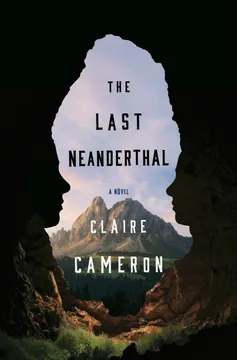
The novel asks readers to imagine meeting a Neanderthal woman called Girl, not as a monster but as a powerful, curious person who can recognize another mind. The imagined greeting ends with two palms touching and both beings understanding that they are not alone.
This frame unsettles the usual story of human superiority before the alternating narratives begin: an archaeologist will uncover two ancient bodies together, while Girl’s life shows what tenderness, hunger, intelligence, and loss looked like from inside a Neanderthal family.
The imagined palm-to-palm greeting establishes recognition as the book’s central test of humanity. Instead of beginning with extinction as a puzzle to be solved, the prologue asks readers to picture an individual encounter before deciding what separates species. Its intimate scale also prepares for the novel’s paired narratives: one woman studies ancient remains, another lives through the bodily costs that eventually become remains. The frame does not claim that difference is meaningless. It asks whether difference has been made to carry too much moral weight, especially when survival is mistaken for proof of superiority.
Warmth Before the Hunt
Girl wakes in a cliffside hut among her family, where shared warmth and familiar routines help them survive a dangerous landscape. Big Mother leads the group, Him is the strongest hunter, Bent has a damaged arm, and Runt is a thin foundling whose place remains uncertain. Their old cat, Wildcat, sleeps beside Girl.
As spring approaches, the family prepares to hunt, but the bison herd is smaller than usual and a young leopard has entered their territory. Girl’s body begins its first heat, a sign that she is old enough to seek a family of her own. She hides the change and walks with the others toward the crossing, unwilling to think about leaving the only home she knows.
The family is both a practical survival unit and Girl’s sense of self. Food, warmth, labor, and affection circulate through the same small group, so puberty is not merely a private bodily change: it threatens the arrangement that keeps everyone alive. The thinness of the bison herd and Runt’s precarious membership introduce scarcity as a force that shapes tenderness. Nobody can afford pure sentiment, yet care is visible in repeated acts of feeding, teaching, and sharing shelter.
Two Skulls Face Each Other
In a cave near Vallon-Pont-d’Arc, archaeologist Rose Gale has already found the skeleton of a modern human. While excavating with her assistant, Andy, she brushes away sediment and recognizes the brow and skull shape of a second body as Neanderthal. The two skeletons lie in the same layer, facing one another, a position that makes Rose suspect they knew each other.
Their proximity could challenge the familiar claim that Neanderthals were intellectually inferior, though it cannot by itself prove how they lived or died. Rose is working on limited funds and is secretly pregnant, but the discovery pulls her deeper into the site. She asks Andy to keep recording the find, even as exhaustion and her private worries press in.
The find is powerful precisely because it is suggestive rather than conclusive. Rose sees an arrangement that invites a story of intimacy, but archaeological context cannot preserve a glance or certify a relationship. Her scientific caution and emotional response therefore coexist from the start. The bodies also turn her abstract interest in Neanderthal cognition into a human encounter, complicating the boundary between professional evidence and personal need.
The Calf Takes Bent
At the river crossing, Big Mother signals the family to target a bison calf. Girl frightens it into the narrow channel, but the calf charges instead of retreating, trapping her between it and its returning mother. Bent leaps onto the cow and twists her head aside, giving Girl time to escape. The bison go down, but Bent has been gored and trampled.
The family gathers around him, humming and holding him as his life ebbs; afterward, they bury him in a shallow grave. They kill the stranded calf for meat, and Girl offers Runt a prized piece, helping the anxious boy feel included. Big Mother still asserts her authority over the hunt, reminding Girl that strength and skill do not yet make her head of the family.
The hunt exposes the cost hidden inside the family’s competence. Their tools and knowledge make a kill possible, but they cannot make it safe. Bent’s rescue is an act of care that also removes the person who handled many essential tasks. Girl’s kindness to Runt suggests a different kind of leadership, while Big Mother’s correction shows why succession cannot happen by strength alone. Authority must be negotiated within a group that depends on every body.
A Grant With Strings
Rose travels to New York to present her research to the Ancient History Museum. She argues that the archaeological record does not support the idea that Neanderthals were cognitively or technologically inferior. When curator Guy Henri demands stronger evidence, Rose shows the committee a photograph of the two skeletons facing each other.
The image moves the room, and the museum grants her a major sum to finish the excavation by August. On the flight home, a pregnancy test confirms what she suspects. Rose tells her partner, Simon, that they are expecting a child, and he is delighted. His joy does not erase her concern that pregnancy could interrupt the work and recognition she has spent years trying to secure.
Rose’s evidence succeeds through an image that is emotionally legible before it is scientifically settled. The committee funds the excavation partly because the bodies can carry a compelling public story, a fact that will later complicate Rose’s control over interpretation. Her pregnancy arrives at the same moment as professional opportunity, turning two hoped-for futures into competing claims on her time. Her hesitation is not lack of affection; it is awareness of how institutions distribute credit and care unevenly.
The Forbidden Pair
After Bent’s burial, Girl and Him share a sexual encounter while working at the river. Their attraction overwhelms the vigilance that normally protects the family, and Big Mother recognizes the danger when she smells what has happened. She has taught the children through stories that close kin should not mate, but Girl and Him have not understood the warning as a rule with consequences.
Big Mother orders Girl away until the fish gathering, believing the family cannot risk the pair repeating the act. Girl tries to submit and stay, but her mother refuses to reverse the decision. She leaves with her spear and shell, carrying the loss of her home as well as the guilt and confusion of being sent away by the person who raised her.
Big Mother’s choice is neither simple cruelty nor a rejection of Girl. She must protect a small group whose survival depends on future alliances, and she acts on knowledge the younger generation has not yet acquired. The episode reveals how inherited stories can fail when they communicate fear without making its stakes tangible. For Girl, desire is a bodily fact, while the rule is only an explanation supplied after the fact. The conflict begins when those forms of knowledge collide.
A Project Taken Over
As Rose’s pregnancy advances, Guy arranges for primatologist Caitlin Alfonso to manage the dig during Rose’s leave. Rose challenges the move and invokes her legal right to decide when she can work.
She stays on site, but the museum’s plans and a journalist’s visit make clear that scientific control is also a fight over publicity. Caitlin brings the reporter into the cave, angering Rose, whose fear of contamination and misrepresentation is acute. At home, Simon’s teaching work disappears, sharpening their financial worries.
He wants Rose to return to London before the baby arrives; she believes leaving will cost her influence over the excavation. Their arguments expose the strain of trying to build a family while both partners’ work remains insecure.
Rose’s professional conflict is not simply ambition against motherhood. The museum can praise her discovery while quietly transferring authority away from her, and the unpaid leave policy makes care a private financial burden. Her insistence on remaining at the site protects her work but also narrows her ability to accept help. Simon’s position is not an easy counterpoint: he faces employment insecurity too. Their conflict grows from unequal bodily risk and shared economic pressure, not from a lack of attachment.
Horns in the Blood
Alone on the edge of her family’s land, Girl senses danger moving through the trees and returns despite Big Mother’s order. A leopard pair attacks her near the camp. Him is already dead, while Big Mother and Runt have climbed into a tree. Girl fights with her spear and a discarded cloak, driving off the cats, but Big Mother has a deep wound in her side.
The old woman understands that she will not recover. She passes her bison horns to Girl, recognizing her as the one who must keep the family going, and dies with Runt close by. Girl has lost Him and Big Mother in one assault; only Runt remains beside her, and leadership now means protecting a child while grieving without time to stop.
The succession Big Mother once tried to manage through rules arrives instead through catastrophe. Girl becomes responsible not because she has won a contest but because the people who held the family together are gone. Her survival depends on instinct, yet the horns turn instinct into a social role that Runt can recognize. The scene makes leadership an embodied inheritance: not abstract authority, but the obligation to feed, shelter, and keep watch for someone weaker.
An Empty Fish Run
Girl takes Runt to the seasonal fish gathering, where they are the only human family to arrive. They catch enough fish to eat and preserve, but the absent families leave Girl isolated. When a male bear attacks a mother and her cubs, Runt rushes from hiding and frightens him off by waving a branch and making himself seem dangerous.
Girl is proud and alarmed: his action may disturb the truce between their groups. Later, she notices an upright figure watching from a distant tree. It does not approach when she offers a greeting. Once the fish season ends, Girl follows its scent and tracks with Runt, hoping it belongs to her sister’s family and might lead them back to other people.
Runt’s intervention shows that usefulness is not the same as obedience. His courage saves the cubs but risks a peace Girl needs, forcing her to confront the limits of teaching through example. The empty gathering also makes social isolation concrete: fish are abundant, yet the season fails in its other purpose of connecting families. The unseen scout offers hope while withholding certainty, shifting Girl’s attention from familiar territory toward an unknown community.
A Birth Between Storms
At the excavation, Andy injures his back while helping Rose stand, and the team sends him to hospital. Without him, Rose can no longer work safely at the site. Back in her flat, she rests until her water breaks and labor begins earlier than expected. She walks to the village hospital alone, then endures a difficult delivery in which Jacob’s heartbeat slows.
At the doctor’s urging, she makes one forceful push, and the baby emerges with the cord around his neck. He survives, but Rose is exhausted and shaken rather than triumphant. Simon arrives after the birth. Jacob struggles to feed and develops jaundice, so mother and child return to hospital for treatment, beginning a period of medical worry and fragmented sleep.
Rose’s birth overturns her confidence that preparation can make a bodily event manageable. Her professional competence remains, but it cannot control labor or guarantee a safe outcome. The single push becomes a moment of agency inside dependence on medical staff and chance. Her relief is inseparable from fear, and the newborn’s health extends that fear beyond delivery. The novel places this vulnerable beginning beside Girl’s approaching winter birth, making modern medicine and prehistoric isolation feel different in degree, not in the stakes of a mother’s body.
Big Girl Under Dirt
Following the scout’s tracks, Girl and Runt reach a camp that belongs to Girl’s sister, Big Girl. No one answers their greeting. Beyond the hut, Girl finds Big Girl’s body, recognizable by her red hair, missing front teeth, and horns. Sunbite has killed her, and the rest of the family has been buried nearby.
Girl digs her sister’s bones from the open ground and lays them with the others, then uses the fire and Runt’s company to endure the night. The camp holds unfamiliar traces: carefully stitched hide, a strange fire arrangement, and a fine bone tool. Runt studies these objects eagerly. Girl sees practical clues but does not yet grasp that they point toward another way of living.
The discovery destroys Girl’s expectation that kinship will restore her to a functioning family. Big Girl’s identity is made legible through intimate physical details, so recognition arrives before acceptance. The burial also forces Girl to take up a task her own family’s practices have taught her to perform. Meanwhile, Runt’s attention to unfamiliar tools marks a difference between them: he treats strange objects as invitations, while Girl’s inherited caution treats them as disruptions.
Runt Follows the Marks
While repairing the camp, Girl notices a stitched hide and other evidence of unfamiliar makers, but she wants to finish the shelter before the weather turns. Runt keeps trying to direct her toward marks cut into a tree. She dismisses his insistence, and he leaves without her. Girl follows his prints until snow and darkness erase them, then returns to an unfinished hut as a severe storm begins.
She digs a burrow beneath a tree and waits with Wildcat, hoping Runt will find his way back. He does not. With no family to help and too little food stored, Girl enters the long winter alone, pregnant and unsure whether the boy is lost, dead, or traveling toward the people whose traces he noticed.
The separation is driven by a failure of attention on both sides. Girl sees shelter as the urgent need because weather has always been the decisive threat; Runt sees signs that could lead beyond the patterns she trusts. Her refusal is understandable and costly, while his departure expresses a curiosity that her culture has not taught her how to interpret. The storm then removes the possibility of immediate repair, turning a disagreement into an existential separation.
The Winter’s Last Meal
Trapped by repeated storms, Girl’s stored food runs out and her body weakens while the baby continues to demand nourishment. She kills Wildcat and eats his meat to stay alive. When labor begins, she gives birth alone in the burrow. The infant is too weak to nurse, and Girl has no food, water, or milk to sustain him.
As her strength fails, she covers the baby’s mouth and nose, ending his life rather than leaving him to die slowly in the cold. Afterward, she boils his bones, buries them beneath a tree, and keeps his curved forearm bone. Near death herself, she waits for the weather to change with the small bone as her remaining link to the child.
The scene refuses an easy distinction between maternal love and survival. Girl’s choices are made under starvation, isolation, and a body consuming itself; the infant’s death is neither sentimentalized nor treated as a moral lesson. Her act is devastating because she understands the child as family and still cannot provide what life requires. Keeping the arm bone gives grief a material form, but it cannot undo the decision. The novel makes survival costly without making it proof of virtue.
Caitlin Holds the Baby
After Jacob’s jaundice requires hospital treatment, Rose returns home weakened, infected, and unable to sleep. Simon hires Marie to help, but Rose remains consumed by fear that Jacob will stop breathing. One night, his crying drives her to stand over the bassinet in a rage, desperate to silence him. Caitlin, who has come to check on her, takes the baby and stays while Rose sleeps.
When Rose wakes, Caitlin admits that she recognized the danger because she once lost a baby while alone. Rose embraces her, and their professional antagonism gives way to a shared understanding of postpartum vulnerability. Caitlin’s intervention does not make Rose instantly well, but it keeps a moment of exhaustion from becoming irreversible.
Rose’s crisis exposes how the language of natural motherhood can conceal danger. She is not short of intelligence or love; she is injured, sleep-deprived, and carrying responsibility that no one person can safely bear alone. Caitlin’s help matters because it is both practical and biographical. Her past loss does not grant her perfect insight, but it lets her recognize a situation Rose cannot name. The relationship shifts from competition over authority to care grounded in disclosed vulnerability.
The Same Blood
When spring light returns, Girl finds meat, nuts, and her missing shell left near her shelter. Runt has survived and is searching for her. She follows his tracks to a group of modern humans, where he stands beside a woman who has treated him kindly. Girl lowers her spear; the woman lowers hers, and they approach with open hands until their palms meet.
In the present, Rose returns to the dig with six-week-old Jacob and uncovers a small, curved infant bone near the Neanderthal skeleton. Its shape recalls the deformity Girl recognized in her child’s arm. Rose cannot prove the bone’s story, but the find deepens her sense that the bodies belonged to lives, not types. She begins the account that will introduce them to the public.
The paired endings answer the prologue without pretending that archaeology can recover every private fact. Girl and the modern woman choose cautious recognition, while Rose finds a child’s bone that links the scientific site to the intimate losses narrated elsewhere. The evidence remains incomplete, which is precisely why interpretation matters. The novel’s resolution does not prove that every encounter was peaceful or that every Neanderthal story is knowable. It insists that uncertainty should not be filled automatically with inferiority.
Analysis
The Last Neanderthal challenges the habit of treating survival as a verdict on worth. Rose’s research begins from a scientific dispute about whether Neanderthals were cognitively inferior, but Girl’s narrative makes the question bodily: she hunts, remembers, cares, misjudges, grieves, and adapts. The novel does not need to claim that Neanderthals were identical to modern humans. It shows that the familiar opposition between rational humans and instinctive predecessors is too blunt to describe either group.
The parallel maternal stories sharpen that argument. Rose has a hospital, medical staff, and eventually help from Caitlin, yet childbirth and early care still leave her physically exposed and frightened. Girl faces the same vulnerability without those supports, and her losses cannot be softened into a story of noble endurance. The comparison is not that their circumstances are equal, but that bodily dependence is part of human life across radically different conditions.
The book is also skeptical about who controls the stories attached to evidence. Guy wants an image that can be understood at a glance; Rose wants an interpretation that can withstand scrutiny. The skeletons invite the word lovers, but the novel keeps the archaeological uncertainty visible. That tension is ethical as well as scientific: readers are asked to feel connection without pretending that feeling is proof.
Finally, family is portrayed as both shelter and constraint. Big Mother’s rules protect a fragile group, yet inherited habits cannot anticipate every new danger. Runt’s curiosity carries him beyond those habits, while Girl’s caution keeps them alive until it cannot. Their eventual encounter with modern humans offers recognition, not a tidy reconciliation of history. The book leaves readers with a narrower, more demanding question than which species was superior: what kinds of attention allow one living being to recognize another before fear decides what it is seeing?
Review Summary
The Last Neanderthal receives mixed reviews. Many praise its portrayal of prehistoric life and the parallel storytelling between a Neanderthal girl and a modern archaeologist. Readers appreciate the author's research and imaginative depiction of Neanderthal society. However, some find the modern-day narrative less engaging and the protagonist unlikeable. The book's exploration of motherhood, survival, and human nature resonates with many readers. Criticisms include an unsatisfying ending and occasional scientific inaccuracies. Overall, the novel is lauded for its unique concept and thought-provoking themes.
Characters
Girl
A wary Neanderthal hunterGirl is a strong, observant young woman raised in a small Neanderthal family. She learns to read weather, animal movement, scent, and terrain as parts of one living world. Her instincts make her an able hunter, but her attachment to family can pull her attention away from immediate danger. She is drawn to warmth and connection, yet she is also capable of acting decisively when food or shelter is at stake. Girl’s perspective is practical rather than abstract: she understands care through feeding, carrying, protecting, and sharing work. Her struggle to balance inherited rules with new circumstances gives the prehistoric narrative its emotional center.
Rose Gale
An archaeologist guarding her findRose is a driven paleoarchaeologist whose research challenges the assumption that Neanderthals were intellectually inferior to modern humans. She trusts careful excavation, but she also follows hunches and feels the emotional force of evidence that cannot fully explain itself. Her work gives her independence and purpose, while the professional world around her makes credit and authority feel precarious. Pregnancy and early motherhood expose the limits of her self-sufficiency without erasing her ambition. Rose’s dry humor and scientific confidence often help her manage fear, though they can also keep others at a distance until she accepts their support.
Runt
A foundling with restless curiosityRunt is a frail boy taken in by Girl’s family after another group abandons him. His uncertain place makes him attentive to food, safety, and the gestures that signal acceptance. He is physically slight but persistent, observant, and eager to understand things that others overlook. His chatter and unusual interests can frustrate Girl, who is responsible for teaching him how to survive. Beneath the vulnerability is a strong capacity to adapt. Runt’s need to belong is matched by an impulse to explore beyond familiar routines.
Big Mother
The family’s hard-won authorityBig Mother leads Girl’s family through accumulated knowledge and a keen sense of risk. Age has weakened her body but not her judgment, and she keeps routines stable because predictable practices help a small group endure. She expresses affection through food, touch, and protection more readily than through words. Her authority can be stern, even frightening, but it is grounded in years of watching what keeps people alive. She worries about succession and the family’s future, especially Girl’s role within it.
Him
Girl’s strong older brotherHim is the family’s principal hunter and a skilled maker of tools. His broad strength and adult status give him influence, but he is also governed by appetite, rivalry, and the immediate demands of survival. He helps maintain the family’s practical life and carries expectations associated with protecting the group. His relationship with Girl is shaped by the intimacy of shared upbringing and the changing pressures of adulthood.
Bent
The family’s gentle helperBent is a kind and useful member of the family whose bent arm limits some tasks but does not define his contribution. He watches over Big Mother, helps with practical work, and responds to danger with courage. His tenderness is shown through small gestures rather than speeches. Bent’s presence reflects how a family values bodies for the work and care they offer, not simply for physical perfection.
Wildcat
Girl’s hungry companionWildcat is a ring-tailed cat who lives near Girl’s family and forms a close bond with her. He seeks food whenever the opportunity appears, yet their relationship includes play, trust, and familiar gestures of affection. Wildcat remains an animal with his own needs, not a human pet, and Girl understands that hunger can limit loyalty. His presence offers companionship outside the family’s social order.
Simon
Rose’s thoughtful partnerSimon is Rose’s partner, an English teacher who wants a child and a more settled life with her. He is considerate and adaptable, often using humor to ease awkwardness, but he faces his own employment uncertainty and cannot fully experience the physical burden Rose carries. Their relationship is affectionate and intellectually lively. The pressure of parenthood tests how well their separate ambitions can become shared responsibilities.
Andy
Rose’s loyal excavation partnerAndy is Rose’s older assistant and friend, a former finance worker who turns to archaeology later in life. He brings patience, practical skill, and a teasing warmth to the excavation. His grief for his late wife gives him an understanding of loneliness that he does not always voice directly. Andy often notices Rose’s needs before she admits them, making his support a steady counterweight to the dig’s professional pressures.
Caitlin Alfonso
A guarded primatologistCaitlin is a respected primatologist recruited to manage the practical side of Rose’s project. Controlled and sparing with humor, she approaches fieldwork with a discipline shaped by difficult experience. Her professional reserve can look like judgment, especially to Rose, whose authority feels threatened by the museum’s decisions. Caitlin’s understanding of animal behavior and vulnerability informs how she thinks about human mothers and the demands of infant care.
Guy Henri
A curator seeking a public storyGuy is a museum curator who wants to turn a struggling institution into a prominent public destination. He recognizes that Rose’s find could draw attention and funding, but he favors a crisp story that can be understood quickly. His business-minded approach is not identical to scientific fraud, yet it creates pressure to package uncertain evidence before researchers have settled its meaning. He is polished, strategic, and comfortable using institutional power.
Big Girl
Girl’s sister and modelBig Girl is Girl’s older sister, remembered for her humor, strength, and distinctive missing front teeth. She has already formed a family of her own, making her both a model for Girl and a reminder that leaving home can be part of survival. Girl’s memories of games and shared care give their sisterhood a lively presence even when they are apart.
Jacob
Rose and Simon’s newbornJacob is Rose and Simon’s first child. His birth brings joy to Simon and a profound new responsibility to Rose. As a newborn, he communicates through feeding, crying, and sleep, requiring care that quickly reshapes the adults’ routines. His vulnerability makes the gap between knowing how to care for a baby and being able to do so under exhaustion painfully clear.
The human woman
A stranger willing to approachThe unnamed woman belongs to a group of modern humans and becomes Runt’s companion. She is cautious around Girl but attentive to what Runt has told her. Rather than letting fear dictate her response to an unfamiliar body, she chooses to approach slowly and openly.
Plot Devices
The alternating timelines
Two lives answer one questionThe novel shifts between Rose’s excavation in contemporary France and Girl’s life in prehistory. Rose encounters the past through fragments, while Girl’s sections give those remains hunger, kinship, danger, and grief. The two threads do not simply explain one another; they make each other harder to reduce. Rose’s scientific work gains emotional stakes, and Girl’s story complicates the categories used to classify her people. Their parallel experiences of pregnancy, professional or familial vulnerability, and care build toward a final recognition across time.
The family’s sensory language
Survival carried by sensationGirl’s family communicates through a small vocabulary, gestures, scent, touch, sound, and shared attention. Their language reflects a world in which danger may arrive faster than deliberate speech. A hand on the head can signal submission, a raised palm can offer peace, and a familiar smell can call up a person or a place. This device makes the reader inhabit their method of knowing rather than treating it as primitive. It also lets the family’s emotional bonds appear through concrete acts instead of extended explanation.
The sea shell
A portable memory of belongingThe shell that Big Mother gives Girl is a keepsake, a sound-making object, and a reminder of the sea and of family stories. It passes through moments of separation and becomes meaningful to Runt as well as Girl. Its role is deliberately physical: it can be worn, held, and listened to, carrying memory when the person who taught the story is absent. The shell also creates a small bridge between different ways of understanding the world, without requiring either character to explain the whole meaning in words.
The paired skeletons
Evidence that invites interpretationThe Neanderthal and modern human remains lie in the same archaeological layer, facing one another. Their position is evidence Rose can document, but the emotional meaning of the pose remains uncertain. The museum sees a compelling public image; Rose sees a scientific question; readers have also witnessed a prehistoric life that makes intimacy possible without proving who the bodies were to each other. Later discoveries around the Neanderthal skeleton deepen that possibility while preserving the limits of what excavation can establish.
Download PDF
Download EPUB
.epub digital book format is ideal for reading ebooks on phones, tablets, and e-readers.








