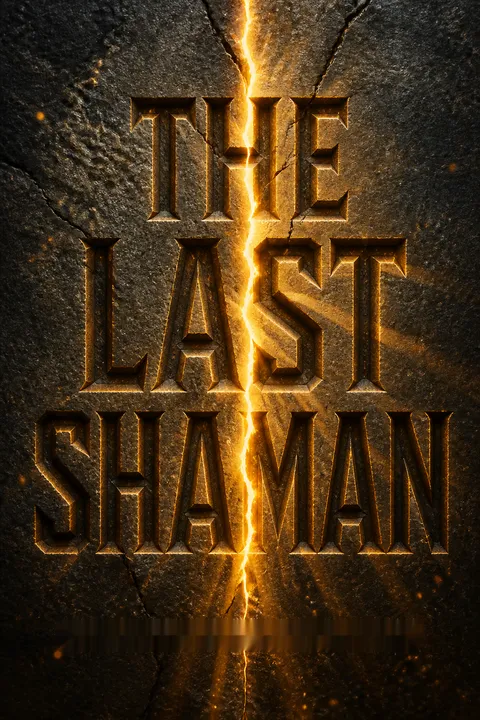


Plot Summary
Prologue
The narrator recalls colonial men swapping safari nightmares, then asks them about dangerous women. The joke turns serious: the men avert their eyes, and one admits that some subjects are too frightening to discuss.
The narrator presents Maxine Carlyle as the kind of woman who draws men into reckless danger, and frames what follows as their shared story. The comic bravado sets up an uneasy question: is Maxine truly the danger, or do the men around her mistake their own choices for her power?
The opening uses colonial humor to expose how fear is converted into a social story. The men can discuss predators and violence as entertainment, but a woman who unsettles their control leaves them speechless. That framing primes readers to see Maxine through Mark’s attraction and resentment, while also inviting doubt about his judgment. The prologue’s claim that this is a story about a dangerous woman is therefore both a hook and a bias to be tested. Mark’s own decisions, not Maxine’s reputation alone, will determine how much danger he enters.
The Toothache Reunion
After returning to the Republic for his father Stan’s memorial, Mark Vale finds himself stalled in middle age. His once-popular book, The Magician’s Way, has not protected his coaching business from collapse; expensive debts press in, and his wife, Kirsten, and their children are far away after another separation. At the Manzimwe Mission Hospital, an infected wisdom tooth leaves him feverish and helpless.
Dr. Maxine Carlyle, his childhood friend and lifelong romantic fixation, recognizes him and arranges treatment. Once the painkiller takes hold, Mark admits that he can teach others to create success but cannot see what he truly wants for himself. Maxine takes him on a drive, promising to show him something that may answer his questions.
Mark’s crisis is not simply financial. He has made a public identity out of creative mastery, yet his own life has become evidence he cannot explain. The gap between his teaching and his experience leaves him ashamed and dependent on other people to tell him what is true. Maxine enters at precisely that vulnerable point, combining real care with the emotional charge of an old attachment. His pain and sedation soften his defenses, but also make him receptive to her account of the world. The story begins by placing a man who doubts his own judgment beside a woman he has long idealized, making discernment as important as desire.
The Cave's Red Thread
Maxine leads Mark to a cave in the Lesoti Mountains, where a six-thousand-year-old San mural traces a shaman’s passage through a crack in the rock and a battle with hostile spirits. She interprets its antelope, lions, and human-animal figures as evidence of a healing journey rather than a hunting tale.
Mark is initially skeptical, then struck by the lifelike image of an eland and the mural’s force. He sees a possible bridge to a creative awareness deeper than the techniques he has taught. Maxine explains that the Republic’s rulers have hunted the surviving shamans, and that only one may remain. Artillery shakes the cave as she describes a tradition that could restore the people’s spiritual power.
The mural gives visible form to Mark’s abstract problem. He has learned that intention can produce results, but not how to distinguish a genuine aim from a desire driven by fear or insecurity. The painted journey suggests that insight requires entering what is hidden, not merely applying a stronger will. Maxine’s interpretation is persuasive partly because Mark sees the art for himself, yet its meaning remains an interpretation rather than proof. This ambiguity matters: the cave opens Mark to wonder, but it also lets him project his own hunger for a complete answer onto the ancient image.
Manzimwe Breaks Open
On the drive back, Maxine tells Mark that her fiancé, Roger Stratton, has been investigating the killing of shamans and plans to find the last survivor in the Meluti Swamps. Mark refuses to join them; he wants to leave the country and return to his children. Then the road into Manzimwe reveals burning shacks, looted shops, fleeing families, and soldiers assaulting civilians.
At the hospital, nurses tell Maxine that Roger has been found dead, bound and shot. She chooses to stay and treat the wounded, while administrator Dr. Moses Kanda sends her with Mark toward the Irrigation Scheme. Rebel child soldiers stop their vehicle. Chollo, Mark’s armed tracker, shoots two; Mark drives over the wounded third as they escape.
The violence turns the shaman quest from an enticing idea into an immediate moral test. Mark’s first instinct is still escape, but the war makes neutrality impossible: even a route home passes through other people’s danger. Maxine’s decision to return to the hospital follows her professional duty, while Roger’s murder makes the mission personally costly. Mark helps her leave, yet the killing of the child soldiers leaves him disturbed rather than triumphant. The scene refuses a clean division between courage and violence. His survival depends on actions that damage his sense of himself, and that unease follows him into the next choice.
A Family Sends Him
At the Vale estate, Mark’s older brother Martin warns that the Meluti is a lethal maze of predators, smugglers, and people changed by what they encounter there. Their mother, Cynthia, reports that rebels have attacked the capital airport and grounded all flights.
She argues that Mark’s safest route to his family abroad is through the swamps, and that Maxine needs an escort. At dinner, she reveals that Stan secretly protected Maxine from government reprisals for years, a debt Maxine never knew she owed.
Though the family doubts the mission, Mark stops treating it as merely Maxine’s adventure. He chooses to seek the shaman and serve something beyond his own escape. Before dawn, Maxine gives him an intravenous injection for his tooth and fever; he slips into a coma.
The family debate makes Mark’s indecision visible in the people who know him best. Martin equates staying with responsibility, while Cynthia sees leaving as the only practical route to survival. Neither can choose Mark’s purpose for him, even when they attempt to steer him. The revelation about Stan also unsettles Maxine’s belief that her activism has operated independently of the estate’s protection. Mark’s commitment appears self-directed, but it remains entangled with his longing for Maxine and his wish to prove his worth. The injection and coma quietly prepare the story’s central uncertainty: whether his coming ordeal is a dream, an experience of another world, or both.
The Gorge Crossing
Mark, Maxine, Chollo, and Maxine’s driver, David, launch a small fishing boat into the Muchocho River, hoping to reach the Meluti without crossing a military checkpoint. When soldiers appear on the bank, Mark spins the boat into the rapids, and the group pretends to be helplessly swept away.
The current carries them through the Stanley Gorge under scattered gunfire, then throws all four into the freezing water below a waterfall. They reach the lake and recover the boat.
Chollo insists that a water spirit tried to drown him; Mark blames the waterfall. After warming themselves with the port intended for a village headman, they motor toward Mlumu. The villagers are waiting, not with weapons raised, but because the headman’s daughter has fallen into a coma.
The passage through the gorge is a physical threshold and a change in Mark’s relationship to control. He avoids the soldiers not by commanding events but by using the current and improvising a convincing appearance of helplessness. The crossing nearly kills the group, and Chollo’s account of a spirit challenges Mark’s preference for explanations tied to familiar physics. Even so, Mark has no reason yet to accept the supernatural literally. The village’s welcome shifts the journey from a private search for wisdom to an obligation toward actual people. Their daughter’s illness will force Mark to act before he can settle what kind of world he has entered.
The Corkscrew Operation
The girl, Yapile, is the daughter of Mlumu’s headman, Veeti. Maxine diagnoses a dangerous blood clot pressing against her brain, but the village has no surgical drill to relieve it. Dumani, an erudite adviser dressed like a local hunter, notices that Mark brought a corkscrew and suggests it could pierce the skull. Maxine prepares the child and steadies her head; Mark has to perform the drilling himself.
He imagines the corkscrew passing cleanly through the bone, then turns it into Yapile’s temple. Blood spurts, but Maxine confirms that the pressure has been released. The villagers accept the pair as useful guests, and Mark discovers that focusing on the needed outcome can carry him through a task he would once have considered impossible.
The improvised surgery gives Mark a test with consequences no theory can soften. His familiar method of holding an outcome in mind helps him act, but the act is not a demonstration of effortless mastery: a child’s life depends on the accuracy of his hands. Maxine contributes clinical judgment, while Dumani sees a use for an object everyone else would dismiss. Their different kinds of knowledge combine under pressure. The episode also complicates Mark’s identity as a teacher of magic. He has to accept responsibility before he feels qualified, and his first meaningful act in the swamps is not self-improvement but service to a frightened family.
A Myth With Teeth
Dumani takes Mark fishing and tells him that the last shaman is a Lapedi myth: each person must preserve the people’s connection to the world, rather than wait for a single savior. He asks Mark to confront his own uncertainty instead. A scout appears to Mark first as a baboon, then as a man with a rifle, and Dumani treats the transformation as ordinary.
When Mark follows his guidance and catches a large tiger fish, Dumani promises to train him. He also warns that one member of their party does not belong. Maxine later studies Dumani’s medical knowledge and suspects he is Cedric, the president’s educated brother who fled an order to kill him. She still believes they have found the singular shaman they came to rescue.
Dumani’s first lesson refuses the heroic premise that brought Mark into the swamps. The search for a savior may be a way to avoid responsibility for one’s own life, a point that lands directly on Mark’s dependence on advisers. The scout’s apparent shape change destabilizes his assumptions, while the fish catch offers him a small, personal confirmation that his attention can affect action. Maxine interprets the same evidence differently, turning Dumani into the leader her political mission needs. Their disagreement reveals how easily a shared event can be made to serve separate hopes. Dumani’s warning about an outsider plants suspicion without yet naming its target.
The Medicine Opens
At the village’s initiation feast, a sorceress seems to become a leopard before returning to human form. Dumani takes Mark into the forest and gives him a mixture of cannabis and a powerful local medicine. Mark experiences telepathy, a strange being called a Tokoloshe, and a vision of himself as a man who has made not belonging his defining wound.
The vision swings from shame and nausea to an overwhelming sense of connection with the universe. When Mark wakes, his fishing rods and fuel have been stolen. He uses a detail from the Tokoloshe’s warning to ask the elder Mumuletu to recover them, and the goods return. Dumani explains that the theft was a test, but he refuses to tell Mark whether the Tokoloshe was objectively real.
The medicine does not simply give Mark dazzling visions; it makes his habitual defenses feel immediate and painful. He sees that his uncertainty may be a strategy learned in childhood, a way to avoid competing with his forceful mother and to stay out of his father’s way. The experience offers no simple proof of supernatural claims, since Dumani treats certainty about what is real as less useful than attention to what the experience reveals. The recovered gear gives the vision a practical consequence, though it does not settle its source. Mark is being asked to tolerate ambiguity without turning it into either credulity or dismissal.
Sibongila's Shape
Dumani teaches Mark that fear can distort perception but that denying real danger is no wiser. He guides him through the idea of innocence, an awareness that notices before it judges. Using it, Mark senses that the scout Sibongila is dying across a channel crowded with hippos and crocodiles. Dumani swims over while Mark covers him with a rifle, shoots a crocodile, and returns with Sibongila’s body.
The scout has been bitten by a supernatural snake and is trapped half man, half baboon. At the village, the council reports that the Portuguese Snake has taken Maxine after claiming a patient needed treatment, and has taken their boat. Mark wants to pursue her, but Dumani insists that he first understand the threat surrounding the village.
This section turns Mark’s new awareness into an ethical and practical skill. He does not merely perceive a hidden scene; he must risk trusting that perception while Dumani risks his body crossing the water. Yet the rescue comes too late, and Sibongila’s grotesque condition resists any comforting account of spiritual power. Maxine’s disappearance activates Mark’s oldest pattern, the impulse to make her rescue the answer to his own longing. Dumani’s insistence on the wider danger creates a conflict between personal attachment and collective need. The test is not whether Mark can stop caring, but whether he can act without letting fear decide what matters most.
The Heart Circle
At the council gathering, Sibongila’s wife mourns him with the whole village, and Mark uses the innocence Dumani taught him to witness her grief without reducing it to helplessness. The elders’ indaba then joins their separate observations into a shared account: a warlord called Colonel Commoro Graca, the Black Eagle, is about to destroy the Lapedi people.
Their visions show Graca as a man whose heart has been hidden by childhood trauma. The villagers believe a soul-retrieval ritual could restore it, but only if an eagle carries the healer into the Dreamtime. Mark sees the same image. When he wants to chase Maxine, Dumani tells him that she is an outside distraction, not his true purpose. Mark chooses to stay and help the village.
The indaba models a form of collective judgment unlike the competitive arguments Mark knows from his family. Participants speak in turn, allowing the whole pattern to emerge rather than forcing an early verdict. Mark first misreads the widow’s public grief, then sees it as a communal rite that makes loss bearable without denying pain. The shared vision of Graca reframes the enemy as a wounded person, but it also risks simplifying political violence into an individual psychological problem. Mark’s choice to stay is therefore not a claim that the village has all answers. It is a decision to stop making Maxine the center of every crisis and to accept responsibility for the threat before him.
An Eagle Takes Flight
Mark learns that no one in Mlumu can become a fish eagle; the villagers say the bird belongs to him. He practices shape-shifting by imagining the vibration of other beings, then finds the great black eagle perched above the swamp. His first attempt lets him experience the bird’s flight and struggle with a heavy fish, but he cannot direct it back to the village.
At the nighttime rite, the sorceress warns that the medicine needed to send him into the Dreamtime could kill him and would magnify every fear. The villagers paint his naked body with ochre, and Mark gives Yapile his phone, showing her the pictures he took of her. As the drumming begins, he experiences the people’s strengths as gifts and finally becomes the eagle.
Mark’s transformation depends on a community, not on an isolated burst of will. The villagers prepare his body, lend him their qualities, and recognize a role he could not claim alone. Giving Yapile the phone turns his modern possession into an offering that connects her to a wider world, while the ceremony strips away the status and clothing he used to define himself. The failed first flight is important: an intense experience does not mean he can command another being. He must learn to carry intention without confusing it with control. His new identity is both an inward discovery and a responsibility placed in public view.
Graca's Heart Restored
Flying toward the war zone, Mark is nearly dragged down by the grief and terror of the Republic. Memories of his own childhood at the estate pull him toward the belief that his family’s old acceptance can fill his emptiness, until the hunting dogs’ affection lifts him back into flight.
He reaches Graca’s camp before dawn and enters the commander’s consciousness. There he witnesses the massacre of Graca’s village, his father’s death, and the abuse and neglect that shaped his belief that only absolute power could make him matter.
Mark then shifts into Graca’s uninjured creative nature and sees the boy’s history without treating it as proof of his worthlessness. The vision releases Graca’s capacity for trust and leadership. In waking life, the Fighters retreat instead of launching their expected final attack.
The climax makes empathy an active intervention rather than a sentimental feeling. Mark does not excuse Graca’s violence; he enters the history that organized it, then holds that history beside a sense of the man’s value beyond it. The narrative imagines the warlord’s brutality as a wound that can be transformed when witnessed without the old verdicts attached. This is also Mark’s own test: his family memories nearly pull him back into seeking validation from the past, but the dogs’ uncomplicated affection helps him move forward. The sudden military retreat gives the dream a public consequence, though the novel leaves open how literal or symbolic that connection is.
The Dream Wakes
Mark wakes after four nights in a coma at the Vale estate. His family insists he never left his bed, and reports that the Rebels abandoned their attack without explanation. Mark calls the Meluti journey a dream, but Dumani and Veeti arrive in person and say their own dreams intersected with his.
They have brought Yapile, who has the same symptoms Mark treated in the dream: a head injury, a dilated pupil, and a coma. Mark recognizes the blood clot and insists on acting when the family hesitates over the risk.
He arranges a drill and performs an emergency burr-hole procedure. Days later, he takes Yapile to Manzimwe for medical care, where she is well enough to travel and be examined. The dream has not replaced reality; it has prepared him to meet it.
The waking reveal refuses the easy choice between dismissing the journey as hallucination and declaring every image literal fact. Mark’s body was genuinely ill, and the visitors’ accounts make the dream’s events feel shared, yet the novel offers no laboratory proof of their connection. What is certain is the change in Mark’s conduct. When the real Yapile arrives, he acts on knowledge that his family does not trust and accepts responsibility for the outcome. The parallel surgery makes the story’s central claim concrete: insight matters less as spectacle than as a capacity to respond. Mark’s new confidence is measured in a frightened child’s care.
Maxine's Last Exit
After taking Yapile to the Manzimwe hospital, Mark finds Maxine preparing to leave with Dominue, the man who calls himself the Portuguese Snake. Chollo shoots out the jeep’s tires, stopping her departure and provoking a confrontation with the soldiers.
Mark tells Maxine that her father was not killed in a hunting accident: his lover shot him, then claimed self-defense. Cynthia confirms the story. Mark argues that the hidden truth shaped Maxine’s habit of testing men and taking on ever more dangerous causes.
He also recognizes that she was about to repeat the pattern by following Dominue to help Colonel Graca. Maxine begins to see the pattern herself. Military police then reveal that Dominue abducts foreigners for ransom and killed Roger, giving her a reason to abandon the escape she had mistaken for duty.
Mark’s confrontation with Maxine is not a declaration that her courage is false. It asks whether courage has become a way to avoid an older grief and to keep repeating a test no one can pass. The revelation about her father supplies a hidden cause for her distrust, but it does not erase the value of her medical work or political commitment. Mark must also confront his own romantic fantasy: he can care for Maxine without treating her as his destined partner. Dominue’s criminal history gives the choice immediate stakes, grounding psychological insight in a concrete danger. For Maxine, seeing the pattern opens a possibility of acting from desire rather than compulsion.
Water at the Grave
Mark accompanies Maxine to Roger’s grave beside the ruined mission church. When she hardens against her grief, Yapile sings a mourning song, and local women and a priest join her. Maxine finally collapses onto the grave and weeps; afterward, she accepts water from the priest and lets him help her stand.
She returns with Mark, Chollo, and Yapile to the estate. Mark has spoken with Kirsten and expects her and the children to visit when travel resumes; the family also plans to give Yapile a home and schooling.
David has gone back into the bush, leaving Mark to wonder whether he had guided the journey from the beginning. Mark no longer needs a romantic rescue from Maxine. He recognizes her as a friend and turns toward the family and community he can actually serve.
The grave scene completes Maxine’s movement from relentless action into grief. The community does not solve her loss; it gives her a setting in which she can feel it without immediately converting pain into another mission. Accepting water from the priest is a small act, but it marks a willingness to receive care from a man rather than test or reject the masculine presence before her. Mark’s resolution is similarly practical. He does not declare his marriage repaired or the country healed; he begins rebuilding through contact with Kirsten, care for Yapile, and renewed belonging. The ending replaces the fantasy of one grand rescue with several relationships that require sustained attention.
Analysis
The Last Shaman builds its central argument through a deliberate instability between worlds. Mark’s coma allows the book to stage spiritual events with the vividness of physical adventure, then makes him test their significance after waking. The question is not simply whether he literally became an eagle. The harder question is what kind of knowledge can change how he acts when the evidence cannot be reduced to ordinary proof. The answer is practical: he recognizes Yapile’s injury, takes responsibility for a risky procedure, and stops waiting for his family to certify what he knows.
The novel also places individual psychology inside political violence. Mark’s lesson about a hidden wound becomes a way to interpret Graca, whose history of colonial and state brutality helps explain his hunger for power. That interpretation humanizes the commander without making his violence harmless. The story’s confidence that soul retrieval can interrupt political vengeance is more mystical than institutional, yet the later council of reconciliation suggests that collective structures must also change. Healing is imagined as both an inward shift and a public obligation.
Mark and Maxine embody different forms of escape. He turns his longing for wisdom into dependence on a teacher, while she turns grief and idealism into ever more dangerous causes. Their attachment has kept each of them focused on an imagined rescue: he hopes she will complete him, and she risks herself to prove that a cause can still be saved. Their eventual separation from those patterns does not deny their affection. It gives both characters room to act without making the other person the answer.
The book’s strongest ethical claim is that attention precedes judgment. The indaba, the animal encounters, and Mark’s changing view of the villagers all ask him to notice what his inherited categories conceal. This does not mean that danger is unreal or that optimism can replace action. The river contains soldiers and crocodiles; the hospital contains urgent injuries; war leaves bodies and grief. The point is not to deny these facts, but to meet them without allowing fear or a fixed identity to dictate every response. Mark’s growth is measured less by supernatural power than by his new capacity to choose, care, and participate.
Review Summary
The Last Shaman receives mixed reviews, with an overall rating of 4.31 out of 5. Many readers praise its vivid descriptions of African landscapes, spiritual insights, and life-changing messages. Some find it a gripping adventure tale with powerful lessons, while others describe it as slow-paced and difficult to engage with. Positive reviews highlight the book's ability to provoke thought and inspire personal growth. Critical reviews mention slow pacing, excessive dialogue, and a dogmatic approach to imparting wisdom. Several readers recommend starting with the author's previous work, "The Magician's Way."
People Also Read

Characters
Mark Vale
The uncertain magicianMark is a returned expatriate, a father, and the author of a successful self-help book whose principles have stopped answering his own problems. He wants to understand why achievement has not brought lasting security, but he is ashamed of needing others to interpret his life for him. His memories of a formidable father and a controlling mother help explain his habit of withdrawing when choices become consequential. Mark is drawn to Maxine, yet his attachment mixes affection with a wish to be rescued and validated. His curiosity, humor, and ability to act under pressure give him a route beyond self-doubt. He is most compelling when he learns that responsibility means choosing without certainty, not waiting until fear disappears.
Maxine Carlyle
The dangerous idealistMaxine is a doctor and human-rights activist whose energy draws people toward difficult causes. She is Mark’s childhood friend, former almost-sweetheart, and enduring emotional complication. Her work in a failing mission hospital is not a pose; she treats the wounded even as violence closes in around her. Maxine combines warmth with a restless appetite for action, and her idealism can make danger feel like proof of purpose. She has endured loss and political repression, but rarely lets herself remain still long enough to understand what those experiences have cost. Her relationship with Mark is shaped by care, attraction, and the painful mismatch between his private longing and her public commitments.
Dumani
The shaman teacherDumani is a village adviser with a scholar’s curiosity, a comic appetite for teasing, and a readiness to unsettle Mark’s assumptions. He moves easily between practical knowledge and spiritual instruction, treating the natural world as a source of information rather than scenery. His lessons are deliberately uncomfortable: he challenges Mark’s need to label experience, but also warns him not to confuse positive thinking with safety. Dumani is confident without being consistently gentle, and he uses tests, riddles, and sudden changes of mood to make his student notice how perception works. Beneath the theatrical teaching style is a serious concern for the community and for the people whose choices affect it.
Chollo
The instinctive trackerChollo is a tracker raised in the bush and trained by his father, Leechwe. He carries weapons, reads the landscape quickly, and speaks little, often making his intentions clearer through action than explanation. Mark has known him since childhood but has rarely understood him, partly because he measures people by the standards of his own culture. Chollo’s apparent severity conceals a deep ease in the world around him and a strong sense of loyalty. He is not a guide who reassures with speeches; he is the person who notices danger, stands his ground, and keeps moving. His presence forces Mark to question assumptions about intelligence, capability, and belonging.
David
The quiet guideDavid is Maxine’s driver, a capable man whose calm manner makes him easy for Mark to underestimate. He helps the group navigate the war zone and the river crossing, and he remains attentive to Maxine’s safety. Unlike Chollo, David is comfortable speaking with outsiders, but he is no mere servant: he has his own judgment and is at home in the Meluti. Mark’s suspicions about him grow from incomplete information and his own jealousy, while David’s understated competence repeatedly complicates that view. He represents a kind of guidance that does not announce itself. His exact place in the larger spiritual journey remains mysterious, even to Mark.
Cynthia Vale
The family matriarchCynthia is Mark’s mother and the commanding center of the Vale estate. She values order, inherited responsibility, and the family’s role in sustaining the Irrigation Scheme. Her authority can make others feel managed rather than understood, especially the estate’s African staff. Yet she is also practical and protective, capable of acting quickly when a crisis demands it. Cynthia’s love is real, though expressed through decisions and discipline more readily than emotional openness. Her relationship with Mark reveals both his tendency to defer to powerful women and her capacity to reconsider how her standards affect the people around her.
Martin Vale
The immovable eldestMartin, Mark’s oldest brother, manages the estate and sees himself as responsible for its workers, land, and family legacy. He distrusts the Meluti and regards Mark as unreliable, but his skepticism comes from practical fears as well as personal frustration. Martin believes that endurance is a moral duty and that abandoning the estate would betray generations of work. His certainty can become bluntness, especially when he thinks Mark is being led by emotion. Even so, he prepares the expedition and helps his brother leave, revealing care beneath his disapproval.
Oliver Vale
The skeptical brotherOliver is Mark’s brother, a sharp-tongued man who uses humor and drinking to cover his unease about the collapsing Republic. He mocks Mark’s past and distrusts the mission, but his jokes coexist with genuine concern for his family. Oliver is less invested in the estate’s solemn traditions than Martin, though he remains part of the same colonial household and its assumptions. His skepticism helps show how the Vales use ridicule to manage fear, especially when events exceed their control.
Kirsten
Mark's estranged partnerKirsten is Mark’s wife and the mother of their children. Their separation is tied to financial strain and the creative stagnation that followed Mark’s early success. Though she is mostly absent from the action, her importance is clear in Mark’s concern for the children and in his uncertainty about whether their family can continue. She represents a real relationship with shared history and responsibilities, unlike the idealized possibility Mark attaches to Maxine.
Colonel Commoro Graca
The wounded commanderGraca commands the Chitswa Freedom Fighters and is feared for the cruelty of the force advancing across the Republic. His people have suffered colonial humiliation and later political repression, histories that shape the movement he leads. He is associated with overwhelming power, but the villagers’ account suggests that his public strength may conceal a private wound. Graca embodies the dangerous possibility that pain can be organized into a political identity and then used to justify further harm.
Veeti
Mlumu's headmanVeeti leads Mlumu Village and is Yapile’s father. He is initially subdued, carrying both private sadness and the weight of protecting his community from outsiders. He values the village’s customs and its independence, while recognizing that isolation cannot shield it from every threat. Veeti trusts collective deliberation and relies on the indaba rather than issuing commands in every dispute. His role connects Mark’s personal journey to the lives and political choices of the people who host him.
Yapile
The girl with a futureYapile is Veeti’s young daughter, cherished by her family and village. Her intelligence and promise have made the community eager to send her to school beyond Mlumu. She begins as a child in need of help, but her presence also draws out care and responsibility in Mark. Her curiosity about the wider world makes her a natural bridge between the secluded village and the modern society beyond it.
President Selele
The threatened presidentSelele rules the Republic through a government associated with censorship, nationalization, farm seizures, and the persecution of spiritual leaders. His concentration of power has helped create the instability the country now faces. He is also connected to Dumani’s past, though the president’s political authority and his family relationships pull in different directions. Selele represents a regime whose fear of independent sources of influence has made it increasingly brittle.
Roger Stratton
Maxine's human-rights allyRoger is Maxine’s fiancé and a human-rights activist investigating the persecution of shamans. He shares her willingness to confront the Republic’s abuses, and his partnership gives her political work both practical support and emotional companionship. His absence from most of the narrative is felt through Maxine’s grief and the sudden vulnerability she faces after losing him.
Jessica Vale
The observant nieceJessica is a young member of the Vale family who records her view of the adults in a diary. She notices racial prejudice, family tension, and changes in her uncle Mark that the older generation tends to miss. Her perspective offers a child’s measure of the estate’s moral climate.
Uncle Jack
The troubled explorerJack is Mark’s uncle, a man whose past journeys into the Meluti have left him withdrawn and difficult to question. His stories about what he encountered there feed the family’s fear of the swamps. He shows that the wilderness can unsettle even those who believe they know it.
Dr. Moses Kanda
The mission administratorKanda administers the Manzimwe Mission Hospital and carries himself with practical authority amid shortages and violence. He recognizes Maxine’s danger after Roger’s death and asks Mark to help her reach the Meluti. Later, he provides medical oversight when Yapile needs care.
Sibongila
The village scoutSibongila is a skilled scout for Mlumu, accustomed to moving through the swamp in forms that conceal him. His knowledge serves the village, and his fate becomes a warning that unseen threats have entered territory the community thought it understood.
Dominue
The Portuguese SnakeDominue is a mulatto operative moving between the Meluti and Portuguese Territory. He presents himself as a man with urgent medical needs, but his presence makes the villagers wary. His smooth approach and unclear loyalties make him difficult to read.
Plot Devices
The San rock mural
A map into the unknownMaxine’s interpretation of the ancient mural gives Mark a visual model for shamanic travel: a figure enters another realm through a crack in stone, confronts hostile forces, and returns with healing. The lifelike eland convinces Mark that the painting deserves more than dismissal as primitive decoration. The image motivates his interest in the last shaman and prepares him to understand later experiences through thresholds, animal guides, and spiritual conflict. Its meaning is never reduced to a verified historical explanation; it works as both an archaeological object and a structure for Mark’s imagination.
Creative intention
Desire tested against purposeMark’s book teaches that focused intention can help bring outcomes into being, but his financial and marital problems expose the limits of will alone. Dumani’s lessons distinguish what Mark wants from what he truly values and repeatedly ask him to act without treating fear as proof. The idea gives shape to his choices in the river, the village, and the war. It also risks becoming a form of magical thinking, a tension the story preserves by placing intention beside practical dangers and responsibilities.
Innocence and the circle
A way beyond old assumptionsDumani and the villagers use circles, guided attention, and communal deliberation to suspend habitual judgments and notice what emerges. Mark’s inner-child imagery helps him experience the world without immediately sorting it into familiar categories. The indaba extends this practice to the whole village, allowing separate observations to form a shared understanding of the danger from Graca. These scenes turn spiritual teaching into a method for perception and decision. The resulting visions are treated as meaningful by the characters, though the story leaves their status open to interpretation.
Didakta and totems
Initiation through embodied riskDidakta is the village’s rite of passage, in which young men enter the bush and must rely on their own instincts. The community treats it as a spiritual initiation, not merely a test of toughness. Animal forms and totems extend this idea: a person may learn to understand another being by imagining its nature, and the fish eagle becomes central to Mark’s own passage. The rite links individual transformation to communal recognition, while its severity and danger keep the process from feeling like a harmless metaphor.
The Dreamtime journey
A dream with waking consequencesDuring Mark’s coma, the journey through the Meluti takes the form of a vivid shamanic adventure involving medicine, animal transformation, a shared village vision, and an attempt to restore Graca’s lost heart. After Mark wakes, Dumani and Veeti describe intersecting dreams, and Yapile arrives with the same medical crisis Mark treated in the dream. The device makes the boundary between dream and waking life porous without settling whether the events happened literally, spiritually, or through the mind’s power to prepare for action. Its most concrete consequence is Mark’s willingness to help Yapile in reality.
About the Author
Other books by William Whitecloud
Download PDF
Download EPUB
.epub digital book format is ideal for reading ebooks on phones, tablets, and e-readers.








