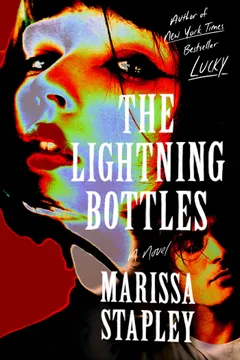


Plot Summary
Prologue
On the fifth anniversary of Elijah Hart’s disappearance, seventeen-year-old Hen Vögel keeps a drawing she rescued from a Berlin concert trash bin: a comic strip about Elijah and his wife, Jane Pyre. A new street poster in Berlin repeats its images, convincing Hen that Elijah may be alive and sending Jane messages.
Hen has never told anyone. Then Jane, whom the world blames for Elijah’s death, moves into the farmhouse next door. Hen spies on her, confronts her with years of anger, and discovers that her idol’s widow is lonelier and more wounded than the legend allows.
The opening makes fandom both a refuge and a distortion. Hen’s secret gives shape to a life narrowed by isolation, while her certainty that she can solve Elijah’s disappearance lets her approach an adult she has already judged. Jane enters as a public villain, but the encounter unsettles that easy division: her grief is private, not a performance for fans. The drawing turns celebrity into a material mystery, something Hen can touch and investigate, while the street art suggests that the story fans think is finished may still be unfolding. Yet Hen’s attachment also carries risk: she wants the legend to be true before she knows the people inside it.
A Friendship Through Static
In 1989, Janet Ribeiro, a gifted Ontario teenager trapped in her strict religious home, opens a music chat room and meets Elijah Hart, a young Seattle drummer hiding his love of alternative music. They begin exchanging letters and homemade recordings. Jane, as she chooses to be called, sends him songs; Elijah adds his voice and arrangements, revealing a gift he rarely shares.
When he hesitates to meet, Jane finally drives west after receiving his invitation, leaving home and crossing the continent in a failing car. She reaches Seattle by hitchhiking and bus. At Elijah’s door, the boy she has imagined becomes a real, nervous young man. Their first kiss gives Jane a home she has chosen, not inherited.
Their romance begins as a collaboration before it becomes an in-person relationship. Letters and tapes let both teenagers disclose parts of themselves that their families and peers have discouraged: Jane’s ambition and Elijah’s singing. Their distance also leaves room for projection. Jane travels toward a person she knows intimately through words but has never tested against daily life. Her departure is an act of self-authorship, yet it concentrates her hopes in Elijah. The story’s central tension is present from the start: intimacy can make two people feel recognized, but it cannot guarantee that one person can rescue the other.
The Song After Loss
In Seattle, Jane struggles to belong among Elijah’s friends, especially his volatile bandmate Kim Beard and Shawn, a friend with whom Elijah once used heroin. Elijah admits that he has battled addiction and that his father, Moses, drinks heavily.
Jane promises they will tell each other everything, but their fragile trust is tested when Alice and Moses die in a car crash. Moses had been drinking; Jane had shared whiskey with him the previous evening and concealed the fact, leaving her burdened with guilt.
At a club, Elijah refuses to numb himself and instead writes and performs a raw song about his mother’s death. Jane accompanies him. The performance becomes the seed of My Life or Yours, their first shared work with the power to change their lives.
The tragedy gives the couple a shared artistic language, but it also lays down a dangerous rule: love means staying close enough to prevent the next catastrophe. Jane treats secrecy as a temporary kindness, withholding what she knows about Moses to protect Elijah. He, in turn, presents her as the person who saved him from heroin. Their care is sincere, yet it begins to resemble responsibility for each other’s survival. The song transforms grief into something an audience can hold, but its later meaning will be contested because the private history behind art cannot remain private once the song becomes a public possession.
The Lightning Bottles Form
Kim’s contempt for Jane grows into a fight that ends the Marvel Boys. Elijah defends her after Kim knocks her down, then walks away from the band. Jane and Elijah name their duo the Lightning Bottles and begin building music around her lyrics, guitar, and bass, with his voice at the center.
Their manager, Petra Lakaois, helps them choose a Columbia deal that protects creative control. In the studio, however, producer Ham Garvin pushes a fashionable Seattle sound and treats Jane as an accessory, while the label prefers to hide her songwriting from a male audience.
Elijah insists she is the creative force behind many songs. When he fires Ham for dismissing her work, Jane gains a measure of professional respect, but learns how quickly the industry can turn her insistence into a reputation for being difficult.
The band’s formation gives Jane a public role, but the industry’s response immediately tries to divide the couple’s shared labor into a marketable male voice and an invisible female author. Elijah resists that division more openly than Jane can, partly because she still believes that success will make people understand her without requiring her to argue. Ham’s dismissal shows that the obstacle is not simply personal dislike; it is a commercial system that treats male authorship as the default. Jane’s growing assertiveness is necessary for the music and costly to her image, a conflict that will make silence seem safer even when it is harmful.
Fame Takes the Chorus
The Lightning Bottles’ performances at the Sand Dollar draw record executives, and My Life or Yours becomes the breakout single that carries their debut to rapid success. Jane and Elijah marry privately on a rainy Malibu beach, then appear in a staged concert video that feels false beside their secret vows.
Kim claims he co-wrote the hit and threatens legal action, putting its royalties at risk. The couple’s first public victories arrive alongside pressure to perform a version of themselves the label can sell.
At the Grammys, they win major awards, but jokes about Jane’s supposedly cold manner feed gossip that she is unworthy of Elijah. He thanks her publicly for their music; she recoils from the cameras and the envy around them. Their achievement enlarges the audience while shrinking their privacy.
The song’s success changes its ownership in the emotional sense before the court addresses its legal ownership. Listeners treat it as a personal message, while the label treats it as a product and Kim as an opportunity to reclaim status. Jane and Elijah respond differently: he reaches toward fans and public confession, while she protects the relationship by withdrawing. That difference is not merely temperamental. Public attention rewards Elijah’s openness and interprets Jane’s reserve as evidence against her. Their fame makes the private bond that generated the music harder to protect, even as it seems to confirm the dream that first brought Jane west.
The Tour Becomes a Habit
On tour, Elijah increasingly relies on mushrooms and Ecstasy to perform, while Jane drinks to keep pace with a world where intoxication passes for ordinary rock life. Their set turns My Life or Yours into a communal anthem, but the audience’s devotion cannot stabilize Elijah’s health.
His voice fails during a major show, forcing cancellations and a move to Beverly Hills. During the Söckdologer festival, Jane spends a rare day exploring with Maxime of La Dure; Elijah responds with jealousy, uses heroin, and alters one of her songs onstage to humiliate her.
Back in Los Angeles, Jane finds him secretly using barbiturates and flushes them away. Hoping to recover together, they travel to Paris, where she catches him injecting heroin in their hotel bathroom.
The tour disguises deterioration as momentum. Crowds, travel, and performance keep the couple moving too quickly to notice how substances have become tools for managing ordinary feelings as well as stage fright. Jane’s caretaking grows more controlling as Elijah’s use grows more secretive; each believes the other’s stability can be restored by the right intervention. His jealousy at her independent day with Maxime exposes an asymmetry: Jane is expected to remain available as his anchor, while her own needs for pleasure and companionship are treated as threats. The Paris discovery breaks the fiction that a change of scenery alone can repair what they have avoided confronting.
Paris Makes Jane the Villain
After finding heroin in their room, Jane leaves with the drugs and syringe, confronts the singer she believes connected Elijah to them, and is arrested for possession with intent to traffic. She refuses to expose Elijah, even when her lawyer warns that this means accepting the public consequences.
Elijah checks into rehab, but news coverage casts him as a victim of Jane rather than a person seeking treatment. Jane’s attempt to defend another woman, Fiadh Connelley, at a concert deepens the industry’s hostility.
When Elijah returns early from rehab, he admits that fame and the public’s erasure of Jane have worsened his despair. He wants to correct their story, but in the Barbara Walters interview Jane cannot claim her songwriting plainly, and the audience takes Elijah’s defense as proof she controls him.
Jane’s silence is both protective and self-erasing. She accepts a criminal narrative to keep Elijah from being charged, then watches the public convert that sacrifice into evidence that she is dangerous. The interview offers a chance to correct the record, but the couple cannot make a clean confession: Elijah wants repair through disclosure, while Jane fears that any explanation will become another spectacle. Their private loyalty therefore strengthens the public story that harms them. The episode also challenges the idea that telling the truth automatically liberates people. Without shared control over the narrative, confession can be absorbed into the very assumptions it was meant to overturn.
A Hook Becomes Evidence
Kim’s lawsuit over My Life or Yours proceeds to trial after an angry outburst from Elijah derails an early settlement conference. On the stand, Kim claims he wrote the chorus hook during the night of Alice’s death.
Jane has long trusted Elijah’s account that the song was his alone, but the phrase sounds unmistakably like Kim, and she begins to doubt him. Lawyer Martika Assad counters with old recordings showing that Jane and Elijah developed the song together before the tragedy.
The jury rules that the Lightning Bottles own the song’s rights, yet legal victory cannot erase the moral complication. Under pressure to create a second album, Jane and Elijah fight over lyrics, lose their producer, and retreat into drinking and distance. Their first record’s success no longer gives them a way to work together.
The trial turns a memory into competing testimony, forcing Jane to confront a gap between emotional loyalty and factual certainty. The jury can assign rights, not settle what the song means to the people who made it. Jane’s doubt matters because the couple’s bond has depended on the belief that they share everything; she has protected Elijah by not asking questions, and he has benefited from that protection. Meanwhile, the second album exposes the limit of their earlier creative formula. They cannot simply reproduce the intimacy of their beginnings when addiction, fame, and unspoken resentment have altered the conditions that made those songs possible.
The Rowboat Leaves Shore
As the band’s touring life collapses, Jane and Elijah arrive in Iceland to detox and hide from fame. There, Elijah finally tells her that Kim supplied the famous chorus hook. He admits he stole it, and that he turned the theft into a weapon during their lawsuit, hoping Kim would suffer for hurting them.
Jane’s anger joins her exhaustion: she tells Elijah he must leave the music world and recover without her. By morning he is gone, and the rowboat has vanished. Searchers find his jacket, shoe, and a shattered boat, then call off the search.
Kim tells the press Elijah asked him for help, while Jane accepts blame and spirals into addiction. After failed acting and a near-fatal overdose, she reaches sobriety and moves to Germany, keeping Elijah’s letters and drawings.
The disappearance grows from an impossible bind: Jane loves Elijah but has become the person who repeatedly shields him from consequences, including consequences he created. Her command to leave is an attempt to stop participating in that cycle, yet she experiences it as abandonment the moment he vanishes. Kim’s account intensifies her guilt because it gives the world a simple villain and a simple rescuer. Jane’s later recovery begins when she stops treating her own survival as secondary to preserving Elijah’s image. The rowboat becomes the story’s most unstable object: evidence of death to the public, but also the boundary between rescue and escape.
A Drawing at the Door
In 1999, Jane finds a wooden box and the drawing Hen saved from the Berlin concert. Hen shows her a photograph of new street art in the city, including a private phrase from a letter Elijah once wrote. Jane checks the original correspondence and sees that no stranger should know those words. She resists Hen’s claim that Elijah is alive, but the matching details persuade her to investigate.
In Berlin, the mural recreates the couple’s early romance and ends with a direction to the place they last kissed. Jane recognizes the old radio station by the television tower and finds a concert poster pointing them toward Hamburg. She lets Hen accompany her, though she still tries to keep the search emotionally and practically under her control.
The clues work because they are intimate rather than spectacular. A sentence from a private letter is stronger evidence for Jane than a likeness of Elijah could be, since it connects the artwork to a shared history no fan should possess. Hen’s role changes from accuser to witness, but Jane still treats her as a risk to be managed. The search tests whether Jane can accept help without turning it into another promise to save someone. Its geography also matters: Berlin and Hamburg are not abstract stops but places where the couple’s public career and private memories overlap, making the past physically unavoidable.
The Clues Cross Borders
In Hamburg, Jane and Hen find neon arrows leading to another Adam and Rib mural. Its panels recall the couple’s graffiti night with La Dure and point toward éclairs flown from Paris for a video shoot. A photographer interrupts their search, forcing them to flee. At a La Dure concert in Paris, Hen drinks too much and becomes ill; Jane gets her safely back to the hotel, then meets Maxime, who leads her to another painting.
Maxime confirms that an artist has been recreating the couple’s history. The mural shows a dreamlike escape in their orange car, while another, harsher image waits nearby. Jane declines to see it that night. In the morning, she gives Hen a train ticket home and admits that the original drawing was hers, not Elijah’s.
The trail’s cheerful images invite Jane to remember a version of the couple that could have escaped fame and addiction. The Paris painting’s imagined drive is not a clue to a location so much as a counterfactual life, and Jane cannot yet face the harsher image because she knows the real history is more painful than the romance Hen has inherited. Maxime offers a different kind of intimacy: he sees Jane as a person and desires her, but he does not demand that she become responsible for him. Her refusal to go further marks not a return to the old myth of perfect devotion, but a conscious choice made with awareness of other possible lives.
The Drawing Was Jane’s
Jane explains that she drew Hen’s treasured comic in London, when Elijah was deep in addiction and no longer making their playful sketches. At the final Berlin concert, she had tried to make him look at the drawing and remember their life together; he refused, so she crumpled it and threw it away. Hen leaves for Berlin believing the people she idolized were human, not a fairy tale.
Alone, Jane travels to Vík, where Elijah disappeared. In the abandoned house she finds a new painting: it shows her near death from pills and Elijah reaching her, with a message that he could not save them both then but can now. On the beach, numbered rocks count the years apart and lead to a bottle containing an invitation to meet in Berlin on New Year’s Eve.
The drawing’s authorship reverses Hen’s interpretation of the first clue. What she thought was proof of Elijah’s enduring romantic attention was actually Jane’s last attempt to reach him, rejected in the period when addiction had displaced their shared world. The revelation punctures Hen’s idealization without making the love false. Jane’s willingness to explain it allows Hen to grieve a real person rather than defend a perfect image. In Iceland, the new art answers the question that the earlier drawing raised: whether someone remembers Jane’s suffering. The invitation offers hope, but it does not erase the years or explain yet how Elijah survived.
The Man Behind the Paint
At the Berlin water-pumping station, Jane follows Elijah’s final sequence of paintings and finds him alive. The images reveal that he pushed the rowboat out to suggest his death, then returned to shore and called Kim for help.
Kim gave him a passport and helped him vanish, partly from brotherly loyalty and partly because he wanted Elijah gone. Elijah lived under another identity, struggled through relapse and recovery, and secretly reached Jane during her overdose so she would survive. At the station, they reunite and compare their years of sobriety.
They forgive each other, though neither pretends their past can be undone. Together they paint over the story of Adam and Rib, leave their fame behind, and choose a quieter life abroad. Before leaving Germany, they help Hen begin making music of her own.
The reunion resolves the mystery without restoring the couple to the innocent state Hen first imagined. Elijah survived by accepting help from Kim, the rival whose claim had poisoned the band, while Jane survived by entering recovery without him. Each had to become less dependent on being the other’s rescuer. Their decision to erase the murals is not a rejection of their art or history; it is a refusal to let a public legend dictate the terms of their future. Helping Hen start a band transfers the story’s musical inheritance without turning her into a replacement for the couple.
Epilogue
In 2001, Hen messages Jane and Elijah after a successful show with her own band. Her mother is attending performances and responding to treatment, while Hen remains close to her without making herself responsible for her recovery. Jane and Elijah are still living quietly in Cambodia, sending Hen songs and encouragement from afar.
They have no intention of returning to public life, but their music continues through the young drummer they once helped. The final exchange leaves fame behind as a choice rather than a defeat: Hen can carry the songs forward, and Jane and Elijah can remain alive to one another beyond the audience’s reach.
The ending gives music a future without requiring the original stars to reclaim celebrity. Hen’s band keeps the creative chain alive, but she is not asked to imitate the Lightning Bottles or repay them by sacrificing her own life. Her mother’s gradual improvement also revises the book’s caretaking pattern: Hen can love her mother while allowing treatment and time to do work she cannot do herself. Jane and Elijah’s distance is no longer a disappearance imposed by crisis. It is a deliberate boundary. Their art can travel farther than they do, and their privacy is finally part of the life they choose.
Analysis
The novel treats artistic fame as a struggle over who gets to interpret a life. Jane writes many of the Lightning Bottles’ songs, Elijah gives them his singular voice, and listeners experience the result as intimate truth. The public then converts that intimacy into ownership: fans claim access to the singer, the industry markets a simplified image, and Kim uses the song’s origin to seek credit and revenge. Jane’s silence is partly a refusal to surrender private experience, but it also leaves false accounts uncontested. The book does not present disclosure as an uncomplicated cure. Elijah’s televised defense cannot force the audience to recognize Jane’s authorship, and Jane’s concealment of his addiction only deepens her isolation.
Addiction is likewise framed as relational without being reduced to romance. Jane loves Elijah, but her repeated attempts to supervise his survival make her confuse devotion with control. Elijah’s recovery depends on leaving the environment in which his partner, band, and fame have become entangled with his use. Jane must also recover without him, rather than treating sobriety as a service she performs for the marriage. Their separation is painful, yet it creates the possibility of meeting again as two people who can take responsibility for themselves.
Hen’s role provides a second lens on celebrity. Her fandom gives her imaginative possibility when her home life feels closed, but it also encourages her to treat musicians as moral symbols. The clues dismantle that idealization without destroying the value of the music. Hen can love what the Lightning Bottles made and still learn that their private lives were compromised, painful, and human. The ending passes music to her while Jane and Elijah choose obscurity. Their final freedom is not a return to innocence or a public vindication. It is the ability to make art, love one another, and decide for themselves how much of their lives the world may have.
Review Summary
Reviews for The Lightning Bottles are largely positive, averaging 3.88/5. Many readers praise its nostalgic 90s grunge atmosphere, compelling dual timelines, and emotional depth, with frequent comparisons to Daisy Jones and the Six. The romance between Jane and Elijah resonates strongly, as do themes of misogyny, addiction, and fame's costs. Critics note uneven pacing, an occasionally unsatisfying ending, and a YA-leaning tone. Fans of 90s music and fictional celebrity stories tend to rate it highest.
Characters
Jane Pyre
The hidden songwriterBorn Janet Ribeiro, Jane is a gifted musician who adopts a new name and crosses a continent to pursue music and Elijah. She writes lyrics with sharp emotional intelligence and wants her work to be heard, yet she often mistakes recognition for safety. Her reserve is repeatedly interpreted as cruelty, encouraging her to retreat rather than explain herself. In love, she is generous and fiercely loyal, but that loyalty can turn into vigilant caretaking. Her central struggle is to distinguish devotion from responsibility for another person’s choices. Jane’s artistic identity is inseparable from her desire to be seen, even as public attention threatens to take control of her story.
Elijah Hart
The magnetic singerElijah is a Seattle musician whose unusual singing voice and open warmth draw people toward him. He is intensely responsive to music and emotion, finding comfort in songs while also fearing the exposure that comes with singing his own work. His loyalty to old friends complicates his attachment to Jane, and his need to please others makes him vulnerable to destructive choices. He does not initially know how to speak plainly about depression, family pain, or addiction, so music becomes both confession and concealment. Elijah’s charm is genuine, but it can make others mistake his vulnerability for something they must manage on his behalf.
Hen Vögel
The teenage investigatorHen is a German teenager, devoted to the Lightning Bottles and especially to Elijah’s music. She is observant, imaginative, and more capable than her isolated life has allowed her to demonstrate. Her mother’s fear and her own lack of close friends make the band’s songs feel like companionship. At first, Hen confuses belief with knowledge and sees Jane through the judgments repeated by fans. Her curiosity, stubbornness, and empathy gradually allow her to recognize the people beneath the public story. Music gives Hen a way to imagine a life beyond her home, but she must still make that life her own.
Kim Beard
The resentful bandmateKim is Elijah’s childhood friend and bandmate in the Marvel Boys. Competitive and quick to mock, he resents Elijah’s talent and Jane’s arrival, which he sees as a force pulling his friend away. He is capable of cruelty, but his bond with Elijah is not wholly false; affection and envy coexist in ways neither man handles well. Kim’s need for recognition shapes his conflict with the Lightning Bottles and his version of their shared history. He understands how to provoke others, though his own desire to be acknowledged is less sophisticated than the music and reputation he covets.
Petra Lakaois
The steadfast managerPetra is the Lightning Bottles’ manager and a trusted friend who understands both the commercial machinery of the music business and its risks. She negotiates for the band’s interests, warns them about money and fame, and continues to care for Jane when there is little career benefit in doing so. Her directness distinguishes practical support from flattery. Petra sees that affection cannot substitute for treatment or professional boundaries, even when Jane and Elijah are not ready to hear it.
Alice Hart
Elijah’s generous motherAlice is warm, unconventional, and welcoming to Jane from the beginning. She gives the young couple a place where music, friends, and imperfect family life can coexist. Her faith in Elijah’s voice and her easy affection help Jane experience belonging beyond her strict upbringing. Alice can recognize pain without making it the only thing that defines a person. Her influence remains present through the songs and memories she shares with her family.
Moses Hart
Elijah’s troubled fatherMoses is a quiet accountant whose distance from Elijah conceals a serious drinking problem. He is difficult for his son to read, and their silences leave old hurt largely unspoken. Jane sees him in a gentler light during a rare evening of conversation, which makes the family’s tensions more complicated than Elijah’s account alone suggests. Moses represents a form of suffering that can remain hidden behind employment, politeness, and routine.
Raquel Ribeiro
Jane’s strict motherRaquel is a religious single mother who tries to direct Jane toward a respectable, stable life. Her rules about music, sexuality, and faith leave little space for Jane’s ambitions, while economic strain and her own history shape the household’s rigidity. She loves her daughter, but often expresses care through control and shame. Raquel’s influence helps explain why Jane is determined to leave, as well as why she carries guilt about wanting a life different from the one her mother imagined.
Shawn
The troubled old friendShawn moves within the Marvel Boys’ circle and shares a complicated history with Elijah. Her struggles with addiction and her vulnerability make Elijah feel responsible for her, while Jane sees her as a rival before understanding the deeper circumstances. Shawn is not simply a romantic obstacle; she is a young person shaped by instability and by the men around her. Her presence tests Jane’s ability to separate jealousy from compassion.
Maxime
The artist from La DureMaxime is the charismatic singer of the French punk band La Dure, a musician who treats performance and street art as ways to leave traces in the world. He welcomes Jane and Elijah into the band’s circle and recognizes Jane’s talent in her own right. His attraction to Jane offers a glimpse of connection that does not depend on her role as Elijah’s partner. Maxime’s easy confidence contrasts with the couple’s increasingly guarded life.
Zack Carlisle
The admired frontmanZack leads Heaven Wretch, a band whose success helps turn Seattle’s alternative scene into a commercial phenomenon. He is welcoming to Jane and Elijah early on, but the demands of sudden attention weigh heavily on him. Zack reflects the scene’s blurred boundary between artistic freedom, public image, and dangerous excess.
Fiadh Connelley
The defiant folk singerFiadh is an Irish singer who refuses to make herself palatable to the music industry. Her anger is tied to speaking publicly about abuse and challenging the expectations placed on women performers. She invites Jane to play beside her, offering a brief artistic alliance based on shared defiance rather than public approval.
Plot Devices
Adam and Rib drawings
A secret history in panelsThe comic drawings begin as private gifts exchanged by Jane and Elijah, recording their courtship and imagined future. Hen’s salvaged page seems to prove that Elijah tried to reach Jane before his disappearance, but its authorship is more complicated than Hen assumes. Later street-art versions transform the comic into a trail through Berlin, Hamburg, Paris, and Iceland. Each image connects a location to a shared memory, allowing Jane to revisit experiences she has avoided. The drawings turn the couple’s private language into both evidence and a public legend, until Jane and Elijah choose to cover them.
My Life or Yours
A hit built from disputed griefThe song begins in the immediate aftermath of Alice Hart’s death and becomes the Lightning Bottles’ defining hit. Its chorus gives listeners a communal way to face mortality, while the line about getting high carries a more troubling origin. Kim’s lawsuit turns the song into a question of authorship and ownership; the court rules for the band, but Jane’s later discovery complicates that victory. The song’s shifting meanings track the difference between what an artist intends, what collaborators contribute, and what an audience believes belongs to them.
Street-art clues
Memory becomes a mapThe anonymous murals repeat the couple’s private symbols and phrases in places tied to their past. Hen first recognizes the style because she possesses Jane’s discarded drawing, then helps Jane interpret the images as directions rather than decoration. The trail forces Jane to revisit places associated with both love and collapse. Its use of public walls creates a deliberate paradox: Elijah hides his message in plain sight, using art that anyone can see but only Jane can fully understand.
The public rock-star story
Fame distorts private truthInterviews, lawsuits, tabloids, radio anniversaries, and fan theories repeatedly recast Jane and Elijah as characters. Elijah becomes an icon whose songs seem personally addressed to every listener, while Jane is reduced to a cold or controlling wife. That public version influences Hen before she meets either of them and shapes Jane’s choices about what to reveal. The device keeps showing how a story can become widely accepted without becoming accurate, especially when audiences prefer a hero and villain to complicated people.
About the Author
Other books by Marissa Stapley

Download PDF
Download EPUB
.epub digital book format is ideal for reading ebooks on phones, tablets, and e-readers.








