

Plot Summary
The Sky Turns Black
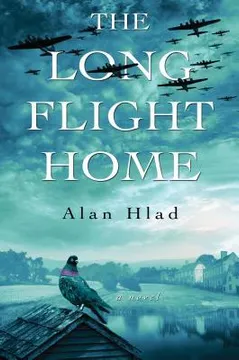
Susan Shepherd, a young zoology student raising homing pigeons with her grandfather Bertie, is tending the flock when German bombers cross Epping. She carries Duchess, the pigeon she once rescued and hand-raised, to Bertie's shelter as the RAF fighters are overwhelmed. The first night of bombing leaves London burning on the horizon; the raids continue, and Susan and Bertie emerge each morning to find the city changed.
Duchess is more than a prized bird to Susan. She is the living result of Susan's patience after an earlier cat attack destroyed the pigeon parents and left their egg apparently doomed. As the Blitz reaches the countryside, Susan wants a way to help, not merely a place to hide.
The novel opens by placing a private act of care inside a public disaster. Susan's bond with Duchess comes from an earlier refusal to accept that a fragile life was already lost, making her later faith in pigeons feel earned rather than fanciful. The bombing overturns the familiar farm routine, but it also gives Susan's practical knowledge a new purpose. Bertie's shelter protects bodies; the pigeons may eventually carry knowledge. The contrast establishes the book's central pressure: survival requires both shelter and risk, and the people who choose to help cannot control the price paid by those they protect.
Buxton Loses Its Heir
In Maine, Ollie Evans has postponed college for three years to run his family's potato farm after his father was crippled in a tractor accident. The news of London's bombing renews his father's wish to help Britain, but Ollie brushes him off.
Before he can apologize, a drunk driver kills both parents. The bank forecloses, seizes the farm equipment, and leaves Ollie with little but a suitcase, a flight log, and his college acceptance. At a Portland airport, he meets Billy Bishop, a Canadian air marshal recruiting American pilots for the RAF, and hears how to reach Charles Sweeny in London.
Ollie initially chooses college. Then a robber smashes a milk bottle over his head and takes his money, and a newspaper account of London's destruction pushes him to abandon that plan.
Ollie's choice is not a simple conversion from civilian to patriot. His father's injury has already made him responsible for a household, while the deaths sever the obligations that had kept him in Maine. The foreclosure makes grief material: it removes his home as well as his family. His earlier dismissal of his father's convictions leaves him with a specific regret, and joining the RAF becomes a way to act on the inheritance he once treated as an irritating refrain. The decision is impulsive, but it answers a deeper need to make sacrifice mean something rather than leave him stranded in guilt.
A Stowaway Finds Britain
With no money for a ticket, Ollie hides aboard a grain ship bound for Halifax. The captain catches him, then offers passage in exchange for deck work; cook Ben stitches Ollie's head with a fishing hook, and the ship reaches Nova Scotia.
After days of failed attempts to board a military vessel, Ollie joins the Dutch freighter Maaskerk as a greaser and crosses the Atlantic. Its convoy is attacked, but the damaged ship reaches Liverpool alone.
There, Ollie sees bombed buildings, fresh graves, and small coffins, then works unloading artillery shells to afford a train ticket. In London, a siren drives him into an underground shelter. Sweeny's office has left him papers for the Eagle Squadron, sending him toward Church Fenton while bombs shake the city above.
The Atlantic crossing turns Ollie's private bereavement into an encounter with losses he cannot claim as his own. He arrives expecting to become useful, but Liverpool and London show him the scale of the work before he has a uniform or a place in the RAF. His exchange of labor for passage echoes the farm life he has just lost, though now each task carries him toward the war. The shelter scene matters because he receives his opportunity amid civilians enduring the danger he hopes to confront. His resolve grows from witnessing vulnerable people, not from an abstract appetite for combat.
A Train Carriage Collision
Meanwhile, Susan attends a secret London meeting about Source Columba, a plan to drop homing pigeons into occupied France so civilians can report German movements. When senior officers demand birds without explaining how the mission will work, she challenges them until Winston Churchill orders them to hear the pigeon keepers' concerns.
On the crowded train back, Flight Lieutenant Clyde Boar grabs Susan after she refuses his advances. Ollie intervenes, and Boar tears up Ollie's RAF papers before Ollie punches him. At North Weald, Boar has Ollie arrested and beaten.
Bertie Shepherd secures Ollie's release by offering him as a worker for three months and threatening to complain about Boar's conduct. Ollie is taken to the Shepherd farm instead of Church Fenton, bound to the very pigeon operation he had not yet understood.
Susan and Ollie meet through a conflict in which each is already resisting someone else's control. Susan insists that expertise from the pigeon keepers must shape a mission affecting their birds; Ollie acts when Boar treats her refusal as irrelevant. His intervention is morally understandable but costly, and Susan's lack of gratitude for the punch complicates any easy rescue narrative. The consequences make their future connection concrete: Ollie loses his route to the RAF, while Bertie's bargain places him in Susan's work. Boar's authority is established not as competence but as a capacity to punish, a danger that will shadow both characters.
A Mission of Pigeons
Once Ollie recovers from his beating, Bertie and Susan show him the lofts and explain Source Columba. At Clacton-on-Sea, Susan releases a training flock across open water; all 127 pigeons return, and Ollie begins to understand the birds' navigational skill.
He also learns the cost of the real operation: cages will be dropped over France, and civilians must attach reports for the pigeons to carry home, with only a fraction expected to survive. A German bombing destroys the farm of Bertie's friend, forcing the Shepherd delivery forward.
Military crews install alarms and parachutes, and Ollie helps prepare the birds. As he and Susan work, shared grief over dead parents draws them closer. Their nearly confessed feelings are interrupted when a stalled truck makes Ollie the driver carrying the first pigeons to North Weald.
The mission's logic depends on a tension between human planning and animal capacity. The first training flight offers evidence that pigeons can find home, but it cannot guarantee that they will survive enemy fire, parachutes, or hunger. Ollie's education therefore changes from skepticism to respect through observation and labor. His growing affection for Susan develops alongside this shift: he begins by dismissing what matters to her, then takes responsibility for the birds and listens to the losses that shaped her. The stalled truck makes that emotional change operational, carrying him toward danger before he has officially joined the RAF.
Duchess Boards the Bomber
At North Weald, a Luftwaffe attack erupts while soldiers prepare the pigeon planes. Ollie discovers that a careless loader has put Duchess among the mission birds and climbs into a Blenheim to retrieve her. Before he can escape, the bomber takes off with him inside. German fighters attack; the gunner, Benny Sullivan, is hit, and Ollie tries to save him while the pilot, Boar, refuses to turn back.
Benny dies before Ollie can stop the bleeding. Over France, Ollie helps pass the pigeon cages to the copilot, then risks his own safety to keep Duchess from being dropped. Shells cripple the aircraft on the return flight. The Blenheim crashes in occupied France, killing the copilot and leaving Ollie injured beside the blinded, badly wounded Boar.
Duchess's accidental presence converts Ollie's compassion into a point of no return. He could have left her in the aircraft, but his attempt to protect Susan's beloved bird entangles him in a combat mission he never intended to join. The sequence strips away his romantic picture of flying: he sees a gunner die despite hands-on effort, and his rescue of the copilot comes too late to save him. Boar's decision to continue the mission sets a lasting moral fracture between the men. The crash then makes their survival interdependent, forcing Ollie to face the enemy not as a trained RAF pilot but as an injured civilian.
Airaines Gives Them Shelter
Ollie pulls Boar from the wreck and hides with him in a field as German soldiers search the crash site. He retrieves Duchess from the damaged plane, then follows a stream to a farm near Airaines.
Madeleine, a French widow living with her truffle hog Louis, points a rifle at the strangers until Ollie explains they are British allies. She brings a doctor, who resets Ollie's shoulder, and helps repair Boar's injured eye. Ollie uses Susan's father's old codebook to write a message and sends Duchess across the Channel.
The pigeon reaches Epping, where Susan and Bertie decode proof that Ollie is alive. At Madeleine's home, Ollie and Boar hide beneath the kitchen floorboards. Madeleine's own losses and the danger she accepts make their refuge an act of resistance.
Madeleine's help is not a sentimental pause from the war. She weighs the danger, then chooses to treat the men because occupation has already taken control of her home and deprived her of ordinary safety. Her care exposes the unequal burden of resistance: the fugitives can move on, but she remains where German reprisals can reach her. The codebook links the two plots through a practical object inherited from Susan's family, while Duchess turns that object into a living channel. The first successful message gives Susan evidence against despair, yet it also makes a private relationship vulnerable to military control.
Duchess Learns the Route
While Boar's eye heals, Ollie finds a canister from a destroyed pigeon and ventures beyond the farm to locate the parachute drop. He sees German soldiers crush a pigeon and steal its message, then discovers a large Luftwaffe base packed with fighters and bombers.
His report gives the RAF actionable intelligence, and Duchess begins carrying coded notes between Ollie and Susan. Susan receives news of the base while also preparing more birds for the mission; when Bertie's health falters, she shoulders more of the work.
In France, Madeleine explains that some hungry villagers eat dropped pigeons and German falconers hunt them. Ollie withholds the worst of this from Susan, sending her encouragement instead. The bird's repeated journeys create a fragile intimacy across occupied territory and the Channel.
Duchess becomes a messenger not because she has been trained for a two-way mission, but because her attachment to people exceeds the system's assumptions about what a pigeon can do. That difference makes her extraordinary and endangered. Ollie's reconnaissance supplies the military purpose the mission promised, while his private notes preserve a human exchange the RAF does not command. His decision to hide reports of pigeons being eaten shows care shading into protective dishonesty: he wants to spare Susan, but withholding suffering also isolates him. Susan, meanwhile, keeps working even as Bertie's condition weakens, turning competence into a form of emotional endurance.
Boar Rewrites the Message
Ollie's French intelligence has to pass through a home already exposed to German rule. When SS officer Dietrich arrives to seize Madeleine's truffles and threatens Louis, Ollie attacks him with a broken scythe. Boar joins the struggle, and together they kill Dietrich.
Ollie puts on the officer's uniform, drives the body away, and hides it, hoping to protect Madeleine. While Ollie is gone, Boar intercepts Duchess, reads the coded exchanges, burns Susan's note, and substitutes a false report.
Boar's hatred has roots in his American father, who abandoned his English mother after the Great War, and deepens when he realizes his damaged eye may end his flying career. His deceit convinces Ollie that Susan and Bertie are dead and leaves Susan believing Ollie is lost.
Boar's betrayal grows from a wound that predates Ollie, but the novel does not excuse the way he directs that injury toward an innocent couple. His father's abandonment has made nationality a personal grievance; his own physical loss turns that grievance into an excuse to control the messages passing through Duchess. The bird's trust becomes an exploitable vulnerability. Ollie's choice to risk himself for Madeleine and Louis, by contrast, shows that his actions have expanded beyond his original wish to fly. Once Boar falsifies the correspondence, both lovers are separated not by geography alone but by manufactured knowledge.
Epping Buried in Fire
In Epping, Bertie grows gravely ill but insists that Susan continue the pigeon work and eventually move to a safer training farm in Northampton. Before she can leave, a heavy raid strikes near their cottage.
A falling bomb knocks Susan into the shelter; when she climbs out, the cottage has become a crater and Bertie lies beneath the rubble. Susan digs him free, but he is dead. She remains on the damaged farm through the winter, living in the shelter and caring for the few pigeons left.
In March 1941, Jonathan Wallace offers her a place at the Northampton farm and agrees to take her birds. Susan accepts at last, carrying Ollie's messages with her. Her departure is not a surrender of the work, but the first step away from a home that has become a grave.
Bertie's death removes the person who taught Susan how to convert fear into purposeful work. The bombing also destroys the physical setting that held her family history, so staying becomes both loyalty and self-punishment. Her months in the shelter preserve her connection to the farm, but they cannot restore what the explosion took. Wallace's offer matters because it gives her a way to carry the pigeons forward without pretending that Epping can remain unchanged. Susan's eventual acceptance marks a difficult distinction between remembering the dead and refusing to live anywhere else.
Lucien's Road South
With Dietrich gone and German searches likely, Madeleine arranges for her husband's friend Lucien Bellamy to guide Ollie and Boar south. A monk with a copper mask and a vow of silence conceals them in a compartment beneath a manure wagon, moving them through roadblocks and a network of monasteries.
Ollie learns that Lucien's face hides a catastrophic Great War wound, and that the mask is part of how he deceives German guards. The journey stretches through occupied France toward the Pyrenees.
Lucien's concealed injuries make Boar reconsider what it means to be unable to fly, while Ollie continues to hope the false message can somehow be undone. At Ascain, Lucien maps their final route across the mountains. The fugitives leave the protection of the Church and begin the climb.
Lucien's disguise is a survival tool built from the injury that others might mistake for weakness. His silent service unsettles Boar's narrow equation between bodily ability and usefulness, especially after the RAF pilot's own injury has ended his career in the cockpit. The wagon's hidden compartment makes escape depend on accepting indignity and confinement, a sharp contrast to Ollie's longing for flight. The route also shifts the story from improvised refuge toward organized resistance. Each monastery offers a temporary shelter, but reaching Spain will require the men to move under their own strength and accept that the guide cannot carry them all the way.
The Mountain Takes Its Due
As the three men climb the Pyrenees in rain and fog, a German patrol shoots Lucien. Boar is wounded in the knee and thigh, leaving Ollie the only one able to move. He tries to keep fighting, but Boar takes his pistol and identification discs, then orders him to continue uphill while he holds the Germans back. Ollie reaches the summit alone and descends toward the Bidasoa River, pursued by soldiers.
With bullets striking around him and no bridge in sight, he jumps into the swollen current. The river carries him toward Spain, but cold and exhaustion nearly kill him. Two boys pull him from the water and hide him in a monastery, where he spends two months recovering. He eventually reaches Britain and joins the Eagle Squadron.
The escape culminates in a transfer of agency. Boar, who has spent much of the story asserting rank and resentment, finally uses his remaining strength to give Ollie a chance to survive. The gesture does not erase his cruelty, but it complicates the idea that people are fixed by their worst choices. Ollie reaches the river through stubborn effort, yet freedom still depends on the current and on strangers who choose to help him. His survival is therefore neither a triumph of skill alone nor a neat reward for courage. It is contingent, collective, and costly.
A Chimney Keeps Her Secret
Decades later, Susan has rebuilt the Epping cottage and raised a family with her late husband, Duncan. A newspaper reports that a coded World War II pigeon has been found in a Rochford chimney, and Susan recognizes Duchess's remains when she visits Niles and Lydia Googins. The red canister contains a message that intelligence experts cannot decode.
Susan brings the pigeon and note home, but her father's codebook was destroyed in the Blitz. She tells her daughter Clover about her wartime work and her love for Ollie, a truth she had kept private throughout her marriage. Together they examine the cipher, yet make little progress. The old messages, saved in Susan's tea tin, connect the discovery to a past she had considered finished.
The time jump shows that survival does not automatically resolve grief. Susan has a daughter, grandchildren, and a rebuilt cottage, yet the pigeon remains a material link to a future she never knew. The chimney discovery returns Duchess not as a miraculous survivor but as evidence that one unfinished journey can outlast the people who began it. Susan's decision to tell Clover changes the burden of memory: a secret once protected from public scrutiny becomes something shared within her family. Their failed attempts to decode the note preserve uncertainty, allowing the past to remain active rather than neatly archived.
The Longest Delay
After learning of the chimney discovery, Ollie comes to Susan's cottage in old age. She is stunned, then angry that he never returned or contacted her. Ollie explains that he survived the river, recovered with help from two boys, and traveled through Portugal to Britain.
In May 1941, he found the Shepherd farm destroyed and believed Susan and Bertie had died. He flew with the RAF until America entered the war, then served in the US Army Air Forces.
Susan shows him the false message signed in Boar's name; Ollie produces the message that made him believe she was dead. They recognize that Boar's forgery, not a lack of love, kept them apart. Ollie had later married Anna, while Susan married Duncan, but neither had forgotten their brief time together.
The reunion replaces a moral accusation with a more painful explanation: neither lover chose silence, but each acted on information deliberately falsified by Boar. Susan's anger is valid because the years were real, even if the belief that Ollie abandoned her was mistaken. Ollie's account restores the missing causal chain without restoring the lost decades. Their marriages and families do not cancel their earlier love; they show how people build lives under the assumption that a door has closed. The scene's emotional force comes from holding both truths at once: they were separated unjustly, and time cannot be returned.
Duchess Comes Home
Susan takes Ollie to the edge of Epping Forest, where he digs a grave for Duchess's remains. They lower the bones together and set a flat stone above the earth. Susan reads the final recovered message, completing the chain that began when Duchess carried Ollie's first note out of occupied France. The pigeon cannot restore the years they lost, but it has brought them into the same place again.
Ollie puts his arm around Susan, and she leans against him. Their reunion does not erase the families and lives built during their separation; instead, it gives the old attachment a present tense. The bird that once navigated toward home through war and distance finally rests, while Ollie and Susan choose to begin again together.
The burial gives physical form to a reunion that could otherwise remain suspended in explanation and regret. Duchess has served as pet, messenger, and witness; returning her remains to the earth acknowledges both her loyalty and the danger humans placed upon her. Susan and Ollie act together, no longer separated by coded scraps or an enemy's interpretation. Their choice does not pretend that love cancels history. Instead, it recognizes that tenderness can survive a long interruption and still require a new decision in the present. The final sense of home belongs to the living as much as to the bird.
Analysis
The Long Flight Home joins two forms of wartime service that are usually kept apart: aerial combat and the quiet husbandry of animals. Ollie wants to fly, and Susan wants to make her knowledge of pigeons useful. The plot brings those ambitions together through Source Columba, a mission whose strategic promise depends on living creatures crossing borders that humans cannot safely cross. Its losses keep the idea of service from becoming a clean heroic abstraction. Birds disappear, civilians die, and the survivors carry responsibility for what they could not prevent.
The novel's most consequential instrument is communication. Pigeons, codebooks, canisters, and letters connect people across distance, but each link can fail or be manipulated. Boar's forged messages show how war damages not only bodies and homes but also the conditions under which people know what has happened. Susan and Ollie do not separate because their affection fades; they build their lives around information they have reason to trust. Their eventual reunion therefore does not undo the past. It makes visible the cost of a lie that deprived them of choices for half a century.
The characters respond to grief in contrasting ways. Susan turns care into disciplined work, while Ollie turns guilt into motion and service. Bertie uses humor and stubbornness to make courage practicable; Madeleine continues to protect others despite having little reason to expect rescue herself. Even Boar is shaped by abandonment and bodily loss, though he chooses to convert injury into cruelty before he makes a final act of sacrifice. These differences prevent the story from treating resilience as a single virtue. The novel's deeper claim is that survival depends on networks of care, but care cannot guarantee safety. Duchess embodies both sides: she is cherished as an individual and used as a wartime instrument. Her final return gives Susan and Ollie a place to meet again, not because loss is repaired, but because the bond survives long enough to be recognized.
Review Summary
Reviews for The Long Flight Home are mostly positive, averaging 4.2/5. Readers praised the unique historical focus on the British National Pigeon Service and Operation Source Columba, appreciating how the novel blends romance with WWII history. Many found the characters endearing, particularly Susan, Ollie, and the pigeon Duchess. Critics noted predictable plotting, underdeveloped characters, repetitive prose, and an overly simple writing style. Despite mixed opinions on the romance, most agreed the novel offers a refreshing, little-known perspective on WWII history that makes it an engaging, accessible read.
Characters
Susan Shepherd
Pigeon keeper and zoologistSusan is a young zoology student who returns to her grandfather's farm to raise pigeons for Britain's war effort. She is observant, disciplined, and unusually willing to question authority when its decisions ignore practical knowledge. Her care for Duchess grows from a childhood spent with Bertie and Agnes, whose affection gives her a model of loyalty and a place to belong. Susan's courage is not fearlessness: raids, loss, and the possibility of sending birds to their deaths frighten her deeply. She keeps working because knowledge and care are the forms of service available to her. Her wish for a loving family reflects both the family she lost and the warmth she experienced with her grandparents.
Ollie Evans
Maine crop-duster turned volunteerOllie is a gifted, self-taught pilot whose father's injury kept him on the family farm instead of at college. He is impulsive and sometimes overconfident, but his instinct is to help people in immediate danger, even when doing so costs him personally. His parents' close marriage gives him an ideal of devotion, while their deaths leave him with regret over how little he understood their convictions. Flying represents freedom to him, yet his experience in Britain teaches him that service often means work far from the cockpit. His humor, tenderness, and practical courage help him build trust with Susan, though the war keeps testing whether hope can survive separation.
Duchess
Susan's unusual homing pigeonDuchess is a striking pigeon Susan hand-raised after her parents were killed, and their bond is closer to that between a person and a cherished companion than a keeper and a working bird. Curious, quick, and unusually attached to Susan, she often seeks affection rather than simply following the flock. Her homing ability makes her valuable to the National Pigeon Service, but her individual personality matters just as much: she responds to people, not merely training. Duchess embodies the collision between private attachment and public duty. Susan wants to protect her, while the wartime mission repeatedly places her in situations no pet should have to face.
Bertie Shepherd
Susan's steadfast grandfatherBertie is Susan's grandfather, a lifelong pigeon racer whose failing knees and dry humor do not diminish his determination to help Britain. He raised Susan after she lost her parents and gave her a vocabulary for courage, especially when fear threatened to make her retreat. His affection is practical: he tends the birds, shelters his family, and uses whatever influence he can muster to protect Susan and Ollie. Bertie respects tradition but is not a passive traditionalist; he trusts Susan's judgment and allows her to take his place at the London meeting. His stubbornness sometimes makes him refuse help, yet it is also the engine of his loyalty.
Clyde Boar
Resentful RAF flight lieutenantBoar is a skilled RAF officer who wants to move from the vulnerable Blenheim bombers to a fighter squadron. He is ambitious, proud of his rank, and accustomed to treating control as proof of competence. His hostility toward Ollie has a personal source: an American father abandoned Boar's mother after the Great War, leaving Boar to carry the resentment. The injury and uncertainty of war intensify his fear of losing the identity built around flying. He can be brave and capable under pressure, but he often turns pain outward, making people around him pay for injuries they did not cause.
Madeleine
French farmer and protectorMadeleine is a French farmer living under German occupation with her truffle hog, Louis. She has lost her sons and cannot be certain whether her missing husband will return, yet she continues to care for the animals and people in her charge. Her suspicion of Ollie and Boar is rational: helping Allied airmen could bring punishment upon her. Once she chooses to shelter them, she does so with resourcefulness, arranging medical care, a hiding place, and an escape route. Her grief has not made her passive. It has sharpened her understanding of what occupation takes from ordinary people and what solidarity demands.
Lucien Bellamy
Masked monk and escape guideLucien is a monk who helps fugitives move through occupied France using a network of religious houses. A copper mask conceals a devastating facial injury from the Great War, and he communicates by writing on a small slate because he has taken a vow of silence. His restraint is not weakness: he plans carefully, hides the men in a false compartment, and accepts risks without asking for recognition. Lucien's presence challenges Boar's belief that a damaged body makes a person useless. He represents a kind of resistance built through patience, disguise, and the willingness to serve without controlling the people being helped.
Clover
Susan's candid daughterClover is Susan's daughter, a busy lawyer and mother of Evie and Hugh. She is practical, independent, and sometimes impatient with her mother's devotion to the Epping farm, but she cares about Susan's safety and well-being. Their temperaments differ, and Susan has often kept private feelings to herself rather than risk unsettling the family life she built. When Susan finally tells her about Ollie, Clover listens without reducing the story to a betrayal of her father. Her curiosity and willingness to help with the coded message create a rare closeness between them, showing how an old secret can become an opening rather than a wall.
Billy Bishop
Canadian pilot recruiterBilly Bishop is a celebrated Canadian air marshal who recruits American volunteers for the RAF. He meets Ollie at the Portland airport and recognizes that the young farmer has substantial flying experience, even if it comes from crop-dusting rather than military aviation. Bishop's informality makes the offer feel personal, but he also understands the political obstacles facing an American volunteer. By giving Ollie a route toward Charles Sweeny, he turns a frustrated young man's skills into a possible contribution to Britain's defense.
Charles Sweeny
RAF volunteer organizerCharles Sweeny is the London contact Bishop has arranged for Ollie. Although Ollie never meets him directly, Sweeny's office leaves him a letter and travel papers for the Eagle Squadron. His intervention makes Ollie's journey more than a desperate private quest by connecting him to a real organization preparing to use American pilots. The note also gives Ollie a concrete destination when the bombing has left him without money, shelter, or certainty.
Jonathan Wallace
National Pigeon Service organizerWallace is an experienced pigeon keeper and organizer for the National Pigeon Service. He helps bring Bertie and Susan into Source Columba, though the mission's secretive military planning initially leaves civilian expertise unheard. He recognizes Susan's knowledge and later offers her work at a safer training farm in Northampton. Wallace provides a practical bridge between her grief-stricken home life and the continued work of raising pigeons.
Agnes Shepherd
Susan's beloved grandmotherAgnes is Bertie's late wife and Susan's grandmother. Susan remembers her as warm, witty, and generous, especially through their walks in Epping Forest and the food they shared along the way. Agnes taught Susan to knit and helped create the loving household that steadied her after her parents died. Though absent from the wartime action, her influence remains in Susan's longing for a marriage built on affection and mutual care.
Duncan
Susan's later husbandDuncan is an engineering professor who becomes Susan's husband after the war. He is kind, dependable, and attentive, often showing care through small practical gestures. Their marriage gives Susan a family and a full life, even though the memories of her first love remain private.
Louis
Madeleine's truffle hogLouis is Madeleine's truffle hog and constant companion. He is intelligent, responsive, and affectionate, and his presence gives Madeleine a living bond to her work and home. His vulnerability also reveals the casual cruelty of the occupation.
Ben
Ship's cook and makeshift medicBen, nicknamed Beans by the ship's captain, is an elderly cook aboard the cargo vessel that carries Ollie to Halifax. Once a tailor, he uses his steady hands to stitch Ollie's head wound with a fishing hook and thread. His kindness offers Ollie a brief moment of human care during a dangerous, improvised journey.
Captain McCracken
Gruff freighter captainCaptain McCracken catches Ollie hiding aboard his ship and makes him work for the passage to Halifax. He is blunt and enjoys teasing Ollie, but his contempt for American neutrality leads him to honor the promise of carrying the stowaway to Canada.
Ralph
Boar's Blenheim copilotRalph is Boar's copilot, a nervous airman who relies on a St. Christopher medallion for comfort. He helps operate the pigeon drop during the mission and is one of the men caught in the crash in occupied France.
Benny Sullivan
Blenheim turret gunnerBenny is the gunner on Boar's Blenheim, a miner from South Wales who joined the RAF. Ollie tends to him after enemy fire strikes the aircraft, and Benny's vulnerability makes the danger of the mission immediate.
Niles and Lydia Googins
Keepers of Duchess's remainsNiles and Lydia are the Rochford couple who discover Duchess's remains during a chimney renovation. Niles preserves the pigeon and her message, while Lydia recognizes the private importance of Susan's old correspondence and helps return it to her.
Plot Devices
Source Columba
Birds carry wartime intelligenceSource Columba is the British plan to parachute homing pigeons into occupied France so local civilians can report German troop movements. The birds carry small canisters, paper, and instructions, then must navigate back across enemy territory. Their use gives Britain a possible source of information where ordinary communication is dangerous or impossible. The operation also forces the story's central ethical question into concrete form: a pigeon can be both a beloved animal and a tool of war, and the people who train the birds must accept a mission whose success depends on many failing to return.
Duchess and the canister
A living link across enemy linesDuchess is Susan's unusually intelligent pet pigeon, mistakenly loaded onto an RAF bomber during the first Source Columba mission. Ollie rescues her from the aircraft and later uses a canister on her leg to send messages to Susan. Although she has not been trained for two-way communication, she repeatedly flies between France and England. Her journeys carry both military observations and personal notes, allowing the separated characters to maintain a relationship while making her vulnerable to exhaustion, predators, and human interference.
The artillery codebook
Keeps private messages unreadableSusan's father used a codebook to transmit artillery messages during the Great War. Susan finds it again while preparing the pigeons, and Ollie uses it to encode reports and personal messages carried by Duchess. The same code allows Susan to decipher his notes when the pigeon returns. It protects the correspondence from casual readers, but its usefulness depends on keeping the key and the messages together. Decades later, the lost book makes the last recovered note difficult to interpret and turns a family heirloom into the missing piece of a long-delayed reunion.
Boar's forged reports
False intelligence splits the loversBoar resents Ollie and fears the loss of his own flying career. When he intercepts Duchess and reads the correspondence, he replaces a personal message with a false report. His manipulation makes Ollie believe Susan and Bertie are dead and leaves Susan convinced that Ollie is lost. The deception transforms a physical barrier into an emotional one: neither lover can act on the truth because each receives convincing evidence of the other's absence. The lie's eventual exposure explains why they failed to reunite during the war without making their grief or anger any less real.
Download PDF
Download EPUB
.epub digital book format is ideal for reading ebooks on phones, tablets, and e-readers.








