

Key Takeaways
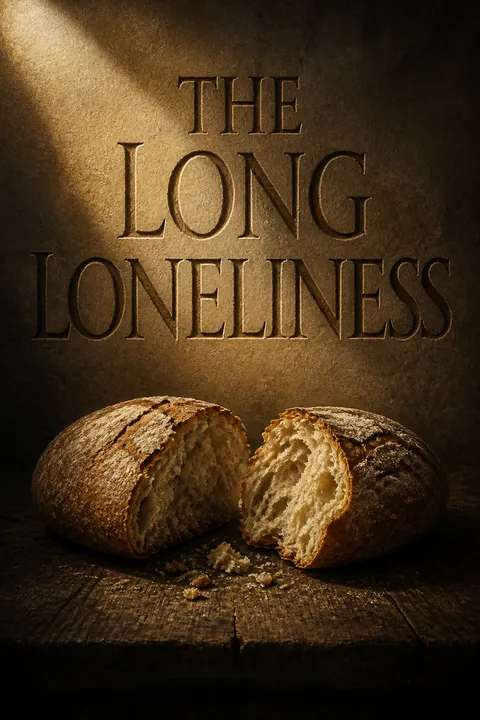
The cure for the long loneliness is a community built through love.
A life in search. Dorothy Day’s story moves from a childhood haunted by questions of God, through radical journalism and labor protests, to Catholic faith and the founding of the Catholic Worker. She reports strikes, spends time in jail, and nurses the sick, yet keeps sensing that neither activism nor private belief is enough on its own. After becoming a mother, she meets Peter Maurin, whose ideas help turn that search into a shared way of life.
Love becomes practical. The answer to loneliness in this memoir is not simply company. It is people living, working, eating, praying, and serving together. The movement offers shelter and food while trying to create a society where care is part of ordinary life, not an occasional rescue.
What's striking is the book's movement from isolation to belonging without pretending that belonging eliminates pain. Sociologists distinguish social connection from mere proximity: trust grows through repeated acts of reciprocity, shared responsibility, and presence. Day's communities make those elements concrete, often around a meal or a daily task. The model also invites a useful question: who performs the work of sustaining community, and who gets to rest? Love can be a powerful bond, but it cannot substitute for fair distribution of labor, privacy, or boundaries. The memoir's strongest claim is that companionship becomes durable when it takes material form.
Let solidarity alter your household, not just your opinions about poverty.
Justice became personal. As a teenager, Day read accounts of labor exploitation and walked through Chicago's poor neighborhoods. She felt drawn to workers whose lives were treated as disposable, but initially understood their struggle mainly through books and political movements. Journalism brought her closer: she covered strikes, demonstrations, and evictions, and later lived among people with little money or security.
Solidarity costs comfort. Day's activism was not a clean conversion from privileged observer to selfless helper. She admits ambition, romanticism, and mistakes. Her experiences in prison and in a Chicago police cell exposed the shame and vulnerability that political slogans can conceal. The question becomes not only whether injustice is wrong, but whether a person will share space, time, and resources with those who endure it.
This insight resembles the distinction in social psychology between abstract concern and empathic contact. Direct relationships can make distant suffering legible, while shared routines challenge assumptions about who is responsible for hardship. Day's self-criticism matters because solidarity is not a purity badge: a person can care sincerely and still seek status, excitement, or a heroic role. Contact alone also does not guarantee understanding. It can reproduce paternalism unless people experiencing poverty have agency in deciding what help looks like. The memoir is most persuasive when it treats solidarity as a discipline of attention and mutual obligation, rather than a feeling that proves one's goodness.
Let happiness awaken faith, rather than treating belief as refuge from pain.
Joy opened the door. Day describes a period of quiet happiness on Staten Island, where walks, gardening, and life with Forster brought her close to the natural world. She began praying not only during distress, but out of gratitude. The birth of her daughter, Tamar, deepened that sense of wonder and led her to seek baptism for the child and, eventually, for herself.
Gratitude demanded a choice. Her decision was not emotionally simple. Forster opposed religious commitment, and Day knew becoming Catholic could end their relationship. She did not turn to faith because love had failed or because she was tired of physical life. She believed love, creation, and the experience of bringing a child into the world pointed beyond themselves. The decision brought both conviction and grief.
Many accounts of belief emphasize crisis, but Day's account makes gratitude an equally serious path to commitment. Research on positive emotion suggests that joy can broaden attention and make people more receptive to possibilities beyond immediate self-interest. That does not establish a religious conclusion, but it helps explain why contentment can prompt questions instead of ending them. The memoir also resists a tidy spiritual narrative: a meaningful choice can be morally coherent and still wound intimate relationships. That tension matters. A story of conversion should not imply that painful consequences automatically validate the decision, only that love and responsibility can pull in more than one direction.
Relieve immediate suffering while challenging the arrangements that keep producing it.
Mercy meets the urgent need. Day's Catholic framework includes corporal works of mercy, such as feeding the hungry, sheltering people without homes, and visiting the sick. It also includes spiritual works, such as teaching, comforting, and confronting injustice. The Catholic Worker opened houses of hospitality and breadlines, but its newspaper also reported on labor conditions, evictions, racism, and unemployment.
Charity is not the whole answer. Day repeatedly worries that aid can leave the causes of deprivation untouched. She resents a system in which people are reduced to recipients of help while employers and institutions escape scrutiny. Yet she does not dismiss relief as useless. Food and shelter matter now, while organizing, public criticism, and changes to working conditions address the structures that make emergency aid necessary.
The pairing of relief and reform anticipates a live debate in public policy: direct service can prevent immediate harm, while structural intervention can reduce how often that harm occurs. Treating these as rivals creates a false choice. Emergency care without advocacy risks managing deprivation indefinitely; advocacy without care can ask people to wait for a political solution while hungry. Day's account adds a third test: whether aid preserves the recipient's dignity and relationship with the giver. Still, small charitable institutions cannot replace broad protections or collective bargaining. Their value is both practical and diagnostic: they meet needs and make the failures around them harder to ignore.
Build change from discussion, a newspaper, hospitality, and shared land.
Maurin offered a program. Peter Maurin, a French peasant and laborer, met Day after she returned from reporting on unemployed marchers. He urged a movement that joined discussion, publishing, and practical community. His round-table discussions were meant to clarify ideas; the newspaper would carry those ideas to ordinary readers; houses of hospitality would put mercy into practice; and agronomic universities would connect study with work on the land.
Start small, then grow. Day helped launch The Catholic Worker in 1933 with 2,500 copies. Its circulation rose to 100,000 by the end of that year, aided by volunteers who sold or gave away papers. The movement's growth was informal and local, not the product of a centralized plan. Maurin called his wider vision a green revolution: a change in social life built through personal responsibility, community, and practical work.
Maurin's design combines three mechanisms that are often separated: public argument, direct service, and a lived alternative. In contemporary terms, the newspaper builds a shared account of problems, hospitality demonstrates another set of social relations, and land based communities test whether those relations can endure. This makes the movement more than an idea or an aid agency. The tension is scale. Informal growth can create commitment and adaptability, but it can also leave leadership, funding, and continuity fragile. The memoir's account of rapid circulation shows that a small institution can travel widely, though reach should not be mistaken for proof that its larger social model works everywhere.
Restore meaningful work by joining skill, ownership, and shared responsibility.
Work is more than wages. Maurin argued that people need meaningful work and a responsible share in what they produce, not simply employment and a paycheck. He favored small scale ownership, craft, farming, and community cooperation over systems that reduce workers to replaceable parts of an assembly line. Day came to value this argument while remaining attentive to unions and immediate labor struggles.
The land tested the ideal. Catholic Worker farms tried to unite households, work, study, and mutual aid. Some provided rest, food, or space for families and children, but others faltered. The memoir names practical obstacles: little money, inadequate equipment, limited farming skills, and disagreements over labor and ownership. Rural community was not a ready made escape from poverty. It required skills, coordination, and a willingness to share responsibility.
The emphasis on ownership and skilled work connects to research on job quality, which finds that autonomy, learning, and control over one's work can matter alongside income. Day's critique of repetitive industrial labor is therefore not merely nostalgic. Yet small farms are not automatically liberating: they can involve exhausting labor, insecure income, and dependence on unpaid work, often performed by women. The movement's own failed ventures make this caveat visible. Maurin's ideal is most useful as a question about how work is organized and who benefits, not as a universal prescription to leave cities or unions. Meaningful work needs viable economics as well as moral purpose.
See the person inside every category called poor, criminal, or worker.
Dignity is specific. Day learned that care requires noticing what a particular person needs, not imposing a generic solution. In the hospital, an elderly patient resisted bathing and wanted her wig. Day and another nurse found a compromise that respected the woman's appearance and wishes. The small episode captures a principle that also shaped the Catholic Worker houses: people arriving for food or shelter were not merely problems to be processed.
Personalism names this focus. In the book, personalism means beginning with the worth and agency of individual people, and meeting needs through direct human relationships. That approach sits alongside public action, not against it. Day's newspaper and picket lines addressed broad injustice, while daily acts of welcome resisted the anonymity that can make the poor seem like a mass rather than neighbors.
The hospital story offers a compact lesson in person centered care: dignity often depends on a detail that looks trivial to an institution but is decisive to the person receiving care. Modern nursing ethics similarly emphasizes informed participation and respect for individual preferences. This does not mean every preference can be met, especially under scarcity. It means constraints should be explained rather than disguised as benevolence. Personal attention can also be difficult to scale, which is why the book pairs it with journalism and labor action. Institutions need rules to serve many people, but those rules should leave room for the person who does not fit the standard case.
Practice peace consistently, including when political allies reach for force.
Pacifism reached beyond war. The Catholic Worker opposed violence in international conflict, but Day also applied nonviolence to class and racial struggles. The movement supported conscientious objectors and criticized conscription, while helping workers and publicizing injustice. For Day, pacifism was not withdrawal from politics; it required active witness and accepting personal consequences rather than using violence to impose change.
The choice was contested. Not everyone in the movement agreed. Some members had served in war, and others believed resistance to tyranny might require force. Day presents these disagreements as real moral questions, not proof that every person who chose differently was indifferent to suffering. Her account of an armed, unstable man threatening a worker shows the practical difficulty: the group restrained him and sought medical confinement, trying to protect people without turning to lethal force.
The memoir's account is useful because it treats nonviolence as an operational problem, not a badge of moral superiority. In conflict studies, de escalation depends on practical alternatives, trusted relationships, and institutions capable of containing immediate danger. The episode of the threatened worker shows the stakes: nonviolent restraint can protect people, but it does not eliminate risk or guarantee a safe outcome. Day's approach is strongest when it asks whether violence reproduces the coercion it opposes. Its hardest question is what to do when restraint fails. The book preserves that uncertainty rather than resolving it with a slogan.
Make community spacious enough for love, conflict, dependence, and grief.
Togetherness was imperfect. The Catholic Worker gathered people with different needs, politics, abilities, and expectations. Residents argued about whether funds should support public advocacy or feed people at the door. Farming ventures divided over work and ownership, and Day sometimes struggled to balance her daughter Tamar's needs with the demands of the movement. Hospitality could become exhausting, and some volunteers left when the work felt futile.
Love did not prevent loss. Peter Maurin, the movement's teacher and organizer, spent his final years seriously ill and unable to think as he once had. His death left Day and the community grieving, even as they understood his life as a gift to others. The memoir does not present community as a frictionless cure. It is a commitment to remain in relationship through dependence, disagreement, and loss.
This closing vision is more credible than a sentimental portrait of community because it includes conflict over money, labor, authority, and care. The sociology of organizations suggests that shared purpose can sustain cooperation, but unclear roles and unequal burdens can also erode it. Day's story makes both sides visible. Its theology gives grief a place inside communal life, while the practical account raises questions about boundaries and succession when a charismatic founder becomes ill. A durable community needs more than affection: it needs ways to resolve disputes, share care, and keep work going. Love supplies motivation, but practices and structures help it last.
Analysis
The Long Loneliness is both a conversion memoir and an argument about social organization. Its narrative is not a smooth ascent from radicalism to religion. Day's early political commitments arise from outrage at working conditions and poverty; her Catholic faith grows through beauty, motherhood, prayer, and an encounter with a community able to connect spiritual life with material care. The book's central intellectual achievement is to refuse the familiar choice between changing institutions and caring for individuals. Day's journalism, labor support, breadlines, and houses of hospitality represent distinct scales of action that she insists belong together.
That synthesis has productive tensions. Personal charity can restore dignity in a moment, but it cannot redistribute power by itself. Structural campaigns can change rules, but they can make individuals disappear into categories. Day's model tries to correct each limitation with the other. Her account of Peter Maurin adds a third dimension: work and ownership. He imagines communities where people can learn, produce, and care for one another, rather than rely wholly on employers or the state. The farms' uneven results are important evidence, not incidental setbacks. They show that ethical aspiration cannot conjure skills, capital, or agreement into existence.
The memoir also reveals a tension between spiritual sacrifice and personal obligation. Day accepts painful choices as part of religious commitment, yet motherhood, partnership, and communal service repeatedly compete for her attention. Her candor makes these choices more complex than a simple tale of heroic renunciation. Likewise, her radical pacifism is morally coherent within her reading of the Gospel, but it remains difficult to generalize into situations where people face immediate violence. The book gives that difficulty a human scale rather than hiding it.
Its form matters. Day writes as a journalist and witness, moving through remembered scenes instead of presenting a systematic political treatise. The result is intellectually selective but experientially rich: an old woman's wig, a hunger strike, a loaf of bread, a failed farm, and a founder's decline carry arguments that abstract language might dilute. The lasting question is not whether love alone can repair society. It is whether social arrangements can be rebuilt so that love becomes a repeated practice, and whether communities can sustain that practice without confusing sacrifice with justice.
Review Summary
The Long Loneliness by Dorothy Day receives mostly positive reviews, with readers praising her inspiring life story and commitment to social justice. Many find her writing style challenging but appreciate her honesty and spiritual journey. The book offers insights into Day's conversion to Catholicism, her work with the poor, and the founding of the Catholic Worker movement. Some readers struggle with her political views, while others are deeply moved by her dedication to living out Gospel principles.
People Also Read





Glossary
The Long Loneliness
Isolation answered by communityDay's name for the loneliness she sees as a recurring human condition, not merely a lack of company. The answer she describes is community: people sharing daily life, work, meals, worship, and practical care. The phrase holds together personal longing and a social response, rather than treating loneliness as something private individuals must overcome alone.
Catholic Worker Movement
Faith joined to social actionA movement Day helped build around a newspaper, houses of hospitality, labor advocacy, and experiments in communal farming. It sought to put Catholic beliefs into daily practice through direct aid and public criticism of injustice. The movement emphasized voluntary participation and local communities rather than relying only on centralized institutions.
Houses of hospitality
Communal homes offering aidCatholic Worker homes that welcomed people in need and offered food, shelter, clothing, and companionship. They were intended not simply as service centers but as places where volunteers and guests could live in relationship. The houses practiced the works of mercy while challenging the isolation and bureaucratic treatment often experienced by poor people.
Agronomic universities
Study joined with land workMaurin's proposed communities where workers and scholars would learn from one another while working the land. The idea combined education, manual labor, cultivation, and shared life. It was part of a broader effort to create local alternatives to industrial dependence and to help people develop practical skills, responsibility, and a meaningful relationship with work.
Personalism
Persons before abstract massesA social and moral outlook that begins with the dignity and agency of each person, and favors direct human relationships and local responsibility. In Day's account, personalism does not reject public action. It insists that organizing, aid, and social reform remain answerable to actual people rather than treating them as anonymous units in a political or economic system.
Voluntary poverty
Chosen simplicity for sharingA deliberate reduction of personal possessions and comforts, undertaken to free resources for service and to reject status driven consumption. Day distinguishes it from destitution, which is imposed deprivation. In the Catholic Worker setting, voluntary poverty was meant to make people more available to others, though the memoir also shows how easily simplicity can become hardship without sufficient resources.
Works of mercy
Practical acts of compassionTraditional Christian acts of care that Day treats as a guide for daily life. Corporal works address bodily needs, including hunger, thirst, illness, homelessness, and imprisonment. Spiritual works include teaching, counsel, comfort, forgiveness, and prayer. Day's account expands their social meaning by linking direct help with efforts to challenge injustice.
Cult, culture and cultivation
Worship, learning, and growingMaurin's compact description of a whole social life. Cult means worship and shared spiritual practice, culture means education and the arts, and cultivation means working the land and producing necessities. Together, the terms express his ideal of communities that develop spiritual, intellectual, and practical capacities rather than organizing life around production or consumption alone.
Green revolution
Community built from the ground upMaurin's phrase for a nonviolent social transformation rooted in local community, shared responsibility, and productive work. In this memoir, it refers to building alternatives within existing society through discussion, hospitality, and land based communities. It is not used to mean the later agricultural technology programs commonly associated with the same phrase.
FAQ
What's The Long Loneliness about?
- Autobiographical Journey: The Long Loneliness is the autobiography of Dorothy Day, detailing her life from childhood through her conversion to Catholicism and her role in founding the Catholic Worker Movement.
- Themes of Faith and Activism: The book explores themes of faith, love, community, and social justice, highlighting Day's commitment to helping the marginalized and her struggles with personal beliefs.
- Personal and Political Struggles: Day intertwines her personal life with broader social issues, illustrating how her faith informed her activism and her experiences with societal challenges.
Why should I read The Long Loneliness?
- Inspiration from a Leader: Dorothy Day's life story offers inspiration through her dedication to social justice and faith, encouraging readers to reflect on their own impact on society.
- Historical Context: The book provides a unique perspective on significant 20th-century social movements, such as labor rights and civil rights, within the context of American history.
- Authentic Voice: Day's candid writing style and introspection create an engaging narrative, making her struggles and triumphs relatable and compelling.
What are the key takeaways of The Long Loneliness?
- Faith and Action: Day emphasizes that true faith should lead to action, compelling individuals to serve others and work towards social justice.
- Community and Solidarity: The importance of community is a recurring theme, advocating for solidarity with the poor and marginalized to achieve meaningful change.
- Personal Transformation: Day's journey reflects the transformative power of love and faith, showing that personal struggles can lead to greater understanding and commitment to serving others.
How does Dorothy Day's faith influence her activism in The Long Loneliness?
- Faith as a Driving Force: Day's Catholic faith is the foundation of her activism, guiding her actions and decisions to serve the poor and advocate for social justice.
- Integration of Spirituality and Action: She emphasizes that faith should inspire concrete actions to help others, exemplified by her work with The Catholic Worker.
- Moral Responsibility: Day views her activism as a moral obligation, believing that Christians are called to stand with the marginalized and fight against oppression.
How does The Long Loneliness address the concept of community?
- Importance of Community: Day stresses that community is essential for personal and social transformation, fostering love and compassion among individuals.
- Catholic Worker Movement: The establishment of The Catholic Worker exemplifies her commitment to building a community centered on faith and service.
- Shared Humanity: Day highlights the interconnectedness of all people, urging readers to recognize their shared struggles and joys, advocating for solidarity with the marginalized.
What role does confession play in Dorothy Day's life as depicted in The Long Loneliness?
- Spiritual Practice: Confession is a significant spiritual practice for Day, allowing her to confront her sins and seek forgiveness, contributing to personal reflection and growth.
- Vulnerability and Honesty: She describes confession as a difficult but necessary act of vulnerability, requiring honesty about one's shortcomings and a willingness to change.
- Connection to Community: Confession connects Day to the larger Catholic community, reinforcing her sense of belonging and highlighting the communal aspect of faith.
How does Dorothy Day's upbringing influence her worldview in The Long Loneliness?
- Early Experiences: Day's childhood experiences, including her family's struggles, shape her understanding of justice and compassion, instilling empathy for the marginalized.
- Literary Influences: Influential authors like Dostoevski and Tolstoy impact her worldview, resonating with her beliefs in suffering, redemption, and social justice.
- Cultural Context: Growing up during social upheaval, Day is influenced by movements like labor rights and women's suffrage, informing her commitment to activism.
What is the significance of The Catholic Worker in The Long Loneliness?
- Foundation of Activism: The Catholic Worker is a practical expression of Day's faith and commitment to social justice, addressing the needs of the poor and marginalized.
- Model of Community Living: It emphasizes communal living and shared resources, reflecting Day's belief in the importance of community and solidarity.
- Legacy of Social Justice: The movement continues to inspire activists today, with Day's vision of integrating faith and action remaining relevant for meaningful social change.
How does Dorothy Day describe her conversion to Catholicism in The Long Loneliness?
- Struggle with Relationships: Day recounts the emotional turmoil of leaving her partner to embrace her faith, illustrating the personal sacrifices involved in her conversion.
- Lack of Joy in Sacraments: She initially experiences the sacraments as "grimly, coldly" undertaken, reflecting her inner conflict and doubts during her spiritual journey.
- Desire for Unity: Day expresses a longing to be united with Christ and the Church, viewing her conversion as a profound act of love and commitment to her faith.
How does The Long Loneliness address social justice issues?
- Advocacy for the Poor: Day highlights her lifelong commitment to advocating for the poor and oppressed, particularly through her work with the Catholic Worker Movement.
- Critique of Capitalism: She critiques capitalism for exploiting workers and perpetuating inequality, calling for a more just social order prioritizing human dignity.
- Integration of Faith and Activism: Day's faith informs her activism, demonstrating that social justice is a fundamental aspect of Catholic teaching, encouraging acts of service and advocacy.
What is the significance of Peter Maurin in The Long Loneliness?
- Mentor and Collaborator: Peter Maurin is a key figure in Day's life, serving as her mentor and collaborator in the Catholic Worker Movement, influencing her approach to social justice.
- Philosopher of Community: Maurin's philosophy emphasizes community and voluntary poverty, shaping the mission of the Catholic Worker and Day's own beliefs.
- Symbol of Humility: His humble lifestyle and dedication to service serve as a model for Day, exemplifying the call to live simply and serve others.
How does Dorothy Day view poverty in The Long Loneliness?
- Voluntary Poverty: Day discusses voluntary poverty as a means to deepen one's relationship with God and others, leading to spiritual richness and greater capacity for love.
- Critique of Materialism: She critiques materialistic values, arguing that true fulfillment comes from love and community rather than wealth, emphasizing spiritual growth.
- Dignity of the Poor: Day portrays the poor as deserving of respect and dignity, advocating for a society that recognizes the inherent worth of every individual.
Download PDF
Download EPUB
.epub digital book format is ideal for reading ebooks on phones, tablets, and e-readers.








