

Key Takeaways
Trade convenience for practiced competence before a crisis arrives

Know-how beats ownership. The book opens by contrasting modern dependence on shops, corporations, and digital services with older habits of making, growing, mending, and sharing. The author's family stories make the point concrete: worn clothes were repaired, gardens supplied food, and leftovers became soup rather than waste. The central argument is not simply to collect emergency gear. It is to regain practical abilities that let people care for themselves and their families when services are interrupted.
Build habits in ordinary times. Sewing, cooking, gardening, and basic repair are easier to learn when there is no emergency clock ticking. The book presents these skills as a way to live with less waste and more connection to neighbors and the natural world, as well as a hedge against disruption.
What's striking is the shift from preparedness as purchasing to preparedness as capability. Resilience engineering makes a similar distinction: a system is robust not merely because it has spare equipment, but because people can recognize trouble, adapt, and coordinate. The book's family memories give that abstract idea warmth and specificity. Still, self-reliance should not be confused with isolation. Modern infrastructure and specialized expertise save lives; practical competence is most powerful when it complements, rather than rejects, shared systems.
Secure heat by practicing dependable fire and shelter methods

Start with the basics. Fire, water, and shelter appear repeatedly as priorities for people living outdoors. One chapter describes a self-feeding fire, a campfire arrangement in which gravity moves stacked fuel toward the flames, reducing the need to tend it through the night. The book says a well-built version can burn for more than eight hours. It also discusses wood stoves and a semi-subterranean roundhouse, a communal building partly dug into the ground and covered with earth.
Practice before relying on it. These examples show how design can reduce labor and soften exposure to cold. Yet every method depends on local conditions, dry fuel, airflow, safe placement, and a realistic assessment of the shelter's limits. The useful lesson is to test basic systems before conditions become dangerous.
The focus on reducing ongoing labor is important. A person who must constantly feed a fire cannot sleep, forage, or care for others, so a design that saves attention can matter as much as one that saves fuel. This is a human-factors insight: reliable systems account for tired users, not ideal ones. But no clever fire structure removes the need for fire safety, ventilation, and supervision. The book's techniques are best treated as skills to learn in controlled settings, not as guarantees of warmth.
Preserve food by controlling moisture, temperature, and storage

Make food last deliberately. The book surveys several ways to stretch a harvest or ration. Hardtack is a very dry biscuit made mainly from flour and water, valued because low moisture limits spoilage. Pemmican is a dense preserved food traditionally made from dried lean meat and rendered animal fat. Root cellars use cool, dark conditions to store produce, while smokehouses combine curing and smoking to preserve meat. Each approach depends on controlling conditions, not merely following a recipe.
Match storage to the food. Root vegetables need different conditions from dry goods such as beans and grains; the book emphasizes temperature, humidity, ventilation, light, and pests. It also offers recipes from earlier American cooking, showing how simple ingredients can provide variety. Preservation methods still require careful food-safety practice, especially for meat.
The strongest idea here is that preservation is a system of environmental control. Food science treats moisture, temperature, oxygen, and contamination as interacting variables, which helps explain why a recipe alone cannot ensure safe storage. The historical examples also show how preservation shaped trade and travel, not just household thrift. However, historical longevity is not proof that a modern batch is safe. The book's bold claims about pemmican as a complete diet should not be treated as established nutrition advice.
Treat wild food as regional knowledge, not a page of plant names
Learn the seasons locally. Wildcrafting means gathering edible plants that grow without cultivation. The book lists common North American plants and explains that different parts may be useful at different times. Cattails, for instance, are presented as a source of shoots in spring, pollen in summer, and starchy rhizomes in colder months. Other entries describe familiar greens such as dandelion and lamb's quarters, along with plants that can be bitter or become less palatable as they mature.
Identification comes first. Knowing a plant's name is not enough. The book itself notes that some plants have lookalikes and that edible parts can vary by season. Local growing conditions matter too: plants near contaminated water or polluted ground may be unsafe to eat. A regional field guide and instruction from a qualified local expert are safer starting points than a general list.
What's valuable is the book's attention to seasonal timing, which turns foraging from a scavenger hunt into ecological literacy. The same landscape changes its edible offerings over the year, and noticing those cycles can deepen practical knowledge of place. The risk is overconfidence: a broad guide can make identification seem simpler than it is. Botanical mistakes can be severe, and the book's reassuring claims about the absence of poisonous lookalikes should not substitute for expert confirmation.
Organize neighbors before fear turns scarcity into conflict
Trust is infrastructure. The book contrasts the familiar movie image of a lone frontier lawman with a more communal picture. In its account, local sheriffs relied on neighborhood knowledge, deputies, and posses, meaning groups of community members called together for a specific need. Residents shared warnings and watched out for one another because a small settlement could not depend on a large police force.
Make cooperation legitimate. Applying that lesson to a modern emergency, the book argues for talking with neighbors, agreeing on responsibilities, sharing information, and maintaining a visible but approachable presence. Its emphasis is not only defense. It also describes help for vulnerable residents and restraint toward displaced people. The underlying principle is that a group can share burdens that isolated households cannot carry alone.
The section's most durable contribution is its emphasis on consent. Security arrangements imposed without trust can look threatening to the very people they claim to protect. Social capital, the relationships and reciprocal expectations that allow groups to cooperate, is a genuine form of emergency capacity. The frontier analogy has limits, since modern neighborhoods are more diverse and legal responsibilities differ. Its practical core remains useful: establish relationships and shared expectations before a crisis makes every decision feel like a test of loyalty.
Let weather, route, and time overrule optimism
The Donner Party's mistake compounded. In 1846, the Donner Party left an established route for the Hastings Cutoff, an untested shortcut across difficult terrain. The route delayed the group in the Wasatch Mountains and across a desert. By the time they reached the Sierra Nevada, winter blocked the pass. Of the 87 people in the party, 47 survived. The book uses the tragedy to show how a small delay can become a supply crisis when a journey depends on reaching shelter before severe weather.
Set limits before departure. The chapter's lessons include favoring known routes, carrying enough supplies for delays, watching the weather, and turning back when conditions worsen. These are planning principles, not a claim that every familiar route is safe. The essential step is to define alternatives and decision points before optimism makes retreat feel like failure.
The story illustrates cascading risk: route choice created delays, delays consumed supplies, and winter converted a difficult trip into a catastrophe. Modern risk analysis uses the same logic, asking how small failures can combine rather than examining each one in isolation. The account also warns against hindsight simplicity. The travelers acted with incomplete information, and the narrative cannot make their choices easy to judge. A practical plan therefore needs contingencies, not just a rule to follow the familiar path.
Carry ways to navigate and communicate without networks
Keep a backup for orientation. The book describes simple ways to estimate direction when modern devices are unavailable: observing a stick's moving shadow, using a watch with the sun, and locating Polaris, the North Star, in the northern sky. It also explains how a magnetized needle floating on a small piece of cork can serve as a basic compass. These methods offer orientation, not a precise map or a reliable route through unfamiliar terrain.
Plan for communication gaps. Historical chapters show how people carried messages before modern networks, using couriers and concealed writing. The broader lesson is to think about how essential information could move if phones and internet access fail. A practical plan should include redundant methods and shared routines, rather than depending on one device or one person.
Redundancy is a quiet but powerful theme. In communication systems, a backup channel matters because the primary channel can fail for reasons no user controls. Low-tech navigation can likewise restore basic orientation, and learning it may make people more attentive to the sky and landscape. These methods have real limits: shadows change with time and latitude, and stars may be obscured. They supplement maps, route knowledge, and sound judgment; they do not replace them.
Learn to repair tools that restore capability, not just store it
Tools multiply human effort. The book ranges from hand-forged knives and handmade snowshoes to water-powered sawmills, grain mills, and stamping mills. Snowshoes spread a person's weight over a larger area so that moving through deep snow takes less effort. An overshot water wheel uses falling water to turn machinery, allowing a mill to saw lumber or grind grain without a modern motor. The examples make a larger point: a tool is most useful when its owner understands what it does and how it can be maintained.
Build a working repertoire. The book also discusses trapping as a historical livelihood tied to food, trade, and clothing. These are specialized skills that depend on location, equipment, law, and practice. The value is not in making every object from scratch, but in knowing which capabilities can be repaired or recreated locally.
This section makes technology feel less like a collection of products and more like a chain of transformations: water becomes motion, motion becomes flour or lumber, and tools extend human labor. That systems view is unusually memorable. It also suggests a useful measure of preparedness: whether a person can keep an essential process working, not merely whether the relevant object is stored nearby. The historical techniques are demanding, though; a description cannot replace hands-on training, suitable materials, or local legal knowledge.
Keep cooking and hygiene possible when retail supplies disappear
Daily care is survival work. The book treats cooking, soap, and clean household routines as practical skills rather than conveniences. It explains traditional soapmaking with wood ash and animal fat, and separately describes why modern ingredients can make the process more predictable. Its cooking chapters cover cast-iron care, open-flame methods, and Dutch ovens, which can bake, simmer, roast, and fry when ordinary appliances are unavailable.
Small routines protect health. The book's opening memories of shared meals and repaired belongings return here in practical form: a household that can cook basic ingredients and maintain its equipment is less dependent on packaged goods. Soapmaking involves caustic materials, and cooking over fire brings obvious hazards, so these skills call for careful instruction and practice rather than improvisation.
Food and hygiene are easy to overlook because they rarely resemble dramatic survival scenes. Yet routine care is what keeps people functioning over time, and public-health practice treats hand hygiene as a basic defense against infection. The book connects this work to independence without pretending it is glamorous. Its homemade recipes should still be approached cautiously: caustic ingredients can injure, and heat does not make every cleaning or food-handling practice safe.
Verify old preservation and remedy claims before risking health on them
The collection is uneven. The book brings together practical history, recipes, how-to material, and claims about folk remedies, water treatment, nutrition, alcohol, and firearms. Its own disclaimer says that instructions have not been reviewed or approved by official testing bodies, and it warns that some products may not meet food-safety regulations. That matters because a historical practice can be interesting without being safe or effective today.
Separate the principle from the recipe. The broad lessons about preparing, conserving, and sharing resources can be useful even when a specific instruction is not. Medical treatments, wild foods, preserved meat, and technical equipment all carry risks that require reliable, current guidance. Treat the book as a prompt to learn, not as a substitute for validated health, safety, or legal advice.
A practical manual earns trust not through its age or vividness, but through evidence, clear limits, and repeatable safety standards. This book is most valuable as a catalog of forgotten practices and a spur to hands-on learning. Its weaker sections blur the difference between a story of past use and proof of present-day safety. The distinction is especially important when errors could cause poisoning, infection, or injury. Curiosity can open the door; verification should decide what gets practiced.
Analysis
The Lost Ways is less a single survival system than a large, multi-author cabinet of techniques, historical anecdotes, recipes, and warnings. Its organizing idea is the recovery of practical competence: people should know how to make, preserve, repair, and share the things on which daily life depends. That theme links otherwise disparate chapters on hardtack, root cellars, snowshoes, water wheels, soap, navigation, and community protection. The book's strongest connective insight is that resilience comes from capacities, not from possessions alone.
Its narrative opening gives those capacities moral weight. Stories of family meals made from leftovers and clothing mended rather than discarded contrast with contemporary dependence on convenience. The book then turns that contrast into a broad inventory of skills. This structure is engaging, but also makes quality uneven. Historical descriptions sit beside modern advice and unverified health claims, sometimes without enough distinction between what people once did and what is safe to do now. The authors' disclaimer acknowledges those limits, yet the confidence of some instructions can still invite misplaced trust. A useful reading strategy is to separate principles from procedures. The principles are often durable: practice before crisis, control storage conditions, understand local ecology, maintain tools, plan for weather, and coordinate with neighbors. Procedures involving health, food safety, water, weapons, or hazardous materials need independent validation. This distinction mirrors resilience engineering, which emphasizes both system design and the ability to detect when a familiar procedure no longer fits the situation.
The book also resists a purely individualist account of survival. Its frontier sheriff chapter argues that information, legitimacy, and shared responsibility matter as much as equipment. That social dimension strengthens the book's central argument: competence is not a private stockpile but a network of people who can act together. Read selectively, the collection is a vivid invitation to learn useful skills. Read uncritically, its varied claims can make the past seem safer and more transferable than it was.
Review Summary
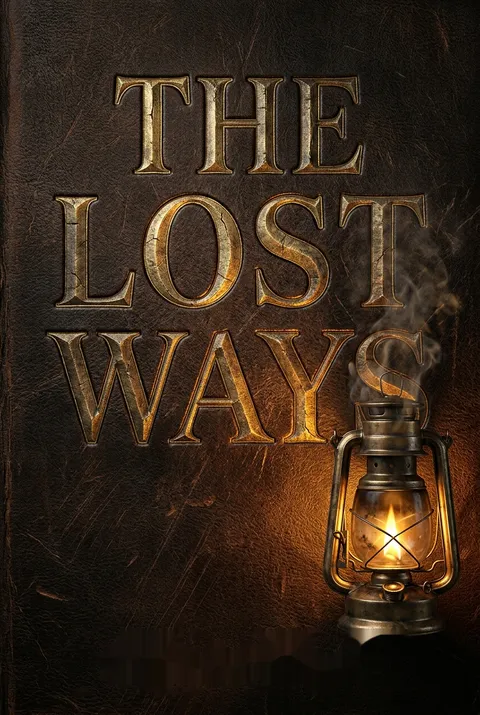
The Lost Ways receives mostly positive reviews, with readers praising its comprehensive survival information and practical advice. Many find it engaging and informative, covering topics like food preservation, natural remedies, and self-sufficiency. Readers appreciate the revival of forgotten skills and techniques used by ancestors. Some criticize the book's cost and visual presentation, while others note its value as a resource for emergency preparedness. The acorn bread recipe and smokehouse plans are highlighted as interesting features. Overall, reviewers recommend it for those interested in survivalism and traditional living skills.
Glossary
Self-feeding fire
Gravity-fed campfireA campfire arrangement designed so that gravity moves stacked fuel toward the burning area as it is consumed. The book presents it as a way to reduce the need to tend a fire overnight. Its performance depends on sound construction, suitable fuel, airflow, and safe placement.
Hardtack
Very dry travel biscuitA simple biscuit made chiefly from flour and water, historically baked until very dry so it could be stored and carried for long periods. It was used by sailors, soldiers, and travelers as a durable source of calories. Its toughness made it easier to eat after soaking or crumbling into liquid.
Pemmican
Preserved meat and fatA concentrated food associated with Indigenous peoples of the North American Plains and later adopted by traders and travelers. The book describes it as dried lean meat mixed with rendered animal fat, sometimes with dried berries. The mixture was valued for portability and storage without refrigeration when kept dry.
Wildcrafting
Gathering wild edible plantsThe practice of collecting useful plants growing without cultivation. In the book, it chiefly means identifying and harvesting edible wild plants for meals, with attention to which parts are available in particular seasons. Safe wildcrafting also requires reliable identification and awareness of local contamination and plant lookalikes.
Posse Comitatus
Community power for enforcementA Latin phrase the book connects to the historical authority of a sheriff to call community members into a posse. The text uses the idea to explain how frontier law enforcement could draw on local people when additional help was needed. The historical legal meaning is distinct from informal neighborhood cooperation today.
Shadow Tip Method
Sun-shadow direction estimateA basic navigation technique that compares the position of a stick's shadow at two different times. The line between the marked shadow tips gives an approximate east-west direction, from which a person can infer other directions. It provides rough orientation and is not a substitute for a map or a compass.
Saponification
Oil and alkali make soapThe chemical process described in the book for making soap by combining fats or oils with an alkali. The text discusses both traditional ingredients, such as animal fat and lye made from wood ash, and more standardized modern ingredients. Working with alkali can be hazardous and requires appropriate safety precautions.
FAQ
What's The Lost Ways about?
- Survival Skills Focus: The Lost Ways by Claude Davis centers on traditional survival skills used by early pioneers and Native Americans. It covers self-sufficiency methods like food preservation, shelter building, and foraging.
- Historical Context: The book provides historical insights into how ancestors thrived in challenging environments, emphasizing the relevance of these skills today.
- Practical Guidance: It offers practical instructions for readers to learn and apply these skills, making it a valuable resource for preppers and those interested in self-reliance.
Why should I read The Lost Ways?
- Reconnect with Heritage: The book allows readers to reconnect with ancestral skills and knowledge, fostering a mindset of self-reliance and resourcefulness.
- Practical Applications: It provides practical advice applicable in emergencies or food shortages, teaching readers to maximize available resources.
- Diverse Topics Covered: From building smokehouses to making pemmican, the book covers a wide range of survival skills and knowledge.
What are the key takeaways of The Lost Ways?
- Self-Sufficiency Skills: Emphasizes the importance of self-sufficiency, teaching skills to survive without modern conveniences, like food preservation and traditional cooking.
- Historical Recipes: Includes lost recipes from the 18th century, such as hardtack and pemmican, connecting readers to history.
- Foraging Knowledge: Offers insights into foraging for wild edibles, encouraging readers to learn about local flora and their uses.
What are the best quotes from The Lost Ways and what do they mean?
- "We have lost the power...": Reflects the author's belief that modern society is overly dependent on technology, losing essential survival skills.
- "We need to learn the skills...": Emphasizes reconnecting with traditional knowledge to navigate future challenges.
- "Humans need to connect again...": Highlights the need for community and connection with nature for survival and well-being.
How does The Lost Ways address food preservation?
- Self-Feeding Fire: Describes how pioneers built self-feeding fires for cooking without constant attention, using gravity to feed logs.
- Smokehouses: Provides a guide on building smokehouses for preserving meats, enhancing flavor and extending shelf life.
- Canning and Fermentation: Discusses traditional canning and fermenting methods, essential for long-term food storage.
What survival food recipes are in The Lost Ways?
- Hardtack Biscuits: Details making hardtack, a long-lasting survival food from flour, water, and salt, used by soldiers and sailors.
- Pemmican Preparation: Describes making pemmican, a nutrient-dense food from dried meat and rendered fat, often mixed with berries.
- Cattail Recipes: Includes recipes using cattails, highlighting their versatility as a food source.
What foraging techniques are discussed in The Lost Ways?
- Identifying Edible Plants: Teaches how to identify and harvest wild edibles like dandelions and wild lettuce, crucial for supplementing food supplies.
- Cattail Utilization: Emphasizes cattails as a versatile food source, detailing how to harvest and prepare different parts of the plant.
- Seasonal Foraging: Encourages learning about the seasonal availability of wild edibles for planning foraging trips and ensuring a diverse diet.
What specific survival skills are covered in The Lost Ways?
- Building Shelter: Covers methods for constructing shelters using natural materials, including tips on location and material selection.
- Water Purification: Discusses traditional water purification methods, like charcoal filters and boiling, essential for survival.
- Herbal Medicine: Highlights using herbal remedies and traditional medicine practices when modern healthcare is unavailable.
How does The Lost Ways relate to modern survivalism?
- Relevance of Old Skills: Argues that past skills are increasingly relevant today, as self-sufficiency becomes more important in potential crises.
- Community Building: Emphasizes community and cooperation in survival, drawing parallels between historical practices and modern survivalism.
- Mindset Shift: Encourages shifting from consumerism to a sustainable, self-reliant lifestyle for greater resilience.
What methods for making candles and glue from pine resin are included in The Lost Ways?
- Candle Making: Provides a detailed process for making candles from pine resin, creating a useful light source from natural resources.
- Glue Production: Explains making strong, durable glue from pine resin for crafting and repair purposes.
- Versatility of Pine: Highlights the many uses of pine trees, showcasing their importance in traditional survival practices.
What methods for making soap are discussed in The Lost Ways?
- Traditional Soap Making: Outlines making soap using wood ash and animal fat, a practical skill for self-sufficiency and hygiene.
- Lye Production: Explains creating lye from wood ash, a critical soap-making ingredient, allowing production without modern chemicals.
- Cold Process Method: Details the cold process method for soap making, emphasizing safety and precision, accessible for beginners.
How does The Lost Ways emphasize the importance of community?
- Cooperative Survival: Highlights the necessity of cooperation and community support in survival situations, relying on shared resources.
- Learning from Each Other: Encourages skill-sharing and learning from one another, fostering a sense of community.
- Cultural Exchange: Discusses how different cultures contribute to survival knowledge, promoting respect and understanding among communities.

Download PDF
Download EPUB
.epub digital book format is ideal for reading ebooks on phones, tablets, and e-readers.








