

Plot Summary
An Arrow Finds GG
With school closed during the 2020 pandemic, thirteen-year-old Matthew spends his days gaming while his mother, a magazine editor, keeps his great-grandmother GG isolated from infection. When she confiscates his Switch and sends him outside, Matthew finds a bow in his father’s old things and turns empty cans into a game target. He fires without checking where GG is standing.
The arrow hits her chocolate Ensure instead of her, but his mother sees the danger and takes away his screens for two weeks. She assigns him to help GG sort her stored boxes. Matthew resents the punishment, his father’s distance in Paris, and the prospect of a dull chore, but the boxes will give him a reason to look beyond his own confinement.
Matthew’s mistake is careless rather than cruel, but its consequences make his isolation impossible to ignore. He treats the yard as a game world where every hazard can be reset, while his mother is trying to protect a hundred-year-old woman from risks that cannot be reversed. The bow links the boy’s fantasy of agency to the real vulnerability around him. His punishment also redirects his attention: the very task he resists will bring him into contact with a history that asks for more than quick, game-shaped solutions.
Stalin's Safe Little World
In 1932 Kyiv, twelve-year-old Mila Lomachenko believes her father, Lev, and Soviet leader Stalin protect children from danger. When an envelope arrives containing lice, Lev kills them and explains that kulak children sent the parasites to infect Party officials.
Mila accepts his account, though her piano teacher, Anna Mikhailovna, later urges her to play fear into Tchaikovsky’s music, unsettling Mila’s belief that she has never truly been afraid. Lev’s fierce protectiveness feels like love, but it also teaches Mila to identify starving rural families as enemies.
In the city, hungry newcomers wait in breadlines while Mila’s household receives Party rations. She notices the contrast without yet questioning its cause. Her world remains comfortable, orderly, and dangerously narrow.
Mila’s innocence is not simple ignorance. It is a carefully maintained political education in which her father’s affection and the state’s authority reinforce each other. The lice give her first contact with danger, but Lev immediately supplies an explanation that protects the system and directs fear toward the poor. Anna Mikhailovna’s musical instruction offers another kind of knowledge: emotion that does not fit the official story. Mila can feel unease before she can interpret it, a gap that makes her later choices both difficult and morally significant.
Cross Hidden in the Hem
Across the ocean in Brooklyn, Helen Lomachenko struggles against her father’s strictness and the embarrassment of being different at school. After she refuses his meal and discards a caviar sandwich to avoid classmates’ ridicule, her father suffers a heart attack.
Her mother explains that he is also grieving letters from relatives in Ukraine who report hunger. Helen, afraid she has caused his illness and desperate to help, takes the gold Orthodox cross he gave her and sews it into the hem of a nightgown.
She sends the garment to her aunt in Ukraine, trusting the family to find the concealed gift. The gesture cannot repair her father’s health or answer the letters, but it gives Helen a practical way to act when distance makes ordinary help impossible.
Helen’s guilt turns a child’s private fear into an act of care, though she misunderstands what her father’s heart attack means. The cross carries several kinds of value at once: family affection, religious identity, and a resource that can be exchanged for food. Hiding it in clothing reflects the constrained choices available to a girl who cannot travel or send money. Her decision also begins a chain of help that depends on strangers and relatives interpreting the gift correctly, rather than on any powerful institution.
Records Begin to Speak
Matthew begins with the least promising box, where GG’s bowling records reveal that she once won medals and can still teach him how to aim. In another box, an old photograph shows GG as a girl beside Helen. Seeing GG cry, Matthew stops treating the papers as clutter.
He plays a piano concerto from her records, and the music helps her reveal that there were three girls in the family story, including Mila. GG lets him organize diaries, letters, and official documents, but insists he follow her order and keep the history secret from Matthew’s mother.
Matthew’s father, a reporter, advises him to build trust and listen before asking for the hardest details. Matthew begins taking notes, researching Ukraine, and recognizing the boxes as evidence rather than junk.
The archive becomes a relationship before it becomes a source of facts. Matthew learns that GG’s pauses and refusals are not puzzles to force open; they are boundaries shaped by pain. Music provides a form of access that questioning alone cannot, while the papers let GG control the pace and order of disclosure. Matthew’s father’s reporting advice matters because it changes the boy’s aim from extracting a revelation to earning the right to hear one. Curiosity begins to mature into responsibility.
At the Door, Nadiya
In spring 1933, a gaunt girl appears at Lev’s Kyiv home and identifies herself as his niece, Nadiya, the daughter of his dead brother. Lev denies having a family and sends her away with only bread, while Mila is ordered upstairs. Later, Mila searches the streets for the girl and sees a truck carrying covered bodies from the children’s Collector.
She finds Nadiya nearby, weak and alone, and takes her to Anna Mikhailovna’s apartment. Anna and her elderly mother, Olga Stepanovna, feed Nadiya and agree to hide her despite the danger of housing a rural child without permission. Mila must lie to Dasha and her classmates to keep visiting. For the first time, she chooses a person over the rules her father has taught her.
Mila’s first act of resistance is modest in scale but radical in its premise: hunger makes Nadiya deserving of help, regardless of the label attached to her family. The bodies at the Collector turn a rumor into something Mila cannot dismiss, yet she has not fully abandoned her father’s explanations. Anna Mikhailovna and Olga Stepanovna model a different authority, one grounded in practical care rather than loyalty tests. Their refuge also makes Mila’s moral awakening dangerous, because compassion must now survive surveillance.
Helen Takes the Record
In Brooklyn, Helen hears her teacher present New York Times correspondent Walter Duranty’s denial of famine as reliable fact. Helen knows her family has received desperate letters from Ukraine, but the class dismisses her as uninformed.
Her classmate Ruth, who had failed to speak up at first, brings her a report by journalist Gareth Jones and encourages her to collect accounts from Ukrainian families nearby. Helen interviews her father’s friends and records their relatives’ pleas, including a censored food parcel returned with an official denial that anyone is hungry.
At Easter, she decides that keeping the testimony private would leave Duranty’s version unchallenged. Ruth helps her revise a letter to the Times, but the editor rejects it for lacking an eyewitness account from inside Ukraine.
Helen’s reporting begins as an answer to humiliation: she wants proof that her family’s experience is real. Ruth helps her turn that impulse into method, gathering names, letters, and corroborating accounts rather than relying on outrage alone. The editor’s rejection exposes the asymmetry of public credibility: an established correspondent can repeat official claims, while a child’s careful collection remains secondhand. Helen is not defeated, but the refusal clarifies what her work will need and how long truth may take to reach an audience.
Three Cousins, One Famine
As Nadiya regains strength, Mila finds a letter from her aunt hidden in Lev’s desk, confirming the family connection. Nadiya explains that her father was arrested for resisting collectivization and that her mother and brothers were left with dwindling food. Party activists confiscated their grain, tools, and cow; her brothers, Antin and Mykola, died of starvation, followed by their mother.
Before dying, the mother told Nadiya to use Helen’s hidden cross for food and seek Lev in Kyiv. Nadiya traded the cross at a Torgsin shop, then reached the city. Mila recognizes that the state she worships helped destroy her cousins. She cannot undo their deaths, but she stops arguing with Nadiya’s testimony and promises to protect her.
Nadiya’s account replaces political categories with the intimate particulars that propaganda suppresses: two boys’ habits, a mother’s last instructions, and the confiscation of a family’s means to live. Mila’s belief does not collapse because she encounters an abstract counterargument; it falters when a person she has touched names the policies and losses behind the word kulak. Her shame is real, but the scene does not let guilt substitute for action. She can neither save the dead nor claim their suffering as her own, only choose what she will do next.
May Day's Secret Police
On May Day, Mila visits the hidden household before going to Katya’s celebration and finds that the secret police have arrested Anna Mikhailovna and taken Nadiya from the apartment. Mila suspects her friend, but Katya knows nothing of the secret. At home, Mila confronts Lev about his niece and the famine; he insists he could not help.
That night, the OGPU arrives to arrest him for concealing his kulak origins and sheltering a relative. Dasha has informed the authorities, hoping they will bring her own starving family to Kyiv and give them ration cards. She also reveals that Lev packed Mila’s suitcase himself. The officers take Mila to the Collector, where she loses her hair, her possessions, and the home she had believed secure.
The arrests destroy Mila’s belief that loyalty can make a family safe. Lev’s earlier cruelty and his final attempt to protect his daughter coexist, refusing the simple division between villain and victim. Dasha’s choice is equally painful: she betrays Mila to save relatives whose hunger Mila had barely considered. The state turns private desperation into a competition for survival, then calls the result order. Mila’s arrival at the Collector makes the consequences bodily and immediate, stripping away the privilege that had shielded her from the lives she judged.
Brooklyn Reaches Kyiv
After Helen receives a letter from Nadiya in Kyiv, she tells her parents that their relative is in danger. Her father, Ivan, explains that he once tried to bring his brother’s family to America and reveals the siblings he lost to war, arrest, and revolution. Though his heart remains weak, he goes with Helen to their lawyer.
The lawyer eventually locates Nadiya in a Kyiv orphanage and secures permission from both governments for Ivan to bring her to Brooklyn. Helen and Ruth also continue looking for famine survivors, hoping to give the truth the eyewitness account the Times demanded. Ivan’s journey is not guaranteed to succeed, but Helen’s letter has turned distant testimony into a specific child he can try to reach.
Helen’s courage changes the family’s silence into shared knowledge. Her father’s past explains why he has been so protective of her, but it also reveals the grief hidden beneath his rules. By telling him about Nadiya, Helen risks upsetting him and gives him a choice he could have avoided; he responds by acting. The legal process shows how narrow the route to rescue is, dependent on two governments and a lawyer’s persistence. The effort answers Helen’s childhood helplessness with a concrete, uncertain intervention.
Two Girls, One Cot
At the Collector, Mila and Nadiya claim to be sisters so the staff will keep them together. They share food, work, and the single warm coat Mila brought from home. Nadiya explains that escape would mean returning to a street where children are dying, so they wait and hope Helen’s family can help. Lice bite Mila, and she develops typhus.
Nadiya nurses her with a piece torn from the coat lining and stays beside her through days of fever. When Mila wakes in the infirmary, Dr. Zima tells her the fever has broken, but Nadiya’s weakened body could not fight the disease. Nadiya died the previous night. Mila has survived the illness and lost the cousin who made survival feel shared.
The sisters’ invented kinship becomes a practical defense against separation, then a genuine bond built through care. Nadiya’s choice to stay beside Mila is not a sentimental cure for the conditions around them; it exposes how little protection even devotion can provide. The coat, once a means of warmth and escape, becomes a compress that helps Mila through fever. Dr. Zima’s blunt news ends the hope that the two girls can leave together. Mila’s survival now carries a burden: she is alive, but the person who taught her how to endure is gone.
The Name That Crossed
When Ivan arrives at the Collector with permission to take his niece to America, the staff identify Mila as Nadiya, unaware that the real Nadiya has died. Mila has a moment to tell the truth, but doing so could leave her trapped in the orphanage with no family searching for her. Dr. Zima understands the deception and confirms that she is well enough to travel.
Mila leaves wearing Nadiya’s name and gives her coat to Vera, one of the few children who treated her kindly. In Brooklyn, Helen, Peter, and their parents welcome her as Nadiya. Mila cannot tell Helen the truth, so she says that Mila died of typhus and lets the family believe the survivor they rescued is the cousin they sought.
Mila’s deception is neither a triumph nor a simple betrayal. It is a survival decision made inside a system that has already erased the distinction between the girls in its records and reduced children to manageable categories. By taking Nadiya’s place, Mila receives the escape Nadiya had hoped for, but she also inherits a name tied to a life she cannot claim as her own. Giving Vera the coat marks a small act of generosity as she leaves, while her silence in Brooklyn begins the long cost of the rescue.
Helen Keeps the Witness
Helen hopes the girl who arrives from Kyiv will tell the New York Times what she witnessed, but the survivor refuses to revisit the famine, explaining that it is too painful and not simply her story to tell. Helen stops pressing her and gives her a chocolate bar instead.
She continues collecting accounts, documents, and letters, though the two cousins never restore their closeness or exchange the truth behind the name. Decades later, Helen’s careful archive helps historians and the United States Commission on the Ukraine Famine identify survivors and corroborate testimony.
She sends the woman she knows as Nadiya a letter with her own account and an invitation to share the story, but receives no answer. Helen’s persistence preserves evidence even when intimacy cannot be repaired.
Helen learns that bearing witness cannot mean commandeering another person’s trauma. Her decision to stop asking respects the survivor’s limit, while her continued collecting protects the public record from the same erasure she challenged as a child. The two forms of care do not perfectly reconcile: the archive grows, but the cousins remain divided by a secret neither can safely undo. Helen’s work therefore offers neither a neat reunion nor a guaranteed verdict. It creates a durable alternative to silence, built from many small acts of recording.
GG's Story Comes Home
Nearly ninety years later, Matthew recognizes that GG is Mila, not the cousin whose name she lived under. GG confirms the truth and explains that she became Nadiya to survive.
Matthew helps her assemble the account from Helen’s papers, photographs, letters, and oral histories, and shares it with his mother, who learns why her grandmother concealed the past. With his father’s advice, Matthew turns his notes into a video and persuades GG to appear briefly. She hums and silently plays along to Tchaikovsky’s Sweet Dreams before recording her name.
GG dies in her sleep the next morning. Matthew and his mother grieve together, then agree to preserve the account. His work has not erased GG’s guilt, but it allows her, Mila, Nadiya, and Helen to be remembered truthfully.
Matthew’s final task is not to solve GG’s past like a game but to make a form in which its contradictions can remain visible. The video gives GG control over what she reveals, and the music allows her body to remember what speech cannot easily hold. Her death follows the act of naming herself, lending the recording urgency without turning it into a cure. Matthew and his mother’s reconciliation matters because the story has changed how they care for one another. Their shared grief becomes a new way to carry the family history.
Epilogue
On GG’s actual hundredth birthday, Matthew and his mother visit the Lomachenko graves at St. Vladimir’s cemetery. He places miniature chocolate bars beside GG’s grave and tells her that he has shared the video with historical archives and is writing a fuller account.
The new headstone names Lyudmila Lomachenko Johnson and honors Nadiya, whose life was lost before she could reach America. Sunlight briefly falls across both names. Matthew imagines the three cousins together, no longer divided by the secret that separated them in life.
The cemetery visit gives the story a physical ending without pretending that remembrance repairs every loss. Matthew places chocolate where the girls’ childhood sweetness once appeared, but the grave names correct the false identity that shaped GG’s life. The paired inscription restores Nadiya to the family record and recognizes Mila as the person who survived. Matthew’s promise to keep sharing the account extends Helen’s archive into another generation. The brief sunlight is meaningful because it is temporary: memory does not undo history, but it can prevent the dead from disappearing inside someone else’s name.
Analysis
The Lost Year brings historical denial into a family story by showing how large systems enter ordinary relationships. In Kyiv, Mila’s father teaches her to interpret hunger through the language of class enemies, while the state takes grain, arrests dissenters, and makes children compete for safety. Nadiya’s testimony breaks that framework not through argument alone but through remembered bodies, meals, and losses. In Brooklyn, Helen encounters a different form of denial: a respected newspaper gives authority to a correspondent who repeats the Soviet account, while an immigrant child’s evidence is dismissed as secondhand. Her work demonstrates that testimony needs both ethical listening and durable preservation.
The novel’s shifting voices complicate the idea of who owns a story. Helen wants Nadiya’s witness, but Nadiya cannot bear to tell it. Mila survives by taking Nadiya’s name, a choice that saves her and also silences her original identity. Matthew’s role is not to expose GG as a puzzle solved, but to help her shape what can be told and to recognize that care includes respecting limits. The archive, the recording, and the cemetery inscription each correct a different kind of erasure, though none restores the dead or repairs every damaged relationship.
The pandemic frame makes these questions immediate without equating distinct crises. Matthew fears losing his father and resents his mother’s restrictions; GG’s history shows him how fear can narrow attention, while her survival teaches him that listening is an action. The book ultimately argues that truth depends on people willing to record what power dismisses and to pass those records on. Its hope is not that memory can undo harm, but that naming the people behind official labels can prevent their suffering from vanishing a second time.
Review Summary
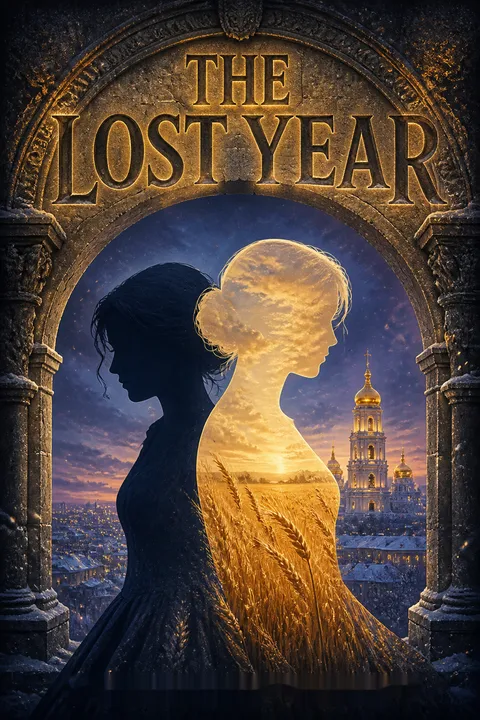
The Lost Year receives overwhelmingly positive reviews, praised for its engaging storytelling, historical accuracy, and timely relevance. Readers appreciate the interweaving of multiple timelines and perspectives, connecting the 2020 pandemic with the 1930s Holodomor in Ukraine. The novel's exploration of propaganda, family secrets, and resilience resonates strongly with readers. Many commend the author's skillful handling of sensitive topics for a middle-grade audience. The plot twist is frequently mentioned as surprising and well-executed. Overall, reviewers find it an educational and emotionally impactful read.
People Also Read

Characters
Matthew
The reluctant family historianMatthew is thirteen, a devoted Zelda player, and a boy struggling with pandemic isolation, his parents’ separation, and his father’s absence in Paris. He initially treats GG’s boxes as an obstacle between him and his Switch, but the old photograph and piano records awaken his curiosity. His father’s reporting advice helps him understand that listening requires patience and trust, not just questions. Matthew’s attention gradually shifts from his own lost routines toward GG’s guarded history and the people whose testimony was ignored. His growth is practical: he helps with daily care, learns to recognize his mother’s strain, and takes responsibility for preserving a story that his great-grandmother could not tell openly.
Mila Lomachenko
The protected Party daughterMila is a bright, affectionate Kyiv girl raised in comfort by her widowed father, Lev. She trusts the Soviet ideals taught at school and believes that her father’s authority protects her, though her love of music, jokes, and chocolate gives her a lively mind beyond political slogans. Her encounters with hunger and with people who contradict the official story force her to reconsider what loyalty means. Mila is not instantly wise or fearless; she doubts, misjudges, and sometimes speaks from the assumptions she is trying to escape. Her central struggle is learning to see individuals where the state has trained her to see labels.
Nadiya Lomachenko
The famine's young survivorNadiya is a rural girl who reaches Kyiv after her family is shattered by hunger and political repression. Quietly observant and fiercely self-reliant, she has learned to assess danger before trusting anyone. Her endurance does not make her invulnerable: grief, exhaustion, and mistrust remain close to the surface. She and Mila share a family connection, but Nadiya does not simply accept Mila’s first efforts to help; she challenges the privilege and assumptions that separate them. Her direct knowledge of the famine forces Mila to confront the human consequences hidden by official explanations.
Helen Lomachenko
The Brooklyn truth collectorHelen is a Ukrainian American girl growing up in Depression-era Brooklyn. She wants to fit in at school, but family hardship and her relatives’ letters make it impossible to dismiss what she hears about Ukraine. Her discomfort with public attention initially keeps her quiet; Ruth’s encouragement helps her interview community members and challenge a respected newspaper’s denial. Helen combines stubbornness with tenderness, especially toward her younger brother and the cousin she hopes will join the family. She learns that keeping records can matter even when editors refuse to listen, and her long commitment to oral histories grows from that early conviction.
Lev Lomachenko
Mila's guarded fatherLev is a high-ranking Kyiv Party official and Mila’s only parent. He loves her deeply and builds her world around protection, education, and stories of Soviet achievement. Yet his fear of political exposure makes him harsh toward people he has been taught to classify as enemies, including members of his own family. He is both an agent of the system and a man shaped by its threats, a contradiction Mila struggles to understand. His authority gives his affection real comfort, but it also teaches Mila to accept a narrow account of who deserves compassion.
Dasha
The wary household caretakerDasha has cared for Mila since childhood and fills the household with practical warnings, country sayings, and familiar routines. Her caution can seem comic to Mila, but it reflects a life marked by danger and loss. Dasha is loyal to the family in complicated ways, balancing affection for Mila against fear for her own relatives and her precarious position in Kyiv. She rarely explains herself, which leaves Mila to mistake silence for simple obedience. Her presence reveals how many adults around Mila are carrying private worries the child has never been encouraged to see.
Anna Mikhailovna
Mila's courageous piano teacherAnna Mikhailovna is Mila’s strict, perceptive piano teacher, a former conservatory student who recognizes when music is expressing more than its notes. She gives Mila a rare space to explore fear and feeling outside official lessons. When Nadiya needs shelter, Anna and her mother weigh the danger honestly rather than hiding behind slogans. Anna’s courage is not recklessness; she understands the risks and acts because the alternative is a child left to die. Her musical guidance helps Mila approach emotions that her comfortable upbringing has not taught her to name.
Ruth Spitz
Helen's reporting partnerRuth is a sharp, serious classmate whose family owns a Brooklyn grocery store. She understands the loneliness of being treated as an outsider and recognizes that Helen’s family knowledge deserves to be heard. After failing to speak up at first, Ruth finds Gareth Jones’s reporting, helps Helen shape her letter, and supports her search for witnesses. She can be blunt, especially when Helen doubts herself, but her criticism is aimed at strengthening Helen’s voice rather than diminishing it. Their friendship turns a private burden into a shared effort.
Ivan Lomachenko
Helen's determined fatherKnown to Helen as Pop, Ivan is a Ukrainian immigrant, printing-press worker, and father whose heart trouble compounds the family’s financial strain. He is strict about food and behavior, but his rules grow from hardship, grief, and a deep wish to keep his children safe. He has lost relatives to war and political repression, yet does not readily speak of that history. His relationship with Helen changes as he recognizes her capacity to listen and act. His devotion is expressed less through explanation than through the risks he is willing to take for family.
Matthew's mother
The overburdened caregiverMatthew’s mother is an editor managing work, parenting, and the daily care of a hundred-year-old relative during the pandemic. Her strictness about screens and precautions comes from fear for GG’s safety, though exhaustion often makes her seem impatient or distant. She loves her son but struggles to make room for his loneliness while carrying too many responsibilities. As Matthew begins helping rather than merely resisting, they recognize each other’s strain. She is also the link between Matthew and GG, though she does not initially know the history her grandmother has kept private.
Matthew's father
The distant reporterMatthew’s father is a newspaper correspondent working in Paris during the pandemic. He misses his son and offers him the tools of a reporter: patience, fairness, and attention to people’s stories. His work keeps him far away, and his failure to be candid about the likely cancellation of their summer trip damages Matthew’s trust. He is not an idealized guide; his job competes with his parental responsibilities. Still, his advice helps Matthew approach GG’s history with greater care and gives him practical ways to shape the material.
Katya Gavrilok
Mila's motherless friendKatya is Mila’s best friend and fellow Young Pioneer, also growing up without her mother. She joins Mila in imaginative games about motherless girls and wants to please her widowed father. Katya values honesty and struggles when Mila asks her to keep a secret, but she is not responsible for every danger Mila fears. Her friendship reflects the emotional limits of childhood under surveillance: even close companions may not understand what is being concealed, and suspicion can grow where trust has not been tested.
Nina Lomachenko
Helen's steadying motherHelen’s mother works exhausting cleaning and sewing jobs after Ivan’s heart attack, while trying to protect her children from worry. She is loving and physically reassuring, but her background has taught her to accept hardship as fate and avoid drawing attention. Her instinct to shield Helen can become silence at precisely the moment Helen wants to act. Nina’s care keeps the family functioning through poverty and illness, even as her own fatigue makes clear that protection has a cost.
Dr. Zima
The compromised physicianDr. Zima is the infirmary doctor at the Collector, a heavy drinker with a brusque manner. Despite the institution’s neglect, he gives Mila accurate medical news and understands more about the girls’ identities than he openly says. His choices suggest a small, precarious space for decency inside a system built to deny it.
Vera
A fellow Collector childVera is an older girl at the Collector who helps Mila and Nadiya navigate work and food. She notices Mila’s illness and offers practical warnings about the infirmary. Her matter-of-fact kindness gives the girls a brief foothold in a place where children are routinely overlooked.
Peter Lomachenko
Helen's watchful little brotherPeter is Helen’s younger brother, playful and eager for the security of their family. Helen tries to protect him from the full weight of their relatives’ suffering, but he worries about losing his father. His questions reveal how children absorb adult fear even when adults try to hide it.
Olga Stepanovna
Anna's generous motherOlga Stepanovna is Anna Mikhailovna’s elderly mother. She helps nurse Nadiya, shares food, and accepts danger as part of caring for a child in need. Her quiet decisiveness often cuts through the adults’ fearful calculations.
Plot Devices
GG's archival boxes
A family past in piecesThe boxes of records, photographs, letters, and diaries turn Matthew’s punishment into an investigation. GG controls the order in which he reads them, making the archive a negotiated act of trust rather than a collection of clues he can simply seize. The papers also connect the 1930s timelines to the 2020 frame and preserve facts that family silence has obscured. Their incompleteness matters: Matthew must compare documents, memories, and historical reporting instead of treating any single item as the whole truth.
The hidden gold cross
A gift carried through hungerHelen hides her father's Orthodox cross in the hem of a nightgown and sends it to relatives in Ukraine. The concealed object carries family love across a censored border and becomes something that can be traded for food. Its route binds Helen's Brooklyn story to Nadiya's survival and makes a child's small decision consequential far beyond her knowledge. The cross also gathers meanings that do not cancel each other: religious inheritance, material value, and the painful possibility of help arriving too late for some members of a family.
Tchaikovsky's music
Memory without explanationPiano music gives Mila a language for emotions her political education cannot accommodate. Anna Mikhailovna uses Tchaikovsky to teach Mila that a piece can express terror rather than triumph, while Sweet Dreams later becomes a shared memory between Mila and Nadiya. In the 2020 frame, the same music helps GG reconnect with her buried past and prepares her to appear on Matthew's recording. Music works not as a code that solves everything, but as a bodily memory that survives when speech falters.
The assumed identity
Survival through a borrowed nameAt the Collector, staff mistake Mila and Nadiya for sisters, and their shared surname makes the confusion useful. After Nadiya dies, Mila accepts the name on which her uncle's rescue depends. The deception allows her to leave the Soviet Union, but it also binds her to a secret that shapes her life and her family's understanding of the past. The device transforms identity from a private truth into a condition of survival, while leaving the emotional cost unresolved for decades.
FAQ
Synopsis & Basic Details
What is The Lost Year about?
- Parallel Timelines Uncover History: The novel interweaves the story of Matthew, a teenager isolated during the 2020 COVID-19 pandemic, with the experiences of his great-grandmother, Mila (later known as GG), and her cousin Helen during the 1930s Ukrainian famine and Great Depression.
- Forced Connection Reveals Past: Matthew, grounded from video games, is tasked with helping GG sort through old boxes, leading him to discover hidden documents and photographs that hint at a traumatic past GG has kept secret for decades.
- Legacy of Survival and Truth: As Matthew pieces together the harrowing story of Mila's survival during the Holodomor and Helen's efforts to expose the truth in America, he begins to understand his family's resilience and the importance of bearing witness to history.
Why should I read The Lost Year?
- Emotional Depth Across Generations: The book offers a powerful exploration of intergenerational trauma, resilience, and the complex bonds within families, showing how historical events echo through time and shape identity.
- Unique Historical Perspective: It provides a compelling, personal look at the Holodomor (Ukrainian famine) and the Great Depression through the eyes of young people, highlighting aspects often overlooked in broader historical accounts, such as the role of propaganda and the struggle for truth.
- Relatable Pandemic Experience: Matthew's isolation, reliance on technology, and strained family dynamics during the COVID-19 lockdown offer a contemporary entry point into the narrative, making the historical struggles feel acutely relevant to modern readers.
What is the background of The Lost Year?
- Ukrainian Famine (Holodomor): The historical core is the man-made famine in Soviet Ukraine (1932-1933), orchestrated by Stalin's regime through forced collectivization and grain confiscation, resulting in millions of deaths, which the Soviet government denied.
- Great Depression in America: Helen's timeline is set against the backdrop of the 1930s Great Depression in Brooklyn, illustrating the economic hardship faced by immigrant families and the challenges of assimilation while maintaining cultural identity.
- COVID-19 Pandemic: Matthew's story is grounded in the early months of the 2020 pandemic, capturing the sudden isolation, fear, and disruption of normal life, particularly for vulnerable populations like the elderly.
What are the most memorable quotes in The Lost Year?
- "My name is Mila Lomachenko.": Spoken by GG at the end of her life (Chapter 53), this single sentence shatters decades of secrecy, revealing her true identity and the profound sacrifice she made to survive, serving as the emotional climax of Matthew's quest.
- "History is simply that—stories—and it matters enormously who gets to tell them.": Written by Helen in a letter to GG (Chapter 50), this quote encapsulates a central theme of the book, emphasizing the power of narrative, the importance of eyewitness accounts, and the fight against historical revisionism.
- "You'll be all right... You'll survive.": Repeated by various characters (Nadiya to Mila in Chapter 41, Mom to Matthew in Chapter 42), this phrase becomes a mantra of resilience passed down through generations, highlighting the enduring human capacity to endure hardship and find strength.
What writing style, narrative choices, and literary techniques does Katherine Marsh use?
- Alternating First-Person Perspectives: The novel employs a multi-perspective structure, primarily alternating between Matthew (2020), Mila (1930s Ukraine), and Helen (1930s Brooklyn), allowing readers intimate access to each character's thoughts, feelings, and experiences across different eras and locations.
- Found Documents and Multimedia: Marsh integrates elements like letters, diary entries, newspaper clippings, and even Matthew's video project ("The Legend of GG") into the narrative, mimicking the process of historical discovery and lending authenticity to the story.
- Symbolism and Motif: Recurring symbols such as the Russian Orthodox cross, food (or lack thereof), the Maxim Gorky airplane, and even the simple act of sharing chocolate underscore key themes of faith, survival, propaganda, and connection across the timelines.
Hidden Details & Subtle Connections
What are some minor details that add significant meaning?
- The Lilac Bush: The lilac bush in Matthew's backyard (Chapter 26) is initially just part of the environment, but GG later reveals its significance, stating, "Lilac. Anna loved lilac," connecting the flower to her deceased daughter (Matthew's grandmother) and hinting at the hidden layers of memory and grief tied to seemingly ordinary things.
- The Orthodox Cross: Helen's reluctance to wear her Orthodox cross (Chapter 9) because it's "different" from others at school subtly highlights the pressure to assimilate and hide her cultural/religious identity in America, foreshadowing the much larger identity concealment Mila will undertake.
- The Maxim Gorky Airplane: Mila's father's enthusiastic description of the propaganda-filled Maxim Gorky plane (Chapter 17) serves as a potent symbol of the Soviet regime's grand, often hollow, promises and its ultimate failure, tragically underscored by the plane's fatal crash years later (Chapter 18), mirroring the regime's destructive nature.
What are some subtle foreshadowing and callbacks?
- GG's Nervous Glances: Early in Matthew's interaction with GG, her "nervous glance at the boxes" (Chapter 3) and frantic reaction to him looking at the papers (Chapter 5) subtly foreshadow the deeply painful and secret nature of their contents, hinting that the past is not just forgotten but actively hidden.
- "Everyone is a possible enemy!": Papa's chilling warning to Mila (Chapter 11) echoes throughout her story, tragically culminating in her realization that Dasha, the person closest to her after Papa, was the one who betrayed them (Chapter 37), reinforcing the pervasive fear and paranoia of the Soviet system.
- The Shared Lullaby: The lullaby Nadiya sings to Mila ("Spi, mladenetz/moi prekrasni" in Chapter 43) is later revealed in the Author's Note to be the same song the author's grandmother and mother sang to her, creating a powerful callback that extends beyond the fictional narrative to the real-life inspiration and the enduring comfort of shared cultural heritage across generations.
What are some unexpected character connections?
- Mila and Helen's Shared Name: The revelation that Helen's American name, Helen, is derived from her Russian name, Yelena, and that Mila's grandmother's name was Anna (Chapter 26), after Anna Mikhailovna, creates a poignant, hidden connection where the survivors name their children after those who helped or were lost, unknowingly linking the generations through hidden tributes.
- Dr. Zima's Compassion: The seemingly minor character of Dr. Zima (Chapter 45), initially described as a drunk, becomes a crucial, unexpected ally who recognizes Mila's true identity but chooses to protect her by confirming "Nadiya's" recovery, highlighting that even within a brutal system, individual acts of kindness and resistance are possible.
- Ruth's Intergenerational Empathy: Ruth's connection to the story extends beyond her friendship with Helen; her family's own experiences with persecution (Jewish family in Germany, Chapter 13) give her a unique empathy for the Ukrainian famine victims, creating an unexpected parallel between different histories of suffering and the importance of speaking up.
Who are the most significant supporting characters?
- Anna Mikhailovna: Mila's piano teacher is a vital figure who provides Mila with a safe haven, challenges her Soviet-indoctrinated worldview, and ultimately risks her own safety to shelter Nadiya, embodying quiet resistance and compassion in a dangerous time.
- Ruth Spitz: Helen's friend is instrumental in encouraging Helen to pursue her journalistic efforts, providing practical advice, emotional support, and a crucial perspective on fighting for truth and identity, serving as Helen's key ally and confidante.
- Dasha: Mila's nanny, initially portrayed as overprotective and superstitious, becomes a complex and tragic figure whose ultimate betrayal of Mila and her father, driven by her own family's starvation, highlights the desperate choices forced by the famine and the corrosive effect of the regime.
Psychological, Emotional, & Relational Analysis
What are some unspoken motivations of the characters?
- Matthew's Need for Control: Matthew's intense focus on finishing Zelda (Chapter 1) and later his meticulous approach to organizing GG's story (Chapter 51) can be interpreted as an unspoken need for control and order in a world turned chaotic and unpredictable by the pandemic and his parents' separation.
- GG's Desire for Absolution: GG's decision to finally share her story with Matthew (Chapter 46) after decades of silence is driven by an unspoken desire for her truth to be known and perhaps for a form of absolution or understanding before she dies, needing someone to bear witness to her sacrifice and the weight of her secret.
- Helen's Pursuit of Validation: Beyond seeking justice for the famine victims, Helen's relentless pursuit of getting the New York Times to correct its reporting (Chapter 33) is subtly motivated by a need for validation – both for her own intelligence and efforts, and for the importance of her family's experiences in a society that often dismisses immigrants.
What psychological complexities do the characters exhibit?
- Mila's Cognitive Dissonance: Mila grapples with profound cognitive dissonance, initially fiercely loyal to the Soviet ideal and her father's narrative (Chapter 2), but increasingly unable to reconcile it with the horrific reality of the famine and her father's complicity (Chapter 36), leading to a shattering of her worldview and identity.
- GG's Survivor's Guilt: GG (Mila) exhibits deep-seated survivor's guilt, evident in her emotional breakdown when recounting Nadiya's death (Chapter 46) and her insistence that Matthew tell Nadiya's story, not her own (Chapter 50), highlighting the psychological burden of living when others perished and the complex relationship with the identity she assumed.
- Matthew's Displacement Anxiety: Matthew displays anxiety related to displacement and loss of connection, exacerbated by the pandemic and his father's absence (Chapter 34), manifesting in irritability, withdrawal, and a desperate need for reassurance about his father's safety and their future together.
What are the major emotional turning points?
- Mila Witnessing the Dead Children: Mila's horrifying glimpse of the dead children being loaded into a truck at the Collector (Chapter 15) is a major emotional turning point, shattering her naive belief in the Soviet narrative and forcing her to confront the brutal reality of the famine and the regime's cruelty.
- Helen Receiving the New York Times Letter: The letter from the New York Times editor dismissing her evidence (Chapter 33) is a pivotal emotional moment for Helen, transforming her disappointment into righteous anger and solidifying her resolve to find irrefutable eyewitness accounts, propelling her long-term dedication to exposing the truth.
- Matthew's Breakdown and Mom's Comfort: Matthew's emotional outburst after his trip to Paris is canceled (Chapter 38), followed by his mother's unexpected empathy and comfort (Chapter 42), marks a significant turning point in their relationship, fostering deeper understanding and connection amidst their shared anxieties and grief.
How do relationship dynamics evolve?
- Matthew and Mom's Shifting Bond: Initially strained and marked by conflict over screen time and isolation (Chapter 1), Matthew and his mother's relationship evolves through shared vulnerability (Matthew's fear for his dad, Mom's grief over Anna) and mutual support (Matthew helping with GG, Mom editing his story), leading to a stronger, more empathetic connection.
- Mila and Papa's Shattered Trust: Mila's relationship with her father transforms from unquestioning adoration and belief (Chapter 2) to profound disillusionment and anger upon discovering his lies and complicity (Chapter 36), culminating in a heartbreaking rupture of trust that is never fully repaired before his arrest.
- Helen and Nadiya's Unfulfilled Sisterhood: Helen's hopeful anticipation of a sister-like bond with Nadiya (Chapter 40) is tragically cut short by Nadiya's death and Mila's assumption of her identity, leaving Helen with a cherished but ultimately incomplete relationship based on a hidden truth, highlighting the lasting impact of Mila's secret.
Interpretation & Debate
Which parts of the story remain ambiguous or open-ended?
- The Extent of Papa's Complicity: While Mila accuses her father of having Anna Mikhailovna and Nadiya arrested (Chapter 36), Papa denies it, claiming he was already targeted by the purges ("It was only a matter of time," Chapter 37). The story leaves it somewhat ambiguous whether Papa actively reported them or if their discovery was a separate event that merely accelerated his inevitable arrest due to his "kulak origins."
- Dr. Zima's True Motives: Dr. Zima's decision to confirm Mila's identity as "Nadiya" to Uncle Vanya (Chapter 47) is presented as an act of kindness, but the text also notes his "bristly eyebrows twitch[ing]" and his statement "She saved herself... I did nothing," leaving room for interpretation about whether his actions were purely altruistic or perhaps also motivated by a desire to distance himself from the Collector's grim realities or protect himself.
- The Fate of Anna Mikhailovna and Olga Stepanovna: After Anna Mikhailovna's arrest and Olga Stepanovna's interrogation (Chapter 35), their ultimate fates are not explicitly detailed in Mila's narrative, leaving the reader to wonder if they survived their entanglement with the secret police and the subsequent hardships.
What are some debatable, controversial scenes or moments in The Lost Year?
- Dasha's Betrayal: Dasha's decision to report Mila and her father to the authorities (Chapter 37) is highly debatable. While Mila sees it as a cruel betrayal ("How could you?!"), Dasha justifies it by her family's starvation and the promise of ration cards, forcing readers to confront the impossible choices and moral compromises people made to survive the famine and the regime.
- Papa's Justification for His Actions: Papa's attempts to justify his lies and abandonment of his family by claiming they were "ignorant, backward people" and that he was protecting Mila (Chapter 36) are controversial, highlighting the disturbing ways ideology and self-preservation can warp familial bonds and personal responsibility.
- Mila Assuming Nadiya's Identity: Mila's choice to take on Nadiya's identity after her death (Chapter 47) is a controversial act, born of desperation but involving deception towards Helen and her family. It raises questions about the ethics of survival and whether the end justifies the means, even in the face of unimaginable trauma.
The Lost Year Ending Explained: How It Ends & What It Means
- GG's Truth and Peaceful Death: The Lost Year ending explained reveals that GG was actually Mila, who assumed her cousin Nadiya's identity to escape Soviet Ukraine after Nadiya died of typhus in the Collector orphanage. GG shares this secret with Matthew shortly before her peaceful death, having finally unburdened herself of the truth she carried for nearly 90 years.
- Matthew Becomes Keeper of the Story: Matthew embraces his role as the "Keeper of GG's Story," deciding to document the interwoven narratives of Mila, Nadiya, and Helen through video and writing. This signifies the successful transmission of history across generations and Matthew's personal growth in understanding resilience and the importance of bearing witness.
- Legacy of Survival and Connection: The final scene at the cemetery (Epilogue) underscores the enduring legacy of the three cousins. By including both Mila's and Nadiya's names on the gravestone and acknowledging Helen's role in preserving famine history, the ending emphasizes that survival is not just about individual endurance but also about the connections, sacrifices, and efforts to remember those lost and ensure their stories are told.
Download PDF
Download EPUB
.epub digital book format is ideal for reading ebooks on phones, tablets, and e-readers.








