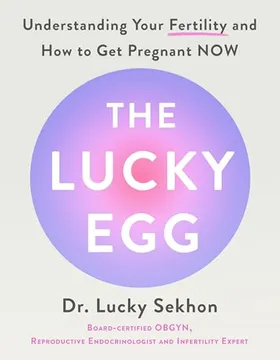


Key Takeaways
Treat conception as probability, not a verdict on effort or worth
Biology is inefficient. Even in the most fertile years, a well-timed cycle offers roughly a 15% to 20% chance of conception. Fertilisation is only one hurdle: embryos must develop, travel to the uterus, and implant. Some pregnancies end before a person knows they began. About 85% of couples conceive after a year of regular, timed intercourse, but that population figure cannot predict any one couple’s experience.
Effort has limits. Sarah, a healthy 33-year-old who tracked ovulation and followed restrictive food rules, blamed herself when pregnancy did not happen quickly. Her tests were normal, and she conceived after eight months. The point is not that everyone should simply wait. It is that a negative test does not reveal a person’s value, effort, or future chances.
What's useful here is a shift from moral judgment to probability literacy. People naturally read repeated failure as evidence that they are doing something wrong, especially when other life goals respond more directly to effort. Fertility does not. Understanding cumulative odds can soften the emotional impact of a single cycle without turning the process into a numbers game. The important qualification is that averages are not individual forecasts: age, medical history, and chance all matter. Clear communication should make uncertainty legible, not offer false reassurance or imply that persistence alone guarantees a baby.
Track ovulation, but treat irregular or painful cycles as clinical clues
Timing is narrow. Sperm can survive in the reproductive tract for up to five days, while an ovulated egg is viable for about 12 to 24 hours. The most useful days for intercourse or insemination are generally the two to three days before ovulation. Calendar estimates work best for people with regular cycles. Ovulation predictor kits detect a rise in luteinizing hormone, usually one to one and a half days before ovulation; they predict the event rather than confirm it.
Periods carry information. A cycle diary can record the first day of full flow, cycle length, pain, and unusual bleeding. Persistent irregular or absent periods, severe pain, heavy bleeding, spotting, or a luteal phase shorter than ten days warrant a discussion with a clinician. These patterns can point to conditions such as PCOS, endometriosis, fibroids, or hormonal disruption.
Cycle tracking is most valuable when it helps a person notice a pattern, not when it becomes a daily referendum on whether the body is cooperating. This distinction matters because consumer apps can create an impression of precision that calendar estimates cannot provide, particularly with irregular cycles. A diary also gives clinicians more useful information than a vague recollection of symptoms. The book’s framing of periods as a health signal is empowering, provided it does not invite self-diagnosis: symptoms are clues that guide evaluation, not proof of a particular condition.
Read ovarian reserve as a treatment forecast, not a fertility score
Quantity and quality differ. Ovarian reserve describes the remaining pool of follicles, while egg quality concerns an egg’s potential to produce a healthy embryo. Anti-Mullerian hormone (AMH) and antral follicle count (AFC) estimate egg quantity and help predict how many eggs may respond to IVF stimulation. They do not reliably predict whether someone will conceive naturally from the single egg typically ovulated each cycle, or when menopause will occur.
Age changes the odds. The book estimates chromosomal errors in embryos at about 20% to 25% in the twenties, around 50% by age 38, and over 70% in the forties. Meng, 28, panicked over a low AMH result, but she ovulated regularly and conceived without treatment. Her case illustrates why a test result needs context, not a label of infertility.
This distinction prevents a common category error: treating a measurement designed to forecast response to medication as a direct verdict on natural conception. It also shows why test results need interpretation alongside age, cycle history, and the question being asked. A low number can be meaningful for planning egg retrieval while saying much less about a person’s immediate chance of pregnancy. Conversely, reassuring reserve markers cannot erase age-related changes in egg quality. The practical lesson is to ask what a test can predict, what it cannot, and which decision its result is meant to inform.
Seek evaluation early when age, symptoms, or history raise the stakes
Use time thresholds as guides. The book recommends fertility evaluation after 12 months of trying under age 35, after six months at ages 35 to 39, and after three months at 40 or older. These are not reasons to delay if there are concerns already. Irregular or painful periods, known endometriosis or PCOS, prior pelvic infection or surgery, repeated pregnancy loss, or a family history of early menopause can justify earlier assessment.
Assess both sides. Fertility involves ovaries, tubes, uterus, and sperm. A semen analysis is an essential part of evaluation, and abnormal results may need confirmation and specialist review. Priya’s fibroid was discovered after a miscarriage and a year of donor insemination attempts. Treating the structural problem helped her conceive. Testing can identify a barrier even when the person trying to conceive appears healthy.
The insistence on evaluating both partners corrects a stubborn tendency to make fertility a woman’s responsibility. It also reframes testing as a way to locate an obstacle, rather than a declaration that someone is defective. Time thresholds can support timely care, but they should not become rigid gates, especially for people using donor sperm, facing medical treatment, or experiencing symptoms. Access is another part of the equation: a recommendation to seek specialist care is only actionable when cost, wait times, and local referral systems allow it.
Keep fertility habits sustainable, and distrust expensive promises
Choose the well-supported basics. A balanced diet, moderate exercise, adequate sleep, and avoiding smoking support general and reproductive health. The book recommends folic acid before conception and addressing documented deficiencies, such as low vitamin D or iron. Moderate caffeine, around one or two cups of coffee daily, is not presented as a reason for most people to quit. Extreme exercise, major weight changes, smoking, and heavy alcohol use can be more consequential than eliminating ordinary foods without a medical reason.
Supplements are not shortcuts. Evidence for many products marketed for fertility is weak, inconsistent, or absent. The author discusses CoQ10 as a possible option, particularly in some IVF settings, while stressing that it cannot reverse aging or create new eggs. Unregulated products may have inaccurate labels, side effects, or interactions. Restrictive diets and long supplement regimens can consume money, energy, and time without proven benefit.
This advice challenges the commercial logic that every uncertain outcome can be fixed by buying a more elaborate routine. The strongest recommendations are modest because the evidence is modest: support overall health, correct deficiencies, and do not confuse plausible mechanisms with demonstrated live-birth benefits. Sustainable habits also protect quality of life during a process that already encourages constant monitoring. A useful nuance is that lifestyle advice should never become another instrument of blame. Health choices can influence risk, but they do not give a person control over every egg, embryo, or pregnancy outcome.
Choose IUI or IVF against your timeline and family-size goals
IUI gives nature a nudge. Intrauterine insemination places prepared sperm in the uterus near ovulation, often with medication to mature more than one egg. It may suit younger patients with open tubes, mild sperm issues, unexplained infertility, or a need for donor sperm. Per-cycle success is commonly about 10% to 20% for women under 35, and repeated attempts may be needed. Medication can also increase the chance of twins.
IVF moves more steps into the lab. It stimulates the ovaries, retrieves eggs, fertilises them, and grows embryos for possible testing, freezing, or transfer. It can be more efficient when time is limited, tubes are blocked, sperm is scarce, or a person hopes for multiple children and wants to bank embryos. Age, medical findings, cost, treatment burden, and goals all belong in the decision. Set a plan for when to reassess or change course.
The most important comparison is not simply which treatment has the higher success rate per attempt. It is which strategy fits the patient’s time horizon and desired family size. A lower-cost first step can become expensive if it consumes months that matter, while IVF’s greater control comes with injections, procedures, cost, and no guarantee. Decision-making improves when the trade-offs are made explicit in advance, including a stopping point for IUI. That approach treats patients as collaborators who can revise a plan, not as passengers following a single predetermined route.
Use IVF's precision without mistaking tests for guarantees
Expect attrition. In IVF, not every retrieved egg is mature, not every mature egg fertilises, and only about half of fertilised eggs may reach the blastocyst stage. Preimplantation genetic testing (PGT) can identify certain chromosomal or inherited genetic problems in embryos, helping clinicians rank options and reduce some risks. A PGT-normal embryo may have about a 60% to 70% chance of live birth per transfer, but implantation can still fail or a miscarriage can still occur.
Tests have limits. PGT samples a small number of cells from the part of the embryo that contributes to the placenta. It cannot assess every aspect of embryo health. The book also warns against paying for add-ons without strong evidence, including routine immune panels, endometrial receptivity testing, and ovarian PRP. Modern freezing and single-embryo transfer can improve control and reduce multiple-pregnancy risk, but no laboratory tool removes uncertainty.
IVF makes reproduction more observable, but visibility can be mistaken for certainty. Grading, genetic testing, and monitoring provide useful information while leaving much of embryo biology unseen. This is a familiar problem in precision medicine: a more detailed measurement can sharpen decisions without making outcomes fully predictable. The book’s skepticism toward add-ons is therefore not anti-innovation. It is a demand that new interventions show meaningful benefit before patients pay for them or accept their risks. Good counseling should distinguish an improved probability from a promised result.
Freeze eggs or embryos to preserve options, not promise outcomes
Freezing pauses biology, not uncertainty. Egg freezing stores unfertilised eggs; embryo freezing fertilises eggs first and can allow genetic testing before storage. Vitrification, a rapid-freezing method, has raised reported survival after thawing to roughly 85% to 90% for eggs and 97% for embryos. Each step still loses some eggs or embryos, and age at freezing strongly affects the chance of obtaining a healthy embryo. The book offers rough planning benchmarks, not guarantees: around 15 eggs per hoped-for live birth in the mid-thirties, and more at older ages.
Choose according to values. Embryos offer more information about development but require a sperm source and can create legal or ethical complications if relationships or plans change. Eggs preserve more flexibility. Preservation may be considered before cancer treatment or when future fertility is a concern, but it cannot promise a child or replace clear family-planning decisions.
Fertility preservation is best understood as buying an option, not purchasing a guaranteed future pregnancy. That framing helps people weigh present cost and effort against the possibility of needing stored eggs or embryos later. It also makes the ethical and relational dimensions visible: an embryo is not merely a more efficient storage unit if another person’s consent is required for its use. The distinction between egg and embryo freezing is thus both biological and social. Clear counseling should present realistic probabilities without turning fear of aging into a sales strategy.
Build a family through the route that fits your biology and values
There is no single family-building template. The book describes donor sperm or eggs, gestational carriers, reciprocal IVF for female couples, and solo parenthood. A gestational carrier carries an embryo but is not genetically related to the child. Donor conception and surrogacy bring practical, legal, emotional, and financial questions, including how to speak with children about their origins and how parental rights are established.
Plan the whole route. A same-sex female couple might use IUI with donor sperm, IVF, or reciprocal IVF, where one partner provides the egg and the other carries the pregnancy. A solo parent may choose donor sperm and IUI or IVF depending on age, medical findings, and family goals. Donor screening, legal advice, clinic support, and a realistic budget are not side issues. They are part of the medical plan.
This section broadens the definition of fertility care from treating a disease to helping people access the conditions needed to build a family. That shift matters because some patients need intervention not because their bodies are infertile, but because a partner, sperm, eggs, or a uterus is not available in their circumstances. Inclusive care must therefore address law and identity as well as biology. The book’s options are grounded in its UK setting, and laws, funding, and donor rules vary by jurisdiction, so local specialist advice remains essential.
Protect your identity and support system throughout treatment
Stress is not the cause. The book rejects the idea that stress itself causes infertility, miscarriage, or poor treatment response. Still, treatment can bring grief, anxiety, relationship strain, and exhaustion. A failed cycle or loss is not evidence that someone caused it. Most early miscarriages are linked to biological factors, often chromosomal errors, and many losses remain unexplained. After recurrent pregnancy loss, a workup may identify treatable causes, but sometimes it does not.
Make support practical. The suggested toolkit includes therapy, support groups, clear boundaries with family and social media, shared responsibilities with a partner, and time for interests unrelated to fertility. After miscarriage, medical recovery and emotional readiness may follow different timelines. A pause can help someone recover; it is not a failure of commitment. The goal is to make decisions with support while keeping a life beyond appointments and test results.
The book’s most humane argument is that the patient is more than a reproductive outcome. That is not decorative encouragement: treatment can be demanding enough to narrow attention until every day seems to orbit a test result. Boundaries, therapy, and continued relationships help preserve a broader sense of self. The same principle applies clinically: emotional care should be part of competent treatment, not an optional extra after distress becomes severe. At the same time, resilience should never be used to pressure someone to continue treatment; stopping or changing goals can also be an informed choice.
Analysis
The book’s organizing achievement is to replace the imagined fertility switch with a more accurate model: a sequence of biological steps, each with its own uncertainty, interacting with a time-sensitive set of choices. Its strongest practical contribution is not a miracle protocol but a map. Readers learn what ovulation tracking can reveal, what ovarian reserve tests cannot predict, when to seek evaluation, and how treatment options differ in cost, efficiency, risk, and future flexibility. The repeated patient stories make those distinctions memorable because the same symptom or test result can mean different things depending on age, history, and goals.
The book also resists a common trap in health advice. It acknowledges that some behaviors influence reproductive health while refusing to promise that perfect eating, supplements, or calm will overcome age-related biology or chance. That distinction matters ethically: without it, lifestyle guidance can make people feel responsible for outcomes they cannot control. Its skepticism toward poorly supported add-ons similarly protects both time and money, especially in a market where plausible mechanisms are often marketed as proven treatments.
A useful tension remains. The detailed statistics can educate, but a percentage is never an individualized forecast. Estimates vary with population, clinic, treatment, and definition of success, while the emotional force of a number can outlast its caveats. The book’s best use is therefore as preparation for informed clinical conversation, not as a self-diagnosis manual or universal treatment algorithm. Its UK-specific discussion of funding, legal arrangements, and donor rules also needs localization elsewhere.
Ultimately, the central message is both scientific and political: better knowledge can give people more agency, but agency is not control. Fertility care should make uncertainty understandable, offer timely options, and protect patients from stigma and commercial exploitation. The book is most persuasive when it holds those truths together, pairing persistence with permission to change course, and hope with honest limits.
Glossary
Ovarian reserve
Estimate of remaining folliclesOvarian reserve describes the number of follicles, each containing an immature egg, remaining in the ovaries. Tests such as anti-Mullerian hormone and antral follicle count estimate this quantity and help predict response to ovarian stimulation. They do not directly measure egg quality, reliably predict natural conception, or show how quickly the reserve will decline.
Anti-Mullerian hormone (AMH)
Marker of follicle quantityAMH is a hormone produced by cells surrounding small ovarian follicles. A blood test can estimate the number of eggs currently available for recruitment and help clinicians anticipate ovarian response during IVF or egg freezing. AMH is not a direct measure of egg quality and cannot, by itself, determine whether someone will conceive naturally.
Antral follicle count (AFC)
Ultrasound count of folliclesAFC is the number of small, fluid-filled follicles visible on an ovarian ultrasound, usually performed early in the menstrual cycle. Each visible follicle contains an immature egg. The count provides an estimate of ovarian reserve and helps predict how many eggs may respond to fertility medication, but it is not a score of natural fertility.
Diminished ovarian reserve (DOR)
Fewer eggs than expectedDOR means that a person has fewer eggs available than expected for their age, often indicated by AMH or AFC testing. It can make ovarian stimulation and IVF less efficient because fewer eggs may be retrieved. DOR is not identical to infertility: someone with DOR may still ovulate regularly and conceive without treatment.
Polycystic ovary syndrome (PCOS)
Hormonal and ovulatory disorderPCOS is a common hormonal condition that can involve irregular ovulation, elevated androgen levels, and a characteristic appearance of numerous small follicles on ultrasound. Insulin resistance is also common and can contribute to hormonal disruption. Symptoms differ between individuals. PCOS can make conception harder, but evaluation and treatments such as ovulation induction can help.
Intrauterine insemination (IUI)
Prepared sperm placed in uterusIUI is a fertility procedure in which prepared sperm is placed through a thin catheter into the uterus near ovulation. It shortens the sperm’s route to the fallopian tubes and may be combined with medication to stimulate ovulation. IUI still depends on fertilisation and embryo development occurring inside the body, so success is not guaranteed.
In vitro fertilisation (IVF)
Eggs fertilised in laboratoryIVF uses medication to mature multiple ovarian follicles, retrieves eggs, and fertilises them with sperm in a laboratory. Embryos are cultured for several days and may be transferred, frozen, or tested before transfer. IVF can bypass some reproductive barriers and allows more control over timing, but attrition occurs at each stage and treatment cannot guarantee pregnancy.
Preimplantation genetic testing (PGT)
Genetic testing of embryosPGT refers to laboratory testing of a small sample of cells from an IVF embryo, usually at the blastocyst stage. Different forms assess chromosome number, known single-gene conditions, or structural chromosome rearrangements. Results can help guide embryo selection, but the sample represents only part of the embryo and testing cannot guarantee implantation, pregnancy, or a healthy child.
Vitrification
Rapid freezing for storageVitrification is a rapid-freezing method used to preserve eggs and embryos in liquid nitrogen. By cooling cells quickly, it limits damaging ice-crystal formation. The method has improved survival after thawing compared with older freezing approaches. Survival does not mean every egg or embryo will develop or result in a live birth.
Download PDF
Download EPUB
.epub digital book format is ideal for reading ebooks on phones, tablets, and e-readers.








