

Key Takeaways
Follow intuition as a path from inner clarity to practical action.
Listen before overthinking. Shinn treats intuition as guidance from the superconscious mind, her term for an inner, divinely connected source of insight. The conscious mind tends to judge situations through fear and habit; intuition, in her account, can reveal a useful next step before reasoning has mapped it out. Her advice is to become quiet, set an intention, and stay receptive rather than force an answer.
Turn insight into preparation. One woman bought costly magazines because doing so helped her feel more prosperous, an impulse Shinn interpreted as intuitive guidance. The point is not that a purchase guarantees wealth, but that a felt nudge can prompt an action that makes a desired future seem more possible. Shinn contrasts prayer, which expresses a request, with intuition, which offers a response.
The valuable distinction here is between having a goal and noticing what action becomes available once attention is quiet. That resembles reflective decision-making: a pause can make faint preferences easier to hear, especially when worry has crowded out alternatives. Still, intuition is not automatically accurate. A strong feeling may reflect experience, but it may also reflect bias, impulse, or fear in disguise. The most useful practice is to treat an inner nudge as a hypothesis: notice it, consider its consequences, and test it with proportionate action.
Prepare for the good you seek without confusing faith with reckless spending.
Make belief tangible. Shinn calls this active faith: behaving in a modest, practical way that matches the good one hopes to receive. A person who wants a radio might clear a place for it and keep that space ready. The preparation turns an abstract wish into something the person can act on now, rather than postponing all movement until certainty arrives.
Keep the gesture sensible. Shinn also describes buying a new purse as a way to feel ready for prosperity, and giving away worn clothes that reinforce a sense of lack. These rituals are meant to cultivate expectancy, not to prove that spending causes money to appear. Her financial examples include a woman who gave a helpful friend $100 and later received $1,000 from an unexpected source. The story illustrates her faith in circulation, not a reliable financial strategy.
Preparation can change behavior before circumstances change. A cleared shelf, a scheduled lesson, or a small investment in needed tools can make a goal easier to pursue and signal commitment to oneself. That is the grounded strength in active faith. The risk comes when symbolic spending is mistaken for evidence that resources are unlimited. A useful test is whether the action increases readiness without creating avoidable debt or neglecting obligations. Hope works best when it recruits practical judgment rather than asking judgment to stand down.
Interrupt recurring fears before they become your default way of seeing.
Repeated thoughts shape attention. Shinn calls a persistent mental pattern a thought-form: an idea strengthened through repetition until it influences what a person expects and notices. Someone who anticipates injustice may interpret new conflicts through that expectation, then carry resentment into the next encounter. Shinn's proposed interruption is to replace the recurring story with a deliberate image of fairness, success, or goodwill.
Change the mental scenery. She compares an inferiority complex to the hostile figures in Cinderella's story, while the fairy godmother represents an inner source of possibility. She also says a trip can loosen old patterns by bringing a person into unfamiliar surroundings. These are different routes to the same practical aim: disrupt a settled narrative long enough to imagine a response beyond the familiar one. Shinn warns that envy and self-pity can become prisons when repeatedly rehearsed.
This account captures a real feature of attention: expectations influence which details stand out, and repeated interpretations can become self-reinforcing. Changing scenery can help because routines cue familiar reactions; a new setting interrupts those cues. But the idea becomes unfair when every hardship is treated as something a person's thoughts attracted. A pattern of expectation may shape some choices and relationships, but it cannot explain every injustice or obstacle. Reframing is most humane when it restores agency without assigning blame for events outside one's control.
Release the need to control the route, while continuing to take useful steps.
Nonresistance means loosening the grip. Shinn uses the term for meeting uncertainty without feeding it with anger, fear, or attempts to force a particular outcome. A man who habitually worried set aside a fixed period to worry and found the exercise difficult, an illustration of how stepping back can interrupt rumination. Shinn argues that impatience and constant monitoring can keep a person emotionally attached to the very uncertainty they want resolved.
Let the route stay open. One woman tried several ways to advance a business idea, met no interested partners, and eventually stopped insisting on a particular path. While visiting another city, she met someone who wanted to help develop it. Shinn presents this as evidence that release makes room for unexpected channels. The practical lesson is to keep acting where action is available, but not to mistake one preferred route for the only possible route.
The distinction between surrender and resignation matters. A person can stop obsessively checking for results while still making calls, revising a proposal, or seeking advice. In that sense, nonresistance resembles psychological flexibility: staying oriented toward a goal while adapting methods as conditions change. The story also cautions against treating a fortunate coincidence as proof that letting go caused the outcome. The practice has value even without that metaphysical explanation, because reduced rumination can free attention for alternatives that were hard to see under pressure.
Build financial security around gratitude and wise use, not fear of loss.
Notice what is already available. Shinn calls the imagined source of provision the Universal Supply, a spiritual store of resources she believes is not limited to a person's current income or possessions. She urges readers to appreciate what they have and avoid defining themselves by temporary setbacks. One wealthy woman, in Shinn's account, repeatedly feared she would have to sell her pearls to survive; after her fortune disappeared, she did sell them. The story links fearful language with a settled expectation of lack.
Use resources deliberately. Shinn's advice is not to spend carelessly, but to give, spend, and enjoy with discernment rather than treating every outflow as disaster. She presents gratitude as a habit that shifts attention toward existing support and opportunities. Her larger claim that gratitude attracts money is spiritual conviction, not demonstrated financial causation. The useful practice is to notice resources without ignoring budgets, risks, or the need to plan.
Gratitude can widen a person's field of attention: instead of seeing only what is missing, the person also registers assets, relationships, and options already in reach. That perspective can support sounder decisions. Yet a spiritual language of abundance should not erase material scarcity, unequal opportunity, or the practical value of saving. The strongest reading is not that fear makes money vanish, but that fear can distort choices and make every expense feel catastrophic. Appreciation and financial planning are compatible; neither needs to cancel the other.
Bring future ambitions into today through concrete decisions and present attention.
Do not live only in anticipation. Shinn contrasts two brothers: one left his small community and pursued opportunities in a city; the other kept telling people what he would do once he became rich. The first acted within the world as it existed, while the second remained attached to a future condition. Shinn's lesson is that vision becomes useful when it shapes choices made now.
Stay open as you move. She describes a woman who received a different sweater from the one she ordered and liked the replacement better. The story supports Shinn's wider suggestion that a plan can be held firmly without dictating every detail. She encourages people to try unfamiliar activities and make room for play, rather than exhausting themselves in the same routine. Her phrase bringing the future into the now means living today in a way that makes a hoped-for life more reachable.
This is the book's clearest corrective to passive daydreaming. A future identity matters when it changes what someone does in the present, from seeking a new opportunity to making room for an unfamiliar experience. The sweater anecdote adds a useful reminder that preferences can evolve through contact with reality, so a plan need not be a contract with every detail. Present action is not a guarantee of success, but it creates feedback. That feedback can sharpen the goal or reveal that another version of it fits better.
Use emotional steadiness to support health, never to blame yourself for illness.
Shinn links mood and the body. She argues that fear, anger, and resentment disturb health, while joy and forgiveness restore it. In one story, a woman lost $30,000 after an investor misused her money. Shinn urged her to forgive him and maintain a sense of prosperity; months later, the money was returned. The story joins emotional composure with financial recovery, but it does not establish that composure caused the repayment.
Keep the useful part bounded. Shinn recommends affirmations and imagery, including picturing light moving through the body, to encourage hope and calm. Her broader claims that particular emotions cause specific diseases, or that positive thinking can prevent infection, should not be treated as medical guidance. A safer application is to use emotional practices for coping and resilience while seeking appropriate medical care for symptoms and illness.
The humane insight is that illness and uncertainty can strain emotional life, and practices that reduce distress may help people feel more supported. The danger is turning that observation into a moral rule: if sickness reflects resentment or weak faith, patients can be made responsible for suffering they did not choose. Modern medicine recognizes complex causes of illness, including biological, environmental, and social factors. Emotional care can complement treatment, but it cannot replace diagnosis, medication, or other needed care. Compassion requires separating a person's well-being from any claim that they caused their disease.
Ask clearly for what matters, but leave the means open to wiser outcomes.
The Divine Design is Shinn's name for a life plan that she believes can guide a person toward fitting forms of health, wealth, love, and self-expression. She cautions that a desired object or outcome may not be the best route to the underlying need. In one example, a woman received two sweaters instead of the one she had chosen and preferred the unexpected option. The story encourages flexibility about details, not indifference to what matters.
Do not dictate every channel. A real-estate agent was asked to find a seven-story building in a particular district and felt the task was impossible. He used Shinn's image of a Great Magician supplying what was needed, then continued searching and found a suitable building. Her advice is to name the desired good, act on opportunities, and avoid assuming that only one person, job, or route can deliver it.
This approach separates an underlying value from its first imagined form. Someone seeking security may discover that the exact job they pictured is not the only way to build it; someone seeking companionship may reconsider which qualities matter most. That flexibility can reduce fixation and improve problem-solving. The appeal to a divinely designed plan remains a matter of faith, and it can be difficult to distinguish guidance from wishful interpretation. A grounded version asks whether a choice fits stated values, respects others, and remains responsive to evidence.
Treat setbacks as real, but not as final verdicts on what remains possible.
Shinn's fourth dimension is a spiritual metaphor for a realm of ideal possibilities beyond the visible conditions of the moment. She urges readers not to let present appearances define the whole future. Her story of an illiterate man begins with rejection: a school would not hire him as a janitor, so he found work selling cigars. He became successful and saved $30,000. Looking back, he joked that literacy might have left him in the job he first sought.
Reinterpret without denying facts. For Shinn, faith means holding open the possibility that a setback can lead somewhere valuable. The lesson is not that every failure secretly guarantees success, or that practical obstacles should be ignored. It is that a visible disappointment can be one event in a larger story. Attend to what happened, learn from it, and avoid treating the first outcome as the only outcome available.
The story shows how hindsight can change the meaning of a closed door, but its humor depends on an unusually favorable outcome. Many people encounter setbacks without a compensating opportunity, so optimism should not be demanded as proof of virtue. A more durable version of Shinn's stance combines hope with honest appraisal: name the loss, identify what can be learned, and keep searching for options. The fourth dimension works best as a metaphor for possibility, not as a claim that observable conditions are unreal or that evidence should be ignored.
Analysis
The Magic Path of Intuition is a spiritual self-help book organized as ten brief lessons, with anecdotes and affirmations doing much of the explanatory work. Its repeated proposition is that inner life matters: expectation affects attention, emotional habits influence behavior, and intuitive guidance can help a person act without knowing every step in advance. Its strongest practical sequence is quiet the mind, clarify a desire, prepare for it, act on available guidance, and loosen attachment to a single route. The stories make this sequence vivid, from clearing space for a hoped-for radio to a rejected janitor applicant who succeeds in a different line of work.
A contemporary reader can preserve that practical core without accepting the book's metaphysical explanations. Shinn's references to magnetic forces, mind-stuff, and a fourth dimension are spiritual claims, not scientific findings. Likewise, the stories of financial recovery or healing are anecdotes, not evidence that thought or affirmation caused the outcome. Treating coincidence as proof risks confirmation bias: successes become signs of spiritual law, while failures may be attributed to insufficient faith. The book's account of disease is especially in need of caution, since illness has complex causes and should never be framed as a patient's moral or mental failure.
Read generously, the book offers a discipline of hopeful attention: interrupt rumination, practice goodwill, prepare for opportunity, and stay flexible when plans change. Read literally, some claims can encourage magical thinking, financial imprudence, or self-blame. Its best value lies in the former interpretation. Intuition can inform choices without replacing evidence; faith can sustain action without guaranteeing results; and acceptance can release needless struggle without excusing injustice. That translation retains the book's memorable insistence on possibility while making room for accountability, medical care, and the realities of material life.
Review Summary
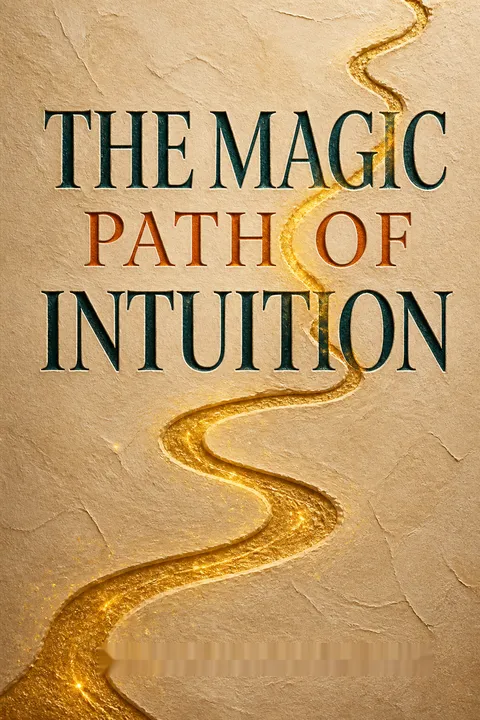
The Magic Path of Intuition receives mostly positive reviews, with readers praising its inspirational content and practical advice on intuition, faith, and positive thinking. Many appreciate the book's colorful design and easy-to-read format. Some readers find the religious tone and repetitive content less appealing. Several reviewers note that the book contains similar ideas to Shinn's earlier works and other self-help literature. Overall, readers value the book's motivational messages and affirmations for personal growth and spiritual development.
People Also Read




Glossary
Intuition
Inner guidanceShinn describes intuition as guidance arising from a spiritual inner source, rather than from deliberate reasoning alone. It may appear as a sudden idea, a quiet sense of direction, or a prompt to take a particular action. The book advises becoming still enough to notice such guidance, while presenting its divine origin as a spiritual belief.
Superconscious mind
Source of higher guidanceIn Shinn's vocabulary, the superconscious mind is the divine or spiritual aspect within a person. It supplies ideal ideas and intuitive guidance, in contrast to the conscious mind's doubts and the subconscious mind's capacity to absorb impressions. The term belongs to her metaphysical model, not to a standard scientific account of cognition.
Subconscious
Impression-absorbing mindShinn uses the subconscious to mean a receptive mental power that takes in emotionally charged thoughts, words, and images and helps shape a person's experience. Repeated fears can establish negative expectations, while affirmations are intended to impress more constructive ideas. This is the author's spiritual-psychological framework, not a precise clinical definition.
Universal Supply
Spiritual source of provisionThe Universal Supply is Shinn's name for an invisible, abundant source from which she believes people can receive money, opportunities, health, and other forms of good. She contrasts it with dependence on one material source, such as a salary or client. In the book, trust in this supply supports gratitude and openness to unexpected channels.
Thought-form
Repeated mental patternA thought-form is a belief or expectation that becomes influential through repeated attention. Shinn argues that patterns such as suspicion, envy, or self-pity shape what people notice and the experiences they expect to encounter. She recommends neutralizing them with different mental images, affirmations, or changes in routine.
Nonresistance
Release of inner struggleNonresistance is Shinn's practice of meeting uncertainty or provocation without intensifying it through fear, resentment, or attempts to force a particular outcome. It involves emotional poise and patience while remaining open to action. The book presents it as a way to let desired outcomes emerge through routes the person may not have planned.
Divine Design
Ideal life planThe Divine Design is the spiritual plan that Shinn believes exists for each person's life. It is associated with health, wealth, love, and meaningful self-expression, while its exact route may differ from what a person first imagines. The idea encourages readers to seek what they value while remaining flexible about how it arrives.
Fourth dimension
Realm of ideal possibilityShinn uses fourth dimension for a spiritual realm of perfect ideas that she believes can shape visible life. She contrasts it with ordinary appearances, which may seem to show lack, failure, or limitation. The term is metaphysical rather than a scientific description of physical dimensions.
Square of life
Four areas of fulfillmentThe square of life names four forms of good Shinn considers essential: health, wealth, love, and perfect self-expression. She treats these as legitimate desires rather than luxuries, while arguing that the best route to them may differ from a person's initial plan. The phrase organizes her account of a well-rounded life.
FAQ
What's "The Magic Path of Intuition" about?
- Author and Content: "The Magic Path of Intuition" by Florence Scovel Shinn is a spiritual guide that explores the power of intuition and faith in manifesting desires and achieving a harmonious life.
- Structure: The book is divided into two parts: the original 1936 manuscript by Shinn and a modern edition with notes by Richard Dotts, providing contemporary insights and applications.
- Core Message: It emphasizes the importance of intuition, affirmations, and faith in the Universal Supply to transform one's life and overcome challenges.
- Practical Lessons: The book offers ten lessons that cover various aspects of life, including financial prosperity, health, happiness, and the power of positive thinking.
Why should I read "The Magic Path of Intuition"?
- Timeless Wisdom: The book provides timeless spiritual principles that are applicable to modern life, helping readers navigate challenges with faith and intuition.
- Practical Guidance: It offers practical exercises and affirmations to cultivate intuition and manifest desires, making it a useful tool for personal development.
- Inspiration and Motivation: The stories and examples shared in the book inspire readers to trust in the power of the Universe and their own intuition.
- Holistic Approach: It addresses various aspects of life, including financial, emotional, and spiritual well-being, offering a comprehensive approach to self-improvement.
What are the key takeaways of "The Magic Path of Intuition"?
- Intuition as Guidance: Trusting and cultivating intuition is essential for making decisions and manifesting desires.
- Power of Affirmations: Repeating positive affirmations can impress the subconscious mind and bring about desired changes.
- Faith in Universal Supply: Believing in an abundant Universe and acting with faith can lead to financial and personal prosperity.
- Non-Resistance and Forgiveness: Letting go of resentment and practicing forgiveness can dissolve negative thought-forms and attract positive experiences.
How does Florence Scovel Shinn define intuition in "The Magic Path of Intuition"?
- Inner Knowing: Intuition is described as an inner knowing or God telephoning to you, coming from the superconscious mind.
- Guidance System: It serves as a guidance system that reveals what you should know, often leading to unexpected but beneficial outcomes.
- Cultivation: Intuition can be cultivated by quieting the mind, making affirmations, and trusting in the power within.
- Practical Application: Following intuitive leads can result in going for one thing and getting another, often better, outcome.
What is the role of affirmations in "The Magic Path of Intuition"?
- Impressing the Subconscious: Affirmations are used to impress the subconscious mind with positive ideas, replacing doubts and fears.
- Creating Reality: They help create a mental picture that aligns with one's desires, facilitating manifestation in the physical world.
- Emotional Impact: The effectiveness of affirmations lies in the feelings they conjure, acting as a bridge to a conducive feeling place for manifestations.
- Customization: Readers are encouraged to adapt affirmations to suit their personal preferences and ensure they resonate emotionally.
How does "The Magic Path of Intuition" address financial prosperity?
- Spiritual Attitude: The book advocates trusting in God for supply rather than relying solely on material sources like salary or investments.
- Invisible Supply: It introduces the concept of an invisible supply, or the bank of the imagination, that can be drawn upon through faith and affirmations.
- Active Faith: Demonstrating faith through actions, such as buying a new wallet or giving away old clothes, is emphasized as a way to prepare for financial abundance.
- Gratitude and Increase: Practicing gratitude for current blessings is highlighted as a law of increase, attracting more to be grateful for.
What is the significance of non-resistance in "The Magic Path of Intuition"?
- Letting Go of Resentment: Non-resistance involves letting go of resentment, resistance, and fear, which can blur vision and prevent intuitive guidance.
- Neutralizing Negative Situations: By adopting a non-resistant attitude, one can neutralize negative situations and attract positive outcomes.
- Forgiveness as a Tool: The book emphasizes the importance of forgiveness in dissolving anger and resentment, leading to peace and harmony.
- Spiritual Growth: Practicing non-resistance is seen as a sign of spiritual growth, allowing one to remain undisturbed by external appearances.
How does "The Magic Path of Intuition" explain the concept of faith?
- Substance of Things Hoped For: Faith is described as the substance of things hoped for and the evidence of things not seen, essential for manifesting desires.
- Holding Mental Pictures: It involves holding a clear mental picture of one's desires long enough for them to manifest in the physical world.
- Trust in the Unseen: Faith requires trusting in the unseen and maintaining confidence even when physical evidence is lacking.
- Role in Creation: It is an integral part of the creative process, allowing individuals to bring their inner visions into reality.
What are some of the best quotes from "The Magic Path of Intuition" and what do they mean?
- "Prayer is telephoning to God, and intuition is God telephoning to you." This quote highlights the reciprocal nature of communication with the divine, emphasizing the importance of listening to intuition.
- "The Game of Life is a game of boomerangs. Whatever you send out comes back." It underscores the law of cause and effect, where one's thoughts and actions return to them in kind.
- "Faith is simply knowing that God can do it." This quote simplifies the concept of faith as a deep-seated belief in the divine's ability to manifest desires.
- "The tide has turned to stay, for the Universe has right of way." It conveys the idea of surrendering to the Universe's plan, trusting that positive change is permanent.
How does "The Magic Path of Intuition" address health and happiness?
- Connection to Inharmony: The book links ill health to inharmony, suggesting that negative emotions can produce disease.
- Joy and Health: It emphasizes the role of joy in promoting health, as positive emotions release proper circulation and vitality.
- Mental Influence: Thoughts and emotions are seen as influencing physical health, with affirmations used to promote well-being.
- Spiritual Body: The concept of a spiritual body, incorruptible and indestructible, is introduced as the true nature of one's being.
What is the "Magic Path of Intuition" according to Florence Scovel Shinn?
- Awakening to Good: The magic path involves awakening to one's good and bringing desires into manifestation through intuition and faith.
- Clearing Negativity: It requires sweeping out negative beliefs and thoughts that clutter the mind and prevent the realization of desires.
- Living in the Now: The path emphasizes living fully in the present moment, where one's power to create and manifest resides.
- Trust in Divine Order: Following the magic path involves trusting in the divine order and allowing the Universe to guide one's journey.
How does Richard Dotts contribute to "The Magic Path of Intuition"?
- Modern Perspective: Richard Dotts provides a modern perspective on Shinn's teachings, relating them to contemporary developments in science and psychology.
- Practical Applications: He offers step-by-step explanations and practical applications to help readers integrate the spiritual principles into their daily lives.
- Personal Insights: Dotts shares personal stories and experiences to illustrate the relevance and effectiveness of Shinn's teachings in today's world.
- Encouragement of Repetition: He emphasizes the importance of repetition in imprinting the subconscious, aligning with Shinn's views on affirmations and manifestation.
About the Author



Download PDF
Download EPUB
.epub digital book format is ideal for reading ebooks on phones, tablets, and e-readers.








