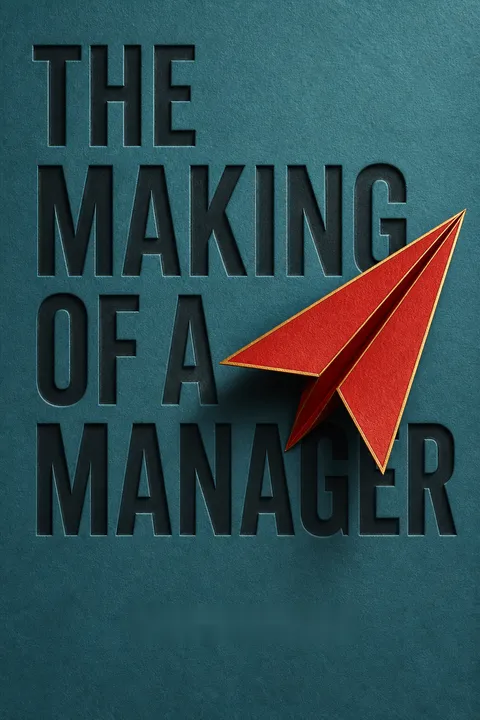


Key Takeaways
Manage for the team's output, not for your own visible busyness
The job is collective performance. Zhuo entered management at Facebook unsure what the role meant. A lemonade seller makes the shift clearer: once Henry and Eliza join the stand, the manager gives up some control but gains the chance to improve what the group can produce. Management is the belief that people working together can achieve more than one person alone. A manager is effective when the team produces stronger outcomes and is healthy enough to keep doing so.
Become a multiplier. The book organizes managerial work into purpose, people, and process: clarify why the team exists, help the right people succeed, and make collaboration effective. In Zhuo's example, thirty hours of training that helps two workers sell just one more cup each per hour can yield more than 2,000 extra cups over a year. Recruiting an unusually strong teammate can multiply output further. In a crisis, however, immediate survival may matter more than long-term investment.
The useful correction is from activity to contribution: a manager's work is often invisible precisely because it improves other people's work. That makes outcomes a better test than a packed calendar, but outcomes alone can reward burnout or short-lived wins. The book's paired measures, team results and the team's strength and satisfaction, guard against that distortion. The deeper question is whether the manager improves both what the group can accomplish now and its capacity to accomplish more later. Context matters: a struggling team may need hands-on help before it can benefit from coaching or planning.
Choose management for its daily work, not the promotion attached
The title hides the job. At twenty-five, Zhuo accepted management partly because it looked like a promotion. Her first meeting with a former peer was awkward, and she felt unqualified. The work turned out to involve coaching, difficult conversations, hiring, and making decisions for a group, not simply holding meetings or having more authority. A talented designer she promoted later left because she wanted sustained time to create, not the daily demands of managing people.
Test the actual fit. Zhuo suggests asking whether the team outcome matters more than a favorite individual craft, whether frequent conversation is energizing, and whether a manager can stay steady in emotionally difficult situations. Organizations with expert individual-contributor paths can offer growth without requiring people to manage. New managers also arrive as apprentices, pioneers, new bosses, or successors; each should spend the first months learning what the team needs instead of performing certainty.
This distinction challenges a common career assumption: greater status does not necessarily mean better work for a particular person. The choice is about the daily texture of the role, including interruptions, responsibility for others, and emotional labor. Organizations benefit when technical expertise and people leadership are both respected forms of contribution, rather than treating management as the only upward path. The book's fit questions are useful, though not a permanent verdict. People can grow into unfamiliar work, but motivation and support shape whether that growth is sustainable.
Build trust by caring consistently, especially when performance gets uncomfortable
Trust makes problems visible. Reports may hide difficulties because their manager has influence over assignments, reviews, and continued employment. Zhuo recalls concealing her own struggles from her boss, then working frantically rather than risk appearing incapable. A manager who learns about problems early can help; one who hears only that everything is fine may discover dissatisfaction when a resignation arrives.
Show care in ordinary behavior. Make regular one-on-ones useful to the report, ask questions before prescribing fixes, be clear about performance, and admit mistakes. Zhuo recommends at least a weekly thirty-minute conversation, focused on priorities, obstacles, feedback, and how the person is doing. Caring does not mean defending every decision or excusing poor work. It means respecting the person while being honest about what needs to change. A manager who admits struggling with micromanagement can make similar feedback easier for a report to hear.
Trust is not simply warmth; it is a condition for accurate information. A manager who feels safe to approach is more likely to hear about a missed deadline or conflict while there is still room to respond. Because the manager holds more institutional power, the burden of making honesty safe falls disproportionately on that person. Yet care can become overprotection if it avoids standards or consequences. The strongest relationship combines respect for the individual with clarity about the work, so that compassion does not require pretending every performance problem is harmless.
Make feedback clear early enough for people to change course
Feedback should change behavior. Zhuo describes four useful forms: set expectations before work begins, comment on specific tasks soon after they happen, identify behavioral patterns across examples, and gather 360-degree feedback from people who work closely with the report. Each serves a different purpose, from clarifying a project's target to revealing how someone's habits affect collaborators.
Be direct and actionable. Zhuo once gave a struggling report task-level comments but never told him plainly that his performance was below expectations. A late review would have left him surprised and little time to improve. Another report heard that his presentations were complicated but did not know what to change. Useful feedback names specific evidence, describes what better work would look like, and agrees on next steps. Critical feedback should be calm and direct, not disguised as questions or buried in a praise sandwich.
The book treats feedback as a communication problem, not a manager's ritual of saying something difficult. The test is whether the recipient understands the gap and can act on it. That shifts attention from the speaker's courage to the listener's comprehension. Specific examples reduce ambiguity, while early warning gives the person time to respond rather than merely absorb a verdict. There is still a judgment call: extensive guidance can slide into prescribing every move. Asking the report to propose next steps preserves agency and helps distinguish coaching from control.
Treat self-awareness as management equipment, not a private luxury
Your inner state shapes the team. After returning from parental leave, Zhuo felt overwhelmed and assumed she had become less capable. An executive coach instead helped her examine her working patterns and ask colleagues how they experienced her. Their feedback showed both strengths she had discounted and areas, such as unclear expectations, that she had missed. The lesson is to compare self-perception with evidence from other people.
Build a personal operating manual. Identify strengths, recurring weaknesses, conditions that help you focus, and situations that trigger disproportionate reactions. When anxious, Zhuo recommends naming the feeling, checking whether the story in one's head is supported by facts, asking trusted people for help, and recording small accomplishments. Reflection, sleep, boundaries, and deliberate practice support better judgment. A growth mindset treats feedback as information about a skill that can improve, rather than proof of fixed worth.
Self-awareness matters here because management transmits emotion: an anxious manager can make uncertainty feel like danger, while a defensive one discourages candor. External feedback helps correct both inflated confidence and harsh self-criticism. Still, introspection alone can become another form of rumination. The practical value comes from linking observation to a change in behavior, such as preparing for a difficult meeting or pausing when a personal trigger flares. The book's emphasis on growth is empowering, provided it does not imply that every limitation can be solved by effort alone.
Give every meeting one job, then earn the time it consumes
Start with the outcome. A meeting may exist to make a decision, share information, review work, generate ideas, or strengthen relationships. Zhuo's weekly status meeting tried to keep everyone informed, but long spoken updates bored the group. She replaced it with written updates. The format changed because the intended result did not require everyone in a room.
Design for participation. Invite only people needed for the outcome, send materials in advance, and finish with named owners and next steps. To draw out quieter voices, use structured turns or silent writing before discussion. Zhuo audited her own calendar and found that about 40 percent of her meetings did not need her. A cited survey of senior managers found that many considered meetings inefficient and an obstacle to their own work. Recurring meetings deserve regular review, not automatic renewal.
A meeting is a costly coordination tool, not evidence that coordination has happened. Naming its purpose makes it easier to choose a lighter alternative, whether an email, a document, or an actual conversation. When a live discussion is needed, preparation and participation rules improve the quality of information in the room. The caution is that efficiency should not become a reason to exclude people whose work is affected. The right attendance list depends on the decision's consequences, not simply on who can speak fastest or who holds the most senior title.
Hire for the future team, using evidence beyond interview polish
Build deliberately, not reactively. Zhuo recommends sketching the team a year ahead: which skills are missing, what strengths are already present, and what backgrounds could widen the group's perspective. Hiring belongs to the manager, even when recruiters help source candidates, because the manager must define the role and make time to connect with applicants.
Treat every interview as an imperfect sample. Zhuo chose to hire Tom, a nervous new graduate who did not solve every interview problem but showed thoughtfulness and persistence. The book also cites Google's analysis finding no relationship between interview ratings and subsequent performance. Improve the odds by asking consistent, role-specific questions, reviewing past work, consulting trusted references, and gathering independent views from multiple interviewers. Avoid the lukewarm candidate who attracts no real advocate. Diversity of experience can expose assumptions a familiar team might overlook.
Hiring is a prediction under uncertainty, so a polished conversation should not be mistaken for a reliable forecast. The book's strongest practical move is triangulation: compare what candidates say with work they have done and testimony from people who have worked beside them. Multiple interviewers help only when they add distinct evidence; otherwise, a group can amplify the same bias. A passionate advocate can reveal a candidate's distinctive value, but enthusiasm is not proof. Clear criteria and varied evidence make both enthusiasm and caution more accountable.
Turn a bold vision into small tests, owners, and deadlines
Make success concrete. Zhuo's early product vision for Facebook Groups sounded admirable but vague. A useful vision lets the team picture what will change and tell whether it happened. It describes the destination, while a strategy explains a plausible route based on the team's strengths and constraints.
Learn through execution. Instagram began as Burbn, an app with several functions, but its founders noticed that photo sharing was the part users returned to. They cut other features and focused the product. Facebook's early photo service similarly lacked many features offered by Flickr, yet tagging people in photos gave users a distinctive reason to share. These examples show why teams should prioritize a few high-value ideas, assign clear ownership, and break long goals into milestones. Review results, adapt plans, and keep metrics connected to the actual purpose they represent.
A concrete vision coordinates action without dictating every step. It gives teams a shared standard for choosing among ideas, while short experiments keep commitment from hardening into stubbornness. The examples also show the value of attention to user behavior: evidence can redirect a plan toward what people actually find useful. But a vivid target can oversimplify a complex mission, and a proxy metric can become the goal itself. Good planning therefore pairs memorable direction with repeated checks that the chosen measure still reflects the human outcome the team intends to create.
Delegate hard problems to multiply capacity, not merely shed tasks
Scale changes the job. With a small team, a manager can know each person's work closely. As the group grows, direct attention no longer fits the calendar, so managers must develop other leaders and accept decisions made without their input. Delegation is not abandonment: the report owns the problem, while the manager offers context, coaching, and help when needed.
Transfer authority with responsibility. Zhuo argues that challenging assignments can signal confidence and develop capability. Publicly naming an owner gives that person the authority to coordinate others. Her extended-vacation test asks whether work would continue smoothly if a leader were away for months; if not, the team may rely too heavily on one person. Zhuo also handed off a weekly design meeting and discovered that colleagues improved it. Her role shifted toward priorities where she could add distinctive value.
Delegation is a transfer of decision-making capacity, not a clever way to empty a manager's task list. The report needs enough authority to act and enough support to avoid being set up for failure. This balance is especially difficult for managers whose identity is tied to being the most capable person in the room. A team that runs well without its leader is evidence of resilience, not proof that the leader is unnecessary. The leader's contribution becomes more valuable when it moves toward alignment, talent, and problems the current team cannot yet solve.
Culture is what your team rewards when stated values get costly
Values show up in tradeoffs. Zhuo recounts an intern who introduced an error that disrupted Facebook's service. Rather than blame the junior employee, the manager accepted responsibility for insufficient support, and the team examined how to prevent a repeat. That response made accountability and learning visible in practice.
Make norms observable. Managers shape culture through what they repeat, model, reward, and tolerate. Zhuo once asked designers to present three explorations to encourage creativity, but some produced pointless variations simply to meet the rule. The incentive had replaced the value it was meant to serve. Team rituals can make desired behavior tangible; Facebook hackathons gave employees time to prototype ideas and put experimentation into action. Culture is therefore not a slogan on a wall. It is the pattern of choices people see rewarded, especially when honoring a value has a real cost.
The distinction between declared values and costly behavior is a powerful diagnostic. A team may praise openness while punishing bad news, or celebrate innovation while rewarding only predictable delivery. Incentives matter because people infer the real rules from consequences, not posters. At the same time, culture cannot be engineered by ritual alone. A hackathon or values exercise can become theater if leaders do not support the behavior in ordinary decisions. The practical test is whether people can point to specific moments when the team chose its stated principles over convenience.
Analysis
The book's central move is to redefine management from a collection of tasks into responsibility for a team's capacity and results. That reframing connects its practical chapters: one-on-ones build trust, feedback removes ambiguity, hiring changes the group's capabilities, meetings coordinate work, and culture influences what people do when no manager is watching. Zhuo's own story gives the framework credibility because it begins with visible uncertainty, not with a portrait of effortless authority. Her first awkward report conversation stands for a broader truth: a title can be assigned overnight, but influence must be earned through repeated interactions.
The strongest tension is between present output and future capacity. A manager who personally rescues every project may help this week's results while making the team dependent. A manager who only invests in development may neglect a crisis happening now. The book does not offer a universal formula; it asks managers to judge conditions, priorities, and time horizons. Its measures of results alongside team health help resist the seductive but narrow idea that productivity alone proves good management.
The account also shows how power alters communication. Reports may hide concerns, meetings may silence dissent, and feedback may be heard as threat rather than help. The proposed remedies are concrete: ask, listen, set expectations early, and make disagreement safe. These methods are most persuasive when paired with accountability. Trust is not permission to avoid hard calls, and care is not the same as protecting someone from all consequences.
The book's evidence and examples are shaped by a fast-growing technology company. Its hiring pace, product experiments, and layers of management will not describe every workplace. Still, the underlying questions travel well: What outcome matters? Who is positioned to deliver it? What process lets people act without avoidable confusion? The adaptation's lasting insight is that management is neither a personality type nor a promotion prize. It is a craft of making other people's work more effective, and it improves through practice, feedback, and deliberate reflection.
Review Summary
The Making of a Manager receives mostly positive reviews for its practical, relatable advice on management. Readers appreciate Zhuo's conversational tone and concrete examples from her Facebook experience. The book is praised for its insights on leadership, team building, and giving feedback. Some criticize its Silicon Valley focus and lack of groundbreaking ideas. Many find it particularly helpful for new managers or those considering management roles. Overall, reviewers recommend it as a valuable resource for developing management skills and understanding team dynamics.
People Also Read






Glossary
Purpose, people, and process
Three managerial leversZhuo's organizing framework for the work of management. Purpose establishes why the team exists and what success means. People concerns whether team members have the skills, motivation, support, and roles needed to succeed. Process covers how they coordinate, make decisions, communicate, and learn from work. Managers use the three areas to diagnose what may be limiting team outcomes.
Multiplier effect
Improved collective outputThe increased team output created when a manager improves other people's ability to work, rather than contributing only through personal execution. Training, hiring, clarifying goals, or improving coordination can generate results beyond the manager's individual labor. Zhuo contrasts this with an additive contribution, where the manager simply completes more work personally.
360-degree feedback
Feedback from multiple colleaguesA review of someone's work gathered from several perspectives, often including close collaborators as well as the manager. The combined view can reveal patterns that one person's observations miss. Because it takes time to collect and interpret, Zhuo recommends using it periodically and discussing the resulting feedback directly with the person concerned.
The Pit
A spiral of managerial doubtZhuo's name for a state in which fear, self-doubt, and worst-case interpretations make a manager feel stuck and isolated. A small event can seem like proof of personal failure. Her suggested ways out include naming the distress, checking assumptions against facts, seeking support, remembering past successes, and caring for basic needs.
Growth mindset
Belief in developing skillsA perspective, associated in the book with psychologist Carol Dweck, that abilities can develop through effort, learning, and practice. Feedback and difficult assignments are treated as information and opportunities to improve, rather than as final judgments of a person's worth or fixed talent. Zhuo applies the idea to managers learning unfamiliar responsibilities.
Weak hire
A candidate without advocatesZhuo's term for a candidate whom interviewers all consider acceptable but nobody strongly wants to hire. Such agreement can disguise a lack of distinctive value or commitment. She recommends looking for a genuine advocate who can explain why the candidate would strengthen the team, while still weighing concerns and evidence from other interviewers.
Extended vacation test
A test of team resilienceA thought experiment for assessing whether a manager has developed a capable layer of leadership beneath them. The manager imagines being away for several months and asks how much the team would need them to intervene for work to continue. Heavy dependence suggests weak delegation, unclear ownership, or a need to develop other leaders.
Portfolio approach
Balance work across time horizonsA way of organizing team projects so that effort is not devoted exclusively to immediate delivery or distant innovation. Zhuo describes dividing attention among short-term improvements, medium-term projects, and early-stage ideas whose value may take years to become clear. The mix lets a team serve current needs while exploring future opportunities.
FAQ
What's The Making of a Manager about?
- Focus on New Managers: The book is a guide for new managers transitioning from individual contributors to leaders, addressing the challenges and responsibilities they face.
- Three Key Themes: Julie Zhuo emphasizes Purpose, People, and Process as essential elements for effective management.
- Personal Journey: Zhuo shares her experiences managing teams at Facebook, providing relatable anecdotes and practical advice.
Why should I read The Making of a Manager?
- Practical Guidance: Offers actionable insights and tools that new managers can apply immediately to improve their management skills.
- Real-Life Examples: Uses experiences at Facebook to illustrate key concepts, making the advice relatable and grounded in reality.
- Support for Growth: Encourages readers to embrace their journey as leaders, reassuring them that management skills can be developed over time.
What are the key takeaways of The Making of a Manager?
- Management is Learnable: Zhuo asserts that "Great managers are made, not born," emphasizing that anyone can become an effective manager with the right mindset and effort.
- Importance of Trust: Building trust with team members is crucial for effective management, fostering open communication and collaboration.
- Feedback is Essential: Regular, constructive feedback helps team members grow and align with expectations, making it a vital part of a manager's role.
What is the definition of management according to The Making of a Manager?
- Getting Better Outcomes: Management is defined as "the belief that a team of people can achieve more than a single person going it alone."
- Focus on Team Dynamics: The role of a manager is to facilitate collaboration and ensure that the team works effectively towards shared goals.
- Long-Term Vision: Involves supporting team members in their career growth and development, beyond day-to-day tasks.
What are the best quotes from The Making of a Manager and what do they mean?
- "Great managers are made, not born.": Emphasizes that management skills can be developed through experience and learning, rather than being innate traits.
- "You must trust people, or life becomes impossible.": Highlights the fundamental role of trust in management for effective communication and collaboration.
- "Feedback is a gift.": Underlines the importance of giving and receiving feedback as a means of growth and improvement for both managers and their teams.
How can I build trust with my team as suggested in The Making of a Manager?
- Open Communication: Engage in honest conversations with your team about their challenges and successes, fostering a safe environment for sharing.
- Be Vulnerable: Share your own mistakes and growth areas to show that everyone, including managers, is on a learning journey.
- Consistent Support: Demonstrate care for your team’s well-being and success by being available and responsive to their needs.
What is the significance of feedback in The Making of a Manager?
- Clarifying Expectations: Feedback ensures team members understand what is expected of them and how they can improve.
- Encouraging Growth: Constructive feedback motivates individuals to develop their skills and strive for better performance.
- Building Relationships: Regular feedback fosters a culture of trust and open communication, strengthening the manager-report relationship.
What are the three buckets that managers should focus on according to The Making of a Manager?
- Purpose: Ensure the team understands overarching goals and why their work matters, aligning everyone towards a common vision.
- People: Understand team members' strengths, weaknesses, and motivations for effective management and team dynamics.
- Process: Establish clear processes for team collaboration to streamline operations and improve efficiency.
How does The Making of a Manager suggest handling difficult conversations?
- Be Direct and Honest: Address issues head-on without sugarcoating, ensuring the message is clear and understood.
- Use Specific Examples: Provide concrete instances to illustrate your points, making it easier for the recipient to grasp the feedback.
- Create a Safe Environment: Approach conversations with empathy and a genuine desire to help, encouraging openness and reducing defensiveness.
What advice does The Making of a Manager offer for new managers in their first three months?
- Listen and Learn: Understand team dynamics, existing processes, and individual strengths and weaknesses before making changes.
- Establish Relationships: Build trust and rapport with team members through regular one-on-one meetings and open communication.
- Set Clear Expectations: Clearly communicate your vision and what success looks like for the team to align everyone’s efforts.
What specific management skills does Zhuo emphasize in The Making of a Manager?
- Communication Skills: Highlights the necessity of clear and open communication within teams, creating a safe environment for expression.
- Decision-Making: Discusses the importance of effective decision-making processes, ensuring decisions are made with all relevant stakeholders.
- Delegation: Emphasizes the art of delegation, empowering team members by giving them significant responsibilities as a sign of trust.
How does Zhuo suggest conducting effective meetings in The Making of a Manager?
- Define Purpose and Outcome: Every meeting should have a clear purpose and desired outcome to guide the planning process.
- Invite the Right People: Ensure only necessary participants are invited to maintain focus and efficiency.
- Encourage Participation: Use structured approaches to ensure engagement, such as giving everyone a chance to speak.
Download PDF
Download EPUB
.epub digital book format is ideal for reading ebooks on phones, tablets, and e-readers.








