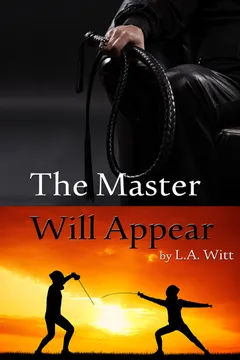


Plot Summary
Five Points to Nothing
At a university fencing club, Ryan O’Connor charges at experienced fencer Mikhail Budnikov with more force than control. Mikhail turns each attack aside and wins their bout five to nothing, exposing the gap between Ryan’s confidence and his skill. The loss stings, but Ryan does not storm out. He asks Mikhail, a forty-five-year-old professor and accomplished fencer, to teach him to fence properly.
Mikhail agrees, setting their first lesson for the next morning. Ryan arrives early, determined to prove his father wrong about his prospects as a fencer and to become good at something on his own terms. Mikhail begins with basic footwork, and Ryan discovers that starting over may be the price of real progress.
The opening reverses the usual romance of instant competence: Ryan’s first meaningful act is not winning, but asking to be taught after losing in public. That choice makes humiliation productive without pretending it is painless. For Mikhail, discipline is a craft, not merely a weapon for asserting authority; the lesson he offers requires Ryan to accept that desire and ability are not the same thing. Ryan’s ambition also carries an unseen family burden. Fencing is already entangled with his wish to answer his father, so learning the sport will eventually require him to separate his own pleasure from inherited judgment.
Footwork Before Foils
Mikhail makes Ryan repeat advances, retreats, and lunges until his legs shake, then uses a rope exercise to teach him to read an opponent’s movement rather than simply attack. Ryan bristles at the slow pace but returns, increasingly responsive to Mikhail’s rare, carefully earned approval.
At the club, Ryan flirts with Scott, a redheaded bartender he recognizes from a dance club; Mikhail interrupts and insists Ryan be ready when lessons begin. Ryan assumes jealousy means Mikhail is prejudiced, until Mikhail shows him a photograph of his former boyfriend, a decorated fencer.
The correction leaves Ryan embarrassed and newly aware of Mikhail’s attraction. When Mikhail asks why he fences, Ryan admits he resumed after a breakup, though he keeps the deeper reasons to himself.
The lesson’s repetition makes attention physical: Ryan has to notice weight shifts and timing before he can impose his will on an opponent. That discipline quietly anticipates the trust dynamic between the men, but it is not identical to it. Mikhail’s interruption of Ryan’s flirtation initially reads as prejudice because Ryan expects hostility from authority figures; the photograph forces him to revise that interpretation. The episode also shows how quickly Ryan turns ambiguity into self-protection. He is attracted to Mikhail, yet he reaches for a familiar explanation, because mistrust feels safer than admitting he wants to be seen.
The First Kneel
As Ryan learns blade work, Mikhail adjusts his foil grip by asking permission to touch him. The contact unsettles them both. After a later lesson, Mikhail lifts Ryan’s chin and nearly kisses him, then abruptly retreats, recognizing that he is crossing a boundary with his student. Ryan confronts him in the locker room and makes clear that the attraction is mutual.
Mikhail warns that he expects discipline in bed as well as on the piste, and Ryan accepts his first direct command to kneel. He eagerly performs oral sex, then leaves uncertain about how far things might go. Rather than press ahead, Mikhail agrees to meet him for drinks and talk through what happened, giving Ryan room to reconsider.
The near-kiss matters because Mikhail notices the ethical danger before Ryan can make desire do all the reasoning. His retreat does not erase the imbalance between coach and student, but it establishes that attraction alone will not serve as consent. Ryan’s immediate obedience surprises him, exposing a desire he has no vocabulary for yet. The follow-up conversation is therefore as important as the sexual encounter: it lets both men distinguish curiosity from obligation. Mikhail’s control becomes credible not because he commands, but because he is willing to stop.
Rules Before Surrender
Over drinks, Mikhail explains that he teaches at a different university and that he does not charge Ryan for fencing lessons because he wants students to continue only if they truly want to fence. Ryan admits he is twenty-six and knows little about BDSM. Mikhail describes submission as negotiated trust, with limits and safewords, not a surrender of the submissive’s right to stop.
At Mikhail’s home, Ryan studies the racks of whips, cuffs, and other equipment, names kissing as essential to him, and learns Mikhail will not exclude it from their play. They kiss, then agree to move slowly and keep checking what Ryan wants. Mikhail’s candid explanations turn an intimidating room into a place Ryan can explore without pretending certainty.
This section replaces fantasy’s vague promise of danger with procedures, boundaries, and specific preferences. Ryan’s insistence on kissing is not a minor romantic flourish; it is his test for whether physical intensity can coexist with emotional connection. Mikhail’s willingness to make room for it shows that his authority is responsive rather than absolute. The conversation also counters Ryan’s assumption that kink means surrendering agency. The rules do not diminish the power exchange. They make it possible by locating the submissive’s consent at its center.
A New Kind of Lesson
In Mikhail’s bedroom, Ryan asks for sex, and Mikhail checks his comfort, uses a condom, and takes time to prepare him before they have sex on the floor. The next evening, Mikhail introduces Ryan to a soft flogger, then a stiffer one. The steady rhythm draws Ryan into subspace, a detached, intensely focused state Mikhail monitors and tends afterward.
Ryan realizes he enjoys pain and submission, but he also asks for a night of ordinary sex. Mikhail accepts the request, lets Ryan set the pace, and follows his attention as Ryan kisses and explores him. Their intimacy expands beyond the roles of instructor and submissive: Ryan learns that asking for something different does not jeopardize Mikhail’s care.
Ryan’s discovery is not simply that pain excites him. It is that he can enter an altered, vulnerable state without losing the right to return, because Mikhail attends to his body and his recovery. The ordinary-sex scene is equally diagnostic: when Ryan takes the lead, Mikhail does not treat it as a challenge to his authority. Their flexibility prevents the roles from becoming a total account of either man. A structure built around command becomes intimate precisely because it can be paused, revised, and set aside.
More Than the Piste
As the relationship grows, Ryan tells Mikhail that he distrusts romance after watching his family’s relationships collapse into resentment and money disputes. He also reveals that he has a trust fund, but wants college and fencing to remain his own choices.
Mikhail later learns Ryan anonymously paid for Las Palmas’s youth team to compete in Europe after refusing to feel indebted for free lessons. At Ryan’s home, Mikhail discovers a studio filled with paintings, drawings, and meticulously painted gaming miniatures.
Ryan signs much of his art with a pseudonym because his family dismisses his work, even though his father once paid twelve thousand dollars for a painting without knowing Ryan made it. Ryan also explains that his father mocked his fencing ambitions, helping fuel his early arrogance.
The revelations complicate Ryan’s apparent privilege without denying it. Money has insulated him materially while functioning as a tool of leverage in his family, so his anonymous donation is both generosity and an attempt to keep a gift free of strings. His pseudonym serves the same purpose: it protects the work from the family’s verdict and lets him test its value apart from his name. Mikhail’s role here is not to rescue Ryan from wealth, but to recognize the person making choices beneath it.
The Tournament Test
Mikhail watches Ryan spar and sees that improved footwork has not cured his reliance on aggression. He enters Ryan in a Las Palmas tournament and sets a consequence for each point an opponent scores: thirty seconds kneeling on LEGO bricks. Under pressure, Ryan retreats, hesitates, and gets hit repeatedly, losing his bout.
The fear of punishment forces him to pay attention to defense, the very skill Mikhail has struggled to teach him. Mikhail still makes him complete the three-minute punishment, but then explains that Ryan’s cautious choices showed the focus he wanted. Ryan is frustrated by the loss, yet watching Mikhail win his own match makes clear how much he still has to learn and why he wants to continue.
Mikhail’s unorthodox wager externalizes a flaw Ryan has resisted seeing: he treats offense as a substitute for defense. The tournament makes that strategy costly in public, while the LEGO punishment turns each point into a consequence Ryan can feel rather than dismiss. Yet the lesson is not that fear makes a good coach. Mikhail acknowledges Ryan’s deliberate defensive attention and distinguishes it from success on the scoreboard. Ryan’s first useful defeat is therefore not the opening humiliation repeated; it is a different one, where he begins to understand what improvement actually asks of him.
The Holiday Hornet’s Nest
Before Thanksgiving, Ryan’s mother, Wendy, presses him to visit and tries to dictate his holiday plans. He tells Mikhail more about the family’s fixation on money and reveals that his parents’ divorce left him feeling responsible for his mother’s drinking and loneliness. He still flies to New York, where Wendy takes him to dinner with her boyfriend Henry, Henry’s pregnant daughter Carla, and her husband.
During the meal, Wendy needles Ryan about marriage and fencing, then quarrels with Henry. Later, Ryan carries his intoxicated mother to bed and calls Mikhail from her guest room. When Ryan cannot manage a conversation, Mikhail asks him to kneel and stays on the phone while he cries, offering steadiness rather than questions.
The holiday visit makes Ryan’s family system tangible: wealth and luxury decorate the setting, but they do not protect anyone from shame, resentment, or emotional neglect. Wendy’s dependence pulls Ryan into the role of caretaker, while her comments make his separate life seem like an injury he has inflicted on her. Mikhail’s remote support works because he does not demand a polished explanation. The kneeling that once expressed erotic submission becomes a way for Ryan to regain composure, showing that the practice has acquired meaning beyond sex.
No More Holiday Tickets
After Ryan returns to California, Mikhail helps him prepare for finals with breaks, study techniques, and a massage instead of another exhausting night of cramming. Once the exams are over, Ryan admits that Christmas with both sides of his family will be worse than Thanksgiving. Mikhail asks him to cancel his flights and offers to spend the holiday with him.
Ryan does, then tells his family he will not come. His half-sister Colleen and Henry pressure him to reconsider, and his father accuses him of abandoning Wendy. Ryan finally answers that his family has long blamed him for the damage his parents caused, then ends the call. The confrontation frightens him, but he looks forward to Christmas for the first time.
The cancellation is a concrete boundary, not a sudden cure for Ryan’s family history. Mikhail’s firm suggestion helps Ryan act, but the decision remains his, and the family’s calls reveal the cost of refusing his assigned role. The final phone exchange matters because Ryan names the unfairness instead of quietly absorbing it. His relief is mixed with fear, which keeps the choice emotionally credible. Christmas becomes less a symbol of reconciliation than a practical experiment: can Ryan spend a holiday without managing other people’s disappointment?
A Fantasy Comes True
On New Year’s Eve, Mikhail takes Ryan to a hotel suite where five men he has vetted are waiting. He has checked their recent test results, shared Ryan’s results, and made sure everyone knows the safewords. Ryan’s long-held fantasy of being overwhelmed by strangers becomes a sustained encounter of kissing, oral sex, and shared penetration, with Mikhail watching from the room.
After the men leave, Ryan is exhausted but asks Mikhail to have sex with him, and they do so without a condom after discussing their test results. The next morning, Mikhail says he loves Ryan. Instead of hearing affection, Ryan sees an impossible transaction and worries that all the care and effort have created a debt he cannot repay.
The scene’s logistics are part of its emotional meaning. Mikhail’s screening and safety rules make Ryan’s surrender possible, while his choice to watch rather than claim the center honors the fantasy Ryan described. But Ryan interprets care through the transactional model his family taught him: a costly gift must produce an obligation. Mikhail’s declaration exposes the mismatch. What he regards as an expression of love, Ryan experiences as a new demand, even though Mikhail has not asked him to return anything.
Love Sounds Like Debt
Ryan pulls away after Mikhail’s confession. When they meet that evening, he argues that Mikhail cannot love him while accepting the idea of sharing him with other men. Mikhail explains that he arranged the encounter because Ryan wanted it, not because he wished to possess or sell him, and says he would choose monogamy if Ryan wanted it. Ryan cannot trust that reassurance.
He sees Mikhail’s three marriages as evidence that love fails, and leaves, insisting their connection was only sex and submission. In the days that follow, Mikhail struggles to teach and confides his confusion to Gene, his former partner. Ryan tries to replace Mikhail with Scott, but cannot imagine kneeling for anyone else and leaves the bar alone.
The breakup is driven less by the encounter itself than by incompatible definitions of what it meant. Ryan treats monogamy as proof of love because the alternative looks like disposability; Mikhail treats honoring Ryan’s sexual autonomy as an expression of care. Neither interpretation is emotionally neutral. Ryan’s departure protects him from the future loss he expects, but it also repeats the isolation he fears. His failed attempt to find a replacement reveals that his attachment is not reducible to sexual novelty.
The Family Pattern Named
After Ryan has already canceled his Christmas trip, Wendy calls to say she is marrying Henry and moving into his penthouse. When Ryan asks whether she loves him, Wendy describes marriage as a way to secure comfort and avoid loneliness, echoing the transactional world Ryan has always known. The answer unsettles his certainty about Mikhail.
He recalls that Mikhail’s care did not change when he learned about Ryan’s trust fund, and that Mikhail treasured Ryan’s handmade painting rather than asking for an expensive gift. Ryan begins to see that the New Year’s gathering was built around his own fantasy, not Mikhail’s advantage. Missing Mikhail, he goes to the professor’s office, though he initially cannot bring himself to enter.
Wendy’s candor does not simply confirm Ryan’s cynicism; it reveals where that cynicism came from. The marriage she describes is strategic, but Ryan has been using that model to interpret every act of generosity, including those that do not benefit the giver. His reassessment rests on concrete evidence: Mikhail showed the same care before and after learning about the trust fund, and valued the painting for its maker. The distinction between transaction and gift becomes thinkable because Ryan can finally compare Mikhail with the family pattern rather than assume they are identical.
Back on His Knees
Ryan eventually enters Mikhail’s office, shaking too hard to explain himself. Mikhail tells him to kneel, and the familiar posture steadies him enough to cry and apologize. Ryan describes Wendy’s approaching marriage and the lesson he has learned from his family: affection has always seemed tied to money, obligation, or control.
He now understands that Mikhail wanted him, not his trust fund, and admits he left because he could not believe he was loved without owing something in return. Ryan asks to be Mikhail’s submissive again and says he wants more than their former arrangement. Mikhail accepts him without demanding a promise about the future. He gives Ryan his house key and asks him to wait for him there.
The office scene brings the book’s central practice into a new setting. Kneeling is no longer an erotic performance or a punishment; it is an embodied route back to safety, one Mikhail recognizes without claiming that recognition as ownership. Ryan’s apology is meaningful because he identifies the mechanism of his mistake: he converted care into debt before Mikhail could ask anything of him. Mikhail’s acceptance does not promise that love will be effortless. It allows them to proceed without requiring certainty as the price of reunion.
Epilogue
Two and a half years later, Mikhail watches Ryan graduate with a history degree and honors. They are married, and Ryan wears Mikhail’s discreet collar beneath his gown. Their marriage grew from practical concerns about medical decision-making, while the collar marks the bond they chose for themselves.
Ryan has cut contact with most of his family after a disastrous later holiday visit, though he is cautiously rebuilding a relationship with his younger sister. He has also become a serious competitive fencer. As the crowd parts, Mikhail joins him, kisses him in public, and follows him home.
The epilogue refuses to make marriage the proof that the couple’s earlier intimacy was incomplete. They marry for legal protection, while the collar carries their chosen language of commitment; the two forms of attachment coexist without being confused. Ryan’s graduation gives visible form to a life he once struggled to claim as his own, and his fencing progress completes the movement from performing for his father to pursuing skill for himself. His family’s absence remains real, but the cautious bond with his younger sister leaves space for connection without requiring him to return to the whole damaging system.
Analysis
The novel places two systems of discipline beside each other. Fencing asks Ryan to control impulse in order to act effectively; BDSM asks him to relinquish control only within boundaries he helps establish. The contrast matters because his family has repeatedly treated obedience as obligation, while Mikhail’s authority depends on Ryan’s ongoing consent. Kneeling therefore changes meaning across the story: it begins as erotic discovery, becomes a way to steady Ryan during family distress, and finally signals a form of trust he chooses rather than inherits.
Money is the other organizing force. Ryan’s trust fund gives him freedom from employment but not freedom from the family’s emotional accounting. His relatives treat money as proof of debt, influence, or status, so he initially assumes Mikhail’s generosity must have an equivalent price. The anonymous donation, the art signed under a pseudonym, and the handmade painting all test that assumption. Their significance lies in who gives and who receives without converting the gesture into leverage.
The romance does not resolve Ryan’s history by making Mikhail a substitute parent or therapist. Mikhail’s help with fencing and studying is useful precisely because Ryan can question it, refuse it, and remain an adult with independent aims. Their rupture is necessary because Mikhail’s declaration of love cannot undo Ryan’s learned suspicion on its own. Ryan must interpret the evidence differently and return by choice. The epilogue extends that distinction: marriage provides legal protection, while the collar expresses a chosen intimate bond. Neither institution proves love by itself. What matters is that Ryan and Mikhail decide what each form means for them.
Review Summary
The Master Will Appear receives mostly positive reviews, praised for its well-developed BDSM elements, age-gap romance, and fencing backdrop. Readers appreciate the realistic relationship development between Ryan and Misha, as well as the exploration of Ryan's emotional journey. The book is noted for its balance of intense scenes and tender moments. Some readers found certain aspects repetitive or struggled with specific plot points. Overall, the story is highly recommended for fans of BDSM romance and character-driven narratives.
Characters
Mikhail Budnikov
The exacting fencing masterMikhail, usually called Misha by friends, is a Russian-born physical sciences professor, experienced fencer, and practiced Dominant. He values precision, preparation, and responsibility, qualities that shape both his coaching and his intimate life. His stern teaching style can frustrate Ryan, but beneath it is a genuine belief that fundamentals protect a student and make later skill possible. Three failed marriages have left him wary of promising himself an easy future, yet he remains capable of hope. Mikhail is drawn to Ryan’s potential and willingness to learn, while his central challenge is to express care without assuming that his intentions will automatically be understood.
Ryan O’Connor
The guarded aspiring fencerRyan is a twenty-six-year-old college student, painter, cook, and ambitious fencer who has moved across the country to build a life apart from his wealthy family. His cockiness initially shields a fear of confirming his father’s contempt, while his distrust of romance grows from watching affection become leverage in his parents’ world. He is generous, inventive, and more disciplined than he first appears, though he struggles to claim credit for his own work and choices. In private, he discovers a desire for submission and attentive care. His central tension is learning that independence need not mean refusing help or treating every kindness as a future debt.
Gene
Mikhail’s candid former partnerGene is Mikhail’s former boyfriend and continuing friend, an academic and fellow fencing enthusiast recovering from shoulder surgery. Their past relationship ended in part because their needs around dominance and submission did not align. Gene knows Mikhail well enough to notice when he is distracted and offers a grounded perspective on love, age, and Ryan’s guardedness. His own doubts about lasting relationships complicate his advice, making him a confidant rather than an all-knowing guide.
Wendy
Ryan’s dependent motherWendy is Ryan’s mother, a woman whose drinking and fear of abandonment strain her relationship with her son. She can be affectionate and needy, but often turns care into pressure, expecting Ryan to soothe her loneliness and fit himself around her plans. Her dependence on financial support from Ryan’s father keeps old resentments alive. Wendy’s behavior helps explain Ryan’s guilt and guardedness without making him responsible for managing her life.
Ryan’s father
The measuring-stick parentRyan’s wealthy father is a former competitive fencer whose infidelity helped fracture the family. He uses money to manage consequences and maintains high expectations while belittling Ryan’s ambitions, especially in fencing. His influence teaches Ryan to associate approval with performance and material value. He is not a constant presence in the story, but his judgments shape the confidence Ryan brings to the piste and the suspicion he brings to relationships.
Fred
The blunt club regularFred is a friend and fellow fencer at the university club. He witnesses Mikhail’s first bout with Ryan, helps keep score, and later comments on Ryan’s progress. His dry, practical observations give the fencing community a voice beyond Mikhail’s instruction.
Scott
The flirtatious club bartenderScott is a redheaded fencer and bartender at Spotlights, a dance club. He flirts with Ryan and offers an easy possibility of a casual hookup. His brief role helps reveal that Ryan’s attraction to Mikhail is more specific than a general interest in men or sex.
Carrie
The club’s skilled technicianCarrie maintains the fencing club’s scoring equipment and knows Mikhail well enough to tease him about his obvious attraction to Ryan. Her practical work supports the club’s competitions, while her teasing briefly makes Mikhail’s private feelings visible to someone else.
Henry Michaud
Wendy’s wealthy boyfriendHenry is Wendy’s boyfriend, a successful car dealer who treats Ryan with more warmth than Ryan’s parents often do. He hopes to build a future with Wendy and tries to draw Ryan into family occasions. His presence makes Ryan’s suspicion of financially strategic relationships collide with the possibility that other people may want a sincere commitment.
Carla
Henry’s expectant daughterCarla is Henry’s pregnant daughter and a successful artist with gallery recognition. She is cordial to Ryan and shares her excitement about her father’s plans. Her established artistic career quietly contrasts with Ryan’s need to hide his own work from his family’s judgment.
Plot Devices
Fencing lessons
Skill through repetitionThe piste gives the romance its first shared language. Mikhail’s insistence on footwork and defense frustrates Ryan, but those drills turn an aggressive novice into a more controlled fencer. The sport also makes their different kinds of authority visible: Mikhail is Ryan’s coach there, while the emotional meaning of their private relationship must be negotiated elsewhere. Competition tests whether Ryan can apply instruction under pressure, and the sport’s progress gives him a way to reclaim an ambition once shaped by his father.
Safewords and aftercare
Consent made actionableMikhail explains boundaries and safewords before introducing more intense BDSM play, then checks Ryan’s physical and emotional state during and after scenes. These practices turn the apparent surrender of control into a negotiated form of agency. They also distinguish Mikhail’s dominance from the manipulation Ryan experiences in his family: Ryan can stop, slow down, or ask for something different without losing care or affection.
LEGO punishment
A lesson Ryan can feelMikhail’s threat of kneeling on LEGO bricks begins as a mischievous punishment and becomes a tournament incentive. Each point Ryan concedes adds time to the penalty, forcing him to attend to defense rather than relying on attack. The punishment is uncomfortable, memorable, and explicitly bounded. It connects the discipline of the bedroom to the discipline Mikhail is trying to develop on the piste, while exposing Ryan’s tendency to measure himself by immediate success.
Ryan’s art pseudonym
Keeping work his ownRyan signs much of his art as B. Halstead so his family’s wealth and dismissive opinions cannot determine how it is received. The pseudonym protects his work but also reflects how hard it is for him to claim recognition under his own name. Mikhail’s admiration helps Ryan reveal the paintings and miniatures he has made, while the galleon painting he gives Mikhail becomes a personal gift that cannot be reduced to money or obligation.
Download PDF
Download EPUB
.epub digital book format is ideal for reading ebooks on phones, tablets, and e-readers.








