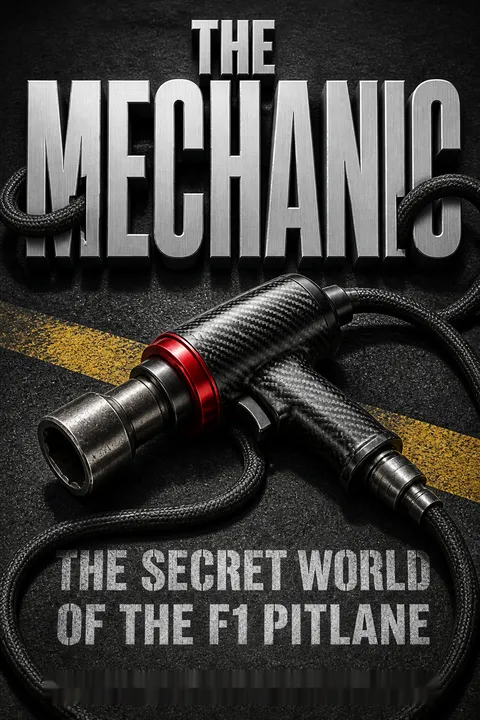


Key Takeaways
A race can turn on three seconds of invisible teamwork
The crew changes the race. A pitstop is a coordinated operation performed under pressure, with mechanics working inches from a fast-moving car, scorching brakes, and an engine at full volume. At Silverstone, Priestley’s job was to remove and refit a wheel in roughly three seconds. A hesitation, a loose nut, or a mistake elsewhere in the crew could cost positions or end a driver’s race.
Precision is collective. The book’s central view is that Formula One victories are not made by drivers alone. Mechanics prepare the car, practice the stop, and rely on one another to execute each movement in sequence. The driver’s trust matters too: David Coulthard once found a cracked suspension retaining nut in his cockpit, and the team assessed the risk quickly enough for him to start.
The pitstop makes a useful case study in distributed expertise: no single mechanic controls the whole outcome, yet each must understand how their action affects the next person’s. That resembles aviation and emergency medicine, where checklists and practiced handoffs make performance less dependent on individual heroics. The limits matter, however. A smooth stop cannot compensate for every strategic or mechanical failure. The crew’s contribution is decisive in particular moments, not a guarantee of victory.
Turn obsession into a career by entering through the lowest rung
A dream needs a route. Priestley grew up beside Brands Hatch, fascinated not only by the cars but by the anonymous mechanics who helped drivers win. He studied mechanical engineering, wrote repeatedly to racing teams, and endured rejection before earning unpaid work with a Formula Ford team. He swept floors, made tea, and learned the workshop before moving through Caterham racing, Formula Three, and Formula 3000.
The first opening was not glamorous. McLaren hired him as a test-team mechanic after years of applications. Testing gave him a place to learn the team’s methods before the pressure of race weekends, though it did not teach him pitstops. He eventually asked to practice them, then joined the race crew. His path shows persistence as a series of useful steps, not a single lucky leap.
This is a grounded account of vocational ambition: curiosity becomes credible when paired with demonstrable skill, repeated applications, and willingness to do unglamorous work. It also shows the value of adjacent entry points. The test team was not the final goal, but it provided access, experience, and relationships. Persistence alone is not a universal formula, since opportunities and resources are unevenly distributed. Here, persistence worked because Priestley kept building competence while seeking the next opening.
Treat every fraction of a second as a system design problem
Speed comes from redesign. McLaren did not rely only on faster hands. The team studied pitstops with high-speed cameras and sensors, then improved the tools, the car, and the way they worked together. Priestley describes a stethoscope used by the fuel mechanic to hear the refuelling valve engage, helping him begin detaching the nozzle sooner. The tactic saved less than a second, but could affect which car left the pitlane first.
Small changes must repeat reliably. Wheel guns were redesigned for greater air flow and simpler operation. Jacks, wheel nuts, and hubs were reconsidered together, while overhead lasers helped mechanics position their guns. The objective was not merely a record stop, but a quick stop that could be repeated without failure. A single very slow stop could erase the advantage of several fast ones.
This is a strong example of systems thinking: performance often improves when teams redesign the interfaces between people, tools, and machines rather than demanding greater effort from individuals. Reliability engineering makes the same distinction between peak performance and repeatable performance. The book’s account also reveals a tension in competitive innovation. A clever workaround may deliver an edge, but secrecy and rule interpretation can invite disputes. The best improvement is not just fast; it is safe, robust, and defensible.
Train the crew like athletes, not replaceable support staff
People are part of the machine. McLaren’s human-performance program, led by sports scientist Aki Hintsa, treated mechanics as active competitors rather than backstage labor. The crew practiced pitstops regularly, used a dedicated training car, and had individual fitness programs informed by physical testing. A mechanic lifting heavy tyres, for example, needed strength and technique suited to that task. Avoiding injury mattered because a substitute could disrupt the crew’s practiced coordination.
Preparation extended beyond strength. The team worked on focus, reaction, recovery, and group cohesion. Drivers were cooled before hot races because excess heat could impair their decisions. McLaren even developed liquid-cooled suits for mechanics, though the bulky gear restricted movement and made them hotter, so it was abandoned. The episode shows that innovation needs testing under real working conditions.
The chapter anticipates a modern human-factors principle: operational performance depends on the condition of workers, not just equipment. Training can improve readiness, reduce injury risk, and strengthen trust across a team. The failed cooling suits are equally instructive. A technically sophisticated intervention can underperform if it interferes with movement, comfort, or the task itself. The useful question is not whether an idea looks advanced, but whether it improves the person doing the work in the actual environment.
A glamorous workplace can normalize recklessness until luck runs out
Privilege blurred boundaries. Priestley remembers the early 2000s as a period of lavish parties, enormous budgets, and a work-hard, play-hard culture. Mechanics sometimes worked punishing hours, then drank through the night. One group wrecked a rented van during a drunken trip and expected severe consequences; they received formal warnings, but the bill was surprisingly small. Instead of prompting caution, their escape helped reinforce a feeling that they could get away with anything.
The danger was not only reputational. Priestley recounts a serious taxi crash in Shanghai after a night out, followed by confusion, injuries, and a missed team flight. He also describes a wider culture that sometimes concealed misconduct. The memoir does not present the excess as harmless fun: it shows how exhaustion, alcohol, and weak accountability can combine into risks for workers and others.
The contrast between elite performance and off-duty excess is more than colorful backstage detail. Organizational cultures teach people what consequences to expect. When rule-breaking repeatedly goes unpunished, members may interpret luck as permission, a pattern familiar in safety research across high-risk industries. The account is personal rather than a systematic survey of Formula One, so it cannot establish how widespread each behavior was. Its sharper insight is local: a team can demand perfect work while tolerating conditions that make sound judgment harder.
Demand excellence, but make the workplace usable by humans
Ron Dennis set the standard. Priestley portrays McLaren’s formidable leader as intensely committed to precision, presentation, and innovation. That culture shaped everything from spotless work areas to the design of the McLaren Technology Centre. The new headquarters was striking and helped present the team to sponsors and visitors, but its scale also created long walks, awkward routes for moving cars, and routines that wasted time, such as clearing benches each night only to set them up again.
Vision has tradeoffs. Dennis pushed the team to stand out, even introducing all-in-one mechanic suits that proved uncomfortable and impractical. The suits were revised and ultimately replaced. Priestley’s view is mixed: demanding standards made McLaren exceptional, but an obsession with appearance could obstruct the work. A powerful leader can raise expectations, yet the organization still needs feedback from people who use the systems daily.
The account captures a classic design tension: symbolic excellence and operational excellence overlap, but they are not identical. A spectacular headquarters may strengthen identity and impress clients while adding friction to everyday tasks. Industrial design and organizational psychology both emphasize observing actual use, not assuming that a polished plan works on the floor. Dennis’s drive is presented respectfully, but the practical costs matter. High standards are most sustainable when frontline workers can challenge design choices without being treated as obstacles.
Respect a driver's strengths without mistaking fame for leadership
Kimi Raikkonen preferred the driving. Priestley describes a fast, relaxed, and unusually private champion who disliked much of the publicity surrounding Formula One. He often slept in garages or team vehicles, spoke sparingly, and focused on making the car go quickly. His bluntness could frustrate engineers, but his crew understood his style and built a close working relationship with him. His performance, rather than polished public relations, was the reason he had been hired.
Different temperaments require different support. Lewis Hamilton arrived as a shy, technically curious young driver, then became a fierce competitor almost immediately. Priestley recalls both his early humility and the pressure that accompanied sudden fame. A driver’s skill does not automatically make them an effective teammate or public figure. The garage had to learn each person’s habits, communication style, and needs while still holding them accountable.
The contrast challenges the assumption that elite performers must also be charismatic, media-friendly leaders. In a specialized role, direct competence can matter more than social polish, while the surrounding team absorbs tasks the performer does not value. At the same time, skill does not excuse poor collaboration. A high-performing organization needs role clarity: it can accommodate different personalities without confusing personal preference with permission to undermine shared work.
A team can collapse from internal politics before its machinery fails
The 2007 rivalry turned inward. McLaren began the season with Fernando Alonso, a two-time champion, and rookie Lewis Hamilton, who quickly proved competitive. Instead of uniting against Ferrari, the two drivers and their garage crews increasingly treated each other as the main threat. A disputed Monaco team order, an argument over qualifying at Hungary, and Alonso’s distribution of cash envelopes to his crew sharpened suspicions. The team later ordered the money returned and donated to charity.
Then came Spygate. McLaren was found to have possessed confidential Ferrari material and was fined $100 million, while losing its Constructors’ Championship points. Priestley describes the shock among mechanics who had no direct role in the case but feared for their jobs and the team’s future. The episode shows how misconduct by a few can damage trust, livelihood, and the achievements of hundreds.
The narrative makes organizational trust visible through its absence. Once colleagues interpret every decision as evidence of favoritism, even routine strategy becomes political, and coordination deteriorates. Research on team performance similarly distinguishes task conflict, which can surface useful disagreements, from relationship conflict, which corrodes cooperation. The memoir also raises a fairness question: workers can bear costs for decisions made far above their level. Individual accountability remains essential, but so does leadership that protects due process and keeps collective purpose credible.
Protect the shared goal when a star's rivalry takes over
The 2007 title fight exposed the cost of distraction. In China, Hamilton’s worn tyres prompted debate about whether to pit, but the team left him out for another lap. He slid into the gravel at the pit entrance and retired, turning a likely championship-clinching finish into a setback. By the final race in Brazil, he and Alonso were still fighting amid a divided team. Ferrari’s Kimi Raikkonen won the title by one point, while McLaren’s internal conflict had already cost it the Constructors’ crown.
The next season brought a different ending. In 2008, Hamilton arrived at Brazil needing a fifth-place finish if Felipe Massa won. Rain and a late change in grip made the final lap precarious. Hamilton slipped behind Sebastian Vettel, then passed Timo Glock, who remained on dry tyres, at the last corner. Fifth place secured Hamilton’s first world title. The crew’s relief was as intense as the finish.
These races show why teams need decision rules that remain stable under pressure. In 2007, rivalry narrowed attention to beating the person in the next garage bay; in 2008, the championship arithmetic gave the team a clearer objective. Decision science describes this as protecting long-term goals from locally tempting reactions. Yet hindsight can make a chaotic choice appear obvious. The lesson is not that one call always determines a season, but that teams should clarify priorities before stress makes coordination harder.
Leave when the next chapter matters more than one more win
Success did not erase the cost. After Hamilton’s 2008 championship, Priestley recognized that the job had taken him away from his family and made nearly every part of life revolve around Formula One. The victory felt like a fitting high point, but the sport’s constant promise of another season, another driver, or another title could keep people from leaving. He chose to stop traveling and moved into a factory-based role, then found that life away from race weekends lacked the adrenaline he needed.
A new role restored the challenge. Priestley began writing about the sport, then became a radio pitlane reporter and television presenter. His mechanics’ experience gave him a perspective on the work hidden behind the drivers. The move was not a rejection of his years at McLaren. It was a way to carry the same appetite for pressure and competition into a life that better fit his changing priorities.
The ending resists the simple idea that a peak achievement provides permanent closure. Work identity can be sustaining and consuming at once; leaving may create grief even when the reasons are sound. Career research often describes this as a transition of identity, not merely a change of job title. Priestley’s move succeeds because he carries forward valued elements, including urgency, expertise, and competition, rather than trying to erase them. His story also leaves a real tension: ambition can enrich a life while exacting costs from people outside the workplace.
Analysis
The Mechanic is a memoir told from an unusual vantage point: the garage floor, where the famous driver is only one part of a large, interdependent operation. Its narrative follows Priestley from a child watching Brands Hatch, through the apprenticeship-like climb into Formula One, to the volatile McLaren years and a second career in broadcasting. The most useful argument is implicit rather than formal: elite performance is manufactured by systems of preparation, specialized labor, trust, and adaptation, while celebrity and leadership often obscure that labor.
The book’s strongest scenes make this claim tangible. A wheel change compresses coordination into seconds; pit equipment evolves through small design changes; a failed experimental suit shows that novelty is not the same as usability. The team’s human-performance program expands the idea further, treating mechanics as contributors whose fitness, recovery, and consistency matter. These details give readers a view of competitive excellence that is more technical and collective than the usual driver-centered account.
The memoir is also a study in contradictions. McLaren’s disciplined standards coexist with a workplace culture of exhausting hours and reckless partying. Ron Dennis’s exacting vision creates both exceptional presentation and daily inconvenience. The 2007 breakdown demonstrates how a championship-level organization can lose coherence when status, suspicion, and rivalry overwhelm shared goals. The account is especially persuasive when describing what Priestley directly experienced, and more provisional when interpreting motives, rumors, and backstage politics. That distinction matters because this is one participant’s memory, not a neutral institutional history.
Its final movement gives the story emotional shape. Winning Hamilton’s title is exhilarating, but it does not settle the question of how much of life a career should consume. Priestley’s transition into media work suggests that expertise can travel when a person identifies the underlying source of satisfaction, in his case pace, pressure, and proximity to the sport. The memoir’s enduring value lies in making the hidden crew visible without pretending that skill, loyalty, or success comes without cost.
People Also Read

Glossary
T-Car
Spare race carThe T-Car was the team’s spare Formula One car, prepared to match one of the race drivers’ settings in case a race car was damaged or unusable. Before regulations removed spare cars, a separate crew maintained it and could prepare it for a driver at short notice.
First Lap Crew
Early-race pitstop teamA small, specially prepared group of mechanics assigned to handle a pitstop during the first lap. The crew existed because a car could return to the pits before the full team had finished clearing equipment and personnel from the starting grid.
parc-fermé
Restricted car inspection areaA controlled area where Formula One cars are held after qualifying under rules that restrict teams from changing parts or altering the cars. Changes generally require permission from the FIA stewards. The restrictions are intended to prevent teams from modifying a qualifying car before the race.
Spygate
McLaren Ferrari information scandalThe name used for the 2007 Formula One espionage scandal involving confidential Ferrari technical material found in the possession of McLaren personnel. The FIA imposed a $100 million fine and excluded McLaren from the Constructors’ Championship that season, though the drivers continued competing.
Download PDF
Download EPUB
.epub digital book format is ideal for reading ebooks on phones, tablets, and e-readers.








