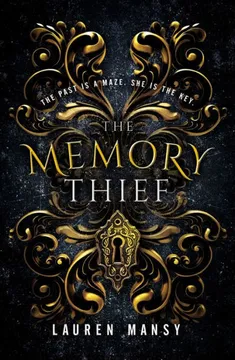


Plot Summary
Red Notice at Auction
In Craewick, Gifted people can pass memories by touch, and the ruler, Madame, turns that power into a market and a weapon. Etta, a seamstress hiding her Gift beneath a false Ungifted tattoo, arrives at Auction Day with her young friend Ryder. She watches Madame torture Kellen Marks, a prisoner from the Coastal city of Blare, then sell his memories to bidders who will soon forget where they came from.
Etta also stops a Gifted man stealing from an Ungifted beggar. She assumes the Minder letter at home concerns her comatose mother’s place in the overcrowded asylum. But the document is worse: it is a notice that her mother will be auctioned, exposing her entire life to strangers and condemning her to a brutal death.
The auction makes the regime’s violence legible as ordinary commerce. Bidders do not merely purchase skill or pleasure; they consume another person’s past while the state presents extraction as civic duty. Etta’s small intervention for the beggar shows that she already resists this order, but the notice turns a public injustice into a personal emergency. Her mother’s memories are both vulnerable property and the only remaining bond between them. The scene therefore sets up Etta’s central conflict: to protect a loved one in a society where care, identity, and survival have all been priced.
The Debt Beneath
Etta runs to the asylum and finds her mother still unconscious, though a finger briefly answers her touch. The gesture revives the bargain that brought them to Craewick: when Minders raided their home in Blare, Etta mistook her mother for an attacker and flooded her mind with violent memories, leaving her in a coma.
Madame offered her mother an asylum bed in exchange for the location of Greer, leader of the Shadows. Etta gave it up, believing the bargain was the only way to keep her mother alive, and Madame captured Greer.
Etta has spent four years hiding among the Ungifted and mourning Shadow friends she believes are dead. Now Ryder reveals she has contacted the Shadows. Etta agrees to meet them, and a hooded figure takes her from her cottage.
Etta’s guilt is not a vague burden but a chain of choices made under coercion, each one intended to preserve a life and each one causing further harm. The mother’s faint response gives Etta evidence that waiting passively may no longer be enough, while Ryder’s initiative challenges the isolation Etta has mistaken for protection. The bargain with Madame has already taught her that institutions can exploit love as leverage. Returning to the Shadows is therefore both a practical move and a confrontation with the identity she has tried to bury: a thief who once used her Gift to defend people, then turned it into the instrument of her worst mistake.
Greer in the Maze
In the hidden Mines, Bray, the new leader of the Shadows, greets Etta as a traitor and nearly strangles her. He blames her for Greer’s capture and for the deaths of Cade, Joss, and Penn, then refuses to help her mother unless Etta serves him. Greer, he reveals, was not killed: Madame sent him to Porter’s Maze, a prison designed to break its captives.
Bray orders Etta to steal the Maze’s location from Porter, the Woodland Realm’s ruler, and bring Greer back. Greer can strip a Gift from another Gifted person, which may be the only way to stop Madame’s plan to seize the Four Realms. Bray gives Etta a necklace connected to Porter’s missing daughter and a memory proving she is alive, then sets a five-day deadline.
Bray replaces Greer’s protective leadership with a harsher logic: people are resources, and a threatened future justifies coercion now. Etta accepts because her mother’s life is still being held over her, but the mission also gives her a chance to repair the betrayal that defines her self-image. The necklace and stolen memory make the political conflict intimate before Etta ever reaches Aravid. Madame’s expansion is not simply a contest between rulers; it depends on exploiting people’s minds, movement, and loyalties. The mission forces Etta to carry both an emotional debt and the possibility of a wider war.
A Sifter at Her Side
Etta finds Ryder training with the Shadows, but refuses to let the twelve-year-old join her journey. Ryder insists that protecting others is the reason she came, then stays behind while Etta travels with Reid, a powerful Sifter Bray assigns as her partner.
Reid can erase what pursuers remember, while Etta’s mind cannot be read, making her the only person likely to steal Porter’s map safely. Their first night outside the Mines ends in a fight with Madame’s Minders. Etta holds them off with a stolen combat skill until Reid knocks them unconscious, then treats her injuries.
As they travel, he tells her he left his family among the Ungifted Tribes and joined the Shadows to find his missing brother, believed imprisoned in the Maze. Their shared purpose begins to soften Etta’s distrust.
The partnership makes trust a practical necessity before it becomes an emotional possibility. Etta’s instinct is to act alone because dependence feels like another route to betrayal, while Reid’s Sifter power gives him the ability to violate privacy even when he chooses not to. His restraint matters more to her than his strength: he lets people tell their own stories, and he offers her protection without demanding intimacy in return. Ryder’s choice to remain with the Shadows also complicates Etta’s protective impulse. She cannot keep everyone safe by keeping them small, a lesson the journey will press on her repeatedly.
The Name of Her Father
A band of Ghosts, memory thieves who create painful recollections, attacks a captive Hunter near the road. Etta disobeys Reid’s warning and helps free her, while a pack of Hunters turns on the Ghosts. The fight confirms how easily stolen memories can be used to manipulate a person, but it also rekindles Etta’s ability to act rather than hide.
As they near Aravid, Reid explains that the brother he seeks was named Penn. Etta recognizes the name as her closest Shadow friend, then admits that Greer is her father. She has never told Reid because she believes her past makes her unworthy of his trust. Their confession brings them closer, but the revelation about Penn plants a secret Etta cannot yet bear to share.
This section binds Etta’s recovered agency to the moral risk of her Gift. She frees the Hunter by entering an enemy’s mind, yet the battle shows that the same mechanism can turn a victim into a weapon. Her choice is neither innocent nor simply heroic; it reopens a capacity she has feared since harming her mother. The disclosures to Reid deepen their intimacy, but they also create an asymmetry: Etta knows the name Penn carries in Reid’s life and understands its significance before Reid does. The story makes closeness consequential, because every new truth offers both connection and the possibility of devastating injury.
Emilia at Aravid
At Aravid’s guarded gate, Commander Averett mistakes Etta for Emilia, a woman the Woodland Minders have been searching for. The guards seize Reid, and Etta wakes in a lavish bedroom beside a portrait of her mother.
Porter, Aravid’s ruler, identifies the portrait as Gwendolyn Lark and explains that Gwendolyn was his daughter, Emilia. A childhood journal and the cloak clasp confirm the connection. Porter gives Etta a memory of her mother holding her as a baby, then admits that his own controlling pride drove Gwendolyn away.
He confirms Greer is alive in the Maze and that Madame is preparing to attack the Realms. Etta, Porter, Felix, and Reid form a coalition with the Shadows and Sorien’s Coastal forces, using Kellen’s murder to persuade Sorien to oppose Madame. Porter then shares the Maze map with Etta.
The mistaken identity at the gate is more than a convenient opening into Aravid: it destabilizes Etta’s confidence in the story she has told herself about her family. Porter does not ask her to accept kinship on authority alone. He offers a verifiable object and a memory that lets Etta feel what his explanation cannot prove by itself. His regret also reframes power: he once governed through control, then learned that protection without listening can become abandonment. The alliance that follows extends that recognition into politics. Rulers and rebels must exchange information and risk trust if they hope to counter Madame’s control.
Penn’s Last Memory
As the coalition prepares to move, Etta learns that Reid’s missing brother is not in the Maze: Penn died four years earlier in Blare. Madame manipulated the fight, but Etta threw the knife that struck him. She tells Porter first, then tries to push Reid away before he learns the truth. Reid refuses to leave, and they kiss; afterward Etta confesses.
Her Gift accidentally transfers a memory of Penn’s death into Reid, forcing him to experience her guilt and grief. Reid walks away, devastated both by the death and by Bray’s years of concealing it. Porter comforts Etta, but she cannot undo what happened. The next day she returns toward the Mines with the Maze map, while Reid follows and demands to confront Bray.
The confession turns the romance into an ethical crisis rather than a refuge from the plot. Etta’s shame tells her that withholding the truth is an act of protection, but the delay only gives the secret greater power over Reid’s choices. Her memory-sharing variation intensifies the betrayal: Reid does not merely hear what happened; he is made to inhabit its emotional texture. Yet the scene refuses to treat his anger as proof that Etta is beyond repair. Both characters must reckon with the difference between responsibility and self-condemnation, while the political mission continues whether or not their relationship can survive it.
Bray’s Locked Cell
Etta brings Reid back to the Mines to persuade Bray to join Porter’s alliance. Reid confronts Bray for using Penn’s survival as a false promise, and the argument becomes a fight. Bray wounds Reid, then locks both travelers in a cell rather than risk losing control of his army.
Reid uses Felix’s blinding powder to disable Bray, and Etta drags the injured Sifter into the forest. They choose the faster southern route through Kripen, despite its Minder training grounds, because the alliance needs Greer before the attack begins.
Reid’s blindness fades, but his injuries worsen. Etta tends him with Porter’s healing compound while he resists her help, still wounded by Penn’s death. She keeps moving, determined to reach the Maze even without his trust.
The confrontation makes Bray’s resemblance to Madame explicit through action rather than accusation: he uses force, withheld truth, and hostage logic to command loyalty. Reid’s anger is justified, but it risks fracturing the only resistance capable of challenging Madame. Etta’s decision to free him instead of securing her own route marks a shift from guilt-driven self-sacrifice toward chosen responsibility. She cannot control whether Reid forgives her, but she can refuse to repeat the abandonment that began their conflict. The healing compound and the dangerous shortcut keep the scene grounded in practical costs: reconciliation is not complete, and the body records what the characters cannot yet resolve.
The Maze’s Living Ghost
Minders attack Etta and Reid on the exposed dunes near Kripen, but the Hunter Etta saved sends his pack to help them reach the sea caves. A current slams Reid against the rock, and Etta revives him on the shore. When they trigger an old cage trap, Beau appears, a Shadow long presumed dead, and unlocks it.
He guides them through the Maze’s shifting corridors, hidden pits, poisoned flowers, and false paths. At the Maze’s heart, Etta reunites with Greer and tells him Madame’s plans. Greer recognizes that Etta’s unreadability formed when Penn’s memory-copying Gift combined with her own.
She can now protect her mind and share memories without losing them. Greer agrees to help stop Madame, while the Maze’s recovering prisoners prepare its violet healing compound for those still trapped by damaged minds.
The Maze literalizes the instability of memory: corridors change, apparent exits deceive, and survival depends on accepting another person’s knowledge rather than trusting first impressions. Beau’s return also revises Etta’s expectation that every missing person must be lost forever, though it does not erase the deaths she carries. Greer’s explanation of her Gift gives her protection a relational origin: she is unreadable because Penn’s capacity remains joined to hers. The discovery does not absolve her of his death. Instead, it transforms grief into a capacity for preserving and sharing experience, a counterforce to Madame’s extraction and control.
Craewick’s Burning Stage
On Auction Day, Porter’s Woodland troops attack Craewick as Greer, Etta, and Reid push through the battle toward the asylum. Bray arrives with the Shadow army, joining the fight after their rupture, while Sorien’s Coastal forces reinforce the alliance.
Madame has dressed Ungifted civilians as commanders, making them hard to distinguish from her soldiers. Inside the asylum, Madame holds Etta’s mother at knifepoint and demands Etta’s unreadability. Greer transfers his own Gift to Madame instead, but Etta’s combined Gift reflects the incoming power back at her.
Madame is overcome, Greer collapses and dies, and Reid is badly injured. Etta gives her mother the healing compound, then wakes from unconsciousness to find Gwendolyn recovered and Porter’s forces victorious. Madame is imprisoned, her network of control broken.
The final battle gathers the book’s competing uses of memory into one room. Madame treats minds as instruments of rule, while Greer gives up his power to protect another person; Etta’s resistance depends on a Gift formed through intimacy with someone she lost. The outcome does not make power harmless. Greer’s death and Reid’s injuries remain the cost of victory, and the civilians disguised as soldiers show how authoritarian control makes moral recognition difficult under pressure. The mother’s recovery is not a reward for Etta’s innocence; it follows care, medical knowledge, and collective action. The ending insists that dismantling a tyrant is only the beginning of repairing the lives her system damaged.
A City Relearns Color
A month later, Craewick has replaced the auction stage with plans for gardens, and the former mansion has become an orphanage. Ryder is adopted into Etta’s family, while rescued Maze prisoners help staff the asylum with the violet compound.
Etta visits Madame and learns from her fractured memories that she murdered her own father. Madame remains under care, no longer able to command the city. Etta and Reid continue grieving Penn while planning to find Reid’s mother and sister among the Ungifted Tribes.
Etta also keeps her father’s memory close as she rebuilds a life with Gwendolyn, Porter, and Ryder. At a public celebration, the people of Craewick share food, adopt orphans, and make new memories together, replacing the auction’s forced exchange with chosen community.
The aftermath refuses a clean reset. Craewick’s new gardens and orphanage are concrete alternatives to the institutions that profited from deprivation, but Etta and Reid still carry losses that cannot be repaired by political victory. Madame’s final revelation gives her history a human motive without excusing her violence: the pursuit of invulnerability left her unable to form an identity beyond the threat she feared. Etta’s choice to visit her, and to preserve rather than erase difficult memories, marks a different relation to power. The community’s new rituals make memory social again, not a commodity to be bought, stolen, or imposed.
Analysis
The novel treats memory as both the basis of selfhood and a political resource. The Gifted can sell skills and experiences, the Hollows can borrow identities, and Madame can use a Sifter’s power to reshape what her subjects know and believe. This economy makes exploitation feel intimate: a stolen memory is not an abstract commodity but a piece of someone’s life, transferred into another person’s body. Etta’s conflict therefore exceeds the question of whether she can defeat Madame. She must decide whether her own use of memory reproduces the violence she opposes.
Etta’s guilt focuses that question. She has reason to regret her actions, but she mistakes lasting accountability for permanent unworthiness. Reid and Porter challenge that mistake in different ways. Reid insists that trust requires truth, even when the truth wounds him. Porter models a ruler who can name the harm caused by his past without pretending it did not happen. Greer’s ethic of mercy offers a third standard, one Bray struggles to maintain after loss. These relationships give the political conflict emotional precision: people do not become good by forgetting harm, but by choosing what to do with knowledge of it.
The story also distinguishes protection from control. Madame calls surveillance and memory manipulation necessary safeguards, while Etta initially tries to protect Ryder by excluding her from danger. Both approaches deny other people agency, though Etta’s motive is love rather than domination. Ryder’s independent choices force Etta to recognize that solidarity cannot mean deciding for everyone. The coalition against Madame succeeds because its members share knowledge and risk, not because one leader can command every mind.
The ending offers no restoration of the dead and no clean return to the world before the auction. Instead, the characters build new institutions: the asylum becomes a place of care, the auction block disappears, and orphans gain homes. Healing is shown as collective labor supported by medicine, truth, and daily acts of belonging. The book’s hope is therefore concrete. A society changes when it stops turning memory into a weapon and makes room for people to create new experiences together.
Review Summary
The Memory Thief received mixed reviews. Some readers praised its unique premise of memories as currency and enjoyed the plot twists and character development. However, many found the world-building lacking, pacing rushed, and character relationships underdeveloped. Critics noted issues with insta-love, confusing timelines, and insufficient exploration of the memory-stealing concept. While some appreciated the fast-paced storytelling and intriguing ideas, others felt the execution fell short of the book's potential. Overall, readers were divided on whether the novel lived up to its promising concept.
Characters
Julietta Lark, called Etta
Hidden memory thiefEtta is a young woman with a concealed Gift for transferring memories by touch, living among Craewick’s Ungifted under a false tattoo. She is protective, observant, and quick to act when someone is being exploited, but her reflex to take responsibility for everyone can become recklessness. Her mother’s illness and her history with the Shadows shape how she sees herself: useful when she can steal, dangerous when she cannot control the damage. Etta’s strongest skill is reading what people need beneath what they say, though she struggles to offer herself the same compassion. Her story is driven by the conflict between hiding from her past and using what she knows to defend others.
Ryder
Orphan with a causeRyder is a small, sharp-witted orphan whom Etta took into her home after Ryder’s grandparents lost their memories of her. She is brave in a way that can look like fearlessness, and her instinct is to help people the authorities ignore. Her loyalty to Etta is affectionate but not passive: Ryder makes choices of her own, including seeking help from the Shadows when Etta hesitates. She has learned practical skills from Etta and carries a strong sense of what a safer Craewick could be. Ryder’s emotional courage challenges Etta’s belief that protecting someone means keeping them out of danger.
Bray
Hard-edged Shadow leaderBray is a Sifter and the leader of the Shadows, raised by Greer alongside his brother Cade. He has military training, strategic intelligence, and a fierce commitment to the people he considers family. The deaths and betrayals he has witnessed have made him suspicious of mercy and inclined to use leverage when he believes the stakes demand it. Bray sees himself as responsible for an underground community that cannot survive on good intentions alone, yet his need for control can make him resemble the rulers he opposes. His complicated history with Etta mixes affection, grief, and resentment, making their conflicts personal as well as political.
Greer
Merciful Shadow mentorGreer leads the Shadows according to a principle of protecting people who cannot protect themselves. A powerful Sifter, he taught Etta how to read minds carefully, divide memories into parts, and use a Gift with restraint. He is disciplined and difficult to impress, but his authority rests on a distinction he insists upon: justice must not become cruelty simply because the enemy has been cruel. Greer serves as mentor and moral reference for Etta and Bray, though his protective instincts can keep important truths hidden. His example gives the Shadows a purpose larger than profit or revenge.
Reid
Unwilling Sifter allyReid is a powerful Sifter who joins Etta’s mission as her partner. He can read and alter memories with extraordinary speed, but he is unusually careful about other people’s privacy and prefers to let them reveal themselves in their own time. He grew up among the Ungifted Tribes and carries a deep attachment to the family he left behind. Reid’s steadiness is not the absence of fear; it comes from deciding what matters enough to act despite it. His dry humor and quiet attentiveness unsettle Etta’s defensive habits, while his loyalty makes him both an effective ally and a person with much to lose.
Madame
Ruler of CraewickMadame rules the Stone Realm from Craewick and commands the Minders, the military force that enforces her laws. A Sifter able to read and implant memories through sight, she treats knowledge as a route to security and uses public auctions to punish those she labels criminals. Her composure makes her difficult to challenge, while her fear of threats drives her to gather power and suppress independent loyalties. Madame has shaped an economy in which Gifted people profit from memories and Ungifted people bear much of the cost. She is the central political antagonist, but her rule also reflects the personal danger of building an identity entirely around fear.
Porter
Woodland Realm rulerPorter rules the Woodland Realm from Aravid and is known across the Realms as a formidable strategist. He designed the Maze, a prison whose ingenuity reflects the darker history of his rule. Porter is intelligent, guarded, and accustomed to controlling risks, but he is capable of acknowledging the damage caused by his choices. His relationship with his family is marked by regret and a desire to repair what authority once strained. As a ruler, he represents the possibility that accountability can change how power is exercised, even when the past cannot simply be undone.
Gwendolyn Lark
Etta’s devoted motherGwendolyn is Etta’s loving mother, an art teacher from Blare who values patience, creativity, and the memories made through ordinary work. She taught Etta to draw and encouraged her to record the details of her life rather than trade them away. Gentle in manner, she is not weak; she has made difficult choices to give her daughter a future beyond the narrow roles imposed by the Realms. Her affection provides Etta with an enduring sense of home, even when they are separated. The images of Gwendolyn’s art and the seaside life they shared remain central to Etta’s understanding of identity.
Penn
Etta’s Shadow partnerPenn is a kind, courageous member of the Shadows and one of Etta’s closest companions. He grew up among the Ungifted Tribes and brings a grounded, practical outlook to the group. Penn values loyalty without confusing it with obedience, and his steady humor helps Etta remember that life is more than survival. He is associated with a rare memory-related Gift and with the leather band Etta keeps on her wrist. His influence remains present in Etta’s choices and in the way she understands courage, love, and the cost of protecting others.
Cade
Bray’s bold brotherCade is Bray’s younger brother and a Shadow who grew up with Etta, Joss, and Penn. Restless, funny, and quick to challenge rules, he shares Etta’s talent for pushing past the limits set by authority. His spirited defiance makes him a source of warmth in the Shadow community, though it can also draw him toward danger. Cade represents the close, chosen family Greer built in the Mines and remains one of the people Etta remembers through the leather band he gave her.
Joss
Quiet Shadow sisterJoss is a Shadow raised by Greer after losing her family, and she becomes Etta’s closest female friend. Reserved in groups, she opens up through shared memories and quiet moments. Her loyalty is intimate and durable, closer to sisterhood than ordinary friendship. Joss helps make the Mines feel like a home rather than merely a hiding place, and her presence shapes Etta’s understanding of belonging. The leather band she gave Etta stands for the bonds the Shadows formed by choice.
Beau
Missing Shadow scoutBeau is a warm, mischievous Shadow who once shared a close friendship with Etta. His quick wit and fondness for teasing helped create some of her happiest memories in the Mines. He is resourceful and persistent, with a talent for finding a way through difficult circumstances. Beau’s absence has become part of Etta’s unresolved history, and the stories attached to him reveal how deeply the Shadow community depends on its members.
Felix
Porter’s loyal commanderFelix is Porter’s brother and Commander Averett’s leader in Aravid. He is an experienced Minder who prefers service and exploration to authority for its own sake. His warmth makes Etta feel welcomed into a family she did not know she had, while his practical inventions and medical knowledge help the resistance prepare. Felix combines a commander’s discipline with an uncle’s enthusiasm, offering a model of leadership that does not require intimidation.
Commander Averett
Aravid’s steadfast commanderCommander Averett is a Woodland Realm officer who serves under Felix and knows Porter’s family well. She is disciplined, observant, and guided by a strong protective instinct. When a confused young woman arrives at Aravid’s gates, Averett acts on the information available to her, even when it leads her to misjudge the situation. Her willingness to reconsider and carry messages through danger makes her a reliable military ally.
Sorien
Coastal Realm rulerSorien rules the Coastal Realm from Blare, a center of art and education. He has reason to question Madame’s growing influence, but challenging her requires evidence and a credible alliance. His nephew Kellen’s disappearance gives the resistance a path to reach him. Sorien represents the rulers who must decide whether caution has become complicity.
Declan
Desert Realm rulerDeclan rules the Desert Realm from Kripen, the military center where Minders are trained. His Realm’s harsh discipline and soldiers’ influence make it a crucial part of the balance of power among the Four Realms. He is aligned with Madame’s interests, giving the resistance another obstacle to consider.
Kellen Marks
Auctioned Blare fishermanKellen is a fisherman from Blare whose memories include a partner, a child, and the skills of a life shaped by the coast. Madame presents his punishment as a lesson to the crowd, while bidders treat his past as a source of entertainment and talent. His composure on the auction stage leaves a strong impression on Etta and makes the cost of Madame’s system impossible to ignore.
Baldwin
Forgotten asylum patientBaldwin is an isolated patient in the Craewick asylum, largely abandoned by visitors. Etta quietly cares for him by bringing food and warming his feet, even though he cannot clearly respond. His presence shows how the asylum’s patients are treated as disposable, and how Etta’s compassion extends beyond the people she already loves.
Plot Devices
Memory transfer
A currency of identityGifted people can move memories from one mind to another through touch, while rare Sifters can do so through sight. Memories carry skills, emotions, and personal history, making them valuable enough to trade and dangerous enough to weaponize. The process lets someone acquire a talent quickly, but it can also erase identity, overload a mind, or force a person to relive pain. The magic system drives the economy of the Four Realms and shapes the story’s central ethical question: whether a memory is property, a tool, or part of the person who lived it.
The Memory Auction
Public punishment as commerceMadame’s annual auction turns prisoners’ memories into merchandise. The ruler decides which experiences will be transferred to bidders, who can purchase love, talent, or excitement while the prisoner suffers and may die. The crowd’s participation helps disguise state violence as entertainment and keeps the wealthy dependent on a system that makes new memories scarce. The auction also gives the story a recurring public image of power: people watch another person’s life being dismantled while the ruler calls it service to society.
Etta’s unreadability
A shield inside the mindEtta’s thoughts cannot be read by Sifters, making her unusually suited to entering Porter’s mind and stealing the Maze map. At first, she understands this only as a rare defense that lets her hide from people who could expose or manipulate her. Greer later explains that the ability is connected to Penn’s memory-copying Gift and her own energy. It also allows her to share certain memories without losing the original. The ability protects the mission, but its personal meaning ties Etta’s survival to the friend whose death she cannot undo.
Porter’s Maze
A prison of shifting pathsPorter’s Maze is built to disorient and exhaust its prisoners. Its routes shift, its traps disguise danger as safety, and its cells and hazards make escape nearly impossible. The Maze protects the people held within it from Madame’s reach, but its design is also a reminder of Porter’s earlier cruelty. Etta must steal its location from Porter’s mind, then rely on Beau to navigate its perils. The prison turns the rescue into both a physical ordeal and a test of whether knowledge can be used to repair the damage it once enabled.
Violet healing compound
A medicine for damaged mindsPorter develops a healing compound from violets that can help repair minds damaged by memory overload and the Maze. Greer and the Maze’s recovering prisoners use it to support rehabilitation, and Etta carries some during the journey. Its existence offers a practical alternative to the asylum’s neglect, where patients are often left to die while their memories replenish the Treasury. The compound cannot erase what people have endured, but it gives them time and support to regain their minds. It makes healing part of the resistance’s work, not an afterthought to victory.
Download PDF
Download EPUB
.epub digital book format is ideal for reading ebooks on phones, tablets, and e-readers.








