

Key Takeaways
Treat winning as a result, not the measure of what leadership is for
The trophy was shared. After winning Super Bowl XLI, Tony Dungy looked at the people who had shaped his path and understood that the achievement belonged to more than the coach holding the trophy. That moment clarified his central idea: mentor leadership deliberately develops people, not just results. Its success is measured in stronger character, healthier relationships, and people better equipped to lead others. Wins and business goals still matter, but they cannot justify treating people as expendable tools or sacrificing every other part of life to achieve them.
Significance outlasts status. Dungy’s work with Michael Vick illustrates the distinction. After Vick served twenty-one months in prison for his role in a dogfighting operation, Dungy focused on helping him rebuild his life and become a constructive influence, not simply on restoring his public standing. The deeper ambition is that people carry what they learn into other relationships.
What's striking is that the book does not dismiss performance; it changes the test of performance. This aligns with research and practice around stakeholder leadership, where an organization is judged partly by how it affects employees, families, and communities. That broader scorecard can protect against short-term incentives that reward results while hiding their human cost. The challenge is practical: outcomes are easy to count, while character and flourishing are harder to assess. Leaders need visible habits, such as development conversations and fair treatment, or “people first” can remain a slogan that never affects decisions.
Trade command for service, while keeping authority to protect the team
Authority is not influence. Dungy argues that a title can compel compliance without earning trust. A mentor leader asks what will help the people and the shared mission, rather than what will preserve the leader’s image. He uses Jesus washing his disciples’ feet as a model of leadership expressed through practical service, not status.
Choose the right level of direction. At a Colts team meeting, Dungy warned players to avoid a party before a game. One player still became involved in an incident. Rather than stage a public punishment to prove his authority, Dungy handled consequences privately and focused on learning and the team’s needs. In another setting, when Buccaneers players neglected fans at an event, he used a forceful public instruction to get them back on the field, then heard their concerns afterward. Serving people does not mean avoiding hard decisions.
This distinction is valuable because empowerment is not the same as passivity. Situational leadership, as described in the book, recognizes that inexperienced people or urgent circumstances sometimes require direct instruction, while capable teams benefit from autonomy. The ethical hinge is whether authority is used to protect the common task or to soothe a leader’s ego. Care can also become paternalism if a leader assumes they always know what is best. Listening after a directive, as Dungy did with the players, makes authority more accountable and helps preserve dignity.
Train people to replace you, then let their leadership spread
Prepare the next leader. Dungy’s Colts experience offers a vivid example of mentoring as team preparation. When veteran defensive back Nick Harper was injured in the Super Bowl, younger Kelvin Hayden was ready to step in and make the game-winning interception. Hayden’s readiness reflected the knowledge and support veterans had shared with him. A team becomes less fragile when expertise is not locked inside one star or one office.
Make development regenerative. Dungy also prepared assistant Jim Caldwell for the head-coaching role by involving him in decisions beyond his existing responsibilities. Caldwell eventually succeeded him in Indianapolis. Dungy considered this a success, even when the successor received the attention. The aim is not to make the organization dependent on a charismatic leader, but to create people who can take responsibility, teach others, and sustain the work after the original leader leaves.
Succession is often treated as a late-stage staffing problem, but this account presents it as a daily knowledge-sharing practice. In organizational learning, resilience improves when know-how is distributed rather than concentrated in a few individuals. The same principle applies outside work: children, volunteers, and junior colleagues need room to make decisions while support remains available. There is a tension worth noticing. A leader cannot guarantee that a prepared successor will share every belief or method. The stronger test is whether the successor can think and act well independently, not whether they imitate the predecessor.
Audit the motives and trade-offs shaping your example before others inherit them
Self-knowledge prevents spillover. Dungy asks leaders to examine their history, strengths, weaknesses, and motivations. Unexamined pain or habits can leak into how they treat children, employees, and teammates. He describes a staff member who stayed at the office because, as a coach’s son, he had absorbed a child’s-eye image of what a devoted football worker should do. He had not noticed that his own role did not require the same schedule.
Priorities require choices. Coach Mike Mularkey once declined a head-coaching opportunity because the move would have separated him from his family during his son’s final year of high school. He later became a head coach. Dungy does not prescribe that choice for everyone; he asks leaders to count the cost and align decisions with their actual responsibilities. Facing painful history may also require forgiveness, trusted counsel, or professional help.
The connection between self-awareness and leadership is more than introspection for its own sake. In psychology, people often repeat learned patterns before recognizing that they are patterns at all. Naming the source of a behavior creates a chance to choose differently. The family examples also resist the fantasy of perfect balance: meaningful priorities compete for finite time, and there is no universal formula for every household or career. The useful question is not whether a choice looks virtuous from the outside, but whether the person has honestly considered who bears its costs.
Make trust visible through competence, integrity, humility, and accountability
Character carries authority. Dungy describes trustworthy leaders as competent enough to guide the work, honest enough to be relied on, secure enough to share knowledge, and genuine enough not to perform a false personality. These qualities matter most when results disappoint. General Dwight Eisenhower prepared a note accepting responsibility if the D-Day invasion failed, rather than blaming the troops or weather.
Own the decision. Dungy recounts regretting a choice to fire an offensive coordinator under pressure, even though the coach had followed their agreed plan. The regret was not simply about the outcome; it was about failing to stand behind what Dungy believed was right. By contrast, leaders earn respect when they accept responsibility, explain decisions, and give credit fairly. Character is also built in ordinary conduct: reliability in small duties often predicts whether others can count on someone when the stakes rise.
The book’s emphasis on character complements competence rather than replacing it. Trust requires both good intent and credible ability: a well-meaning leader who cannot perform the work can still harm a team. Accountability adds an important organizational function because it makes failure discussable instead of forcing people to hide bad news. Yet character should not become a vague label used to exclude people who differ in style or background. Observable conduct, transparent standards, and consistent consequences make judgments about trust more fair and useful.
Use the platform already in front of you to change one life
Influence starts nearby. Dungy uses “platform” to mean the particular relationships and setting where a person can affect others. It need not be fame or formal authority. As a teenager, he knew assistant principal Leroy Rockquemore as someone who sat with students and talked about their interests. Years later, when Dungy quit his high-school football team, Rockquemore invited him over, reminded him of his abilities, and challenged him to reconsider. Dungy returned, and the decision helped redirect his life.
Small moments travel. Allen Truman, five years older than Dungy, spent time with him as a teenager, took him to games, and encouraged him to avoid destructive choices. Dungy later regretted not looking for younger boys to guide when he was eighteen. The lesson is not to wait for ideal conditions or a formal mentoring program. Attention, time, and a genuine relationship can make an ordinary role consequential.
These stories illuminate how influence travels through informal networks. Social learning often happens through repeated contact, example, and encouragement, not through a formal curriculum. Rockquemore’s earlier conversations made his later challenge credible because the relationship preceded the advice. That sequence matters: unsolicited guidance from a stranger can feel intrusive, while the same words from a trusted adult may open a new path. The book’s invitation should still be paired with boundaries. Mentors need to respect the other person’s agency and recognize when a problem calls for professional support.
Build a culture people can own, not just a target they must hit
Shared purpose travels. When Dungy joined the Indianapolis Colts, owner Jim Irsay wanted an organization defined by more than football victories. The team sought to make character, family, and community part of its identity. Dungy argues that culture is built by repeated choices about whom an organization values and how it treats them, especially when pressure tempts leaders to use fear or replace people merely to make an example.
Include every contribution. The Colorado Rockies’ mission emphasized integrity, service, quality, and trust rather than promising a championship. After reaching the 2007 World Series, the organization gave identical championship rings to everyone, including office and housekeeping staff. The gesture made visible the idea that many kinds of work contribute to a shared achievement. Dungy also distinguishes core commitments, where unity matters, from nonessential preferences, where room for differences can strengthen a team.
Culture becomes credible when it shapes resource allocation, recognition, and everyday treatment, not only mission statements. The Rockies example shows how symbolic rewards can tell employees whose labor counts. Research on psychological safety similarly suggests that people contribute more candidly when they expect respect rather than humiliation. Still, belonging should not require uniformity. The book’s distinction between shared essentials and flexible preferences offers a useful guardrail: teams can agree on standards of conduct while making space for different identities, working styles, and perspectives.
Develop people in sequence: connect, teach, equip, trust, and elevate
Growth needs a pathway. Dungy’s “Seven E’s of Enhancing Potential” is a practical progression for developing people. In paraphrase, a leader first builds a real connection, then teaches the task and supplies the tools, reinforces effort, grants responsibility when someone is ready, sustains motivation, and creates opportunities for greater contribution. The steps are not a rigid checklist; people may need teaching in one area while taking responsibility in another.
Prepare before releasing. Former coach Lofton Greene taught his basketball players so thoroughly that he did not need to direct every move during games. Dungy’s father summarized the principle for him: teach during preparation, then allow people to perform. Quarterback Matt Hasselbeck likewise developed through progressively more demanding skills rather than being handed every decision at once. Encouragement belongs throughout this process, not only when someone is struggling.
The sequence resembles effective apprenticeship: observe, practice with guidance, receive feedback, and take on harder work. It also maps onto three basic psychological needs often discussed in motivation research: connection, growing competence, and meaningful autonomy. The order is important, but not mechanical. Some capable people are ready for responsibility sooner than a cautious manager expects; others need clearer instruction than an expert realizes. Good development therefore depends on feedback in both directions. The learner’s performance is evidence about the teaching, not merely a verdict on the learner.
Measure your tenure by what people can do better after you leave
Impact is not always visible. Before Dungy retired, a couple wrote to tell him that a public-service announcement he had recorded for a foster home had helped inspire them to welcome a twelve-year-old boy into their family. They were not football fans, and Dungy had not known the message reached them. The story captures his view that a leader may never see the full effect of a small act.
Know when to hand off. The book presents mentorship as building value in people, sometimes by delegating work or helping them find a better guide. Moses accepted Jethro’s advice to train other capable people to handle routine disputes, rather than carrying every responsibility alone. John the Baptist likewise accepted that his followers should move toward Jesus. In each case, leadership meant serving the people’s needs rather than guarding one’s own centrality.
This is a demanding measure because it shifts attention from personal visibility to other people’s capacity. It also resembles the logic of stewardship: resources, roles, and authority are held temporarily and should be strengthened for whoever comes next. That perspective can encourage generous delegation and knowledge transfer. It should not, however, make leaders indifferent to evidence. Intention alone cannot show that people are better served. Feedback, observed growth, and honest assessment help distinguish genuine development from a flattering story a leader tells about their own influence.
Analysis
The book’s distinctive contribution is not a novel management tool so much as a redefinition of what leadership is for. Dungy begins with the emotional image of a Super Bowl trophy and turns the spotlight away from the individual winner toward the people whose teaching, loyalty, and example made the moment possible. From there, the book moves through a coherent sequence: orient leadership toward significance, cultivate the character to deserve trust, notice opportunities for influence, shape a culture, develop people, and measure success by what those people can carry forward.
Its football stories make abstract ideas concrete. A younger player steps into a Super Bowl after learning from a veteran. An assistant is prepared to succeed the head coach. A school administrator’s ordinary conversations create enough trust to change a teenager’s decision. These examples show that leadership is distributed across relationships and repeated interactions, not contained in the person at the top of an organizational chart. The practical implication is that development and succession are not separate projects. Each is evidence that leadership is working.
The book’s Christian commitments are central, not decorative. Service, forgiveness, faith, and eternal significance supply its moral frame. Readers who do not share that faith can still engage with its account of humility, responsibility, and care, but the spiritual claims should not be mistaken for neutral management science. The author’s experiences illustrate a philosophy; they do not establish that every caring leader will produce winning teams or that every strong team is caring.
That distinction also clarifies the book’s most useful tension. Leaders must deliver results, protect standards, and sometimes direct people firmly, yet they should not confuse control with influence or sacrifice every relationship to hit a target. Dungy’s strongest practical advice is to align decisions with stated values, share knowledge, make room for others’ judgment, and prepare successors. The book’s lasting test is simple but demanding: do people leave the leader’s care more capable, more grounded, and better able to help someone else?
Review Summary
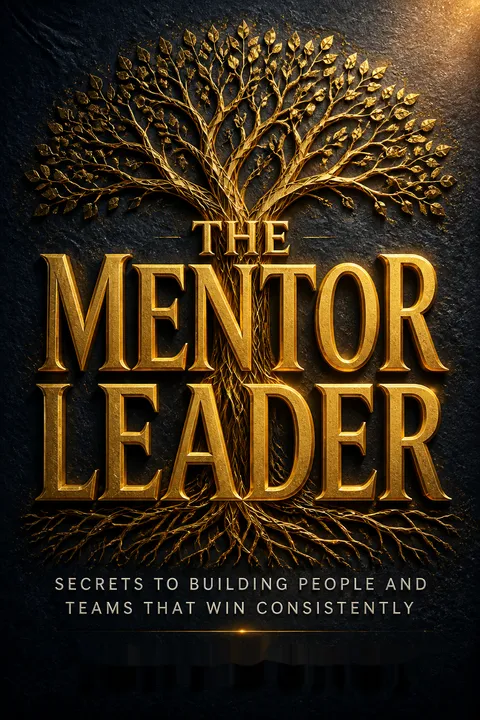
The Mentor Leader by Tony Dungy receives high praise for its practical leadership advice rooted in Christian values. Readers appreciate Dungy's focus on putting others first, building character, and leading by example. The book offers valuable insights for both sports and business contexts, emphasizing the importance of relationships and personal growth. While some find it repetitive or overly sports-focused, many readers consider it an excellent guide for developing mentor leadership skills and making a positive impact on others' lives.
People Also Read





Glossary
Mentor leadership
Leadership that develops peopleA deliberate way of leading that seeks to improve the people being led, not merely secure a result. It combines example, teaching, relationships, service, and the transfer of responsibility. Its measure includes whether people grow in character and ability and whether they can, in turn, develop others.
The Seven E’s of Enhancing Potential
A people-development sequenceDungy’s named process for helping people grow into stronger contributors and leaders. Its stages move from establishing connection and teaching, through supplying tools, reinforcing effort, and granting responsibility, toward motivation and greater contribution. The sequence is intended as a practical guide, not a rigid formula; people may need different kinds of support at the same time.
Situational leadership
Leadership matched to readinessA model associated in the book with Paul Hersey and Ken Blanchard. It proposes that leaders adjust their degree of direction and participation according to the needs, experience, and capability of the people involved. A novice or urgent situation may call for clear instruction, while a prepared person can be given more autonomy.
Coaching tree
Leaders developing leadersA branching chain of development in which one leader teaches and prepares others, who then lead and mentor additional people. Dungy uses the idea to describe influence that extends beyond a single team or tenure. The goal is not merely to create capable followers, but to develop people able to build capability in others.
Platform
A sphere of personal influenceThe relationships, role, and setting through which a person can affect others. A platform does not require fame or formal authority; it may be a family, workplace, school, team, or neighborhood. Dungy stresses that a person’s everyday position can create opportunities to encourage, guide, and mentor someone.
Good success
Achievement with lasting significanceA spiritually grounded idea of success that looks beyond immediate or material results. In the book, it means using leadership to make a lasting difference in other people’s lives and building a culture that can serve beyond the leader’s own tenure. It does not reject measurable achievement, but places it within a larger moral and relational purpose.
FAQ
What's The Mentor Leader about?
- Focus on Mentorship: The Mentor Leader by Tony Dungy emphasizes the importance of mentorship in leadership, advocating for leaders to invest in the growth and development of those they lead.
- Character and Integrity: The book discusses how character is foundational to effective leadership, highlighting that leaders must be trustworthy and authentic.
- Long-term Success: Dungy argues that true success is measured by the positive impact leaders have on others, not just by short-term achievements.
Why should I read The Mentor Leader?
- Timeless Principles: The book presents leadership principles that are not fads but are timeless and applicable to anyone.
- Personal Growth: It encourages readers to reflect on their leadership styles, develop strengths, and address weaknesses.
- Real-life Examples: Dungy shares personal anecdotes from his coaching career, making the lessons relatable and actionable.
What are the key takeaways of The Mentor Leader?
- Mentor Leadership Defined: Dungy defines mentor leadership as focusing on building character and relationships, aiming for a positive impact.
- People First Approach: The book emphasizes prioritizing relationships over profits, stating that relationships are what ultimately matter.
- Legacy of Influence: It encourages readers to consider the legacy they leave behind, focusing on positive influence and character.
What are the best quotes from The Mentor Leader and what do they mean?
- "If all you’re about is winning, it’s not really worth it." This quote underscores the idea that leadership should focus on lasting impact rather than just immediate success.
- "It is not about me." This phrase encapsulates the essence of mentor leadership, emphasizing prioritizing others' growth over personal recognition.
- "Success is measured in changed lives, strong character, and eternal values." This reflects Dungy’s belief that true success is about positive influence rather than material achievements.
What is the concept of mentor leadership in The Mentor Leader?
- Intentional Impact: Mentor leadership involves making a deliberate effort to positively influence those around you, focusing on their development.
- Building Relationships: Dungy emphasizes putting people first and nurturing relationships to foster a supportive environment.
- Legacy Building: Mentor leaders aim to create a legacy by developing future leaders and making a lasting impact.
How does The Mentor Leader define success?
- Long-term Perspective: Success should be defined by the lasting impact one has on others, not immediate results.
- Character Over Achievement: Personal growth and integrity are more important than accolades, as success is measured in changed lives and strong character.
- Focus on Relationships: Success is also about the quality of relationships built along the way, as relationships are ultimately what matter.
What are the characteristics of a mentor leader according to The Mentor Leader?
- Trustworthy Traits: Competence, integrity, security, and authenticity are foundational to mentor leadership.
- Relational Qualities: Being accountable, available, and approachable is necessary for effective leadership.
- Leadership Attributes: Mentor leaders demonstrate courage, lead by example, and keep others focused on the organization’s vision and mission.
How can I apply the principles from The Mentor Leader in my life?
- Self-Reflection: Evaluate your leadership style and identify areas for growth, understanding your motivations and actions.
- Invest in Others: Actively seek opportunities to mentor those around you, focusing on their development and success.
- Build Relationships: Prioritize building strong, meaningful relationships in both personal and professional settings.
What role does character play in The Mentor Leader?
- Foundation of Leadership: Character is the cornerstone of effective leadership, as people need to be comfortable with who their leaders are.
- Influences Decisions: A leader's character affects decision-making and interactions, impacting the organization's culture.
- Trust and Loyalty: Strong character fosters trust and loyalty among team members, essential for long-term success.
What is the "Seven E's of Enhancing Potential" method in The Mentor Leader?
- Engage: Build relationships and be present in the lives of those you lead.
- Educate: Teach skills and provide knowledge necessary for growth.
- Equip: Provide tools and resources needed for success, offering guidance and support.
How does Tony Dungy define a mentor leader in The Mentor Leader?
- Servant Leadership: A mentor leader serves others and prioritizes their growth, contrasting with authority-focused leadership styles.
- Building Relationships: Focus on building strong, trusting relationships with the team, essential for effective leadership.
- Long-term Impact: Aim to create a lasting impact by developing future leaders and making a difference in their lives.
How does Dungy suggest leaders handle failure in The Mentor Leader?
- Learn from Mistakes: Emphasize learning from failures rather than dwelling on them, as mistakes provide valuable lessons.
- Maintain Perspective: Keep a long-term perspective and don't let short-term setbacks define your journey.
- Support Others: Encourage and support team members to keep moving forward, fostering a positive environment to overcome obstacles together.
About the Author


Download PDF
Download EPUB
.epub digital book format is ideal for reading ebooks on phones, tablets, and e-readers.








