


Plot Summary
A Funeral With No Body
In London in 1913, twenty-one-year-old Lilith Montgomery mourns her father, the Duke of Radnor, while preparing to inherit his secret office as Head Witch of the Lazarus Coven. The coffin lowered into the family grave is empty, since the coven intends to speak with his spirit. A voice reaches Lilith without being called and warns that her brother Freddie will bring ruin, but she turns her attention to her pale mother and troubled sibling.
Nearby, civil servant Nicholas Stricklend watches to see whether Lilith can lead the coven. Artist Bram Cardale, newly arrived from Sheffield to pursue painting, stops to sketch the mourners, struck by Lilith's stillness in the bright heat. Each sees something in her that the others cannot yet name.
The empty coffin makes mourning an active threshold rather than a final separation: Lilith's grief is already entangled with the work she inherits. Her private burden sits beside public performance, as aristocratic ritual requires the family to receive condolences while hiding the truth of the burial. The scene also places three different forms of attention around Lilith: familial duty, Stricklend's political scrutiny, and Bram's artistic gaze. Their competing interpretations establish the novel's central question of who can truly see her, and what seeing obliges them to do.
A Daughter Takes Command
After the funeral guests leave, Lilith enters the catacombs beneath her family's garden and meets her father's spirit. He reassures her that she has been trained to lead, though his presence cannot replace the comfort of his living embrace. A message from opium dealer Chow Li interrupts them: Freddie is dangerously ill in the den where he has gone to escape grief.
Lilith and the butler Withers carry her brother home, and she uses gentle spirits to ease his withdrawal. The rescue does not solve his addiction. Freddie remains fragile, resistant to leaving London, and dependent on Lilith to keep his life from sliding further out of control. She must now shoulder her coven duties while trying to hold together a family already coming apart.
Lilith's first exercise of authority is not ceremonial but domestic. She can command spirits and inherit a powerful institution, yet her brother's addiction resists any clean magical remedy. The contrast prevents leadership from appearing as simple mastery: her gifts provide care, not control over another person's will. Her father's reassurance offers emotional continuity, while Freddie's crisis immediately tests whether that inheritance can meet ordinary human need. Lilith begins to define strength not as freedom from grief, but as the ability to act while carrying it.
The Demon Challenge
At Lilith's inauguration, she chooses the coven name Morningstar and withstands an anonymous challenge to her fitness for leadership. The challenger cites Freddie's opium use as proof that Lilith might be compromised, so she accepts the prescribed test: summon a demon before the assembled witches.
With Violet, her maid and closest coven companion, assisting, Lilith opens a passage to the Darkness. The demon escapes its circle, burns Violet, and drags her into the abyss despite Lilith's desperate efforts to pull her free.
Druscilla breaks the enchanted thread before Lilith is taken too. Shattered by Violet's loss, Lilith nevertheless claims the office and its robe, understanding that the coven cannot be left leaderless. The unknown challenger has tested her and exposed a danger inside the ceremony.
The test makes inherited legitimacy answer to public proof, but the proof is structured so that success and loss arrive together. Lilith demonstrates courage and skill, yet the cost is Violet, whose loyalty cannot be converted into protection. The coven's insistence that Lilith claim office immediately reveals its institutional priority: continuity must prevail even when the new leader is grieving. This is not a triumphant initiation so much as a forced education in the moral injury of command, where surviving a crisis does not mean emerging innocent of its consequences.
The Painter Returns Her Gaze
Bram settles into the chaotic household of sculptor Richard Mangan, where he hopes to become a painter but struggles to make his work feel alive. He first notices Lilith at her father's funeral, then encounters her again outside Chow Li's opium den while helping Mangan's friends retrieve the drunken sculptor.
Lilith assumes Bram's presence there reflects approval of the den; he cannot fully defend himself, and her judgment stings. Their paths cross again when Lilith accompanies Charlotte Pilkington-Adams to Mangan's studio.
As Bram paints Charlotte, Lilith studies his work and gradually softens toward him. At Lilith's home, a falling glass vase stops in midair through her magic. Bram sees the impossible rescue, and Lilith chooses not to erase his memory of it.
Art gives Bram a way to approach what ordinary social conduct keeps distant: he studies people for the hidden life beneath their appearance. Lilith, meanwhile, judges him by his actions around Freddie's addiction, not by his good looks or artistic ambition. Their attraction therefore begins in friction and ethical scrutiny, rather than instant idealization. The suspended vase is a small but consequential breach in Lilith's secrecy. By sparing Bram from a memory spell, she makes an unconscious choice to allow intimacy before she has decided whether it is safe.
A Secret Spoken Aloud
At an artists' party, Bram and Lilith dance together and retreat to a garden, where he gently asks about the vase he saw her stop from breaking. Before she can answer, the hostile spirit that has been intruding on her thoughts overwhelms her. She flees, unable to explain the danger. Later, while Bram paints her in his freezing attic, the spirit's taunts trigger a burst of uncontrolled magic that throws Bram across the room and wrecks the studio.
Lilith then tells him that she is a witch, a necromancer, and the new Head Witch of the Lazarus Coven. Bram accepts her account and comforts her rather than recoiling. Her confession relieves the strain between them, but she has exposed coven secrets to someone outside its protection.
The haunting attacks Lilith through the very skill she prizes: her ability to listen to the dead. Its intrusion converts secrecy from a deliberate discipline into an enforced isolation, driving her to reveal herself at a moment of emotional overload. Bram's acceptance matters because he treats her as a person before treating her as a supernatural problem. Yet the intimacy is ethically complicated. Lilith's trust in him offers relief, while her disclosure places both him and the coven in greater danger.
The Sorcerer in the Dark
Lilith and senior witch Druscilla deliberately confront the uninvited spirit. He identifies himself as Edmund Willoughby, an ancient sorcerer who once sought the power of resurrection and now serves the Sentinels, the coven's old enemies.
When Willoughby attacks Druscilla, Lilith banishes him before he can stop the older witch's heart. At Yulemass, the coven calls a young spirit named Amelia, who predicts a vast war and names the sons of several witches, including Louis, among those destined to die.
Bees then terrify Amelia into silence, and Willoughby appears in the sacred circle despite their protections. His intrusion confirms that someone is working against the coven from within or nearby, while the prophecy turns a distant political crisis into a personal threat.
The two encounters widen the story's danger from private haunting to organized conflict. Willoughby's ancient grievance makes the past an active political force, while the bees reveal that even a protected ritual can be manipulated through a spirit's most intimate fear. Amelia's prophecy is precise enough to wound but not precise enough to guide action, leaving the coven with knowledge that cannot be cleanly used. Lilith's role shifts from recipient of ominous warnings to interpreter of competing obligations, including the lives of people she loves.
The Wolf Enclosure
As war and the Sentinel threat tighten around her, Lilith's relationship with Bram offers a rare private refuge. At the zoo, that refuge vanishes when Willoughby seizes Bram's body and crushes his ability to breathe. Lilith attempts to drive the spirit out, but the attack is so strong that Bram can barely remain conscious.
He thrusts his hand through the wolf enclosure bars; a wolf bites him, and the pain forces him to draw breath. That moment gives Lilith the opening to banish Willoughby. She erases the witnesses' memories before taking Bram away, then proposes they escape to Radnor Hall, where a Sentinel cannot reach them as easily. Their planned retreat is now an act of protection, not merely a lovers' holiday.
The zoo attack strips away the comforting assumption that Lilith's enemy is limited by darkness, distance, or secrecy. Bram's survival depends on a brutal bodily interruption, a bite that restores his breath when magic has nearly extinguished it. The event also makes love operational: Lilith does not only feel responsible for Bram, she changes her plans to keep him alive. Yet the public setting forces her to conceal what happened, showing how protection under the coven's rules repeatedly requires her to erase other people's access to truth.
A Dance Becomes a Threat
At the Anstruthers' ball, Bram arrives with Mangan's artistic circle and sees Lilith with her fiancé, Viscount Louis Harcourt. Before he can understand her guarded manner, Stricklend tells Lilith that Freddie is in his power and demands the Lazarus Elixir, its ingredients, and its spell.
Lilith refuses to reveal the coven's Great Secret and slips away to search for her brother. She finds Freddie unconscious after taking opium, his body cold and apparently dead. On Tower Bridge, she and Louis catch up with him, but Sentinel attackers close in.
Louis fights them; in the struggle, a blade cuts Freddie's throat, and the men tumble into the Thames. Louis survives with help from spirits, but Freddie does not. Bram, who misses Lilith at their planned station meeting, sees her leave with Louis and mistakes the emergency for a choice against him.
The ballroom turns social choreography into coercion: Stricklend can make a threat look like an ordinary dance while forcing Lilith to choose between secrecy and family. Her refusal protects the Elixir, but Freddie's death makes that victory emotionally unbearable. Bram's mistaken interpretation is not simple jealousy; it grows from incomplete information and the secrecy Lilith has repeatedly needed to maintain. The scene binds the novel's three central pressures together, romantic trust, familial loyalty, and institutional duty, then lets each person act on only a fragment of the truth.
Freddie Crosses Back
Unable to accept Freddie's death, Lilith takes his body to the Great Chamber and uses the Elixir and the Raising spell to restore him. He awakens alive, but a fissure opens beneath him and demons seize him. With her Cavaliers' help, Lilith hauls him out of the Darkness. Freddie is terrified by what he has seen and runs from her, suddenly stronger than before.
The potion will need to be taken regularly to sustain him, and Lilith cannot find him. Meanwhile, Bram returns to the station too late and sees Louis take Lilith away; believing she has chosen her fiancé, he leaves London and eventually enlists. Lilith has saved Freddie's body at the price of breaking coven law, widening the threat to herself, and losing Bram through silence.
Freddie's return exposes the difference between restoring life and restoring a life. The Elixir succeeds physically, but the journey through the Darkness leaves him frightened and estranged from the sister who rescued him. Lilith's act is motivated by love, yet it cannot undo his experience or guarantee his safety. At the same time, Bram's departure shows how secrecy can injure the person it is meant to protect: he reads Lilith's urgent loyalty to family as rejection. The consequences of resurrection therefore spread beyond the ritual into trust, identity, and the coven's moral authority.
War Opens the Graveyard
By 1917, Lilith is helping feed London's poor at a convent soup kitchen while her mother remains emotionally diminished by Freddie's death. War fills the Land of Night with young soldiers, and the spirits now press Lilith to use the Elixir on them as she did for Freddie. She fears her choice has awakened a desire for return that the dead cannot contain.
A note supposedly from Lord Grimes draws her to a cemetery gate, where Willoughby and two men attempt to seize her. Lilith drives them off by banishing the spirit and setting their carriage alight, then realizes the message was a trap and that someone has compromised Grimes's household. Her private transgression has become part of a larger crisis among both living and dead.
The soup kitchen places Lilith's inherited privilege beside the war's material hunger, while the spirits bring the war's losses into her private supernatural life. Their demand is emotionally persuasive because she has already crossed the boundary once for Freddie. But a single rescue cannot become a universal remedy without turning the Elixir into an answer to grief itself. The ambush confirms that Lilith's guilt is exploitable: her compassion draws her into danger, and her enemies understand that she will answer a summons when another person may need help.
A Bomb at Fitzroy Square
Stricklend pressures Louis's father, Lord Harcourt, to obtain the Elixir by threatening Louis's life. During a zeppelin raid, Harcourt enters the catacombs and takes the cask containing the potion.
Lilith discovers him and argues that Stricklend will misuse its power, but Harcourt believes surrendering it is the only way to save his son. Two armed men seize Lilith as Willoughby blocks her magic. Before they can remove her, a bomb strikes the house. Lilith calls on Hekate as the chamber collapses around them.
She survives beneath the ruins with Iago and the Elixir, but the Great Chamber is destroyed and several household servants die. Harcourt's attempt to protect Louis has helped bring the coven's home down, while Lilith is left with its surviving sacred object and the knowledge of his betrayal.
Harcourt's betrayal mirrors Lilith's earlier choice to use the Elixir for Freddie: both acts arise from love, yet each places private attachment against collective responsibility. The novel refuses an easy moral separation between the coven's rules and individual compassion. The bombing then turns political violence into literal architecture, destroying the hidden space that had housed the institution's memory. Lilith survives, but continuity can no longer mean simply preserving the old chamber; leadership must now imagine a different form of safety.
The Artist Comes Home
In 1919, Bram returns from the war with paintings shaped by his experiences in Africa. At his London exhibition, Lilith appears and tells him she is no longer to marry Louis. They reunite, and Lilith later breaks the engagement openly rather than continuing a life chosen for safety and family expectation.
She brings Bram to a gathering of senior witches and introduces him as the man she intends to marry, openly admitting that she has told him about the coven.
The witches object that she has broken their secrecy, but Druscilla argues that Lilith's judgment deserves trust and asks whether Bram will submit to testing for possible induction. He agrees. The gathering marks a deliberate shift: Lilith will not build a marriage on concealment, even if her choice forces the coven to reconsider its inherited boundaries.
Bram's paintings give public form to experience he once carried privately, and their reception makes him less socially marginal, but his reunion with Lilith is not a reward for artistic success. It depends on both of them choosing honesty after years of injury. Lilith's introduction of Bram to the witches turns a personal commitment into a political act: she risks authority to argue that secrecy should protect people, not imprison the coven in its customs. Druscilla's qualified support keeps the change from seeming effortless; acceptance must still be tested and negotiated.
The Secret at Her Deathbed
After Bram and Lilith become lovers, Stricklend forces his way into her rooftop observatory and demands the Elixir. He suspends Bram over the building's edge, then uses magic to crush Lilith's body when she refuses him.
As she dies, Lilith tells Bram the Great Secret: the Elixir requires blood taken from a newborn within its first hour, with a girl's blood needed to raise a woman. She also directs him to the convent where the potion is hidden and begs him to stop Stricklend. Willoughby has been listening and carries the secret to his master.
Bram runs to fetch the cask, while Louis attempts to raise Lilith. At the cemetery, Stricklend adds newborn blood to the Elixir and resurrects Perry, but the flawed working makes Perry rapidly decay before demons drag him into the Darkness.
Lilith's death forces the secret into the open, but she chooses Bram as its keeper because he is present, trusted, and willing to act. That trust becomes dangerous when Willoughby overhears the formula, turning intimate knowledge into a weapon. Stricklend's experiment exposes the difference between possessing instructions and possessing the moral and practical competence to use them. Perry's rapid decay is not merely a failed spell; it demonstrates that resurrection without the full knowledge and discipline of the Lazarus tradition produces suffering rather than restored life.
Queen of the Night
Louis completes the Raising with the Elixir Bram retrieves, and Lilith wakes in the observatory, alive but newly empowered as a risen witch. She learns that Willoughby has taken her final words to Stricklend and rushes with Bram and Louis to her father's grave, where the failed resurrection has opened the Darkness.
Stricklend and Willoughby battle escaping demons as Lilith arrives. Bram shoots at the attackers, Louis fights off a wraith, and Lilith's immense new magic pushes the creatures back.
She blasts Willoughby into the pit, then uses a magically transformed ivy vine as a Silver Thread to lash Stricklend away from Bram and cast him into the abyss. She seals the rupture, saves Louis, and accepts the spirits' title of Queen of the Night. Bram stays beside her, and they face the new day together.
The final confrontation resolves the novel's repeated question of whether power can be separated from responsibility. Stricklend has the formula and ambition, but his violence makes him incapable of using the Elixir without catastrophe. Lilith's risen strength matters because she acts to contain harm, not to rule others. The transformed ivy also turns an inherited instrument into something of her own making, matching her reinvention of the coven's future. Her bond with Bram survives not because danger disappears, but because he chooses to stand within the truth she can no longer hide.
Analysis
The novel makes inheritance both a source of power and a mechanism of confinement. Lilith inherits a title, a secret, and a structure of obligations before she has time to decide which parts of that structure she believes in. Her repeated conflicts are not simply between good and evil. She breaks the coven's laws to save Freddie, while Lord Harcourt betrays the coven to protect Louis; both act from love, but each decision produces consequences beyond the loved one they intend to save. The difference lies partly in how they handle responsibility afterward. Lilith accepts the cost and keeps trying to prevent further harm. Stricklend, by contrast, treats other lives as expendable material for his ambition.
Death is not an abstraction in this story. The spirits have memory, desire, and grief, and their persistence makes mourning an ongoing relationship rather than a completed event. Yet the Elixir cannot dissolve loss without remainder. Freddie returns physically but is traumatized by the Darkness, and his return awakens hope among the war dead that Lilith cannot ethically satisfy. Resurrection therefore sharpens the novel's question of whether love gives someone the right to override the limits that protect others.
Bram's art and Lilith's necromancy are parallel forms of attention. He tries to make hidden human experience visible through paint; she listens to what the living world has silenced. Their romance depends on the willingness to be seen without reducing the other person to a role. When Lilith reveals the coven, she risks communal trust to refuse a marriage founded on concealment. Her choice challenges a secrecy code that once protected the witches but now threatens to isolate them from the changing world.
The ending does not erase danger or restore the old order. Lilith survives as a transformed leader, the coven's home has changed, and her power has expanded beyond inherited ritual. The novel's resolution is therefore less a return to safety than a new bargain: responsibility must accompany power, and love must become a practice of truthful, shared risk.
Review Summary
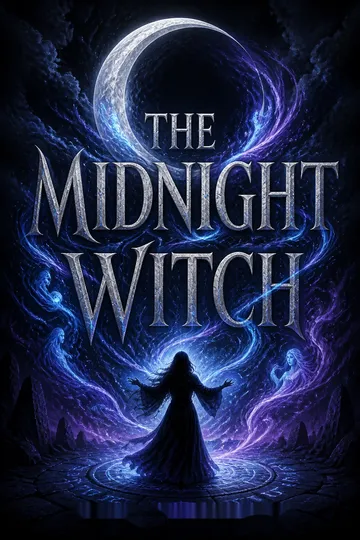
The Midnight Witch received mixed reviews, with many readers finding the plot inconsistent and the main character, Lilith, frustrating. While some appreciated the historical setting and witchcraft elements, others felt the romance was unbelievable and the pacing slow. Critics praised Brackston's writing style but found the character development lacking. Some enjoyed the good vs. evil theme and the World War I backdrop. Overall, readers were divided, with some loving the magical elements and others disappointed by the execution of the story.
People Also Read


Characters
Lilith Montgomery
Heir between worldsThe young daughter of the Duke of Radnor is also heir to the leadership of the Lazarus Coven, a secret society of necromancers. Lilith is observant, disciplined, and accustomed to carrying private responsibilities without complaint. Her ability to listen to spirits gives her unusual intimacy with death, but it does not make her immune to grief, uncertainty, or the needs of her family. She values loyalty and protection, sometimes so intensely that she struggles to distinguish care from self-sacrifice. Her inner conflict is sharpened by the gap between her public identity as an aristocratic young woman and the magical office she is being prepared to inherit.
Bram Cardale
Painter with a searching eyeBram leaves his family's steelworks and the security of Sheffield to pursue painting in London. He is ambitious, earnest, and vulnerable to self-doubt, often measuring his work against an ideal he cannot yet reach. His gift lies in looking beyond a sitter's surface and trying to capture the life that ordinary portraiture might miss. Bram's independence has a cost: he must build a career with little money and no guarantee of success. His attraction to Lilith grows alongside his artistic attention to her, but his strongest quality is not romantic persistence alone. He is willing to listen, revise his assumptions, and remain present when the world she inhabits proves difficult to comprehend.
Louis Harcourt
Witch and childhood fiancéLouis is Lilith's longtime friend and intended husband, a well-born witch raised in the same social and magical world. Charming and confident, he enjoys an audience and can be careless about where he displays his magic. Beneath that ease lies a genuine capacity for loyalty and concern. He understands the demands of coven life in a way few people can, which makes him a natural source of support for Lilith. At the same time, shared history and compatibility do not guarantee that two people want the same kind of love. Louis's relationship with Lilith is shaped by affection, family expectation, and their common inheritance.
Nicholas Stricklend
Sentinel power brokerA high-ranking civil servant, Stricklend is also a powerful member of the Sentinels, a rival order of sorcerers. He prizes control, precision, and status, regarding other people as instruments in a larger plan. His polished manners conceal a willingness to punish, manipulate, and kill when he considers it useful. Stricklend's history of exclusion has hardened into contempt for those he sees as weak, while his ambition is framed in the language of restoring what his order believes was taken from it. He is dangerous not because he lacks discipline, but because he has made discipline answer to power rather than conscience.
Freddie Montgomery
Troubled younger brotherLilith's younger brother inherits the dukedom but lacks the steadiness expected of its holder. Sensitive, charming, and self-conscious, Freddie struggles with grief and with an opium habit that worsens as he tries to escape the pressures of adulthood. His closeness to Lilith is rooted in shared childhood memories, yet her efforts to protect him can make him feel watched and misunderstood. Freddie longs for the freedom he remembers from boyhood but cannot simply return to it. His vulnerability shapes Lilith's choices and exposes the limits of what family love can repair.
Lord Robert Montgomery
Father and former Head WitchLilith's father is the late Duke of Radnor and the previous leader of the Lazarus Coven. Reserved in public and exacting as a teacher, he prepares Lilith for leadership through years of instruction in ritual, necromancy, and secrecy. His spirit remains available to her after death, offering counsel while also representing the authority of the traditions she must inherit. He loves his children, but his belief that the coven must come first makes affection difficult to separate from duty.
Lady Annabel Montgomery
Grieving motherLilith's mother is a former duchess whose sense of self has long been bound to marriage, rank, and the rituals of household life. She uses elaborate social customs to manage grief, while the loss of her husband leaves her increasingly uncertain and fragile. Annabel cares deeply for her children but cannot fully understand the secret world that occupies Lilith. Her attachment to tradition is not simply vanity; it is one of the few structures that still makes a bewildering life feel orderly.
Violet
Maid and coven confidanteAn orphan raised within the Montgomery household, Violet becomes Lilith's lady's maid and closest companion in the coven. She knows the demands of secrecy and accompanies Lilith on magical business, offering practical help as well as emotional loyalty. Their bond crosses the formal divide between mistress and servant, giving Lilith a rare relationship in which she can be understood without explanation. Violet's courage is quiet and dependable, built through years of trust rather than any desire for status.
Druscilla Larkspur
Coven's stern elderDruscilla is the Lazarus Coven's oldest senior witch and one of Lilith's most demanding teachers. Her age has not diminished her authority or her command of magic. She despises laziness and false confidence, but her severity serves a protective purpose: she wants younger witches to understand the consequences of errors before those errors become fatal. Druscilla respects discipline and the coven's inherited laws, yet she is also capable of recognizing when a leader must make a difficult choice.
Richard Mangan
Unruly sculptor and mentorMangan is a celebrated sculptor whose intense devotion to art governs his home, work, and social life. He lives unconventionally with his wife, children, mistress, and artistic dependents, and treats convention as an obstacle to creative freedom. Beneath his bluster, he is generous to younger artists and a loyal member of the Lazarus Coven. His willingness to mentor Bram and advise Lilith reflects a belief that talent needs room to develop, even when the person developing it is difficult to manage.
Charlotte Pilkington-Adams
Lilith's loyal society friendCharlotte is Lilith's lively and affectionate friend, deeply invested in fashion, parties, and the pleasures of social life. Her cheerfulness can seem frivolous, but it is also a practical form of care: she creates chances for Lilith to leave grief and duty behind for a while. Charlotte does not know the coven's secrets, so her friendship gives Lilith a connection to ordinary life. She is perceptive about Lilith's romantic feelings even when she cannot see the dangers surrounding them.
Lord Harcourt
Louis's protective fatherThe Earl of Winchester is a senior Lazarus witch and Louis's father. Proud, politically alert, and deeply invested in his son, he has long disliked the fact that the coven's authority rests with the Duke of Radnor's family. His social power gives him influence, but his strongest motives are personal as well as institutional. He can offer Lilith support when their interests align, while his paternal concern makes him wary of choices he believes may endanger Louis.
Lord Grimes
Coven's ceremonial anchorLord Grimes serves as Master of the Chalice and is one of the Lazarus Coven's most reliable senior witches. He oversees important ceremonies and helps preserve the institution's rituals. Warm and steady, he offers Lilith support without pretending that leadership will be easy. His practical loyalty contrasts with the coven's more argumentative members, making him a source of continuity during periods of fear and change.
Edmund Willoughby
Ancient hostile sorcererWilloughby is a sorcerer from an earlier age, remembered for exceptional power and forbidden attempts to raise the dead. His ambition left him in the Darkness, from where he can intrude on Lilith's thoughts and exploit the living. He speaks with the certainty of a man who believes past greatness entitles him to present obedience. His presence connects the Sentinel conflict to an older history of necromancy abused for personal power.
Peregrine Smith
Mangan's devoted assistantKnown as Perry, he assists Mangan and shares the crowded, unpredictable household in Bloomsbury. He is sociable and eager to be useful, though his own artistic ambitions remain secondary to his loyalty to his mentor. Perry's easy manner helps bridge Bram's first days in London and the household's eccentric routines. His faith in Mangan's judgment shows how deeply admiration can shape a person's sense of purpose.
Gudrun
Mangan's candid companionGudrun is a German painter and Mangan's mistress, a striking and independent presence in the artist's household. She speaks bluntly, resists conventional modesty, and refuses to soften her opinions for other people's comfort. Her directness unsettles Bram but also makes her a perceptive observer of his desires and vulnerabilities. As an outsider in both polite society and wartime Britain, she understands the cost of being judged by identity rather than work.
Victoria Faircroft
Flamboyant senior witchVictoria is an elderly Lazarus witch who loves magic and wishes the coven were less secretive. She is expressive, opinionated, and willing to challenge Druscilla's caution, often bringing an alternative perspective to senior discussions. Her belief in communication and collective knowledge makes her a useful counterweight to the coven's instinct for concealment.
Amelia
Young prophetic spiritA girl who died centuries earlier, Amelia appears at the coven's Yulemass gathering with a handful of flowers and an unusually direct view of the future. Her childlike manner coexists with grave knowledge, though she is sensitive to the memories and fears attached to her death.
Withers
The family's steadfast butlerWithers is the Montgomery household's dependable butler, trusted by Lilith and loyal to the family across years of change. He understands how to protect their privacy and helps Lilith manage crises without demanding explanations.
Sister Bernadette
Convent's trusted caretakerA nun at St. Mary's Convent, Sister Bernadette helps run the soup kitchen and earns Lilith's trust through practical compassion. She treats the hungry with dignity and can be relied upon to protect what Lilith places in her care.
Plot Devices
The Lazarus Elixir
Life returned at a priceThe Elixir is the Lazarus Coven's most guarded magical substance, capable of restoring the dead when combined with a precise spell and the proper ingredients. Its power makes it both a source of hope and a political prize. Lilith uses it to try to save Freddie, and its later misuse demonstrates that possession of the potion alone does not ensure safe resurrection. It gives the central conflict its concrete object: the Sentinels want the Elixir to reclaim power, while Lilith must decide what its use is for. This description reveals major plot events.
The Great Secret
The missing ingredientThe Elixir requires a final ingredient and knowledge of how to prepare it, information known only to the Head Witch. This knowledge protects the potion from anyone who might seize the bottle without understanding its use. The secret becomes a weapon when Stricklend engineers circumstances in which Lilith may reveal it, and a responsibility when she must decide whom to trust with it. Its existence turns intimate confidence into a matter of collective security.
The Rubicon
Boundary between the livingThe coven's sacred floor depicts the Rubicon as a blood-red divide between the Land of Day and the Land of Night. Witches use ritual circles to call or summon spirits across that boundary, while the Darkness lies deeper still and contains demons and other dangerous beings. The symbol is also practical: it marks where spells can be performed and where a breach may let hostile creatures escape. Lilith's encounters with the dead repeatedly test whether a crossing can remain controlled.
Maygor's Silver Thread
Magical tether and weaponThis ancient enchanted cord can bind a summoned creature and help a necromancer control it. Lilith uses it during her proof of worth, where it becomes a desperate lifeline against the demon she has called. Its later transformation into an ivy-made thread connects inherited coven magic with Lilith's own capacity to reshape it. The thread makes control visible: it can restrain an enemy, but only while the witch holding it can bear the force pulling back.
The Spirit Guardians
Protection from the unseenLilith's loyal spirit companions, including a group of Cavalier soldiers, accompany and defend her during dangerous journeys. They can see threats ordinary people cannot and lend aid when her own strength is failing. Their presence gives her protection, but not invulnerability: stronger sorcery can hold them back, and their assistance cannot undo every loss. They embody the coven's ongoing relationship with the dead, turning necromancy from a means of acquiring knowledge into a bond of mutual service.
Shadow Chronicles Series
About the Author
Other books by Paula Brackston
Download PDF
Download EPUB
.epub digital book format is ideal for reading ebooks on phones, tablets, and e-readers.








