

Key Takeaways
Build emotional fitness by feeling difficult things while living what matters
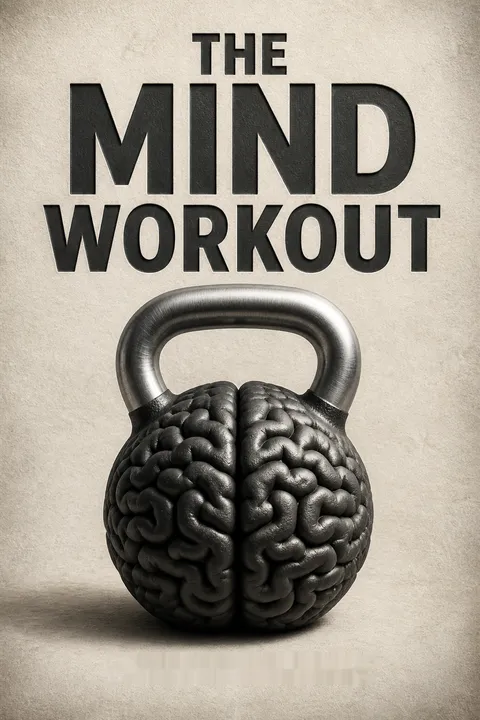
Capacity, not calm. Freeman defines emotional fitness as the ability to experience emotions and still choose actions that fit personal values. Like physical training, it develops through repeated practice with discomfort, not through wishing the discomfort away. A novice runner cannot become strong by avoiding exertion; likewise, avoiding every anxious or sad feeling can leave a person less prepared to meet ordinary challenges.
Human, not broken. The book's central analogy is that people are not rocks: having thoughts, urges, and intense emotions is part of being human. Freeman shares how years of rituals, intrusive images, and anxiety preceded his recovery. He presents the comparison to fitness as a reason to practice and seek support, not as proof that mental illness is unreal.
The fitness analogy shifts attention from perfect emotional control to flexible functioning, a useful distinction in both therapy and performance training. It also counters the idea that discomfort automatically signals failure. The analogy has limits, however: mental distress is shaped by biology, trauma, poverty, discrimination, and access to care, not just personal practice. Treating emotional skills as learnable can encourage agency, but it should not imply that people are responsible for causing their illness or can recover through effort alone.
Look beneath distress for the habits and conditions keeping it alive
Symptoms can mislead. Freeman compares mental distress to knee pain: reducing pain may help, but lasting improvement may require changing what is straining the knee. He urges readers to ask what is interfering with a valued life, rather than making symptom relief the only goal. His term compulsion means an action used to cope with, check on, or control uncertainty and unwanted feelings.
Follow the pattern. Procrastination illustrates the cycle. Freeman avoided reading for a Chinese poetry course, escaped the resulting anxiety, and then faced a frightening exam. The panic was real, but the repeated avoidance had helped create the predicament. His Inventory exercise makes this pattern visible by mapping how time and energy are spent now, then comparing it with an imagined day a year ahead.
This problem-focused lens resembles systems analysis: a visible failure may be the output of a loop, not the root cause. Mapping time can expose costs that introspection tends to rationalize away. Still, distress is not always a signal of an individual habit that needs changing. Sometimes the environment is harmful, and symptom relief, medication, or practical protection is necessary. A useful assessment asks both what a person does in response to distress and what conditions are producing it.
Train attention in ordinary moments, not only during formal meditation
Attention is practiced. Freeman defines mindfulness as deliberately noticing the present without judging what is noticed. He argues that repeatedly splitting attention among messages, imagined arguments, and future worries rehearses distraction. He describes seven kinds of experience to notice: sight, sound, touch, smell, taste, thought, and emotion. The point is not to suppress thoughts, but to notice them alongside the rest of the moment.
Use daily life as practice. Walking, cooking, watching a film, or listening to a friend can all become opportunities to return attention to what is happening. Meditation is a focused drill for this skill, not a guarantee of calm. Freeman recommends starting with short sessions, making time consistently, and treating a wandering mind as the occasion to practice returning rather than as evidence of failure.
The emphasis on ordinary activity makes mindfulness less like a wellness accessory and more like attentional hygiene. The seven-sense framing is memorable because it reminds readers that thoughts and feelings are experiences, not the whole field of awareness. Yet attention is also affected by sleep, stress, neurodivergence, and technology design. A person who struggles to focus is not necessarily practicing distraction badly. Mindfulness can support attention, but it should not replace evaluation when concentration problems are persistent or impairing.
Let values guide action when fear offers a faster escape
Choose a direction. Values describe how a person wants to live, while goals are concrete steps in that direction. Friendship, for example, might become a goal of making regular time for friends. Freeman uses the Unhappiness Curve, a pattern from organizational change, to explain why innovation feels worse before it feels better: uncertainty rises, and people are tempted to retreat to familiar behavior.
A jacket, a dangerous drive. As a teenager, Freeman raced home to retrieve a suit jacket because he feared being judged at a school dance. He drove recklessly, prioritizing relief from embarrassment over safety. The story shows how fear can quietly become the decision-maker. Values do not promise comfort; they help identify the action worth taking while discomfort remains.
Values function like a compass rather than a mood forecast. This connects personal behavior to organizational change: teams also retreat from uncertainty when short-term relief is easier than long-term improvement. The distinction between values and goals guards against confusing a particular tactic with a meaningful life direction. One caution is that values are not universal instructions. They can conflict, and a person's context may constrain available choices. The useful question is not simply what matters, but what is feasible and ethical here.
Change the response, not the thought or feeling that comes first
Spot the conditional rule. Freeman calls the recurring trap IF X THEN Y thinking: if anxiety appears, action must wait; if a message goes unanswered, something must be wrong; if a thought is disturbing, it must reveal something about the person thinking it. These rules turn ordinary uncertainty into a demand for reassurance or control.
Choose a response. The book draws on Acceptance and Commitment Therapy, or ACT. In practical terms, notice the thought or feeling, identify a valued direction, then take a step in that direction without requiring the internal experience to change first. Freeman's example is doing necessary shopping while tired and stressed instead of waiting to feel motivated. An Awesome Schedule extends the idea by putting enjoyable, health-supporting activities on the calendar before a crisis creates pressure.
Separating an internal event from a behavioral choice is a strong antidote to the assumption that feelings must be obeyed or eliminated. This is also compatible with behavior-based approaches: action can precede a change in mood, rather than waiting for motivation to arrive. The approach is not a command to override every signal. Fear can point to real danger, and exhaustion can indicate a genuine need for rest. The task is to examine the situation, not automatically treat discomfort as either a stop sign or meaningless noise.
Reduce compulsions gradually, and redesign the day around them
Three recurring patterns. Freeman groups compulsions into coping, checking, and controlling. Coping tries to replace an unwanted feeling; checking seeks certainty; controlling tries to prevent an unwanted outcome. The outward behavior may look harmless or harmful, but the book asks what function it serves. Its Hierarchy exercise lists these behaviors from easiest to hardest to change, so practice can begin with manageable challenges rather than the most frightening one.
Look upstream. A Compulsion Journey maps the events and conditions before a behavior, such as fatigue, conflict, or easy access to a phone. This can reveal earlier points for change. Freeman's phone exercise is a simple example: notice the urge, postpone checking to a chosen time, and follow through. The aim is to practice choice, not to ban phones or other useful activities.
Combining graded practice with a map of the surrounding day is more realistic than relying on willpower at the moment of strongest temptation. It recognizes that behavior is shaped by cues, routines, and social systems. The categories can be useful for reflection, though they are broad enough to cover many different behaviors and should not be mistaken for a clinical diagnosis. Exposure exercises are best tailored to the person and situation, especially when fears involve actual safety, trauma, eating, substance use, or severe symptoms.
Treat frightening thoughts as mental events, not commands or evidence
Make room around a thought. Freeman calls the skill of noticing thoughts without equating them with the self cognitive defusion. He compares thoughts to clouds: they can be present without taking charge of the day. The Annoying Kids in a Car exercise turns this into an image: worries and urges are noisy passengers, while the driver continues toward a chosen destination.
Question the loop. The Five Whys exercise repeatedly asks why a compulsion feels necessary, helping uncover deeper fears such as death, rejection, or being alone. Freeman also encourages non-judgement and curiosity toward thoughts and physical sensations. His practice of imagining positive outcomes is meant to loosen the mind's habit of rehearsing catastrophe, not to prove that everything will work out.
Defusion offers a practical middle ground between believing every thought and trying to suppress it. The passenger metaphor makes that distinction easy to recall under stress. Curiosity can also interrupt automatic interpretations of bodily sensations, which often intensify fear. However, a thought may sometimes contain useful information, and a disturbing thought alone does not establish its cause or meaning. The goal is not to dismiss content reflexively, but to avoid treating the mere presence of a thought as proof or instruction.
Make change concrete instead of waiting for motivation to appear
Motivation is unreliable. Freeman warns that waiting to feel ready can become another form of avoidance. His phrase addict maths describes the chain of clever justifications that turns one small obstacle into a reason to abandon a plan. Rain disrupts a walk, so meditation can wait; then errands, food, and the rest of the evening get postponed too.
Put the next step in reach. Freeman recommends making intentions visible, tangible, and consequential. A vague goal such as exercising more becomes a specific plan, supported by equipment placed where it is easy to use or a friend expecting to meet. He also advises keeping success close: count practice itself as progress, rather than judging the day only by a distant result. Seek professional and peer support when doing this alone is not working.
This advice echoes implementation planning: a clear cue and a prepared environment reduce the number of decisions required at the critical moment. Externalizing a plan can also expose hidden assumptions, such as believing that ideal conditions are necessary. The critique of motivation is persuasive when motivation means waiting for a particular feeling. It should not be taken to mean that fatigue, competing obligations, or lack of resources can be solved by better planning alone. Sometimes the plan needs to change because the environment is genuinely unsustainable.
Measure progress by valued functioning, not by a perfectly calm mind
Happiness takes practice. Freeman distinguishes happiness from the temporary relief of defeating a fear. He recommends tracking whether a person is doing more of what matters, rather than using feelings as the only progress report. Gratitude can be practiced during ordinary tasks, such as eating, getting dressed, or noticing the work behind a meal. Loving-kindness meditation offers another way to exercise warmth toward oneself and others.
Expect a changing path. The final planning exercise sorts actions into those that support a valued life, those that signal drift, and those that indicate deeper trouble. This helps catch patterns before they become crises. Freeman also argues that recovery is not a guarantee against unwanted thoughts or future distress. The aim is to keep choosing meaningful actions, seek help when needed, and extend care beyond the individual to relationships and community.
Functioning is a more useful progress measure than emotional perfection because a person can feel anxious and still participate in life. The emphasis on gratitude also gives positive emotion a place in the training plan, rather than defining health only as less distress. A balanced view must include both personal practice and structural conditions: community, safety, and access to care shape what functioning is possible. Recurrent or severe symptoms deserve professional attention, not a test of whether someone has applied these exercises correctly.
Analysis
The book's most coherent claim is that mental health is not merely a condition to diagnose or a feeling to optimize. It is an ongoing relationship among attention, behavior, uncertainty, and the environments in which people live. Its practical engine is recognizable from Acceptance and Commitment Therapy: loosen the grip of thoughts, clarify values, and choose action without waiting for emotional comfort. Freeman's distinctive contribution is to translate that stance into everyday design tools, including inventories, ranked practice, and maps of the conditions surrounding a habit.
The narrative gives the method credibility without making the book simply a memoir. The author's history of checking, intrusive imagery, procrastination, and fear supplies vivid examples of how ordinary attempts at relief can become self-reinforcing. The rocks, monster, and wilderness images make abstract concepts portable. They also create a memorable arc, from identifying compulsive patterns to building a life no longer organized around them.
The strongest caution is that the fitness analogy can blur important distinctions. Skills can be practiced, but psychiatric conditions are not equivalent to being out of shape, and outcomes are not controlled by effort alone. The text recognizes biological and social influences, yet its polemic against an illness-first system sometimes risks sounding dismissive of diagnosis, medication, or symptom relief. Those can be legitimate parts of care. Its exposure examples also need context: accepting uncertainty is not the same as ignoring genuine hazards or refusing appropriate safety checks.
Read as a practical philosophy rather than a universal clinical protocol, the book is most useful when it shifts the question from how to erase discomfort to how to act responsibly while experiencing it. Its emphasis on values, gradual practice, and environmental support offers a durable counterweight to reassurance-seeking. The most humane application combines that agency with professional care, social support, and attention to conditions beyond individual control.
Review Summary
The Mind Workout by Mark Freeman receives mostly positive reviews, with an average rating of 4.09 out of 5. Readers praise its practical approach to mental health, comparing it to physical fitness. Many find it helpful for managing anxiety, OCD, and other mental health issues. The book is lauded for its accessible language, relatable examples, and actionable exercises. Some readers consider it life-changing, while a few criticize its simplistic approach or poor translation quality. Overall, it's recommended for anyone seeking to improve their mental well-being.
People Also Read








Glossary
emotional fitness
Acting well amid emotionFreeman's term for the capacity to experience emotions while continuing to make choices aligned with personal values. It is developed through practice with difficult internal and external experiences, rather than by trying to eliminate feelings. The book compares this capacity to physical fitness, while emphasizing that the goal is participation in life, not emotional invulnerability.
compulsion
Relief-seeking response to uncertaintyAn action or mental behavior used to cope with, check on, or control uncertainty, anxiety, or other unwanted experiences. Freeman argues that compulsions can bring short-term relief while reinforcing the pattern that makes uncertainty feel urgent. They range from obvious rituals to ordinary-looking behaviors, such as repeatedly checking messages or delaying work until one feels ready.
Coping, checking and controlling
Three compulsion patternsFreeman's three broad categories for behaviors that react to unwanted internal experiences. Coping attempts to replace or cover a feeling; checking seeks certainty or reassurance; controlling tries to prevent an feared outcome by managing people, events, or circumstances. The categories focus on the purpose of a behavior, not only how it looks from the outside.
Acceptance and Commitment Therapy (ACT)
Values-guided action with acceptanceA therapeutic approach that develops psychological flexibility by helping people make room for thoughts and feelings, remain present, clarify values, and take committed action. Freeman adapts its principles into a simple sequence: notice and accept internal experience, choose a valued direction, and act. The approach does not require unwanted thoughts or emotions to disappear before life can continue.
Unhappiness Curve
Discomfort during meaningful changeA change-management pattern Freeman encountered in organizational workshops. When a person or group tries something new, uncertainty and unpleasant feelings can rise before the change becomes workable. Retreating to familiar behavior may reduce discomfort quickly but prevent the desired change. Values can help people persist through that difficult transition without treating distress as proof that change is wrong.
cognitive defusion
Separating thoughts from identityAn Acceptance and Commitment Therapy skill for experiencing thoughts, images, and urges as mental events rather than facts, commands, or definitions of the self. The person does not need to suppress or disprove a thought. Instead, defusion creates room to notice it and choose how to act. Freeman illustrates the skill with metaphors such as clouds and noisy passengers.
addict maths
Excuses that derail changeFreeman's name for the chain of persuasive justifications that turns a small obstacle into a reason to return to an unwanted pattern. A disrupted plan can prompt further delays, each one seeming reasonable on its own. The term highlights how the mind can rationalize short-term relief even when the resulting behavior moves a person away from stated values.
The Hierarchy
Ranked practice planAn exercise that lists a person's compulsions and ranks them by how difficult they seem to change. The person begins with more manageable items and builds toward harder challenges, rather than starting with the most intimidating behavior. Freeman also suggests making a related list of valued activities to add as compulsions are reduced.
bad flow
Absorbed in harmful loopsFreeman's term for becoming deeply absorbed in behaviors and worries that grow more demanding while moving a person farther from what matters. Unlike the positive state of flow, where challenge and skill support engagement, bad flow makes ordinary life feel like a succession of crises. The book presents it as a pattern sustained by judgments, fears, and compulsions.
About the Author
Other books by Mark Freeman

Download PDF
Download EPUB
.epub digital book format is ideal for reading ebooks on phones, tablets, and e-readers.








