

Key Takeaways
Let possessions earn their place by serving the life you actually value
Use things as tools. The book defines minimalism by your relationship to possessions, not by how few objects you own. A mechanic may need a garage full of tools; someone else may find that unused gadgets, clothes, and furniture take up space and attention without improving daily life. The author describes clearing out a crowded home after realizing that maintaining its contents was consuming time and energy. The deeper issue is not the stuff itself, but the belief that another purchase will deliver happiness, status, or connection.
Make room for what matters. Reducing excess can free money, time, and attention for relationships, health, and experiences. The aim is not to live without comforts. It is to choose belongings that support a life you want, rather than letting advertising define what that life should contain.
What's distinctive here is the shift from counting possessions to asking what they do in a person's life. That makes minimalism adaptable: the same object can be waste for one person and essential equipment for another. The argument also echoes research on intrinsic goals, such as close relationships and personal growth, which tend to provide more durable satisfaction than status seeking. Still, clutter is not always a matter of poor choices. Housing costs, caregiving, disability, and limited storage can shape what people own and keep. A useful version of the principle invites discernment without turning simplicity into another standard people must feel guilty for failing.
Write down the person you want money to help you become
Start with values. Before changing a budget, the book asks readers to consider what kind of person they want to be, what they value in relationships, and what they hope for their family. These aims are broader than a job title or a purchase. They give spending decisions a reason beyond immediate pleasure or social approval.
Connect vision to habits. The author recommends writing down both those core values and a realistic picture of life with finances in better order. Then translate distant hopes into manageable steps. Someone aiming to clear debt, for instance, might regularly prepare coffee at home and direct a planned share of each paycheck toward creditors. The point is to build routines that make financial progress part of everyday life, rather than waiting for one dramatic fix.
This approach gives budgeting an identity and purpose, a useful counterweight to treating money management as arithmetic alone. Behavioral research often describes a tension between immediate rewards and future goals; a written personal reason can make the future feel less abstract. The exercise also helps distinguish values from borrowed aspirations, such as buying something chiefly to impress others. Yet values do not automatically resolve trade-offs. A family may deeply value education, security, and time together while having too little income to fund all three. Reflection clarifies priorities, but it cannot substitute for adequate resources or erase hard constraints.
Track one month of income and spending before making sweeping cuts
Diagnose before prescribing. The book recommends gathering one month of pay records, bank and credit-card statements, bills, and loan information. Sort spending into categories such as housing, utilities, groceries, transportation, medical costs, and eating out. Total the figures and compare expenses with income. Starting with one month is deliberate: reviewing years of records may be more thorough, but could make the task so daunting that it never gets done.
Keep the picture current. After the first review, record new expenses regularly and ask where the money went and why. The aim is not to shame yourself for past choices. It is to replace a vague sense that money disappears with evidence about actual patterns, including charges or purchases that were easy to overlook.
Measurement can interrupt the feeling that financial trouble is mysterious or uncontrollable. In behavioral science, feedback makes patterns visible and helps people adjust actions against a goal. The one-month scope is a practical design choice: a useful imperfect snapshot can beat an ideal audit abandoned halfway through. But an expense ledger is not a diagnosis of every cause. A deficit may come from low wages, unstable work, medical costs, or high local housing prices, not merely discretionary purchases. Tracking is strongest when it informs decisions without implying that every financial problem is a personal discipline failure.
Pause before buying, especially when a sale manufactures urgency
Make each purchase explain itself. The book offers a simple screening habit: ask whether an item is needed now, whether an existing tool can do the job, whether it replaces something necessary, and whether it will be used often. The author suggests looking for several specific future uses before buying a specialized gadget. A kitchen tool bought for one task may end up taking space while an ordinary utensil would have worked.
Compare real value. A discount saves money only when the purchase was already planned. Check the quantity as well as the price: a larger-looking bargain may cost more per ounce. Cheap goods can also become expensive if they fail quickly, while a well-made second-hand item may offer better lasting value.
The questions work because they create a pause between desire and transaction. That pause matters in environments designed to encourage impulse buying, from checkout displays to one-click online orders. Unit pricing and total-cost thinking also help counter common framing tricks: a lower sticker price is not necessarily a lower long-term cost. The framework is useful without assuming every purchase can be postponed. Replacing a broken coat or buying an essential work tool is different from chasing a sale. A sound filter should slow avoidable spending, not make necessary spending feel suspect.
Give every dollar a job, then protect the essentials first
Plan the whole paycheck. The book calls its main method zero-based budgeting: assign income to savings, necessities, debt, and discretionary spending until none is left unassigned. Savings are set aside near the start, not treated as whatever happens to remain. For irregular income, a percentage-based budget can be easier than fixed dollar amounts. The book also proposes a dream budget, a realistic picture of desired spending once finances are stable, to help make present sacrifices purposeful.
Use actual numbers. In one example, monthly take-home income of about $1,583 covers $1,250 in basic costs, leaving roughly $333 for savings or debt. The amounts are illustrative, not universal. Review bank statements, watch for fees, and reconcile transactions so the plan reflects what is actually happening.
A budget is more useful as a map than as a verdict on character. Assigning money in advance reduces the mental ambiguity that makes small purchases feel harmless until the month ends. Paying savings first can also separate future money from spendable money. The method's strength is clarity, but its example amounts cannot travel unchanged across regions, household sizes, or medical needs. A zero-based plan should be revisable when reality changes. If essential costs already exceed income, repeatedly cutting small comforts will not repair the underlying arithmetic; increasing income or accessing support may be necessary.
Make a budget with your household, not as a decree
Treat money as shared work. The book warns that a budget imposed by one partner can create resentment. Couples should discuss their goals and spending decisions together, then agree on the compromises required. Children, especially teenagers, should receive an age-appropriate explanation when finances mean changes to activities, routines, or housing. Involving them in choices, such as selecting among affordable homes, can preserve some agency during a difficult transition.
Keep connection affordable. Friends may be used to restaurant meals or costly outings. The book suggests replacing these with potlucks, game nights, park picnics, hikes, and shared movie nights. Explain the budget change without condemning other people's choices, and offer another way to spend time together. Friends who repeatedly pressure or shame someone for sticking to a financial plan may require firmer boundaries.
The central insight is that a budget operates inside relationships, not just inside a spreadsheet. Family decision-making research emphasizes that people are more likely to accept changes when they have a voice in them, especially when the changes affect daily life. Lower-cost alternatives also preserve the social function of an outing instead of treating connection as an expense to eliminate. The nuance is that financial secrecy and control can make joint budgeting unsafe for some people. Shared planning is valuable when there is mutual respect; it should not be used to excuse coercion or deny an individual access to money.
Stop borrowing to preserve a lifestyle your income cannot support
Interrupt the debt cycle. Credit cards can make available funds seem larger than they are. Unpaid balances accrue interest and fees, so a purchase can keep costing money long after its short-lived appeal fades. The book advises people in debt to stop adding new charges, reduce expenses where possible, keep up with required payments, and direct extra money toward one balance at a time, beginning with the smallest. It also urges students to examine the cost and career value of a degree before taking out loans.
Use credit cautiously. A card can be useful when spending is controlled and the balance is paid in full each month. Rewards are not a reason to spend more. Someone who finds that cards trigger overspending may be safer using cash or debit while getting finances under control.
The book rightly draws attention to the gap between buying something and being able to afford it. Interest makes that gap expensive, while minimum payments can disguise how slowly a balance is shrinking. Its advice to stop relying on credit for ordinary spending is especially relevant when a person has lost track of charges. Debt, however, is not always evidence of an unsustainable lifestyle. Education, medical care, housing, and emergencies can produce large balances even for careful households. A repayment plan should address interest and cash flow while avoiding the assumption that every borrower simply chose poorly.
Build a buffer before asking investments to rescue you
Prepare for ordinary shocks. The book recommends first saving a small emergency fund, with $1,000 as an initial target, then building toward several months of essential expenses. Even a modest reserve can keep a car repair from consuming grocery money. Separate savings can also cover planned costs, such as travel or a future vehicle, so they do not need to be financed with debt.
Save for a reason. The author frames future savings as care for a future version of yourself, not pointless hoarding. The book suggests setting money aside automatically or by a consistent share of each paycheck. Its percentage budget allocates roughly 10% to 15% to savings, though the right amount depends on income and obligations. Retirement contributions and longer-term investments belong after nearer-term stability is considered.
An emergency reserve is both a financial tool and a behavioral one: it reduces the chance that a routine setback forces someone into expensive borrowing. Separating savings by purpose can also make delayed gratification more tangible, because a growing balance represents a specific future choice. The book's $1,000 figure is a starter target, not a universal measure of safety. The right reserve depends on job stability, dependents, health, and access to support. For households struggling to cover essentials, even a small reserve may take time to build, and that difficulty should not be mistaken for a lack of commitment.
Choose ownership by total cost, not the pride of owning
Compare the whole arrangement. The book favors owning a home or vehicle when it is affordable, because a paid-off asset can reduce ongoing payments and provide greater control. It argues against buying a new car on credit, noting that cars lose value, and recommends considering a sturdy used vehicle instead. Renting can still make sense for short stays or while saving for a home, and the book advises borrowing items that are needed only once or briefly.
Match ownership to use. When something is used regularly, buying a durable version may be more practical than repeatedly borrowing it. But an item that sits unused is not automatically valuable just because it belongs to you. The relevant question is whether the purchase, upkeep, insurance, and financing costs fit both your budget and your needs.
This is a helpful correction to the idea that ownership is always an upgrade. The book's best principle is to compare ongoing costs with actual use, rather than equating a purchase with success. That principle applies to cars and household equipment as much as housing. Yet ownership itself does not guarantee security: repairs, property taxes, maintenance, and changing life circumstances can make an owned home costly or inflexible. Renting can purchase mobility and shift some maintenance risk. The comparison should include the full cost of each option and the value of flexibility, not just whether payments eventually produce ownership.
Build assets only after your base is stable, and let time do work
Favor durable growth. The book defines an asset as something that can produce value, and cautions against piling up debt to acquire one. It describes investing as a long-term activity, recommends research and diversification, and warns against treating speculative bets or gambling as dependable income. Retirement accounts such as IRAs and employer-sponsored 401(k)s are presented as ways to save for later life; the book specifically advises checking whether an employer matches contributions.
Reinvest rather than inflate spending. A small-business example shows Warren Buffett buying a used pinball machine for a barbershop, using its earnings to buy more machines, and later selling the business. The lesson is gradual reinvestment, not a guaranteed formula for wealth. The book also urges business owners to manage costs, pay attention to employees, and learn from failed attempts.
The strongest idea is patience: wealth is presented as something built by repeatedly directing resources toward productive capacity, rather than by chasing quick returns. Reinvestment and diversification are useful concepts across personal finance and business, where concentration in one bet can expose a household to severe loss. Still, the book's investing material should be treated as an introduction, not a technical plan. Tax rules, account limits, fees, and investment products change, and individual circumstances matter. Its confident treatment of some market claims and cryptocurrency advice makes independent, current research particularly important before risking savings.
Analysis
The book's core move is to connect household finance with a question of ownership in two senses: who owns the objects, and who directs the money. Its answer is not a strict inventory limit or a sophisticated investing formula. It is a sequence: identify values, observe spending, reduce purchases that do not serve those values, budget for necessities and goals, create a buffer, and approach debt and investment with caution. The sequence gives the reader a practical path from anxiety to agency.
Its most effective feature is its insistence on making the invisible visible. A month of statements, a categorized spending record, and a written plan turn money from a vague source of dread into decisions that can be inspected. The focus on social life and family also recognizes that budgets are lived with other people, not merely calculated alone. The book's examples make the approach feel possible, especially its modest-cost alternatives to habitual outings and its small-business story of reinvesting earnings.
The main limitation is that the text sometimes treats financial outcomes as more controllable than they are. Spending choices matter, but wages, housing costs, health, debt terms, and emergencies constrain the available choices. Its financial figures date from 2018, its sample budgets are not portable across locations, and some claims about insurance, investments, credit, and retirement require current professional verification. The chapter on building assets is less reliable as instruction than as encouragement to think long term.
The most useful reading is therefore neither a promise that minimalism solves every financial problem nor a demand to cut every pleasure. It is a method for testing whether spending reflects chosen priorities, and for identifying where change is possible. Its durable contribution is the idea that a budget should buy a life, not merely balance a ledger. Its advice becomes safer and more effective when paired with realistic attention to structural limits, current financial rules, and the reader's actual household needs.
Review Summary
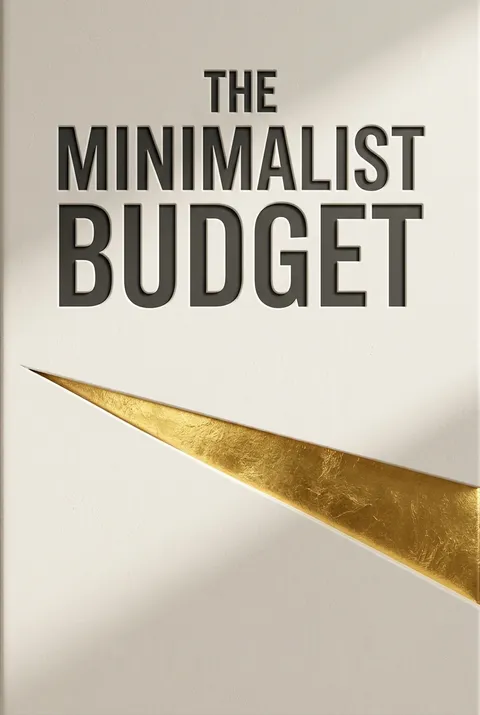
The Minimalist Budget receives mixed reviews, averaging 3.07 out of 5. Readers find the content basic, offering little beyond well-known budgeting advice, though some appreciate its helpful tips on topics like credit card debt. Grammar and writing quality are frequent complaints, with one reviewer noting incorrect pronoun usage. The audiobook version draws particular criticism for poor production quality, including awkward silences, page-turning sounds, and audible throat-clearing. Overall, the book may suit beginners but disappoints those seeking deeper personal finance or investing guidance.
People Also Read

Glossary
Minimalism
Possessions serving chosen valuesIn this book, minimalism is a way of relating to possessions, not a rule about owning a particular number of things. The test is whether belongings and spending support the life a person values. A useful tool can belong in a minimalist life, while excess items that demand money, space, and attention can undermine it.
zero-based budgeting
Assigning all incomeA budgeting method in which income is allocated across planned categories until every dollar has a purpose. Categories can include savings, housing, food, transportation, debt payments, and discretionary spending. The goal is not necessarily to spend all the money, but to decide where it belongs rather than leaving part of the paycheck unplanned.
dream budget
A realistic desired budgetA written picture of how someone would like to use money once finances are stable and spending reflects personal priorities. It includes both necessary expenses and chosen goals, with annual and quarterly costs converted into monthly amounts. The book uses it to make present cutbacks purposeful and to help prioritize future spending.
percentage-based budget
Budgeting by income sharesA budget that assigns a percentage of income to categories rather than fixed dollar amounts. The book presents this as a possible fit for people whose income varies, such as contractors or commission-based workers. Its sample percentages are guidelines from the text, not universal standards, and should be adapted to actual income and local costs.
emergency fund
Savings for unexpected costsMoney set aside for unforeseen expenses, such as a vehicle repair or other urgent cost, so the expense does not immediately disrupt funds for essentials or require borrowing. The book proposes an initial target of $1,000 and then several months of basic expenses. Appropriate targets vary with household circumstances and resources.
APR
Annual borrowing interest rateAPR means annual percentage rate. In the book's discussion of credit cards, it describes the stated annual rate used to determine interest on unpaid balances. Card terms can also include fees and introductory rates that change, so the APR alone does not show the full cost of borrowing. The agreement's current terms matter.
asset
Something that can produce valueThe book uses asset for something that can create value, including investments, property, a business, or a person's labor and income. It contrasts assets with items that mainly require ongoing spending. This is a practical personal-finance definition, not a complete accounting definition; an asset can still carry costs, risks, or debt.
liability
Something that drains moneyIn the book's practical budgeting language, a liability is something that takes money from a person's pocket, such as a costly vehicle or debt obligation. This simplified distinction helps readers question ongoing expenses, but does not replace formal accounting usage. An item can provide important personal value while still costing money to own and maintain.
IRA
Individual retirement savings accountAn IRA, or Individual Retirement Account, is a type of account intended for retirement saving. The book describes traditional, Roth, and rollover IRAs and notes that their tax treatment differs. Contributions, withdrawals, eligibility, and tax rules depend on the particular account and current regulations, so the text's brief overview is not a substitute for up-to-date guidance.
401(k)
Employer-sponsored retirement planA 401(k) is an employer-sponsored retirement savings plan that can direct contributions from a worker's paycheck into investments. The book advises employees to understand their plan's rules and check whether the employer matches contributions. Vesting schedules, fees, investment choices, tax treatment, and withdrawal restrictions vary by plan and current law.
Download PDF
Download EPUB
.epub digital book format is ideal for reading ebooks on phones, tablets, and e-readers.








