

Plot Summary
A Confession in the Heat
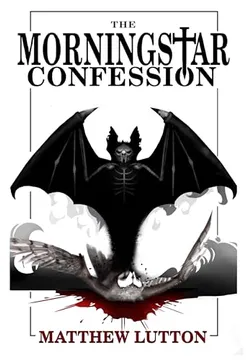
Dan, a priest who has rebuilt a small neighborhood church, expects another ordinary confession. Instead, a stranger questions why Christians need forgiveness if Christ already sacrificed himself, then challenges Dan’s account of human cruelty and divine justice.
As the church turns stiflingly hot, Dan finds the confessional doors locked and experiences a murder as if its victim’s body were his own. The stranger says he is the Devil, has come to confess, and will release Dan after telling his story.
Dan remains skeptical, but terror has made refusal impossible. The stranger’s first revelation is not a scheme for souls: he claims he collects them because they matter to God and, therefore, to people. His confession begins with the claim that he was pushed from Heaven.
The confessional makes Dan both professional and captive: he has authority to hear sins, but no control over the encounter. The stranger exploits that contradiction, turning the ritual’s promise of safe disclosure into an interrogation of the priest’s beliefs. Dan’s sudden vision of murder also shifts the dispute from theological abstraction into embodied evidence. Yet the scene does not settle whether the stranger is trustworthy. Its central pressure is epistemic: Dan must listen to a voice his tradition has taught him to dismiss, while the reader must weigh a story told by a self professed liar.
The Morningstar Refuses
Before humanity exists, Lucifer watches a mouse fight an owl far stronger than itself. The mouse’s resistance moves him, and the bird’s victory leaves him grieving. When God creates Man and grants him dominion over the animals, Lucifer cannot join his brothers in bowing.
He sees the decree as an order that the powerful should rule the vulnerable, and refuses it. Michael leads Heaven’s forces against him. Lucifer’s brilliant mace blinds angels as he advances, but the battle ends when Michael cuts his wings and Lucifer falls into the earth.
For a moment, Michael offers a hand. Lucifer reaches for the brother he still longs to embrace, but Michael lets go. The fallen angel enters the world carrying both the pain of rejection and the conviction that humanity has been unjustly favored.
The mouse gives Lucifer a moral vocabulary before he has a political one. He admires resistance, but the story also shows how empathy can harden into a demand that the world confirm one’s grievance. His refusal to bow is framed not as a simple appetite for power but as protest against a hierarchy he considers unjust. Still, his violent march toward the creation chamber complicates his self-image as defender of the small. The severed wings make the conflict intimate: the war costs him not only status, but the possibility of belonging with Michael.
The Garden’s Speaking Snake
In his cave, Lucifer learns from a talking snake that God has made a second companion for Adam. The news deepens his sense of being replaced. The snake then meets Eve in the garden and reasons that the forbidden fruit must be meant for God, since everything else serves creatures. It persuades her that eating it could make her more like her creator.
Eve takes a bite and gives the fruit to Adam, who eats as well. Meanwhile, a mouse nips at Lucifer’s ruined wing until a bat kills it and spreads wings like his own. Lucifer recognizes a reflection of himself and smiles for the first time since his fall. Later, he returns to Heaven, where God asks him to test Job’s devotion, setting a wager that will expose the cost of faith under pressure.
The garden episode shifts blame away from the familiar image of Lucifer personally disguised as the serpent. The snake acts from its own hunger and reasoning, while Eve makes a choice inside a world whose rules she does not fully understand. Lucifer’s response to the bat offers a parallel kind of recognition: he sees his damaged form mirrored in another creature and briefly finds kinship instead of shame. His return to Heaven then converts private injury into an experiment on someone else. The wager with Job becomes a test not only of Job’s loyalty, but of what divine favor means when it can be withdrawn.
Job Loses Everything
Lucifer accepts God’s permission to test Job, a prosperous man whose gratitude appears effortless. Raiders take his livestock, fire destroys his flocks, and a storm kills his children. Lucifer’s own attack on the family turns the house into a nest of insects that overwhelms Job’s children and collapses the building.
Job’s wife survives and urges him to condemn the cruelty; his friends suspect the family must have earned its suffering. Job refuses to curse God, even as sores cover his body and he crawls among the ruins to reach his children.
Lucifer admits that Job has kept his faith, but argues the trial has still planted fear: Job will wonder whether each new loss is proof that God has turned against him. The test leaves Job faithful, yet no longer secure in what faith can protect.
The episode refuses the comforting arithmetic that good conduct reliably produces safety. Job’s devotion remains intact, but the deaths around him expose how little control he has over the terms of his life. His wife and friends offer competing ways to restore a sense of order: reject God, or blame the victims. Job accepts neither explanation, though his endurance does not erase his grief. Lucifer defines success psychologically rather than doctrinally. Even without making Job curse God, he has altered the man’s expectation of tomorrow, turning blessing into something that can no longer be trusted.
Joshua Learns His Power
As a boy, Joshua slips into an abandoned temple and befriends an old man who teaches him small acts of magic and leaves drawings behind. The man urges him to use his abilities against the Romans, who are taking his people’s food.
When a confrontation between Roman soldiers and Jewish workers erupts, Joshua sees the old man whispering to both sides. The violence spreads, and Joshua’s repeated attempts to stop it fail. At last, his anger bursts outward: Romans and Jews swell, rupture, and die around him.
Joshua tends to the dying Markus, then makes the bodies and armor disappear to hide the massacre. In the temple, he confronts his vanished teacher and finds drawings linking the old man to the violence and to a much larger story. Horrified by what he has done, Joshua rejects the teacher’s lessons and seeks another way.
Joshua’s first public use of power is not a clean rescue. He ends the immediate violence by causing a second, larger catastrophe, then tries to repair the damage by erasing its evidence. His horror matters because he recognizes himself as an agent, not merely a victim of circumstance. The old man’s whispers show how resentment can recruit people into violence, but Joshua’s power makes the consequences unusually visible. This episode establishes the ethical problem that will shape his later choices: having the ability to stop suffering does not guarantee that intervention will prevent it.
Six Children of Glass
Years later, Lucifer finds Joshua fasting in the desert and offers food, freedom from Roman rule, and a chance to rule through force. Joshua refuses the gifts and says he has abandoned the magic Lucifer taught him.
Lucifer argues that power would free people from circumstances that keep them trapped, then warns that God will abandon Joshua when he is most desperate. As a storm rises, six grotesque infant figures emerge from glass, sand, and blood, and attack the exhausted man. Lucifer offers to stop them if Joshua will accept his help.
Joshua instead uses blood from his wound to turn the sand into thick clay, trapping the creatures beneath a hardened crust. He leaves the desert with renewed resolve: human beings need love and care, not another ruler who promises to save them through domination.
Lucifer’s argument has force because he understands the appeal of intervention: when people are suffering, power can look more humane than patience. Joshua’s refusal is not a claim that suffering is harmless. He is hungry, injured, and facing creatures made from a history he cannot undo. His answer is to use his own blood and attention to the immediate danger, rather than accept Lucifer’s offer of control. The scene makes love an active practice, not an assurance that God will prevent pain. It also sharpens the brothers’ conflict: both notice injustice, but they disagree about what help should require.
Dan’s Unfinished Family
Dan first turns toward the priesthood after his mother dies by suicide. In the church, a priest offers hope that baptism could secure her place in Heaven, and Dan commits his life to the faith in exchange for that hope.
At seminary, Father Mason teaches him that priests should guide people toward change rather than act as judges. Dan later meets Max, a stripper who visits a pancake gathering at the church; their warmth grows into a secret relationship.
When Max tells him she is pregnant, Dan recoils from the life they might share and returns to the church instead of standing beside her. After Max leaves the club, her friend Rhonda tells Dan she had an abortion. Dan carries the loss as proof that he failed both Max and the child he might have raised.
Dan’s vocation begins in grief, but its foundation is an exchange he cannot verify: he gives his future to the church in hope of saving his mother. Father Mason offers a more sustainable ethic, insisting that forgiveness must be paired with guidance, yet Dan struggles to apply that lesson when his own desire conflicts with his religious identity. His retreat from Max is not simple rejection of faith or love. It is an attempt to preserve a promise by sacrificing a possible family, and the resulting guilt becomes a private wound the stranger can later exploit.
Lucifer Reaches the Cross
When Joshua is condemned, Lucifer discovers that a follower named Judas has identified him to the authorities. Lucifer confronts Judas and forces him to see the harm his betrayal will unleash, but does not undo it.
At the execution, he watches soldiers torture Joshua and uses his power to turn violence back upon people in the crowd. Simon is forced to help carry the cross, while Mary Magdalene tries to make sense of Joshua’s suffering through faith. Lucifer reaches the foot of the cross, furious that Joshua will not let him intervene.
Joshua finally looks at him and asks that the people responsible be forgiven. Lucifer stops the attack he has set in motion, but he cannot remain with the one person whose compassion might have reached him. He turns away, grieving and refusing the connection Joshua has offered.
The cross is where Lucifer’s accusation against humanity meets Joshua’s refusal to answer cruelty with equivalent punishment. Lucifer can alter the crowd’s behavior, but he cannot make Joshua choose rescue or revenge. Joshua’s request for forgiveness therefore unsettles the categories Lucifer relies on: the people who hurt him are still treated as capable of mercy. Lucifer’s retreat is not presented as a calm resolution. He stops his violence, yet leaves rather than accept the closeness Joshua offers. The scene makes compassion a demand placed on the wounded, and shows how easily that demand can feel like another form of abandonment.
Dan Refuses Absolution
Back in the confessional, Lucifer turns Dan’s own history against him, describing how his retreat cost him a future with Max and their child. He reveals that Rhonda lied about the abortion and that the child is alive, then offers Dan a chance to see them if he will forgive Lucifer.
Dan believes the revelation but refuses to absolve a being who is not sorry. Lucifer tears through the church, becomes a monstrous figure, and breaks Dan’s body while demanding that he accept responsibility for the fall.
Dan answers that people are born flawed but can choose to improve, while Lucifer chose to deepen his hatred. Lucifer releases him and flies through the roof. Paramedics find Dan alive, but sedate him before he can search for his family. As Dan fades, Lucifer leaves a tiny mouse skull on his chest.
Dan’s refusal is the story’s decisive moral act because he finally distinguishes forgiveness from automatic absolution. His faith has taught him to hear the contrite, but Lucifer wants the ritual without remorse or accountability. Dan cannot verify that the child is safe or that he will ever reach Max, yet he refuses to trade another person’s future for his own relief. His argument about choice does not deny human cruelty; it insists that imperfection leaves room for change. Lucifer’s departure interrupts the violence without resolving their conflict, while the mouse skull keeps the original source of his grief present at the moment Dan survives.
Analysis
The novel builds its theology through competing testimonies rather than a settled account of divine justice. Lucifer presents creation, Job’s suffering, and Joshua’s death as evidence that God favors humanity while abandoning those who question the order. Dan initially answers with familiar doctrine, but each story forces him to confront the distance between a principle and its consequences. The frame matters because neither speaker can claim an uncontested moral position: Lucifer’s critique is sharpened by his own cruelty, while Dan’s commitment to mercy is compromised by the choices he made with Max.
The book’s most persistent question concerns the difference between being flawed and choosing what to do with that flaw. Lucifer experiences rejection as an injustice that explains his anger, then allows that anger to become his identity. Joshua and Dan are also capable of harm, but each is measured by whether he can acknowledge it and choose differently. This does not make their choices equivalent or erase the people they hurt. Instead, the story treats accountability as the difficult work that makes change possible.
Its treatment of forgiveness is deliberately uncomfortable. Dan’s vocation teaches him to hear people without becoming their judge, yet the Devil asks for absolution as though the ritual itself should settle the matter. Dan’s refusal is not a rejection of mercy in general. It is a refusal to let mercy become a substitute for remorse. The ending leaves the larger theological conflict open, but gives Dan a clear decision: he will not purchase personal comfort by pretending that pain has been repaired. In this account, faith is less certainty that God will intervene than a daily choice to act with care when certainty is unavailable.
Characters
Dan
The doubting priestDan is a community priest whose instinct to help others is tangled with grief, guilt, and persistent questions about God. His mother’s death drives him toward the church, while his training with Father Mason teaches him to treat forgiveness as a beginning rather than a verdict. He is not serenely certain: he doubts the doctrines he preaches and remembers choices he wishes he could change. His work asks him to listen without judging, yet he struggles when his own desire and vocation collide. Dan’s defining tension is between the comfort of inherited promises and the responsibility to make choices without proof that they will be rewarded.
Lucifer
The fallen challengerLucifer is an angel whose attention to animals and the vulnerable gives him an unusual sensitivity to power and hierarchy. He reads humanity’s favored place in creation as an injustice, and his own rejection makes that grievance intensely personal. He is articulate, theatrical, and capable of tenderness, but pain repeatedly turns his desire to be understood into a need to prosecute others. His long conversations with Dan reveal a mind that can question its own freedom while remaining attached to its resentment. Lucifer wants recognition from God and from the people he believes have displaced him, though accepting recognition would require more than winning an argument.
Joshua
The compassionate teacherJoshua, also known as Jesus, is a curious child who grows into a teacher attentive to the suffering of others. He questions inherited answers, notices the fear beneath political obedience, and possesses abilities that make force an available solution. His early experiences show him how quickly anger can become destructive, shaping his effort to teach compassion without promising easy freedom. He believes people can surprise one another with courage and care, even when they fail. His relationship with Lucifer is especially revealing because both understand rejection, yet Joshua refuses to treat power or grievance as proof that another person should submit.
Max
The guarded belovedMax is a stripper who values independence and resents being treated as someone to hide or rescue. Her humor lets her test Dan’s sincerity, but her direct questions expose how much he wants the comfort of intimacy without its public consequences. She is affectionate without surrendering her judgment, and she has her own history of being misread by people who assume they know her motives. Max offers Dan a relationship grounded in being seen as a person, not a role. Her presence makes his conflict concrete: the life he imagines with her requires choices he cannot postpone indefinitely.
Father Mason
Dan’s demanding mentorFather Mason teaches Dan at seminary and becomes the priest he can approach when doctrine no longer feels sufficient. He insists that a priest is neither judge nor executioner, and that guiding someone requires patience after forgiveness. His counsel is practical rather than sentimental, shaped by the burden of hearing painful confessions. Mason challenges Dan to take responsibility for his vocation without pretending he can control another person’s soul.
Eve
The garden’s questionerEve is curious about the garden’s creatures and enjoys its abundance, but she has little experience questioning the rules governing it. The snake’s reasoning catches her attention because it connects the forbidden fruit to her desire to understand and become more like God. Her choice grows from curiosity and persuasion, not from a settled wish to rebel.
Adam
Eve’s companionAdam is Eve’s mate and partner in tending the garden. He accepts the fruit she offers, sharing in the choice that changes their place in the garden.
Michael
Lucifer’s loyal brotherMichael is one of Lucifer’s angelic brothers and a leader among those who remain loyal to God. He approaches Lucifer with sorrow as well as duty, hoping words might still avert a final confrontation. His bond with Lucifer makes the conflict feel like a family rupture rather than a distant cosmic dispute.
Uriel
Lucifer’s watchful brotherUriel is an angel and one of Lucifer’s brothers. He watches the creation of humanity and tries to draw Lucifer into the gathering, marking the ordinary closeness that exists before their disagreement divides Heaven.
Raphael
The observant brotherRaphael is another of Lucifer’s brothers. His curious observations about humanity’s physical form help establish the angels’ initial wonder at the new creation.
The talking snake
The garden’s persuasive beastThe snake is a speaking animal with its own appetite and practical understanding of the garden. It questions why a tree should be forbidden when everything else seems intended to serve life. Its reasoning persuades Eve, though the snake is not Lucifer in disguise.
Job
The tested landownerJob is a prosperous, devout man who greets his good fortune with gratitude. When catastrophe destroys his household, he continues to address his losses through faith rather than blame. His strength is real, but so is his grief, and his story asks what loyalty means when it cannot protect the people one loves.
Job’s wife
The grieving truth tellerJob’s wife survives the disaster that kills their children and challenges her husband’s continued faith. Her anger gives voice to the injustice he tries to bear quietly. She is not simply faithless; she insists that grief should not be disguised as gratitude.
Joseph
Joshua’s cautious fatherJoseph is Joshua’s earthly father, a working man under Roman rule. He worries about his son’s extraordinary abilities and the danger they may bring, while also struggling to protect his household from the occupation’s demands.
Mary
Joshua’s protective motherMary is Joshua’s mother. She tries to protect him from the consequences of his abilities and understands the fear that his power creates for those closest to him. Her care is practical, shaped by the danger of raising a remarkable child under occupation.
Markus
The resisting laborerMarkus is a Jewish laborer forced to work under Roman control. Hunger, humiliation, and the threat of violence sharpen his anger, while his resistance gives others a reason to consider fighting back. He becomes a human measure of the cost when political rage turns physical.
Thescolus
The troubled Roman soldierThescolus is a Roman soldier whose humiliation and fear feed his hostility toward the Jews he is assigned to control. His anger makes him vulnerable to the escalating violence around him.
Judas
Joshua’s conflicted followerJudas is one of Joshua’s followers, a man whose private choices place him in conflict with the movement he has joined. His actions matter because the story treats betrayal not as an abstract label, but as a decision with consequences for other people.
Mary Magdalene
A steadfast witnessMary Magdalene has known a life marked by demons before joining Joshua’s circle. She trusts the love she has experienced from him, even when she cannot explain why events unfold as they do. Her faith is grounded in personal change rather than easy certainty.
Simon
The unwilling helperSimon is a bystander caught in the violence surrounding Joshua’s execution. The soldiers force him to help carry the cross, bringing him into immediate contact with the suffering he had been watching from the crowd.
Rhonda
Max’s protective friendRhonda is Max’s friend and fellow worker at the club. She is blunt, protective, and suspicious of Dan’s ability to hurt Max while continuing to claim good intentions. Her loyalty shapes how much access Dan has to Max’s life.
Plot Devices
The confessional frame
A debate under duressThe church confessional creates the book’s central frame: Dan has come to hear another person’s confession, but the visitor controls the room and demands that Dan listen. This reverses the usual power of the ritual. As the stranger recounts events from creation through Joshua’s life, Dan’s responses and memories make the ancient stories collide with present moral choices. The frame also gives the story a focused question: can a priest offer forgiveness to someone who may not regret what he has done?
Reimagined scripture
Familiar stories recastThe narrative revisits the garden, Job’s trials, Joshua’s life, and the crucifixion through Lucifer’s account. These episodes do not merely retell familiar events; they give Lucifer private motives, relationships, and doubts, while keeping Dan’s skepticism in play. The gap between inherited religious explanations and the stranger’s version drives the theological conflict. Because the account comes from a self described deceiver, its claims remain contested rather than becoming a simple replacement for scripture.
Animals as mirrors
Small lives reflect powerAnimals shape Lucifer’s understanding of hierarchy and loss. A mouse’s fight with an owl first moves him, while a bat’s damaged wings later offer a reflection of his own. The garden snake also acts from its own hunger and reasoning, not as a disguise for Lucifer. These encounters give abstract disputes about dominion a physical scale: who is allowed to eat, rule, resist, or survive. The small mouse skull that passes through the story keeps Lucifer’s private history present in the human conflict.
Confession and absolution
Forgiveness tested by remorseDan’s priestly duty to hear confessions becomes the standard against which the Devil tests him. Dan believes that forgiveness should be available to those who seek it, but his history shows that absolution alone cannot ensure someone will change. Lucifer demands the same ritual treatment while resisting responsibility for his actions. This device turns a religious practice into a concrete moral dilemma: whether mercy can be offered without remorse, and whether refusing absolution is judgment or an honest boundary.
Download PDF
Download EPUB
.epub digital book format is ideal for reading ebooks on phones, tablets, and e-readers.








