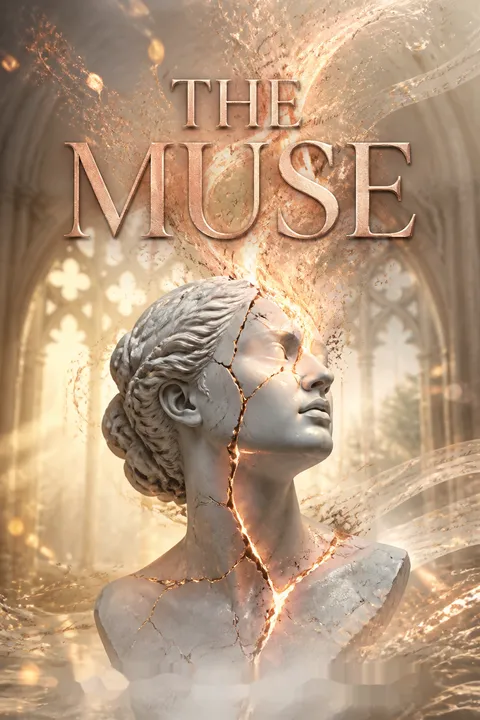


Plot Summary
A Late First Impression
Iris Eliot, a graduate student and new teaching assistant, rushes into her first class late and meets James Beckett, the celebrated poet directing the Creative Writing program. Beckett humiliates a student who cannot claim the identity of a writer, then turns Iris's outraged objection into an example for the class.
His severity unsettles her, but his approval of her response gives her first lesson a strange charge. After class, he questions her age, asks her to use his first name, and notes that she will also take his advanced fiction course. Iris needs the stipend and her degree, so she cannot simply retreat from the difficult, attractive professor who will supervise her work throughout the year.
The opening makes authority both the source of attraction and its first ethical obstacle. Beckett tests whether students can claim a writer's identity, while Iris's instinctive defense of a humiliated classmate reveals a more relational form of courage. Her position is precarious: she is simultaneously his employee, student, and emerging author. The tension is not merely whether they desire each other, but whether Iris can distinguish genuine recognition from approval controlled by someone who holds power over her academic future.
The Pubside Warning
That evening, Iris recounts her disastrous first day at the White Harp, where her roommate Claire and Claire's boyfriend, Monty, help her laugh at herself. Beckett appears, recognizes Monty, and leaves after an awkward exchange with Iris. Outside, she slips on wet pavement, and Beckett catches her before she falls.
Their teasing turns serious when he acknowledges that an affair with a student at his former university nearly damaged the woman's academic career. He warns Iris away from their mutual attraction, but his confession makes the boundary more charged, not less. Iris returns upstairs knowing that the man she must work for has recognized the same chemistry she is trying to dismiss.
Beckett's confession complicates the familiar romance of forbidden attraction. He understands that a professor's desire can have consequences beyond private regret, yet frames Iris as someone who might tempt him, shifting responsibility toward the person with less institutional power. Iris sees both his candor and his self-excusing swagger. The scene establishes a central contradiction: he can identify the danger accurately while continuing to behave in ways that make it harder for her to protect herself.
A Manuscript Seen
At their thesis meeting, Beckett takes Iris to the student union for food and asks her to read from the novel she has proposed. She hesitates, so he reads the opening himself, spotting the story's emotional force in a passage about a brother. His question about whether that brother is alive catches Iris off guard.
She refuses to explain, but Beckett does not press; instead, he asks for the completed manuscript and promises a detailed review. His attention feels both professionally serious and unnervingly intimate. That night, Iris sends him the file. The request creates a new closeness: Beckett is no longer only the man who grades her work, but the first reader trusted with the grief embedded in it.
The manuscript gives their attraction a legitimate channel: attention to craft becomes a form of attention to the person. Beckett notices autobiographical pressure without claiming ownership of Iris's pain, and his willingness to stop when she refuses makes his sensitivity credible. Yet the same closeness can blur roles. By reading her writing as an intimate map, he gains access to material Iris has not chosen to share directly, a distinction that becomes increasingly consequential as their relationship develops.
A Screenful of Want
While waiting for Beckett's comments, Iris opens a late-night chat with him that turns into an explicit fantasy. By the next evening, she is back in his advanced fiction class, where he sets an exercise about orgasm and refuses to pair her with another student, making him her sole reader. Iris confronts him afterward, ashamed that their private exchange is disrupting her work and furious at his teasing.
Beckett admits that his fixation began as soon as he saw her. Iris responds with a proposition meant to reduce desire to a one-time act, then recoils and tells him to search her name and learn about the accident that killed her brother. She leaves him with the truth she cannot yet explain.
The classroom exercise exposes how private desire can colonize a supposedly neutral professional space. Beckett's control over Iris's feedback and partners gives his provocations institutional force, even when both appear to participate willingly. Iris's attempt to reduce herself to a casual encounter is a defense against being known, not simply a bid for sex. Her reference to the accident marks the first time she names the history beneath her guardedness, though she still treats disclosure as a weapon that might make him withdraw.
The Terms of Friday
At the pub, Iris sees Beckett with Maggie and mistakes their exchange for another casual conquest. Later, he assigns Iris a stack of journals and provokes her until she accuses him of punishing her for refusing him. Instead, he praises her writing and admits he would leave the university for a chance to make a real relationship with her, though he believes she deserves someone better.
Iris tells him her scars make her fear being desired only until a man sees her body. Beckett accepts them without pity, and they agree to spend Friday together, with no other partners. On Thursday, he walks her home through heavy rain; when she leans against him, their first kiss makes their combative attraction feel unexpectedly tender.
This turn shifts the conflict from whether Iris wants Beckett to whether she can risk being seen by him. Her scars are not presented as an obstacle he must heroically cure; they are part of the evidence she uses to test whether desire will survive reality. His promise of exclusivity offers reassurance, but it does not resolve the power imbalance or his history. The rain kiss matters because it briefly suspends their verbal defenses and lets physical tenderness precede certainty.
A Wife at Midnight
At a Friday party, Iris grows jealous watching Claire and Griffen become a couple and calls Beckett to collect her. He kisses her beside the car, then their teasing turns physical during the drive to his house. Just as he carries her inside, a woman appears on the porch and identifies herself as his wife.
Iris flees to her apartment in shock, where Claire comforts her. The next Monday, Beckett explains that he and Julia have long been separated and are arguing over custody of their dog, Rufus.
Iris tries to end their entanglement, but they have sex in his office. When she treats the encounter as meaningless and suggests he wants a hidden affair, Beckett leaves wounded. Their first consummation deepens the bond while confirming Iris's fear that intimacy will cost her control.
The wife reveal collapses the distinction between erotic fantasy and ethical reality. Iris has been willing to accept a physical arrangement, but not knowingly to become someone's secret. Beckett's explanation may be true, yet it arrives only after she has already been placed in a humiliating position. Their office encounter then reproduces the danger of unequal power in literal form. Iris's coldness afterward is self-protection, but it also injures the person she wants, making mistrust a mutual force rather than a flaw located only in her.
A Father's Last Call
After their office encounter, Iris remembers the night of the accident: her brother Derrick had rescued her from a drugged assault, then died driving her to the hospital. Soon afterward, her mother calls to report that Iris's estranged father, poet Richard Eliot, has died.
Beckett comes to Iris's building to offer comfort, but she refuses special treatment and will not begin a secret relationship while he is still her professor and married. She throws herself into teaching, writing, and job applications, avoiding him even when they must work together.
At night, she writes letters she never sends, telling Beckett about Derrick, her scars, her ambitions, and the small things that make her herself. Silence becomes her chosen boundary, though the letters reveal how much she still wants him.
Iris's boundary is an act of agency, not evidence that she feels nothing. Her refusal of secrecy protects her education and her need for a relationship that can exist in public, while the unsent letters give her a private space to experience attachment without surrendering control. The father's death intensifies her existing grief and exposes how thoroughly she has organized her life around survival. Writing becomes both a craft and a substitute for direct intimacy, letting her speak while postponing the risk of being answered.
Halloween's Borrowed Warmth
Claire insists Iris attend a faculty Halloween party, where Iris arrives dressed as a fairy and finds her old friend Brad beside Beckett. Seeing Beckett watch Brad embrace her, Iris follows him outside and explains that Brad is only a friend.
Although she is drunk, Beckett refuses to kiss her and instead lends her his coat and takes her home. Iris wakes in his guest room, embarrassed by the fragments she remembers, but he makes her breakfast and helps her feel safe rather than ashamed.
When she asks for a day together without promises about the future, Beckett agrees. He shows her how to play chess, accepts her scars, and they begin seeing each other on Sundays. For Iris, care becomes something she can receive without immediately turning it into a debt.
The episode reverses the pattern established by the office encounter. Beckett's restraint while Iris is intoxicated, followed by practical care the next morning, gives her evidence that closeness need not be taken from her. Her request to limit the future is still a defense, but it also lets her consent to the present on her own terms. Chess, breakfast, and the shared day make intimacy ordinary, which is precisely what frightens Iris: ordinary affection asks her to imagine a life rather than survive a night.
Notes Under the Laptop
When Iris returns to Beckett's house for another weekend, she wanders into his study while he walks Rufus. Beneath his laptop she finds notes about herself, her scars, and the assault she cannot remember. Beckett admits he is writing a biography of Richard, and that Richard had supplied information about Iris and her accident.
To Iris, the notes make their romance look like research disguised as love. She accuses Beckett of using her pain for a book and threatens to expose their relationship if he publishes her story. He insists his feelings are genuine, but she leaves with Allison, unable to trust him. The intimacy that had made Iris feel visible now seems to have been built on knowledge she never agreed to share.
The betrayal turns a question of consent inside out. Beckett may not have intended to exploit Iris, but he has kept the existence of his research from the person whose private history it concerns. His affection cannot erase that asymmetry. Iris's threat is an attempt to regain control over a story already being assembled around her, while her flight reflects a body trained to treat sudden discovery as danger. The scene also exposes the cost of using literary insight as a substitute for honest disclosure.
The Memory Returns
At a public memorial for Richard, Beckett speaks warmly about the poet and praises Iris's promise, but she leaves the church rather than hear more. She drives to the Monterey cove where her father's ashes will be scattered and confronts Beckett when he finds her there.
Their argument over his biography and the boy she once dated cracks Iris's certainty about the accident. Memories surface: she had been drugged and raped before Derrick arrived. Her mother confirms that doctors found evidence of assault while treating Iris's injuries, though the drugs and trauma erased her memory.
Iris had believed for years that she lost her virginity in a later relationship. The revelation reframes her fear, shame, and short-lived romances, but does not make the truth easier to bear.
The recovered memory is not a neat solution to Iris's distress. It replaces an incomprehensible emotional burden with a name, while exposing how institutions and family members can preserve facts that the survivor cannot access. The book refuses the idea that remembering is automatically liberating: Iris experiences the truth as bodily shock, anger, and grief. Beckett's role is complicated because his notes help trigger the revelation, but he is not entitled to interpret it for her. Knowledge creates responsibility, not ownership.
A Story She Owns
After the funeral, Iris questions Beckett about her parents and learns that Richard believed her mother had been unfaithful. Beckett's biography complicates the story of an absent father, showing that Richard had tried to reconnect with Iris, though she had returned his letters unopened.
Iris reads the finished manuscript, which honors Richard without telling her own story, but she cannot trust Beckett enough to stay with him. She lies that she is seeing someone and ends their relationship.
Over the next three years she writes A Poet's Daughter, a memoir about her family and assault, while Beckett promotes her work from a distance. The memoir becomes a bestseller, but success does not settle her feelings. She returns to Seattle still carrying both gratitude and hurt.
Iris's decision to end the relationship is both a refusal of further secrecy and a costly attempt to protect herself from dependence. The biography alters her understanding of Richard without absolving him; his gestures of repair arrived after years of absence and were filtered through her grief. By writing her own memoir, Iris claims the authority Beckett's research threatened to take from her. Yet professional success cannot substitute for relational resolution. The three-year gap shows that self-authorship can restore agency without automatically healing attachment.
A Second First Meeting
Back in Seattle after a book tour, Iris attends Beckett's event at Bluebird Books, where he introduces her to the audience as a celebrated writer. His reading includes a passage about a scarred woman that Iris recognizes as drawn from their time together. Afterward, she sees him leave with Jessica, the woman he is dating, and takes his signed book home.
Later, when they meet again in the bookstore, Beckett offers a physical relationship within his open arrangement with Jessica. Iris rejects the proposal, unwilling to accept desire without exclusivity. The encounter makes clear that professional success has not made her immune to him, but it has given her a firmer sense of what she will and will not agree to.
The public setting reverses their original roles: Iris is now a recognized author, not simply Beckett's student, yet emotional power does not follow professional status in a straight line. His reading turns private memory into public art, a gesture that can feel both honoring and exposing. Jessica's presence intensifies Iris's sense of replacement, while Beckett's open arrangement offers access without the commitment Iris wants. Her refusal marks growth: she can desire him and still reject terms that would diminish her.
The Selkie Manuscript
On New Year's Eve, Iris slips outside the White Harp as Claire and Griffen celebrate inside. Beckett finds her at midnight, and their urgent kiss leads to sex at Iris's house. The encounter ends in anger: Iris admits she still loves him, while Beckett insists the man she loved is gone and leaves.
Three months later, Iris completes a dark novel inspired by a Scottish selkie legend and emails it to him, no longer needing his approval. Beckett comes to her home anyway. They share tea, discuss the manuscript, and apologize for the cruelty of their earlier fight, but neither asks the other to resume the relationship. Their renewed ease is meaningful precisely because it is not yet a promise.
The novel gives Iris a way to transform inherited pain without writing a direct confession. Sending it to Beckett tests whether she can share work without making his response the measure of her worth. Their conversation restores intellectual companionship, the part of the bond that survived erotic conflict, but its restraint also preserves uncertainty. The scene rejects the easy equation of sex with reconciliation: desire can reunite bodies quickly, while trust requires slower and more deliberate evidence.
Letters in the Wrong Hands
Claire confesses that she mailed Iris's unsent letters to Beckett, who reads them in his office and recognizes how much Iris once trusted him. Soon afterward, a New Yorker article publicly identifies the lawyer Iris had kept unnamed in her memoir as the boy who assaulted her.
Iris initially fears the exposure, then learns her mother had urged Beckett to use words to seek accountability. Iris calls him, and they begin talking again.
During their reunion, Iris learns that her father's accusation against her mother was mistaken: Alexandria had traveled to obtain an abortion, not to pursue an affair, and had hidden it because Richard opposed abortion. The truth lets Iris see her parents as flawed people rather than inherited warnings about love. She goes back to Beckett and chooses him openly.
Two disclosures, one private and one public, force Iris to reconsider who controls her story. Claire's well-meant intervention violates Iris's privacy, yet the letters give Beckett evidence of a love Iris has repeatedly disguised. The article risks another loss of control, but her mother's request reframes exposure as an attempt at justice rather than exploitation. Learning the truth about her parents loosens the false pattern Iris has used to predict her own future. She can now choose Beckett without mistaking inherited fear for certainty.
The Poet's Answer
Iris arrives at Beckett's home carrying dinner, then misreads Jessica's presence as proof that he has returned to their open arrangement. She leaves, realizes she is tired of running, and comes back to ask for the truth. Jessica is the architect completing work on the house, not a lover. Iris admits she has always loved Beckett.
He delays answering until they have eaten, then takes her to his study and shows her a boxed poetry collection devoted to her, begun years earlier. The poems make visible what his evasions and betrayals had obscured: his attachment endured, but it could not replace the honesty she required. Iris accepts his declaration and kisses him, choosing a future based on what they have finally said plainly.
The final reconciliation depends less on a grand romantic gesture than on Iris returning to verify what she fears. Her first impulse is flight, but she interrupts it with a direct demand for truth. Beckett's poems offer evidence of duration, yet the book is not sufficient by itself; it matters because he presents it alongside an explicit commitment to Iris rather than as a substitute for one. The resolution answers the novel's central question: love becomes credible when private feeling is matched by accountable choice.
Epilogue
Years later, James is teaching in Edinburgh while he and Iris prepare to move to California for his new position at Stanford. Iris, now his wife and an established writer, is pregnant with twins. James teases her about reading his journals, then abandons the joke when she admits she feels large and unattractive.
He reassures her with the image of the butterfly she has struggled to believe in, praises the life she is carrying, and imagines distinct futures for each child. Their marriage has not erased their sharp banter or Iris's vulnerability; it has given James the chance to meet both with steadiness.
The epilogue shifts the romance from pursuit to daily care. James's old habit of turning Iris into a muse is softened by his attention to her changing body and immediate insecurity. Iris is still capable of self-doubt, but she no longer has to convert it into withdrawal or a test of whether she will be abandoned. The twins also echo the book's recurring question about art and family: James once feared that devotion to one would crowd out the other. Here, he speaks of both children as separate people, while his marriage makes room for love, work, and ordinary dependence at once.
Analysis
The novel makes romantic desire inseparable from questions of power, consent, and narrative ownership. Iris and James meet in a university where he evaluates her work and controls parts of her academic life. Their chemistry is genuine, but the story does not treat sincerity as an ethical exemption. James's past affair, his sexual provocations, and his concealed research into Iris all show how a person can feel deeply and still behave irresponsibly. Iris's resistance is therefore not a simple obstacle to romance. It is an intelligent response to a situation in which professional risk, bodily vulnerability, and emotional need overlap.
Writing offers both characters a way to see and a way to hide. James reads Iris's fiction with unusual care, yet assumes that insight can stand in for disclosure. Iris writes unsent letters and later a memoir, first using language to avoid direct vulnerability, then to claim authority over her own account. The difference between the biography and memoir is crucial: James's book can help Iris understand Richard, but only Iris can decide how her assault and family history are told.
The recovered memory plot is handled as a rupture rather than a revelation that neatly restores the past. Iris's new knowledge changes her understanding of shame, intimacy, and the accident, but does not dictate how she must feel or what she must do next. Likewise, the eventual truth about Alexandria's past dismantles the false family story Iris had absorbed, without turning her parents into either villains or saints. The book's resolution depends on Iris making choices with fuller knowledge, not on love erasing damage. Its most persuasive claim is that intimacy becomes possible when desire is joined to honesty, boundaries, and the willingness to let another person own her story.
Review Summary
The Muse by L.M. Halloran receives mixed reviews, averaging 4/5 stars. Most readers praise the beautifully written student-teacher romance between 27-year-old Iris and 33-year-old Professor James Beckett, noting intense chemistry, emotional depth, and unexpected plot twists involving Iris's tragic past. Fans appreciate the angst, forbidden romance elements, and poetic writing. However, critics cite frustrating miscommunication, insta-love, choppy writing, and exhausting push-pull dynamics. Some found the hero sleazy and characters immature. The ending divides readers, with some wanting more closure.
People Also Read


Characters
Iris Eliot
The guarded young writerIris is a talented graduate writer who teaches, grades, and tries to finish a novel while carrying grief and visible injuries from an old accident. Small in stature and often underestimated, she has learned to use wit, competence, and sexual detachment to control how close people can get. Her devotion to writing is partly ambition and partly a way to give shape to experience that feels otherwise unmanageable. She longs for recognition but distrusts the vulnerability it demands. Her central struggle is not learning to desire someone, but learning to protect her boundaries without treating every need as a danger.
James Beckett
The brilliant, flawed mentorJames is an acclaimed poet, novelist, and director of a university writing program. His sharp teaching style can push students toward confidence, but his charm and appetite for provocation also conceal a history of poor judgment. He reads prose with unusual sensitivity and is drawn to Iris's imagination, humor, and reserve. James wants intimacy but initially approaches it through teasing, seduction, and assumptions that his feelings will be understood without being stated. His artistic insight does not make him ethically infallible. His challenge is to make honesty and accountability as important as the words with which he moves people.
Claire
Iris's candid anchorIris's roommate and closest friend, Claire is a philosophy graduate student whose directness cuts through Iris's evasions. She offers humor, practical help, and a steady belief that Iris deserves more than the casual encounters she uses as armor. Claire's own romantic choices develop alongside Iris's, especially through her connection with Griffen. Her loyalty can become overreach, as she sometimes acts on what she thinks Iris needs rather than asking first. She remains an essential witness to Iris's changing capacity for trust.
Griffen Banks
The steady cowboy scholarGriffen is a fellow graduate student, a strong writer, and a warm presence in Iris and Claire's circle. His easy confidence and practical kindness contrast with Beckett's volatility. He becomes Claire's partner after Iris encourages their connection, and he offers Iris a dependable friendship without demanding that she reveal more than she wants. Griffen's support helps make the university community feel like a life beyond the central romance.
Derrick Eliot
Iris's protective brotherDerrick is Iris's older brother and the person whose affection remains a source of strength in her adult life. He helped raise her and gave her a model of fierce, practical care. Iris remembers him through habits, family stories, and the sweatshirt she wears when she needs courage. Her promise to him shapes her educational ambitions, while the memory of his protection complicates her ability to separate love from guilt.
Richard Eliot
The celebrated poet fatherRichard is a renowned poet and teacher whose work gives him a public stature that contrasts with his private failings as a husband and father. His artistic ambition can consume his attention, leaving his family unsure which version of him will return home. He loves poetry and his family, but struggles to reconcile those commitments. Iris's understanding of him is shaped by absence, memory, and the writing he leaves behind, making him both a personal wound and a subject of literary inquiry.
Alexandria Eliot
Iris's thoughtful motherAlexandria is a loving mother who rebuilds her life while raising Iris and Derrick and teaching dance. She is private, resilient, and accustomed to carrying difficult choices without explaining them. Her history with Richard is more complicated than Iris first understands, and her later marriage to Phillip offers a quieter kind of companionship. Alexandria's care for Iris is genuine, though grief and silence sometimes leave them unable to meet each other fully.
Will Cabot
Iris's first boyfriendWill is a boy from Iris's adolescence whose relationship with her becomes entangled with the night that changes her family. His actions and the memories surrounding them remain difficult for Iris to understand. He represents the way an early relationship can shape a person's sense of safety long after its immediate events have passed.
Julia
Beckett's estranged wifeJulia is James's wife, whose unresolved separation complicates his attempt to begin a relationship with Iris. Her appearance makes clear that James's private life is not as simple as his flirtation suggests. She is not merely a romantic obstacle; her marriage to James carries its own disputes and history.
Jessica Buchanan
The independent architectJessica is an architect and, for a time, James's partner in an open relationship. Confident and self-possessed, she makes her own choices rather than serving only as a rival to Iris. Her presence forces Iris to confront whether she can accept a casual arrangement and clarifies the difference between attraction and the kind of commitment she wants.
Rufus
Beckett's devoted dogRufus is James's large German Shepherd, affectionate, energetic, and not always aware of his size. His enthusiasm brings physical comedy into tense scenes and offers Iris a form of uncomplicated welcome. Rufus also connects the characters through shared domestic memories and ordinary acts of care.
Allison
Iris's supportive stepsisterAllison is Iris's stepsister and a café manager whose warmth helps Iris remain connected to the family she has been hesitant to claim. She answers Iris's urgent call when Iris needs help and offers a welcoming relationship without forcing closeness. Their growing bond supports the novel's broader picture of family as something that can be chosen and built over time.
Phillip
Alexandria's gentle husbandPhillip is Alexandria's husband and the father of Iris's stepsisters. He represents steadier companionship than the intense, consuming love Iris associates with her parents' generation. His presence helps create a welcoming family home, even as Iris takes time to believe she belongs there.
Plot Devices
Derrick's sweatshirt
A wearable source of courageIris wears her older brother's sweatshirt when she needs the comfort of his imagined support. It first appears as a private talisman, linking her present-day academic struggle to the person who helped raise her. Its meaning grows beyond nostalgia: the sweatshirt carries both Iris's promise to continue her education and the guilt she has never resolved. The garment makes grief concrete without requiring Iris to discuss it, and shows how a physical object can preserve a relationship while also keeping its loss close.
Scars and recovered memory
The body keeps unfinished historyIris's injuries, pain, and avoidance of mirrors connect a present physical reality to events she cannot fully remember. Her scars shape her fear of rejection and her belief that desire will disappear once someone sees her clearly. The eventual return of memories surrounding the accident changes how she understands her shame and relationships. The device treats the body not as a puzzle that another character can solve, but as the site where incomplete knowledge and emotional consequences persist.
Richard's biography
A private life becomes public textBeckett's biography of Richard Eliot links Iris's romance to the question of who has the right to tell a family's history. Richard's letters and recollections give Beckett material that Iris herself has withheld, creating an imbalance between the couple. Iris experiences his research as a betrayal because she does not know it is happening. The finished biography complicates her view of her father, while the decision to leave her own story out of it creates space for Iris to write her memoir herself.
Unsent letters
Love spoken without an audienceIris writes letters to Beckett during the period when she avoids him, using the pages to record memories, preferences, ambitions, and feelings she cannot say aloud. The letters let her maintain a connection while preserving the illusion that she is not risking anything. Claire's later decision to send them violates Iris's privacy but gives Beckett access to the affection Iris has repeatedly denied. The device turns private writing into both a form of self-understanding and a test of consent.
The selkie story
A legend reshapes heartbreakThe Scottish selkie legend gives Iris a framework for writing a bleak, transformed version of emotional loss. Its folklore atmosphere connects her creative work to Beckett's Scottish background and the couple's shared love of literary interpretation. Sending the finished manuscript to him allows Iris to share a work without asking him to validate her worth. The story becomes a bridge back to conversation, but not an instant cure for their mistrust.
Download PDF
Download EPUB
.epub digital book format is ideal for reading ebooks on phones, tablets, and e-readers.








