

Plot Summary
The Attic Pact
Hannah Morgan, a careful, capable teenager from a struggling New Jersey lakeside town, and Zoe, her daring best friend, have promised since childhood never to let each other down. With few classes or programs left at their public school, they secretly use an attic at the wealthy Sussex Country Day to study and watch Ethan Drysdale, the boy Zoe wants.
When Zoe’s excitement gives them away, they flee down the hill. A teacher offers scholarships, but the girls reject the invitation, unwilling to accept charity from a world that has kept its advantages to itself. Hannah’s refuge is the attic; Zoe assures her it will remain theirs, as she has protected Hannah since they were children.
The attic gives the girls a literal vantage point over a class divide they cannot cross by ordinary means. Hannah treats access to education as a private act of repair, while Zoe turns trespass into theater and resists the implication that they should be grateful for scraps. Their pact is both shelter and burden: Hannah understands loyalty as vigilance, and Zoe understands it as an assurance that neither will be abandoned. Those definitions will pull them toward different choices when protection can no longer mean keeping each other safe.
The Stormy Party
Hannah earns college money selling hot dogs, while her recovering alcoholic father, Doug, relies on her attendance at his sobriety meetings. Before Ethan’s party, she sees Doug drinking at a bar and leaves with the knowledge she has dreaded. At the party, Zoe seduces Ethan, and Hannah drinks for the first time, then shares a charged moment with Danny Spinelli, her old crush, before his girlfriend Rebecca calls him away.
Hannah falls asleep and fails to answer Noah, Zoe’s younger brother, when he needs her. She wakes to find the storm-ravaged party and rescues Noah, then spots Zoe across the lake at the abandoned amusement park. After bringing her back, Hannah hears that the aliens Zoe believes in have returned.
The party overturns Hannah’s usual role as the responsible observer. She confronts her father’s relapse, but when she chooses intoxication and romance, she cannot protect Noah as she intended. Her guilt is earned, not merely imposed by her anxious temperament. Zoe’s return from the amusement park carries two meanings at once: a concrete crisis after Ethan’s party and the reappearance of a private cosmology Hannah once helped contain. The storm externalizes the night’s disorder, but the consequences are intimate: a frightened child, a shaken friend, and Hannah’s growing suspicion that loyalty alone cannot manage illness.
Socks and Silence
Hannah remembers the system she and Zoe invented after Zoe first described meeting extraterrestrials on the frozen lake. Short socks signaled her manic, invincible moods; long socks meant depression, and Hannah responded by slowing her down or pulling her back toward life. Zoe’s past hospitalization taught Hannah to fear treatment as much as crisis, so she trusts their childhood code long after it has outgrown its purpose.
Now Zoe races through a fashion collection, barely sleeps, and says the aliens are back. Then she collapses into a deep sleep. Meanwhile, Danny finds Hannah at the lake, kisses her, and draws her into a tentative intimacy. His attention gives her joy, but Zoe’s silence prevents her from sharing it.
The socks translate a frightening condition into a language two children can use, a genuine act of care that gradually becomes an inadequate substitute for adult support. Hannah’s fear of institutional control is rooted in what she witnessed, yet it encourages her to treat familiar rituals as sufficient. Her budding relationship with Danny offers a life not organized around rescue, but she cannot yet inhabit it without Zoe’s confirmation. The section’s emotional contrast is the point: pleasure is real, but Hannah experiences it as something she must postpone until her friend is well.
The Drowned Hot Dog Cart
While Zoe remains under her mother Susan’s watch, Hannah learns that Doug has appeared drunk on a televised weather report, condemning the station’s climate coverage before issuing a forced apology.
The public humiliation is followed by a sharper betrayal: Hannah discovers her father has taken the savings she earned for college. At the bar, Doug says the family now needs her money, but offers no meaningful repair. Hannah laughs through tears, then takes the hot dog cart that represented her carefully calculated route to college and sinks it at the boat launch.
Danny finds her there, but she warns him away, convinced her family’s troubles will contaminate any relationship. The loss leaves her with no plan except the possibility of starting over.
Hannah’s practical routines have been a defense against instability: she pays bills, tracks every frank sold, and converts a future into arithmetic. Doug’s theft destroys not only money but the belief that competence can protect her from adult irresponsibility. Sinking the cart is a deliberately irreversible gesture, part grief and part refusal to keep serving the family system that has consumed her labor. Yet Hannah turns the blame inward again by pushing Danny away. The act of letting go is incomplete because she has not yet separated love from the obligation to absorb other people’s consequences.
The Runaway Museum
Zoe slips into Hannah’s bedroom during her suicide watch and reveals that Susan has signed papers to commit her to treatment. Hannah urges her to see a doctor, but Zoe fears being controlled as she was during her earlier hospitalization.
She also knows about Doug’s televised breakdown and argues that Hannah needs distance from home. With their plans suddenly narrowed to a choice, Hannah packs clothes, a favorite book, and the emergency coins she and Zoe saved. They first visit Danny’s house, where Hannah sees Rebecca with him and leaves heartbroken.
Then they enter an IKEA after closing, eat stolen meatballs, plan imaginary homes, and sleep among the showroom beds. Zoe leaves a security guard asleep, and they escape through a locked door as police arrive.
The commitment papers make the road trip more than adolescent rebellion: Zoe experiences departure as a way to keep control of her body and choices. Hannah goes partly from devotion, partly because public shame and the wreckage of her college plan make home unbearable. Their first stop at Danny’s confirms her fear that intimacy can be withdrawn, while IKEA gives them a temporary world assembled from other people’s domestic hopes. The comic trespass does not resolve the medical danger. It instead lets the girls rename flight as a lesson in freedom, a framing that will make escalating risks easier to accept.
Kermit Takes Flight
The girls hide their car from tracking devices and spend the night inside an IKEA, where Zoe teaches Hannah to care less about rules and consequences. In New York, Zoe spray-paints the Fashion Institute of Technology after failing to get into its design programs. Near the Museum of Natural History, she cuts Kermit the Frog free from the nets holding a parade balloon, and they watch it drift away.
They sleep in the Central Park Zoo’s penguin house, then get the car repainted and new plates with help from a stranger who pays when Zoe charms him. At a Pennsylvania truck stop, they see an Amber Alert using their school portraits. Zoe has taken a Taser, and their escape now has the police looking for them.
Zoe’s lessons give Hannah permission to act outside her habitual caution, and some of that liberation is exhilarating: the floating balloon turns a childish spectacle into an image of release. But the episode also clarifies the cost of treating audacity as a universal remedy. Zoe’s anger at rejection spills into vandalism, theft, and risk imposed on strangers, while Hannah keeps translating these acts into a shared adventure. The shift from secret trespass to an Amber Alert marks a new scale of consequence. Their private world is now being pursued by institutions and family members they cannot simply evade.
A Tornado and a White Buffalo
At a Black Friday crowd, Zoe disguises them with cheap clothes and hair dye, then frightens Hannah by pretending that police have found them. They escape and head toward a tornado in Ohio. When the storm bears down, Hannah holds Zoe against the ground as the wind lifts her, and afterward Zoe calls the experience a meeting with God.
In Nebraska, beadworker Rosemarie teaches them about survival, offers Hannah a vision of a white buffalo, and encourages her to accept experience rather than shrink from it. The friends smoke a ceremonial pipe, then flash a cowboy and meet Dillon and Colby. Zoe steals their horse; the girls ride into the dark but find no real buffalo.
These episodes test Hannah’s wish to replace fear with openness. The tornado makes her body useful in a new way: she protects Zoe not through rules but by holding on through a force neither can control. Rosemarie’s account complicates the girls’ habit of turning other people into symbols, while her warning about desire makes Hannah consider what she wants rather than merely what she can endure. The horse theft is both joyful and reckless, another moment when Zoe’s confidence outruns judgment. The white buffalo becomes a promise Hannah can carry, even as its meaning remains uncertain.
Old Faithful Goes Late
At Yellowstone, Hannah turns her phone back on, hoping authorities will find them and help Zoe. She sees messages from her mother and Danny, who has been following their route after Zoe secretly called him. Before Hannah can contact him, Zoe notices the phone and leads her to Old Faithful. The geyser misses its predicted eruption time; Zoe reaches toward the pool, then the eruption begins late.
When Hannah looks again, Zoe has disappeared, leaving behind her weather radio, backpack, and most of the coins. Hannah calls Danny, who meets her in Wyoming. They share an intimate moment in his ice cream truck, but police arrive. They escape through the truck’s rear door and steal a pickup to pursue Zoe.
Hannah’s choice to turn on the phone is a betrayal in Zoe’s eyes, but it is also a first attempt to bring the crisis within reach of help. Zoe’s apparent influence over Old Faithful deepens the uncertainty: a delayed natural event can be read as coincidence, power, or confirmation of her beliefs. Her disappearance makes the debate immediate rather than theoretical. Danny’s arrival offers comfort, yet their intimacy unfolds amid pursuit and guilt. The stolen truck turns affection into action; he joins Hannah’s search instead of asking her to abandon Zoe.
Vegas, Then the Canyon
Hannah and Danny follow Zoe’s trail to Las Vegas, where they find her drunk, exhausted, and dressed for a party. They get her a hotel room, and she insists their friendship deserves recognition alongside romantic love. The next day they gamble the remaining coins and win enough money for Hannah and Zoe to get small horseshoe tattoos.
Away from Danny, Zoe admits she feels homeless because Hannah does not believe the aliens will take her away. Hannah suggests treatment, but Zoe hears rejection. Police surround the stolen pickup, and Zoe runs toward the Grand Canyon, pawning the jackalope she had carried. Hannah and Danny take a bus to Flagstaff, then hire a taxi toward the canyon as a dangerous storm approaches.
The Vegas reunion briefly restores the trio, but the hotel’s manufactured romance exposes a truth the pair has avoided: Zoe needs Hannah’s belief as proof that she is still understood. Hannah can affirm Zoe’s experience without accepting its explanation, yet that distinction has not reached her friend. The tattoo makes the road’s improvisations permanent, even as the reunion shows that celebration cannot repair the rupture. Zoe’s flight to the canyon is driven by both conviction and despair. Hannah’s choice to follow, rather than go home, brings devotion to the edge of its limits.
The Canyon’s Lightning
At night, Hannah and Danny pass the closed park gate and search the Grand Canyon’s rim. Hannah finds Zoe near Hopi Point, almost naked and convinced she no longer needs earthly clothes. Zoe gives Hannah a handmade photo album of their road lessons and asks her to care for Noah. She steps off the rim onto a lower ledge, then refuses Hannah’s offer to leave together.
Hannah jumps down after her and holds her hand, even threatening to follow her into the sky. Lightning strikes the ledge; Hannah loses her grip, and Zoe dives as another bolt hits. Hannah tumbles down the canyon slope and catches a branch. Searchers find only Zoe’s scorched corn-pollen pouch. Hannah survives with serious injuries.
The canyon gathers the book’s competing explanations into one event that refuses a clean verdict. Zoe’s alien narrative, the storm’s violence, and the physical danger are all present, but the disappearance cannot prove what she believed or settle what happened to her. Hannah’s promise to follow is not simply romanticized loyalty; it reveals how thoroughly she has confused love with self-erasure. Her survival leaves her with grief and uncertainty rather than a reassuring answer. The photo album offers memory as a fragile tool, not a substitute for the person who made it.
Life After the Search
In the hospital, Hannah’s parents and Susan tell her they do not blame her for what happened, though guilt persists. She and Danny receive community service for their role in the Taser incident and stolen truck, and prepare meals at a women’s shelter together. Hannah also works with Ms. Brennan to demand better classes at Johnson High.
She chooses to forgive Doug, who has lost his weather job and promises to repay her, while making clear she can take care of herself. At Christmas, Noah creates a memorial in the woods from Zoe’s art, clothes, and exhibits, spelling LIFE with pages from her copy of On the Road. Hannah cannot stay long, but she lets her mother comfort her.
Recovery here is practical rather than triumphant. Hannah’s community service, school organizing, and changed relationship with her father all redirect the competence she once spent on keeping a family afloat. Forgiveness does not erase Doug’s theft or restore trust; it marks Hannah’s refusal to let resentment govern every future choice. Noah’s memorial makes grief communal and material, gathering the objects through which Zoe taught him to recognize intangible feelings. Hannah’s departure from the ceremony shows that mourning does not synchronize across relationships. Each survivor must find a livable form of remembrance.
Epilogue
Years later, Hannah measures her life by the choices she once struggled to make. She travels, studies, takes risks, and learns to say yes without treating every desire as a danger. She leaves the lake that had held both comfort and pain, and keeps a photograph of herself and Danny in their graduation gowns.
Their first love remains important without being the only love either can know. Hannah writes regularly to Noah, now working at NASA, where he studies the exoplanet Zoe believed her visitors came from and searches for life.
The ending refuses to turn the road trip into a cure or the loss into a solved mystery. Hannah carries Zoe forward through habits of curiosity and courage, but she does not remain frozen in the role of Zoe’s caretaker. Leaving the lake marks a break from inherited duty, not a denial of affection. Noah’s scientific search for the same distant world that structured Zoe’s belief creates a precise final ambiguity: wonder survives, but it can take forms other than certainty. Hannah’s life becomes larger because she can remember Zoe without making remembrance her only future.
Analysis
The novel makes care a practical question before it makes it an emotional ideal. Hannah counts hot dogs, pays bills, monitors her father, and watches Zoe for signs of danger. Those tasks give her control in a household and town where adults and institutions repeatedly fail her. Yet the same competence traps her in an assigned role: she assumes that love means anticipating crises and that wanting something for herself is a form of neglect. Her gradual movement toward desire is therefore not a simple coming-of-age rebellion. It is a struggle to distinguish responsibility from self-erasure.
Zoe offers a counter-model. She treats imagination, appetite, and audacity as routes out of confinement, and her creations help Noah approach feelings through tangible forms. But the book does not present her energy as uncomplicated liberation. Bipolar disorder changes the stakes of her brilliance and defiance; a childhood coping system can honor intimacy while delaying necessary care. The tension is ethically difficult because Hannah must neither dismiss Zoe’s subjective reality nor let loyalty turn dangerous beliefs into unquestioned facts. The novel preserves that difficulty rather than rewarding Hannah with certainty.
The road trip works as a series of rehearsals. Hannah discovers pleasure, anger, and ambition in settings far beyond the lake, but the pair’s lawbreaking makes clear that freedom without regard for others can become another form of carelessness. Their encounters with class inequality, Native history, science, and commercial spectacle also widen the book beyond private romance. The final disappearance does not resolve whether Zoe’s cosmic account was true. Instead, the uncertainty becomes part of Hannah’s grief, which cannot be settled by diagnosis, faith, or a photograph.
Hannah’s later life suggests a more sustainable inheritance: she keeps curiosity and willingness, but no longer treats one friendship or one first love as the whole of existence. The novel’s hope is neither that pain disappears nor that every loss has a consoling explanation. It is that a person can carry love forward without surrendering the right to choose what comes next.
Review Summary
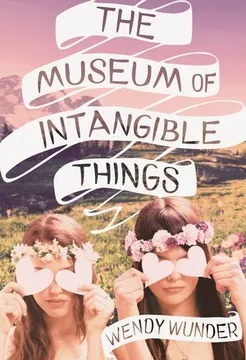
The Museum of Intangible Things received mixed reviews. Some readers praised its exploration of friendship, mental illness, and coming-of-age themes, finding the characters relatable and the writing beautiful. Others felt the plot was disjointed and unrealistic, with problematic portrayals of mental health. The road trip storyline and character development drew both praise and criticism. While some found the ending powerful and fitting, others felt it lacked resolution. Overall, reviewers were divided on whether the book lived up to its intriguing premise and cover.
People Also Read




Characters
Hannah Morgan
The dutiful observerHannah is an intelligent, methodical teenager who pays bills, sells hot dogs, studies at a private school from a hidden attic, and quietly plans for college. Her parents’ instability has taught her to anticipate trouble and mistake usefulness for security. She is shy about her body and uncertain what she wants, but her curiosity is expansive, especially about Sweden, art, and the world beyond her lake town. Her loyalty to Zoe is both her greatest strength and the habit that most limits her: she intervenes, interprets, and protects before asking what she herself needs. Her development depends on learning that care can coexist with boundaries, desire, and a future not built around other people’s emergencies.
Zoe
The restless makerZoe is Hannah’s brilliant, charismatic best friend, a gifted designer who creates monthly installations to help her younger brother understand emotions. She can read Hannah’s moods quickly and meets exclusion with nerve, humor, and daring. She also lives with bipolar disorder, though she and Hannah have often tried to manage its effects through a childhood code rather than sustained professional care. Zoe’s heightened energy fuels her creativity and her appetite for freedom, while her fear of being controlled makes support feel threatening. Her bond with Hannah is unusually intimate: she wants to protect Hannah from passivity, but also needs Hannah to recognize her reality without reducing it to a diagnosis.
Danny Spinelli
The shy first loveDanny is a quiet, long-legged classmate who sells ice cream from a truck and takes pleasure in building a business. He and Hannah share a brief childhood kiss that she remembers far more intensely than he appears to, leaving her uncertain about how much of their connection is real. Danny is observant and patient, and he recognizes Hannah’s kindness and ambition beneath her self-effacing manner. His romantic attention gives her a chance to experience desire outside her role as a caretaker. He is not a perfect rescuer: his existing relationship with Rebecca complicates his approach, and his choices require Hannah to ask for honesty rather than accept attention on faith.
Doug Morgan
The unreliable fatherDoug is Hannah’s handsome, alcoholic father, a television weatherman who also drives a limousine to supplement his income. His affection for Hannah is real, but so are his neediness, careless decisions, and tendency to make her responsible for his stability. He draws her into his recovery and depends on her help, blurring the boundary between parent and child. His work and drinking reveal a man whose charm has carried him farther than his practical skills can sustain. Through him, the book shows how love can persist alongside harm, without making a child’s forgiveness or labor a cure for a parent.
Elizabeth Morgan
The withdrawn motherHannah’s mother is depressed, isolated, and prone to retreat into television and unopened shopping bags. She once made art and invented stories with Hannah and Zoe, so Hannah remembers the lively parent she has lost access to. Her eventual attempts to cook, date, and reconnect reveal that withdrawal is not the whole of her character. She is neither a dependable guide nor an uncaring parent; her difficulty functioning leaves Hannah filling adult roles too early. Their relationship carries the possibility of renewed tenderness, but also the strain of years in which Hannah learned not to expect much.
Noah
The literal-minded brotherNoah is Zoe’s eight-year-old brother, a gifted reader and astronomy enthusiast who struggles to interpret emotion and metaphor. He understands facts with startling speed but needs his sister’s museum installations to approach feelings indirectly. Hannah helps him name loneliness, gratitude, friendship, and grief without pretending they are easy to calculate. His literal questions expose how much of human life depends on interpretation, while his affection for Zoe is visible in the art he absorbs and recreates.
Susan
Zoe’s watchful motherSusan is Zoe and Noah’s mother, a nurse who understands the danger of leaving Zoe without close supervision. She tries to balance care with the limits of what a family can manage, including making difficult decisions about professional treatment. Hannah sees her as both a trusted adult and a rival authority when the girls’ childhood methods fail. Susan’s grief and honesty give Hannah a rare reassurance that responsibility for Zoe’s well-being was never hers alone.
Tommy Flanagan
The town’s go-betweenKnown as Ice, Tommy moves between the public and private school worlds and sells marijuana. He admires Hannah, calls her Mary after Bruce Springsteen songs, and believes she will outgrow the limits of their town. His confidence in her is sincere, but she does not share his romantic interest and treats him more like an overprotective older brother.
Ms. Brennan
The stubborn teacherMs. Brennan is one of the few teachers left at Johnson High who continues to invest in students. She organizes the poorly attended Paloozapalooza and publicly affirms the students who show up. Her practical commitment gives Hannah a model of adult care that does not demand repayment, and later becomes an ally in efforts to improve the school.
Rosemarie
The beadwork mentorRosemarie is a Native beadworker at a roadside tourist attraction who resists being treated as a display. She welcomes the girls into the employee space, shares fry bread, and teaches Zoe a technique for securing beads. Her frankness about history, desire, and survival complicates the girls’ assumptions about freedom and what they are entitled to want.
Jimmy
The science-minded cousinJimmy is Zoe’s cousin, a University of Michigan student who works in a laboratory caring for mice. He believes in the value of basic research and reacts with dismay when the girls release the animals. His disagreement with them gives the story a grounded counterpoint to their impulsive moral certainty.
Rebecca Forman
Danny’s longtime girlfriendRebecca is a cheerleader who has been Danny’s girlfriend since ninth grade. Hannah views her through insecurity and comparison, but Rebecca has a life and attachments beyond the role Hannah assigns her. Her presence forces Hannah to confront the difference between longing for Danny and having any claim on him.
Plot Devices
The Museum of Intangible Things
Feelings made visibleZoe builds installations in her basement to help Noah approach emotions he cannot readily understand. Each exhibit turns an abstraction such as pride, fear, desire, or freedom into objects, images, and activities. The museum is a way the siblings communicate, but it also becomes the story’s organizing logic: the road trip’s lessons attach feelings to concrete encounters. The exhibit form allows Zoe to teach Hannah without lecturing and gives Noah a vocabulary for inner life. Its strength is also its limit, since representing an emotion does not necessarily explain or control it.
The Stocking Code
Childhood mood signalsHannah and Zoe use short and long socks as a private alert system. Short socks are meant to slow Zoe when she feels invincible and overactivated; long socks remind Hannah to encourage her when she is depressed. The code grew from their friendship and offers Hannah a concrete way to help, but it was invented when they were children and cannot replace medical care or shared adult responsibility. As Zoe’s moods become more dangerous, the failure of the code marks the point where familiar intimacy no longer guarantees safety.
The Alien Visitors
Belief under pressureZoe believes extraterrestrials visited her as a child and have returned to take her away, traveling through storms and lightning. Hannah initially treats the belief as part of Zoe’s imaginative world, then becomes alarmed as it shapes Zoe’s decisions and her refusal of treatment. The book never supplies a definitive explanation for the strange weather and events, so readers must hold Zoe’s experience alongside the possibility of hallucination and the realities of bipolar disorder. The belief creates the central conflict between validating a friend’s feelings and accepting her account as literal fact.
The Road Lessons
A curriculum of risksDuring the escape, Zoe assigns abstract lessons to specific experiences: insouciance at IKEA, audacity in New York, appetite at a truck stop, and saying yes with Rosemarie. The lessons help Hannah notice desires she has suppressed while managing her parents and planning a narrow future. They also give the trip momentum and turn each stop into an experiment in living differently. Their value is not automatic: Zoe’s equation of freedom with rule-breaking repeatedly exposes Hannah and strangers to danger, forcing Hannah to decide which lessons are worth carrying home.
Zoe’s Photo Album
Memory carried forwardZoe’s handmade album gathers photographs that preserve the girls’ road experiences and the meanings Zoe assigned to them. The images include their acts of audacity, encounters with animals and strangers, and Hannah’s emerging relationship with Danny. At the canyon, Zoe gives the album to Hannah as a way to remember the lessons they shared. It cannot substitute for Zoe or explain her disappearance, but it gives Hannah a physical record to carry into grief. The album transforms their improvised museum into a portable archive of a friendship that cannot be kept intact.
Download PDF
Download EPUB
.epub digital book format is ideal for reading ebooks on phones, tablets, and e-readers.








