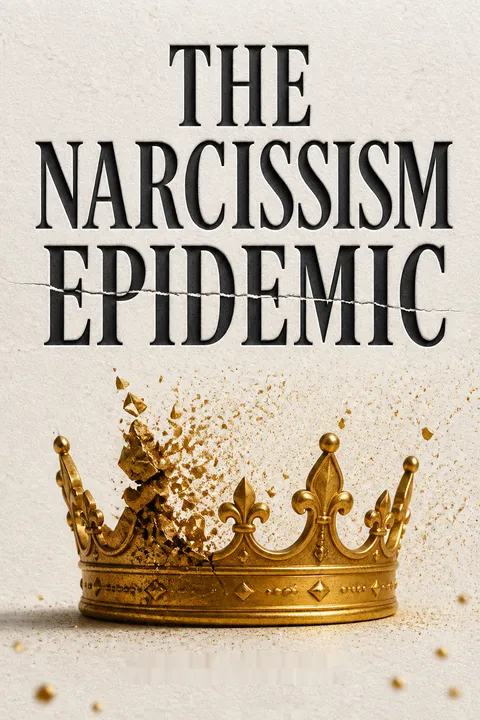


Key Takeaways
Distinguish self-respect from the belief that rules are for others
Confidence is not entitlement. The book defines narcissism as an inflated sense of superiority and specialness, combined with little concern for emotionally close relationships. That differs from healthy self-esteem, which can include confidence while still valuing other people. The authors reject the popular idea that narcissists secretly despise themselves: research using implicit self-esteem tests found that the outgoing narcissists they study generally like themselves very much. Their problem is not too little self-regard, but self-regard detached from care and reality.
The trend has measurable limits. A review of 85 samples, totaling 16,275 college students tested between 1979 and 2006, found a 30% rise in average narcissism scores. By 2006, one in four students endorsed most items on the measure. These are shifts in college samples, not proof that every person became narcissistic, and the authors distinguish personality traits from clinical Narcissistic Personality Disorder.
The useful distinction is between feeling worthy and feeling exempt. A secure person can accept criticism without treating it as an attack on rank; an entitled person reads ordinary limits as personal insults. This resembles the difference between self-confidence and status defense in social psychology. The book’s population-level evidence is provocative, but the college samples cannot represent every age group or explain why scores changed. Its strongest claim is therefore cultural rather than diagnostic: institutions can normalize self-display and entitlement even when most individuals do not meet clinical criteria.
Narcissistic confidence can win attention while quietly sabotaging real performance
Overconfidence has a bill. In studies described by the authors, students with inflated views of their ability earned poorer grades over time and were more likely to leave college. In a betting experiment, narcissists answered general knowledge questions no better than others, but were more confident and wagered too aggressively. They even claimed to have outperformed their peers after doing worse. Their self-belief protected the fantasy, not the result.
The spotlight is an exception. Narcissistic leaders can emerge quickly because confidence and forceful self-presentation attract attention. Yet peers often rate them poorly over time, and companies led by more narcissistic CEOs show more volatile performance. The book identifies a narrower setting where narcissism can help: solo performances with visible personal credit, such as an audition. Teamwork, learning from mistakes, and sharing recognition are less compatible with it.
The distinction between visibility and competence explains why self-promotion can be mistaken for leadership. In uncertain settings, groups often use confidence as a shortcut for judging ability, especially before they have evidence of performance. That shortcut can select leaders who are good at entering the spotlight but poor at listening or correcting course. The authors’ argument is strongest when it separates contexts: assertiveness can help in auditions or public presentations, while collaboration requires a different skill set. The practical question is not whether confidence is good, but whether it stays answerable to feedback.
Give children warmth, limits, and praise tied to effort
Affection needs boundaries. The authors trace modern indulgent parenting to good intentions: parents want happy children and hope strong self-esteem will prepare them for life. But telling children they are exceptional, giving in to every demand, and shielding them from criticism can teach them that other people should accommodate them. Studies cited in the book associate later narcissism with parental overpraise, putting a child on a pedestal, and weak monitoring. The pattern is not simply warmth. It is warmth without enough structure.
Praise the work, not the crown. In a study, children praised for being smart later avoided difficult tasks more than children praised for working hard. The authors recommend firm, age-appropriate limits and meaningful choices, such as letting a child choose between two suitable outfits rather than decide whether winter clothing is necessary. Love reassures a child of belonging; accurate feedback helps build skills.
This is a strong correction to the false choice between harsh authority and permissive approval. Children need both psychological safety and a workable map of consequences. Specific praise also gives a child information about what can be repeated, whereas broad praise can turn ability into a fragile identity that must be defended. The evidence does not mean every compliment creates narcissism, or that parents should withhold affection. The sharper lesson is to avoid making admiration the main currency of family life. A child can be deeply loved without being told that the world owes them a starring role.
Treat celebrity culture and social platforms as amplifiers of self-display
Attention teaches norms. In a study of celebrity guests who completed the Narcissistic Personality Inventory, reality television performers scored higher in narcissism than other celebrity groups. The authors call such figures cultural superspreaders: they make self-promotion, vanity, and attention seeking unusually visible. Social platforms add a feedback loop. People can select flattering photos, count online friends, and receive comments for provocative self-presentation. A Facebook study cited in the book found that higher-scoring narcissists were especially skilled at presenting themselves online.
The medium is not the whole message. The authors do not claim that every user or every online exchange is narcissistic. Social networking can help people stay in touch. Their concern is that a public profile rewards image and reach more readily than intimacy, and that repeated rewards can make exhibitionism seem ordinary. Reality shows and personal pages can therefore shift standards even for people who are not especially self-centered.
Platforms do more than host personality; their visible metrics teach users what counts as success. A number beside a profile is easy to compare, while trust and care are harder to display. This creates a measurement problem: what is countable can displace what matters. The authors’ early social-media examples are historically specific, but the underlying design question remains relevant wherever attention is rewarded. At the same time, online visibility can support real communities and practical mutual aid. A platform’s effects depend not only on individual motives, but on which behaviors its design makes easy to notice and reward.
Don't borrow against a lifestyle your income cannot sustain
Credit can counterfeit success. Easy borrowing let households appear wealthier than they were, turning luxury into an immediate purchase rather than a long-term achievement. In 2005, Americans spent more than they earned for the first time since the Great Depression, according to the book. Average credit-card debt exceeded $11,000, and risky mortgages let buyers take on homes far beyond traditional affordability. Rising house prices made the gamble seem sound until defaults and falling values exposed the gap between image and ability to pay.
The costs spread outward. The authors connect the mortgage crisis partly to overconfident borrowers and lenders who assumed prices would keep rising. When the market collapsed, the damage reached homeowners, financial institutions, and taxpayers. Their point is not that all debt is foolish. Borrowing can support productive investment. The danger is debt used mainly to display status or satisfy immediate wants, especially when the borrower assumes tomorrow will take care of itself.
The episode reveals how personal psychology and institutional incentives can reinforce one another. Borrowers may want the larger house, while lenders and financial firms can profit from making that desire easier to satisfy. A purely moral account of overspending misses the architecture that turns optimism into systemic exposure. Yet structural incentives do not erase personal agency: a realistic budget still matters. The book’s durable distinction is between borrowing to build capacity and borrowing to simulate status. That distinction helps explain why a purchase can feel like progress while making a household less resilient.
Choose partners for reciprocal care, not just the first rush
Charm can arrive before care. The authors describe narcissists as exciting early partners: outgoing, confident, and attentive when a new relationship supplies admiration and status. Trouble grows when a partner needs care, compromise, or commitment. The book’s Chocolate Cake Trap names the pull of choosing an immediately pleasurable option despite knowing its longer-term costs. A charismatic partner can produce a powerful initial rush, while repeated self-centered behavior gradually erodes trust and satisfaction.
Watch what happens over time. In a study of strangers who met repeatedly, narcissists were initially seen as engaging and were liked more than others. After further meetings, their appeal declined. The authors advise caution when someone seems magnetic, especially if they routinely take credit, dismiss others, or react angrily to criticism. A person’s behavior under frustration and ordinary responsibility offers more useful evidence than charm during courtship.
The insight is not that charisma signals bad character. It is that early attraction provides incomplete information, and intense attention can be confused with intimacy. Relationship science distinguishes the excitement of novelty from the trust built through repeated responsiveness. That makes time an important diagnostic tool: does the person remain considerate when attention shifts, or when a partner’s needs interfere with their preferences? The book’s warning should not become a license to label every confident person a narcissist. The more precise test is reciprocity, especially when there is no immediate reward for showing it.
Question rising status standards before they become necessities
The bar keeps moving. The book links narcissism to status purchases and appearance management, from luxury goods to cosmetic procedures. Cosmetic operations and treatments in the United States increased more than fivefold between 1997 and 2007, according to the figures it cites. Meanwhile, the average size of new homes grew from 1,905 square feet in 1990 to 2,227 in 2005, even as families became smaller. The issue is not that a large home or cosmetic procedure proves narcissism. It is that status competition can make optional goods feel like basic requirements.
Comparison fuels the escalation. When affluent consumers adopt expensive standards, people with fewer resources may spend to avoid appearing unsuccessful. The result can be debt, environmental waste, and dissatisfaction, since status goods lose their advantage once others acquire them. The authors argue that the chase often delivers brief excitement rather than lasting well-being. Before buying, ask whether the purchase solves a real problem or merely keeps pace with a standard that keeps changing.
This section connects private consumption to social comparison. People often evaluate possessions relative to what peers have, not against an absolute measure of usefulness. That makes status competition unstable: each person’s attempt to stand out raises the benchmark for everyone else. The environmental costs also matter because a private signal, such as a larger home or vehicle, uses shared resources. Still, not every taste for quality is vanity, and economic circumstances shape what people can reasonably choose. The useful distinction is whether a purchase serves a durable purpose or mainly communicates rank.
Teach children they are loved, not inherently owed special treatment
Uniqueness is not superiority. The authors distinguish being different from being special in the sense of deserving more than others. They note that parents increasingly choose uncommon names, often hoping a child will stand out from birth. Their concern is not that unusual names are harmful by themselves, but that the cultural message prizes distinction as proof of importance. Telling every child they are exceptional can also collide with ordinary life, where people share rules, wait their turn, and receive no automatic advantage.
Connection is a better lesson. The book describes experiments in which narcissistic participants became less aggressive after learning they shared a trait with the person who had insulted them. That suggests common ground can weaken the impulse to treat others as outsiders. The authors recommend expressing love directly, while helping children notice shared feelings and practice perspective taking. A child can be cherished within a family without being entitled to special treatment from everyone else.
The distinction between uniqueness and superiority is especially useful because modern culture often fuses them. Individual differences can support creativity and personal freedom, while a claim to exceptional status can weaken fairness and belonging. Shared identity offers a counterweight: seeing another person as similar can make their needs harder to dismiss. The book’s argument does not require flattening individuality or discouraging children’s talents. It asks what individuality is for. When difference becomes a reason to rank people, it divides; when it helps people contribute distinct strengths to a common life, it can enrich a group.
Make reciprocity and consequences stronger than entitlement
Entitlement transfers costs. The book defines entitlement as believing one deserves special treatment, success, or goods without a matching contribution. In a candy experiment, college students who scored higher on entitlement took more candy from a bucket intended for children. On campus, students sometimes argued that attendance or effort alone should earn high grades. At work and in relationships, the same mindset can turn criticism into a perceived insult and small disagreements into prolonged conflict.
Rules need credible enforcement. The authors connect entitlement with cheating, aggression, and taking credit from others. A culture where misconduct attracts attention or goes unpunished invites imitation. They argue that consistent consequences matter more than spectacular punishment, and that honor codes work best when a community actively supports them. Reciprocity matters too: favors and cooperation sustain trust only when people recognize obligations to others, rather than treating every benefit as something they are owed.
Entitlement is a coordination problem, not merely an unpleasant personality trait. Shared systems work when people expect both benefits and obligations to apply across the group. If rule breakers gain advantages while others absorb the costs, trust erodes and more people feel pressure to defect. This logic connects the book’s classroom examples to organizations and shared resources. Reliable enforcement can protect cooperation, but punishment alone is insufficient if the norm itself seems unfair. Institutions need transparent standards, consistent application, and visible respect for the people who bear the consequences.
Practice humility and gratitude by directing attention beyond yourself
Make the self less central. The authors recommend gratitude, mindfulness, compassion, service, and honest self-appraisal as ways to counter inflated self-focus. In a study they cite, people who listed things they were grateful for weekly reported greater well-being and were more supportive of others than a comparison group. Mindfulness, defined in the book as attending to present experience without harsh judgment, can help interrupt reflexive defensiveness and anger. Humility here means seeing oneself accurately, not practicing self-hatred.
Build habits and institutions. Parents can model gratitude and teach children empathy. Schools can teach conflict resolution and friendship skills rather than telling every child they are exceptional. Communities can reward helpful conduct, while media and financial policy can reduce incentives for attention seeking and reckless status spending. The authors also note that volunteering can become another résumé item or route to recognition. Its value is clearest when attention to the helper does not eclipse the people being helped.
The proposed remedy works on two levels: attention and incentives. Gratitude changes what a person notices, while community norms change which behaviors receive approval. Research on prosocial behavior broadly supports the idea that helping can strengthen social bonds, even when motives are mixed. That qualification matters: service need not be perfectly selfless to do good, but organizations should not confuse public visibility with impact. Humility is also not passivity. Accurate self-assessment can support ambition while leaving room for other people’s knowledge, needs, and contributions.
Analysis
The book’s central contribution is to separate self-esteem from narcissism and then trace how a culture can confuse the two. Its target is not ordinary confidence, personal freedom, or every form of self-expression. It is a specific configuration: grandiose self-importance, entitlement, status seeking, and weak investment in reciprocal relationships. That distinction allows the authors to connect seemingly unrelated behaviors, from cosmetic procedures and conspicuous debt to bullying, online self-presentation, and workplace conflict.
The epidemic metaphor gives the account narrative force. Parenting, celebrity media, social networks, and easy credit become channels that normalize behaviors, while attention and short-term rewards help them spread. The strongest explanatory move is the feedback loop: individual self-promotion changes social expectations, and changed expectations recruit people who might not otherwise be narcissistic. This is more illuminating than blaming a single generation or treating every example as an isolated moral failure.
The evidence is substantial for a popular cultural analysis, but not all claims have equal support. The cross-temporal study documents rising scores among college students, while conclusions about all ages and national culture rely on less direct indicators. Correlation between parenting and later traits does not establish a simple causal pathway, and media examples demonstrate cultural visibility more readily than their precise effects on personality. The book acknowledges some of these limits, yet its rhetoric can make the diagnosis feel more settled than the evidence warrants.
Its lasting practical value lies in the distinction between affirmation and exemption. Children need affection, but they also need accurate feedback, limits, and practice considering other people. Adults need confidence, but should remain accountable to evidence and reciprocity. At the social level, the analysis points beyond personal virtue to systems that reward spectacle, credit-fueled consumption, or rule breaking. The argument is most persuasive when treated as a framework for examining incentives and norms, not as a universal diagnosis of contemporary people.
Review Summary
The Narcissism Epidemic received mixed reviews. Many praised its insights on rising narcissism in society, citing cultural shifts, parenting styles, and technology as contributors. Some found it thought-provoking and well-researched, while others criticized its methodology, outdated examples, and perceived conservative bias. Reviewers noted the book's relevance but questioned its alarmist tone and sweeping generalizations. Some felt it provided valuable perspective on societal trends, while others found it repetitive and lacking in-depth analysis. Overall, opinions were divided on the book's effectiveness in addressing the complex issue of narcissism.
People Also Read



Glossary
Narcissistic Personality Inventory
trait narcissism measureA self-report questionnaire used in much of the research discussed in the book. Its common version presents pairs of statements and asks respondents to choose which describes them better. Scores estimate narcissistic personality traits, such as entitlement, exhibitionism, and superiority. The inventory is not a clinical diagnostic test, and a high score does not by itself mean someone has Narcissistic Personality Disorder.
Narcissistic Personality Disorder
clinical narcissism diagnosisA psychiatric diagnosis involving a persistent pattern of grandiosity, need for admiration, and lack of empathy, alongside significant impairment or distress. The book distinguishes this disorder from narcissistic traits measured in the general population. A person can score high on a personality measure without meeting diagnostic criteria, and diagnosis requires assessment by a trained professional.
self-regulation strategies
ways to sustain self-admirationBehaviors narcissistic people use to preserve or increase a favorable view of themselves. The book includes self-promotion, seeking attention, emphasizing appearance or status, blaming others for failures, and surrounding oneself with admirers. These strategies can produce a short-term boost in pride, but failures or challenges to self-image may provoke anger, blame, or aggression.
time-delay trap
short-term rewards, delayed costsThe book’s description of behaviors that feel rewarding at first but create larger costs over time. Narcissism can provide excitement, status, attention, or a sense of superiority in the moment. Its longer-term costs may include damaged relationships, poor learning, financial trouble, and harm to others. The short-term payoff helps explain why a destructive pattern can persist.
pleasure principle
immediate wish fulfillmentA Freudian term used in the book for the pull toward immediate gratification and the satisfaction of wishes. In the authors’ discussion, consumer credit can let people act on this impulse by buying status goods or expensive homes before they can afford them. The pleasure principle contrasts with the reality principle, which requires acknowledging constraints and delayed consequences.
reality principle
limits imposed by realityA Freudian term for adjusting desires to the practical demands and limits of the world. The book uses it to explain why a desired lifestyle cannot be sustained merely by confidence or borrowing. Saving, working toward goals, and assessing what one can afford reflect attention to reality; easy credit can temporarily make fantasy appear attainable.
Chocolate Cake Trap
choosing immediate relational excitementThe book’s analogy for choosing an immediately gratifying option despite its likely longer-term costs. In relationships, a charismatic and exciting partner can feel more compelling than a steadier, more caring person, much as a rich dessert can be more tempting than a healthy meal. The analogy explains why people may choose intensity even when they recognize its risks.
Proteus Effect
avatars shape online behaviorThe term used in the book for changes in a person’s behavior associated with the appearance of their avatar in a virtual world. In the cited experiments, people assigned attractive avatars behaved with greater social confidence, while those assigned taller avatars acted more competitively in a negotiation. The authors raise the possibility that virtual behavior can influence conduct outside the virtual setting.
FAQ
What's The Narcissism Epidemic about?
- Cultural Shift Focus: The Narcissism Epidemic by Jean M. Twenge and W. Keith Campbell examines the rise of narcissism in American culture, highlighting self-admiration as a core societal value.
- Epidemic Model: The authors compare narcissism to an epidemic, similar to the obesity crisis, analyzing its causes, symptoms, and potential treatments.
- Research-Based Insights: The book is grounded in extensive research, combining empirical data with anecdotal evidence to illustrate the prevalence of narcissistic traits.
Why should I read The Narcissism Epidemic?
- Understanding Modern Culture: It provides insights into the cultural dynamics shaping contemporary American society, essential for parents, educators, and psychology enthusiasts.
- Practical Solutions Offered: The authors offer practical advice for coping with and mitigating the effects of narcissism in everyday life.
- Awareness of Personal Behavior: Reading the book can help individuals reflect on their behaviors and attitudes, fostering a deeper understanding of narcissism's impact.
What are the key takeaways of The Narcissism Epidemic?
- Narcissism vs. Self-Esteem: Narcissism is distinct from healthy self-esteem, often lacking empathy and valuing relationships less.
- Cultural Influences: Parenting styles, media, and societal values contribute to the rise of narcissism, with over-praising and indulgent parenting playing significant roles.
- Long-Term Consequences: Narcissism has destructive long-term effects on individuals and society, including relationship troubles and a lack of genuine connection.
What are the best quotes from The Narcissism Epidemic and what do they mean?
- "Recognizing the narcissism epidemic...": Emphasizes the importance of awareness in addressing the cultural shift towards narcissism.
- "Narcissism is a psychocultural affliction...": Highlights that narcissism is rooted in cultural and social dynamics, not just individual psychology.
- "The cultural focus on self-admiration...": Reflects the disconnect between self-perception and reality, underscoring the dangers of prioritizing superficial values.
How does The Narcissism Epidemic define narcissism?
- Psychological Definition: Narcissism is an inflated self-view characterized by a lack of empathy and a focus on self-admiration.
- Narcissistic Personality Inventory: The authors use this tool to measure narcissistic traits, providing a standardized assessment method.
- Distinction from Self-Esteem: Narcissism is distinct from healthy self-esteem, as narcissists often lack genuine concern for others.
What are the root causes of the narcissism epidemic according to The Narcissism Epidemic?
- Parenting Styles: Modern parenting, characterized by over-praising and indulgence, significantly contributes to the rise of narcissism.
- Media Influence: Celebrity culture and media portrayals of success and beauty promote narcissistic values.
- Cultural Shifts: Since the 1970s, a focus on individualism and self-expression has shifted societal values towards self-admiration.
How does The Narcissism Epidemic suggest we treat or mitigate narcissism?
- Promote Empathy: Fostering empathy and emotional intelligence in children can counter narcissistic tendencies.
- Set Boundaries: Emphasizing the importance of setting limits and boundaries in parenting, encouraging parents to enforce rules.
- Encourage Realistic Self-Assessment: Advises against excessive praise, promoting realistic self-assessment and hard work as foundations for self-esteem.
What symptoms of narcissism are discussed in The Narcissism Epidemic?
- Vanity and Materialism: Narcissists seek status through appearance and possessions, highlighting vanity and materialism as key symptoms.
- Entitlement and Aggression: Feelings of entitlement and aggressive behavior when slighted or disrespected are common.
- Relationship Issues: Narcissists often struggle to maintain deep, emotionally connected relationships.
How does The Narcissism Epidemic relate narcissism to modern technology and social media?
- Social Media Amplification: Platforms like Facebook and Instagram amplify narcissistic behavior by encouraging self-promotion.
- Feedback Loop: Narcissistic individuals are drawn to these platforms, which reward their behavior, further entrenching narcissism.
- Cultural Norms: The normalization of narcissistic behavior through social media has shifted societal expectations.
What are the long-term consequences of the narcissism epidemic as outlined in The Narcissism Epidemic?
- Societal Impact: The rise of narcissism has destructive long-term consequences, including increased aggression and a lack of caring for others.
- Personal Relationships: Narcissism can lead to relationship troubles, as narcissists struggle to form deep emotional connections.
- Economic Consequences: Overconfidence and entitlement can lead to financial crises, as seen in the 2008 mortgage meltdown.
What role does entitlement play in the narcissism epidemic as described in The Narcissism Epidemic?
- Conflict in Relationships: Entitlement leads to conflicts, as individuals believe they deserve special treatment, disregarding others' needs.
- Workplace Issues: Entitled employees may demand more for less work, causing frustration among managers and coworkers.
- Social Consequences: A widespread sense of entitlement can erode social norms of reciprocity and cooperation.
How can parents raise children to be less narcissistic according to The Narcissism Epidemic?
- Set Realistic Expectations: Avoid over-praising children, focusing on encouraging hard work and effort.
- Teach Empathy: Instilling empathy and understanding for others can help children develop healthier relationships.
- Limit Indulgence: Set boundaries and teach children resilience and responsibility by not always giving them what they want.
About the Author
Other books by Jean M. Twenge

Download PDF
Download EPUB
.epub digital book format is ideal for reading ebooks on phones, tablets, and e-readers.








