

Key Takeaways
Read narcissism as a continuum, not a synonym for vanity
More than showy self-love. Burgo distinguishes ordinary self-absorption from a pattern that repeatedly harms other people. He presents narcissism as a continuum: some people show occasional self-centeredness, while others show a persistent mix of inflated self-importance and limited empathy. The clinical diagnosis, Narcissistic Personality Disorder, requires at least five of nine features in the DSM; the book says about 1 percent of people meet that threshold. Burgo estimates that more damaging but subclinical traits may affect as many as 5 percent. Those figures are the book’s claims, not a tool for diagnosing someone from a distance.
Judge patterns, not labels. Naomi, a charitable teacher, can be warm to people outside her family yet jealous and manipulative with her adult children. Her case illustrates why a checklist alone can miss the damage of a relationship. Burgo’s “Extreme Narcissist” is a practical label for harmful patterns, not a formal diagnosis.
The continuum is a useful corrective to casual name-calling: it shifts attention from a person’s image to repeated behavior and its effects. That distinction also fits dimensional approaches to personality, which examine traits in degrees rather than treating every pattern as a separate box. The prevalence estimates deserve more caution than the framework itself. A percentage depends on how “extreme” traits are defined and measured, and the book’s label is not a clinical category. Readers can use the idea to notice patterns without treating it as a license to diagnose.
Look beneath the winner act for shame, without excusing harm
A defense against defect. Burgo argues that many Extreme Narcissists act superior because they cannot bear an underlying sense of being flawed, small, or worthless. He calls this deep, often unconscious sense of inner defect “core shame.” To escape it, a person may build an impressive public self and divide people into winners and losers, then use achievement, admiration, or dominance to keep the feared self out of view. Different histories can contribute: neglect, abuse, early loss, or a parent who values a child mainly for achievement. The book does not claim that every narcissist shares one childhood story.
The behavior still counts. Lance Armstrong’s public attacks on people who questioned his record illustrate how defending a heroic image can become bullying. The explanation is a way to understand the behavior, not proof of what Armstrong privately felt, and not an excuse for its consequences.
This account offers a psychologically generous alternative to the assumption that arrogance always reflects genuine confidence. It also helps explain why a small criticism can provoke a response wildly larger than the immediate event: the threat may concern identity, not the disputed detail. The risk is making hidden shame sound like a settled fact about any difficult person. It is inferred, not directly observable. Understanding a possible motive can reduce retaliatory escalation, while accountability still rests on observable actions and harms.
Treat criticism as a possible injury, not automatically an attack
A familiar defensive sequence. A “narcissistic injury” is a blow to a person’s sense of worth, such as rejection, criticism, or a slight. Burgo emphasizes that everyone experiences these moments. In his example, Natalie receives a disappointing work review after a day of lateness and mistakes. She first blames circumstances, then dismisses her workplace, and finally responds to a breakup message with anger. Blame, contempt, and indignation briefly protect her from shame, but they also make it harder to face what happened.
Feelings can mislead. Burgo calls the tendency to assume that someone caused painful feelings the “principle of false attribution.” A person feels hurt, then reads the hurt as evidence of hostile intent. This can turn an accidental slight into a perceived attack, especially for someone highly sensitive to criticism. A pause can help separate what was said from what it seemed to mean.
The key practical distinction is between validating an emotion and endorsing the story attached to it. Hurt is real; the conclusion that another person meant to humiliate someone may not be. This resembles a basic skill in emotional regulation: noticing an interpretation before acting on it. The idea applies to ordinary conflict as well as extreme behavior, which makes it useful but easy to overextend. It should not be used to dismiss a person’s account of mistreatment or to assume every angry response conceals shame.
When rivalry becomes retaliation, prioritize distance and evidence
Competition can become persecution. Burgo describes the Bullying Narcissist as someone who boosts a fragile sense of superiority by making another person seem inferior. A target may be isolated, ridiculed, undermined, or set up to fail. In the workplace example, Phil humiliates his employee Tyler, sabotages communication, and threatens his future employment after Tyler challenges him. The Vindictive Narcissist turns this contest into a campaign of retaliation, treating disagreement or an unintended slight as grounds for revenge.
Do not fight on impulse. Burgo’s advice is to avoid a head-to-head contest when it is unsafe or futile. Tyler saves emails, logs incidents, consults a lawyer, and uses evidence to secure a settlement. In cases of persistent bullying, distance or a change of workplace may be safer than trying to win the aggressor’s respect.
This section is strongest when it treats bullying as both an interpersonal pattern and an organizational problem. Witnesses, documentation, and fair procedures matter because a target should not have to rely on private persuasion against someone with more power. The advice to avoid confrontation is pragmatic, not a universal rule; direct reporting or collective action may be necessary, and the safest choice depends on the setting. Describing a bully’s possible insecurity can help explain the behavior, but it should never shift responsibility onto the person being targeted.
Test intense admiration against time, reciprocity, and real knowledge
Flattery can create attachment. The Seductive Narcissist wins attention by making another person feel fascinating, attractive, or uniquely understood. Harlan, a client who admits to repeatedly cheating, describes using close attention and personal questions to draw people in. He treats the listener as an audience, not an equal. In Burgo’s account of Tina and Seth, extravagant gifts and declarations of devotion arrive before Seth has had time to know Tina well. Such idealization can feel like love, but the admirer may be responding to a fantasy rather than to a separate person.
Watch what happens next. Burgo advises skepticism when someone rapidly casts a new acquaintance as perfect or promises a life of exceptional happiness. Pay attention to whether interest goes both ways and whether the person respects boundaries. The test is not whether someone is charming, but whether care remains when admiration is not immediately returned.
The section captures how attention can be persuasive without being mutual. Feeling seen is powerful, and a person who skillfully mirrors another’s interests can seem unusually compatible. Yet fast affection is not itself evidence of manipulation; some people are simply expressive, and early romance often involves idealization on both sides. The more revealing evidence is how a person handles ordinary limits, disagreement, and the other person’s independent life. That shifts the question from “Is this person too charming?” to “Does this connection make room for two people?”
Give children delight first, then limits that make room for others
Care changes with development. Burgo argues that babies need joyful attention and a sense of being cherished. As children grow, parents must also help them recognize limits, accept frustration, and consider other people’s feelings. He summarizes the balance as unconditional love paired with approval tied to behavior and effort. Celine’s mother, by contrast, pushed her into beauty pageants and praised her as a vehicle for the mother’s unrealized ambitions. Tiger Woods’s father made his son’s success central to his own sense of importance. In both cases, a child’s identity risks becoming a parent’s project.
Praise is not the whole job. Constant admiration without realistic expectations can leave children unprepared for criticism, effort, and responsibility. Burgo’s examples also show the opposite danger: withholding affection or using a child as a family scapegoat can be deeply damaging. The goal is neither perfection nor relentless praise, but attentive care and proportionate limits.
This developmental account makes an important distinction between affirming a child’s worth and praising every performance. Children need security, but they also need practice tolerating disappointment and repairing harm. That is compatible with approaches to parenting that combine warmth with clear expectations. The book’s claims about early experience and brain development should not be read as a simple causal formula: families and children differ, and no single parenting mistake determines a person’s future. Its practical lesson is more modest and useful: admiration works best when it does not replace guidance.
Do not confuse charisma, expertise, or success with empathy
Ability is not character. Burgo groups several distinct patterns under grandiose and Know-It-All narcissism. One person may claim exceptional status; another may dominate conversation by displaying supposed superior knowledge. Monica, a parent at a school event, turns nearly every topic into proof of her expertise. Steve Jobs, as portrayed through colleagues’ accounts, could combine real creative ability with contempt for people he considered inferior. The book also describes charismatic leaders whose confidence draws followers into treating them as uniquely authoritative.
Separate the gift from the conduct. A person may produce valuable work or possess genuine expertise while still dismissing others, taking credit, or resisting correction. Burgo’s warning is not to reject every confident or accomplished person, but to avoid treating success as proof of wisdom, kindness, or sound judgment. Keep independent standards, especially when a leader demands unquestioning loyalty.
The distinction between competence and character is essential in workplaces and public life. Charisma can coordinate people around ambitious goals, while expertise can be genuinely valuable; neither guarantees good judgment or humane treatment. The danger arises when audiences mistake confidence for evidence and surrender their own evaluation. At the same time, a forceful style or narrow conversational habit alone cannot establish narcissism. The more dependable questions concern repeated conduct: Does this person share credit, accept correction, and treat people without status as people?
Step out of moral courtroom fights instead of competing to be right
Conflict becomes a verdict. The Self-Righteous Narcissist frames disagreement as proof that one person is good and the other bad. Burgo’s client Denise often recasts marital arguments as a case against her husband, Eric, while overlooking her own part in the conflict. The pattern can also appear after a breakup: rather than grieve, a rejected partner may use blame and contempt to make the former partner seem wholly unworthy. Moral certainty then protects self-esteem by keeping personal responsibility out of view.
Do not litigate every grievance. Burgo warns that fact-based arguments may intensify the contest when the other person experiences disagreement as humiliation. In some relationships, disengaging from the argument is more useful than trying to deliver a perfect rebuttal. This does not mean accepting abuse or abandoning your own judgment. It means choosing when discussion is productive and when a boundary, outside support, or distance is more protective.
The courtroom metaphor clarifies why some arguments do not improve when either person adds more evidence: the dispute is serving a status function, not just solving a problem. Couples research and conflict practice often distinguish between resolving a specific issue and defending identity; the two can become entangled quickly. Still, stepping back should not become automatic appeasement. A relationship that requires one person to suppress every objection is not repaired by a calmer tone. The relevant measure is whether disengagement reduces harm and leaves room for genuine accountability.
Treat addiction as escape from pain, not only a bad habit
Relief can feed the cycle. Burgo argues that addictive behavior may temporarily blunt shame, loneliness, or a sense of inner defect. When the effect wears off, regret and secrecy can deepen those feelings, prompting renewed use. He calls this pattern a “downward shame spiral.” Ian, a technically skilled young man, retreats into an online role-playing game where his avatar gains status. The game briefly offers a version of himself he finds easier to inhabit, but his work and relationships deteriorate, adding to the shame he is trying to escape.
Care has limits. Burgo emphasizes that not every addicted person is narcissistic, and that loved ones cannot rescue someone by willpower alone. He urges family members to stop enabling harmful behavior, establish boundaries, and seek support. Treatment and recovery support may help address both addictive behavior and the relational damage surrounding it.
The account adds psychological motive to a picture of addiction that can otherwise focus only on physical dependence or visible consequences. Understanding what relief a behavior provides can help make treatment more precise. But shame is not a complete explanation of addiction, which can involve biology, mental health, social conditions, and access to care. It is also important not to label a person narcissistic simply because addiction has narrowed their attention. The most useful application is to ask what the behavior is doing for the person while still taking its effects seriously.
Protect yourself without joining the winner-loser contest
Start with your own response. Burgo’s central coping advice is to notice when someone else’s contempt or charm is changing how you see yourself. In one personal story, he realizes that envy of a successful writer helped provoke a cutting remark. That moment echoes his earlier account of talking too long about his own troubles and failing to ask his piano teacher about hers. Narcissistic behavior is not limited to clinical cases; stress, envy, and wounded pride can make anyone temporarily self-absorbed.
Choose protection over victory. Burgo recommends setting limits, documenting serious workplace or legal conflicts, and leaving relationships that repeatedly cause harm. Compassion may help a person avoid retaliating, but it does not require staying close or tolerating abuse. Understanding another person’s pain and protecting oneself are compatible. The practical test is whether a response lowers danger and preserves self-respect, rather than simply proving who is right.
The book’s most productive turn is from identifying the difficult person to examining the reader’s own participation: the urge to retaliate, the attraction of reflected status, or the impulse to rescue. That kind of self-observation can interrupt escalation without implying equal responsibility for unequal harm. Compassion is most useful as a guide to one’s own conduct, not as a demand that a target remain available. The book’s strong emphasis on avoidance is sensible in dangerous relationships, though other situations may call for documentation, formal intervention, or carefully supported confrontation.
Analysis
Burgo’s most memorable contribution is a relational model of narcissism. The problem is not simply vanity; it is the way a person protects a threatened self-image by recruiting other people as admirers, rivals, scapegoats, or witnesses. This lens connects outward behavior, such as boasting or retaliation, to a possible inward fear of defectiveness. It also makes the reader’s own reactions part of the story: humiliation can provoke counterattack, while admiration can make warning signs harder to see.
The book is a hybrid of psychoanalytic explanation, practical relationship advice, and case-based storytelling. Its portraits make abstract defenses tangible, especially the contrast between a bully who lowers others and a seducer who raises them temporarily. The recurring winner-loser frame gives the chapters coherence and helps explain why apparently different behaviors can serve a similar purpose.
That coherence is also a limitation. “Core shame” is an interpretive explanation, not something that can be directly inferred with certainty from arrogance or cruelty. The celebrity profiles rely on biographies and public accounts, which can illustrate a theory but cannot establish a private motive or justify a diagnosis. The book itself says it is not a diagnostic manual; readers should preserve that caution. Narcissistic Personality Disorder is a specific clinical diagnosis, while “Extreme Narcissist” is Burgo’s broader term for a harmful pattern.
The safest use of the framework is therefore behavioral rather than diagnostic. Notice recurring lack of empathy, entitlement, blame, or retaliation; assess the actual risk and power imbalance; and choose boundaries accordingly. A compassionate account of someone’s possible history can prevent dehumanization, but it cannot undo harm or replace accountability. The book’s strongest practical message is a double discipline: refuse the contest when it only escalates, and examine the needs or insecurities that make the contest hard to leave.
Review Summary
The Narcissist You Know receives mixed reviews, with praise for its accessible explanations of narcissistic behaviors and criticism for its reliance on celebrity examples. Readers appreciate Burgo's empathetic approach and practical advice for dealing with narcissists, though some find the categorizations oversimplified. The book's exploration of narcissism as a spectrum resonates with many, helping them understand both others and themselves. However, some reviewers question the scientific rigor and find the advice limited. Overall, it's considered a useful introduction to the topic, despite its limitations.
People Also Read




Glossary
Extreme Narcissist
Harmful narcissistic patternBurgo’s term for a person whose inflated self-importance and limited empathy repeatedly cause pain or disruption, even when the person does not meet the diagnostic criteria for Narcissistic Personality Disorder. It is a descriptive framework in this book, not a formal clinical diagnosis or a substitute for professional assessment.
narcissistic injury
Blow to self-worthA perceived or actual challenge to a person’s self-esteem, such as criticism, rejection, failure, or an unintended slight. Burgo treats these injuries as part of ordinary human life. He argues that a person who cannot tolerate the resulting shame may defend against it through blame, contempt, indignation, or retaliation.
core shame
Deep sense of defectBurgo’s term for a profound, often unconscious feeling of being damaged, inferior, or fundamentally flawed. He links it to early experiences in which a child’s need for attentive care and emotional connection is not adequately met. In his account, some narcissistic behaviors defend against this painful self-experience.
principle of false attribution
Mistaking pain for attackBurgo’s name for the tendency to assume that another person caused a painful feeling deliberately. Someone who feels ashamed, irritated, or diminished may interpret an innocent remark as an intentional insult, then respond as if under attack. The concept is offered to explain how minor interactions can escalate into disproportionate conflict.
relentless narcissistic defense
Ongoing shield against shameBurgo’s description of a defensive self-image that is continually rebuilt to keep shame out of awareness. A person relying on it may recover quickly from criticism by blaming, dismissing, or attacking the source, then resume presenting as superior. The defense can feel like the person’s identity rather than a strategy they consciously choose.
blueprint for normality
Expected early caregivingBurgo’s use of D. W. Winnicott’s idea that children have basic expectations for how caregivers will respond to their physical and emotional needs. Caregivers need not be perfect, but reasonably attuned attention helps a child develop security and self-worth. Persistent neglect, chaos, or misattunement can undermine that development.
downward shame spiral
Shame reinforcing escapeBurgo’s term for a cycle in which a person uses an addictive behavior to escape painful feelings, then experiences further shame or damage because of that behavior. The added distress can intensify the urge to return to the same escape. Ian’s prolonged online gaming illustrates this pattern in the book.
FAQ
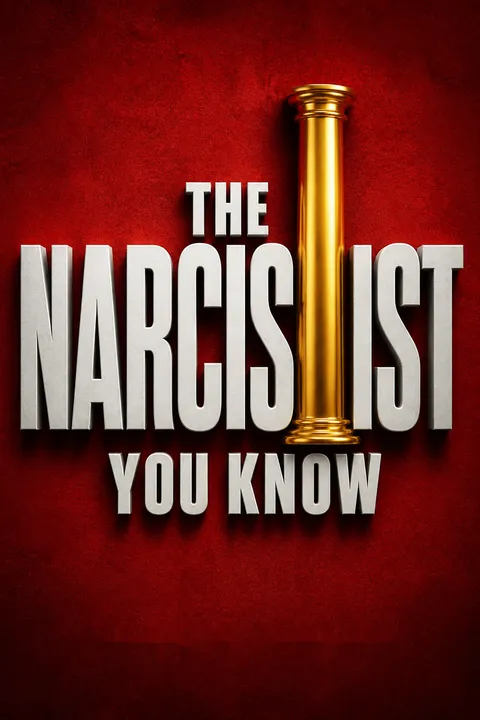
What is The Narcissist You Know by Joseph Burgo about?
- Comprehensive look at narcissism: The book explores narcissism as a complex psychological phenomenon, existing on a spectrum from healthy self-regard to pathological extremes.
- Focus on Extreme Narcissists: It centers on "Extreme Narcissists," who are more harmful than ordinary narcissists but may not meet the criteria for Narcissistic Personality Disorder.
- Practical coping strategies: Burgo provides tools for recognizing narcissistic behaviors and managing your reactions to minimize harm.
- Empathy and understanding: The author encourages readers to approach narcissists with empathy, recognizing their behavior as a defense against deep-seated shame.
Why should I read The Narcissist You Know by Joseph Burgo?
- Clarifies misconceptions: The book distinguishes between everyday vanity and true pathological narcissism, cutting through cultural clichés.
- Identifies harmful behaviors: Readers learn to spot Extreme Narcissists in their lives, even if they don’t meet clinical criteria.
- Offers actionable advice: Practical strategies are provided for setting boundaries and protecting your self-esteem.
- Promotes self-awareness: The book encourages reflection on your own narcissistic tendencies, fostering personal growth and healthier relationships.
What are the key takeaways from The Narcissist You Know by Joseph Burgo?
- Narcissism is a spectrum: Not all narcissists are the same; some are more destructive than others.
- Core of shame: Extreme narcissistic behavior is often a defense against unconscious shame and feelings of defectiveness.
- Types of narcissists: The book categorizes several types of Extreme Narcissists, each with unique behaviors but shared core traits.
- Coping is possible: With self-awareness, empathy, and clear boundaries, you can manage relationships with narcissists more effectively.
How does The Narcissist You Know by Joseph Burgo define the narcissistic continuum?
- Spectrum from healthy to pathological: Narcissism ranges from normal self-esteem to destructive, pathological forms.
- Extreme Narcissists in the middle: These individuals are more harmful than the average person but may not qualify for a clinical diagnosis.
- Two core traits: An inflated sense of self-importance and a lack of empathy are central to narcissistic behavior.
- Real-life examples: The book uses case studies to illustrate how people fall at different points on the continuum.
What are the main types of Extreme Narcissists in The Narcissist You Know by Joseph Burgo?
- Bullying Narcissist: Aggressive, competitive, and seeks to dominate others to feel superior.
- Narcissistic Parent: Idealizes or exploits their children to bolster their own self-image, often causing emotional harm.
- Seductive Narcissist: Uses charm and attention to manipulate and control others for admiration.
- Grandiose Narcissist: Projects an exceptional self-image, feels entitled, and often disregards social norms.
- Additional types: The book also covers Know-It-All, Self-Righteous, Vindictive, and Addicted Narcissists, each with distinct behaviors.
How does Joseph Burgo explain the role of shame in narcissism in The Narcissist You Know?
- Core shame as root: Narcissists develop grandiose defenses to hide deep, unconscious feelings of defectiveness.
- Triggers defensive behaviors: When shame surfaces, narcissists respond with blame, contempt, or rage to protect their self-image.
- Affects relationships: These shame-based defenses lead to manipulation, exploitation, or attacks on others, perpetuating conflict.
- Victims’ responses: Those affected by narcissists may develop their own defensive behaviors, fueling ongoing cycles of dysfunction.
What is narcissistic injury and how does it affect behavior, according to The Narcissist You Know by Joseph Burgo?
- Definition of narcissistic injury: It refers to blows to self-esteem from criticism, rejection, or perceived slights, which are especially painful for Extreme Narcissists.
- Emotional pain is shame: The core feeling is shame and humiliation, which narcissists defend against with blame or contempt.
- Universal experience: Everyone feels narcissistic injury, but Extreme Narcissists react more defensively and aggressively.
- Escalates conflict: These injuries often lead to retaliatory behavior and cycles of blame.
How does The Narcissist You Know by Joseph Burgo describe the "winner-loser" dynamic in narcissistic relationships?
- Central to narcissistic identity: Narcissists see themselves as winners and others as losers, using this binary to boost self-esteem.
- Manipulates others’ self-worth: They exploit others’ desire to be winners, either by including them in their grandiosity or making them feel inferior.
- Drives conflict: The need to maintain winner status leads to attacks, humiliation, or domination of those who challenge them.
- Perpetuates abuse: This dynamic keeps victims emotionally entangled and fuels ongoing cycles of abuse.
What are the characteristics and impacts of Bullying Narcissists in The Narcissist You Know by Joseph Burgo?
- Core shame and projection: Bullying Narcissists often come from abusive backgrounds and project their own shame onto victims.
- Winner-loser worldview: They divide the world into winners and losers, needing to dominate to maintain their self-image.
- Relentless retaliation: They quickly recover from ego wounds and retaliate fiercely, making them resistant to change.
- Social manipulation: They form alliances to isolate and persecute targets, often choosing vulnerable or successful individuals.
How does The Narcissist You Know by Joseph Burgo characterize Narcissistic Parents and their effects on children?
- Parental idealization: Narcissistic Parents live through their children, demanding perfection to support their own self-esteem.
- Developmental failure: They fail to provide unconditional love and appropriate limits, leading to children with shame and distorted self-worth.
- Long-term harm: Children may become overly empathic yet vulnerable to exploitation, or develop narcissistic traits themselves.
- Coping advice: Limiting or severing contact is often necessary, as these parents rarely change.
What practical strategies does The Narcissist You Know by Joseph Burgo offer for coping with Extreme Narcissists?
- Manage your reactions: Master your own defensive responses and avoid escalating conflict.
- Set clear boundaries: Protect yourself from abuse or exploitation by enforcing limits and consequences.
- Disengage when needed: For especially harmful relationships, minimizing or ending contact may be the healthiest choice.
- Self-awareness: Recognize your own vulnerabilities to avoid being manipulated or drawn into unhealthy dynamics.
What are the best quotes from The Narcissist You Know by Joseph Burgo and what do they mean?
- On empathy and boundaries: “Empathy for the narcissist does not mean tolerating abuse. It means understanding the pain behind the behavior while protecting yourself.”
- On the narcissistic continuum: “Narcissism is not an all-or-nothing trait; it exists on a spectrum, and we all have a place on it.”
- On coping: “You cannot change the narcissist, but you can change how you respond.”
- On self-awareness: “Recognizing your own narcissistic tendencies is the first step toward healthier relationships.”
- On the winner-loser dynamic: “For the narcissist, life is a contest, and there can only be one winner.”
About the Author
Other books by Joseph Burgo


Download PDF
Download EPUB
.epub digital book format is ideal for reading ebooks on phones, tablets, and e-readers.








