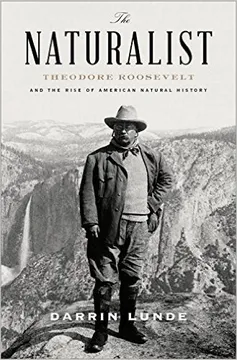


Key Takeaways
A dead seal launched Roosevelt's lifelong effort to join hunting with science.
Curiosity became a calling. At eight, Roosevelt found a dead seal displayed outside a Broadway grocery. He hurried home for a ruler and notebook, then returned to measure and describe it. He wanted the whole animal, but took home only its head and preserved the skull. The encounter joined the tactile study of an animal with the adventure he had encountered in books, and prompted him to create a boyhood natural-history museum filled with specimens.
A hunter-naturalist studies firsthand. Roosevelt used the term for a naturalist who applied hunting and collecting skills to learn about wildlife. For him, hunting was not a hobby added to science. It was a route into close observation, specimens, and the study of animals in their habitats. His later conservation work grew from that same direct involvement.
The seal is a compact origin story because it links wonder to a method: look closely, record what is seen, and preserve evidence. That method resembles hands-on learning in fields such as archaeology, where direct contact with material traces can make abstract knowledge vivid. The story also carries a moral tension. Roosevelt’s intimacy with animals depended on killing them, a practice that modern readers may reject even while recognizing the scientific and historical value of the resulting specimens.
Treat museum specimens as a long-term archive, not a cabinet of trophies.
Collections preserve evidence. Early natural-history museums grew from private cabinets of curiosities, but institutions such as the American Museum of Natural History and the Smithsonian developed collections for research as well as public display. A study skin is a compactly prepared animal specimen designed for storage and comparison, not a lifelike display mount. Thousands can fit in drawers, where researchers can examine variation across species, locations, and time.
A tag makes a specimen useful. Its label records where and when it was collected and by whom. Roosevelt’s boyhood collecting belonged to a much larger effort: Spencer Fullerton Baird recruited collectors and helped build the Smithsonian’s holdings, while Albert Bickmore organized the New York museum that Roosevelt’s father helped establish. These collections became a durable record of animal life.
A specimen collection is more than a warehouse: it is an archive whose future usefulness depends on reliable context. A label can turn an old skin into evidence about where a species lived at a particular time. That is a powerful model for data stewardship in any discipline. Yet an archive is never complete or neutral. What collectors choose to preserve, and which places they visit, shape the questions later researchers can ask.
Turn curiosity into knowledge by recording animals alive and dead.
Observation adds context. Roosevelt did not merely shoot birds and prepare their skins. In Egypt, he watched living birds, described their calls and feeding habits, and documented where they appeared. He also recorded physical features while specimens were fresh, before colors and other details could fade. The combination helped him distinguish an animal’s appearance from its behavior, a difference a preserved skin alone cannot supply.
Notes make experience testable. Roosevelt filled notebooks with observations, including detailed accounts of birds in the Adirondacks and on Long Island. His first published bird list, written with Henry Minot, included species the two had personally observed in one region. That focus on firsthand records made the work more dependable than a list assembled from hearsay or distant specimens.
Roosevelt’s practice joins two forms of evidence: an organism’s physical features and its actions in context. Modern field research still depends on this complementarity, because measurements alone rarely explain what an animal does, while observation without durable records can be difficult to verify. The strongest lesson is methodological rather than nostalgic: curiosity becomes science when observations are specific enough to be checked. Killing was central to Roosevelt’s method, but close observation does not inherently require it today.
Build capacity through practice, but do not mistake toughness for health.
Strength was learned, not inherited. Roosevelt grew up with asthma and other illnesses, often confined indoors. At twelve, after years of failed remedies, his father challenged him to build physical strength. Roosevelt began exercising, then tested himself outdoors in the Adirondacks and the Maine woods. He was still asthmatic, but these experiences gave him confidence and a way to pursue the adventurous life he had imagined.
Determination has limits. Roosevelt also wore glasses after discovering that poor eyesight had undermined his hunting. Later, a doctor warned that his heart was weak and urged him to avoid exertion. Roosevelt rejected the advice and continued hunting. His story shows how practice can enlarge a person’s sense of possibility, but it does not prove that illness can always be overcome by willpower or that defying medical guidance is wise.
The transformation is compelling because it treats ability as something built through repeated effort, not simply bestowed by nature. It also exposes the costs of a culture that equates bodily worth with strength. Roosevelt’s grit helped him enter a wider world, but his continuing illnesses complicate any simple triumph narrative. A useful distinction is between training to expand one’s options and treating every warning sign as a challenge to defeat.
Notice ecological collapse by comparing years, not isolated excursions.
Decline hides in snapshots. When Roosevelt first went west to hunt bison in 1883, the species had already been reduced from an estimated population of tens of millions by commercial hunting and the railroads. Roosevelt killed one of the remaining wild animals, seeing it as a last chance to experience the western frontier. George Bird Grinnell had a different advantage: repeated visits and years of observation made the disappearance of wildlife harder to miss.
Time changes what abundance means. A visitor who sees game on a single trip may conclude that it is plentiful. Grinnell watched numbers diminish across seasons and years, and his earlier fossil work had made extinction a real possibility rather than an abstract idea. His warnings helped Roosevelt recognize that the living West was changing faster than occasional hunters could perceive.
This is a lesson about scale and observation. A single visit can make a depleted landscape look healthy if the observer has no baseline for comparison. Long-running records reveal change that snapshots conceal, a principle relevant to everything from wildlife surveys to public health monitoring. The account also shows how personal experience can mislead: Roosevelt’s excitement at getting a bison did not initially help him see the system that was losing them.
Make hunting answer to fair chase and wildlife conservation.
A code limits the hunter. Fair chase is the principle that a hunt should give the animal a meaningful chance to escape, rather than turning the kill into a guaranteed outcome. After meeting Grinnell and seeing the decline of western game, Roosevelt helped found the Boone and Crockett Club. Its members promoted hunting ethics, wildlife protection, and laws against destructive practices. Roosevelt came to distinguish the sportsman’s hunt from market hunting, which killed animals on a commercial scale.
Conservation kept hunting possible. The club’s aim was not to end hunting but to preserve wildlife and habitats so that hunting could continue under limits. Roosevelt’s views remained rooted in the idea that humans were part of nature and could hunt responsibly. That position challenged both unrestricted slaughter and the belief that all human involvement with wildlife was inherently wrong.
The fair-chase principle turns restraint into part of the activity rather than a rule imposed from outside. That can make conservation persuasive to people who value hunting, because protecting animals also protects the possibility of future encounters. But a code grounded in preserving sport can leave unanswered whether an animal’s value depends on its usefulness to hunters. The principle is strongest when its limits protect wildlife regardless of who wants access to it.
Turn conservation concern into law and protected ground.
Organize for enforcement. The Boone and Crockett Club helped campaign to protect Yellowstone, where poachers and commercial interests operated with little consequence. In 1894, Congress passed a law establishing protection for the park’s wildlife and providing penalties for violations. The effort shows the practical gap between declaring a place protected and giving officials the authority to defend it.
Refuges make room for recovery. As president, Roosevelt used executive power to protect Pelican Island in Florida, a nesting site threatened by plume hunters who killed birds for hat decorations. His 1903 action created the first National Wildlife Refuge. By the end of his presidency, he had established fifty-one refuges. These measures connected public pressure, scientific concern, and government authority to the protection of specific habitats.
The story makes conservation concrete: protection requires boundaries, rules, and someone empowered to enforce them. Yellowstone’s case shows that scenery alone does not safeguard wildlife, while Pelican Island demonstrates how a small area can matter because animals depend on it for breeding. Roosevelt’s political influence gave naturalists a route from evidence to policy. Still, protected status is only a beginning; the book’s examples make clear that laws matter when institutions can carry them out.
Let field observation and specimen measurement correct each other's blind spots.
Data needs interpretation. Roosevelt and mammalogist Clinton Hart Merriam disagreed about how many bear species existed in North America. After examining more than two hundred skulls, Merriam proposed dividing grizzly bears into five species and black bears into four. Roosevelt argued that variation within a species could be mistaken for evidence of separate species. The proposed distinctions are not accepted today, but Merriam’s broader goal was to map how animals were distributed across the continent, which he called studying life zones.
Two methods reveal different patterns. Merriam emphasized large, comparable series of specimens and systematic measurement. Roosevelt emphasized behavior and firsthand experience with living animals. Either approach can miss something: field impressions may be subjective, while measurement can make minor differences seem more decisive than they are.
The disagreement is a useful portrait of science as a negotiation between measurement and judgment. Standardized specimens make comparisons possible, but deciding which differences matter requires interpretation. Field experience can supply context, although it can also tempt an observer to generalize from a few memorable encounters. The productive choice is not to crown one method as superior, but to ask what each can establish and what evidence would challenge its conclusions.
Tell nature vividly without inventing behavior or disguising uncertainty.
Storytelling can distort evidence. Roosevelt and other naturalists criticized popular animal tales by writers such as Reverend William J. Long, whose stories gave wildlife humanlike motives and behavior that scientists considered unreliable. Roosevelt argued that readers should not be asked to accept imaginative scenes as factual natural history. His own writing mixed narrative with observations of animal behavior, and he wanted natural-history books to be readable without sacrificing accuracy.
Accuracy does not guarantee trust. Roosevelt’s attack on Long became a public controversy. Long replied that Roosevelt’s own accounts of hunting were violent, and many readers sympathized with the popular clergyman. The naturalists may have had the stronger case about factual claims, but Roosevelt’s aggressive rhetoric made their campaign look like a powerful man bullying a beloved writer.
The dispute anticipates a lasting problem in science communication: emotionally satisfying stories can outrun what evidence supports. Vividness is not the enemy of rigor, but readers need to know where observation ends and interpretation begins. Roosevelt’s own position was vulnerable because he demanded accuracy while writing openly about killing animals. That contradiction did not settle whether Long’s stories were true, but it did affect who the public trusted.
Use expeditions to document life, while confronting the violence of collecting.
Africa united Roosevelt’s roles. After leaving the presidency, he led a Smithsonian expedition with his son Kermit and a team of field naturalists. The party included about 265 people, collected birds and small mammals as well as large animals, and produced specimens and observations for museum study. Roosevelt and Kermit killed 296 and 216 large animals respectively. The expedition also contributed records of species and behavior, including work later published with Edmund Heller.
Preservation came with a cost. Roosevelt wanted museums to document wildlife while it still existed, particularly species such as the increasingly scarce white rhinoceros. He regarded specimens as a record for the future, but creating that record required killing animals and relied on a large expedition operating in colonial East Africa. The expedition culminated his lifelong naturalism while making its ethical contradictions impossible to ignore.
The expedition brings the book’s central tension into full view: collecting can create lasting knowledge while irreversibly taking individual lives. Roosevelt’s goal of documenting wildlife before it vanished gives his actions a scientific rationale, but that rationale cannot automatically justify every specimen collected. The scale of the safari also directs attention to the porters and local people who made the work possible. A complete account of natural history must ask not only what was preserved, but who bore the costs.
Analysis
The book’s most important move is to treat Roosevelt’s hunting and conservation not as two disconnected reputations, but as parts of a single historical identity. He learned about animals through collecting, stalking, and preparing specimens, then brought those experiences into writing and public policy. That perspective explains why he could shoot wildlife and argue for its protection without considering himself inconsistent. It does not, however, resolve the moral question for a present-day reader. The book makes the historical logic intelligible, not universally persuasive.
Its museum history provides the framework for that argument. Specimens are not merely trophies or exhibits. Properly labeled and preserved, they form comparative evidence that can outlast the conditions of the original field encounter. Roosevelt’s insistence on behavior and narrative complements the systematic collections built by Baird and Merriam, while their methods expose a real tension between interpretation and measurement. The strongest account of nature needs both, along with a clear sense of what each method cannot show.
The biography also shows how scientific identity is shaped by institutions and personal need. Roosevelt’s childhood illness, his father’s expectations, his reading, and his early museum all helped make field naturalism a way to build a self. But that self was never simply private. The Boone and Crockett Club, Yellowstone protections, wildlife refuges, and the African expedition translated individual passions into organized action. In this account, conservation emerges not from sentimental distance alone, but from knowledge, political leverage, and decisions about what uses of nature should be limited.
The central challenge remains unresolved by design: preserving records of life is not the same as preserving life. Roosevelt’s expedition produced valuable knowledge, yet its methods depended on killing and on a colonial expedition structure. That contradiction is not a flaw to edit out of the story. It is the question the story leaves readers: what forms of knowledge justify intervention, and who gets to decide the price?
Glossary
hunter-naturalist
hunter who studies wildlifeA naturalist who uses hunting and specimen collecting as methods of firsthand study. Roosevelt treated natural history as his primary purpose and hunting as a way to observe, identify, and collect animals. The term distinguishes this approach from sport hunting with only incidental interest in wildlife.
study skin
compact research specimenA small mammal or bird specimen prepared in a uniform, space-saving form for scientific collections. Unlike a display mount, a study skin is designed for storage and comparison with many other specimens. Its value depends on an attached label recording details such as collection place, date, and collector.
fair chase
ethical pursuit of gameA hunting principle that rejects methods making a kill virtually certain and preserves the animal’s opportunity to escape. Roosevelt and the Boone and Crockett Club treated fair chase as a moral standard for sport hunting. It was part of a broader effort to distinguish regulated hunting from commercial slaughter.
nature hunter
hunter seeking close involvementThe book’s term for a hunter drawn to direct participation in the natural world and close knowledge of the animals pursued. A nature hunter is not defined mainly by hunting for food or by the challenge of sport. Museum collectors are presented as a specialized form, collecting specimens to support natural-history study.
life zones
geographic patterns of wildlifeClinton Hart Merriam’s project for understanding and mapping how animal species are distributed across North America. By comparing specimens collected from different places, Merriam sought to identify patterns in wildlife distribution and the environmental or geographic forces associated with them. It required systematic sampling across many locations.
lumpers and splitters
opposing species classificationsTerms for two approaches to biological classification. Lumpers group a wider range of variation under fewer species names, while splitters treat narrower differences as evidence for additional species. Roosevelt tended toward lumping, while Merriam often split forms into more species. Their dispute illustrates how evidence still requires judgment about which differences are taxonomically meaningful.
nature fakers
writers accused of fabricating natureA label used in a public controversy over popular wildlife stories that naturalists judged inaccurate or exaggerated. Theodore Roosevelt and other scientists criticized writers such as Reverend William J. Long for presenting imagined or anthropomorphic animal behavior as fact. The dispute also exposed the difficulty of defending scientific authority when popular storytelling has a broad audience.
Boone and Crockett Club
sportsmen's conservation organizationAn organization founded by Roosevelt and other prominent hunters to promote fair-chase hunting, study of wildlife, and protection of big game. The club used its members’ influence to support conservation laws, including efforts to protect Yellowstone. Its members sought to preserve wildlife and hunting opportunities through restraint and government action.
Download PDF
Download EPUB
.epub digital book format is ideal for reading ebooks on phones, tablets, and e-readers.








