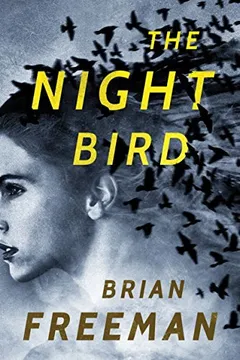


Plot Summary
The Bridge Takes Brynn
A traffic jam traps Lucy Hagen and her carefree roommate, Brynn Lansing, high above the Bay in Lucy’s worst place: a bridge. Lucy glimpses a bone-white mask in a nearby car, but doubts her own frightened eyes. Then Brynn abruptly claws at her face, scrambles over the Camaro, and climbs a bridge cable as if something is chasing her.
Lucy’s phobia leaves her frozen on the pavement, unable to reach her. Brynn loses her grip and falls into the water. Homicide inspector Frost Easton arrives to question Lucy, who describes a breakdown unlike anything Brynn had shown before. When Lucy mentions the mask, Frost recognizes a pattern: another woman, Monica Farr, died after a sudden, similar episode.
The first death turns private fear into public danger. Lucy’s bridge phobia is not merely a character detail: it determines what she can do when Brynn needs help, and her paralysis deepens the guilt of witnessing the fall. Brynn’s abrupt transformation also disrupts the comforting idea that distress always gives warning. The masked face may be a real clue or a frightened perception, but Frost treats it as evidence rather than dismissing Lucy. The case begins with two competing uncertainties, what happened to Brynn and whether anyone can trust what they saw.
Memory Under Glass
At home, Frost studies a video of Monica Farr’s death at a wedding reception. The footage shows the previously ordinary guest suddenly screaming, firing a gun, and killing herself, with no apparent medical or drug-related explanation.
Across the city, psychiatrist Francesca Stein, known as Frankie, guides fourteen-year-old Jillian Clark through a treatment for her terror of water after a kayaking accident. Using hypnosis, images, and repeated recollection, Frankie helps Jillian remember a safer version of the event.
Jillian drinks water without panicking. Frankie’s success reveals both the promise and danger of her method: memory can be altered, not simply soothed. In private, Frankie is still grieving her father and questioning whether the memories people preserve are as dependable as they believe.
These parallel scenes establish the novel’s central ethical friction through action rather than theory. Frankie’s method works: Jillian can drink water again. Yet the improvement depends on substituting a new account of the accident, which makes relief inseparable from uncertainty about truth. Frost, meanwhile, approaches Monica’s death as a puzzle that recorded evidence might solve, though the video cannot explain the change in her mind. Frankie’s private grief gives her professional confidence a crack. She studies memory for a living, but cannot use that expertise to make her own loss clear.
Brynn Forgot the Cat
Frost interviews Brynn’s boyfriend, Gabriel Tejada, who recalls that she once feared cats after a severe attack as a teenager. Recently, after seeing a psychiatrist, Brynn had begun playing with his cats and later seemed unable to remember the attack at all.
At the apartment she shared with Lucy, Frost finds more gaps: Brynn missed work and a dental appointment, and Lucy recalls her briefly seeming unsure what day it was. The changes began before the bridge incident. Lucy identifies Brynn’s therapist as Francesca Stein, so Frost visits Frankie and questions her about memory reconsolidation.
Frankie confirms that she treated Brynn, but insists the sessions ended weeks earlier and could not explain the sudden violence. Frost now has a plausible link between both dead women and one controversial practitioner.
Brynn’s forgotten cat attack is the first concrete sign that the deaths may involve more than sudden illness. Her changed behavior looks like successful treatment, yet the blankness around its cause makes improvement unsettling. Frost’s investigation advances through intimate details that friends might once have celebrated: a phobia gone, a relationship made easier. The missed appointment and confusion about the calendar complicate that apparent recovery. Frankie becomes a suspect not because she is clearly guilty, but because her work alters the very evidence on which the case depends: what each person remembers about herself.
A Threat Finds Christie
Frankie receives a sequence of anonymous messages from someone calling himself the Night Bird, including a threat to watch her die. She suspects a stalker but has no way to identify him. That night, he sends a photograph of Christie Parke, another former patient, at a crowded bar and warns Frankie that she has minutes to save her.
Frankie runs there, but Christie has already been triggered into terror. She bolts into the street and is struck by a truck. Frost questions Christie’s date and learns she had seemed fine until the sudden episode. Frankie recognizes the pattern and the victim: Christie had come to her for help with a crippling fear of needles. Three patients have now suffered abrupt, catastrophic breakdowns.
The threat changes the investigation from retrospective to urgent: Frankie is no longer simply explaining deaths, she is being forced to watch another one unfold. The Night Bird exploits her professional responsibility by making her feel that any delay is a choice with a body attached. Christie’s ordinary evening sharpens the horror of the attack, because no visible crisis prepares the people around her. The killer’s knowledge of Frankie’s patients suggests access to their private fears. The clinic’s promise of safety has become a map of vulnerabilities for someone else to use.
The Song Returns
Frost notices that the same Carole King song, Nightingale, played during the breakdowns of Monica, Brynn, and Christie. Christie’s records show that she was abducted from a parking garage the morning before her death. Security footage captures a gloved stranger taking her, then driving away in her car. Near the scene, Frost finds an album case concealing needles, a pointed echo of Christie’s fear.
Meanwhile, Frankie’s former patient Todd Ferris approaches her on a running trail. He claims to have unexplained memories of women being tortured in a white room, including Brynn, and says he loses hours or days at a time. His account sounds implausible, but the victims’ faces and the timing make Frankie uneasy.
The song turns atmosphere into mechanism: a familiar piece of music is now evidence that the episodes were deliberately prepared. The garage footage adds a physical interval between abduction and breakdown, suggesting the victims were handled before anyone saw them lose control. The hidden needles show how precisely the violence can be tailored to a person’s fear. Todd’s story complicates rather than clarifies the case. He offers a witness account that matches details not publicly explained, but his missing time also makes him impossible to assess. Knowledge itself becomes suspicious.
A Patient Walks In
Frost learns that someone may have compromised Frankie’s phone, giving the stalker access to her calls and therapy sessions. Even so, Lucy visits Frankie to discuss her lifelong fear of bridges.
Frankie explains that she is suspending new treatments until the murders are understood, and Lucy leaves without agreeing to therapy. Their conversation makes clear how much Lucy wants to become less afraid and how exposed Frankie’s practice may be. Frost keeps watch outside, then arranges to meet Lucy later.
Their growing affection is complicated by his memory of his murdered sister, Katie, whose loss still governs his instinct to protect Lucy. Before they meet, an unknown sender challenges Frost to name his worst memory, extending the Night Bird’s game to the detective himself.
Lucy’s consultation places the novel’s most vulnerable fear directly inside the killer’s likely reach. Frankie’s caution is responsible, but it cannot undo the surveillance already underway. Her therapy room, designed as a refuge, has become porous. Lucy’s wish to change is also personal rather than merely clinical: she does not want fear to dictate where she can live or who she can become. Frost’s protective feelings carry their own distortion, because Lucy recalls Katie to him. His care is genuine, yet grief risks turning a living woman into a substitute for someone he lost.
Lucy Vanishes
After leaving a note for Lucy to stay alert, Frost discovers that the warning has arrived too late. A masked man attacks her in the alley behind her apartment, injects her, and carries her away in a car with its trunk open. Frost finds the disturbed garbage and a magazine addressed to Brynn, evidence that the same predator had been near both roommates.
With no reliable lead, he turns to Herb, an artist and longtime friend whose network among the city’s homeless residents can spread Lucy’s photograph quickly. A message from the Night Bird directs Frost to the place where Katie was found: a stolen blue Malibu near Ocean Beach. The killer has chosen Frost’s deepest wound as the next stage of the search.
The abduction shifts Lucy from witness to captive and makes the case intimate for Frost in a way he cannot easily contain. The attacker’s use of a needle turns Christie’s clue into a method, while the magazine links Lucy’s alley to Brynn’s history. Frost’s search depends on community knowledge rather than police authority alone; Herb’s network recognizes that people overlooked by official systems can be essential witnesses. The Ocean Beach message is not only a location clue. It is an assault on Frost’s grief, designed to make him relive the discovery that shaped his life.
The Malibu at Ocean Beach
At Ocean Beach, Frost opens the stolen Malibu and finds Lucy beneath a blanket like the one that covered Katie’s body. For a moment, the staged resemblance nearly overwhelms him; then he feels Lucy’s heartbeat. She is alive, drugged, and unable to account for the day she has lost.
On the drive toward the hospital, panic seizes her and she bolts from the SUV with Frost’s phone. A melody begins playing nearby, but it does not trigger the same breakdown that killed the other women.
Frost catches up and takes her for medical care. Tests later show barbiturates in her system, and police place an officer outside her apartment. Lucy remembers almost nothing of her captivity, leaving Frost unsure whether the Night Bird’s plan has failed or merely paused.
The rescue gives the story its first breath of relief, then immediately complicates it with memory loss. Lucy is physically present but cannot narrate what happened to her, so survival does not restore control. The staged car and blanket show how the Night Bird uses Frost’s past as part of his method, not simply as personal taunting. The song’s apparent failure offers hope without proof. Frost wants a clean answer, but Lucy’s safety cannot be measured by whether she reacts in one particular way. The missing day remains an open wound in both the investigation and her sense of self.
Newman Steps Forward
Frankie follows Darren Newman, a former patient whose charm once persuaded her to support treatment instead of prison after a rape charge. Later, student Merrilyn Somers was murdered, and although many suspected Darren, DNA evidence sent another man to prison.
Frankie now recognizes Darren in one of Todd’s videos and confronts him at his warehouse. He grabs and threatens her, then leaves her with no proof she can take to the police. Frost follows her to Darren’s Berkeley home and finds him with his assistant, who supports his account of an ordinary evening.
The encounter gives Frost reasons to distrust Darren, but not enough to arrest him. At home, Frankie’s husband, Jason, finally admits he once altered her memory of her father’s death at her request.
Darren’s charisma matters because it has already influenced institutions as well as Frankie. Her earlier judgment helped him avoid serious consequences, making present suspicion feel entangled with shame. Yet the apparent fit is dangerous: a known predator can become a convenient explanation before evidence supports it. Jason’s confession makes that danger personal. Frankie has spent her career changing other people’s memories, only to learn that someone she trusted changed hers. The parallel does not make the actions equivalent, but it strips away her assumption that consent or good intentions can remove the cost of rewriting a life.
The Second Bridge
While Frost and Frankie search San Francisco’s dark parkland for Darren and Todd, Lucy remains under police protection at home. A call from the Night Bird brings back the imagined mountain bridge and the music that had failed to affect her at Ocean Beach.
She leaves a message for Frost, then takes a carving knife from her kitchen and slips out through the back door. At Stow Lake, Frost spots Todd with a gun, pursues him up Strawberry Hill, and is struck from behind during the storm.
Frankie finds Frost injured, then realizes Lucy is gone. Remembering that Darren stopped at a storage facility in Dogpatch, she gives Frost a new lead. Their hunt shifts from the exposed streets to the place where the Night Bird may be staging his victims’ fear.
Lucy’s apparent recovery proves fragile because the trigger can be reactivated after the first rescue. Her decision to leave is not a reasoned escape but the consequence of a carefully planted command working through fear. The knife raises the stakes from self-endangerment to imminent violence. At the same time, Frost’s pursuit of Todd separates him from the person he is trying to protect, while Frankie must act on incomplete memory and observation. The storage facility clue shows her beginning to trust her own reasoning again, but the need to guess where Lucy has gone exposes how little control anyone has.
Tea Crates and Photographs
Police break into the Dogpatch storage unit and find painkillers hidden beneath crates of tea, along with a concealed envelope of photographs. The pictures show Merrilyn Somers being watched and, later, dead; other women appear in the collection as well.
The evidence supports the belief that Darren has stalked and killed women, though it does not explain the Night Bird’s full scheme. A phone signal leads Frost and Lieutenant Jess Salceda to an abandoned factory rigged with traps.
As they search, Nightingale plays from a discarded phone, followed by Frankenstein, a pointed warning that Frankie is the real destination. She sees a light blinking in a nearby abandoned building and runs toward it, while Frost breaks out of the factory to follow.
The photographs transform suspicion into a record of predation, but they do not settle who is responsible for the current murders. Darren’s past offers a powerful narrative that can eclipse other possibilities, exactly as a planted memory can eclipse an inconvenient fact. The factory’s traps turn the investigation into a staged performance, while the two songs divide its purpose: one activates victims, the other summons Frankie. Her choice to run toward the signal is both courage and vulnerability. The Night Bird has learned that the investigator can be manipulated by urgency as effectively as any captive.
The White Room Breaks
Inside the abandoned building, Frankie finds Todd, Lucy, and Darren in a vast white room built from projection screens. Darren is bleeding on a chaise, and Lucy grips a bloody knife, convinced she is still trapped above a mountain gorge.
As Frankie approaches, the room shifts into Lucy’s bridge nightmare and the Night Bird’s voice urges her toward violence. Frost and Jess arrive with armed officers. One officer finds the controls and shuts off the projections, but Lucy lunges at Frankie before the room goes dark.
Jess and another officer shoot Lucy to stop her stabbing Frankie. Lucy survives, while Darren appears to die. The scene seems to confirm the worst: Frankie’s methods have been turned against her patients, and the man she suspected has been killed before he can explain himself.
The white room is a physical version of the story’s moral problem: an engineered reality can feel more convincing than the world outside it. Lucy does not choose violence from a stable understanding of events; she acts within a fear that has been made sensory and immediate. Frankie’s knowledge of hypnosis gives her a chance to reach Lucy, but not enough time to control the room or the armed response. Jess’s shot prevents a fatal stabbing and also creates a new injury that cannot be undone. Even the apparent death of Darren offers no closure, only another scene that may have been staged.
The Boy in the Choir
After the white-room attack, Frankie recognizes that Darren’s lifelong avoidance of white rooms makes him an unlikely architect of the torture chamber. Todd disappears from the hospital, and tests show that he was never drugged. Records reveal that Todd Ferris is not a real identity.
At a diner, a photograph delivered to Frankie shows the real Todd, Todd Farley, beside Merrilyn Somers in their Reno high-school choir. They had been engaged. The discovery explains his fixation on Darren and his hatred of Frankie, whose testimony helped Darren avoid prison.
A card directs Frankie to Point Reyes, where her father died. Todd confronts her there, admits he killed Darren and orchestrated the attacks, then claims Frankie’s sister Pam pushed their father from the cliff.
The choir photograph replaces a clinical relationship with a lost intimate history: Todd was not a detached witness but a man whose future had been organized around Merrilyn. His revenge is directed at Darren, but also at Frankie and the justice system that failed to protect her. The false identity and clean toxicology expose how thoroughly he has managed the evidence. His claim about Pam is different from the other revelations because it enters a memory Frankie cannot verify at will. Todd’s leverage comes from knowing that her past has already been altered, leaving her desperate to distinguish remembered truth from an imposed story.
The Cliff Gives Way
On the Point Reyes trail, Todd forces Frankie to confront the memory she asked Jason to erase. She recalls that Pam was arguing with their father over her affair with Jason and pushed him from the cliff; Todd confirms what Frankie now sees. Frost reaches them as they struggle near the edge. He pulls Frankie clear, and Todd falls to his death.
Later, Pam admits the affair and her father’s threat to expose it, though Frankie refuses to give Frost her confession. She orders Pam and Jason out of her life and vows to stop altering patients’ memories. Meanwhile, Lucy recovers in hospital and decides to return to Modesto. Frost visits with Shack before joining Duane and Herb at home, ending the case among friends rather than alone.
The resolution refuses the easy repair of a recovered memory. Frankie gains the truth, but it arrives through coercion and cannot restore her father, marriage, or trust in her sister. Her choice to withhold Pam’s confession protects family at the cost of public justice, a decision shaped by the same divided loyalties that once made her vulnerable. Lucy’s return to Modesto is not defeat; it is a practical boundary after a city and a relationship proved too frightening to inhabit. Frost ends among chosen family, while Frankie chooses a future built around helping people face memories rather than replacing them.
Analysis
The novel treats memory as a form of power that can heal, manipulate, and conceal, depending on who controls the conditions of recollection. Frankie’s work begins from compassion: she wants people such as Jillian to live without being governed by terror. But the same tools become coercive when the Night Bird turns phobias into scripts for self-destruction. The victims’ actions are real even when the worlds prompting them are fabricated, exposing a cruel gap between psychological cause and physical consequence.
The mystery’s structure makes readers share that instability. Evidence does not simply reveal a culprit; it can be arranged to produce a persuasive false account. Darren’s genuine history of predation makes him an ideal suspect, while Todd’s supposed vulnerability encourages Frankie to interpret his clues as pleas for help. The eventual revelation does not excuse Darren or erase his crimes. It shows how a true accusation can be exploited to hide a different crime.
Frankie’s erased memory of her father is the emotional counterweight to the investigation. She once treated memory alteration as a patient’s choice, but Jason’s intervention shows how consent can be entangled with grief, fear, and unequal knowledge. When the truth returns, it does not restore her old life. It exposes the affair, the murder, and the family’s complicity, leaving Frankie with facts but no clean remedy. Her refusal to keep rewriting patients’ pasts is therefore a change in practice, not a claim that memory is sacred or accurate. She accepts that healing may mean learning to live beside what cannot be removed.
Frost’s story offers a contrasting response. His memories of Katie remain painful, yet they anchor his sense of responsibility and connect him to Duane, Herb, and Lucy. The ending does not promise that pain disappears. Instead, it locates survival in chosen relationships, honest limits, and the difficult work of distinguishing what one remembers from what one wishes had happened.
Review Summary
The Night Bird received mixed reviews, with many praising its gripping plot and psychological elements. Readers enjoyed the exploration of memory manipulation and the suspenseful narrative. Detective Frost Easton was well-received as a protagonist. Some critics found the characters underdeveloped and the plot predictable. The book's pacing and Freeman's writing style divided opinions. Despite some criticism, many readers found it an engaging thriller and looked forward to continuing the series.
People Also Read
Characters
Frost Easton
Grief-marked homicide detectiveA San Francisco homicide inspector with a history degree, a law degree, and a habit of noticing details other people dismiss. Frost is warm and approachable, but his work is shaped by the murder of his younger sister, Katie, and by the burden of having found her body. He lives with his cat, Shack, and is close to his chef brother, Duane. Frost’s instincts are patient rather than theatrical: he listens, checks records, and follows small inconsistencies until they form a pattern. His protectiveness can become personal, especially when someone’s vulnerability recalls Katie. Beneath his humor and solitary habits is a man trying to make sense of how violence redirected his life.
Francesca Stein
Controversial memory therapistA prominent psychiatrist who uses hypnosis and carefully designed sensory cues to help patients reshape traumatic memories. Frankie is intelligent, disciplined, and committed to giving people relief when conventional therapy has failed them. Her cool manner grew partly from a childhood with an exacting, emotionally distant father, and she often approaches intimacy as if it were another problem to solve. Her work has brought professional acclaim as well as ethical criticism. She is capable of compassion, but her confidence in her method can make her underestimate the emotional cost of intervention. Her relationships with her sister, husband, and patients reveal how difficult it is for her to ask for help or admit uncertainty.
Lucy Hagen
Bridge-fearing witnessA young Macy’s employee who shares a cramped San Francisco apartment with Brynn. Lucy lives with a severe fear of bridges, an anxiety that can overwhelm her body and leave her unable to move. She is observant, kind, and self-conscious beside Brynn’s easy confidence, yet she wants a life that feels chosen rather than merely endured. Lucy is drawn to Frost’s steadiness and enjoys the possibility that someone sees more in her than she sees in herself. Her curiosity about therapy reflects a genuine wish to change, but also her impatience with being defined by fear.
Todd Ferris
A patient in fragmentsA guarded former patient of Frankie’s who appears soft-spoken, troubled, and uneasy about leaving a paper trail. He describes intrusive memories and periods of lost time, while keeping the details of his life and past deliberately vague. His reluctance to trust doctors or police makes him difficult to help, and his quiet manner invites others to underestimate how much he is withholding. Todd’s place in the story reflects the danger of treating a person’s account as either wholly reliable or wholly false. He is most compelling when his stillness gives way to flashes of anger and fear.
Darren Newman
Charming suspected predatorA wealthy, polished young businessman whose looks and social ease conceal a history of accusations involving women. Darren knows how to make a story work in his favor, and his family’s resources have helped him avoid serious consequences. He is skilled at turning scrutiny back on the people who question him, especially those who already feel compromised. Frankie once treated him and believed she could distinguish his genuine wounds from his manipulations. His presence in the investigation forces Frost and Frankie to separate compelling suspicion from evidence.
Pam Stein
Frankie’s defiant younger sisterFrankie’s younger sister, whose beauty and social confidence contrast with her sibling’s reserved intellectual intensity. Pam has spent much of her life resisting the demanding standards their father imposed, and she has moved through unstable work, addiction, and difficult relationships. She resents Frankie’s habit of managing her life, even when that control comes from concern. Pam can be funny, sharp, and fiercely independent, but she also knows how to use charm to avoid uncomfortable questions. Her bond with Frankie is built from shared history, rivalry, and a persistent wish to be treated as an equal.
Jason
Frankie’s neuroscientist husbandA British neuroscientist who works in pharmaceutical research and shares Frankie’s intellectual habits and emotional reserve. Jason understands the biological mechanisms behind memory, while Frankie handles their therapeutic application. Their marriage is built on professional affinity and mutual respect, but closeness has become difficult as Frankie’s work and grief consume her attention. Jason often responds to emotional conflict with analysis rather than comfort. His belief that he is helping can obscure how much control he exercises over people close to him.
Brynn Lansing
Lucy’s confident roommateLucy’s tall, attractive roommate and fellow Macy’s employee, Brynn moves through social life with a brightness Lucy envies. She is warm rather than cruel, and her confidence makes her a natural fit in parties and relationships. Brynn is dating Gabriel Tejada and appears to be imagining a settled future with him. Her polished habits and cheerful manner lead those around her to assume they know her well, even when important parts of her experience remain private.
Gabriel Tejada
Brynn’s devoted boyfriendA Sausalito attorney who has been dating Brynn for several months and believes their relationship has a future. Gabriel is confident and financially established, but grief makes him reveal details he might otherwise have overlooked. His recollection of Brynn’s former fear of cats becomes an important clue because he recognizes the change in her as more than ordinary personal growth. He is sincere about his affection, even though he did not know everything happening in Brynn’s life.
Jess Salceda
Frost’s blunt police lieutenantA veteran San Francisco police lieutenant who mentors Frost and leads with hard-won street knowledge. Jess is physically tough, outspoken, and impatient with institutions that protect powerful people. She and Frost share history from his sister’s murder case, along with a complicated personal relationship neither treats lightly. Jess favors decisive action and accepts the emotional cost of choices that must be made quickly. Her skepticism keeps Frost from confusing loyalty with proof.
Marvin Stein
Frankie’s demanding fatherA physicist and father to Frankie and Pam, Marvin values achievement, argument, and intellectual rigor. He expects his daughters to meet standards he rarely softens, and his attention often feels more like evaluation than affection. Frankie has long sought his approval, while Pam has responded by rejecting the life he imagined for her. Their family camping tradition gives Marvin a setting in which to turn personal conflicts into abstract questions, a habit that leaves both daughters carrying unresolved feelings.
Merrilyn Somers
Gifted student and singerA bright, ambitious computer science student from Reno who combines academic drive with a love of singing and games. Merrilyn has won scholarships, completed competitive internships, and built a future that seems unusually well mapped for someone so young. She is engaged to her high-school sweetheart, Todd, and her confidence does not depend on proving herself to strangers. Her life connects the investigation to an earlier failure of justice and gives the case a human cost beyond its current victims.
Duane Easton
Frost’s chef brotherFrost’s older brother, a high-energy chef who runs a food truck and still sends meals home for Frost. Duane is irreverent and playful in private, though demanding in a professional kitchen. He and Frost became closer after a family tragedy, and their affection often arrives disguised as teasing. Duane is one of the few people who can challenge Frost without making him retreat into silence.
Herb
Artist with citywide connectionsA longtime friend of Frost’s, Herb is a former city councilman and a celebrated sidewalk artist who knows people across San Francisco’s social boundaries. His network includes journalists, politicians, and unhoused residents, making him an informal source of information beyond official police channels. Herb is imaginative and humane, but not naive about the damage caused by power or memory. He offers Frost both practical help and a broader view of the city he investigates.
Monica Farr
A guest at a weddingA young nurse who attends a wedding as a stranger’s last-minute date. Monica has built her life around caring for others, but a devastating experience at work leaves her seeking help with memories she cannot escape. Her case is the first known death that makes Frost suspect a pattern.
Christie Parke
A patient afraid of needlesA Wells Fargo loan officer who is recently divorced and cautiously enjoying life on her own. Christie likes attention and dating, but she is also unsettled by a strange feeling that something important has gone missing from her memory. A past medical scare has left her with a powerful fear of needles.
Jillian Clark
A teenager afraid of waterA bright fourteen-year-old who wants to become an eye doctor like her mother. After nearly drowning during a kayaking trip, Jillian develops a fear so intense that even seeing water can bring back the experience. She is open to Frankie’s help and eager to return to ordinary teenage life.
Shack
Frost’s traveling catA small black-and-white cat whom Frost adopted while investigating his former owner’s murder. Shack rides with Frost, charms Lucy, and has an uncanny instinct for when someone nearby is upset. His quiet presence gives Frost a domestic connection to a city otherwise filled with crime scenes.
Simona
Darren’s knowing assistantA young woman who works with Darren and is involved with him. Simona is blunt, self-assured, and unwilling to accept the police’s assumptions about the man she knows. Her presence provides Darren with an apparent alibi and helps him deflect suspicion.
Plot Devices
Memory reconsolidation
Rewrites traumatic associationsFrankie’s therapy uses hypnosis, repeated recollection, music, and tailored images to change how patients experience a memory. Her practice treats memory as something malleable: recalling an event can make it open to revision. The technique helps patients whose fears have taken over daily life, as Jillian’s recovery demonstrates, but it also raises questions about identity, consent, and the reliability of testimony. The Night Bird learns enough about Frankie’s methods to weaponize their logic, giving victims new emotional associations and false experiences that feel real. Jason’s alteration of Frankie’s own memory makes the method’s risks intimate rather than theoretical.
Nightingale
Activates planted fearThe Carole King song appears at the deaths of Monica, Brynn, and Christie, then returns in later attacks as a cue connected to hypnotic suggestions. Its gentle sound contrasts with the terror it unleashes, making an ordinary piece of music function like a hidden switch. Frost notices the recurrence and traces how the song was requested or played at each scene. The repeated melody links separate crimes and demonstrates that the victims’ breakdowns were planned. It also becomes part of the Night Bird’s private symbolism, which extends beyond the victims to Frankie and Frost.
The white room
Projects fear as realityA chamber of screens and projectors can transform its white walls, floor, and ceiling into vivid environments tailored to a captive’s phobia. Drugs and hypnotic suggestion make the projected setting feel immediate, while sound and commands keep the victim responding to the constructed world. The room is the practical extension of Frankie’s audiovisual treatment space, but its purpose is coercion rather than relief. It allows the Night Bird to stage fear as an experience the victim cannot easily distinguish from reality. The apparent climax there shows how quickly a constructed memory can produce real bodily danger.
The smiling mask
Hides and advertises identityThe grotesque white mask appears near the bridge, in a public square, and in the Night Bird’s threats. Its exaggerated grin and insect-like eyes make it instantly recognizable, while concealing the wearer’s face. It operates as both disguise and performance: the killer invites witnesses to remember the mask even as he hides the person beneath it. The image binds otherwise separate scenes and helps create the Night Bird persona, turning the crimes into a spectacle aimed at Frankie and Frost. Its visibility does not make the investigation easy, because the wearer repeatedly escapes before anyone can identify him.
The stolen memories
Obscures guilt and motiveMissing time, planted recollections, and altered memories interfere with ordinary investigation. Victims cannot explain what happened during their captivity, while Todd presents fragmentary visions that direct Frankie toward a suspect. Darren’s history supplies a convincing theory, but the clues are arranged to make that theory feel complete before it is tested. Frankie’s own erased memory of her father’s death mirrors the victims’ vulnerability and turns her past into leverage. The device repeatedly asks whether a vivid memory is evidence, a construction, or both, making the reader experience the same uncertainty that clouds the case.
Download PDF
Download EPUB
.epub digital book format is ideal for reading ebooks on phones, tablets, and e-readers.








