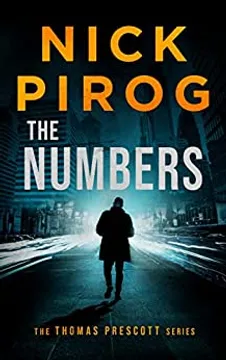


Plot Summary
Prologue
A killer named Lew watches a Blockbuster assistant manager finish closing, then attacks him in the alley and carves three numbers into his forehead. The careful ritual is personal: the sight of a rat has revived the memory of Lew’s father, whose body was found in a sewer after he disappeared.
Lew leaves the victim beside the dumpster, pleased that his game has begun. The numbers look like a signature, but they are also a message meant to draw someone into a story that began decades earlier.
The prologue makes a murder feel like both violence and authorship. Lew’s precise carving turns a body into a page, while his revulsion toward rats exposes the old wound driving his composure. The contrast matters: he treats the killing as controlled procedure, but his memory is still governed by a child’s helpless view of his father’s violated corpse. His game is therefore not only a puzzle for investigators. It is a way to force private history into public view, even as the violence makes that history harder to read.
A Body at Love Park
On October 18, 2011, Thomas Prescott1 watches skateboarders at Love Park before crossing to the Occupy Philadelphia encampment, where students discover Brooke Wexley3 dead in a tent. Thomas,1 a former Seattle homicide detective fired after repeatedly breaking procedure, enters before police secure the scene and recognizes strangulation.
Brooke3 is twenty, a Penn student, and the daughter of Nicholas Wexley,3 one of the city’s richest financiers. Thomas1 gives detectives Mike Gallow9 and Desiree Moore7 what he observed, then visits his sister2 Lacy2 at swim practice.
When Captain Folch4 tells him a separate serial killer has murdered three people, Thomas1 accepts an invitation to help. Brooke’s3 highly publicized killing begins a second investigation beside the one that will soon consume him.
Thomas’s first move is instinctive and useful, but it also repeats the behavior that cost him his badge: he acts before the institution authorizes him. Brooke’s death makes that flaw productive again, since his willingness to enter the tent gives the investigators an early assessment. Yet his private life is not separate from the case. His visit to Lacy’s practice shows the protective habit that grew after their parents died, and his quick acceptance of Folch’s offer suggests that work is also how he keeps fear at a manageable distance.
Three Digits, Three Murders
At an FBI briefing, Thomas1 learns that the earlier victims were marked 503, 914, and 386. The task force assumes the numbers identify the victims’ birthplaces and predicts another target from the 386 region.
Thomas1 argues that the carvings are part of a narrative, not merely a map, and his guess that they might represent weights earns him ridicule rather than access to the case files. A background check then disqualifies him because his Seattle supervisors describe his methods as reckless and his evidence as unreliable.
Shut out, Thomas1 searches public records and discovers the old Numbers lottery, in which players chose three digits, often with help from dream books that converted dream symbols into numbers. He decides the victims’ markings may refer to those books.
Thomas’s insight begins with a refusal to accept the task force’s convenient explanation, but his failed weight theory reminds us that intuition is not the same as proof. His exclusion has a real history behind it: he solved crimes, yet his shortcuts damaged prosecutions. The Numbers lottery offers a different model of order, one where ordinary people use dreams and shared customs to make uncertain life feel legible. Thomas enters that system as an outsider, and his next advance will depend on listening to people whose knowledge he cannot retrieve from police databases.
Ms. Ruby Opens the Books
Desiree Moore,7 confined to bed after a pregnancy scare, invites Thomas1 to her mother’s6 home, where Ms. Ruby6 has collected decades of dream books. Ruby6 explains how Numbers players chose bets from dreams, anniversaries, and hunches, and how the informal lottery helped neighbors survive when banks excluded them.
Thomas1 and Ruby6 search forty-three books for the three murder numbers, but Desiree’s7 careful spreadsheet reveals the decisive pattern in a single 1954 volume. Its entries connect the numbers to Boston, Hill, and War, pointing toward the Battle of Bunker Hill.
One entry for Battle is not an active area code, so the killer used War instead. The book’s initials, E.K., also match Eugene Kirovec, the first victim’s full name, confirming that the killer chose this guide deliberately.
Ruby gives Thomas more than a codebook. Her family history ties the Numbers to housing discrimination, mutual aid, and the fragile forms of financial independence available to Black communities. This changes the investigation’s scale: the lottery is not a quaint superstition but a social institution with memory, rules, and betrayals. Thomas’s dependence on Ruby and Desiree also counters his lone-wolf habits. He cannot solve the pattern by imposing his own cleverness; he needs collective knowledge, careful recordkeeping, and a willingness to be corrected.
The Grave Points Backward
Thomas1 takes the E.K. Dream Book to Boston and finds 772 painted on the back of Edith Montgomery’s gravestone. The matching entry is Digging. After a makeshift cover story fails, he persuades local officers and FBI agent Wade Gleason8 to help uncover the grave.
Edith’s coffin contains two more recent bodies, dressed in clothes associated with the 1970s. The discovery overturns Thomas’s1 assumption that the killer’s numbers predict future murders. These clues point backward, toward killings the present-day victims somehow connect to.
Forensics later finds three new numbers written on Edith’s skull. Thomas1 and Gleason8 match them to Delaware, Dock, and Boat, then use Edith’s eighty-two-year lifespan to identify Pier 82 on the Delaware River as their next destination.
The grave converts the investigation from a sequence of prospective warnings into an excavation of buried history. Thomas’s willingness to dig is ethically and legally reckless, but this time the transgression uncovers evidence the official search could not see. The old bodies also unsettle the idea that a serial killer’s victims belong to one moment in time. The present murders are being used to reopen a past conflict, and the task force must now treat the city itself as an archive, with cemeteries, river piers, and old community knowledge carrying what institutions failed to preserve.
A Killer on the Liner
At Pier 82, Thomas1 and Gleason8 enter the gutted SS United States. Thomas1 finds conservancy worker Marty Inaba dead in the ship’s empty indoor pool, then spots a masked figure fleeing across the upper decks. A splash suggests the killer has jumped into the Delaware, but Thomas1 finds no body in the water.
At the task force briefing, investigators reveal that the killer carved 415 and 623 beneath a propeller blade, entries for New Orleans and Church. Thomas1 earns a special FBI consultant credential after his lead proves valuable.
He then follows a separate clue in Brooke’s3 case: her roommate Rachel admits Brooke3 had been secretly seeing a professor and withheld the man’s identity because she feared the consequences. Rachel remembers a distinctive dragon tattoo, giving Thomas1 a new lead.
The ship gives Thomas his first near encounter with the person behind the numbers, but the apparent escape is designed to make pursuit itself unreliable. His new credential marks a temporary reconciliation with official power, though it comes only after he has already acted beyond his authority. Meanwhile, Rachel’s hesitation shows how grief can turn loyalty into concealment. She is trying to protect Brooke’s private life, but secrecy also shields a man the investigation needs to examine. Thomas’s two cases now demand the same skill: separating the story people tell from what their omissions reveal.
Churches Hide the Old Numbers
Thomas1 follows the dragon tattoo to Drexel professor Matthew Hutchings,15 who admits a casual relationship with Brooke3 but denies killing her. Meanwhile, the Numbers clues bring Thomas1 and Gleason8 to Queen Loretta Carroll,18 an elderly former lottery banker whose North Philly operation once employed many runners.
Loretta18 explains the old rivalry between Numbers bankers and the Mafia, then agrees to take their bets. When Gallow9 notices that Loretta18 lives near East Orleans Street and a church, Thomas1 returns to investigate.
A cadaver dog finds nothing on church property until Ruby6 remembers that an adjoining lot once belonged to the congregation. The dog alerts in the neighbor’s yard, where investigators uncover four bodies. Three skulls bear fragmented markings that combine into 793, the dream-book entry for Queen.
This section makes memory materially useful. Ruby’s recollection of a property boundary defeats a technically competent search that treated the current church grounds as the whole site. Loretta’s stories likewise complicate the simplistic division between criminal enterprise and community service: the Numbers could provide loans and local support while remaining vulnerable to fraud and coercion. Thomas’s interest in the past is no longer abstract. A few remembered details determine where investigators dig, and the body count proves that the lottery’s history was recorded not only in ledgers but in people who disappeared.
The Queen’s Clock Stops
Before investigators can fully identify the four bodies, the killer attacks again. Officer Clement is shot in his patrol car, while Loretta,18 her longtime protector Jumpy,21 and her partner Palmer are killed inside her house.
Thomas1 finds 258 carved into Loretta’s18 forehead and 591 on Palmer’s; Jumpy21 has no number. The entries, Carriage, Whooping Cough, Fragrance, and Soldier, seem unrelated. Thomas1 searches the house despite orders to leave the crime scene and notices the grandfather clock has stopped at 4:34.
The E.K. Dream Book gives Mafia for 434. The clue shifts suspicion toward the Italian crime families and connects the present killings to Loretta’s18 old territory. Thomas1 now sees that the killer is arranging crimes as chapters in a concealed feud.
The stopped clock demonstrates how the killer adapts the rules when earlier clues are too obscure, while Thomas’s willingness to trespass again shows both his analytic gift and his persistent danger to evidence. Loretta’s death strips away the romantic distance of historical research: the woman who explained the Numbers is now one of its messages. The contrast between marked and unmarked bodies also matters. These killings are not indiscriminate; the killer is sorting people into roles, forcing Thomas to ask not only who died but which deaths are meant to be read.
A Daughter’s Double Life
Brooke’s3 second roommate, Rachel, had concealed her lover’s identity, but Thomas1 first eliminates Matthew Hutchings.15 Phone records then reveal a second burner contact, and Thomas1 traces it to Wexley Capital partner Steven Eglund.14 Eglund14 admits an affair with Brooke,3 though he denies murder.
At a remote Poconos property Thomas1 finds Eglund’s14 hidden bunker and a safe whose file on Nicholas Wexley11 has been replaced with blank pages. The file implicates Nicholas11 in years of insider trading and fraud.
Thomas1 later learns Brooke’s brother13 Evan13 stole it and that Brooke3 intended to expose their father.11 As Thomas1 pursues the Wexleys, Lacy2 develops dizziness, blurred vision, and muscle spasms. Her multiple sclerosis diagnosis suddenly makes Thomas’s1 protective role more urgent than any investigation.
The affair initially offers a familiar suspect, but the deeper revelation is a family economy built on secrecy, surveillance, and inherited advantage. Brooke’s burner phone is not merely a romantic device; it is a tool for escaping a father who monitors her communications. Thomas’s discovery of the file turns the Wexley name from a backdrop into a source of danger. At the same time, Lacy’s diagnosis forces his care-taking impulse into the open. He can pursue clues with energy, but he cannot make his sister’s illness yield to the same methods.
The Confession at Gate 326
Thomas1 initially suspects Nicholas Wexley,11 then discovers that a knee replacement makes his apparent late-night route implausible. Evidence points instead to his youngest daughter, Claire:12 Brooke’s3 blue sports tape is missing, the woman on bridge footage wears different shoes, and the sisters could use a hidden tunnel linking their luxury building to an abandoned subway.
At a Penn football game, Thomas1 and Carmen17 lure Claire12 to a meeting point and confront her. Carmen’s17 hidden microphone carries Claire’s12 private admission to the stadium corridor speakers.
Claire12 says she strangled Brooke3 after learning her sister3 planned to expose their father,11 then stole the laptop and destroyed the evidence. Thomas1 sends the financial file to news outlets and Nicholas.11 Claire’s12 confession closes Brooke’s3 murder, while the document leak threatens the empire she tried to protect.
Claire’s motive is not simply greed. She has treated admission to Penn and the Wexley legacy as the architecture of her future, so Brooke’s disclosure feels like the destruction of a life already assigned to her. That pressure explains the panic without excusing the killing. Thomas’s trap relies on humiliation and public exposure, methods that resemble his usual coercive shortcuts, but Carmen supplies the technical skill he lacks. The stadium transforms a private family confession into public evidence, reversing the Wexleys’ control over what can be heard and believed.
The Captain’s Hidden History
After Brooke’s3 case breaks open, Thomas1 returns to the Numbers murders. Port surveillance shows the supposed shipboard escapee walking off the SS United States, and Thomas1 recognizes Captain Jim Folch,4 his trusted task force contact.
A break-in at Folch’s4 house reveals a copy of the E.K. Dream Book marked with every murder number. Thomas1 learns Folch’s4 father was a police lieutenant killed for refusing a Mafia payoff. Coach Paduchowoski20 remembers that Folch4 and Drexel criminology professor Allen Collier5 became inseparable after Collier’s5 mother died.
Their high school jersey numbers later formed 356, the book’s entry for Murder. Ms. Ruby6 adds that Collier’s5 mother once won six thousand dollars from Loretta18 and was never paid. The clues suggest a shared revenge plot, though Thomas1 still lacks proof of its full shape.
Thomas’s case turns on recognizing that intimacy can be a stronger link than forensic evidence. Folch and Collier’s friendship spans grief, athletic ambition, and the losses of their families; their matching history makes the murders legible as an act of shared authorship. Yet the revelations also expose the limits of Thomas’s instinct. The story he assembles is persuasive but incomplete, especially around Collier’s mother. His methods can find patterns, but a pattern can conceal as much as it discloses when the investigator mistakes the visible grievance for the whole motive.
The Lecture Becomes a Trap
Thomas1 interrupts Folch’s4 guest lecture at Drexel and lays out the Numbers killings before the class. Collier5 admits that his mother’s unpaid winnings drove his hatred of Loretta,18 and Thomas1 explains how he and Folch4 used the dream book to frame a decades-long revenge story. Folch4 throws a flash-bang grenade and runs. Kip Hufley,10 once Thomas’s1 comic foil, turns his weapon toward Folch4 rather than arresting Thomas.1
Folch4 escapes by jumping into the river and strikes Thomas’s1 injured spleen underwater, leaving him close to drowning. Kip10 arrests Collier,5 who later admits to fourteen murders but protects Folch.4 Thomas1 recovers to learn that Collier5 is terminally ill and that his testimony may never be enough to convict the missing captain.
The lecture is Thomas’s most public act of improvisation, and it briefly forces the private logic of the murders into a shared room. Collier’s admission gives the class what the formal investigation lacked, while Folch’s escape reveals how quickly narrative control can return to the person with institutional authority. Kip’s choice is a meaningful reversal: the officer Thomas mocked becomes the one who recognizes the evidence. Thomas survives through Lacy’s remembered encouragement, but the physical injury underlines the cost of treating every problem as something he can chase down himself.
The Safehouse in the Poconos
While recovering, Thomas1 realizes Folch4 had blackmailed Collier5 with the truth about Collier’s5 mother. In 1973, Allen5 had slit Tina’s wrists and staged her death as suicide; Folch4 used that secret to force his dying friend into the later murders and take the blame. Months later, Thomas1 tracks Folch4 to Eglund’s14 stocked bunker in the Poconos.
He uses Folch’s4 phobia of rats to drive him from hiding, then captures him with help from Gleason.8 Thomas1 cannot build a clean legal case, so he hands Folch4 to Frank Capetta, whose family suffered from the original revenge scheme. Collier5 dies after pleading guilty. Lacy’s2 MS enters remission, and at a later gathering she paints while Thomas1 considers teaching and a future with Jennifer.16
The final pursuit resolves the central misreading: Collier’s public grievance was real, but Folch held the deeper leverage and controlled the plan. Thomas’s victory remains morally compromised. He captures Folch, then rejects the slow, uncertain machinery of prosecution in favor of private punishment by the Mafia. That choice echoes the old cycle of retaliatory violence the investigation uncovered. The quieter close offers a counterweight: Lacy returns to painting, Thomas imagines teaching, and his relationships become less solitary. His future is not secured, but it is no longer defined only by the next case.
Analysis
The novel treats numbers as a way people make uncertainty bearable. In the street lottery, a dream, anniversary, or hunch becomes a wager with a precise payoff. The killer twists that practice into a criminal language, but the code works only because it belongs to a real community with its own history. Ms. Ruby’s6 knowledge restores that context and prevents the investigation from reducing the Numbers to exotic color or simple superstition.
The book’s two investigations also test different kinds of power. Brooke’s3 case concerns wealth that controls information: Nicholas11 monitors his children, Eglund14 keeps leverage files, and the Wexley name can shape a university’s decisions. The Numbers murders concern people excluded from respectable financial systems, whose grievances were ignored until they became violence. These histories are not morally equivalent, but both reveal how institutions protect some forms of influence while leaving others unrecorded.
Thomas1 embodies the tension between insight and accountability. His intuition repeatedly finds what official procedure misses, yet the same impatience makes his findings vulnerable in court and pushes colleagues away. The story does not simply celebrate the rogue detective. It shows that knowing the truth and securing justice are separate achievements, especially when powerful people can hire lawyers, control records, or exploit Thomas’s own misconduct.
The family plots give that question emotional weight. Thomas’s1 care for Lacy2 is loving but sometimes controlling; Brooke’s3 desire to challenge her father11 becomes entangled with her siblings’12 futures; Collier’s5 loyalty to his sisters helps conceal a terrible secret. In the end, Thomas1 chooses an extralegal fate for Folch4 after learning that official justice may fail. The choice brings emotional closure but repeats the logic of private revenge that produced the murders. The novel leaves that contradiction alive, even as Lacy’s2 painting and Thomas’s1 possible turn toward teaching suggest forms of care and responsibility beyond the chase.
Review Summary
Readers largely praise The Numbers as an entertaining, humorous mystery with strong character development. Thomas Prescott's wisecracking, rule-breaking personality wins fans, though some find his antics occasionally over-the-top. The dual plotlines—a billionaire's daughter's murder and a numbers-based serial killer case—are considered engaging, with the historical lottery system adding educational depth. The sibling dynamic between Thomas and Lacy resonates emotionally. Most reviewers, whether familiar with the series or new to it, express eagerness to continue reading.
Characters
Thomas Prescott
Rogue-minded investigatorA former Seattle homicide detective now living in Philadelphia, Thomas is quick-witted, physically confident, and unusually good at noticing patterns. His instinct often reaches the truth before official procedure does, but his impatience can contaminate evidence and alienate colleagues. Since his parents died, he has treated looking after his younger sister2 Lacy2 as a central responsibility. Humor helps him approach danger without admitting how much it frightens him. Thomas wants justice, yet his difficulty accepting limits repeatedly forces him to confront the difference between solving a case and serving it well.
Lacy Prescott
Thomas’s younger sisterLacy is a Drexel swimmer, avid reader, and gifted painter who shares Thomas’s1 quick humor but is less inclined to turn every feeling into a joke. She and Thomas1 lost their parents in a plane crash, and their closeness carries the tenderness and occasional overprotectiveness of siblings who became each other’s safest family. Swimming gives her routine and identity, while art offers another way to see herself. She is willing to tease Thomas1, challenge his assumptions, and accept care without surrendering her independence.
Brooke Wexley
Protester with a conscienceBrooke is a Penn student whose family wealth makes her an object of public suspicion, though she is private, thoughtful, and more interested in ideas than status. Her questions about inequality and finance draw her toward the Occupy movement and strain her relationship with her father11. She reads widely, enjoys hiking and climbing, and resists being treated as an extension of the Wexley name. Brooke’s efforts to make her own choices reveal a young woman trying to turn inherited privilege into a reason for accountability.
Jim Folch
Philadelphia police captainFolch is a respected Philadelphia captain, former basketball standout, and longtime friend to people across the police department. His athletic discipline and practiced authority make him appear dependable, while his history gives him a personal stake in the city’s old wounds. He knows how to command a room without raising his voice and is skilled at making others feel they belong beside him. Folch’s mixture of loyalty, ambition, and emotional reserve makes him a powerful presence in both Thomas’s1 professional circle and the investigation.
Allen Collier
Drexel criminology professorCollier teaches criminology at Drexel and shares a long history with Folch4, his high school basketball teammate. He is intelligent and restrained, a man who built a professional life after a difficult youth and years of responsibility toward his family. His worn appearance hints at illness, while his careful manner suggests someone accustomed to keeping painful facts contained. Collier’s interest in justice is inseparable from his memories of poverty, family instability, and the neighborhood’s informal economy.
Ms. Ruby
Keeper of Numbers historyDesiree’s mother7 is a retired Philadelphia teacher with a long memory, a broad collection of dream books, and a deep connection to the Numbers tradition. She speaks from lived experience about migration, redlining, civil rights, and the ways neighbors helped one another when formal institutions shut them out. Her warmth does not make her naïve: she remembers both the generosity and the fraud within the illegal lottery. Ms. Ruby’s knowledge gives Thomas1 access to a history that police records cannot contain.
Desiree Moore
Homicide detective and researcherMoore is Gallow’s9 homicide partner, sharp-minded and practical even when late pregnancy and medical concerns keep her away from the field. Her careful review of the dream-book entries corrects Thomas’s1 hurried work and turns a vague hunch into a usable clue. She is close to her mother6, Ms. Ruby6, and shares an affectionate, teasing relationship with her. Moore’s competence is collaborative: she knows when patient records and other people’s memories are more valuable than a dramatic leap.
Wade Gleason
FBI partner in the fieldGleason is an FBI agent with Philadelphia roots who becomes Thomas’s1 most compatible partner on the Numbers investigation. He is steady where Thomas1 is impulsive, but he appreciates humor and will take risks when the evidence warrants them. His family’s familiarity with the Numbers gives him a personal point of entry into the case. Gleason’s loyalty grows through shared danger, though his professional caution keeps him aware of how easily Thomas1 can endanger a career as well as a suspect.
Mike Gallow
Philadelphia homicide detectiveGallow is a broad-built detective, Moore’s7 partner, and one of Thomas’s1 closest friends in Philadelphia. He is devoted to his family, passionate about basketball and cheesesteaks, and willing to listen when Thomas’s1 theories sound improbable. His investigative work on Brooke’s3 murder supplies evidence Thomas1 cannot access alone. Gallow balances affection with professional judgment, often recognizing when his friend’s improvisation has crossed a line even as he continues to trust his instincts.
Kip Hufley
Determined patrol officerHufley is a uniformed officer with a prickly manner and a long-running rivalry with Thomas1, who needles him with an unflattering nickname. He wants advancement and recognition, and his persistence can look like insecurity when measured against Thomas’s1 swagger. Their antagonism is sharpened by basketball, workplace status, and Thomas’s1 habit of treating rules as optional. Hufley is more capable than Thomas1 initially gives him credit for, and his commitment to the job rests on a genuine desire to become a good detective.
Nicholas Wexley
Powerful financier and fatherNicholas is a wealthy hedge-fund founder whose name is attached to buildings, institutions, and his children’s expectations. He is controlled in public and accustomed to solving problems through money, influence, and careful management of appearances. His children experience that management as surveillance and pressure, particularly when he monitors their communications and directs their futures. Nicholas’s grief and ambition coexist uneasily, making it difficult for outsiders to distinguish sincere devotion from the need to retain control.
Claire Wexley
Youngest Wexley siblingClaire is a high-school senior who admires her family’s connection to Penn and expects to follow her siblings there. She has grown up inside a world where access and reputation seem permanent, so her plans are deeply tied to the Wexley name. Her relationship with Brooke3 is shaped by both sisterly affection and sharply different ideas about what their family owes the public. Claire’s youth makes her vulnerable to fear about losing the future she has been promised.
Evan Wexley
Brooke’s older brotherEvan is a Penn senior and fraternity treasurer whose polished, dutiful manner reflects his father’s11 influence. Beneath that presentation, he has a complicated bond with Brooke3 and shares her frustration with the family’s control. He is more willing to question the Wexley fortune than his public image suggests, but he worries about the consequences for himself and those around him. His loyalty is genuine, though caution often makes it difficult for him to act decisively.
Steven Eglund
Wexley’s business partnerEglund helped build Wexlund Capital alongside Nicholas11 and has spent decades protecting his position within the firm. He is wealthy, socially polished, and accustomed to compartmentalizing private appetites from public responsibility. His history of marital betrayal gives him a practiced ability to conceal parts of his life. Eglund’s loyalty to Nicholas11 is pragmatic as well as personal, shaped by the shared enterprise that made both men powerful.
Matthew Hutchings
Drexel economics professorHutchings is a young Drexel economics professor whose academic work makes him a plausible figure in Brooke’s3 orbit. He is attractive and personable, but cautious about the effect a private relationship could have on his career. His reluctance to approach police reflects fear of scandal as much as fear of suspicion.
Jennifer Peppers
Lacy’s art professorJennifer teaches art history at Drexel and is funny, warm, and quick to meet Thomas’s1 absurdity with her own. She encourages Lacy’s2 artistic ability and gradually becomes part of the siblings’ social world. Her easy confidence contrasts with Thomas’s1 guarded solitude. She is adventurous enough to help with an unusual investigation, yet she also notices when his jokes are hiding exhaustion or fear.
Carmen Gallow
Hacker and drummerCarmen is Gallow’s9 younger half-sister, a skilled cybersecurity professional who plays drums in a punk band. Her independence, bluntness, and appetite for mischief make her difficult to intimidate. She and Thomas1 have a volatile casual relationship, complicated by his awkward attempt to end it. Beneath the pranks, Carmen is observant and technically capable, and she can turn a social situation into an opportunity when Thomas1 needs help.
Queen Loretta Carroll
Former Numbers bankerLoretta built a powerful Numbers operation in North Philadelphia at a time when few women could command such a business. Her authority rests on nerve, calculation, and a willingness to use enforcers and bribes when necessary. She remembers the lottery as both livelihood and danger, and she takes pride in surviving its rivalries. In old age, she retains a regal presence and a practical understanding of how power is maintained.
Baxter
Sleepy pug companionBaxter is the pug Thomas1 buys for Lacy2 when she feels isolated by illness. He falls asleep in improbable places, creating both practical trouble and welcome comic relief. His dependence gives Thomas1 and Lacy2 a small shared responsibility that is not measured in evidence, health tests, or professional success.
Coach Paduchowoski
Folch’s high school coachKnown as Coach P, Paduchowoski is a Polish American basketball coach who believes discipline can help young people survive grief. He mentored both Folch4 and Collier5 and remembers the emotional circumstances around their high school years. His recollections connect personal history to the team’s public record.
Jumpy
Loretta’s longtime protectorJumpy once served as an enforcer for Loretta’s18 Numbers operation and remains fiercely protective of her. In old age he tends her home and flowers, but his loyalty still carries the force of his earlier life. He distrusts law enforcement and remembers the cost of choosing restraint in a violent rivalry.
Plot Devices
The E.K. Dream Book
Turns dreams into cluesThe E.K. Dream Book assigns three-digit numbers to people, objects, places, and experiences. The Numbers Killer carves selected numbers onto victims or nearby objects, turning an old gambling reference into a trail through both current crimes and buried history. Its entries are deliberately ambiguous, so investigators must identify the correct edition and interpret groups of numbers together. Ms. Ruby’s6 collection and knowledge make the book usable, while Thomas’s1 own dream eventually leads him to another clue. The device links private memory, popular tradition, and criminal evidence. It also gives the killer a way to shape how investigators read the violence. This description reveals the central mystery, so it is a spoiler.
The Numbers Lottery
Makes chance socially legibleThe illegal three-digit lottery is the historical system beneath the murder clues. Players placed bets through runners and bankers, often choosing numbers from dreams, anniversaries, and hunches. For Ms. Ruby6 and Queen Loretta18, it carries memories of community support as well as exploitation. The investigation depends on understanding both its mechanics and its history: numbers that initially resemble area codes eventually point to dream-book symbols and people from past conflicts. The lottery therefore operates as more than a puzzle source. It is the social world through which the killer’s old grievances become readable.
The Burner Phones
Hide private loyaltiesBurner phones let Brooke3 communicate outside the family monitoring of her regular device. Their call records, messages, and location data give Thomas1 a partial map of her secret relationships and movements. The records do not identify every contact directly, so Thomas1 must combine them with behavioral details, including a habit of texting at a particular time and a distinctive emoji. The phones expose how surveillance inside a wealthy family can make secrecy necessary, while also creating a trace that an investigator can follow. Their evidence is crucial to unraveling who knew about the financial file and when.
The Springlight Tunnel
Breaks a perfect alibiA concealed route from the Springlight building’s basement to an abandoned subway line gives residents a way to slip out without passing the doorman or ordinary security cameras. A teenage resident teaches Thomas1 how to find it, and the tunnel changes how he evaluates the Wexley family’s movements on the night Brooke3 died. It also links the murder scene to the family home and helps explain how someone could move between them without leaving the expected record. The passage is a literal escape route and a symbol of how privilege can conceal movement behind respectable surfaces.
Thomas’s Improvisation
Finds truths, risks proofThomas1 solves problems through hunches, physical tests, disguises, unauthorized searches, and pressure applied to reluctant witnesses. These methods uncover clues the task force overlooks, from a gravestone’s hidden meaning to a route through an abandoned station. They also repeatedly risk contaminating evidence, alienating partners, or turning a sound conclusion into an unusable case. His improvisation is both his investigative gift and the flaw that cost him his police career. The plot keeps asking whether reaching the truth is enough when the means of reaching it may prevent justice from being carried out.
Thomas Prescott Series
Download PDF
Download EPUB
.epub digital book format is ideal for reading ebooks on phones, tablets, and e-readers.








