

Key Takeaways
Treat the OCD loop, not the topic that keeps changing.
The pattern matters most. Obsessions are unwanted thoughts, images, or urges that trigger distress. Compulsions are actions or mental rituals used to relieve that distress or prevent a feared event. A person may check a lock, wash, pray, count, seek reassurance, or mentally replay a day. The themes differ, but the cycle is similar: doubt rises, a ritual brings brief relief, and the doubt returns. In Cherry Pedrick’s story, checking began with a locked door and spread to appliances, car brakes, and work papers. She knew she had checked, yet the urge kept coming back.
Relief reinforces repetition. The workbook distinguishes ordinary habits and worries from symptoms that consume time, cause marked distress, or disrupt relationships, work, and daily routines. The target is not simply unusual behavior. It is the recurring loop that makes life smaller.
What's useful here is the shift from asking whether a particular fear sounds sensible to asking what a behavior does. The same outward act can be ordinary once or compulsive when repeated to neutralize doubt. That functional lens helps explain why changing symptom themes does not necessarily mean the underlying problem has changed. It also prevents casual self-diagnosis: occasional checking is not automatically OCD. Distress, impairment, and the function of the ritual matter.
Approach feared cues, then resist the ritual that promises relief.
Practice a different response. Exposure and response prevention, or ERP, pairs deliberate contact with a feared but objectively safe situation with refraining from the usual ritual. The person learns to experience uncertainty without treating the ritual as necessary. The workbook suggests building an exposure hierarchy, a ranked list of triggers, and using the Subjective Units of Distress Scale, or SUDS, to rate anxiety from 0 to 100. A person who fears contamination might begin with a manageable trigger, then gradually approach harder ones without washing afterward.
Repeat, rather than escape. The authors describe repeating an exposure as anxiety changes, then moving to a more difficult step. Their case examples show how gradual practice can loosen avoidance and checking. ERP is demanding, so the book recommends support from an OCD-trained clinician, especially when symptoms are severe or the exposure plan is hard to manage safely.
ERP is powerful because it changes the relationship between a trigger and the response that follows it. The person does not need to win an argument with every frightening thought before acting differently. A crucial boundary is that exposure is not reckless risk-taking: a clinician helps distinguish an OCD alarm from a genuine safety issue and tailors the task accordingly. Anxiety reduction can be encouraging, but the deeper achievement is learning that distress can be present without dictating behavior.
A disturbing thought is not proof of intent or character.
Thoughts are not actions. Intrusive thoughts can involve violence, sex, religion, illness, or other subjects a person finds horrifying. The workbook describes people who respond by suppressing the thought, avoiding the situation, or using hidden rituals such as repeating a phrase or mentally reviewing events. Those strategies may briefly soothe anxiety, but they can make the thought more central and persistent.
Shame feeds secrecy. Angelita, a mother troubled by an unwanted thought of harming her child, tried to counter it by repeating reassuring words in her mind and avoiding knives and bathing her daughter alone. The book argues that the thought itself does not reveal her wishes; the distress and efforts to neutralize it are part of the OCD cycle. If thoughts are accompanied by genuine intent, planning, or immediate danger, a qualified professional must assess the situation rather than assume it is OCD.
The distinction between mental content and chosen action is essential wherever people mistake a thought for a moral verdict. A thought can feel vivid without functioning as a plan. At the same time, no short description can determine what a particular person intends or needs. That is why the book's normalization of intrusive thoughts is best paired with careful assessment, not used as a blanket reassurance. The aim is less shame and more accurate attention to behavior, distress, and risk.
Test exaggerated responsibility instead of obeying every what-if.
Separate event from interpretation. The workbook's ABCD method traces how a trigger can prompt an intrusive thought, how a threatening interpretation produces anxiety, and how a ritual or avoidance briefly reduces it. A bump while driving, for instance, may be interpreted as evidence that someone was hit. Turning around to check gives temporary relief, but the next bump can restart the doubt.
Make room for other causes. The authors use exercises such as listing other factors that could contribute to an accident, then weighing how much responsibility belongs to each. They also recommend identifying thinking habits such as catastrophizing, all-or-nothing judgments, and treating a mere possibility as probable. Cognitive restructuring means examining these beliefs and developing a more balanced appraisal. It is meant to improve perspective, not become another repeated reassurance ritual.
The method is strongest when it turns a vague accusation into a question that can be examined: What is known, what is inferred, and what remains uncertain? That can interrupt the tendency to claim total responsibility for events with many possible causes. Yet analysis itself can become compulsive if the person keeps debating until certainty arrives. The useful endpoint is not a perfect proof of innocence. It is enough perspective to choose a response without obeying the demand for certainty.
Let anxiety come along while you move toward what matters.
Acceptance is not surrender. Acceptance and commitment therapy, or ACT, offers a way to stop making symptom removal the condition for living. It encourages people to notice thoughts and feelings without treating them as commands, while taking actions that reflect personal values. Mindfulness practice can help someone observe an anxious thought and return attention to the present, rather than immediately neutralizing it.
Values guide the next step. The workbook distinguishes a value, such as being an involved parent, from a specific goal, such as attending part of a child’s sports event. A parent who fears losing control in public might take a manageable step toward attending while allowing anxious thoughts to be present. In this view, progress includes living more fully even when symptoms have not disappeared. ERP remains the book’s main treatment approach, with ACT presented as a complementary perspective.
This approach corrects a common trap: turning recovery into a second full-time project organized around monitoring whether anxiety has vanished. Values provide a different measure of progress, based on what the person is doing with available time and attention. The distinction matters because acceptance is not passive resignation, and values-based action is not a way to secretly guarantee calm. It asks whether a meaningful activity is worth doing even while the mind produces discomfort.
Treat the pattern beneath each symptom, not just its visible ritual.
OCD wears different costumes. The workbook applies its treatment principles to scrupulosity, health anxiety, hit-and-run fears, primarily obsessional symptoms, and other patterns. A religious ritual may be driven by fear of moral failure; repeated body checks may be attempts to rule out illness; returning to a driving scene may seek certainty that no one was harmed. These problems can look unrelated while sharing avoidance, doubt, and attempts to neutralize distress.
Hoarding needs practical structure. The book describes how indecision, emotional attachment, distrust of memory, and fear of future regret can make discarding difficult. Its program asks the person to pause unnecessary acquiring, choose a small area, and sort items into categories for keeping, donating, or discarding. The person with the hoarding problem must control those decisions. Severe or complicated symptoms call for professional assessment rather than a forced household cleanout.
A shared mechanism can make a wide range of symptoms less mysterious, but it should not flatten meaningful differences between them. A person afraid of moral wrongdoing needs a plan that respects faith, while someone overwhelmed by clutter may need practical organization as well as anxiety treatment. The workbook's insistence that the person with hoarding symptoms make the decisions is especially important: removing possessions without consent can deepen conflict and undermine trust. Tailoring is part of treatment, not a concession.
Support recovery by withdrawing reassurance and accommodation collaboratively.
Families can join the cycle. Loved ones may check a lock for someone, repeatedly confirm that no harm occurred, or change household routines to avoid triggering anxiety. These actions often come from care or a wish to keep the peace, but the workbook warns that they can help rituals persist. Reassurance relieves distress briefly without teaching the person to tolerate doubt.
Change the pattern together. The authors advise families to discuss accommodation openly and reduce it in a planned, consistent way. Sudden refusal or criticism can make the situation more volatile; the person with OCD should not be forced into treatment. Family members can encourage practice, recognize small efforts, and avoid becoming the exposure police. The goal is to support the person, not to treat the person as identical to the disorder.
This is a relational account of reinforcement: the ritual can recruit an entire household, so recovery may require changing family habits as well as individual ones. Compassion and boundaries are compatible. In fact, a calm refusal to provide endless reassurance can express confidence in the person's ability to face uncertainty. The safeguard is collaboration. Without clear discussion and agreed steps, a boundary may feel punitive rather than supportive, especially in a home already strained by symptoms.
Use specialist care, especially when symptoms, age, or depression complicate treatment.
Self-help has limits. The book presents CBT, especially ERP, as a central treatment and describes medication, particularly serotonin-focused antidepressants, as another option. Many people may benefit from both, but the right choice depends on the individual, symptoms, and response. Medication decisions, including side effects and changes, belong with a prescribing clinician. The authors urge readers to seek an accurate diagnosis and an OCD-experienced therapist rather than assume that any general talk therapy includes ERP.
Context changes the plan. Depression, substance problems, other conditions, and major life stress can interfere with treatment. Children may have ordinary developmental routines, so a behavior alone does not establish OCD; distress, time consumed, and disruption matter. The workbook recommends specialized assessment for children and coordinated family support. It is a practical guide, not a substitute for professional diagnosis or care.
The book's strongest safety principle is its emphasis on qualified, disorder-specific care. A self-help manual can make treatment more understandable and help a patient ask better questions, but it cannot evaluate every diagnosis, risk, or medication choice. This matters particularly when symptoms coexist with depression, when a child is involved, or when a person is unable to function. Matching the level of support to the level of need is a mark of sound treatment, not failure.
Plan for lapses so one anxious week does not reclaim your life.
Progress is uneven. The workbook distinguishes a lapse, a temporary increase in symptoms, from a more serious return to earlier levels of impairment. Stress and life transitions can revive urges, but a setback does not erase skills already learned. The authors urge readers to notice avoidance and substitute rituals, a pattern they call compulsion creep, before small workarounds regain a larger role.
Measure function, not perfection. The Yale-Brown Obsessive Compulsive Scale, or Y-BOCS, is presented as a way to rate symptom severity and track change over time. It is a snapshot, not a diagnosis or a verdict on a person's worth. The book's endpoint is not a promise that OCD disappears forever. It is greater freedom from distress and interference, with a plan to return to helpful treatment strategies when symptoms rise.
A maintenance plan protects against all-or-nothing thinking about recovery. If any recurrence is treated as proof that treatment failed, shame can push the person back toward concealment and rituals. A measured response instead asks what changed, which old behavior returned, and what support is needed now. Symptom scales can help make progress visible, but they are only useful when they inform care rather than become another object of compulsive checking.
Analysis
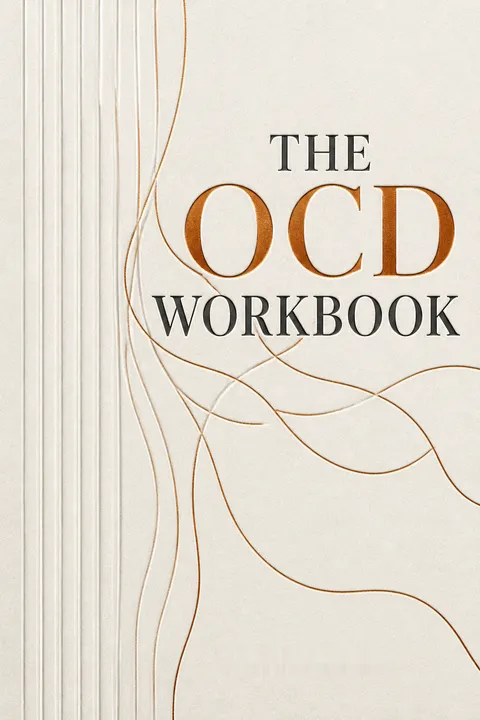
The OCD Workbook is a clinical self-help manual with a patient narrative at its center. Cherry Pedrick's account of escalating checks gives the reader a recognizable entry point, while Bruce Hyman's clinical perspective supplies diagnosis, treatment choices, and structured exercises. The book then moves from general principles to applications for particular symptoms, family life, childhood OCD, and finding professional help. Its most useful through-line is functional: identify what triggers distress, what the person does to neutralize it, and how that response keeps the problem active. This explains why symptom themes can change while the underlying loop remains.
The practical strength is its translation of treatment into tasks: self-assessment, exposure hierarchies, response prevention, thought records, and relapse planning. It also takes mental rituals seriously, addresses reassurance and family accommodation, and distinguishes relief from lasting change. ACT adds an important counterweight to a recovery project focused solely on symptom reduction: a person can pursue valued activities while distress is present.
The limits matter. This is a 2010 edition that relies on the diagnostic framework and medication information current at its publication. Its use of labels such as hoarding OCD and hypochondriasis should not be mistaken for current diagnostic terminology, and its prevalence estimates are historical figures, not current population guidance. Its account of exposure emphasizes habituation and waiting for anxiety to fall. Contemporary exposure practice also emphasizes new learning about feared predictions and tolerating uncertainty, so lower anxiety during an exercise is not the only meaningful outcome. Some of the book's intensive exposure schedules and rapid behavior changes should not be copied as universal instructions. Exposures must separate realistic hazards from OCD fears and should be individualized, particularly for children, severe symptoms, medical concerns, or co-occurring conditions. The enduring value is a clear model and a hopeful, practical invitation to seek appropriate care, not a one-size-fits-all treatment prescription.
Review Summary
The OCD Workbook receives mostly positive reviews, with readers finding it informative and helpful for understanding and managing OCD symptoms. Many appreciate the practical exercises and strategies provided. Some criticisms include outdated content, repetitiveness, and occasional insensitivity to certain topics. Readers recommend it as a good resource for those with OCD, their families, and therapists, but suggest supplementing with more current information. The book is praised for its accessibility and comprehensive coverage of different OCD subtypes, though some sections may not apply to everyone.
Glossary
Obsessive-compulsive disorder (OCD)
Intrusions and ritualsA mental health disorder involving obsessions, compulsions, or both. Obsessions are unwanted thoughts, images, or urges that cause distress. Compulsions are repetitive actions or mental acts used to reduce distress or prevent a feared outcome. Symptoms become clinically significant when they consume substantial time, cause marked distress, or interfere with daily functioning.
Exposure and response prevention
Face fears, resist ritualsA behavioral treatment for OCD. Exposure means deliberately approaching a feared but objectively safe situation, thought, or cue. Response prevention means refraining from the usual ritual, avoidance, or reassurance that follows. Repeated practice helps a person learn to experience uncertainty and distress without relying on compulsions.
Subjective Units of Distress Scale
Self-rated distress measureA self-rating scale used in the workbook to estimate anxiety or discomfort, usually from 0 to 100. A person rates how distressing a trigger or exposure feels. The score helps compare situations and plan practice, but it is subjective and does not independently diagnose OCD or measure objective danger.
ABCD method
Map the OCD cycleA worksheet-based adaptation of a cognitive therapy model used to examine OCD episodes. It tracks an activating event and intrusive thought, the belief or appraisal attached to it, the emotional consequences, and the neutralizing ritual or avoidance that follows. The purpose is to make the links between interpretation, distress, and behavior easier to identify.
Cognitive restructuring
Examine unhelpful beliefsA cognitive therapy process for identifying and reconsidering beliefs that intensify OCD symptoms. The workbook focuses on patterns such as overestimating danger, assuming excessive responsibility, and demanding certainty. The goal is a more accurate appraisal, not forced optimism or endless mental debate. The authors present it as a supplement to ERP for many readers.
Acceptance and commitment therapy (ACT)
Values-led action with discomfortA behavioral therapy approach that teaches people to make room for difficult thoughts and feelings rather than organizing life around their removal. It uses mindfulness, acceptance, and clarification of personal values to support meaningful action. In the workbook, ACT complements OCD treatment by shifting attention from controlling thoughts to choosing behavior in valued directions.
Yale-Brown Obsessive Compulsive Scale (Y-BOCS)
OCD severity ratingA clinician and research assessment that rates dimensions of obsessive thoughts and compulsive behavior, including time, interference, distress, resistance, and control. The workbook includes a self-administered version for tracking symptoms over time. A score can help show change, but it is a severity measure, not a standalone diagnostic decision or a measure of personal worth.
Compulsion creep
Rituals return in disguiseThe workbook's term for replacing an obvious compulsion with a quieter or modified behavior that still serves the same anxiety-reducing function. Someone who stops repeatedly checking a door might instead stare at it, tap it, or rely on another person to check. Noticing these substitutions can prevent the ritual cycle from rebuilding.
Habit reversal training
Replace repetitive pullingA behavioral treatment described for trichotillomania and related repetitive behaviors. It typically includes noticing urges and situations that precede pulling, identifying early movements, and practicing an incompatible response instead. The workbook also describes relaxation and awareness exercises. Treatment is tailored to the person's triggers and may be combined with other approaches.
ComB
Individualized hair-pulling modelShort for the comprehensive behavioral model, a treatment approach for trichotillomania described in the workbook. It examines the sensory, emotional, cognitive, environmental, and hand-related conditions associated with pulling, then selects strategies suited to the person's pattern. The approach treats hair pulling as behavior with different functions across individuals, rather than assuming one remedy fits all.
FAQ
1. What is The OCD Workbook: Your Guide to Breaking Free from Obsessive-Compulsive Disorder by Bruce M. Hyman about?
- Comprehensive self-help guide: The book is a structured, self-directed program for people with OCD, using cognitive behavioral therapy (CBT) techniques, especially exposure and response prevention (ERP).
- Covers all OCD subtypes: It addresses a wide range of OCD forms, including checking, washing, hoarding, scrupulosity, primarily obsessional OCD, and related disorders.
- Empowerment and education: The workbook aims to help sufferers and their families understand OCD, reduce symptoms, and live more fulfilling lives through practical exercises and step-by-step plans.
2. Why should I read The OCD Workbook by Bruce M. Hyman?
- Evidence-based strategies: The workbook presents scientifically supported methods, primarily ERP and cognitive restructuring, proven effective for OCD.
- Expert authorship: Written by Bruce M. Hyman, Ph.D., LCSW, and Cherry Pedrick, RN, it combines clinical expertise with practical advice.
- Holistic resource: It includes guidance for families, addresses co-occurring disorders, and is praised by experts as a first-rate resource for sufferers, families, and clinicians.
3. What are the key takeaways from The OCD Workbook by Bruce M. Hyman?
- Active recovery focus: The book emphasizes that progress, not perfection, is the goal—symptom management leads to a more fulfilling life.
- Self-directed change: Readers are empowered to take charge of their recovery through structured exercises, daily ERP practice, and cognitive strategies.
- Family and lifestyle integration: It highlights the importance of family support, healthy routines, and integrating ERP into daily life for lasting change.
4. What are the main forms and subtypes of OCD discussed in The OCD Workbook?
- Common subtypes: The book covers checking, washing/cleaning, ordering/repeating, hoarding, and scrupulosity.
- Primarily obsessional OCD: It explains “Pure O,” where intrusive thoughts dominate without obvious compulsions, but with covert mental rituals.
- Spectrum and related disorders: Health anxiety, body dysmorphic disorder, trichotillomania, and skin picking are also discussed, broadening understanding of OCD’s many faces.
5. How does The OCD Workbook by Bruce M. Hyman explain Exposure and Response Prevention (ERP)?
- Core CBT technique: ERP involves exposing oneself to feared situations and preventing compulsive rituals, breaking the OCD cycle.
- Habituation and extinction: Through repeated exposure, anxiety decreases (habituation), and compulsions lose their power (extinction).
- Stepwise approach: The workbook guides readers to create anxiety hierarchies, start with manageable exposures, and gradually face more challenging fears.
6. What is cognitive restructuring in The OCD Workbook and how does it help with OCD?
- Challenging faulty beliefs: Cognitive restructuring targets irrational beliefs and cognitive errors that maintain OCD, such as overestimating risk or thought-action fusion.
- ABCD model: The book uses the Activating event, Belief, emotional Consequence, and neutralizing ritual framework to analyze and intervene in OCD cycles.
- Behavioral experiments: Readers are encouraged to test beliefs in real life, weakening OCD’s grip and promoting more realistic thinking.
7. How does The OCD Workbook incorporate acceptance and mindfulness for OCD treatment?
- ACT principles: Acceptance and commitment therapy (ACT) is introduced, focusing on living fully despite OCD symptoms rather than eliminating thoughts.
- Experiential acceptance: The workbook teaches making room for uncomfortable feelings and urges, reducing avoidance and OCD’s power.
- Mindfulness practice: Exercises help increase present-moment awareness and cognitive defusion, allowing sufferers to observe thoughts without judgment.
8. How does The OCD Workbook address primarily obsessional OCD (Pure O) and its treatment?
- Nature of Pure O: Primarily obsessional OCD involves intrusive, distressing thoughts without overt compulsions, but with covert mental rituals like counting or reassurance seeking.
- Key treatment steps: The workbook guides readers to write down intrusive thoughts, accept their presence, and confront them through exposure exercises.
- Reducing mental rituals: Techniques are provided to identify and prevent covert compulsions and compulsive reassurance seeking.
9. What advice does The OCD Workbook by Bruce M. Hyman give for scrupulosity (religious OCD)?
- Definition and impact: Scrupulosity involves excessive, rigid adherence to religious or moral codes, causing distress and interfering with spiritual life.
- ERP with faith integration: The workbook recommends working with a spiritual advisor, keeping records, and creating ERP plans that respect core beliefs.
- Responsibility modification: Patients are encouraged to transfer responsibility for obsessional fears to their faith and replace compulsive rituals with sincere spiritual practices.
10. How does The OCD Workbook by Bruce M. Hyman help with hoarding OCD and related challenges?
- Understanding hoarding traits: The book identifies indecisiveness, categorization problems, faulty memory beliefs, emotional attachment, and need for control as key features.
- Stepwise decluttering: It advises setting realistic goals, halting accumulation, organizing, and gradually discarding possessions at a manageable pace.
- Family involvement: Decisions must be made by the hoarder, with family support only when invited, and the process should be gradual to manage anxiety.
11. What guidance does The OCD Workbook offer for families supporting someone with OCD?
- Education and understanding: Families are urged to learn about OCD, reduce blame, and communicate openly to foster a supportive environment.
- Avoid enabling rituals: The book warns against participating in compulsions or providing excessive reassurance, as these reinforce OCD.
- Collaborative recovery: Families should work as a team, help with exposure tasks when appropriate, and maintain patience and encouragement.
12. What are the best quotes from The OCD Workbook by Bruce M. Hyman and what do they mean?
- “The great thing in this world is not so much where we are, but in what direction we are moving.” — Emphasizes progress and hope in recovery rather than current struggles.
- “You can live a more productive and fulfilling life with a little bit of OCD in your life than you can with a lot of OCD.” — Highlights that symptom management, not perfection or cure, is the goal.
- “There is perhaps nothing so bad and so dangerous in life as fear.” — Underlines fear’s central role in OCD and the importance of confronting it through ERP and acceptance.
Download PDF
Download EPUB
.epub digital book format is ideal for reading ebooks on phones, tablets, and e-readers.








