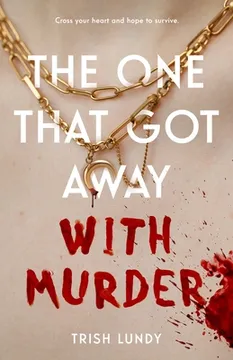


Plot Summary
A Fresh Start on Credit
Senior year is approaching when Lauren O’Brian moves from California to Happy Valley with her mother, Kat, who hopes to build a life with her boyfriend, Mark. Lauren wants better grades, a place on the soccer team, and no questions about the fire that left her ex-boyfriend, Clint, badly burned.
At Valley Hospice, where Kat works, Lauren begins a weekly, no-strings hookup with Robbie Crestmont, a volunteer whose touch helps her shut out the past. She keeps the arrangement carefully contained, even refusing to give him her number until he secretly puts it in his phone. When he invites her to his lake house for Labor Day, Lauren sees one last escape before school begins.
Lauren’s fresh start is less a clean break than a system of concealment. She treats sex, alcohol, and athletic exhaustion as ways to regulate memories she cannot yet name, while the rules of her arrangement with Robbie keep intimacy safely temporary. Her refusal to exchange numbers reveals the deeper strategy: connection is acceptable only when it leaves no durable claim. The move also places her inside a new family arrangement she resents, even as she tries to protect her mother’s happiness. The story begins with a protagonist who wants relief without exposure, a wish that will become impossible once other people’s buried histories converge with hers.
The Bonfire Warning
At a team party hosted by captain Lex Okada, Lauren tries to blend in, drinks too much, and receives flirtatious texts from Robbie. During the team’s ritual bonfire, Mara Kumari notices Robbie’s contact on Lauren’s phone and warns her away from the Crestmont brothers.
Andrea Okada explains that her sister, Victoria, died while visiting Robbie at his family’s lake house; Robbie said she drowned during a night swim, but no one explained the wound on her chest. Teammate Gwen adds that Trevor Crestmont was the last person with Jess Ebenstein before Jess died after a homecoming party. Lauren’s teammates regard both deaths as suspicious, and their warning turns her private fling into a choice with public consequences.
The bonfire makes the team’s grief visible, but it also shows how memory can harden into a verdict. For Mara and Andrea, Robbie’s proximity to Victoria’s death is inseparable from their loss; the absence of an explanation has become evidence in its own right. Lauren recognizes the danger of rumor because she has already been condemned by a story about her own past. Yet she does not immediately leave Robbie. Her instinct is not simple denial: she wants to distinguish what happened from what people say happened, even while she is using the relationship to avoid examining her own culpability.
The Lake House Invitation
After searching local reports about Victoria, Lauren decides she should end things with Robbie, but he invites her to Lake Monarch for Labor Day, and she agrees to one last weekend.
Kat objects when she learns the destination is the site of Victoria’s death; Mark persuades her that the trip is safe, allowing Lauren to go under the false pretense that she will be with teammates. At the mansion, Lauren meets Robbie’s brother Trevor, their friend John, and their father, Lionel, a wealthy attorney who openly welcomes underage drinking.
Robbie later admits he researched Lauren online and found a thread about the California fire. She flees, then returns to him, recognizing that each has approached the other as a fellow survivor while withholding the worst parts of their histories.
The lake trip is Lauren’s first active decision to cross a boundary she understands. She lies to Kat, not because she believes the weekend is harmless, but because she wants to postpone the consequences until after she has taken what comfort she can from Robbie. His online research repeats the same defensive logic: each seeks information before risking trust. Their recognition of shared trauma is real, but it can also become a shortcut to intimacy, letting them mistake mutual damage for mutual knowledge. Lionel’s easy authority and indulgence establish a household where wealth softens ordinary rules, while the lake itself holds a history neither Lauren nor Robbie is ready to face plainly.
Blood Beneath the Boat
The next day, Lauren searches the boat for sunscreen and finds a faded blue-and-white bikini top hidden beneath old gear. A dried bloodstain marks its lining. She recognizes it from Victoria’s final social media photo and remembers that Victoria’s swimsuit top was never recovered. Lauren secretly replaces the item, then compares the photo with what she found.
Robbie later throws her into the lake as a joke, intensifying her fear, and she retreats to her room to study Victoria’s posts. The evidence does not prove who hurt Victoria, but it changes Lauren’s private arrangement into an investigation. She also notices Robbie’s old necklace on Mara’s team pendant, a detail that will make the next school day more dangerous.
The bikini top is powerful because it is both material evidence and an intimate remnant: a garment that should have been accounted for has survived inside the place where Victoria spent her final hours. Lauren’s decision to put it back is understandable, but it leaves her without proof and gives whoever knows about the discovery a chance to intervene. Her response also mirrors her established coping style: she conceals what she knows, hoping to control the danger by controlling who knows. The lake’s beauty and recreational ease sit beside the evidence of violence, making the setting itself morally unstable. A place of leisure can conceal the precise details that official accounts failed to explain.
The Necklace and the Exposure
Back at Valley High, Lauren wears the crescent-moon pendant Mara gives her as a supposed team tradition. Robbie reacts sharply because he gave the necklace to Victoria, and John explains that Mara had once taken it from him.
Mara then accuses Lauren of stealing it, and Andrea condemns her in front of the team. A disguised caller warns Lauren not to reveal what she found on the boat. Soon an anonymous school account posts a photograph of Lauren leaving a California police station and brands her responsible for the fire that injured Clint.
Lauren skips the pep rally, where she sees an ambulance carrying Trevor from the parking lot. Kat later tells her Trevor overdosed and died. The rumor that Lauren tried to bury has reached Happy Valley, and another Crestmont tragedy has begun.
This sequence collapses Lauren’s two forms of danger into one: the threat of physical violence around Victoria’s evidence and the social punishment attached to Lauren’s own past. The necklace becomes a test whose meaning Lauren cannot know until after she wears it, while the accusation makes the team’s fear of Robbie turn against her. The online post repeats the essential harm of rumor: it converts a complicated event into a portable label. Lauren’s flight from the pep rally is not merely avoidance; it is a bodily response to a public arena where she expects judgment. Trevor’s death then makes the town’s pattern feel less like gossip and more like an emergency.
A Binder of Suspicions
Lauren visits Robbie after Trevor’s overdose and finds a binder filled with his brother’s research into Jess’s death. Robbie believes the town’s accusations helped drive Trevor to take his own life, while Lauren cannot reconcile that explanation with the threat she received.
At Trevor’s calling hours, she tells John about Victoria’s bloodstained top and plays him the anonymous voice mail. John believes her, so they return to the lake to search the boat. The compartment has been cleared, leaving no physical evidence.
At the homecoming football game, a note presented as Trevor’s confession appears alongside Victoria’s bikini top, claiming Trevor killed her and Jess. Robbie refuses to accept the confession as genuine, and the newly public clue makes the town’s certainty shift toward his dead brother.
Trevor’s binder changes him from a name in other people’s suspicions into a person who was actively trying to understand the deaths. The document’s existence complicates the story’s central moral problem: a community can punish the wrong person while still failing to pursue the truth. Lauren’s disclosure to John is an important departure from secrecy, though their search comes too late to preserve the evidence. The staged confession offers the town a satisfying narrative, but Robbie’s refusal to accept it shows that certainty is not the same as knowledge. The clues now implicate and exonerate in turns, exposing how easily a dead person can be made to carry a story they cannot contest.
Ainsley’s Anonymous Account
At a party, Lauren pretends to be drunk so Ainsley, Mark’s guarded daughter, will let her use a phone. Lauren finds the anonymous gossip account logged in beside Ainsley’s personal profile and secretly saves proof.
Robbie asks her to wait before exposing Ainsley, because Trevor’s burial has already been delayed. Earlier, Ainsley had told Lauren that Jess was her best friend and that Trevor called Robbie before calling emergency services on the night Jess died.
Lauren later learns Ainsley dealt drugs and that the heroin and cocaine that killed Jess came from her stash, though she insists Jess never knowingly used them. Ainsley admits she created the account partly to divert attention from herself toward Trevor. Lauren’s suspicions widen, and the truth about Jess remains unresolved.
Ainsley’s account demonstrates that online cruelty can be both retaliation and self-protection. Her grief for Jess is genuine, but she weaponizes the dead girl’s memory to redirect scrutiny from her own drug dealing and fear of exposure. That mixture makes her neither a simple villain nor a reliable witness. Lauren’s decision to gather proof rather than immediately publish it reflects a growing capacity to weigh consequences, especially after learning that public accusations can destroy people without establishing facts. Still, Ainsley’s knowledge about the drugs and Trevor’s delayed call sharpens the case against him. The investigation gains information while becoming more morally complicated, because nearly everyone involved has something to hide.
The Secret in Lex’s Closet
Before Trevor’s delayed burial, Lex finally tells Lauren and Mara that Trevor was with her on the night Victoria died. They had met through therapy for disordered eating, and he sought Lex’s help after finding a pair of Victoria’s underwear in Lionel’s dresser.
Trevor suspected his father might be involved but feared Lionel’s legal power, so Lex hid the underwear for two years while pretending to distrust Robbie. At the burial, Ainsley arrives with a protest accusing Trevor of harming Jess and Victoria.
Lauren stops her by threatening to expose the gossip account, and Mark escorts his daughter away. The underwear gives Robbie a possible motive against Lionel, while the burial reveals how grief, family loyalty, and suspicion have kept the people closest to the deaths from speaking openly.
Lex’s confession reframes her public behavior as the cost of a private pact. She has been protecting evidence and Trevor while maintaining a false position in the team, partly from fear and partly because her relationship with Mara complicates what she can safely disclose. The underwear seems to confirm Lionel’s involvement, but the clue is not yet proof; its force comes from its disturbing placement and Trevor’s interpretation. Ainsley’s protest shows how grief can become a public performance, especially when the person being mourned has also been accused. Lauren intervenes without resolving Ainsley’s pain, choosing instead to protect the burial from another spectacle. No one’s loyalty is uncomplicated.
Trevor’s Last Warning
After the burial, Robbie, John, and Lauren find Trevor’s letter hidden in a hay bale near the abandoned Sycamore Road barn. Trevor wrote that someone had contacted him with a photograph of Victoria’s bloody swimsuit and that he feared Lionel might kill to protect himself.
He asked Robbie to speak with Lex if anything happened to him. Robbie plans to read the letter and show Victoria’s underwear at Lionel’s Halloween charity dinner, where witnesses can hear the accusation. Lex and Mara agree to wait nearby as an escape plan.
Lauren also learns Mark and Kat are engaged, while Mark’s attention to family and domestic rituals makes his presence feel increasingly difficult to question. The dinner will test whether public exposure can accomplish what private investigation has not.
Trevor’s letter is both a warning and a final act of authorship. Unlike the note displayed at the football game, this message is addressed to someone he trusts and anticipates the possibility that his death will be used to silence or misdirect. Robbie’s public plan tries to turn visibility into protection: if Lionel is confronted before witnesses, he may be unable to control the story. Yet the plan depends on a clue that has not been verified and on a family power structure that Robbie has spent years fearing. Mark’s domestic warmth adds another layer of misdirection, since familiarity can make people feel safe even when they have little basis for trust.
A Fundraiser in Flames
At Lionel’s Halloween fundraiser, Robbie reads Trevor’s letter and displays the underwear Lex preserved, accusing his father of involvement in Victoria’s death. The guests are stunned, but before Robbie can build his case, a masked guest spreads lighter fluid on the lawn and ignites the pumpkins.
Everyone escapes unharmed. Security footage shows the arsonist arriving in a skeleton costume, but the mask hides their identity. Lionel’s girlfriend, Stacy, later tells Robbie that the underwear was hers; she had lent it to Victoria at the lake.
The apparent proof against Lionel collapses, and the fire damages Trevor’s already waterlogged research binder. Lauren, who survived the earlier blaze that injured Clint, is shaken by the flames. Robbie dismisses the danger, and she challenges his indifference.
The fundraiser turns evidence into spectacle, then destroys the confidence that spectacle seemed to promise. Robbie’s accusation is public, but its foundation proves mistaken: the underwear’s presence in Lionel’s drawer has an innocent explanation. The arson creates a second threat without resolving the first, and the concealed costume means that the person who set the fire remains unidentified. For Lauren, fire is not a symbolic abstraction but a sensory trigger tied to a real injury and her own guilt. Robbie’s wish to burn the house reflects despair, while Lauren’s insistence that luck is not safety marks a difference in how they process danger. Their shared trauma no longer guarantees that they respond to it alike.
The Killer in the Kitchen
As Lauren, Robbie, and John reconsider the case, they suspect soccer coach Holliger because he knew Victoria, had access to school grounds, and was near the parking lot when Trevor overdosed. Ainsley rejects the theory, but Lauren later finds a skeleton costume in the decorations Mark is putting away.
Mark has drugged her. In his private account, he reveals that he killed Victoria with fishing pliers, killed Jess after luring her away from a party and injecting her, then drugged Trevor when Trevor’s investigation threatened to expose him.
Mark also admits he hid Victoria’s swimsuit and used security-camera access to remove it after Lauren found it. He drives Lauren to Lake Monarch and throws her into the water, bound and weighted. Robbie, John, Lex, and Mara find her in time; police arrest Mark, who later confesses to three murders and Lauren’s attempted murder.
The reveal works by converting ordinary trust into retrospective evidence. Mark’s helpfulness, access to family spaces, and technical work in security all appeared mundane until they are joined to his predatory attention and control of information. His method depends on the same social failures that damaged Lauren: people believe the convenient account, overlook the vulnerable person, or assume that familiar roles imply safety. The false leads do not make the investigation pointless; they show how evidence must be tested rather than merely fitted to grief. Lauren’s rescue depends on others noticing absences and acting together, a sharp contrast to the isolation that shaped her earlier choices.
A Life Beyond the Fire
Recovering in hospital, Lauren learns that Mark is jailed and that investigators used evidence from her attempted murder to secure his confession. She and Kat abandon the engagement and plan a Christmas trip to New York instead of continuing the life Mark had promised them.
Lauren also meets Clint, whose burns have left lasting scars, and tells him the fire was deliberate: she stole and burned Polaroids Donovan used to coerce her, but the blaze spread and injured Clint.
Clint learns why she acted and accepts that she was trying to escape Donovan’s abuse, though their relationship belongs to the past. Back with the soccer team, Lauren helps them qualify for states. Robbie asks her on a real date, and she accepts, no longer using him only to numb herself.
Lauren’s recovery depends on replacing concealment with accountable truth. She does not recast her choice to burn the photographs as harmless; she explains the coercion that preceded it while acknowledging the injury that followed. Clint’s response allows them to separate love from the impossible demand that either restore their former selves. Kat’s decision to leave Mark and travel with Lauren also repairs a relationship strained by the daughter’s fear of being displaced. Soccer offers Lauren a future shaped by practice and shared effort rather than self-punishment. Accepting Robbie’s invitation is not a cure for grief; it is a willingness to risk attachment without pretending that desire can erase what happened.
Analysis
The novel makes public reputation a form of evidence, then repeatedly demonstrates why it cannot be trusted. Robbie is suspected because he was present when Victoria died; Trevor is condemned because he was the last person with Jess; Lauren is labeled an arsonist because a photograph and a simplified account travel faster than her explanation. These judgments are emotionally intelligible, since the town’s young people are grieving and want a culprit, but they become dangerous when suspicion substitutes for investigation. The actual killer exploits precisely that appetite for a clean story, using wealth, professional access, and familiar roles to redirect blame. The novel’s mystery therefore concerns not only who committed violence, but how a community decides whose account deserves belief. Lauren’s arc is distinct from conventional innocence narratives. She did set the fire that injured Clint, even though Donovan’s coercion shaped her actions and she did not intend Clint’s injuries. Her recovery requires neither denying harm nor accepting the town’s caricature of her as irredeemable. When she finally tells Clint the truth, she acknowledges both what he suffered and what had been done to her. That balance differs from the investigation’s repeated false binaries: guilty or innocent, loyal or disloyal, grieving or suspicious. Relationships also become a test of whether people can remain present without demanding certainty. John listens despite his allegiance to Robbie; Lex risks exposing her private history; Kat learns that care cannot be reduced to plans for a new household. The ending offers connection rather than a claim that trauma is erased. Lauren returns to soccer, tells the truth, and accepts a date while still carrying physical and emotional scars. The unresolved identity of the masked arsonist leaves a final warning: even after one killer is caught, not every threat or explanation has been brought into the light.
Review Summary
Reviews for The One That Got Away with Murder are mostly positive, averaging 3.76/5. Many readers praise its fast-paced, engaging plot with unexpected twists, comparing it favorably to other popular YA thrillers. Common criticisms include slow pacing in the first half, a rushed ending, shallow character development, and a predictable or underwhelming reveal. Several reviewers note difficulty connecting with characters, while others found the protagonist compelling despite poor decision-making. The book is widely recommended for younger readers or those new to the YA mystery/thriller genre.
Characters
Lauren O’Brian
Guarded newcomerLauren is a California transfer, a gifted soccer player, and the daughter of Kat, a hospice nurse. She arrives in Happy Valley determined to protect her privacy and repair her school record, but she uses alcohol, sex, and overtraining to mute memories she cannot yet face. Her sharp humor and suspicion are defenses against rejection, not signs that she feels little. Lauren has a strong instinct for noticing contradictions, yet her fear of exposure often makes her hide information rather than ask for help. She is drawn to people who recognize pain in her, especially Robbie, but she must learn that shared damage is not the same as trust. Her choices test whether she can accept responsibility without reducing herself to her worst mistake.
Robbie Crestmont
Haunted volunteerRobbie is a Valley High student from a wealthy family and a volunteer at the hospice where Lauren’s mother works. After a death connected to his past, he gives up soccer, turns toward music, and lives beneath his community’s suspicion. His hookup with Lauren begins as mutual escape, but he is more emotionally perceptive than his detached manner suggests. Robbie seeks control by researching others and limiting what he reveals, habits that protect him while making intimacy difficult. His loyalty to his brother and his long attachment to Victoria shape how he interprets evidence, sometimes making belief feel safer than uncertainty. He is drawn to Lauren because she seems to understand grief, though neither can heal the other by pretending the past has vanished.
Kat
Protective motherKat is Lauren’s mother and a nurse at Valley Hospice. She has raised Lauren largely on her own and wants a lasting partnership after earlier romantic disappointments. Her instinct is to care through practical gestures, from bringing snacks to worrying about birth control, though she can mistake provision for emotional closeness. Kat’s happiness with Mark unsettles Lauren, who fears losing the intimacy they once shared. Their conflict is sharpened by Lauren’s secrecy and Kat’s eagerness to build a stable future. Kat is compassionate and persistent, but her wish for a new family sometimes leaves her daughter feeling like a problem from an earlier chapter of her life.
John
Robbie’s loyal confidantJohn is Robbie’s close friend, a musician, and a perceptive observer of the Crestmont family. He is stylish, witty, and more emotionally candid than his theatrical confidence first suggests. His loyalty to Robbie is grounded in years of friendship and support through difficult family experiences, but he does not claim that loyalty has always meant certainty. John is willing to listen when Lauren shares the evidence she found, and his presence makes the investigation less solitary. His friendship with Robbie includes unresolved romantic history, which adds tenderness and occasional tension without erasing their trust. John’s dry humor gives the group room to breathe when grief threatens to make every conversation unbearable.
Lex Okada
Captain with a secretLex is a soccer captain, a disciplined athlete, and one of the first teammates to offer Lauren a place in the group. Her composure can look effortless, but she carries private struggles that make her cautious about what others are allowed to know. Lex values loyalty and follow-through, and she tries to mediate between friends without giving up her own judgment. Her relationship with Mara is central to her emotional life, while her connection to Trevor is built around a vulnerable shared experience. Lex’s secrecy has consequences, but it comes from a wish to protect people as well as herself. On the field, she leads by making room for teammates who might otherwise be pushed aside.
Mara Kumari
Grieving teammateMara is a talented forward and Victoria’s closest friend. She protects Victoria’s memory with fierce loyalty, which makes her suspicious of anyone connected to the Crestmonts. Her bluntness can wound people, but it grows from grief she has never been able to settle. Soccer gives Mara a way to honor her friend through ritual and performance, including carrying Victoria’s number onto the field. Her relationship with Lex softens some of her sharp edges, though it does not erase her instinct to act before she has every fact. Mara has to learn that protecting a memory and protecting the truth are not always the same task.
Andrea Okada
Victoria’s determined sisterAndrea, a soccer goalkeeper, is Victoria’s younger sister. She shares Mara’s conviction that Victoria’s death was not adequately explained, but her grief is also deeply personal: she lost a sibling, a teammate, and someone she expected to share her own high school years. Andrea can be quick to judge Lauren because Lauren’s connection to Robbie feels like a threat to Victoria’s memory. Beneath that defensiveness is a clear sense of fairness and a desire to preserve the joyful parts of her sister, not only the circumstances of her death. Andrea’s soccer skill and loyalty give her a place to keep carrying Victoria forward.
Ainsley
Jess’s grieving best friendAinsley is Mark’s daughter, a younger student with artistic talent and a more guarded nature than her polished appearance suggests. She was closest to Jess and carries deep grief, anger, and shame around the circumstances of her friend’s death. Ainsley’s relationship with Lauren is complicated by their parents’ romance and by their different loyalties to the Crestmonts. She can be cutting when she feels cornered, yet her volatility masks a need to keep control of how others interpret her. Art offers her a language for attachment and remembrance, while her choices around secrecy reveal how guilt can twist even sincere loyalty.
Trevor Crestmont
Robbie’s watchful brotherTrevor is Robbie’s younger brother, a quiet student whose closeness to the Crestmont family is strained by the stories surrounding the deaths of two girls. He is often difficult for Lauren to read, and his suspicion of her contrasts with Robbie’s willingness to trust her. Trevor’s connection to Jess and his relationship with his brother give him a place at the center of the town’s competing explanations. He is more observant than he first appears, and he shares the family’s burden of living under public judgment. His private loyalties make him a source of both tension and unanswered questions.
Victoria Moreno
Remembered soccer starVictoria was Andrea’s older sister, Mara’s best friend, and a standout soccer player who had played varsity since middle school. She was also a hospice volunteer and an athlete whose speed and commitment made her a local legend. Those who loved her remember not only her talent but her warmth, ambition, and irrepressible confidence. Her crescent-moon necklace, soccer number, and photographs remain vivid touchstones for the people who miss her. Because Lauren never knew Victoria, she must piece together the person behind the town’s memorials and accusations, a process that reminds her how little a community’s story can contain.
Jess Ebenstein
Artist and loyal friendJess was Ainsley’s best friend, an ambitious young artist, and Trevor’s girlfriend. She preferred oil painting and had begun imagining a future studying art long before most students had settled on a direction. Her work and friendships show a curious, attentive person who noticed more than people expected. Jess’s connection to the Crestmonts and to Ainsley leaves several people grieving in different ways, each of them carrying a partial account of who she was. Her paintings endure as intimate records of the people she loved, giving the living a way to remember her beyond rumor.
Mark
Kat’s polished partnerMark is Kat’s boyfriend, a successful professional with ties to Happy Valley and a practiced ease around Lauren. He tries to win her trust through generosity, advice, cooking, and an eagerness to include her in family plans. His relationship with Kat offers her the promise of stability, while his relationship with Ainsley reflects the difficulty of joining two households after painful histories. Mark’s confidence and social fluency make him seem reliable to people who do not know him well. He is also connected to local technology and security work, a detail that places him near the town’s private lives in ways that are not initially obvious.
Lionel Crestmont
Powerful family patriarchLionel is Robbie and Trevor’s wealthy father, a prominent attorney whose influence reaches across Happy Valley. He enjoys visible comforts, formal gatherings, and being treated as the person who can solve a problem. His divorce and changing romantic relationships shape the Crestmont household, while his money gives his sons a degree of protection other families do not have. Lionel is charismatic in public and accustomed to managing impressions. To Lauren, his hospitality initially feels generous but also slightly theatrical, a polished surface that makes it difficult to judge what happens within his family.
Clint
Lauren’s scarred first loveClint is Lauren’s former boyfriend and a gifted lacrosse player. He is remembered as kind, affectionate, and devoted to her, which makes the harm between them especially painful. His close friendship with Donovan once put him near the center of Lauren’s social world, while his injuries after the fire left both of them with a past they could not discuss honestly. Clint’s gentleness is not weakness; it is part of why Lauren fears telling him what happened. He represents both the love she lost and the person she must stop using as a measure of whether she deserves forgiveness.
Donovan
Coercive former teammateDonovan was Clint’s best friend and one of Lauren’s former teammates. He used compromising photographs to pressure Lauren into unwanted attention and sexual contact, relying on her fear that Clint would not believe her. His athletic ambitions and social confidence give him power in their school circle, but his treatment of Lauren turns that status into a weapon. He is the hidden source of the blackmail that shaped Lauren’s choices before the fire.
Coach Holliger
Soccer coach and local fixtureCoach Holliger leads Valley High’s girls’ soccer team and comes from a family with long ties to Lake Monarch. He is competitive, attentive to talent, and proud of the school’s soccer traditions. His comments and access to players can make Lauren uncomfortable, while his connections to Victoria and the local area later invite scrutiny. He is responsible for balancing team cohesion with individual performance, though his decisions sometimes reveal how readily a team’s majority can be treated as a fair authority.
Stacy
Lionel’s younger girlfriendStacy is Lionel’s girlfriend, a young attorney who once babysat Robbie and Trevor. She is polished and courteous in social settings, though her position beside Lionel can make her seem like part of his public image. Her professional independence and future plans are easy to miss beneath the attention Lionel commands. Stacy’s presence gives Lauren another view of how the Crestmont family navigates intimacy, status, and the expectations placed on the people around it.
Rachel
Lauren’s distant childhood friendRachel grew up playing soccer with Lauren and once shared her weekly routines and confidences. Their friendship frays as Lauren’s drinking and isolation deepen, especially after the fire changes how their teammates see her. Rachel’s withdrawal hurts because it confirms Lauren’s fear that people will leave once they know the worst about her. She remains an important measure of the life Lauren lost in California.
Plot Devices
Victoria’s bikini top
Physical evidenceThe blue-and-white swimsuit top, stained with blood, connects Victoria’s unexplained chest wound to the lake and boat where she died. Lauren finds it hidden in a compartment, but it disappears before she and John can recover it. It later appears with a supposed confession by Trevor, then resurfaces as part of the evidence that exposes Mark. Because its location changes and its owner is initially uncertain, the top drives the investigation while also demonstrating how evidence can be planted, concealed, or misinterpreted. Its physical presence matters more than the stories people tell about it.
Trevor’s investigation binder
A record of doubtTrevor’s binder gathers timelines, printed messages, theories, and fragments of evidence about Victoria and Jess. It turns him from an object of rumor into an investigator whose questions challenge the town’s accepted explanations. Lauren and Robbie use it to reconstruct what Trevor knew and when he learned it. The binder is damaged by the fire at Lionel’s fundraiser, but surviving pages lead Lauren and Robbie toward new suspects and reveal Jess’s role in the inquiry. Its incomplete state keeps the investigation dependent on interpretation rather than presenting a neat answer.
The moon pendant
A dangerous signalRobbie gave Victoria a crescent-moon pendant connected to her interest in astrology and the night sky. Mara passes it to Lauren under the guise of a team good-luck tradition, but Robbie recognizes it and reacts as though Lauren has taken a private object from his past. The pendant exposes the tensions among Robbie, Mara, and Victoria, and its sudden appearance becomes part of the team’s accusation against Lauren. It also shows how memorial objects can carry contradictory meanings: comfort for one person, evidence of intimacy for another, and a weapon when someone chooses to use it that way.
The Unhappiest of Valleys
Rumor as a weaponThe anonymous social media account publishes school gossip and later exposes Lauren’s California history, including a police-station photograph and a distorted account of the fire. Its posts turn private pain into public entertainment and give the community a ready-made explanation for people it already distrusts. Lauren eventually discovers that Ainsley controls the account and uses it to redirect suspicion from herself and Trevor. The account is not a reliable source of truth, but its influence shapes who is believed, who is shunned, and how quickly a rumor can become a social sentence.
Security camera access
Control of the recordCameras appear to promise objective proof, but their usefulness depends on who installs them, who can disable them, and how long recordings are stored. Lauren’s discovery on the boat triggers a camera alert, allowing the person monitoring the system to remove the swimsuit top. A school camera is also unavailable when Trevor is found, while footage from the Crestmont house captures the masked arsonist. The device therefore both advances and obstructs the mystery. It underlines that technology does not produce truth by itself; access and interpretation determine which parts of an event become visible.
Download PDF
Download EPUB
.epub digital book format is ideal for reading ebooks on phones, tablets, and e-readers.








