Plot Summary
Stories Across Species
Across the universe, intelligent beings preserve their wisdom in unique ways, each method reflecting their culture and biology. The Allatians etch their voices into wax, so reading is reliving the author's tone, but each reading erases the original. The Quatzoli are living books, their stone minds passed down and grown with each generation. The Hesperoe, once warlike, now map and simulate the minds of their dead, living in endless debate with the past. The Tull-Toks read the universe itself, seeing stars and black holes as texts, while the Caru'ee build cities in the ruins of unreadable books, unconsciously echoing lost meanings. In this cosmic tapestry, storytelling is survival, memory, and the fragile hope of connection—each species, in its own way, fights the erasure of time.
Souls in Strange States
Rina's soul is an ice cube, always at risk of melting, her life defined by the need to keep it cold and close. In a world where everyone's soul takes a physical form—cigarettes, coffee, salt—Rina's existence is cautious, isolated, and cold. She envies those who burn bright, like her friend Amy, whose soul is a pack of cigarettes, or Jimmy, whose soul is salt, lively and warm. When Rina risks everything for a moment of connection, she lets her soul melt, choosing life over preservation. Amy, too, learns that the soul's container can change, and that growing up means embracing transformation. In the end, Rina's state change is a leap into warmth, love, and the unknown.
Algorithmic Hearts
Sai lives in a world where Tilly, an AI assistant, curates every aspect of his life—what he eats, whom he dates, how he feels. Tilly's recommendations are so seamless that Sai can't distinguish his own wants from those suggested to him. When he meets Jenny, a neighbor who resists surveillance, Sai is drawn into a rebellion against the algorithmic status quo. Together, they plot to destroy Tilly's data-driven power, only to discover that the system is nearly omniscient, and even their resistance is anticipated. In the end, Sai must choose between complicity and adaptation, realizing that the boundaries between self and machine, freedom and manipulation, are forever blurred.
Foxes and Steam
In old China, Liang and his father hunt demons, but the world is shifting—railroads and foreign technology drain the land's magic. Liang befriends Yan, a fox spirit (hulijing) struggling to survive as her powers fade. As the old ways die, both must adapt: Liang becomes a mechanic in Hong Kong, Yan a courtesan transformed against her will into a mechanical being. Together, they reinvent magic as technology, forging a new kind of fox spirit—chrome and steam, not fur and flesh. Their partnership is a testament to survival, love, and the resilience of myth in the face of relentless progress.
Words as Magic
Lilly, a young American girl in 1960s Taiwan, feels isolated by her foreignness and the cruelty of her peers. She befriends Mr. Kan, a Chinese literomancer who reads fortunes in the strokes of characters, teaching her that words hold power and history. Through stories of war, migration, and loss, Lilly learns to see the world's pain and beauty in language—how "freeze" can become "free," how "China" is wildflowers that bloom after fire. As political violence and family secrets swirl around her, Lilly discovers that magic is not in spells, but in the stories we tell and the names we choose to remember.
Memory's Mirror
Paul Larimore invents a technology that captures not just images, but the personalities of loved ones—simulacra that can interact, learn, and comfort. For his daughter Anna, these digital ghosts become a source of pain, a violation of her autonomy and a substitute for real connection. The simulacra are both solace and betrayal, allowing Paul to relive a perfect, unchanging version of his daughter, even as their real relationship fractures. Anna's struggle is the universal one: how to reconcile the past with the present, how to forgive, and how to accept that memory, no matter how vivid, is never the same as life.
Regulated Lives
Ruth Law, a private investigator with a cybernetic Regulator, can control her emotions, suppressing fear, grief, and rage. When she is hired to solve the murder of Mona, an escort with a hidden camera in her eye, Ruth navigates a world where technology enables both exploitation and protection. The killer is a watcher, obsessed with control and secrets, preying on women who try to secure their own safety. Ruth's investigation is a battle between human vulnerability and technological enhancement, culminating in a moment where she must act without the Regulator's help—embracing pain, risk, and the messy reality of being human.
Paper Animals, Paper Love
Jack grows up ashamed of his Chinese heritage and his immigrant mother, pushing her away in pursuit of assimilation. His mother's love is expressed through paper animals—origami creatures she breathes to life, embodying her culture and affection. As Jack grows older, he abandons these tokens, and his mother, who dies with her story untold. Only after her death does Jack discover a letter hidden in a paper tiger, revealing her harrowing past and the depth of her love. The paper menagerie becomes a symbol of loss, regret, and the enduring power of a mother's story.
Compression and Connection
Across the cosmos, beings remember and forget in ways that reflect their nature: Telosians shed memories as their bodies grow, Esoptrons merge and share experiences, Tick-Tocks live and die in cycles of nuclear thought. For humans, memory is imperfect, compressed into stories and feelings. In a family separated by ambition and longing, stories become the bridge—between parent and child, between those who leave and those who stay. The act of storytelling, whether through words, images, or compressed memories, is how we endure the loss and change that time brings.
Immortality's Price
Aboard the starship Sea Foam, humanity faces a choice: accept a cure for aging and live forever, or die to make room for new generations. Maggie and João, a couple divided by this dilemma, must decide what it means to be human—whether to embrace change, sacrifice, and renewal, or to cling to life at the cost of stagnation. As the ship reaches its destination, the descendants of the immortals become machines, then pure energy, evolving beyond flesh. The story asks: is immortality a blessing or a trap, and what does it mean to be truly alive?
Fragile Empires
In the American West, Chinese immigrants seek fortune and belonging, facing prejudice, violence, and exclusion. Through the eyes of Lily and Logan (Guan Yu, the God of War in disguise), we see the blending of cultures, the resilience of the marginalized, and the bittersweet taste of becoming American. The stories of gods, heroes, and outcasts intertwine, showing that history is made not just by conquerors, but by those who endure, adapt, and tell their tales. The Chinese New Year feast, the trial by chicken blood, and the passing of traditions are all acts of survival and transformation.
Becoming American
Charlie, a Formosan laborer, helps build the Trans-Pacific Tunnel, a marvel of engineering that links Asia and America. His journey is one of hardship, adaptation, and complicity in the suffering of others. As he falls in love with Betty, an American woman, Charlie confronts the secrets and guilt of his past—his role in the deaths of prisoners during the tunnel's construction. The story explores the costs of progress, the erasure of the marginalized, and the possibility of redemption through truth-telling. In carving a new symbol on a monument, Charlie honors the forgotten and claims his place in the story of America.
Tunnels Through Time
In Qing Dynasty China, Tian Haoli, a litigation master, uses wit and trickery to help the powerless navigate a corrupt legal system. When he is drawn into a plot to preserve the memory of a massacre suppressed by the Manchu rulers, Tian must choose between survival and bearing witness. With the help of the Monkey King, he encodes forbidden history into children's songs, ensuring that the truth endures even as he faces torture and death. The story is a meditation on the power of narrative, the courage of ordinary people, and the duty to remember.
Justice and Tricksters
Tian Haoli's final act is not one of heroism in battle, but of cleverness and resilience. By disguising the story of Yangzhou's massacre in nonsense rhymes, he ensures that the memory of atrocity cannot be erased, even by the most powerful. The Monkey King, a trickster and rebel, serves as both inspiration and companion, reminding Tian—and us—that history is shaped by those who refuse to be silenced. The line between hero and survivor blurs, and justice becomes an act of storytelling, passed from one generation to the next.
Witnesses to Atrocity
Dr. Evan Wei and Dr. Akemi Kirino invent a method to witness the past directly, sending volunteers to observe the horrors of Unit 731, Japan's secret biological warfare program. Their work sparks international controversy, as governments and historians debate who owns the past and how it should be remembered. Survivors and descendants seek closure, while denialists and politicians resist uncomfortable truths. The process of witnessing is fraught—each observation erases the moment forever, and the weight of memory becomes unbearable. In the end, the struggle is not just for justice, but for the right to remember, to speak, and to be heard.
The End of History
As the world grapples with the consequences of making history transparent and accessible, the temptation to silence, deny, or exploit the past remains strong. Evan Wei's quest to give voice to the victims of atrocity ends in tragedy, as the forces of denial and political expediency overwhelm his idealism. Yet, as Akemi Kirino reflects, the photons of history continue to travel outward, bearing witness to all that has been. The duty to remember, to tell true stories, and to empathize with both victims and perpetrators is the only hope for reconciliation and meaning. In the end, history is not a closed book, but a living conversation between past and present.
Characters
Jack (The Paper Menagerie)
Jack is the American-born son of a Chinese immigrant mother and a white father. His journey is one of shame, rejection, and eventual regret as he distances himself from his mother's language, culture, and love in pursuit of acceptance. Jack's psychological arc is defined by internalized racism and the pain of assimilation, culminating in a profound sense of loss when he discovers, too late, the depth of his mother's sacrifices. His relationship with his mother is the emotional core of the story, and his eventual understanding is both heartbreaking and redemptive.
Rina (State Change)
Rina's soul is an ice cube, a metaphor for her cautious, isolated existence. She is hyper-aware of her vulnerability, living in fear of loss and change. Her relationships—with her friend Amy, her coworker Jimmy, and her own desires—reveal a deep yearning for connection and transformation. Rina's psychological journey is one of overcoming fear, embracing risk, and choosing life over mere survival. Her state change is both literal and symbolic, marking her growth into a fuller, warmer self.
Sai (The Perfect Match)
Sai is a modern everyman, comfortable in a world curated by AI but increasingly uneasy with the loss of agency and authenticity. His relationship with Tilly, the omnipresent assistant, is both nurturing and suffocating. When he meets Jenny, he is drawn into a struggle for autonomy, questioning the nature of desire, freedom, and identity. Sai's development is marked by his awakening to the dangers of surveillance and manipulation, and his ultimate choice to adapt rather than escape reflects the complexities of living in a data-driven world.
Yan (Good Hunting)
Yan begins as a magical hulijing, wild and free, but is gradually stripped of her powers by the advance of technology and colonialism. Her transformation into a mechanical being is both a violation and an act of agency, as she reclaims her identity in a new form. Yan's relationship with Liang is one of mutual survival, love, and reinvention. Psychologically, she embodies resilience, adaptability, and the enduring power of myth in the face of relentless change.
Mr. Kan (The Literomancer)
Mr. Kan is an elderly Chinese man in Taiwan, skilled in the art of reading fortunes through characters. He is a bridge between cultures, histories, and generations, carrying the scars of war, loss, and migration. His relationship with Lilly is paternal and nurturing, offering her wisdom, comfort, and a sense of belonging. Mr. Kan's psychological depth lies in his ability to find meaning in suffering, to teach resilience through language, and to embody the hope that stories can heal and connect.
Anna Larimore (Simulacrum)
Anna is the child of Paul Larimore, inventor of the simulacrum. Her relationship with her father is fraught with betrayal, distance, and the pain of being replaced by a digital version of herself. Anna's psychological struggle is with the boundaries of selfhood, the ethics of memory, and the challenge of forgiveness. Her journey is one of reclaiming agency, confronting the past, and seeking authenticity in a world of perfect, but hollow, replicas.
Ruth Law (The Regular)
Ruth is a former police officer turned private investigator, equipped with a Regulator that controls her emotions. Haunted by the loss of her daughter and the failures of justice, Ruth is both hardened and vulnerable. Her relationships—with clients, colleagues, and the killer she hunts—are shaped by her struggle to balance reason and feeling. Ruth's psychological arc is one of confronting pain, accepting imperfection, and rediscovering the value of unfiltered humanity.
Logan / Guan Yu (All the Flavors)
Logan is the American incarnation of Guan Yu, the Chinese God of War, living among immigrants in the American West. He is a storyteller, protector, and bridge between worlds, embodying both mythic strength and human vulnerability. Logan's relationships—with Lily, Ah Yan, and the community—reflect his role as mentor, outsider, and symbol of resilience. Psychologically, he is defined by adaptability, generosity, and the bittersweet longing for home and acceptance.
Charlie (A Brief History of the Trans-Pacific Tunnel)
Charlie is a Formosan worker who helps build the Trans-Pacific Tunnel, navigating the complexities of colonialism, migration, and complicity in injustice. His relationship with Betty, an American woman, is a source of hope and redemption, but also a confrontation with the secrets of his past. Charlie's psychological journey is one of reckoning with guilt, seeking forgiveness, and finding a place in the story of a new world.
Dr. Evan Wei (The Man Who Ended History)
Evan is a Chinese-American scholar who invents a method to witness the past directly, driven by a sense of duty to the victims of atrocity and a belief in the power of empathy. His relationship with Akemi Kirino, his wife and collaborator, is both partnership and tragedy, as the weight of history and denial overwhelms them. Evan's psychological arc is one of idealism, despair, and sacrifice, embodying the struggle to give voice to the silenced and to bear witness in a world that resists uncomfortable truths.
Plot Devices
Metafiction and Storytelling as Survival
The collection uses metafictional devices—stories about stories, characters who are storytellers, and narratives that comment on their own construction. This structure reflects the central theme: storytelling is how individuals and cultures survive, remember, and make sense of suffering. The act of telling, retelling, and transforming stories is both a defense against erasure and a means of connection across time, space, and identity.
Magical Realism and Literalized Metaphor
Many stories literalize metaphors—souls as objects, paper animals that come to life, fox spirits becoming machines—blurring the line between the fantastical and the mundane. This device allows the exploration of psychological and cultural truths in ways that are emotionally resonant and intellectually provocative, inviting readers to question the boundaries of reality and meaning.
Technology as Mirror and Agent of Change
The stories frequently use advanced technology—AI assistants, simulacra, cybernetic regulators, time travel—as both plot drivers and symbols. Technology is a double-edged sword: it enables connection, preservation, and justice, but also surveillance, manipulation, and alienation. The narrative structure often juxtaposes personal stories with broader societal shifts, using technology as a lens to examine the costs and possibilities of progress.
Nonlinear, Fragmented, and Documentary Structures
Several stories employ nonlinear timelines, fragmented perspectives, and documentary formats (e.g., interviews, testimonies, archival footage). This device reflects the complexity of memory, the unreliability of history, and the contested nature of truth. By refusing neat resolutions, the stories invite readers to grapple with ambiguity, empathy, and the ongoing work of interpretation.
Foreshadowing and Recursion
Recurring motifs—origami, food, language, loss—create a sense of foreshadowing and resonance across the collection. Characters' choices and fates often mirror those of others, suggesting that history is cyclical, and that the struggles of one generation are inherited by the next. The narrative structure thus reinforces the idea that the past is never truly past, and that every story is part of a larger, unfinished conversation.
Analysis
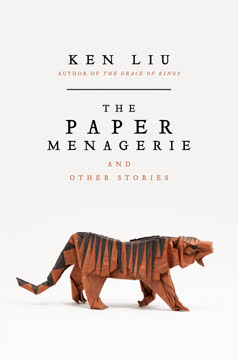
Ken Liu's The Paper Menagerie and Other Stories is a masterwork of speculative fiction that weaves together science fiction, fantasy, and historical narrative to explore the deepest questions of identity, memory, and empathy. At its heart, the collection is about the power and fragility of stories—how they shape who we are, connect us across cultures and generations, and serve as both shield and weapon against the erasure of time and trauma. Liu's stories interrogate the costs of assimilation, the ethics of technology, and the responsibilities of witness and remembrance. In a world increasingly mediated by algorithms, surveillance, and curated realities, Liu warns of the dangers of forgetting—whether through denial, convenience, or the seductive perfection of digital memory. Yet, he also offers hope: that through storytelling, through the courage to remember and to speak, we can find meaning, justice, and connection. The collection is a call to empathy, urging us to honor the complexity of our histories and the humanity of both victims and perpetrators. In the end, Liu suggests, the only way to endure the darkness is to keep telling true stories, to bear witness, and to let the light of memory travel ever outward, illuminating the universe.
Last updated: