Plot Summary
Paris Awakens to Sirens
In the quiet Parisian morning, Kate Moore, an American expat and covert intelligence operative, senses something is wrong as sirens slice through the city's usual hush. The city, already tense from recent terror attacks, is on edge. Kate, navigating the etiquette minefield of expat school drop-off, is always alert to danger, her instincts honed by a life of secrets. As police convoys race by, the city's underlying anxiety surfaces, and Kate's own fears—personal and professional—rise. The day, which began with mundane routines and marital friction, is about to spiral into chaos, as Paris braces for an unprecedented threat.
The Suicide Bomber's Delivery
Mahmoud, a terminally ill Egyptian immigrant, is delivered by van to the heart of Paris, wearing a visible suicide vest and carrying a mysterious briefcase. He is both pawn and symbol, his personal tragedy manipulated for a larger, hidden agenda. The city's security measures, designed to prevent such attacks, are powerless against a man willing to die. Mahmoud's journey is marked by resignation and sorrow, his actions driven by a promise of financial security for his children. As he steps into the public eye, the city's vulnerability is exposed, and the stage is set for a day of terror and deception.
Billionaire's Morning Disrupted
Hunter Forsyth, an American tech billionaire, is preoccupied with business and personal ambitions, oblivious to the sirens and the growing crisis. His world of privilege is insulated by wealth, assistants, and security, but cracks appear as police and embassy officials arrive, citing credible threats against Americans. Hunter's plans for a lucrative merger and a press conference are derailed. As communications fail and security tightens, he is forced into a "safehouse" by supposed American officials, unaware that he is being drawn into a sophisticated plot targeting him and his company.
Expat Life, Hidden Dangers
Kate's morning is a balancing act of domesticity and clandestine work. Her marriage to Dexter is strained by secrets and past betrayals, and her career as a covert CIA operative in Paris is increasingly precarious. As she navigates the city's markets and school events, she monitors persons of interest and maintains her cover. The bomb threat at Gare de Lyon is just the first sign that today will be different. Kate's professional anxieties and personal regrets intertwine, as she senses that her carefully constructed life is about to unravel.
Dexter's Risky Bet
Dexter Moore, Kate's husband, is a former tech worker turned day-trader, gambling on a risky short-sell against Hunter's company, 4Syte. His financial woes and marital guilt push him to stake more than he can afford, relying on insider tips and emotional vendettas. As the city's tension mounts, Dexter's own secrets and past deceptions threaten to resurface. His day, meant to be routine, becomes a gauntlet of anxiety, chance encounters, and mounting pressure, as the consequences of his choices begin to close in.
The Bomb Threats Multiply
Multiple bomb threats are reported at iconic Parisian sites: Gare de Lyon, Arc de Triomphe, Place Vendôme, and Notre-Dame. Each threat is carefully timed and placed to stretch police resources and sow panic. The city locks down, military and police swarm, and the public reels. The threats are not what they seem—no demands are made, and the devices are designed to paralyze rather than destroy. The real target is hidden, as the chaos serves as a smokescreen for a more personal and lucrative crime.
Domestic Tensions, Public Chaos
Kate and Dexter's marriage, already fragile, is tested by the day's events. Small domestic failures—forgotten birthday presents, unspoken resentments—mirror the larger breakdown of order in Paris. As Kate tries to maintain normalcy for her children, she is pulled deeper into the unfolding crisis. The city's panic is reflected in their home, where secrets and lies threaten to explode. The personal and the political collide, as the Moores' private struggles become entangled with the public emergency.
The Mercenary's Motivation
Wyatt, an American ex-soldier and mercenary, is hired to play a key role in the plot. Driven by the need to pay for his daughter's medical care, he agrees to dangerous, morally ambiguous work in Paris. Disguised and meticulously prepared, he navigates the city's streets, evading police and executing his part in the scheme. Wyatt's internal conflict and mounting paranoia highlight the human cost of the operation, as he becomes both tool and victim in a game he barely understands.
Security Breaches and Secrets
Hunter, cut off from communication and surrounded by unfamiliar "protectors," grows increasingly suspicious of his situation. The safehouse, supposedly a refuge, becomes a prison. As he pieces together the inconsistencies—Chinese-made phones, locked doors, and evasive answers—he realizes he is not being protected, but held. The plot's sophistication becomes clear: the terror in Paris is a diversion, and Hunter himself is the true target, not for ransom, but for financial manipulation on a global scale.
Kate's Double Life
Kate's training and instincts kick in as she investigates the bomb threats and the disappearance of Hunter. She leverages her network of informants, safehouses, and coded routines to stay ahead of both the authorities and the conspirators. Her search leads her to the shadowy Travelers International Booking Service, a front for clandestine operations. As she uncovers connections between the Paris attacks and simultaneous threats in Mumbai and Hong Kong, Kate realizes the plot is global, and the stakes are personal.
Venice: The Mastermind's Lair
In Venice, Julia (aka Susanna), a former FBI agent and Kate's old nemesis, orchestrates the entire operation. Driven by revenge against Kate and a desire to reclaim stolen fortune, she manipulates events from afar, using her husband Chris and a network of criminals. The plot is not terrorism, but a financial heist: by kidnapping Hunter and crashing 4Syte's stock, they and their investors stand to make millions. Julia's cold calculation and personal vendetta drive the day's chaos, as she balances motherhood, crime, and the ghosts of her past.
The Louvre Under Siege
Mahmoud stands alone in the Louvre's courtyard, surrounded by police and military, his vest and briefcase radiating threat. The authorities debate how to respond, paralyzed by the possibility of a dirty bomb or nuclear device. The standoff becomes a media spectacle, the city's fate hanging in the balance. The true nature of the threat—psychological, not physical—emerges, as the bomb is revealed to be a hoax, designed to immobilize and distract. The real damage is done elsewhere, in the markets and in the lives of the conspirators' targets.
Marital Lies and Cover Stories
Kate and Dexter's relationship is strained to the breaking point by the day's events. Old wounds—infidelity, deception, professional secrets—resurface. As Dexter's risky trades and Kate's clandestine work collide, both are forced to confront the cost of their double lives. The frame-up against Dexter tightens, as evidence is planted to implicate him in the attacks. The couple must decide whether to trust each other, or to run, as the net closes in.
Hunter's False Sanctuary
Hunter's captivity reaches its climax as his captors reveal their true intentions. There is no ransom; his disappearance is meant to trigger a stock collapse, enriching the conspirators. Colette, his assistant, is revealed as a mole, complicit in the plot for her own gain. Hunter's attempts to escape fail, and he is left powerless, a pawn in a game he cannot control. The financial and personal consequences of his downfall ripple outward, affecting employees, investors, and the city at large.
The Sniper's Dilemma
Ibrahim, a Parisian police sniper, is ordered to kill Mahmoud, ending the Louvre standoff. The decision is fraught with moral and political implications, as the authorities debate the ethics and optics of executing a man who may be a victim as much as a perpetrator. The shot is fired, Mahmoud is killed, and the city breathes a collective sigh of relief. But the true damage—psychological, financial, and personal—has already been done.
Financial Schemes Unravel
As news of the attacks and Hunter's disappearance spreads, global markets tumble. Dexter's short position pays off, but the windfall is tainted by suspicion and guilt. Julia and her co-conspirators execute their trades, laundering millions through offshore accounts. The financial world reels, and the true nature of the plot is revealed: not terrorism, but a heist executed through fear and manipulation. The victims are not just the rich, but anyone caught in the web of lies and panic.
The Frame-Up Tightens
Evidence mounts against Dexter: surveillance footage, planted phones, and digital trails all point to him as the mastermind behind the attacks. Julia's meticulous planning ensures that he looks guilty, while also providing just enough exonerating evidence to keep the authorities guessing. Kate races to clear her husband's name, but the odds are stacked against them. The personal becomes political, as the couple's survival depends on outsmarting both the police and their enemies.
The Kidnapping's True Purpose
Hunter is released, his reputation and fortune in tatters. The press conference is canceled, the merger collapses, and 4Syte's stock plummets. The conspirators, having shorted the stock, reap enormous profits. The kidnapping, masked by terror and chaos, is revealed as a masterstroke of financial crime. Hunter, humiliated and broken, must reckon with the cost of his hubris and the fragility of power.
The Mastermind Revealed
Julia, having orchestrated the plot from Venice, escapes with her child and fortune. Her husband, wounded and dying, is left behind. The final confrontation with Kate is tense and ambiguous, as old enemies face off under the bridges of Paris. Julia's motivations—revenge, justice, survival—are laid bare. The cycle of betrayal and retribution comes full circle, as both women are forced to confront the consequences of their choices.
The Final Confrontation
In a climactic showdown on the banks of the Seine, Kate confronts Julia and her accomplices. Shots are fired, lives are lost, and the truth is revealed. Kate, haunted by guilt and regret, chooses mercy over vengeance, giving Julia the means to escape and end the cycle of violence. The police close in, but the main players slip away, changed but not destroyed. The city, and the characters, are left to pick up the pieces.
Aftermath and Reckoning
As night falls on Paris, the city begins to heal. Kate and Dexter, their marriage tested but intact, contemplate a future free from secrets. Hunter, humbled, faces the consequences of his ambition. Julia disappears into the shadows, her revenge complete but her happiness uncertain. The true cost of the day's events—measured in lives, fortunes, and trust—is left unresolved, a reminder that in a world of diversions and deceptions, the line between victim and perpetrator is never clear.
Characters
Kate Moore
Kate is a former CIA operative living undercover in Paris, balancing the demands of motherhood, marriage, and espionage. Her marriage to Dexter is fraught with secrets and past betrayals, and her professional life is under threat as her covert substation faces closure. Kate is resourceful, disciplined, and deeply conflicted—her sense of duty often at odds with her desire for a normal life. Her psychological complexity is marked by guilt, regret, and a longing for redemption. Throughout the story, Kate's journey is one of survival, self-discovery, and the painful recognition that her choices have consequences for those she loves.
Dexter Moore
Dexter is Kate's husband, a former tech worker turned day-trader, whose financial recklessness and emotional insecurity drive much of the plot. Haunted by past failures and a need to prove himself, Dexter's risky short-sell against 4Syte is both a bid for redemption and a potential downfall. His relationship with Kate is strained by mutual deception, yet he remains devoted to his family. Dexter's psychological arc is one of anxiety, guilt, and the search for self-worth, as he is framed for crimes he did not commit and must rely on Kate's skills to survive.
Julia MacLean / Susanna Petrocelli
Julia, living in Venice under an alias, is the architect of the plot against Hunter and the Moores. Driven by a sense of betrayal and loss—both personal and financial—she orchestrates the day's chaos as both revenge and opportunity. Her intelligence, ruthlessness, and capacity for long-term planning make her a formidable antagonist. Julia's relationship with Kate is deeply personal, rooted in past friendship and betrayal. Her psychological profile is marked by ambition, resentment, and a willingness to sacrifice others for her goals, yet she is also a mother, struggling with the costs of her choices.
Hunter Forsyth
Hunter is the CEO of 4Syte, a tech conglomerate, whose wealth and power make him both a target and a symbol. His self-importance and entitlement blind him to the dangers around him, and his reliance on others—assistants, security, lovers—proves his undoing. Hunter's psychological journey is one of humiliation and loss, as he is kidnapped, manipulated, and ultimately released, his fortune and reputation in ruins. His relationships are transactional, and his downfall is a cautionary tale about the limits of control.
Mahmoud Khalid
Mahmoud is a terminally ill Egyptian immigrant, manipulated into becoming the face of terror in Paris. His motivations are rooted in love for his children and despair over his fate. Mahmoud's psychological state is one of resignation, sorrow, and a desperate hope that his sacrifice will secure a better future for his family. He is both victim and symbol, his death orchestrated for maximum impact by those who care nothing for his life.
Wyatt
Wyatt is an American ex-soldier, hired for his skills and desperation. His participation in the plot is driven by the need to pay for his daughter's medical care, but he is increasingly conflicted by the violence and deception required. Wyatt's psychological arc is one of mounting paranoia, guilt, and ultimately betrayal, as he is used and discarded by the masterminds. His fate underscores the expendability of those on the margins of power.
Chris / Bill MacLean
Chris, Julia's husband and former partner in crime, is a skilled operative whose loyalty is tested by the plot's escalating violence. His relationship with Julia is complex—marked by love, resentment, and shared guilt. Chris's psychological journey is one of self-doubt, physical suffering, and eventual abandonment, as he is wounded and left behind in the final escape. His role highlights the personal costs of ambition and revenge.
Colette
Colette is Hunter's assistant, secretly complicit in the kidnapping plot. Her motivations are pragmatic—financial security and personal advancement—but she is also a survivor, navigating the dangers of male-dominated power structures. Colette's psychological profile is marked by adaptability, calculation, and a willingness to betray those who underestimate her. Her actions are pivotal in Hunter's downfall and the plot's success.
Ibrahim Abid
Ibrahim is a Parisian police sniper, tasked with ending the Louvre standoff. His internal conflict—between duty, ethics, and identity as a Frenchman of North African descent—mirrors the city's own struggles with diversity and violence. Ibrahim's psychological arc is one of anguish, responsibility, and ultimately tragedy, as he becomes both executioner and victim in the day's events.
Richie Benedetti
Richie is a small-time mobster turned investor, recruited by Julia to fund the operation. His greed and lack of scruples make him both useful and disposable. Richie's psychological makeup is simple—self-interest and bravado—but his fate is a reminder that in a world of diversions, even the most cynical can be outplayed.
Plot Devices
Diversion as Central Mechanism
The novel's primary plot device is the use of coordinated terror threats as a diversion for a sophisticated financial crime. The bomb threats and the suicide bomber paralyze the city, distract law enforcement, and create the conditions for a high-profile kidnapping and stock market manipulation. This device allows the author to explore themes of fear, control, and the fragility of modern life, while also critiquing the ways in which public panic can be engineered for private gain.
Framing and False Narratives
The conspirators meticulously frame Dexter for the attacks, planting physical and digital evidence, manipulating surveillance footage, and creating alibis and false leads. This device heightens suspense and underscores the novel's exploration of truth, perception, and the power of narrative. The use of multiple points of view and unreliable narrators further blurs the line between reality and deception.
Parallel Timelines and Locations
The story unfolds across multiple locations—Paris, Venice, Hong Kong, Mumbai—each experiencing its own version of the crisis. The parallel timelines and intercut chapters create a sense of urgency and interconnectedness, reflecting the globalized nature of modern threats and the ripple effects of individual actions.
Psychological Realism and Moral Ambiguity
The novel delves deeply into the psychological states of its characters, using their fears, regrets, and desires to drive the plot. Moral ambiguity is a constant: heroes are flawed, villains are sympathetic, and every action has unintended consequences. This device invites readers to question easy judgments and to empathize with characters on all sides of the conflict.
Foreshadowing and Reversal
The narrative is rich with foreshadowing—small details and conversations that later prove pivotal. Reversals abound: apparent terrorists are revealed as pawns, protectors as betrayers, and victims as perpetrators. The structure keeps readers off-balance, mirroring the uncertainty experienced by the characters.
Analysis
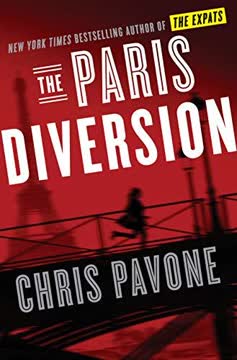
The Paris Diversion is a masterful exploration of how fear, manipulation, and personal vendetta can upend lives and societies. Chris Pavone uses the thriller format to interrogate the fragility of modern security—both personal and collective—and the ease with which trust can be weaponized. The novel's central lesson is that in a world saturated with information, surveillance, and competing narratives, truth is elusive and often irrelevant; what matters is who controls the story. The characters' psychological complexity—especially Kate's struggle to reconcile her professional ruthlessness with her longing for normalcy—reflects the broader human cost of living in a world where every relationship is potentially transactional, and every act of protection can become an act of betrayal. The book warns against the dangers of complacency, the seduction of certainty, and the moral compromises demanded by survival. Ultimately, it is a story about the limits of control, the inevitability of unintended consequences, and the possibility—however faint—of redemption through empathy and self-awareness.
Last updated:
Review Summary
The Paris Diversion receives mixed reviews averaging 3.52 stars. Readers praise the intricate plot, non-stop action, and compelling protagonist Kate Moore, a CIA agent balancing espionage with family life in Paris. Many found the multiple perspectives and complex storyline initially confusing but ultimately gripping, with expertly crafted twists. Common criticisms include slow pacing at the start, too many characters, an unlikeable husband Dexter, and Kate's cold personality. Several reviewers recommend reading the first book, The Expats, for better context, though it's not essential.