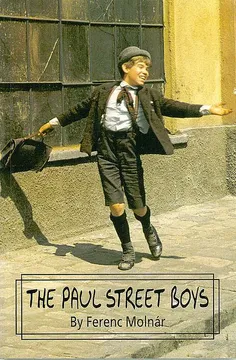


Plot Summary
The Marbles Become a Cause
In a Budapest classroom, a note summons the Paul Street boys to their vacant-lot headquarters, the grund. On the way, Nemecsek1 explains how the stronger Pásztor brothers5 took his friends' marbles by invoking einstand, their claim that force entitles them to whatever they want. Boka,2 usually cautious about quarrels, agrees that the abuse cannot continue.
At the meeting, the boys elect Boka2 president, giving him authority to organize their defense. Geréb3 receives only three votes, a small public defeat that sharpens his rivalry with Boka.2 The gang decides to visit the redshirts, their rivals from the Botanical Gardens, before they can be driven from the ground they use as a playground.
The marbles turn a playground grievance into a question of power: the boys know the Pásztors are stronger, but Boka insists that strength does not make their seizure legitimate. His election gives the group a shared authority, while Geréb's minority vote introduces competition inside the gang. Nemecsek's low status also becomes visible: he reports the injustice, yet the organization gives command to someone else.
The Flag Above the Fort
Before the others arrive, Nemecsek1 spots Feri Áts,4 leader of the redshirts, standing on a Paul Street fortress. Áts4 takes the gang's small red-and-green flag and leaves Nemecsek1 too frightened to stop him. When Boka2 and the others inspect the empty flagstaff, Boka2 stays composed and orders a replacement in red and white.
The boys hear the news as proof that the redshirts mean to claim their territory, not merely mock them. Their meeting hardens into a decision to defend the grund. Nemecsek,1 still the gang's only human private, obeys the officers' commands while hoping for recognition; even in the crisis, his companions treat his service as something ordinary.
The missing flag makes the conflict visible and personal. Áts has crossed into the boys' home territory and taken its emblem, while Boka answers with practical adaptation rather than panic. Nemecsek's position exposes the gang's miniature hierarchy: he is essential to its routines but denied the status that would make his loyalty publicly count.
A Night Among Redshirts
Boka2 takes Nemecsek1 and the strong, exuberant Csónakos6 into the Botanical Gardens to leave a notice on enemy ground. They creep past sentries, find the redshirts' hidden weapons, and reach the island across its lagoon. Nemecsek1 slips into the water while boarding their boat, then shivers through the approach.
From cover, the boys see Geréb3 among the redshirts, explaining how they can enter the grund and arrange for the watchman7 to leave its gate open. Boka2 realizes his friend is helping the enemy invade. After posting their notice and extinguishing the lantern, the three escape pursuit through the conservatory and over a fence. Nemecsek1 returns soaked, while Boka2 carries the knowledge of betrayal alone.
The raid makes the boys' invented military world materially dangerous: they trespass, evade guards, and discover a real plan to take their home ground. Geréb's presence wounds Boka because the betrayal comes from inside the friendship he is trying to lead. Nemecsek's courage remains imperfect and bodily; fear, cold, and clumsiness accompany his decision to stay beside Boka.
The Private Called Traitor
At the grund, Nemecsek1 follows Geréb3 and overhears him offer cigars and money to Janó,7 the watchman,7 in exchange for driving the boys away. He runs to fetch Boka,2 but the Putty Club's members8 stop him to demand that he take their secret oath.
When he refuses and hurries on, they expel him and write his name in lowercase in their record as a traitor. Boka2 reaches the gate too late to stop Geréb3 from leaving; Geréb3 laughs at them as he runs off. The gang continues playing, unaware of the bribe, and Boka2 is left fearing that their home and their friendship have both been lost.
The chapter's cruelest reversal is social, not military. Nemecsek sacrifices his standing in the Putty Club to warn the gang, then is condemned by boys who do not know what he has done. Their lowercase entry turns a childish record into an instrument of shame. Boka's leadership cannot protect everyone from injustice, and Geréb's contempt leaves reconciliation seemingly impossible.
Nemecsek Takes the Flag
To recover the stolen flag, Nemecsek1 slips into the Botanical Gardens and hides in a tree above the redshirts' meeting. When Geréb3 claims the Paul Street boys have no courage, Nemecsek1 reveals himself, admits taking the flag, and refuses Áts's4 invitation to join the rival gang. The Pásztor brothers5 wrench the flag away and dunk him in the lagoon while the redshirts laugh.
Nemecsek1 does not retaliate, but tells Geréb3 that he would rather suffer than betray his friends. His rebuke silences the gathering. Áts4 then learns that the Pásztors5 took Nemecsek's1 marbles and orders them into the water as punishment. The redshirts salute Nemecsek1 as he leaves.
Nemecsek's courage is not a display of physical power. He stands alone, refuses the safer offer of belonging, and accepts humiliation without changing sides. His conduct also alters the rival gang: Áts enforces a rule against exploiting weaker boys, making honor a test that applies to his own followers as well as his enemies.
Forgiveness Has a Boundary
Boka2 posts a warning that an attack is imminent and prepares the boys for war. Geréb3 returns with the stolen flag, admits his wrongdoing, and asks to be accepted again. Boka2 forgives him privately but refuses to restore his place in the gang, remembering Geréb's3 earlier laughter as he fled. Later, Geréb's father arrives to learn whether his son truly betrayed his friends.
The boys hesitate to accuse him without proof, and Nemecsek,1 feverish from his repeated soakings, declares that Geréb3 is not a traitor. His answer protects Geréb3 from his father's anger, but the Putty Club boys8 still condemn Nemecsek1 as a liar. Boka2 takes the sick boy home, hearing him grieve over the dishonor recorded against his name.
Boka separates forgiveness from restored trust: remorse matters, but it cannot erase the consequences of Geréb's choices. Nemecsek, meanwhile, protects the very boy whose betrayal has endangered his friends. His loyalty is not simple obedience; he chooses mercy even when it costs him credibility with the group that has already mistreated him.
A War Delayed One Day
Geréb3 sends Boka2 a detailed warning that the redshirts know their defenses and have postponed the attack until the next day. Boka2 reads the letter to the gang, which votes to take Geréb3 back as a private under supervision. Redshirt messengers then formally declare war for three o'clock the following afternoon and agree to rules against unfair fighting.
They visit Nemecsek1 at home, where one Pásztor brother5 asks forgiveness for the bullying. Before the battle, Boka's2 boys return the recovered flag to the redshirts so it can be won openly. Geréb3 asks for the most dangerous position, and Boka2 assigns him to the trench. Janó7 digs that trench, changing the defense plan for the attack.
Trust returns here as a monitored practice rather than an absolution. Geréb's warning supplies useful information, but Boka keeps him under watch and gives him a chance to prove himself through risk. The formal declaration and agreed rules let the boys treat play-war as a moral system, while returning the flag makes fair contest more important than possession.
The Grund Holds Its Ground
The redshirts attack through both entrances. Boka's2 boys feign retreat on Maria Street, draw one force behind the sawmill, then spring from the shed and Janó's7 hut to trap it. Sand bombardment and hand-to-hand wrestling overwhelm the attackers; the Pásztor brothers5 and several others are locked in the shack. Áts's4 remaining force charges the trench, where hidden defenders erupt on Boka's2 signal.
The line falters when Nemecsek,1 feverish and forbidden to leave bed, suddenly arrives and knocks Áts4 down, then collapses himself. The Paul Street boys drive the redshirts out and recapture their flag, which Geréb3 takes from the enemy. Boka2 restores Geréb's3 rank and promotes Nemecsek1 to captain before his mother9 carries him home.
The victory comes from coordination, not superior strength: Boka's feigned retreat and hidden trench turn the redshirts' confidence against them. Nemecsek's arrival changes the battle, but the triumph is inseparable from the cost to his failing body. Geréb's recovery of the flag completes his effort to earn trust through action rather than explanation.
Victory Comes Too Late
Nemecsek's1 fever worsens at home, where Boka2 stays beside him. The Putty Club8 corrects its record and prepares an honor scroll, but its delegation arrives too late: Nemecsek1 dies before he can see the apology. Boka2 wanders through the city, then returns to the grund and learns from Janó7 that construction workers will soon replace it with a three-story building.
Even the territory defended at such cost is already lost. Kolnay8 and Barabás8 make peace at the site of Nemecsek's1 last stand. The next day, Professor Rácz10 tells the class to honor their dead schoolmate. Boka2 faces the loss of his friend and playground together, with the boys' victory offering no way to recover either.
The ending refuses the consolation of a battlefield win. The club repairs Nemecsek's name, but only after he can no longer receive the recognition he wanted; the grund, too, is claimed by forces outside the boys' invented nation. Boka's grief marks the passage from childhood certainty toward knowledge that courage can matter deeply without controlling what happens next.
Analysis
The novel makes childhood feel serious without pretending that children's institutions are harmless. The Paul Street boys invent ranks, courts, flags, and military procedures because the grund gives them a place to practice belonging and power. Their system can inspire discipline and mutual courage, but it can also reproduce exclusion: Nemecsek1 serves everyone while remaining a private, then is condemned by the Putty Club8 for leaving its meeting to protect the gang. His repeated acts of loyalty expose the gap between a community's stated ideals and its treatment of the least powerful member.
Boka2 and Áts4 offer contrasting kinds of command. Boka2 plans carefully and accepts responsibility for the group; Áts4 leads through force and presence, yet insists that strength obey limits. Their rivalry is not simply good against evil. Both boys want a usable place for their followers, and both understand that a leader's conduct sets the terms others live by. Geréb's3 struggle adds a more intimate problem: remorse may be sincere, but restored trust has to be earned through action.
The final losses unsettle the adventure's apparent promise. Nemecsek's1 courage cannot make his body recover, and the boys' defense cannot prevent adults from building on the land. The novel therefore distinguishes moral victory from control over outcomes. The boys' loyalty matters because it changes how they treat one another, not because it secures the ground forever. Boka's2 grief marks the painful discovery that a world can be worth defending even when it cannot be kept.
Review Summary
Readers across many languages and cultures have praised The Paul Street Boys as a timeless story of courage, loyalty, friendship, and sacrifice. Most reviewers highlight the emotional depth of characters like the brave Nemecsek and wise leader Boka, noting the book transcends its intended young audience. Many were moved to tears by the tragic ending. Some readers interpret the story as an allegory for nationalism and patriotism. A small minority found the themes outdated or the glorification of conflict problematic for children.


Characters
Ernő Nemecsek
The overlooked standard-bearerThe smallest and only human private among the Paul Street boys, Nemecsek is routinely ordered about and underestimated. He wants a place in the group, yet his sense of right and wrong repeatedly proves stronger than his hunger for status. His courage is not fearlessness: he trembles, cries, and longs to go home, then acts anyway when his friends or their ground are threatened. Through him, the story measures leadership by what a person will endure for others, not by rank.
János Boka
The steady commanderBoka is the boys' elected leader, valued for clear judgment, fairness, and the ability to turn excitement into workable plans. He does not seek every quarrel, but takes responsibility when the grund is threatened. His friendship with Nemecsek1 gives his authority a tender side, while Geréb's3 rivalry tests his capacity to distinguish forgiveness from trust. Boka wants to protect the boys' shared world, and the strain of that responsibility pushes him toward an adult seriousness he cannot yet fully understand.
Dezső Geréb
The restless rivalGeréb is energetic, proud, and impatient with Boka's2 authority. His ambition makes him sensitive to public recognition and vulnerable to resentment when others choose Boka2 as their leader. Beneath his bravado is a need to belong, though he often handles that need through competition rather than honest appeal. His relationship with Boka2 is central to the gang's fragile unity, and his choices test how much loyalty can survive wounded pride.
Feri Áts
The redshirt commanderLeader of the rival redshirts, Áts is strong, charismatic, and accustomed to commanding attention. He wants a football ground for his boys, but also insists on rules and expects his followers to honor them. His mixture of aggression and fairness makes him more than a simple enemy to Boka's2 gang. He embodies a competing form of leadership, one that can inspire loyalty while still being challenged by the conduct of his own followers.
The Pásztor brothers
The gang's hard fistsThe older and younger Pásztor brothers are feared for their strength and their habit of taking games and possessions from weaker boys. Their silent, intimidating presence makes them the clearest source of physical danger in the conflict. They follow Áts4 among the redshirts, but their conduct also exposes the limits of strength when a group claims to live by rules.
Csónakos
The loyal strongmanCsónakos is a powerful, cheerful Paul Street boy whose booming whistle and physical strength make him useful in both mischief and danger. He follows Boka2 into the Botanical Gardens and supports the gang without needing the authority of command. His warmth gives Nemecsek1 a companion in the ranks and helps keep the boys' military seriousness tethered to their exuberant play.
Janó
The watchman at the grundJanó guards the lumberyard beside the grund and is a familiar adult presence in the boys' territory. His affection for cigars and his practical interest in money make him susceptible to persuasion, while his knowledge of the grounds later helps the defenders. He represents how the boys' private world depends on adults who have their own needs and loyalties.
The Putty Club boys
The officious clubWeisz, Kolnay, Barabás, Csele, and the other members turn their putty collection into a club complete with officers, dues, minutes, and penalties. Their procedural seriousness is comic, but their decisions carry real weight for Nemecsek1. The club reflects the boys' desire to build institutions of their own, along with their tendency to mistake rules and rank for fairness.
Nemecsek's parents
The poor tailor's familyNemecsek's1 mother and father are hardworking, modest people who try to care for their son amid poverty and limited choices. His mother watches over his health; his tailor father meets hardship with quiet endurance. Their home, set against the gang's invented military world, shows the adult obligations and material vulnerability that the boys' games cannot keep at bay.
Professor Rácz
The stern schoolmasterProfessor Rácz enforces school discipline and disbands the boys' Putty Club8 when he discovers it. His authority is real but limited: he sees the children's rules as mischief, not as a society they take seriously. His presence connects their private adventures to the orderly adult institution surrounding them.
Plot Devices
The grund
A city child's homelandThe vacant lot and adjoining lumberyard are the boys' playground, imagined prairie, fortress, and shared territory. Defending it gives their games a concrete stake, while its ownership by adults places a limit on what the boys can protect.
Ranks and war rules
Play made consequentialThe boys borrow military ranks, signals, maps, and court-martial procedures to organize their rivalries. These invented rules make the battle legible and let the children practice fairness, but they also reproduce the exclusions and humiliations of the society they have built.
The red-green flag
A test of rightful claimThe flag marks the Paul Street boys' attachment to the grund. Its theft, recovery, and return before battle turn ownership into a question of honor: the boys would rather win it openly than keep it through an advantage they consider unfair.
The Putty Club record
A written measure of belongingThe club's minutes and black book give small acts of authority a permanent-looking form. Nemecsek's1 name in lowercase becomes a public judgment, while the later correction exposes how easily a group can formalize an injustice before understanding the truth.
Download PDF
Download EPUB
.epub digital book format is ideal for reading ebooks on phones, tablets, and e-readers.








