

Key Takeaways
Look past the famous piano image: one photograph cannot contain a siege.
A moment has a history. The photograph of Aeham Ahmad playing piano among Yarmouk’s ruins traveled around the world. But the scene began with the exhausting work of hauling water, a hungry family, and a poem by Ziad al-Kharraf, whose pregnant wife had died after soldiers blocked her passage through a checkpoint. Ahmad played while three birds sang nearby, and a neighbor shared precious coffee with him. The image captured the pianist, not the life around him: a son, husband, and shopkeeper living under siege, with food and water running out.
The memoir restores context. Ahmad tells this story because a striking image can become a substitute for understanding. His music mattered, but it did not cancel the hunger, grief, and danger that made the performance possible.
What's striking is how a photograph can make suffering legible to distant audiences while also making it smaller. The piano offers a familiar symbol of culture; the siege behind it is harder to fit into a frame. This tension appears throughout humanitarian media, where compelling images can attract attention but flatten the people pictured into emblems. Ahmad's insistence on the life before and after the image is a form of correction. It also leaves a difficult question: can any personal story convey the scale of collective suffering without seeming to stand for everyone?
Treat encouragement as practical work: make room for talent to survive.
Support takes effort. Ahmad’s father, Ahmad, was blind from childhood, after an eye infection went untreated. He learned carpentry and music, built instruments, and guided his son through the crowded streets of Yarmouk. He helped Aeham prepare for the entrance exam to Damascus’s selective music school, practiced solfège with him, and borrowed money to buy a piano. When no tuner would travel to their neighborhood, he taught himself to tune it.
Belief became logistics. The father’s support was not simply praise or a prediction that his son would succeed. It meant finding lessons, instruments, money, transport, and ways around barriers. Aeham’s own path was uncertain, but his father made it possible for him to keep trying.
This portrait expands the idea of mentorship beyond advice. A mentor often changes what is materially possible: access to equipment, time, instruction, and a sense that a difficult goal is worth the cost. The father’s blindness does not make him a symbol of limitless willpower; the memoir shows his specific skills, dependence on others, and hard-won adaptations. That distinction matters. Celebrating determination can obscure the resources people need, while this story makes care visible as organized, practical labor.
Make elite skills accessible, or talent remains the privilege of the already privileged.
Access was unequal. Aeham passed the music school’s entrance exam with 99 percent, yet he entered a world where many classmates arrived by car or chauffeur while he and his father crossed Damascus by bus. Even the first-year solfège book cost about a month’s average salary. Later, Aeham and his father opened a music shop in Yarmouk, where Aeham began teaching group lessons and selling instruments on credit.
He widened the doorway. Group classes lowered the price, and credit let students begin without paying for an instrument upfront. Some students disappeared with their instruments, but the approach succeeded: the shop eventually had about 200 students. Aeham saw classical music, often treated as a status marker, as something ordinary people should be able to learn.
The memoir makes access concrete: a talent test may be formally open while books, lessons, travel, and instruments keep opportunity socially narrow. Aeham’s shop changes the system at the point he can reach, lowering costs and accepting some risk to bring in more students. This resembles a broader principle in education: participation depends not only on ability, but on the design of the path into a subject. The compromise is real, since group instruction and credit can strain quality and finances. Still, his experiment treats wider access as a value worth managing for, not dismissing.
Give a craft room to become yours before demanding it become your livelihood.
Practice was not passion. For years, Aeham played piano largely because his father wanted him to become a concert pianist. Difficult teachers and relentless practice made him resent the instrument. At sixteen, he began skipping an abusive high school and hiding in the family’s music shop, where he could experiment with jazz, pop, Arabic music, and classical forms without being corrected.
Freedom changed the work. Influenced by Lebanese musician Ziad Rahbani and others, Aeham began composing his own songs. He later understood those quiet hours as preparation for the burst of songwriting that came during the siege. The path was not a neat conversion from reluctant student to successful artist. It involved boredom, secrecy, trial, and time for musical ideas to develop.
The shop offers an important contrast to the familiar story that discipline alone produces mastery. Aeham’s formal training supplied technique, but private experimentation gave him ownership of the music. Creativity often needs both: structured learning can build fluency, while low-stakes exploration lets people combine influences in unexpected ways. The account does not prove that every young person should evade school or parental expectations. It does suggest that a skill becomes durable when learners can eventually use it for purposes they choose.
In a siege, art can feed bodies, then help a neighborhood speak.
Survival came first. During Yarmouk’s siege, food grew scarce and prices soared. Aeham used lentils, wild clover, and a looted spice mixture to make falafel, selling it at the ordinary local price. The stand drew long lines, and he sometimes prepared about 3,000 pieces in a day. A grenade explosion wounded his hand and killed a customer, but he returned to selling food.
Music answered another need. At home, songs helped neighbors briefly lift their spirits. Aeham later pushed a piano into the streets and performed with local men and children, composing songs about hunger, water shortages, displacement, and political promises. Videos carried those performances beyond Yarmouk. Music did not replace food or stop violence, but it gave people a shared way to describe what was happening.
The sequence resists the comforting idea that art is separate from material need. Aeham first uses practical skill to help people eat, then music to make their experience audible. Collective singing can create a temporary sense of coordination and belonging, especially when public life has been shattered. Yet the memoir is clear that expression has limits: a song cannot open a checkpoint or guarantee a meal. Its importance lies not in solving the siege, but in helping people remain social beings within it.
Making hope visible can also expose people to danger you cannot control.
The risk was real. Aeham often performed outside with children from Yarmouk. One day, twelve-year-old Zeinab joined a street performance and was killed by a sniper. Aeham carried her to a makeshift hospital, where she was pronounced dead. He blamed himself for taking the children into the street, stopped composing for a time, and struggled to return to music.
Art is not protection. The children’s performances had offered relief and a sense of ordinary life, but neither good intentions nor the music could make a sniper’s line of fire safe. Aeham eventually performed with children again, choosing narrower, crowded streets, yet the guilt remained. His account does not turn the death into a lesson about courage. It shows how war makes even generous acts carry risks no one can fully manage.
This episode complicates the public image of art as uncomplicated resistance. The performance created joy, but its visibility exposed children to a danger that neither music nor care could control. Aeham’s guilt resembles what clinicians call moral injury: distress tied to the sense that one has violated a responsibility, even when the harm was not truly within one’s power to prevent. That frame may help explain his suffering without declaring it resolved. It also warns against judging choices made under conditions where every available option is dangerous.
In Yarmouk, neutrality meant navigating danger, not standing outside politics.
Refugees faced a trap. Yarmouk’s Palestinian residents had reason to fear being treated as outsiders or blamed for Syria’s unrest. Local leaders urged neutrality, and many residents initially tried to avoid taking sides. Meanwhile, the regime used Palestinian demonstrations at the Golan border for its own purposes, and the resulting deaths helped turn local anger toward demands for freedom.
The danger multiplied. As the conflict reached Yarmouk, residents faced government forces, Palestinian militias, armed opposition groups, and eventually ISIS. The siege brought starvation, while Aeham’s brother Alaa was arrested at a checkpoint and disappeared. The memoir presents political choices as entangled with survival, identity, and family, not as clean decisions made from a safe distance.
The memoir’s account is a witness’s perspective, not a complete history of Syria’s conflict. That distinction matters because the author’s framing is shaped by where he lived, whom he knew, and what he endured. Within that limit, the story shows why the word neutrality can mislead: people may avoid public alignment because they fear retaliation, not because they lack political judgment. It also shows how armed actors can narrow civilian choices until routine acts, such as traveling to work or seeking food, carry political consequences.
Treat survival as a network of risky favors, not a lone escape.
Help came through people. Raed helped Aeham connect to the internet and record performances, then endured torture rather than reveal information that could endanger him. Monika, a German journalist, worked to arrange Aeham’s departure and helped fund it. His mother contributed her savings, and a fixer with ties to state security arranged passage out of Yarmouk.
No helper was simple. The escape depended on trust, money, secrecy, and luck. The driver was beaten and the family was detained during the journey. After release, Aeham traveled alone through Syria and Turkey, eventually crossing the sea to Greece. He left Tahani and their sons behind because taking them on the dangerous route seemed too risky. His survival was collective, but its costs were intimate.
The narrative counters the lone-rescuer version of migration stories. Escape depends on ordinary acts of loyalty, but also on intermediaries whose motives and affiliations may be compromised. Raed’s courage and Monika’s support coexist with a smuggling system that can exploit desperate people. This does not make help meaningless; it makes trust a high-stakes calculation shaped by unequal power. The account also resists treating departure as an uncomplicated triumph, since safety for one person can mean separation and danger for those left behind.
Safety changes your address faster than it quiets the war inside.
Reunion was not instant repair. After reaching Germany in 2015, Aeham spent months in a crowded refugee center, anxious about his family and unable to work. With help from people in Wiesbaden, Tahani and their sons joined him in 2016. His parents arrived in 2018. The family later opened a small music and art school for refugees and local residents.
The past persisted. Aeham describes fear of hunger, guilt over Zeinab, and uncertainty about his missing brother Alaa. Busy concert schedules sometimes kept painful thoughts at bay, while quiet could bring them back. Music helped him communicate across languages and raise support for others, but it did not erase grief. Safety made a future possible; it did not make the losses disappear.
The ending refuses a tidy recovery arc. Legal safety and family reunion matter enormously, but neither automatically restores a sense of home or resolves traumatic memories. The school in Wiesbaden gives music a new social role: a place for learning and connection rather than only performance or protest. At the same time, keeping busy can be both meaningful work and a way to avoid painful recollection. The memoir offers no simple test for distinguishing the two, only an honest account of living with both hope and unresolved loss.
Analysis
The book is both a chronological memoir and a correction to a famous image. Its opening question is not simply what a pianist did in a ruined city, but what that photograph leaves out: a family, a neighborhood, a siege, and years of musical labor. That structure matters. The reader first encounters an arresting public symbol, then follows the private history that makes the symbol intelligible.
Music serves several distinct functions rather than one grand metaphor. It is a family inheritance shaped by Aeham’s blind father, a demanding discipline imposed by institutions, a livelihood built through accessible teaching, a private space for experimentation, and finally a public language for people trapped in Yarmouk. Food and music are deliberately placed beside each other. Aeham sells falafel because people are hungry, and performs because hunger and fear have also damaged social life. Neither activity is romanticized as a substitute for safety.
The memoir’s most difficult ethical material is Zeinab’s death. Ahmad’s guilt is emotionally central, but the narrative does not establish that he could have foreseen or prevented the sniper attack. Readers can understand the guilt without accepting it as proof of culpability. That distinction preserves the force of his testimony while avoiding the false comfort of treating trauma as a moral verdict.
The book also has limits inherent to witness memoir. Its account of political actors is personal and situated, not a neutral survey of the Syrian conflict. Yet that partiality is part of its value: it shows how broad political forces are encountered through checkpoints, family separations, food lines, and disappearing relatives. In Germany, rescue does not become a clean ending. Reunion, work, and artistic community coexist with grief and fear. The final insight is not that music defeats violence, but that people use it to make connection and testimony possible when ordinary forms of agency have been stripped away.
Review Summary
The Pianist from Syria is a moving memoir of Aeham Ahmad's life in war-torn Syria. Readers praise Ahmad's courage, resilience, and use of music to bring hope amid destruction. The book provides insight into life before and during the Syrian conflict, detailing Ahmad's journey from playing piano in rubble-filled streets to fleeing as a refugee. Many reviewers found the story emotionally impactful, shedding light on the refugee experience. While some felt the writing style could be improved, most agreed it's an important, eye-opening account of survival and the power of music.
Glossary
UNRWA
Palestinian refugee agencyThe United Nations Relief and Works Agency for Palestine Refugees in the Near East. In the memoir, UNRWA supported Palestinian refugees through schools and other services. During the siege of Yarmouk, it attempted to deliver food and hygiene supplies, though access and distribution were repeatedly interrupted.
oud
Arabic short-necked luteA traditional Arabic string instrument with a rounded, pear-shaped body and a short neck. It has no frets, making accurate fingering difficult. Aeham’s father built and repaired ouds, and the family’s music business eventually manufactured them for students, shops, and overseas buyers.
dabkeh
Levantine line danceA group dance popular across the Eastern Mediterranean. Dancers link hands or shoulders and move together in a line. In the memoir, dabkeh is part of Palestinian wedding celebrations, where men and women commonly dance in separate spaces.
Naqba
Palestinian displacement of 1948Arabic for catastrophe, the term Palestinians use for the displacement of more than 700,000 people during the 1948 war. Aeham’s family fled Safad and became refugees in Syria. The memory of that displacement shapes the family’s identity and the later flight from Yarmouk.
Naqsa
Defeat of the 1967 warArabic for setback, the term used for the 1967 Arab-Israeli war, during which Israel occupied the Golan Heights, among other territories. In the memoir, commemorations of the Naqsa became occasions when Syrian authorities and Palestinian groups directed people toward the border, with deadly consequences.
Samed
Yarmouk choirThe name Aeham and other men gave their choir in Yarmouk during the siege. The Arabic word conveys steadfastness. The group rehearsed and performed songs for local audiences, first in a space associated with Fatah and later in public, where its music focused on hunger, displacement, and daily life under siege.
FAQ
What's The Pianist from Syria about?
- Personal Journey: The memoir follows Aeham Ahmad, a Palestinian musician living in Syria, as he navigates life during the Syrian Civil War. It delves into his personal struggles with hunger, loss, and the impact of war on his family and community.
- Music as Resistance: Ahmad uses his music as a form of resistance, performing in the streets of Yarmouk to bring hope and joy to those affected by the war.
- Family and Identity: The book explores themes of family, identity, and the refugee experience, emphasizing cultural heritage and the bonds that hold families together in times of crisis.
Why should I read The Pianist from Syria?
- Unique Perspective: The memoir offers a rare glimpse into the life of a Palestinian musician amidst the chaos of war, providing insights into the resilience of the human spirit.
- Emotional Depth: Readers will connect with Ahmad's emotional journey as he navigates love, loss, and survival in a war-torn country.
- Cultural Significance: The book highlights Syria's rich cultural heritage and the role of music in uniting people, making it a poignant read for those interested in the arts and social justice.
What are the key takeaways of The Pianist from Syria?
- Power of Music: Music serves as a powerful tool for healing and resistance, with Ahmad's performances becoming a lifeline for his community.
- Resilience in Adversity: Ahmad's story showcases the resilience of the human spirit, illustrating how individuals can find hope and purpose despite overwhelming challenges.
- Importance of Family: The narrative emphasizes the significance of family bonds and support systems during crises, highlighting how love provides strength in adversity.
What are the best quotes from The Pianist from Syria and what do they mean?
- "I Forgot My Name": This line reflects the profound loss of identity experienced by those affected by war, symbolizing how conflict can strip individuals of their sense of self and belonging.
- "What you’re doing is very important": Spoken by a woman offering coffee during a performance, this quote underscores the significance of art and music in providing solace and hope to those suffering.
- "I want to raise my voice to dispel some of the fear and the lies": Ahmad expresses his desire to share his story and challenge misconceptions about refugees, emphasizing the need for understanding and empathy.
How does The Pianist from Syria depict the impact of war on daily life?
- Destruction and Loss: The memoir vividly describes the physical destruction of Yarmouk and the emotional toll it takes on its residents, recounting the loss of friends, family, and home.
- Struggle for Survival: Ahmad details the daily challenges of finding food, water, and safety, illustrating the harsh realities faced by those living in a besieged area.
- Community Resilience: Despite the devastation, the memoir highlights the strength and solidarity of the community as they support one another through music and shared experiences.
What role does music play in The Pianist from Syria?
- Expression of Emotion: Music serves as a vital outlet for Ahmad, allowing him to express his pain, anger, and hope amidst the chaos of war.
- Cultural Heritage: Ahmad's music reflects his Palestinian identity and cultural heritage, connecting him to his roots and the history of his people.
- Unifying Force: Through his performances, Ahmad brings people together, fostering a sense of community and shared purpose, providing comfort and strength.
How does The Pianist from Syria address themes of identity and belonging?
- Struggle with Identity: Ahmad grapples with his identity as a Palestinian refugee, feeling the weight of his heritage while facing the challenges of displacement.
- Sense of Belonging: The memoir explores the importance of community and family in providing a sense of belonging, even when physical homes are lost.
- Cultural Connection: Ahmad's connection to his culture through music reinforces his sense of belonging, reminding him of his roots and shared experiences.
What challenges does Aeham Ahmad face in The Pianist from Syria?
- Hunger and Starvation: Ahmad describes the dire food shortages and the struggle to find basic necessities, highlighting the physical toll of war on his community.
- Loss of Loved Ones: The memoir recounts the painful losses of friends and family members, deeply affecting Ahmad's emotional state.
- Displacement and Exile: Ahmad faces the challenge of being uprooted from his home and the uncertainty of his future as a refugee.
How does The Pianist from Syria illustrate the refugee experience?
- Life in Yarmouk: The memoir provides a detailed account of life in Yarmouk, a Palestinian refugee camp, showcasing the struggles and resilience of its residents.
- Struggles for Survival: Ahmad's narrative highlights the daily challenges faced by refugees, including food scarcity, safety concerns, and the search for identity.
- Hope and Resilience: Despite the hardships, the memoir emphasizes the hope and resilience of refugees, showcasing their ability to find joy and purpose through music and community support.
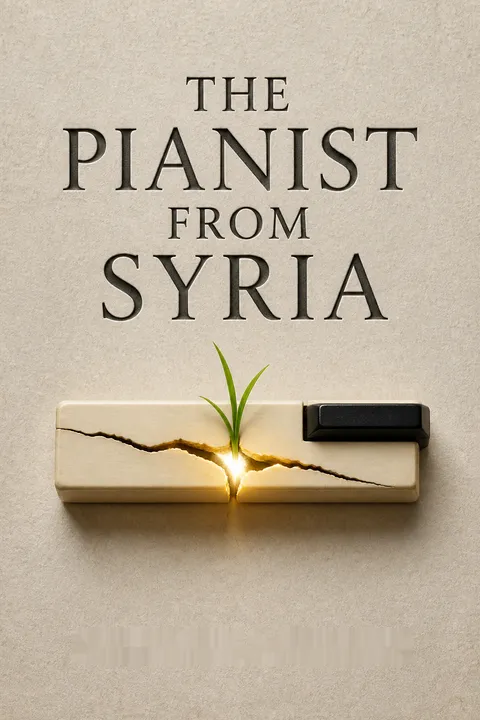
What is the significance of the title The Pianist from Syria?
- Identity as a Musician: The title emphasizes Ahmad's identity as a pianist, highlighting the central role that music plays in his life and story.
- Connection to Place: By including "from Syria," the title situates Ahmad's story within the context of the Syrian Civil War, underscoring the impact of conflict on his life.
- Symbol of Resistance: The title serves as a symbol of resistance against the despair of war, showcasing how music can transcend boundaries and provide hope.
How does The Pianist from Syria conclude?
- Reunion with Family: The memoir concludes with Ahmad successfully reuniting with his family in Germany, symbolizing hope and resilience amidst their struggles.
- New Beginnings: Ahmad's journey in Germany represents a new chapter, where he can pursue his passion for music and support his family.
- Ongoing Struggles: Despite the happy ending, the memoir acknowledges the ongoing struggles faced by refugees and the impact of war, serving as a reminder of human resilience.
What was the significance of the falafel stand in The Pianist from Syria?
- Means of Survival: The falafel stand represents Ahmad's resourcefulness and determination to provide for his family during the siege.
- Community Support: The stand serves as a gathering place for the community, fostering a sense of solidarity among the residents of Yarmouk.
- Personal Growth: Running the falafel stand marks a turning point for Ahmad, challenging his identity and forcing him to confront the harsh realities of life in a war zone.
Download PDF
Download EPUB
.epub digital book format is ideal for reading ebooks on phones, tablets, and e-readers.








