

Plot Summary
The Clown in the Road
Driving home through Brisbane, Jamie nearly hits a bewildered clown, then spots another clown searching for him the following night. The first clown, Goshy, climbs onto a shop roof and throws himself headfirst onto the pavement. He gets up again, apparently unhurt, while his companion Doopy panics over something in Goshy's pocket and throws it into a hedge.
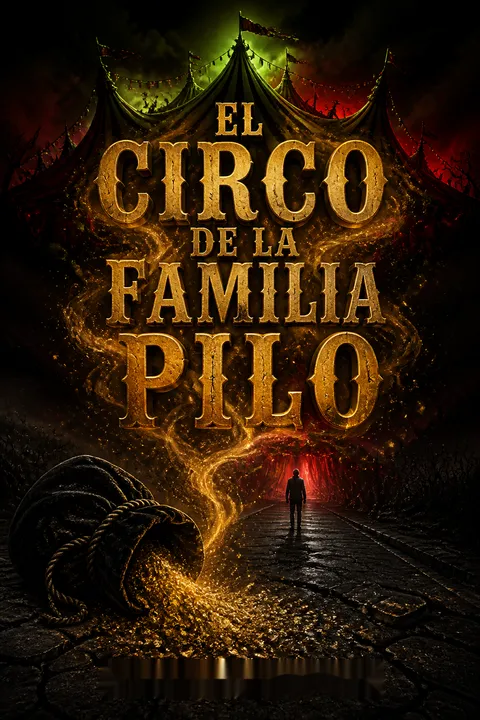
A third clown, Gonko, arrives and orders the pair away. Jamie finds the discarded object: a small velvet bag filled with tinkling, glassy grains. Thinking it may be drugs, he takes it home instead of calling the police. His casual theft turns a strange encounter into a claim the clowns will soon come to collect.
The opening makes Jamie's defining habit an action: when confronted with something inexplicable, he converts it into an ordinary opportunity. He mistakes the clowns' fear of the bag for evidence of valuable contraband and pockets it, just as he treats his dull life as a series of small inconveniences to endure. His choice is neither heroic nor malicious at first. That makes the consequence feel earned: the supernatural enters through the same compromised judgment Jamie uses to navigate the everyday.
The Audition Has Teeth
At home, Jamie discovers that the grains chime and glow faintly. Irritated with Steve, his domineering roommate, he slips some into the milk, hoping to cause trouble. The clowns arrive instead, wrecking the share house and terrifying Steve into helping them.
They leave Jamie a deadline: perform something funny or join their circus. Their visits grow more invasive, reaching even the locked Wentworth Club where Jamie works. Steve receives a shorter deadline and fails; Jamie finds blood in Steve's room and assumes the worst.
With little time left, Jamie sets off fireworks and stages a naked bomb scare in central Brisbane. Police arrest him, but Gonko sends word that the stunt passed. Jamie returns home believing his ordeal is over, unaware the clowns are about to take him for good.
Jamie starts the crisis by using an unknown substance as a petty weapon against someone who has mistreated him. The clowns then enlarge that small retaliatory impulse into a test that makes humiliation public and consequential. His stunt succeeds because it is genuinely dangerous, not because he has found a harmless comic trick. The episode turns the demand for laughter into coerced performance: Jamie can survive the audition only by becoming the spectacle, while the police and passersby see a nuisance rather than a man being hunted.
A Ticket to Nowhere
After the police release him, Jamie falls asleep at home and wakes inside a body bag at the Pilo Family Circus, a hidden showground reached through a concealed lift. Steve is there too, alive, and already eager to explore. The carnival's cheerful spell draws Jamie through a magic show where the magician, Mugabo, makes a rabbit explode before the audience.
A fortune-teller named Shalice hypnotizes Jamie and tries to plant an instruction for his return to Brisbane, but the dust he swallowed lets him resist. He glimpses the monstrous owner, Kurt Pilo, then watches Gonko's clown act collapse into violence. Goshy strikes an audience member, and the apprentice is beaten. Gonko tells Jamie he has inherited the apprentice's place.
The circus first appears as a sensory seduction, not simply a prison. Its music, food, and crowds make Jamie's disorientation feel pleasurable before the spectacle reveals its cost in blood. Shalice's failed command is an early clue that Jamie's stolen dust has altered his relation to the show. Meanwhile, the clown act exposes the circus's internal logic: violence is entertainment, but only when management controls its timing. Jamie is recruited at the moment that control falters.
Paint Makes JJ
Shalice tells Jamie the circus saved him from a future of loneliness, alcoholism, and murder, presenting a bleak vision that Gonko has helped tailor to keep him compliant. Old clown Winston gives Jamie a more practical warning: remove the special face paint whenever possible, or risk forgetting who he was. Jamie puts the paint on and feels his thoughts go blank.
A cruel, fearless clown personality, JJ, takes control. JJ bullies the carnival workers, attacks the acrobats, and treats fear as a weakness to punish. When the paint wears off, Jamie wakes in agony; Winston melts some of the dust and has him wish the pain away. Jamie learns the dust can grant limited wishes, but every new dose carries a cost he does not yet understand.
The split between Jamie and JJ literalizes a conflict that Jamie had previously managed through avoidance: the wish to remain harmless versus the wish to dominate before anyone can hurt him. Paint does not invent cruelty from nothing. It removes the self-monitoring that kept Jamie's anger socially legible and limited. Winston's advice recognizes identity as a practice that must be renewed, not a permanent possession. The dust complicates that safeguard by offering relief, making survival dependent on a substance whose moral and metaphysical price remains hidden.
The Crystal Ball Heist
JJ joins Rufshod in a prank against Shalice, stealing her crystal ball and substituting one that shows Rufshod's body instead of the future. JJ keeps the real ball hidden, discovering that it can spy through walls and across the showgrounds.
Its visions expose the circus's rivalries and give him a private advantage over Gonko and the other clowns. Meanwhile, Doopy explains that Goshy is in love with a fern and believes its silence means rejection.
The brothers' odd tenderness sits beside Goshy's unpredictable violence, which ruins the clown act. JJ enjoys the chaos, but his stolen instrument will later become crucial to the resistance. The more he watches others, the less he recognizes how completely he is being watched by Jamie in return.
The crystal ball makes surveillance feel like play before it becomes political power. JJ uses it for voyeurism and leverage, not solidarity, while the fern romance shows that even the circus's most grotesque figures form attachments that exceed their roles. Goshy's confusion and Doopy's loyalty complicate the easy division between monster and victim. JJ's pleasure in watching others also creates an unstable mirror: he can observe Jamie's world, but Jamie remains inside the same body, gathering knowledge JJ cannot reliably erase.
Nine Dead Tricks
On show night, the acrobats sabotage the clowns' stage with smoke bombs. The crowd panics and stampedes; nine visitors, called tricks by the circus, are trampled to death. George Pilo suspends Gonko's act and assigns the clowns outside jobs. Jamie learns the jobs are not ordinary errands: in Brisbane, the clowns burn down a house because its newborn may grow up to discover medical cures.
In Sydney, they beat a man whose assault is meant to spark a gang war, then wreck a politician's car to start another chain of consequences. Gonko describes their work as part of a much larger history of human catastrophe. Jamie returns with proof that the circus's violence reaches far beyond its own grounds, and that the clowns help engineer it.
The stampede converts theatrical rivalry into real mortality, while management's response treats the deaths as lost revenue and failed entertainment. The outside assignments widen the scale without changing the method: individual bodies are used as instruments in causal chains whose eventual victims may never know the circus existed. Jamie's horror clashes with JJ's appetite for the work, demonstrating that moral knowledge alone does not guarantee control. The circus survives by making each participant responsible for a small action and no one responsible for the whole disaster.
Freedom Hangs Above
During Kurt's prayer meeting, Jamie and Rufshod help George rig crates above the stage for an attempted killing. Kurt avoids them with a tiny umbrella, but the tent then collapses under an anonymous sabotage, revealing a banner marked with the rebels' signal: freedom.
Jamie remembers Winston's warning and suspects the old clown is involved. To prove his usefulness, Jamie breaks into the freak show, hangs a second banner, smashes the glass displays, and tips over Nugget's tank.
A photograph catches him at the scene, giving Winston leverage over JJ. That night Winston brings Jamie beyond a loose plank in the circus fence, where performers, workers, and freaks have gathered in secret. Jamie is admitted to their resistance despite the others' distrust of clowns.
The banner turns an abstract hope into a visible breach in the circus's carefully managed order. Jamie's role is morally compromised from the outset: he helps prepare an assassination attempt before understanding the larger rebellion, then performs vandalism to earn the rebels' confidence. The photograph makes trust transactional, but also gives Winston a way to protect Jamie from JJ. The secret gathering expands Jamie's sense of possible allies while exposing the rebels' reasonable fear that his divided identity could betray them.
The Circus Eats Souls
At the meeting beyond the fence, Fishboy explains that the circus lures visitors through hidden ticket gates and strips them of their souls. Each attraction targets a weakness: greed at the games, vanity in the acrobats, hunger for power in Mugabo's show, and cruelty in the clowns.
The Pilos collect the resulting soul dust, which becomes the performers' pay and fuels wishes. Shalice has a different role: her hypnotic commands can set disasters in motion far beyond the showgrounds.
Fishboy and the other rebels plan to exploit rivalries, sabotage attractions, and provoke Kurt into losing control. Jamie agrees to help, though the rebels warn that JJ will be killed if he turns against them. Their strategy has no guarantee of success, only a chance to make the circus unstable.
The revelation turns the carnival's attractions into a taxonomy of human vulnerability. Visitors are not simply deceived by magic; each is invited to surrender agency through a desire already familiar to them. The rebels' own wages are fragments of those stolen lives, so resistance cannot begin from innocence. Their plan to weaponize rivalries borrows the circus's methods, risking that opposition will reproduce the coercion it means to end. Jamie's participation therefore tests not just courage but whether he can act without becoming another instrument.
Paid in Human Dust
The clowns' outside jobs intensify Jamie's split: he watches as JJ embraces arson and violence, then learns that JJ has killed a gypsy worker he suspects witnessed Jamie's actions. The apprentice, burned by Gonko and returning for revenge, attacks the clown leader; Gonko and Doopy subdue him, and Gonko beats him to death. Jamie wakes in blood and discovers JJ has left a threat on the cupboard.
To protect his plans, Jamie uses wish dust to erase his memories of rebel meetings and sabotage before JJ takes control. He proposes a truce, but JJ exploits the gap in his memory and grows more suspicious of Winston. The resistance gains an ally in Jamie while acquiring a dangerous, increasingly autonomous enemy in the same body.
The shared body makes secrecy a form of self-defense and self-violation at once. Jamie's memory erasure protects the rebellion, but it also deprives him of continuity and leaves JJ able to interpret blankness as betrayal. JJ's murder of a witness shows that his violence is strategic as well as impulsive: he understands exposure as a threat to be eliminated. Winston's attempt to keep Jamie alive must contend with an adversary who shares Jamie's face, senses, and capacity to act.
A Wedding in Ruins
For Kurt's birthday, Gonko presents a kidnapped priest, who is then borrowed to marry Goshy to his fern. Shalice recovers her crystal ball and identifies Winston as its keeper, while a chain of provocations pushes Mugabo toward a confrontation with her.
The acrobats prepare explosives for the clowns, but Shalice's redirected events send the blast into the funhouse instead. The explosion exposes the matter manipulator's grotesque workshop and unsettles Kurt so violently that his human shape begins to fail.
Shalice escapes the grounds with Steve. Around them, the clown and acrobat feud, the rebels' sabotage, and the Pilos' rivalries have become indistinguishable sources of danger. The carnival's rules no longer contain the violence they were designed to stage.
The wedding joins comic absurdity to the story's most coercive machinery: a captive priest is made to sanctify a marriage that Goshy experiences as emotionally real. Meanwhile, Shalice's fate-steering demonstrates how small interventions can reroute violence rather than stop it. The funhouse blast breaks open the literal site where the circus manufactures bodies, making its hidden cruelty public. Yet exposure does not automatically liberate anyone; it destabilizes Kurt, whose power depends on a brittle performance of civility.
Kurt Unmasks the Circus
After the explosion, Kurt transforms into a scaled predator and hunts through the grounds. The resistance learns that Winston has been tortured, and the rebels prepare one last attack. Goshy and Doopy reach Shalice's hut first; a runaway wagon crushes Doopy, then Mugabo's fire drives Goshy away. Shalice escapes with Steve, while Kurt kills the freaks and acrobats and orders Gonko to help eliminate the remaining workers.
George traps Gonko, Rufshod, and JJ in his trailer, intending to send them into the funhouse pit. JJ finds a stash of dust and swallows it rather than share it, wishing himself out of the trap. The wish separates him from Jamie, leaving Jamie outside as Kurt charges the trailer and the circus collapses into slaughter.
The final disorder gathers the book's separate systems of violence into one event: rivalries, magical commands, exploitation, and private revenge all escape their assigned boundaries. Goshy and Doopy's deaths are not cleanly heroic or villainous; they emerge from confused attachments and badly timed interventions. JJ's wish is a selfish act, but it accidentally gives Jamie a chance to survive. The escape depends on the very resource extracted from victims, underscoring that the circus has made even liberation contingent on its economy.
A Wish Beyond the Fence
Jamie finds Winston alive in the clowns' tent. Winston has spent two years' worth of dust on a wish for freedom, and the wish has finally been granted. He gives Jamie a pass-out card and chooses to remain briefly, intending to confront George. Jamie reaches the hidden lift and returns to Brisbane, leaving the ruined circus behind.
Before the police find him, he uses the dust still in his pocket to erase the ordeal from his memory. His return resolves the immediate captivity but not its cost: he cannot explain where he has been, and the dust remains beside his bed. The life he regains is real, yet the circus has left traces his conscious memory cannot contain.
The ending refuses a simple equation between escape and recovery. Winston's freedom arrives only after years of accumulated wages and repeated wishing, while Jamie's return is purchased with forgetfulness. One man chooses to remember enough to act; the other survives by making experience inaccessible. The leftover dust and persistent nightmares prevent the outside world from becoming a secure opposite to the circus. Jamie has returned to ordinary life, but ordinary life now contains evidence that reality can be breached.
Epilogue
Weeks later, investigators and journalists struggle to explain the bloodied circus site, the nine deaths at a fair, and a toothless priest who refuses to speak. Jamie is found wandering in a clown suit and cannot account for his disappearance. His parents take him in, but he feels worn down by an ordeal he cannot remember.
A half-full velvet bag remains in his bedside drawer. He avoids touching it, though nightmares keep showing him the circus's ancient, scaled predators. The final unease is not only that the show may return, but that Jamie's forgotten connection to it has not been severed.
The epilogue makes forgetting an incomplete form of rescue. Jamie has regained a social identity and a home, but his family can only receive the unexplained aftermath, not the experience that produced it. The remaining dust gives the supernatural a mundane hiding place, while the nightmares preserve knowledge below conscious recall. By turning witnesses into contradictory public stories, the book also shows how institutions manage the impossible: they classify, interview, and discredit it. The circus is absent from view, yet its mechanisms continue to shape what Jamie can know about himself.
Analysis
The novel's central horror is not that violence exists, but that it has been organized into work. Each performer is assigned a human weakness to exploit, each visitor becomes a source of soul dust, and each catastrophe can be traced to someone carrying out a limited instruction. That structure resembles systems in which responsibility is divided until no participant feels answerable for the whole. Jamie's transformation into JJ gives this problem an intimate form: he cannot distance himself from the harm, but he cannot fully command the self that commits it.
The circus's comedy depends on the same mechanism as its cruelty. A failed gag, a smashed display, or Goshy's disastrous affection can provoke laughter because the audience is trained to treat pain as spectacle. Yet the book repeatedly shows that attachment survives within this machinery. Winston protects Jamie, Fishboy tends the freaks, and Doopy tries to care for Goshy. These bonds do not make the circus gentle; they make its brutality harder to excuse as an inevitable feature of monstrous characters.
The wish dust sharpens the moral trap. It grants relief and, eventually, escape, but its power comes from lives the circus has already stripped. Jamie and Winston cannot simply step outside the system's economy; they must use its stolen resource to resist it. Their different endings suggest two imperfect strategies for survival. Winston seeks release while preserving his understanding of what happened. Jamie returns by erasing his knowledge, gaining safety at the cost of continuity. The leftover dust and nightmares leave that bargain unresolved. Ordinary life is not restored as innocence. It is a fragile condition maintained beside a door Jamie cannot remember opening.
Review Summary
The Pilo Family Circus receives mixed reviews, with many praising its originality, dark humor, and bizarre world-building. Readers appreciate the unique characters, especially the psychotic clowns, and the struggle between Jamie and his alter-ego JJ. Some find it disturbing and violent, while others enjoy its creepy atmosphere. Critics note the author's vivid imagination but mixed execution. The book's connection to Elliott's personal experiences with schizophrenia intrigues many. Overall, it's described as a wild, entertaining ride that may not be for everyone.
People Also Read
Characters
Jamie / JJ
The divided new clownJamie is a redheaded Brisbane concierge whose quiet routines conceal resentment, embarrassment, and a deep wish to be noticed. He avoids confrontation until the circus makes avoidance impossible. Its special face paint produces JJ, a reckless clown personality who treats fear as weakness and cruelty as performance. The two share a body but not a stable sense of responsibility, forcing Jamie to confront how much of his restraint depends on habit and circumstance. Jamie's ingenuity surfaces under pressure, while JJ's appetite for power exposes the aggression Jamie has kept contained. Their struggle makes identity a practical question: who gets to act, and who must live with the consequences?
Winston
The weary keeper of memoryWinston is an aging clown who retains more patience and moral awareness than the younger members of his troupe. He knows the circus's routines and dangers, but he does not mistake familiarity for acceptance. His concern for Jamie comes from recognizing how the face paint can erode a recruit's former identity. Winston is cautious because he has survived by limiting what he says and whom he trusts. That caution coexists with a persistent impulse to protect people who have little power. His room, old newspapers, and small pets suggest a man trying to preserve ordinary attachments inside a place built to consume them.
Gonko
The clown bossGonko leads the clown troupe with a mixture of intimidation, strategic patience, and grotesque humor. He punishes disobedience, expects performers to obey orders, and understands violence as both practical tool and stagecraft. His authority rests less on formal rank than on his ability to anticipate danger and make others fear the cost of crossing him. He also knows how to charm the Pilo brothers when it serves the troupe. Gonko's brutal competence makes him difficult to classify as merely a henchman: he protects his own interests, manages fragile loyalties, and treats the circus's savagery as the natural environment of his life.
Kurt Pilo
The smiling proprietorKurt Pilo owns the circus and rules it with polished manners that sit uneasily beside his immense, predatory body. He is curious, theatrical, and capable of seeming genial while discussing cruelty or collecting teeth. His interest in religion and performance does not soften his appetite for control; instead, he treats both as material for private amusement. Kurt rewards entertainers when they please him and permits rivalries when they keep the show lively. His authority depends on everyone believing that his civilized manner is the most dangerous part of him, not evidence that he is safe.
Steve
Jamie’s adaptable roommateSteve begins as Jamie's selfish, physically imposing roommate, accustomed to taking food and asserting himself at home. The circus gives him a role among the freak-show workers, where he finds routine, companionship, and pleasures Jamie cannot accept. His relative lack of family ties helps him adapt, though he often mistakes accommodation for freedom. Steve's relationship with Jamie shifts from domestic irritation to uneasy fellowship, revealing how differently two people can respond to the same captivity.
Shalice
The fortune-tellerShalice is a fortune-teller whose crystal ball and knowledge of cause and effect make her one of the circus's most influential figures. She can hypnotize visitors and arrange chains of events that reach far beyond the showgrounds. Her polished charm masks a hard pragmatism shaped by years of watching suffering and serving the Pilos. Shalice values her independence and her access to information, but her confidence in prediction can make her underestimate how much chance and interference remain in the world.
Fishboy
The humane freak-show curatorFishboy is a courteous curator with a sharklike head and a voice that contrasts with his unsettling appearance. He cares for the freak-show performers, including Steve, and treats their pain as more than part of the attraction. His compassion gives him authority among people who have little reason to trust the circus's managers. Fishboy studies how the show operates and helps organize those seeking to resist it, balancing careful explanation with a willingness to take risks.
George Pilo
The bitter co-ownerGeorge is Kurt's short-tempered brother and a co-owner of the circus, accustomed to exercising authority through threats, assignments, and petty humiliations. He resents Kurt's greater power and is constantly looking for ways to undermine him. George's schemes are often driven by personal grievance rather than concern for the people caught in them. His small stature does not lessen his capacity for harm; instead, he compensates with relentless aggression and a taste for control.
Goshy
The bewildered violent clownGoshy is a large clown whose wide-eyed bewilderment can give way to sudden, frightening violence. He communicates through gestures, whistles, and a high, kettlelike cry, while his brother Doopy often tries to interpret and protect him. Goshy's mind seems divided between confusion and calculating awareness, leaving others unsure how much he understands. His attachment to a fern reveals a capacity for tenderness that does not make him predictable or safe.
Doopy
Goshy's anxious brotherDoopy is Goshy's brother and caretaker, a nervous, whiny clown who constantly tries to explain events and keep his sibling from trouble. His anxious speech makes him seem harmless, but he can become violently protective when Goshy is threatened. Doopy's loyalty is sincere even when his judgments are poor. He yearns for reassurance and belonging, and his efforts to manage Goshy's moods show how affection can persist in a place where care is routinely mixed with danger.
Rufshod
The reckless pranksterRufshod is a young, erratic clown who treats pranks, pain, and physical danger as sources of excitement. He planted the dust in Goshy's pocket and delights in dragging others into schemes without considering the consequences. Rufshod's appetite for punishment is as conspicuous as his appetite for mischief, making him difficult to predict even within Gonko's crew. His companionship offers JJ a route into clown culture, but never a dependable source of safety.
Mugabo
The constrained magicianMugabo is a powerful magician forced to perform modest tricks that he considers degrading. His pride and volatile temper collide with the circus's demand that he entertain without frightening the audience. Mugabo is easily overwhelmed by humiliation and suspicion, yet his anger contains real magical force. His conflict with Shalice and the Pilos shows the danger of giving a resentful performer immense power while denying him control over how it is used.
Randolph
The acrobat spokesmanRandolph speaks for the acrobats, a troupe of graceful performers locked in a long feud with the clowns. He is proud, quick to retaliate, and suspicious of Jamie because JJ's behavior threatens everyone around him. Randolph's beauty and discipline serve the circus's appeal to vanity, but his confidence does not make him immune to management's control.
Yeti
The suffering glass eaterYeti is a huge, gentle freak forced to eat glass during performances. His mournful manner contrasts with the violence of his act, and he suffers both physical injury and public display. His care for others makes the circus's exploitation visible without requiring him to explain it.
Tallow
The melting exhibitTallow is a freak whose flesh continually melts away, leaving him to gather and replace what falls from his body. He speaks with weary acceptance, a response that makes his condition more disturbing rather than less. His exhibit shows how the circus turns prolonged suffering into routine.
Plot Devices
The special face paint
Makes cruelty performableThe circus's greasy face paint does more than disguise its clowns. When Jamie wears it, JJ takes control of their shared body, acting with confidence and cruelty Jamie lacks. The paint's effects leave Jamie with pain, memory gaps, and uncertainty about what he has done. Winston's warning to remove it becomes a practical defense of identity, while Jamie's later attempts to hide memories from JJ turn the body into contested territory.
Wish dust
Turns stolen souls into wishesThe tiny glasslike crystals are fragments of human souls harvested from visitors and paid to circus workers. When prepared over flame, the dust can fulfill wishes within limits set by the powers behind the circus. It relieves Jamie's pain, allows him to sleep and hide memories, and eventually gives him a chance to escape. The substance ties the circus's economy directly to its victims: even comfort and freedom are obtained through material taken from other people.
Shalice's crystal ball
Surveillance becomes resistanceShalice uses the crystal ball to read possible futures and monitor events across the circus. Rufshod and JJ steal it, and JJ uses it to spy on performers, observe the hidden ticket gates, and follow the conflicts developing around him. Its absence weakens Shalice's ability to watch the rebels, though the ball also makes JJ more dangerous to them. The device turns secret knowledge into both a weapon and a liability.
Ticket gates and pass-outs
Connects the circus to EarthHidden ticket gates draw ordinary visitors into the circus without their understanding, while pass-out cards let circus workers travel between the showgrounds and the outside world. The gates conceal a threshold in plain sight, making a fairground or entrance booth part of the trap. The pass-outs also enable the clowns' assignments in Brisbane and Sydney, showing that the circus is not sealed away from human history. Both mechanisms make access depend on the circus's rules.
The freedom banner
Signals hidden rebellionA banner bearing the word freedom appears when a sabotaged tent collapses, giving Jamie a clue that resistance exists inside the circus. Winston uses the word to identify himself to Jamie, and later helps Jamie hang another banner in the freak show. The sign is deliberately simple: it communicates across divided groups without revealing the rebels' full plan. Its appearance converts an abstract hope into evidence that the Pilos' authority can be challenged.
Download PDF
Download EPUB
.epub digital book format is ideal for reading ebooks on phones, tablets, and e-readers.








