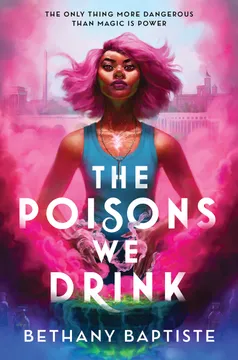


Plot Summary
Prologue
An ailing human known as Mr. Mouse enters the Golden Coin, a bar where desperate people seek witchers who can fulfill their wishes. He pays its owner, Prospero, for access to the Black Book, then calls the Love Witcher to ask for love from someone who wants nothing to do with him.
In Washington, DC, magic has become public knowledge, but humans still hold the political power to restrict witchers. Mr. Mouse is offered a way to make his wish real, though the price of that borrowed affection is not yet clear.
The prologue turns a private ache into the book's first transaction. Mr. Mouse wants a feeling he cannot earn, and the magical marketplace promises to sell it to him. His desperation establishes the story's central danger before Venus appears: love can be made into an instrument, but the person who pays for it may not be the person who suffers. The Black Book also links intimate problems to an underground economy, where human and witcher need are both negotiable.
The Love Witcher's First Client
Eighteen-year-old Venus Stoneheart lives with her mother Clarissa, younger sister Janus, uncle Bram, and cousin Tyrell in Deanwood, a witcher neighborhood hemmed in by anti-witcher laws. Venus brews illegal love potions to help pay the family bills, though each brew can maim or kill her.
A sentient, violent magic called It lives inside her, so Clarissa makes her drink costly reinforcement potions to keep it contained. When Mr. Mouse requests a potion for his estranged son, Venus agrees to prepare a familial-love brew. The job gives her money and puts her skill to use, but it also brings a vulnerable stranger into a business where desperation is routinely exploited.
Venus's work makes care and coercion difficult to separate. She supports her family through a craft that converts desire into a purchasable effect, while the cost lands on her own body. Clarissa's supervision protects Venus from It, but it also makes the younger woman feel managed rather than trusted. Mr. Mouse's request echoes that tension: wanting reconciliation is understandable, yet a potion can counterfeit the response instead of repairing the injury that caused the estrangement.
Iron at Carter's Pantry
At Carter's Pantry, anti-witcher activists crowd the entrance, and Venus steers Janus away from them before the store becomes unsafe. Inside, the activists return wearing iron, which burns witchers and fills the shop with panic. Store owner Jerome Carter drives them out, protecting Venus until Janus can reach her. Days later, Janus persuades Venus to attend an underground auroras party.
There Venus meets Presley Carter, her childhood friend, newly returned from Toronto after three years away. A SWIG raid turns the party into a stampede. Janus opens a portal for the escapees, while Presley helps Venus find her family. In the chaos, Venus's uncontrolled magic surfaces, reminding her and Presley of the traumatic night that changed them both.
The grocery-store confrontation makes prejudice physical: iron is not merely a symbol but a weapon that burns bodies and dictates where witchers can gather. Jerome's intervention offers a rare instance of human solidarity with an immediate consequence. At the party, community and danger occupy the same room. Venus's return to a gathering exposes her to both the pleasure of belonging and the emotional overload she has tried to avoid, while Presley's reappearance connects her present isolation to a shared past.
A Message from the Dead
Before Venus can understand the danger around her, detectives tell her that Clarissa has been murdered, one of several witchers killed in DC. At the funeral, Janus grieves openly while Venus goes numb and withdraws from the mourners.
The sisters later use Tyrell's knowledge of mediumship to attempt contact with their mother. Clarissa's spirit answers only long enough to tell them to stop investigating. The message infuriates Venus, who believes her mother is still trying to control her.
Her grief and guilt overwhelm the weakened protections around It, which escapes and makes Tyrell attack his younger brother Hakeem. The familiar Patches knocks Tyrell unconscious before Hakeem is strangled, but Venus flees, horrified by what her magic can do.
Clarissa's death removes both the family's emotional center and Venus's employer, leaving grief tangled with practical insecurity. The séance makes that loss more complicated: a message from beyond the grave provides no explanation, only another command. Venus experiences restraint as abandonment because she is asked to accept danger without being given a way to confront it. It exploits that gap, turning her wish to protect her family into a threat to them.
The Pyre at Midnight
Venus goes to master brewer Elder Glenn, hoping to find a potion that will erase It. He refuses to help her destroy herself and explains that Clarissa's reinforcement brews only taught her to suppress the deviation.
Soon, Clarissa's former associate Nisha Sharma summons Venus to meet her sister, Matrika, the Grand Witcher. Matrika identifies Julius Keller, a human SWIG officer and serial killer, as Clarissa's murderer and orders Venus to brew a potion that will make him welcome his own execution.
The recoil nearly kills Venus, but Nisha heals her. At a woodland gathering, Venus watches Julius burn at the stake. Matrika then forces Venus into a blood oath and assigns her five political potions to influence senators before a vote on the Registration Act.
Matrika gives Venus what grief has been demanding, but packages revenge as employment and then as loyalty. The execution appears to restore agency, yet Venus has been maneuvered into a spectacle designed to test her usefulness. The blood oath makes that imbalance bodily: Matrika's authority is no longer just political. Venus's complicity is therefore neither simple consent nor pure victimhood. She chooses vengeance, but powerful people have shaped the choices available to her.
The Father's Second Chance
At a senator's party, Venus steals Senator Winston Mounsey's hair for the political brew and discovers Mr. Mouse there. The client is Mounsey's dying father, who has already used Venus's familial-love potion to reconnect with his son.
Because Mounsey is human, another potion could kill him through overdose. Venus warns Matrika, who changes targets and has Senator Harry Cavendish drugged so Venus can obtain his blood. Meanwhile, Venus and Presley begin repairing their friendship.
On a rooftop, Venus admits that three years earlier she secretly brewed for Baldwin Tillery; when Baldwin's plan to poison his grandmother went wrong, he threatened her, and Presley killed him to save her. They burned the evidence together, and both became deviants.
The Mounsey complication exposes the danger of treating a potion as an isolated product: one act of manufactured love changes the risk of every later intervention. Venus cannot control how clients use what she makes, yet she remains implicated in the consequences. Her confession to Presley reframes their separation as shared guilt rather than rejection alone. Their intimacy grows from a history neither can undo, and honesty becomes a risk they must choose before trust can return.
The Protest Takes Blood
Janus joins a protest against the Registration Act despite promising Venus she will stay away. Venus, Presley, and Tyrell rush to the demonstration as SWIG officers and Iron Watchers turn the street into a battlefield. Janus uses her portals to evacuate witchers, while Presley's magic amplifies the abilities of those fighting back.
When an officer corners the group, It takes control of Venus and turns him against his fellow officers. A bullet still strikes Venus in the chest. Presley carries her to Epione Hospital, but she dies before doctors can save her. She wakes the next day with a healed wound and learns that a sacrificium potion revived her, though its maker's identity is initially withheld.
Janus's protest is an act of political conviction and a bid to matter in a family shaped by famous activists. Venus's fatal injury turns that desire into an intimate cost. Her deviation prevents greater harm in the moment, but its power does not distinguish rescue from domination. Resurrection then transforms survival into a debt: Venus is alive because someone surrendered something irretrievable, a fact that makes her future work feel less like a choice than an obligation.
A Borrowed Heartbeat
After waking, Venus learns Matrika expects her to finish the political potions before the Senate vote. She resumes work while avoiding the people who watched her die, and her relationship with Janus remains strained by the protest and the earlier séance. Venus returns to the work she knows, collecting a senator's blood and using Tyrell's shapeshifting to get close to another target.
At a party, she realizes the senator's father is Mr. Mouse, whose potion has already altered the senator's feelings. The work brings money and progress, but brewing repeatedly worsens Venus's health. She also begins to suspect that Elder Glenn, who has vanished, paid the price for her resurrection.
Venus responds to trauma by returning to labor, a familiar strategy that gives her measurable tasks when grief offers none. But her work is no longer only economic survival: each potion is part of a political mechanism she did not design. The possible sacrifice behind her resurrection intensifies the pressure to keep producing. She is alive, yet the boundary between her life and other people's lives has become dangerously porous.
Blood at Rock Creek
When Venus and her relatives target Senator Westbay's nephew, Tanner Jensen, Janus uses WASP tracking information to locate his violent Iron Hand faction. The group corners the attackers and takes the blood Venus needs for a potion. Later, Venus and Aunt Keisha try to obtain Senator Radliff's blood, but Tyrell's shapeshifting collapses under the strain.
He is badly injured, and Venus takes him to Elder Glenn's home, only to realize the brewer is dead. Using Glenn's health grimoire, she brews the potion that saves Tyrell, breaking her love-brewer pledge. It remains inside her because the sacrificium potion has passed Glenn's memories and commitments to her. Venus has saved her cousin, but inherited another discipline and another burden.
Tyrell's crisis forces Venus to confront the difference between protecting family and controlling it. She risks her craft because his life matters more than her role as a brewer, but the rescue binds her to Glenn's history in a way she did not choose. The inherited pledge makes sacrifice cumulative: one act of survival carries another person's habits and obligations into the future. Love here is not a clean moral answer. It is a decision made under pressure, with consequences that continue after the emergency.
The Letter Under the Bed
Searching the late Elder Glenn's house, Venus finds a ledger listing Clarissa's purchases and another client's health potions. She then studies the riddles in Miss Florence's journal and finds Clarissa's hidden letter beneath her mother's bed. Clarissa apologizes for her severity and urges Venus to leave DC before powerful people use her family to control her.
The letter includes a coin that can buy a route through the Black Book, but Venus refuses to abandon Janus. She interprets the warning as evidence that Matrika may have manipulated Clarissa's final choices. Instead of escaping, Venus decides to finish the political job and confront the Grand Witcher afterward.
The letter gives Venus the tenderness she rarely received from Clarissa, but its instruction to flee arrives too late to feel like freedom. Venus hears love in the apology and threat in the warning, then chooses family loyalty over self-preservation. That choice is emotionally coherent and strategically dangerous. The coin represents an exit she can actually take, which makes her refusal significant: she is not trapped solely by circumstance, but also by the belief that leaving would betray those she loves.
The Family Behind the Cause
At Darius's grave, Venus meets Malik Jenkins, Janus's estranged father and a leading WASP activist. He explains that Matrika is human and that her witcher aura comes from health potions. He also reveals that Matrika is Presley's birth mother, and that she and Owen secretly worked as WASP allies while raising a child under threat from the Iron Watch.
When an iron nail bomb killed young Presley, Owen gave his life to a sacrificium potion, and Clarissa brewed it to bring Presley back. Matrika later chose political leadership over raising the child. Malik asks Venus to help remove Matrika from office, but Venus keeps her own plan for revenge.
The revelation rearranges the story's family map without making its harms disappear. Matrika's secrecy protected a political operation, but it also left Presley with an invented account of their origins and a mother who was physically absent. Clarissa's sacrifice shows that love can demand an irreversible cost, while Matrika's choices show that public service can become an excuse for private abandonment. Venus now sees her own family loyalties reflected in a much larger and more damaging history.
The Grand Witcher's Trap
After making more potions and learning that Matrika may be connected to her mother's fate, Venus attacks the Grand Witcher at home. Her attempt fails, and she wakes feverish and restrained. Matrika's human identity is protected by Nisha's familiars and by potions that maintain a witcher aura.
Nisha explains that Clarissa's death is still under investigation, then demands a fealty feast: Venus must consume the loyalty of Patches, her family's ancient familiar, or lose access to Janus. Nisha's parakeet Prospero is revealed as the familiar behind the Golden Coin's humanlike owner. Venus refuses to sacrifice Patches and searches for another way to free her sister.
Venus's failed attack is the moment her private certainty collides with an opponent's infrastructure. Matrika's authority is not magic alone but an assembled system of familiars, wealth, and controlled information. Nisha's demand turns affection into a resource, forcing Venus to weigh her own power against Patches's life. The scene echoes the potion economy in a darker form: loyalty, like love, can be harvested, priced, and used to secure obedience.
A Sister's Price
Presley joins Venus in confronting the Sharma family and uses their connection to Matrika to demand Janus's release. To secure the exchange, Nisha swears a blood oath to Presley and gives Venus Ilyas's loyalty rather than requiring Patches's sacrifice. Janus is freed, but she chooses to leave with Malik's WASP intern Levi instead of returning home with Venus.
The separation deepens Venus's guilt. Her uncle Bram and Presley stay close, while Venus opens the letter Darius left her and takes its call to use love as a force for protection. She also finds Clarissa's phone record and learns that Miss Florence tried to warn her mother before the murder.
The rescue succeeds in practical terms but fails to restore the family as it was. Janus's departure shows that protection cannot be imposed without cost, and Venus must face the consequences of treating her sister as someone to manage. Presley's participation is a tentative return to trust, while Darius's letter offers a different model of love from Clarissa's guardedness. Each form of care asks Venus to relinquish control, which is precisely what she has struggled to do.
The Garden Path
When Venus calls Miss Florence, the older witcher admits she phoned Clarissa twice on the night she died, trying to steer her away from danger. She refuses to name the killer, but gives Venus the remainder of a riddle about a garden and a cost. Venus enters the Labor of Love gala with Bram, the completed senator potions, and a suspicion she cannot prove.
On the yacht, Levi Tillery, Malik's human intern, reveals that he killed Clarissa because she tried to send Venus away. He also admits that he manipulated Venus's work and wants the Registration Act to pass, so humans can identify and target witchers.
The riddle does not solve the mystery so much as teach Venus how to recognize the answer in a pattern of names and consequences. Levi's revelation turns her earlier choices into pieces of someone else's design: the client, the warning flower, and the political assignment were all used to position her. His motive is shaped by grievance, but he converts injury into a wish to expose an entire population. The book's central danger becomes clear: private pain can be weaponized as public policy.
The Gala Becomes a Battlefield
At the gala, the poisoned senators obey Matrika and prepare to vote against the Registration Act, while Levi uses blood oaths to control Presley and Malik. Matrika stabs herself to force the senators to follow Venus's commands rather than Levi's. Venus attempts to summon Clarissa's spirit, and the spell brings her mother back long enough to kill Levi.
The blood oaths break, and the senators remain under Venus's direction. The Registration Act fails in the Senate the next day. Matrika's death is publicly concealed as a peaceful passing, while Venus, Janus, Presley, and their allies are left to face the damage their methods have caused.
The climax does not offer a clean victory: the law is defeated through deception, coercion, and a death, the very tools the protagonists oppose. Clarissa's return is brief, but it gives Venus a final intervention that cannot be mistaken for simple absolution. The political result matters because the Registration Act would expose witchers to surveillance and arrest, yet the means of stopping it leave the group morally implicated. Survival and justice arrive together, neither untouched by the other.
A LOVED Beginning
After the gala, Venus's family and friends gather at their old billboard meeting place. Janus proposes LOVED, a new operation to challenge discrimination and use the resources now available through Presley and the Underbelly. Presley wants to work with Nisha to rebuild their relationship, while Janus offers to learn brewing from Venus after her recovery.
Tyrell commits to improving his shapeshifting, with Aunt Keisha and Leap helping him. Venus is still grieving, injured, and uncertain what her relationship with Presley will become, but she agrees that resistance cannot rest on one person's body. The epilogue reports that Mounsey runs for president and the four senators vote against the Registration Act.
The ending shifts the story from a single gifted protagonist toward collective capacity. Venus has spent much of the novel measuring love by how much suffering she can absorb for others. LOVED proposes another measure: distribute skill, danger, and responsibility rather than making one young woman the necessary sacrifice. The political future remains uncertain, and the family wounds are not magically healed. What changes is the group’s willingness to act together and to imagine change beyond one decisive potion.
Epilogue
By late August, Senator Winston Mounsey has announced an independent presidential campaign focused on unity between humans and witchers. The four senators Venus's potions influenced have endorsed him, and together they helped defeat the Registration Act. Mounsey's campaign follows his father's recent death, while the public argument over witcher rights continues.
His candidacy does not erase the laws already in place or guarantee a safer future. It does, however, show that the Senate vote has altered the political field, and that the survivors' choices now reach beyond the families and neighborhoods where the story began.
The epilogue refuses a tidy political victory. The Registration Act has failed, but the wider structure of anti-witcher law remains, and Mounsey's candidacy makes reform another contest rather than a settled result. That uncertainty is important: the story has shown how quickly power can disguise self-interest as public safety. The alliance behind Mounsey offers possibility, not proof of justice. The final movement from clandestine potions to a public campaign also marks a change in scale, from one family's survival to a struggle over who gets to define the nation's future.
Analysis
The novel makes love a material force, then asks what happens when material force is mistaken for love itself. Venus's potions can produce attachment, forgiveness, or political conviction, but they cannot supply consent. That distinction is the story's ethical pressure point. Venus works inside a system that commodifies desire because her family needs money, then becomes a target of people who want her craft to manipulate public power. Her clients are not all monsters, and her patrons are not all wrong about the dangers facing witchers. The problem is that legitimate fear can still justify illegitimate control.
The political setting sharpens the family conflict. Witchers face laws that restrict gatherings, employment, and safety, while human institutions decide which bodies count as dangerous. The Registration Act would formalize surveillance, but the characters' private forms of surveillance and coercion mirror the state they oppose. Matrika's political strategy, Levi's revenge, Clarissa's secrecy, and Venus's protective control all begin with an attempt to keep someone safe or secure. Each turns harmful when one person decides another's choices are expendable.
Venus's deviation makes that ethical problem bodily. It gives her power to stop violence, yet its method is to seize another person's will. Her fear of becoming like It leads her to suppress herself, but suppression leaves her unprepared to use power deliberately. The story does not offer a simple cure. It suggests that self-knowledge, limits, and trusted relationships matter more than pretending dangerous capacities do not exist. The generational pattern is not broken by one revelation or one political vote. Clarissa's letter, Darius's counsel, Presley's return, and Janus's eventual proposal each give Venus a different account of care. By the end, she accepts collective resistance rather than solitary sacrifice. The new LOVED plan is imperfect and politically risky, but its promise lies in shared responsibility. The novel's final claim is not that love makes violence righteous. It is that love becomes less destructive when it makes room for other people to choose, disagree, and carry the burden together.
Review Summary
Reviews for The Poisons We Drink are generally positive, averaging 3.68/5. Readers frequently praise the unique magic system, rich worldbuilding, and compelling themes around discrimination and political intrigue. Many highlight Venus as a relatable protagonist navigating morally complex situations. Common criticisms include pacing issues, overly choppy sentence structure, an excessive number of characters, and slow plot development in the first half. The audiobook narration received particular acclaim. Several reviewers note that despite its flaws, it is an impressive debut with potential for a sequel.
Characters
Venus Stoneheart
The volatile love brewerVenus is an eighteen-year-old witcher and brewer whose love potions help support her family. She can sense other people's negative emotions, but a traumatic past has left her with a dangerous deviation called It, which can seize control and manipulate others. Venus hides her pink hair and keeps close watch on her sister, often treating vigilance as the same thing as care. Her skill, ambition, and sharp humor help her survive in a hostile city, while her fear of harming those she loves makes intimacy difficult. She is drawn to practical solutions, especially money and work, because feelings are harder to control than recipes. Her central struggle is how to protect people without deciding their lives for them.
Janus Stoneheart
The fearless younger sisterJanus is Venus's younger sister, a witcher with the rare ability to open portals to places she knows. She is politically engaged, stubborn, and willing to enter danger when she believes other witchers need help. Her bond with Venus is both a source of security and a pressure point: she wants her sister's protection, but also wants room to make her own choices. Janus admires her father and the activists who challenge anti-witcher laws, even when that puts her at odds with Clarissa's caution and Venus's guardedness. Beneath her boldness is a wish to be seen as more than a daughter or someone else's responsibility.
Clarissa Stoneheart
The guarded family matriarchClarissa is Venus and Janus's mother, a former Love Witcher who now runs the family's illegal brewing business. She is exacting, suspicious, and skilled at turning fear into rules that keep her daughters alive. Her affection is real but difficult for her children to recognize because she expresses it through orders, precautions, and work. Clarissa's past in the witcher rights movement and her history as a brewer shape the household long after she stops discussing either. She represents a generation that learned to survive by withholding vulnerability, even when that strategy makes closeness feel like another risk.
Presley Carter
Venus's returning confidantPresley is Jerome and Florence Carter's grandchild and Venus's childhood friend. They can amplify another witcher's magic, though the power can overwhelm its recipient. Presley is observant, protective, and wary of the damage that closeness can cause, having been shaped by a painful shared history with Venus. Their return from Toronto unsettles the careful distance Venus has built around herself. Presley values honesty, but they also understand that love and loyalty can bind people to choices they never expected to make. Their connection with Venus is affectionate, complicated, and difficult to name.
Matrika Sharma
The formidable Grand WitcherMatrika is the elected Grand Witcher of the DC dominion and a commanding political figure. She is strategic, self-possessed, and skilled at making personal relationships serve public goals. Her authority depends on political connections, careful alliances, and an acute understanding of what other people want. Matrika is determined to protect witchers from laws that could expose them to surveillance, but she is willing to use morally dangerous methods in pursuit of that aim. Her confidence makes her both persuasive and difficult to challenge, especially for younger witchers accustomed to obeying those above them.
Nisha Sharma
The familiar-forging powerbrokerNisha is Matrika's older sister, a medium who summons Spirits and forges them into familiars. She is polished, perceptive, and deeply protective of the beings she considers her children. Nisha works within the criminal and political networks of the Underbelly, balancing affection for her family with a willingness to bargain hard. She reads vulnerability quickly and often uses that knowledge to steer a conversation or secure compliance. Her care is genuine, but it does not prevent her from making choices that place other people at risk.
Levi Tillery
The polished WASP internLevi is a human intern connected to WASP and to Washington's political world. He is intelligent, patient, and adept at presenting himself as a helpful ally. His personal history has taught him how much money and family status determine who is protected and who is abandoned. Levi is ambitious, observant, and skilled at finding the emotional leverage beneath a person's public loyalties. He sees politics as a contest over power rather than a conversation about principle, making him a dangerous presence in rooms where others mistake good manners for good intentions.
Bram Stoneheart
The protective uncleBram is Clarissa's brother and the uncle who helps raise Venus and Janus. His immense strength makes him careful with ordinary objects and with the people he loves. He works at the Golden Coin and has ties to Prospero's criminal network, but at home he is a steady source of practical care, humor, and family history. Bram's protectiveness is sincere, though he knows that holding people too tightly can hurt them.
Tyrell Kennedy
The shapeshifting cousinTyrell is Venus's cousin and Janus's close companion. He can shapeshift, but the changes are painful and difficult for him to sustain. Funny, loyal, and sometimes insecure, he prefers to be accepted as himself rather than praised for a transformation. His relationship with Venus is built on years of shared mischief and an ease he rarely finds elsewhere.
Malik Jenkins
The absent activist fatherMalik is Janus's father and a cofounder of WASP, the witcher rights organization. His calling lets him project himself away from his body, allowing him to remain publicly active while physically incapacitated. He is committed to the movement and believes public leadership demands personal sacrifice. His distance from Janus is motivated by fear for her safety, though the absence has its own emotional cost.
Darius Knox
The remembered WASP founderDarius is Venus and Janus's father and one of WASP's founders. Though the sisters have different memories of him, his activism and belief in the power of love shape their understanding of courage. Family stories and keepsakes allow Venus to piece together the man behind the public legacy. Darius represents a form of conviction that accepts risk without assuming that sacrifice alone will change the world.
Owen Carter
The community's lost founderOwen was a WASP cofounder, Jerome and Florence's son, and a beloved figure in the witcher community. His work, family, and long history with the movement connect several generations of the novel's characters. The memorial mural at Carter's Pantry keeps his name present in the neighborhood, while his legacy gives the younger characters a complicated example of courage and public service.
Elder Glenn
The health master brewerElder Glenn is a master brewer of health potions and a trusted supplier to the Stoneheart family. Stern about the limits of brewing, he dislikes shortcuts and expects younger brewers to understand the cost of their craft. His care for his sister Yolanda informs his view that love cannot always be expressed by trying to control an outcome. He gives Venus hard truths when reassurance would be easier.
Mr. Mouse
The desperate potion clientMr. Mouse is a human client who approaches the witcher underworld seeking a way to repair a family relationship before his illness overtakes him. He is wealthy enough to pay for a potion but cannot buy back the years he spent away. His vulnerability makes him sympathetic, while his willingness to use magic on another person's feelings raises difficult questions about whether regret can become entitlement.
Florence Carter
The riddling High WitcherFlorence is Jerome's wife, a High Witcher with a calling that reveals possible futures through writing. Her predictions arrive in riddles, and the future she sees can be difficult to alter. She is warm toward neighborhood children and respected for her knowledge, but her guarded way of sharing information can leave those seeking help feeling shut out.
Jerome Carter
The neighborhood allyJerome is a human grocer and Florence's husband. He has long welcomed witchers into Carter's Pantry, even as anti-witcher pressure threatens his business. His defense of Venus during an activist confrontation makes his principles visible through action, not merely public sympathy. He is a trusted elder in a neighborhood where trust carries real risk.
Keisha Kennedy
The experienced shapeshifterKeisha is Tyrell's mother and Darius's twin sister. An accomplished shapeshifter, she understands the discipline and fear involved in changing form. She loves her son fiercely, though their disagreements often arise from the way her expectations can sound like criticism. Keisha carries family traditions and stories that help the younger generation understand what survival has demanded.
Hakeem Kennedy
The youngest cousinHakeem is Tyrell's younger brother, a human boy with a quick wit and a talent for puncturing family tension with jokes. He is observant and affectionate, though he sometimes walks into situations before he understands their danger.
Patches
The ancient family familiarPatches is the Stoneheart family's black cat familiar, bound to the family across generations. He helps with brewing and watches over the household with an old, steady loyalty. His silence makes him easy to underestimate, but he often notices danger before the people around him do.
Prospero
The Underbelly's hidden kingProspero is known as the owner of the Golden Coin and keeper of the Black Book, a directory of magical services. He profits from the needs of desperate clients and understands how to make people pay for access. His composed, playful manner hides how closely the Underbelly's business is tied to the Sharma family.
Ilyas
The Grand Witcher's guardIlyas is Matrika's formidable guard, controlled in manner and unsparing toward anyone he sees as a threat. His powers make him an effective enforcer, while his rigid loyalty leaves little room for sympathy. Beneath his flat demeanor, he is a person shaped by a severe understanding of duty and obedience.
Chelsea
The ER witcher doctorChelsea is a witcher doctor and Nisha's girlfriend. She brings medical knowledge into a story where magical solutions often cause as much harm as they repair. Direct and pragmatic, Chelsea is willing to give Venus information that powerful people would rather keep hidden.
Winston Mounsey
The swing-vote senatorWinston Mounsey is a senator whose position makes him important to the Registration Act vote. Unlike some of his colleagues, he is difficult to sway with ordinary money or political flattery. His ties to his family and his ambition make him vulnerable to competing forms of influence.
Plot Devices
Love potions
Desire made into leverageVenus brews potions that can influence different forms of love, from familial attachment to loyalty toward an idea. A drinker's blood or hair helps bind the potion to its target, while stronger recipes require more of the brewer's body and magic. The effect can repair a relationship only in appearance, or make a political belief feel personally beloved. Their use drives the central moral conflict: a potion can change what someone feels, but cannot make that feeling freely chosen.
It, the deviation
Power with a willIt is a volatile mutation of Venus's calling, born from trauma and capable of infecting people with destructive impulses. Reinforcement potions and a brewer's vow of abnegation can suppress it, but neither removes its power. When Venus's control breaks, It can turn fear and anger into physical violence. It gives her the capacity to intervene in moments when ordinary magic cannot, while making every use a danger to the people she intends to protect.
Blood-tethers and oaths
Bonds that compel actionA blood-tether connects two people and can help them locate one another or open a portal to a familiar place. A blood oath is more coercive, binding loyalty and imposing pain when the oath-taker resists. Both devices transform relationships into magical obligations, but their purposes differ: a tether is rooted in mutual protection, while an oath creates a hierarchy of power. The plot repeatedly asks whether a bond can still be loving when it limits a person's freedom.
Sacrificium potions
Life purchased with lifeA sacrificium potion can restore someone who has died, but it requires another person's life essence and leaves the revived person with inherited memories, emotions, or magical commitments. The potion links Venus's present to earlier tragedies involving Clarissa, Owen, Presley, and Elder Glenn. Its consequences are not limited to returning a body to life: it transfers obligations and grief across generations, making survival inseparable from the question of who paid for it.
The Registration Act
A law that exposes witchersThe proposed Registration Act would make witchers list identifying details, species, and callings in a public and law-enforcement-accessible system. Supporters frame it as public safety, while witchers recognize that it would make them easier to track, detain, and attack. The bill gives the potion plot its deadline and turns Venus's private work into a national political struggle. It also tests whether stopping injustice through coercion can preserve the freedom that the law threatens.
Download PDF
Download EPUB
.epub digital book format is ideal for reading ebooks on phones, tablets, and e-readers.








