

Key Takeaways
Treat self-discipline as a trainable skill, not a personality lottery.
Practice changes capacity. Walter argues that self-control is not simply something a person either possesses or lacks. He points to research by neuroscientists Todd Hare and Colin Camerer, who observed activity in prefrontal brain regions while people chose between smaller immediate rewards and larger delayed ones. The book interprets this as evidence that long-term choices involve brain systems that can be strengthened through use.
Repeat the behavior. Discipline also depends on focus, impulse control, working memory, and prioritizing. These capacities do not improve through wishing; they improve when a person repeatedly chooses a useful action. A single burst of effort matters less than practicing the behavior consistently enough for it to become familiar.
The book's most useful opening move is to replace a fixed-trait story with a practice story. That shift makes improvement imaginable without pretending that everyone begins with equal time, energy, or circumstances. Discipline is also more than resisting temptation: it includes deciding what matters, sustaining attention, and recovering after interruption. Treating it as a collection of trainable capacities encourages targeted practice instead of self-condemnation. The claim should not be read as a promise that effort alone can overcome every constraint. It is a reason to look for the parts of self-control that can be practiced and supported.
Remove repeated temptations instead of spending all day resisting them.
Willpower has limits. Walter describes self-control as vulnerable to fatigue, stress, hunger, and repeated temptation. He cites a 1996 experiment involving 67 participants: one group resisted freshly baked treats and ate radishes, while another could eat the treats. When both groups later faced a difficult puzzle, the radish group gave up sooner. The book uses this study to illustrate how effort on one task may leave less persistence for the next.
Change the surroundings. If evening snacking is a problem, do not keep a supply of tempting food within reach and expect to win the same argument nightly. Shop after eating, avoid the aisles that trigger impulse purchases, and keep easier, healthier choices available. The same logic applies to distractions: make the unwanted action harder to begin.
This advice is powerful because it changes the question from whether someone has enough willpower to what conditions keep demanding it. A well-designed environment reduces the number of decisions that need to be made under pressure. That is not an excuse for avoiding responsibility; it is a practical way to make responsibility less exhausting. The book sometimes describes depleted willpower as if it were a simple, fixed fuel tank. Its strongest point does not depend on that exact metaphor: repeated exposure to a difficult choice creates avoidable friction, and reducing that friction is often the wiser design.
Question familiar choices before comfort quietly decides your future.
The default feels safer. The status quo bias is the tendency to keep things as they are, even when another option may be better. Walter connects it to loss aversion, fear of regret, and the mere exposure effect: the longer a person lives with a job, routine, or relationship, the more normal it can seem. Familiarity can make an unsatisfying arrangement feel preferable to uncertainty.
Compare, do not drift. For a meaningful decision, the book proposes dividing a page into four sections: advantages and disadvantages of staying, then advantages and disadvantages of changing. Give the exercise time, revisit it the next day, and ask a trusted person to review it. This turns an automatic preference into a decision that can be examined.
The four-part comparison is valuable because people often scrutinize the risks of change while treating the risks of staying as invisible. Making both sides explicit can expose the price of inertia. The exercise also helps separate a real constraint from an untested fear. Still, a list cannot make every decision objective, and some choices involve incomplete information or consequences that are difficult to reverse. The best use of the tool is not to eliminate emotion, but to give emotion and evidence a place on the same page before familiarity wins by default.
Pair confidence with outside feedback before your blind spots become habits.
Skill can distort self-assessment. The Dunning-Kruger Effect describes a pattern in which people with weak performance in an area may also lack the ability to recognize that weakness. Walter traces the idea to psychologists David Dunning and Justin Kruger, whose studies tested humor, logic, and grammar. In the book's account, limited self-evaluation makes it harder to notice mistakes and improve.
Use evidence, not bravado. If someone believes they are a strong driver, an instructor's assessment or a practice test may reveal skills that need work. Track actual performance, seek feedback from people with more experience, and treat criticism as information rather than an attack. Confidence is useful when it supports action; it becomes a liability when it blocks correction.
The lesson is not to distrust every positive judgment of oneself. It is to build feedback into learning, especially where progress is hard to assess from the inside. Tests, instructors, and measurable records provide a second vantage point, while experienced peers can reveal standards a beginner has not yet learned to see. Feedback also needs scrutiny: one harsh opinion is not automatically accurate, and expertise does not guarantee good teaching. A useful calibration loop combines outside assessment with observable results and a willingness to revise.
Make disciplined actions ordinary by building them into your daily rhythm.
Routines reduce negotiation. Walter describes habits as repeated responses that become increasingly automatic. A morning routine can prevent one missed alarm from cascading into skipped exercise, rushed food, and abandoned plans. An evening routine can protect sleep by limiting devices and making space to unwind. The book recommends at least seven hours of sleep, along with organization, regular movement, and daily practices that support longer-term goals.
Shrink the distance. A distant target can feel impossible, so translate it into daily actions. Walter's example turns a 60-pound weight-loss goal over a year into roughly five pounds per month and a little over one pound each week. He also recommends recording five things to appreciate each day. The point is to make progress visible and repeatable, not to design a perfect schedule.
Routine is a form of decision architecture: a predictable cue makes useful action easier to repeat and less dependent on mood. The book's attention to sleep is especially important because discipline is not separate from basic physical maintenance. Its many suggestions, from reading to gratitude to exercise, are best treated as a menu rather than a complete daily checklist. Adding too many habits at once can turn a helpful routine into another source of failure. A small number of reliable actions offers a stronger foundation than an ambitious schedule that collapses under ordinary demands.
Let discomfort rise and fall without treating every urge as an order.
Practice staying present. Walter presents the Navy SEALs' 40% Rule as a reminder that the first feeling of exhaustion may not mean a person has reached their full capacity. Used carefully, it can encourage someone to continue in manageable increments rather than stop at the first discomfort. The book also recounts Jia Jiang's 100-day effort to seek situations where he might be rejected, which helped him become less fearful of asking and approaching people.
Ride the urge. Urge surfing, a technique associated with psychologist Alan Marlatt, means observing an impulse as a temporary wave instead of identifying with it or immediately acting. Notice where the sensation appears, pay attention to breathing, and watch it intensify and fade. Walter says urges often peak within 20 to 30 minutes. A ten-minute pause can also interrupt an automatic choice.
These techniques offer a middle route between obeying an impulse and waging war against it. Naming an urge as an experience, rather than a command, creates a moment in which choice becomes possible. The same principle makes small, voluntary encounters with discomfort useful practice. The important limit is that discomfort is not always harmless or a reliable signal to push harder. Pain, exhaustion, and anxiety can point to genuine risk. The practical aim is flexible persistence: notice what is happening, pause, and decide whether continuing serves the goal.
Build a system and identity that survive after the goal is reached.
Results are not a routine. A goal names an outcome; a system is the repeated process intended to produce it. Walter argues that a temporary diet may produce temporary weight loss if the eating habits behind it remain unchanged. He divides change into outcomes, processes, and identity: what a person wants, what they repeatedly do, and the beliefs they hold about the kind of person they are.
Make the behavior part of you. The book describes entrepreneur Brian Clark, who stopped biting his nails after a manicure helped him value their appearance and care for them. The change was not just a short-term ban on nail biting; it included a new way of relating to his nails. The practical question becomes not only what result is desired, but what ongoing practice and self-understanding support it.
Systems matter because a finish line can end the structure that produced a result. Identity can provide continuity, but it should remain flexible rather than becoming a new label that must be defended. A person who sees themselves as a runner can still rest, change sports, or revise a goal without losing worth. The Clark story also shows that identity is shaped by experience: seeing a valued result can make maintenance feel meaningful. The broader lesson is to connect repetition with a reason that continues to matter after the initial target is met.
Start before certainty, then use deadlines to keep planning from replacing work.
Action corrects the plan. Parkinson's Law describes how work can expand to fill the time allotted to it. Walter recommends setting tighter deadlines so a task does not become unnecessarily elaborate. He also introduces a 70% rule: begin when success seems reasonably possible rather than waiting for complete certainty. For example, someone who hopes to run a marathon can start by training at a distance they can manage now.
Make effort observable. The book warns that saying a person will try can leave the amount of effort undefined. A specific commitment makes the next action easier to assess. It also discusses Grant Cardone's 10X Rule, which proposes aiming far beyond the initial target to encourage sustained lifestyle change. That approach is best understood as a prompt to think bigger, not a substitute for realistic steps and honest limits.
The strongest combination here is an imperfect start plus a short feedback cycle. A deadline forces a choice, while action reveals information that additional planning cannot supply. The 70% threshold is a useful antidote to perfectionism, though no single percentage can determine readiness for every decision. Some commitments deserve more preparation because mistakes carry substantial costs. Likewise, a tenfold target may energize one person and overwhelm another. The common principle is to match the size of the next step to the stakes, then learn from doing rather than waiting for certainty to arrive.
Train attention in the present instead of rehearsing feared futures.
Zen emphasizes this moment. Walter presents Zen as a practice of attention and connection, not simply a way to avoid ambition. Planning for the future can still matter; the distinction is between taking a practical step and becoming consumed by worry about an outcome. The book describes Shaolin monks as combining demanding physical training with meditation, study, work, and rest, rather than treating constant exertion as discipline.
Meditation practices attention. In Zazen, a person sits upright and attends to breathing. Shikantaza involves noticing thoughts without judging or following them. Kinhin applies attention to slow walking. Walter recommends beginning with brief sessions, such as five minutes in the morning and evening, and cites a study in which undergraduates completed 20-minute meditation sessions over five days and reported less anxiety, stress, and fatigue than a comparison group.
The practical value of meditation here is not the promise of an empty mind. It is learning to notice distraction without automatically following it, a capacity that can transfer to ordinary work and difficult decisions. The book's account of monk life also corrects the idea that discipline means continuous strain: rest is part of the routine. Meditation is not a universal remedy, and a short exercise should not be treated as a replacement for professional care when distress is severe. Its modest, testable use is to create a little more space between thought and action.
Use difficult emotions as signals for action, not instructions to lash out.
Emotions contain information. Walter suggests that envy can reveal something a person wants, while fear can prompt preparation instead of paralysis. If a job seems unstable, for instance, writing down the feared outcome and possible responses turns vague anxiety into a planning exercise. Anger can be redirected toward constructive effort rather than retaliation. Sadness may prompt reflection about what deserves more attention, while shame may require sharing the burden with a trusted person or counselor.
Reward the work itself. The book also uses Pavlov's dog experiments to explain association: dogs learned to connect a bell with feeding. By pairing a difficult task with a pleasant cue, such as a favorite drink or music, a person may make beginning the task more inviting. A small reward after a work session can reinforce the routine. Consistency, not a single reward, builds the association.
This view treats emotion as data without assuming that every feeling gives accurate instructions. Envy can identify a desire, but it does not establish that the desired possession or status will improve a life. Fear can reveal a risk while exaggerating its likelihood. The useful sequence is to notice the feeling, ask what it may be pointing toward, and choose a response consistent with considered values. Pairing work with an enjoyable cue can lower resistance, but rewards should support the task rather than become the only reason to do it.
Expect imperfect results, learn from them, and schedule recovery as part of discipline.
Some attempts will fail. The Pareto Principle is a rough pattern in which a minority of inputs account for a large share of results. Sturgeon's Law, as Walter presents it, reminds readers that much output in any field may be mediocre. Together, these ideas are meant to make imperfect results less surprising: assess what worked, keep improving promising efforts, and stop pouring energy into a project that evidence shows is failing.
Protect future capacity. Burnout is described as persistent physical and mental exhaustion, low mood, difficulty deciding, and hopelessness, not ordinary short-term tiredness. Walter recommends sleep, food, rest, and saying no to excessive demands. He advises estimating a project's duration carefully, even allowing roughly one and a half times the expected time when uncertain. If burnout has already set in, recovery may require time away and changes to how work is approached.
Persistence is most useful when paired with learning. The Pareto and Sturgeon ideas can loosen perfectionism, but their numerical framing should not be mistaken for a guarantee that exactly one fifth of effort produces success. Results vary, and poor outcomes may reflect strategy, timing, or limited resources rather than a lack of discipline. The burnout discussion supplies an essential counterweight to relentless effort: rest preserves the ability to act over time. A sound practice distinguishes temporary discomfort worth tolerating from sustained depletion that calls for a change in workload or support.
Analysis
The book's core contribution is its insistence that discipline is not a heroic mood but a pattern that can be designed. Its most coherent advice concerns ordinary mechanisms: reduce exposure to temptation, make actions repeatable, use feedback, and keep goals connected to a process. These ideas are strongest when they shift responsibility away from self-blame without removing agency. A person can take responsibility for arranging a better environment, even when they cannot simply choose to feel motivated.
The text is less reliable when it turns suggestive examples into universal rules. The 40% Rule is motivational rather than a measured account of anyone's remaining capacity. The willpower depletion experiment is used to support a simple resource model, although self-control may depend on more than a finite store of effort. The marshmallow findings are also presented as though an early choice predicts adult success in a direct way, obscuring how a child's circumstances affect whether waiting feels safe. These caveats do not erase the practical value of pausing before acting or protecting attention; they limit how confidently those behaviors can be explained.
There is also a productive tension between the book's call to endure discomfort and its warnings about burnout. The distinction cannot be reduced to toughness: a useful challenge has a purpose, boundaries, and a path to recovery, while chronic overload erodes the capacity it demands. Its strongest synthesis is therefore not to push through everything, but to make deliberate action easier, tolerate temporary friction, evaluate results, and stop when persistence becomes harmful. Discipline becomes durable when it includes both effort and judgment.
Review Summary
The Power of Discipline receives mixed reviews, with an average rating of 4.12 out of 5. Many readers find it inspirational and practical, praising its concise nature and motivational content. Some appreciate the neuroscience-backed approach and easy-to-implement tips. However, critics argue it lacks depth, rehashes common self-help concepts, and relies on questionable studies. Some readers recommend other books like "Atomic Habits" for more comprehensive coverage. Overall, it's seen as a quick, basic read that may benefit those new to self-discipline concepts.
People Also Read






Glossary
Status quo bias
Preference for the familiarA tendency to preserve existing arrangements rather than choose a change, even when an alternative may be better. In the book, the bias is linked to loss aversion, fear of regret, and familiarity. It can keep people in established routines, jobs, or relationships because changing course feels risky.
Dunning-Kruger Effect
Misjudging one's own competenceA pattern in which limited skill in an area can coincide with limited ability to recognize one's own errors. The book uses the idea to argue for objective measures, constructive criticism, and learning from people with greater experience, rather than relying only on confidence or self-assessment.
Willpower depletion
Reduced persistence after effortThe book's term for the idea that sustained self-control can leave a person less able or willing to persist on a later task. It illustrates the concept with a study in which participants who resisted tempting food later persisted for less time on a puzzle than participants allowed to eat the treats.
40% Rule
Question the first urge to quitA motivational rule the book associates with Navy SEAL training. It proposes that when a person first feels unable to continue, they may still have substantial capacity remaining. The book recommends using that belief to persist through manageable discomfort, though the percentage is presented as a motivational claim, not an individualized measurement.
10 Minute Rule
Delay an impulsive choiceA technique for interrupting immediate gratification by waiting ten minutes before acting on an urge. The pause gives a person time to reconsider whether the impulse still matters. The book applies it to choices such as eating a snack or stopping an exercise session.
Urge surfing
Observe an urge until it passesA technique associated in the book with psychologist Alan Marlatt. Rather than suppressing an urge or obeying it, a person notices its physical sensations, attends to breathing, and watches it intensify and subside like a wave. The method creates distance between experiencing an impulse and acting on it.
Parkinson's Law
Work expands to fill timeThe principle that a task can expand to occupy the time available for its completion. The book uses it to explain how loose deadlines may encourage overcomplication or delay, and recommends assigning shorter, clear time limits to encourage focused work.
70% rule
Start before certaintyA rule of thumb advising people to begin when they believe success is reasonably possible, rather than waiting for complete confidence. The book uses it to challenge perfectionism and planning paralysis. It is a prompt to take a workable first step, not a precise probability test.
False hope syndrome
Unrealistic expectations for changeThe belief that changing a pattern of behavior will be easier or faster than it is. In the book, this belief leads people to set overly ambitious expectations, fail to sustain them, and become discouraged. The proposed remedy is to recognize the difficulty and make change more realistic.
Pareto Principle
A minority drives many resultsA rule of thumb based on Vilfredo Pareto's observation that a minority of people owned most of Italy's land. The book applies the principle to effort and results: a relatively small portion of work may produce a large share of useful outcomes. It encourages reviewing results and focusing on what works.
Sturgeon's Law
Expect much work to disappointAn idea attributed in the book to science fiction writer Theodore Sturgeon: low-quality work is not unique to any one genre or field. Used alongside the Pareto Principle, it encourages people to expect imperfect results, learn from weak attempts, and continue refining rather than treating every failure as proof they should quit.
Zazen
Seated meditation practiceA seated meditation method described in the book. The practitioner sits upright in a comfortable position and attends to breathing or present experience. The aim is to practice attention and return to the present when thoughts wander, rather than to force the mind to become empty.
Shikantaza
Open awareness while sittingA meditation technique the book describes as sitting and noticing what is happening within and around oneself. Thoughts are acknowledged without judgment or pursuit, then allowed to pass. The practice is intended to reduce automatic involvement in mental chatter and help redirect attention.
Kinhin
Walking meditation practiceA form of Zen walking meditation presented as an alternative for people who find seated practice difficult. The practitioner walks slowly and deliberately, coordinating steps with breathing and maintaining awareness of posture and movement. The exercise uses controlled movement to train attention and self-control.
Eightfold Path
Buddhist guide to conductA Buddhist framework mentioned in the book through principles such as right speech, right view, and right action. Walter uses it to show that present-focused Zen practice is not opposed to purposeful goals. The framework emphasizes ways of living and acting, not simply achieving external outcomes.
FAQ
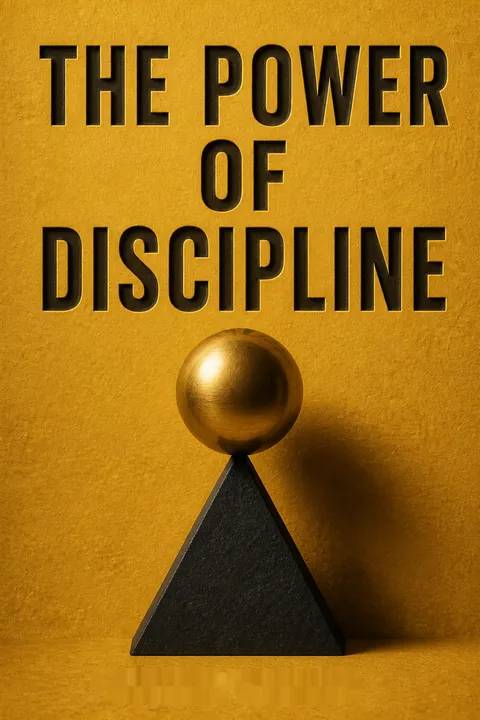
What's "The Power of Discipline" about?
- Core Focus: "The Power of Discipline" by Daniel Walter is about harnessing self-control and mental toughness to achieve personal and professional goals.
- Self-Discipline as a Key: The book emphasizes that self-discipline is the most crucial skill for success, surpassing intelligence and talent.
- Practical Guide: It serves as a manual for building habits that transform life, understanding self-discipline, and taking control of one's habits.
- Long-Term Vision: The book encourages readers to take responsibility for their current state and work towards where they want to be in the future.
Why should I read "The Power of Discipline"?
- Overcome Failures: If you've struggled with achieving goals, this book provides insights into why self-discipline is often the missing link.
- Actionable Strategies: It offers practical advice and daily habits to improve self-discipline and mental toughness.
- Comprehensive Approach: The book covers various aspects of self-discipline, including biological, psychological, and philosophical perspectives.
- Empowerment: It empowers readers to take control of their lives and make lasting changes by applying the principles discussed.
What are the key takeaways of "The Power of Discipline"?
- Self-Discipline is Essential: Without self-discipline, other success principles are ineffective.
- Biological Basis: Understanding the brain's role in self-discipline can help improve it.
- Daily Habits Matter: Consistent daily actions are crucial for building self-discipline.
- Mindset Shift: Changing one's belief system and identity is necessary for lasting change.
How does Daniel Walter define self-discipline in "The Power of Discipline"?
- Key to Success: Self-discipline is described as the key that unlocks personal fulfillment and success.
- Skill Development: It is a skill that can be developed, not an innate trait.
- Consistency and Endurance: Self-discipline involves doing what needs to be done consistently, even when it's uncomfortable.
- Focus and Control: It requires setting goals, filtering distractions, and controlling impulses.
What are the daily habits recommended in "The Power of Discipline"?
- Morning Routine: Successful people have a fixed morning routine that sets the tone for the day.
- Evening Routine: A relaxing bedtime routine is crucial for rest and productivity.
- Gratitude Practice: Being grateful enhances self-control and overall well-being.
- Goal Setting: Breaking down long-term goals into daily actionable steps builds momentum.
How does "The Power of Discipline" address the biological aspects of self-discipline?
- Brain Activity: The book discusses studies showing that self-discipline is linked to activity in specific brain regions.
- Delayed Gratification: It highlights the importance of the prefrontal cortex in delaying gratification and making healthy choices.
- Willpower Fatigue: Self-discipline can be depleted like a muscle, requiring rest and replenishment.
- Stress Impact: Stress affects the brain's ability to exercise self-discipline, emphasizing the need for stress management.
What is the "status quo bias" as explained in "The Power of Discipline"?
- Resistance to Change: The status quo bias is the tendency to stick with familiar routines and resist change.
- Psychological Phenomenon: It is a psychological barrier that can hinder self-discipline and goal attainment.
- Loss Aversion: People fear losing what they have, even if change could lead to better outcomes.
- Overcoming Bias: Understanding and challenging this bias is crucial for making positive changes.
How does "The Power of Discipline" suggest overcoming procrastination?
- Parkinson’s Law: The book explains how tasks expand to fill the time available, leading to procrastination.
- Set Tight Deadlines: Overcome procrastination by setting early deadlines and challenging yourself.
- Seventy Percent Rule: Start tasks when you are 70% ready to avoid overanalyzing and delaying action.
- Action Over Perfection: Focus on taking action rather than waiting for perfect conditions.
What role does meditation play in "The Power of Discipline"?
- Focus and Calm: Meditation is recommended for improving focus, decision-making, and emotional control.
- Daily Practice: Incorporating meditation into daily routines can enhance self-discipline and reduce stress.
- Mindfulness: It helps in living in the present moment and reducing mental chatter.
- Techniques: The book provides basic meditation exercises like "Zazen" and "Shikantaza" for beginners.
What is the "40% Rule" mentioned in "The Power of Discipline"?
- Mental Fortitude: The 40% Rule suggests that when you feel exhausted, you've only reached 40% of your potential.
- Push Beyond Limits: It encourages pushing past perceived limits to build confidence and resilience.
- Endurance Building: Applying this rule helps in developing mental toughness and self-discipline.
- Belief in Potential: Believing in your untapped potential is key to overcoming challenges.
How does "The Power of Discipline" address the Dunning-Kruger Effect?
- Overestimation of Abilities: The Dunning-Kruger Effect is when individuals overestimate their skills and fail to recognize their incompetence.
- Self-Awareness: The book emphasizes the importance of being aware of one's limitations and seeking feedback.
- Continuous Learning: Encourages ongoing self-improvement and learning to avoid complacency.
- Objective Feedback: Seeking objective feedback helps in accurately assessing one's abilities.
What are the best quotes from "The Power of Discipline" and what do they mean?
- "Self-discipline is like a key—it unlocks the door to personal fulfillment." This quote emphasizes the foundational role of self-discipline in achieving success and fulfillment.
- "You are the only person capable of changing your life—no one can do that for you." It highlights personal responsibility and the power of individual action in transforming one's life.
- "Discipline is about doing what you know you’ve got to do even when you don’t feel like it." This quote underscores the importance of consistency and perseverance in building self-discipline.
- "Your life is a reflection of the decisions you have made." It stresses the impact of choices on one's life and the need for intentional decision-making.
About the Author
Download PDF
Download EPUB
.epub digital book format is ideal for reading ebooks on phones, tablets, and e-readers.








