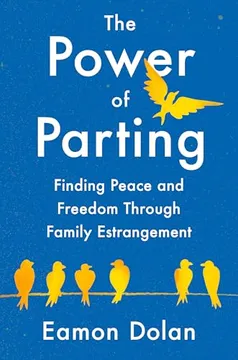


Key Takeaways
Treat family loyalty as earned, not as a duty imposed by birth.
A break can restore safety. Eamon Dolan opens with the story of ending decades of contact with a mother who had beaten, insulted, and neglected him. The final phone call did not repair the relationship. It ended her access to him, and he describes an immediate sense of relief. His argument is not that every difficult relative should be cut off, but that a family tie does not excuse ongoing harm.
Estrangement is common. A University of Cambridge survey of 807 estranged people found that 80 percent reported a positive effect on their lives. That finding is encouraging, not a guarantee: the survey describes respondents, not every person considering separation.
What's striking is the shift from bloodline as a moral command to behavior as the basis of obligation. That move resembles an ethical principle used in many other relationships: intimacy increases responsibility rather than granting immunity. The survey helps puncture the idea that estrangement is inherently disastrous, though self-selected respondents cannot represent every case. The practical implication is permission to consider distance, not pressure to choose it. A person weighing separation may need safety planning, emotional support, and attention to financial or caregiving dependencies.
Look for damage to trust, not only bruises, when naming abuse.
Harm is not always visible. Dolan describes four forms of child maltreatment: physical abuse, sexual abuse, psychological abuse, and neglect. Insults, intimidation, humiliation, and chronic dismissal can be psychological abuse; neglect includes failures to provide physical, medical, educational, or emotional care. The less visible forms are often minimized, even though they can accompany physical or sexual violence and continue into adulthood.
Notice the lasting effects. The book suggests looking beyond a numerical threshold for how often something happened. Consider the childhood environment and its consequences: persistent fear, isolation, self-doubt, or difficulty trusting your own perceptions and other people. Abuse is never caused by the child, even when the child has been taught to believe otherwise.
The emphasis on trust offers a useful lens because it focuses on what relationships do to a person's sense of reality, not only on whether an incident meets a formal category. It also resists a common evidentiary bias: visible injuries are easier to document than chronic emotional deprivation. Still, the lens should prompt careful reflection rather than instant diagnosis. Memory, family norms, and present distress can be complex, and a trained, trauma-informed professional can help distinguish harmful patterns from isolated conflict.
Survival habits can look like strengths while quietly shrinking your life.
Adaptation has a cost. Dolan describes how people from abusive homes may become compulsive workers, people-pleasers, withdrawn, hyper-alert, or unusually self-critical. These responses can help a child manage danger, but the same strategies may restrict adult relationships, pleasure, rest, and self-trust. He connects long-term trauma with Complex PTSD, or CPTSD, a pattern associated with symptoms such as shame, emotional flashbacks, dissociation, and relationship difficulties.
Responses can conflict. One sibling may overwork to stay safe, while another acts out or numbs their feelings. Dolan argues that these differences can hide a shared history. He also notes that CPTSD is recognized by the World Health Organization but is not listed as a separate diagnosis in the US psychiatric manual, leaving some survivors treated for separate symptoms.
This account usefully reframes traits like relentless productivity as possible adaptations rather than fixed personality. That distinction can reduce shame while opening room for change. Trauma research also supports the broader idea that prolonged threat affects attention, emotional regulation, and relationships, although symptoms vary widely and do not prove a particular history. A strength can remain valuable even as its costs are examined. The goal is not to strip away resilience, but to gain choice about when an old survival response is still serving its purpose.
Judge love by repeated behavior, then ask what the relationship gives you.
Actions clarify attachment. Drawing on bell hooks, Dolan argues that love should be assessed by how a person treats others, not by their claims or family role. Abuse and care are not made equivalent by calling cruelty discipline or sacrifice. This standard does not demand flawless behavior. It asks whether respect, empathy, and repair are present often enough to make a relationship safe and reciprocal.
Ask what you receive. Dolan’s therapist asked him what he gained from daily calls with his mother. He realized he was maintaining them mainly to share the burden with his sister, not because the calls nourished him. The question can expose trauma bonds, relationships in which intermittent kindness keeps someone attached despite recurring harm. Financial help or parental duty does not automatically create an unlimited emotional debt.
The focus on observable conduct is powerful because it makes love less vulnerable to manipulation through labels, promises, or tradition. Reciprocity is not a strict ledger, especially when illness or crisis temporarily changes what someone can give. But a chronic one-way relationship deserves scrutiny. The distinction between practical support and emotional care is also important: providing food or tuition fulfills real responsibilities, yet it does not purchase a lifetime claim over another person's choices.
Use distance and clear rules to test whether change is real.
Start with room to think. Dolan recommends beginning with a temporary break, ideally long enough for life without constant contact to feel possible. Use the pause to write down specific harms and their ongoing effects. Then identify clear, reasonable rules for future contact, such as no insults or no repeated calls. State them briefly, in a calm tone, and focus on what you need rather than trying to force an admission.
Enforce what you set. If a rule is broken, end the conversation or reduce contact as promised. This makes the boundary measurable and helps reveal whether the relative can respect it. Separation can be partial, quiet, or complete. Gray rocking, a technique of giving little emotional response to provocation, may help in some encounters. Personal safety and circumstances should guide the pace.
The method turns a vague hope that someone might change into a process with observable evidence: a boundary is stated, a response follows, and behavior is assessed over time. That resembles contingency-based approaches in behavior change, where predictable consequences matter more than persuasive speeches. The approach also avoids assuming that confrontation produces insight. Its limit is that rule-setting may provoke escalation in some relationships. Where intimidation or violence is possible, expert support and a safety plan matter more than conducting a test.
Practice self-care by interrupting the reflexes abuse taught you.
Learn to parent yourself. Dolan calls this reparenting: developing the care, steadiness, and emotional support that were missing in childhood. He describes four elements: regulating emotions, keeping reliable commitments to yourself, meeting your needs, and making room for play. These are not indulgences. They help replace chaos and self-neglect with stability and pleasure.
Try the opposite response. Opposite action, a dialectical behavior therapy technique, means pausing before an automatic response and considering whether doing the reverse would be healthier. Someone who reflexively agrees might say no; someone who denies themselves rest might take a day off. Dolan also urges readers to notice the inner critic, which often echoes old insults, and to treat its attacks as learned messages rather than objective truths.
The strength of this section is its practical account of recovery as repeated behavior, not a single insight. Reliable routines and enjoyable activities can help rebuild a sense of agency after an unpredictable childhood. Opposite action is most useful when an impulse is driven by fear or avoidance, not as a universal rule: an instinct to leave an unsafe situation should not be overridden. Self-care is best understood as informed attention to needs, not automatic comfort or self-denial.
Treat estrangement as a living loss that needs its own rituals.
Mourn what never arrived. Estrangement can bring grief for the relationship a person had and for the loving family they hoped to have. Dolan uses the term living loss for this open-ended pain: the relative is still alive, future contact remains possible, and other family members may keep the relationship present. Holidays, familiar places, or memories of occasional kindness can trigger longing as well as relief.
Make the loss speakable. Dolan describes writing an unsent account of what a relative did, imagining the care that should have been given, and creating a truthful memorial speech rather than a falsely glowing one. Such rituals give shape to grief that conventional mourning practices may not recognize. Chosen relationships can also provide belonging, though they do not erase the loss of what was missing.
Estrangement resembles ambiguous loss, a term used in family psychology for losses without clear closure, such as a loved one who is physically present but psychologically unavailable. Naming that ambiguity explains why grief can persist without meaning the decision was wrong. Rituals can make private experience socially legible and help people integrate it into a life story. They should remain invitations, not assignments: some survivors need silence, distance, or a gradual approach before revisiting painful memories.
Forgiveness is optional, and it never requires reopening the relationship.
Separate pardon from access. Dolan challenges the cultural habit of treating forgiveness as proof of goodness or as a duty owed to family. Even when someone chooses to release resentment, that choice does not require forgetting, excusing, or reconciling with the person who caused harm. Reconciliation requires more than the survivor's willingness; it depends on accountability and changed behavior from the other person.
Acceptance is another path. Dolan and his therapist disagree about whether forgiveness is useful for survivors. He allows that some may find it freeing, while others may prefer to accept that the abuse happened, was not their fault, and may never be repaired. The book distinguishes genuine apology from evasions that deny harm or shift responsibility. No outsider can prescribe a survivor's timetable or emotional conclusion.
This distinction restores moral agency to the person who was harmed. In restorative justice, repair is not merely a victim's internal act; it ordinarily involves acknowledgment, responsibility, and efforts to make amends. That framework helps explain why pressure to forgive can feel like another demand placed on the injured party. At the same time, people define forgiveness differently, and some find personal value in it without renewed contact. The essential protection is refusing to make any one definition a condition of healing.
Break secrecy by telling your story to people who can witness it.
Begin with a safe audience. Dolan recommends writing privately, speaking with trusted friends, seeking a suitable therapist, or joining a survivor group such as Adult Survivors of Child Abuse. Sharing can challenge the belief that pain will always be dismissed or punished. It can also help a survivor organize memories and feelings. A study cited in the book found that participants who wrote about traumatic experiences over four days reported better mood and fewer illnesses six weeks later than a comparison group.
Choose the method carefully. Journaling need not happen daily or focus only on trauma; repetitive writing can become rumination. Therapy can offer guided support, but Dolan notes that providers vary in their understanding of family abuse and CPTSD. A survivor can ask questions, seek a better fit, and stop sharing with people who are unsafe or dismissive.
The value of testimony is both personal and social. A listener can help turn an isolated memory into an experience that is acknowledged and contextualized, a process central to many forms of trauma therapy. Yet disclosure is not automatically healing: the wrong listener can shame, expose, or retraumatize someone. Consent and control over the audience are therefore part of the intervention. The book's emphasis on survivor groups also points to peer knowledge as a complement to professional care, not a replacement for it.
Protect children collectively, because private family life can conceal public harm.
Silence protects power. Dolan argues that family abuse is reinforced by norms that discourage outsiders from questioning how children are treated, alongside gaps in education, research, law, and clinical practice. He challenges the idealization of the isolated nuclear household, noting that many societies historically relied on wider kin networks and shared caregiving. The point is not that every extended family is safe, but that privacy should not outweigh a child's welfare.
Support can prevent harm. The book cites research linking pandemic-era child tax credits with lower maltreatment reports, and describes school programs that teach children to recognize, resist, and report abuse. It also points readers toward community support, advocacy for children in foster care, and better-funded prevention research. Survivors can help by speaking honestly and noticing when a child may need support.
The argument expands recovery from a private matter into a question of institutional design. Economic stress, isolation, and inadequate services can make caregiving harder, so prevention cannot rely only on identifying bad individuals after harm occurs. Material support and trusted adults are plausible protective factors. The book's critique of family privacy is compelling, but intervention also carries risks, including biased surveillance of marginalized families. Effective protection must combine child safety with due process, cultural humility, and support that does not punish poverty.
Analysis
The book's central contribution is a reversal of the usual moral framing of family estrangement. Rather than treating separation as a failure to preserve a sacred bond, it asks whether the bond is safe, reciprocal, and capable of repair. That move gives survivors a practical vocabulary for evaluating contact, while Dolan's memoir supplies the emotional evidence: a child can normalize mistreatment, carry it into adulthood, and mistake endurance for obligation. The stories of other survivors widen that lens beyond one family and show how differently people adapt to similar conditions.
The structure matters. The book moves from social denial, to the mechanisms and effects of maltreatment, to boundary-setting, grief, and public responsibility. This prevents a simplistic conclusion that leaving alone heals trauma. Separation may reduce ongoing harm and restore agency, but it does not automatically resolve shame, dissociation, or grief. The account's strongest practical insight is to treat contact as adjustable and boundaries as observable tests, not as a dramatic all-or-nothing declaration.
Its evidence requires more caution than its moral argument. Estrangement research is limited, and the cited positive-outcome survey cannot show that separation causes improvement for all respondents. Associations between childhood adversity and adult illness do not establish a single causal pathway in every individual. Dolan sometimes generalizes about the capacity of people with particular diagnoses to change, despite the uneven evidence he describes. The safest reading is not that diagnosis predicts a relative's future, but that repeated behavior, accountability, and respect for limits are better evidence than promises.
The book is most persuasive when it joins individual self-protection to collective responsibility. It rejects both family mythology and the fantasy that survivors should simply become self-sufficient. Healing requires room to choose, but also witnesses, supportive relationships, competent care, and institutions willing to protect children. Its closing challenge is therefore wider than whether to leave: it is whether a culture can stop treating domestic harm as private property.
Glossary
Complex PTSD (CPTSD)
Long-term trauma responseComplex post-traumatic stress disorder describes difficulties associated with prolonged or repeated trauma, especially when it begins early and involves a caregiver. It can include PTSD symptoms alongside shame, emotional flashbacks, dissociation, low self-esteem, impulsivity, physical complaints, and trouble sustaining relationships. The book notes that the World Health Organization recognizes CPTSD, while the US Diagnostic and Statistical Manual does not list it as a separate diagnosis.
Adverse Childhood Experiences
Childhood sources of lasting stressAdverse Childhood Experiences, often shortened to ACEs, are potentially traumatic events and conditions occurring before age eighteen. The book includes maltreatment, witnessing domestic violence, bullying, and growing up amid family mental health or substance-use problems. ACEs are used in public health research to study how early adversity relates to later health and well-being. They describe exposure, not a diagnosis or a fixed prediction of an individual's future.
Parentification
A child taking adult rolesParentification occurs when a child is made responsible for duties that properly belong to adults. Instrumental parentification involves practical responsibilities, such as routinely preparing meals or managing household needs. Emotional parentification involves tending to a parent's feelings, acting as a confidante, or mediating adult conflict. Some age-appropriate chores are ordinary development; the concern is a sustained role reversal that burdens the child or displaces their own needs.
Trauma bond
Attachment sustained by harm and kindnessA trauma bond is an attachment formed or maintained in an abusive relationship where harm is interspersed with occasional care, approval, or relief. The positive moments can sustain hope that the relationship will improve and lead the harmed person to blame themselves for its failures. The term helps explain why someone may remain emotionally attached to a relative despite recognizing repeated mistreatment.
Counterdependency
Denying needs to stay self-reliantCounterdependency is a pattern in which someone minimizes or rejects their own needs, often because asking for help was ineffective or unsafe in childhood. It can look like extreme self-sufficiency, reluctance to depend on others, or a claim that nothing is needed. The pattern can protect a person from disappointment while also making it harder to receive support and build intimate relationships.
Reparenting
Providing care once missingReparenting is the ongoing practice of giving oneself forms of care and guidance that were absent or unreliable in childhood. In the book, it includes regulating emotions, keeping dependable commitments to oneself, attending to one's needs, and allowing play. It is not a claim that adults can change the past; it is a way to build present-day capacities for safety, self-respect, and enjoyment.
Opposite action
Choosing against an unhelpful impulseOpposite action is a technique associated with dialectical behavior therapy. A person notices an emotional impulse, considers whether acting on it would be useful in the current situation, and, when appropriate, chooses a healthier contrary behavior. Examples include declining an unwanted obligation despite a reflex to please others, or taking a needed walk despite an urge to withdraw. It is not meant to override genuine danger signals.
Living loss
Grief without definite closureLiving loss describes grief associated with estrangement from a relative who is still alive. The relationship may remain uncertain, relatives may continue to share gatherings, and the possibility of future contact can complicate mourning. The loss can include both memories of the relationship and grief for the care or family bond that never existed. The term explains why separation can bring relief and sorrow at once.
Gray rocking
Withholding emotional fuelGray rocking is a response to provocation in which a person stays neutral and gives minimal emotional reaction, much like an unremarkable object. The book presents it as one possible way to avoid feeding a relative's attempts to provoke conflict. It is not a universal solution: the person using it must consider safety, context, and whether reduced engagement is likely to help.
Weathering
Health strain from chronic oppressionWeathering is Arline Geronimus's term for the cumulative physical toll of repeated social stress, especially discrimination tied to race, class, and other forms of marginalization. The book uses the concept to connect stressful environments with earlier onset of chronic illness and reduced healthy life expectancy. It emphasizes that these outcomes cannot be explained simply as individual lifestyle failures.
Download PDF
Download EPUB
.epub digital book format is ideal for reading ebooks on phones, tablets, and e-readers.








