

Key Takeaways
When faith feels thin, create space before adding more effort
Busyness can hollow out worship. The book begins with Jess, who tries to squeeze scripture reading into a packed day and ends up tense, guilty, and spiritually flat. Her problem is not a lack of good intentions. Sacred practices have become tasks to complete, with little room to receive anything from them. The authors call mindfulness deliberate, compassionate attention to what is happening now, inside and around a person. They connect its value to a culture of long workweeks, reduced sleep, and constant digital interruption. One cited study found that many people would rather receive a mild electric shock than sit alone with their thoughts for fifteen minutes.
Space changes the experience. Jess pauses, notices her tension, and makes room for an unexpected invitation to the temple. She leaves without finishing her planned reading, but feels more connected to God. The lesson is not that effort is useless. It is that more effort cannot always repair an experience drained by relentless pace.
The sharp insight is that religious exhaustion may come not from weak belief, but from treating devotion as another productivity system. This resembles the distinction in attention research between focused engagement and task-switching: a person can spend time on a practice while scarcely attending to it. Stillness should not become a new performance standard. For people carrying excessive caregiving, work, or church demands, the remedy may require fewer commitments and practical support, not merely a calmer attitude toward an impossible schedule.
Treat Sabbath, sacrament, and temple worship as retreats, not appointments
Sacred routines can interrupt the rush. The book presents the Sabbath, home, and temple as recurring places to step out of constant activity. The Olsons arrive at church in a panic, barely noticing the sacrament; the mindful version pauses before entering, listens during the ordinance, and treats conversations as chances to be present. At home, one family protects Sunday from email, news, and some social obligations so there is room to sit together. At the temple, the invitation is to experience sacred ordinances without reducing the visit to a task to finish.
Attention can be trained. When a mind wanders during a talk or hymn, noticing and gently returning to the service becomes practice. The sacrament offers a particularly concrete focus: its words, bread, water, and shared ritual.
The reframing makes religious institutions more than providers of instruction or service. They can also create a rare, noncommercial space for attention, ritual, and shared meaning. That is a distinctive resource in a culture built to monetize distraction. Yet a weekly retreat is not automatically restful: family logistics, accessibility needs, and exhausting callings can make worship feel like labor. The useful question is not whether a practice is sacred in theory, but whether its actual form gives people room to participate with care.
Leave silence in prayer for a response you cannot script
Prayer is relationship, not a report. The book describes a familiar pattern: Justin mutters a quick list of thanks and requests at bedtime, then falls asleep before finishing. The authors suggest changing the aim from completing words to being with God. Jesus regularly withdrew from crowds to pray, sometimes before demanding events and sometimes after them. His example makes solitude a source of spiritual resilience, not an escape from service.
Make room to listen. A pause before and after speaking can help the body settle and make prayer less hurried. This does not require eloquent language or a long session. A mother in a noisy kitchen offers a brief, wordless plea for God to stay with her, then returns to caring for her children with more steadiness. Everyday prayers remain valuable, even when they feel ordinary.
Prayer as dialogue changes the measure of success: the point is not to produce a persuasive request or obtain an immediate answer, but to cultivate attention and openness. This has a useful parallel with reflective listening, where a pause can reveal what a person has not yet articulated. Silence, however, does not prove that a particular thought is divine guidance. Discernment still requires humility, context, and sometimes counsel from trusted people. The book’s strongest practical move is not promising certainty, but helping prayer become less rushed and more relational.
When your mind wanders, returning is the practice
A quiet room is not a quiet mind. People who begin praying or meditating often discover more inner chatter, not less. The book argues that this is not evidence of failure: mindfulness means noticing thoughts and feelings without needing to eliminate them. A person can use the breath, the body, scripture, or attention to God as an anchor, meaning a point of focus to return to when attention drifts.
Repeat the return. One woman becomes frustrated because her attention keeps wandering during meditation. She makes progress when she stops demanding uninterrupted focus and instead notices the distraction, then calmly redirects her attention. The same approach can help during scripture reading or worship. When distressing memories or intense emotions arise, the practice is to meet them gently, rather than automatically judging or suppressing them.
This approach treats attention as a capacity developed through repetition, not a personality trait possessed by the unusually disciplined. That shift can reduce the shame that often sabotages practice. It also has a limit worth respecting: for people with trauma, panic, or severe distress, closing the eyes and turning inward can intensify symptoms. The book acknowledges this risk. A safe practice may need to be brief, externally focused, supported by a clinician, or paused altogether. Compassion includes choosing an appropriate form of attention.
Hold questions without mistaking uncertainty for failure
Thoughts are not verdicts. The book encourages readers to notice a thought as a mental event rather than accept it automatically as truth, identity, or revelation. A depressed man, for instance, once interpreted harsh self-criticism as God’s disapproval. With support and mindful attention, he learned to question that interpretation. Scripture study can also become more than decoding information: slow reading and reflection can make a passage a starting point for personal inquiry and spiritual experience.
Not knowing belongs to mortal life. A mother unsettled by Church history questions chooses not to force an instant resolution. She and her husband keep seeking, while allowing some uncertainty to remain. The authors distinguish this patience from treating uncertainty as inherently superior to conviction. Questions can be held alongside what a person still believes, without pretending every tension is already solved.
The distinction between a thought and a fact is valuable well beyond religious life. It interrupts the common leap from I feel condemned to I am condemned, or from I feel certain to I must be right. The book also resists two easy answers: silencing difficult questions, and romanticizing doubt as proof of sophistication. Its account is most persuasive when patience includes continued inquiry, evidence, and honest conversation. Not every unresolved question becomes comforting, and people deserve room to describe that difficulty without being rushed toward a reassuring interpretation.
Notice the ordinary moment before outsourcing your attention
Presence makes ordinary life vivid. The authors contrast living in the moment with living only for pleasure. Mindful attention can mean noticing the texture, smell, and taste of a raisin, or recognizing the people and sounds in a room rather than moving through it on autopilot. The book links this practice to the Latter-day Saint idea that eternal life is not only a distant destination, but a way of living with God’s qualities now.
People can interrupt for a reason. In a Gospel story, Jesus is on the way to help a sick child when a woman reaches for his clothing. He notices her and stops to respond. The scene illustrates how a worthy goal can occupy so much attention that someone in immediate need disappears from view. Being present can restore attention to both the task and the person in front of us.
This is more than an argument for savoring pleasant sensations. Attention is also an ethical choice: it determines which people and needs become visible. That connects contemplative practice to moral psychology, where perception often precedes action. Still, presence should not be confused with abandoning planning, obligations, or future consequences. The useful balance is to plan without becoming mentally absent from the life being planned for. A pause can make action more responsive, not less responsible.
Make love visible by staying with people in pain
Compassion begins with attention. The book connects mindfulness with charity, the practice of seeing another person truthfully rather than reducing them to a label or a problem to fix. It tells of Roger, a ward member with serious mental health challenges whom others often kept at a distance. One friend had tried to correct his thinking, then withdrew when advice did not work. A better opening comes when Sam asks about Roger’s life and listens as Roger describes a painful childhood.
Presence is a form of help. The authors describe a bishop who visits a seriously ill man, takes his hands, and asks how he is doing without distracting him from the reality of illness. That kind of company can matter more than a quick solution. The book also treats awkwardness and difference in a congregation as chances to practice patience and build community.
The emphasis on listening counters a common helping reflex: discomfort with suffering can push people toward advice, platitudes, or avoidance. Attentive presence offers dignity without pretending to cure another person. It also needs boundaries. A ward member is not a substitute for professional care, and closeness should never require unsafe or unwanted disclosure. The strongest form of compassion combines warmth with respect for autonomy, practical assistance, and referral when needed. Community is not merely a feeling of belonging; it is sustained attention to people who might otherwise be overlooked.
Pursue growth from divine love, not self-contempt
Progress need not mean self-rejection. The book presents eternal progression as ongoing change, but warns against turning it into an endless verdict that a person is never enough. One woman initially hears spiritual guidance as a list of corrections from a disappointed God. A friend helps her see the same guidance as an invitation to heal. That shift changes growth from punishment into a response to love.
Make goals spacious. When Carrie feels prompted to build community, she first wants a checklist of tasks. She instead holds the intention in mind and looks for fitting ways to act in each situation. Stillness supports progress by helping people see where they are, notice what they feel, and choose a next step. Acceptance does not mean approving harmful conditions or giving up; it means meeting reality clearly enough to respond wisely.
The distinction between acceptance and resignation is essential. Self-compassion can make change more sustainable because it reduces the threat response that often narrows attention and encourages defensiveness. At the same time, a spiritual interpretation of growth should not make every hardship sound like a lesson assigned by God. The book’s more humane image is of guidance that heals rather than scolds. In practice, that requires testing goals against real needs, limits, and consequences, not simply treating every inner impression as an instruction.
After a lapse, return to Christ before shame drives another escape
Pain can carry information. Craig relapses into a behavior he has been trying to change and feels ashamed. Rather than numb himself or pretend the event does not matter, he pauses, notices the hurt, and considers its effects on his wife. The authors argue that regret can signal a real breach between a person’s actions and values. Feeling bad does not mean being worthless; it can be a reason to seek repair and change.
Begin again in the present. The book describes turning toward cravings or painful feelings without either indulging them or condemning oneself. It presents repentance as a repeated return to Christ, not a single dramatic transformation that permanently eliminates struggle. A new choice can begin in the next moment, even while the consequences of past choices remain and accountability is still required.
This section rejects both moral panic and moral erasure. Shame often collapses behavior into identity, while denial can prevent repair; the book instead separates a person’s worth from the real effects of their choices. That distinction supports accountability without humiliation. It is especially important where addiction or trauma limits a person’s control, since change may require sustained support rather than willpower alone. Spiritual renewal can motivate repair, but it should not be used to minimize harm to partners or others.
Give marriage room for imperfect people and persistent disagreements
Expectations can overload love. Claire and Mark are late for a birthday party and blame each other during the rush. The mindful version begins when each notices their own tension before reacting. The authors argue that partners often bring inherited stories about what love should feel like and what a spouse should provide. When those expectations become absolute, ordinary stress can look like proof that the relationship is broken.
Some conflicts recur. The book cites marriage research estimating that 69 percent of relationship conflicts concern persistent differences, not problems that can simply be solved once. It uses the image of a lake: expanding one’s capacity to hold a hurt can reduce its power without pretending the hurt is harmless. The authors distinguish ordinary marital strain from abuse and serious betrayal, which require a different response.
This account replaces the fantasy of perfect compatibility with a more realistic skill: staying curious while managing recurring differences. The lake image helps explain why emotional capacity can matter even when a partner does not change. But acceptance must never become pressure to endure abuse, coercion, or ongoing danger. The book explicitly sets those cases apart, and that distinction deserves emphasis. For ordinary conflict, self-regulation is useful; it does not excuse unequal labor or make one person responsible for repairing a relationship alone.
Give children undivided attention, then teach them to handle quiet
Connection can be brief and complete. Eddie handles his daughters’ schedule but realizes at bedtime that he has barely connected with them. The book warns that a parent absorbed in a phone may appear physically present while being emotionally unavailable. It cites observations of caregivers using phones during meals and research on the importance of back-and-forth interaction for young children’s language development. One practical suggestion is a short stretch of phone-free, child-led play, with the parent giving full attention.
Quiet is learned, not automatic. Families can build small pauses into meals, prayers, and transitions, and allow children to experience boredom without rushing to entertain them. The authors do not ask parents to be constantly available. They recommend clear boundaries: either attend fully when possible, or explain when attention must wait.
The distinction between full attention and continuous partial attention is especially useful for parents, who are often asked to work, supervise, and respond simultaneously. Short periods of undivided presence may be more realistic than an impossible ideal of constant availability. The argument also avoids treating children as distractions from adult spiritual life: their noise can be part of the setting in which attention is practiced. Still, advice about screens should not become another source of parental guilt. Family conditions, work demands, and children’s needs differ.
Analysis
The book’s central claim is that spiritual practices are not depleted only by doubts about doctrine or shortcomings in religious institutions. They can also be drained by the pace and habits through which people approach them. Prayer becomes a task, scripture becomes material to finish, worship becomes an event to endure, and service becomes another demand. Stillness changes the quality of participation by making room to notice thoughts, emotions, bodily tension, other people, and the possibility of divine guidance.
Its most consequential move is to interpret mindfulness through Latter-day Saint theology rather than present it as a foreign technique. The Sabbath, sacrament, temple, prayer, pondering, and covenant become forms of contemplative practice. This translation makes mindfulness legible to readers who might otherwise regard it as secular or imported, while grounding attention in relationship with God and community. The result is not a manual for emptying the mind, but an argument for becoming more receptive, truthful, and compassionate.
The book also refuses a simplistic equation between peace and pleasant feelings. Restlessness, grief, doubt, boredom, guilt, and marital friction may all be faced with attention rather than pushed away. This expands the meaning of spiritual experience beyond reassurance. Yet the same advice needs careful boundaries. Stillness cannot substitute for reducing excessive demands, treating mental illness, addressing abuse, or obtaining support. Nor should every painful experience be spiritualized as a lesson. The authors are most persuasive when attention leads to clearer perception and responsible action, not passive endurance.
The lasting practical insight is that presence is both a spiritual discipline and a social one. Returning attention to a prayer, a child, a spouse, or a suffering neighbor is a small act repeated many times. The book’s vision of renewal depends less on dramatic experiences than on these returns: to the moment, to relationship, and to the possibility of beginning again.
Review Summary
The Power of Stillness receives mostly positive reviews, with readers praising its insights on incorporating mindfulness into Latter-day Saint faith practices. Many found it transformative, offering practical advice for prayer, scripture study, and daily life. Reviewers appreciated the book's perspective on slowing down, being present, and finding deeper meaning in worship. Some critics felt it was repetitive or too "churchy," but overall, readers found it a valuable resource for spiritual growth and stress reduction. The audiobook narration received mixed reviews.
People Also Read


Glossary
Mindfulness
Compassionate present attentionThe deliberate practice of noticing thoughts, feelings, bodily sensations, and the surrounding world as they unfold in the present. In this book, mindfulness is not detached observation or an attempt to stop thinking. It is awareness joined with compassion, used to deepen prayer, worship, self-understanding, and relationships.
Non-Doing
Resting outside task modeA deliberate pause from the impulse to produce, fix, or complete something. In the book, non-doing is not passivity or abandonment of responsibility. It is a restorative way of entering Sabbath, prayer, or temple worship without treating each sacred practice as another item on a checklist.
anchor
A focus for returning attentionA chosen point of attention that helps steady the mind when it wanders. Common anchors in the book include breathing, bodily sensations, scripture, a person speaking, or awareness of God. The practitioner notices distraction and gently returns to the anchor, making the return itself part of the exercise.
continuous partial attention
Divided, incomplete attentionA pattern of keeping some attention on a person or activity while repeatedly monitoring other demands, especially screens and notifications. In the parenting discussion, it describes an adult who appears available but is only half listening. The book contrasts this with either giving focused attention or clearly explaining when attention must wait.
heart at war
A defensive, reactive stanceA relational state in which a person sees another mainly as an obstacle, source of blame, or problem to control. The book uses this term, alongside heart at peace, to describe how a person’s inner posture shapes conflict. Noticing the shift can create an opportunity to soften defensiveness and respond more openly.
heart at peace
An open, responsive stanceA relational state marked by greater openness, curiosity, and willingness to see another person as fully human. In the book, returning to a heart at peace parallels noticing and redirecting attention in meditation. It does not require denying conflict or excusing harm; it changes how a person engages with what is happening.
FAQ
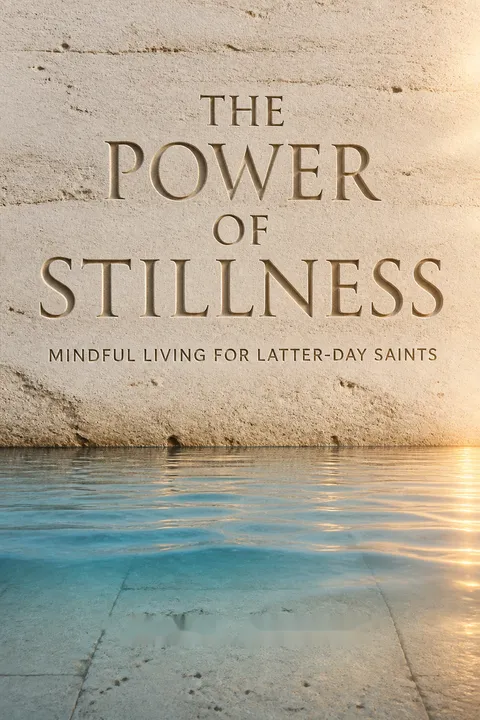
What is "The Power of Stillness: Mindful Living for Latter-day Saints" by Jacob Z. Hess about?
- Integration of Mindfulness and Faith: The book explores how mindfulness and contemplative practices are inherently present within Latter-day Saint (LDS) doctrine and culture, offering a bridge between ancient spiritual wisdom and modern LDS life.
- Addressing Spiritual Burnout: It addresses the challenges of spiritual burnout, busyness, and distraction in contemporary life, proposing stillness and mindful living as antidotes.
- Practical Guidance: The authors provide practical advice, exercises, and real-life examples for incorporating stillness, silence, and mindfulness into daily gospel living.
- Restoring Depth to Spiritual Practices: The book aims to help readers rediscover the richness and transformative power of prayer, scripture study, Sabbath observance, and relationships through mindful presence.
Why should I read "The Power of Stillness" by Jacob Z. Hess and co-authors?
- Relevance to Modern Life: It tackles the pervasive issues of stress, over-scheduling, and spiritual emptiness that many Latter-day Saints and others experience today.
- Faith-Consistent Mindfulness: The book reassures readers that mindfulness is not foreign or incompatible with LDS beliefs, but rather deeply rooted in the restored gospel.
- Practical Tools for Change: Readers gain actionable strategies to create more space, stillness, and meaning in their spiritual and everyday lives.
- Personal and Communal Transformation: The book offers insights for both individual growth and building more compassionate, connected communities.
What are the key takeaways from "The Power of Stillness" by Jacob Z. Hess?
- Stillness is Essential: True spiritual depth and connection with God require intentional pauses, silence, and stillness, not just more activity.
- Mindfulness is Already Present: LDS practices like prayer, Sabbath observance, and temple worship are inherently mindful when approached with awareness and presence.
- Transformation Through Practice: Consistent, mindful engagement with spiritual practices can revive faith, heal relationships, and foster personal growth.
- Embracing Discomfort and Not-Knowing: The book encourages readers to hold space for questions, discomfort, and uncertainty as part of the journey toward deeper faith and understanding.
How does "The Power of Stillness" define mindfulness, and how is it connected to Latter-day Saint teachings?
- Mindfulness Defined: Mindfulness is described as “paying attention, in the present moment, on purpose, and non-judgmentally,” or “conscious affectionate awareness of the moment.”
- Scriptural and Prophetic Roots: The book highlights that mindfulness is embedded in LDS scripture and prophetic counsel, such as the invitations to “be still and know that I am God” and to ponder and meditate.
- Not Just an Eastern Practice: While mindfulness is often associated with Buddhism, the authors show it is a universal spiritual skill, present in Christian and LDS traditions.
- Heart in the Present: The Chinese character for mindfulness (nian) combines “now” and “heart,” paralleling the LDS emphasis on bringing one’s heart to God in the present.
What problems does "The Power of Stillness" identify with the current pace of LDS and modern life?
- Chronic Busyness: The book critiques the culture of relentless activity, both in church and secular life, which leads to spiritual and emotional exhaustion.
- Superficial Spirituality: Overemphasis on “doing” can flatten worship, making prayer, scripture study, and church attendance feel like empty routines.
- On-Demand Mentality: Modern expectations for instant answers and constant stimulation undermine the patience and openness required for genuine spiritual growth.
- Loss of Heart: The authors warn that the “death or loss of the heart” can result from an over-hectic lifestyle, diminishing the richness of spiritual practices.
How does "The Power of Stillness" by Jacob Z. Hess suggest Latter-day Saints can incorporate stillness and mindfulness into their daily gospel living?
- Intentional Pauses: Build moments of stillness into daily routines, such as pausing between activities or before spiritual practices.
- Mindful Worship: Approach prayer, scripture study, and temple attendance as opportunities for deep presence and communion, not just tasks to complete.
- Sabbath as Retreat: Reimagine the Sabbath as a restorative retreat, focusing on rest, reflection, and connection with God and family.
- Practical Exercises: The book offers “Things to Try” at the end of each chapter, including breath awareness, body scans, and mindful listening.
What are the main concepts and practices of mindful prayer and scripture study in "The Power of Stillness"?
- Prayer as Communion: Prayer is reframed as a two-way, mindful dialogue with God, involving listening, silence, and heartfelt presence rather than just reciting requests.
- Scripture as Experience: Scripture study is encouraged as a mindful, immersive experience—slowing down, pondering, and seeking personal revelation rather than just reading for completion.
- Embracing Silence: Both practices benefit from periods of silence before, during, and after, allowing space for the Spirit and deeper insight.
- Dealing with Distraction: The book normalizes wandering thoughts and teaches gentle redirection of attention as part of the spiritual practice.
How does "The Power of Stillness" address dealing with inner noise, distraction, and restlessness?
- Turning Toward Discomfort: The book teaches that inner turbulence is normal when seeking stillness, and encourages turning toward, rather than avoiding, uncomfortable thoughts and feelings.
- Anchoring Attention: Techniques such as focusing on the breath, body sensations, or sacred words help anchor the mind and cultivate calm.
- Gentle Curiosity: Readers are encouraged to observe their thoughts and emotions with compassion and curiosity, reducing self-judgment.
- Patience and Practice: Quieting the mind is presented as a gradual process, requiring patience and repeated practice.
What does "The Power of Stillness" say about handling doubt, questions, and not-knowing in faith?
- Not-Knowing is Normal: The book affirms that uncertainty and lack of answers are a natural and purposeful part of mortal experience and spiritual growth.
- Holding Space for Questions: Readers are encouraged to create compassionate space for their own and others’ questions, without rushing to resolve them.
- Mindful Inquiry: Mindfulness helps differentiate between thoughts and reality, allowing for more objective evaluation of doubts and concerns.
- Faith and Conviction: The authors caution against both glorifying doubt and rigid certainty, advocating for humility, patience, and openness to ongoing revelation.
How does "The Power of Stillness" by Jacob Z. Hess apply mindfulness to relationships, marriage, and parenting?
- Being Present with Others: Mindful presence is key to deeper connection, empathy, and healing in relationships, including marriage and parenting.
- Letting Go of Unrealistic Expectations: The book encourages accepting partners and children as human beings, with space for mistakes and growth.
- Mindful Communication: Practices such as full attention, non-judgmental listening, and pausing before reacting are emphasized.
- Transforming Family Life: Mindfulness is shown to enhance family rituals, discipline, and daily interactions, making home life more peaceful and nurturing.
What are the unique Latter-day Saint perspectives on mindfulness and stillness presented in "The Power of Stillness"?
- Restoration Mindfulness Advantage: The book argues that the restored gospel uniquely integrates “being” and “becoming,” offering abundant opportunities for mindful stillness within its practices.
- Temple and Sabbath as Retreats: LDS temples and the Sabbath are highlighted as built-in sanctuaries for retreat, reflection, and non-doing.
- Doctrine and Dharma Synergy: The authors explore synergies between LDS doctrine and broader contemplative traditions, suggesting the Church has potential for a profound meditative tradition.
- Openness to All Truth: Drawing on Joseph Smith and Brigham Young, the book encourages gathering truth from all sources, including mindfulness practices.
What are the best quotes from "The Power of Stillness" by Jacob Z. Hess, and what do they mean?
- “Be still, and know that I am God.” (Psalm 46:10): Emphasizes the foundational scriptural call to stillness as a path to divine connection.
- “Beware the barrenness of a busy life.” (Socrates): Warns against the spiritual emptiness that can result from constant activity without reflection.
- “Forever is composed of nows.” (Emily Dickinson): Highlights the importance of living fully in the present moment as the essence of eternal life.
- “When we are still, looking deeply, and touching the source of our true wisdom, we touch the…living Christ in ourselves and in each person we meet.” (Thich Nhat Hanh): Suggests that mindful presence allows us to experience Christ within ourselves and others.
- “Try a little harder to be a little better.” (President Gordon B. Hinckley): Encourages gentle, ongoing progression, aligning with the book’s message of compassionate growth.
Download PDF
Download EPUB
.epub digital book format is ideal for reading ebooks on phones, tablets, and e-readers.








