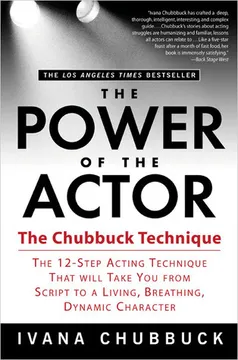


Key Takeaways
Give every emotion a job: help the character pursue a human need
Aim before feeling. Chubbuck’s central shift is to treat emotion as fuel for action, not as the performance’s destination. The actor first identifies an OVERALL OBJECTIVE, the character’s deepest human need across the story, such as being loved, regaining power, or belonging to a family. Scenes then become attempts to secure that need. Anger, grief, and joy emerge from the struggle rather than being summoned for their own sake.
Leticia keeps reaching. In Monster’s Ball, Halle Berry’s character discovers that her boyfriend concealed his connection to her husband’s execution. Instead of playing the scene as anger alone, Berry’s choices connect the betrayal to Leticia’s need for love and safety. Her reactions move from shock and fury toward an attempt to understand the lie in a way that might preserve love. The objective gives the emotional shifts a direction.
What's useful here is the distinction between emotion as an experience and emotion as information about an unmet goal. In appraisal-based accounts of emotion, feelings arise partly from how people interpret events in relation to what matters to them. That makes a playable need a practical route into emotional complexity. The approach can also resist self-display: the character attends to the problem, not to how moving the actor appears. Still, a coherent objective is an artistic lens, not proof that every human action serves one simple need. Some stories deliberately withhold resolution or resist a triumphant arc.
Make each scene a negotiation, not a delivery of plot
Ask something of someone. A SCENE OBJECTIVE is what a character wants from another person during one scene. It should require a response and support the larger objective. This keeps dialogue interactive: instead of merely wanting love, the character tries to make a specific person love, trust, forgive, or help them. The objective remains stable through the scene, while the tactics used to pursue it can change.
Translate plot into relationship. In Out of Time, Eva Mendes could have played a police officer whose goal was simply to solve a crime. Chubbuck instead framed her character’s larger need around winning back her ex-husband. Solving the case now carries personal stakes: it can demonstrate her value and help restore their relationship. Plot still matters, but the actor’s interpretation gives the plot human consequences.
This method resembles negotiation theory: each person has an aim, incomplete information, and a changing read of the other side. That structure can enliven exposition because even routine lines become attempts to influence someone. It also gives scene partners a reason to respond rather than recite. The useful caution is that not every exchange needs to be forceful or strategic. Some relationships are built through shared attention, silence, or cooperation. A playable objective should sharpen the scene’s behavior without turning every human encounter into a contest.
Make the goal difficult enough that failure remains believable
Conflict creates suspense. OBSTACLES are the physical, mental, and emotional barriers between a character and an objective. Some are stated in the script; others can be inferred from its facts. Rejection, a secret, a power imbalance, illness, or a history of betrayal can make a simple request feel dangerous. The actor identifies the character’s obstacles first, then finds personal parallels that make the struggle specific.
A phobia changes the journey. Indiana Jones’s fear of snakes turns crossing a snake-filled space into a test of survival rather than an ordinary escape. Chubbuck also describes Bonnie in The Vampire Diaries as initially played through her helpless circumstances. Reframing those circumstances as obstacles she fights to overcome helped make her more active and compelling. The dramatic reward lies in the attempt to win, even when the character does not succeed.
Obstacle-based analysis has a close cousin in game design: a goal becomes engaging when it is clear, consequential, and hard enough to demand adaptation. In performance, that difficulty can produce a visible arc as the character tries one route, meets resistance, and changes approach. The framework is strongest when obstacles arise plausibly from the story rather than being added simply to heighten intensity. It also deserves a social reality check: agency can make a character active, but it should not imply that people can overcome every structural barrier through willpower alone.
Use a real emotional analogue, not a literal imitation
Personalize the relationship. SUBSTITUTION means mentally connecting a scene partner to a real person whose relationship history activates the character’s need. The match is emotional, not necessarily literal: an actor playing a lover might draw on unresolved feelings toward a parent if that connection better supports the scene. Chubbuck advises trying several possibilities in rehearsal and keeping the choice that creates the most useful response.
Pictures make words personal. INNER OBJECTS are the images associated with the people, places, and events being discussed or heard. An actor playing a character who longs for a boat, for example, might picture a personal ambition that carries the same hope and risk. The images should fit the objective and substitution, so the actor responds to something vivid rather than to a generic idea.
These tools turn memory into a form of imaginative translation. Cognitive accounts of mental imagery suggest that vividly imagined scenes can recruit some of the same sensory and emotional processes used in perception, which helps explain why a specific personal image may feel more immediate than an abstract instruction. But emotional intensity is not the same as truthful characterization. Memory can be distorted, and a performer need not excavate trauma to create depth. The strongest analogue is one that serves the scene while leaving the actor able to work safely and consistently.
Change tactics when thoughts change, and keep listening while silent
Give each thought a tactic. BEATS mark shifts in thought; ACTIONS are the smaller attempts to influence another person within each beat. If the scene objective is to gain someone’s trust, one beat might use humor, another honesty, and another a challenge. These are not feelings to display but approaches to test. The actor watches the other person’s response and adjusts rather than fixing a single delivery in advance.
Listening stays active. Chubbuck’s ACTIVE LISTENING asks the performer to identify what the other person’s words mean through the character’s own history, how that meaning feels, and what the character wants to do about it. In a group scene, a HOT PERSON is the individual whose response matters most; other people can function as allies, knowingly or not. This keeps attention focused and gives silent reactions a purpose.
The emphasis on response connects acting to interactive communication, where meaning is co-created rather than transmitted intact. A performer who listens for a change in the other person can make small facial or physical adjustments feel consequential. The beat structure also gives rehearsal a useful vocabulary for diagnosing a flat scene: perhaps the tactic never changes, or the actor is not receiving the partner’s response. The framework should remain flexible, however. If beats become a rigid checklist, spontaneity can be replaced by another kind of preplanning.
Enter scenes already in motion
Bring the pressure with you. The MOMENT BEFORE is a recent or unresolved event that explains why the character needs the scene’s objective now. The actor briefly recalls its sensory details before beginning, so the scene starts with emotional momentum instead of building from neutral. Chubbuck recommends choosing an event that connects to the script and can be accessed quickly.
Make the space personal. PLACE and FOURTH WALL involve imagining the performance space as a meaningful location from the actor’s life, including what lies beyond the audience-facing side of a set. PREVIOUS CIRCUMSTANCES means the accumulated history that explains how the character behaves. Together, these choices give the scene a felt past and a private environment. They are especially useful when film scenes are shot out of order or interrupted by production delays.
The method recognizes that behavior is contextual. A room associated with past conflict can alter attention and posture, while an immediate prompt can help an actor establish continuity between a character’s unseen life and the scene on the page. This echoes environmental psychology, which examines how places cue memory, mood, and action. Yet using intensely charged memories is not a neutral technique. A performer should be able to choose a less distressing analogue, pause the exercise, or work without autobiographical material. Continuity and privacy matter, but personal safety matters more.
Let props reveal what dialogue conceals
Behavior carries subtext. DOINGS are purposeful activities involving props or the surrounding environment. They can offer a character something to hide behind, a way to manage tension, or a visible expression of an objective. In a kitchen argument, continuing to prepare food can communicate far more than standing still and announcing anger. The activity should fit the character and help pursue the scene objective, not become decorative business.
Ordinary actions become revealing. Chubbuck describes Brad Pitt bringing wine glasses into a scene about an awkward young man on an indoor picnic. Handling the glasses gave the character a physical route into the scene’s nervous sexual tension, even though the dialogue stayed conversational. Props can also establish occupation, habits, status, or humor. The actor tests options in rehearsal and keeps behavior that makes the character more specific and the scene more alive.
This is a practical application of embodied communication: people infer intention not only from words but from timing, gesture, and object use. A prop can create a second channel of meaning, especially when a character is concealing something or cannot speak freely. It also gives actors a concrete task that can reduce self-consciousness. The limitation is that added business can distract or undermine the script if it is too conspicuous. Behavior earns its place when it changes the relationship or clarifies character, not merely because movement looks interesting.
Build chemistry from empathy, but respect boundaries
Connect through shared feeling. The CHEMISTRY EXERCISE has two parts. COMMONALITY OF PAIN asks an actor to imagine that the scene partner understands a deeply felt insecurity or loss. SEXUAL FANTASY adds an imagined physical charge. Chubbuck proposes using the actual partner, not a substitution, so the performer stays connected to the person in the room. The technique is meant to create intimacy even when the actors feel little spontaneous connection.
Connection need not be romantic. Chubbuck applies chemistry to friends, family, colleagues, and adversaries, arguing that emotional closeness makes relationships more watchable. Her examples include actors who reportedly shifted from mutual dislike to a more engaging on-screen connection. The larger point is that relationship dynamics need history and specificity. For many scenes, however, empathy, trust, playfulness, or rivalry can create that history without sexualizing the bond.
The shared-vulnerability element has intuitive force: perceived understanding can reduce social distance and make attention feel warmer. The sexual component is a much less universal claim. Attraction does not reliably create trust, and importing erotic fantasy into a nonromantic relationship may be uncomfortable or inappropriate, especially where professional power differences exist. The technique is best treated as one optional imaginative route, not a rule about human connection. Consent, the scene’s meaning, and the performer’s comfort should determine whether it belongs in the work.
Explore emotional material, then release control
Write toward the need. An EMOTIONAL DIARY is automatic writing prompted by an overall or scene objective, often followed by the question of why that objective matters. Chubbuck uses the exercise to uncover personal associations, secrets, and unresolved feelings that can inform the actor’s choices. She distinguishes this creative exercise from therapy, though its subject matter can be intense. The writing supplies possibilities for the performance; it is not a clinical diagnosis or a demand to disclose private material.
Prepare, then respond. After rehearsing the objectives, obstacles, images, tactics, and history, LET IT GO means trusting the preparation instead of consciously reproducing every choice. The same principle shapes auditions: avoid copying an imagined casting preference, make specific choices, and let the character’s thought continue beyond the final line. Odelya Halevi’s audition, delivered with her own accent rather than an imitated Southern one, illustrates the value Chubbuck places on personal specificity.
The combination of structured preparation and release resembles skill learning: deliberate practice builds options, while attention to the immediate task allows fluent action. The diary prompt can also help a performer generate material instead of waiting passively for inspiration. Its risks deserve equal clarity. Free writing about trauma may stir distress, and claims that it reliably reveals hidden truth exceed what the exercise itself can establish. It should be optional, bounded, and approached as artistic exploration. Strong work can come from observation, imagination, and craft, not only from personal pain.
Treat fear, addiction, and death as playable physical states, not clichés
Start from the character’s problem. In supplementary exercises, Chubbuck asks actors to consider what an addiction provides the character, such as numbness, confidence, or a sense of control. She also proposes sensory imagery to evoke states such as intoxication, fear, or dying, rather than relying on familiar gestures that merely signal them. These exercises come after script analysis: a physical state should complicate the character’s pursuit of a goal, not replace it.
Keep the work imaginary. Her fear and death exercises focus on what the character might lose or leave unresolved, while the addiction exercises use imagined sensations and safe substitutes rather than real substances. The book explicitly warns that some simulated impairment exercises can affect judgment and advises against driving or operating machinery afterward. The general lesson is to make physical detail serve the story while respecting the performer’s health and the limits of rehearsal.
This section extends the method from interpretation into psychophysical craft: attention, imagery, posture, and imagined sensation can shape how a state is played. It can help an actor avoid stock signs of drunkenness or panic. But a suggested bodily formula cannot guarantee a particular physiological response, and an actor’s subjective simulation is not equivalent to lived addiction, illness, or imminent death. The distinction protects both accuracy and dignity. Research-based medical advice, stunt supervision, and the performer’s own safety take priority over any artistic exercise.
Analysis
The book’s most useful contribution is not simply a list of acting exercises. It is a theory of performance organized around pursuit. Chubbuck asks actors to translate script information into a human need, then use emotion, memory, space, behavior, and thought as resources for pursuing that need. This creates a chain from story-scale intention to moment-by-moment tactics. Her distinction between feeling an emotion and acting to change a situation is especially effective: it gives performers something playable and gives audiences a reason to care about emotional change.
The case studies make the system memorable. Leticia’s betrayal in Monster’s Ball demonstrates how an actor can interpret a crisis through a need for love rather than settle for a single display of rage. Examples from The Matrix, The West Wing, and other productions show how relationship-centered objectives can animate material that might otherwise feel like exposition. The repeated emphasis on testing choices in rehearsal also presents acting as inquiry, not as a search for one intellectually correct interpretation.
The method’s limits are important. The author often treats painful personal experience as a privileged source of truthful work, and sometimes makes broad claims about trauma, addiction, violence, sexuality, and human motivation. Those claims are not established by the anecdotes provided. Actors can use imagination, observation, physical technique, and invented circumstances; autobiographical trauma is not a prerequisite for depth. Nor should empathizing with a character’s self-justification be confused with endorsing the character’s conduct.
The strongest version of the technique is therefore both ambitious and bounded. Its tools can generate specificity, connection, and energetic scenes, but they should remain adaptable artistic prompts rather than psychological laws. In particular, exercises that evoke distress or impairment require consent, self-awareness, and appropriate safety practices. The central craft lesson survives those qualifications: prepare a meaningful objective, make concrete choices that serve it, respond to the partner, and allow the performance to remain alive rather than mechanically executed.
Glossary
OVERALL OBJECTIVE
The character’s central needThe main human need or mission that drives a character across the entire script. It should be simple, emotionally consequential, and broad enough to connect the character’s scenes into one journey. Examples in the book include seeking love, self-worth, family, or restored power.
SCENE OBJECTIVE
A scene-level interpersonal goalWhat the character wants from another person during one scene. It should support the OVERALL OBJECTIVE and be phrased as an attempt to make the other person do or feel something. The goal stays consistent through the scene even as the character changes tactics.
OBSTACLES
Barriers to the character’s goalPhysical, mental, or emotional difficulties that make an objective hard to achieve. Some are explicit in the script, while others can be inferred from its circumstances. Chubbuck has actors identify the character’s obstacles, then find personal parallels that intensify the struggle.
SUBSTITUTION
A real-life emotional analogueThe actor’s choice to associate a scene partner with a person from the actor’s life whose history makes the character’s objective feel more urgent. The match is based on emotional dynamics, not literal resemblance or role. The actor tests possible choices in rehearsal and uses one that supports the scene.
INNER OBJECTS
Personal mental imagesThe images an actor associates with people, places, things, or events in the script. These images connect scripted language to the actor’s own experience and help make speaking and listening specific. Chubbuck advises choosing images that fit the objectives and the actor’s SUBSTITUTION.
BEATS and ACTIONS
Thought shifts and tacticsA BEAT marks a change in thought. An ACTION is the tactic used within that beat to influence another character and advance the SCENE OBJECTIVE. Together, they give a scene variation and forward motion. The actor can revise them in response to a partner’s behavior.
MOMENT BEFORE
The scene’s immediate emotional triggerA personal or imagined event that occurs before the scene and gives the character urgency to pursue the SCENE OBJECTIVE. It connects the actor to an ongoing emotional situation rather than a neutral starting point. Chubbuck advises selecting an event that fits the script and can be accessed quickly.
PLACE and FOURTH WALL
A personalized performance spaceThe actor imagines the set or stage as a meaningful place from personal experience. The FOURTH WALL is the imagined boundary facing the audience or camera, completed with details from that personal location. The technique aims to create a sense of history, privacy, and familiarity within a production space.
DOINGS
Purposeful behavior with propsPhysical activities involving props or the environment that reveal character and support an objective. Examples include preparing food during an argument or handling an object to manage nervousness. DOINGS should fit the character’s circumstances and create meaningful behavior, rather than serving as random movement.
INNER MONOLOGUE
Unspoken thoughts during a sceneThe detailed internal dialogue a character thinks but does not say aloud. It can include interpretations of another person, private reactions, fears, and thoughts that would have consequences if spoken. Chubbuck treats it as interpersonal: the actor’s silent thoughts remain directed toward the other person.
PREVIOUS CIRCUMSTANCES
History shaping present behaviorThe accumulated experiences that explain who a character is and how the character operates. Actors identify the history suggested by the script, infer what is consistent with its facts, and then connect those circumstances to suitable personal or imagined experiences.
LET IT GO
Release conscious controlThe final stage of preparation, when the actor trusts the analysis and stops trying to consciously reproduce every choice. The actor remains focused on the scene and responds to the partner, allowing prepared material to inform spontaneous behavior rather than dictate it.
EMOTIONAL DIARY
Objective-led automatic writingA handwritten, free-flowing writing exercise that begins with an OVERALL OBJECTIVE or SCENE OBJECTIVE, often followed by a because prompt. Chubbuck uses it to generate personal associations and possible motivations for artistic work. The exercise is presented as a creative tool, not as therapy or a clinical assessment.
COMMONALITY OF PAIN
Imagined bond through shared hurtAn exercise in which an actor imagines that a scene partner understands a deeply felt fear, insecurity, or painful experience. Chubbuck uses it as one component of her CHEMISTRY EXERCISE, aiming to create empathy and emotional closeness between performers.
CHEMISTRY EXERCISE
A method for creating connectionA two-part exercise combining COMMONALITY OF PAIN with SEXUAL FANTASY. The actor uses the actual scene partner as the focus, seeking to create emotional and physical charge. The book proposes it for varied relationships, though its sexual component is optional and may not suit every scene or performer.
ENERGY KILLS
Symbolic release of destructive energyA metaphorical approach to portraying a character who kills or is killed. Rather than treating the act only as literal violence, the actor identifies a destructive emotional force, such as fear, shame, or revenge, that symbolically needs to end. The concept is intended for fictional performance, not real-world behavior.
HOT PERSON
The key person in a group sceneIn a scene with several people, the HOT PERSON is the individual from whom the character most needs a response. Other characters can serve as WITTING or UNWITTING ALLIES, helping the character influence the HOT PERSON. The device focuses the scene on one primary interpersonal objective.
Download PDF
Download EPUB
.epub digital book format is ideal for reading ebooks on phones, tablets, and e-readers.








