

Plot Summary
The Protégé Returns
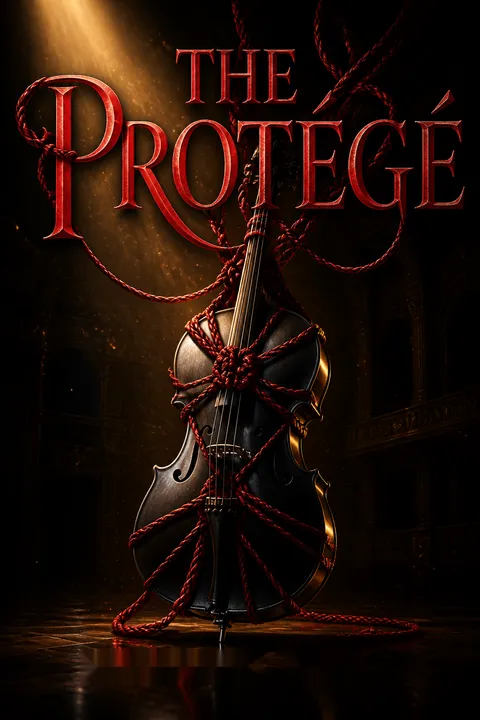
Isabeau Laurent returns to London after three years away, carrying her cello and an apology she has not managed to give. At the Mayhew Concert Hall, she learns that conductor Laszlo Valmary, the guardian and mentor she left behind, is holding rushed auditions to fill gaps in his orchestra.
Her own career has stalled, and she needs his help to find her musical direction, though she has not planned to audition. When Laszlo appears, he leads her to his office without giving her the welcome she hoped for.
Before she can explain why she came, his concertmaster, Marcus, mistakes her for a candidate. Isabeau accepts the misunderstanding and says she will audition, turning an uncertain homecoming into a test of whether she can work beside Laszlo again.
The return begins as a practical emergency, but Isabeau’s real need is relational: she wants access to the person whose judgment once organized both her music and her sense of safety. By letting Marcus’s assumption stand, she converts an emotionally exposed request into a professional one. Laszlo’s formal silence mirrors the rupture between them, while the audition provides a shared task through which they can approach what neither is ready to name. The orchestra’s vacancy makes the reunion plausible, but its deeper function is to put Isabeau’s artistic dependence and desire for independence in immediate tension.
A Cello in the Street
Thirteen years earlier, Laszlo, newly appointed at twenty-five to lead the Royal London Symphony Orchestra, hears a clear cello melody on a London street. The musician is eight-year-old Isabeau, playing her dead mother’s oversized instrument for coins.
He follows her home and finds her father, Piers Laurent, disabled by a broken back and using heroin in a neglected house. Isabeau has been left without proper lessons or reliable care. Laszlo confronts Piers and insists on taking the child into his own home, promising musical training and safety.
Isabeau packs a few belongings and leaves with him, trusting the stranger who recognizes her talent. At Laszlo’s house, he buys her a cello suited to her size and begins building the structured musical life she has never had.
Laszlo’s intervention is both generous and ethically consequential. He sees a child whose talent is being neglected, but he also makes an enormous decision on her behalf, using his confidence and resources to replace her father’s care. Isabeau’s trust is understandable: music is her strongest attachment, and Laszlo promises to protect the instrument through which she remembers her mother. The scene establishes the book’s central ambiguity. Care can offer a vulnerable child genuine safety, while also creating a power imbalance that will shape every later choice between guardian and protégé.
The Mayhew Debut
In Laszlo’s home, Isabeau learns to read music, practice with discipline, and trust that no one will sell her cello or take it away. At fourteen, she begins playing her mother’s instrument again and cries through The Swan, which carries both the memory of her mother and the grief of losing her.
Laszlo gives her a pink dress and a solo debut with his professional orchestra at the Mayhew. Her performance moves listeners, and Laszlo publicly presents her as his protégé.
He later creates a youth orchestra partly so Isabeau can keep playing under his direction; she rises through its cello section while her friend Hayley Chiswell becomes a close musical companion. Their shared rehearsals, concerts, and private music-making make Laszlo’s house feel like Isabeau’s home.
Music gives Isabeau a language for grief before she can explain it in ordinary terms. Returning to her mother’s cello is not merely a technical milestone; it allows inherited memory and present ability to occupy the same body. Laszlo’s orchestras then extend his care into an institution, giving her achievement, peers, and a public identity beyond the neglected child he rescued. Yet the youth ensemble also concentrates her world around him. His protection helps her flourish, while its intimacy makes separation feel less like a normal step toward adulthood than the loss of an entire home.
The Birthday Rupture
As Isabeau approaches eighteen, Laszlo recognizes that his feelings have changed and begins withdrawing from the ordinary affection that once bound them. Their duet of Rachmaninoff’s Vocalise becomes a private channel for emotions neither can safely discuss.
On Isabeau’s eighteenth birthday, after her final youth-orchestra concert, she kisses Laszlo and tries to turn their closeness into a romance. He kisses her back briefly, then abruptly pushes her away and rebukes her.
Isabeau reads his shock as disgust, locks herself in her room, and leaves that night for Hayley’s flat. Laszlo does not follow. Their silence lasts three years, during which Isabeau studies music at Durham but loses confidence in her playing and Laszlo carries guilt over having hurt her.
The rupture is built from two incompatible interpretations of the same moment. Isabeau understands her kiss as the culmination of a love she has believed was mutual; Laszlo experiences desire alongside alarm at his authority over someone he raised. His restraint prevents him from acting on the attraction, but his harshness leaves Isabeau with shame rather than an explanation. The scene complicates the romantic fantasy of perfect mutual understanding: even two people who communicate through music can fail each other when power, age, and fear make plain speech feel impossible. Their silence becomes an active injury, not a neutral pause.
Vocalise Reopens the Door
At the Mayhew, Isabeau plays Vocalise alone, choosing the duet that once belonged to her and Laszlo. He recognizes their shared piece in her performance and understands that she is apologizing, though he still believes he was the one who failed her.
When she asks whether she has earned a place in the orchestra, Laszlo initially hesitates because an upcoming tour would keep them together for weeks. He rejects another cellist and arranges to see her privately.
At his house, Isabeau explains that she wants his mentorship again, not merely lessons: his expectations and praise help her feel grounded and make music with conviction. She is now twenty-one and asks him to understand the intimate feelings attached to that dynamic. Laszlo agrees to explore it carefully, with clear limits and room for her to reconsider.
The repeated musical motif has changed function. Once it carried unspoken longing, but now it makes a conversation possible without pretending that feeling alone can repair the past. Isabeau’s request is notably specific: she seeks structure and attention, not an automatic return to childhood or immediate sexual intimacy. Laszlo’s conditions acknowledge that his professional authority and their history make consent more complicated than simple agreement. The negotiation marks growth for both: she names what she wants, while he must distinguish care that supports her from control that merely satisfies his own attachment.
The Tour Begins
Laszlo offers Isabeau a second-cellist position on a five-week Asian tour, with demanding rehearsals and little time to prepare. She accepts both the work and his renewed mentorship. The orchestra leaves for Singapore, where an established player hints that Isabeau has secured her place through her history with Laszlo.
The insinuation feeds Isabeau’s fear that her career has no value apart from his name. Before the first concert, she admits her anxiety and asks Laszlo for a consensual spanking to settle her; he establishes a safeword and promises to stop if she uses it.
Afterward, she feels calmer and plays well. Laszlo reassures her that her place rests on her musicianship, while their formal working relationship gains a private ritual that gives her both structure and a sense of being cared for.
The tour turns an intimate reconciliation into a public professional arrangement, where Isabeau’s position can be read as favoritism even when her skill is real. Her insecurity is not simply stage fright; it is anxiety about authorship and legitimacy. The negotiated discipline becomes a way to regulate that anxiety, but its value depends on explicit limits, not on Laszlo’s authority alone. His reassurance matters because he separates her ability from his patronage, even as the tour makes their personal and professional roles harder to keep apart.
A Kiss in Bangkok
As the tour moves through Southeast Asia, Isabeau and Laszlo play Vocalise together at a Kuala Lumpur airport, restoring some of the connection they lost. Their private discipline deepens, and Laszlo becomes increasingly aware that Isabeau responds to his authority.
In Bangkok, he catches her making jokes about a viola player who has treated her unkindly. He reprimands her for answering rudeness with unprofessional behavior, and the force of his words unexpectedly sends her into a submissive, disoriented state.
Once she recovers, Isabeau kisses him and tells him she has wanted him for years. Laszlo admits that he desired her before she left, but never touched her because she was under his care and too young. Her confession changes their relationship from carefully managed mentorship into an acknowledged mutual attraction.
The market scene exposes how authority affects Isabeau beyond the private rituals they have discussed. Laszlo’s reprimand has an unintended intensity, and her altered state prompts a kiss that neither can dismiss as ordinary professional affection. The moment is charged with genuine desire, but also with the danger of confusing vulnerability with consent. Isabeau’s later clarity and direct account of her feelings are therefore essential, as is Laszlo’s admission of his earlier restraint. Their attraction is no longer hidden, yet the history that makes it powerful also requires continued scrutiny.
The First Honest Night
After Isabeau challenges Laszlo to admit what he wants, he sends her an account of the desire he once suppressed. She answers during a concert, then meets him privately at the hotel. Laszlo disciplines her for her earlier behavior in Bangkok, but they negotiate the encounter and Isabeau asks for what she wants.
Their first sexual night together follows, bringing to completion the kiss he stopped on her eighteenth birthday. Afterward, they discuss the three years apart, Isabeau’s unhappy experience with another man, and Laszlo’s regret at allowing her to believe he was disgusted by her.
He explains that he had fallen in love but feared his feelings would exploit the trust she placed in him. They agree that their new intimacy must be paced by her choices, not by his desire alone.
The night supplies the physical consummation romance has deferred, but its deeper work is interpretive: each character revises the story they have told themselves about the birthday rejection. Isabeau learns that his refusal came from fear and responsibility, not revulsion; Laszlo learns that her desire was not a passing act of youthful confusion. The book does not erase the asymmetry between them by making the attraction mutual. Instead, their explicit negotiation and his willingness to wait become the conditions under which intimacy can begin without pretending the past is irrelevant.
The Swan Finds Its Voice
With the tour nearing its end, Isabeau returns to an email from an agent who noticed her performance at the Mayhew years earlier. She had ignored the offer after her painful separation from Laszlo, but now records herself playing in an empty conference hall, testing how she sounds when she stops imitating expected interpretations.
The music reveals a personal voice shaped by grief, love, and her mother’s influence. Isabeau writes back to the agent and asks to be considered for representation.
As she decides to visit her father after returning to London, she remembers a failed attempt at nineteen: she found Piers still living amid heroin use and resentment, and left without repairing their relationship. That memory makes the coming visit frightening, but she no longer wants fear to make the decision for her.
Isabeau’s artistic recovery parallels a shift in how she understands dependence. Laszlo can help her hear herself, but he cannot provide the musical identity she must claim. Playing alone in a resonant room lets her test an interpretation without an audience or conductor shaping it first. The remembered visit to Piers adds another layer: she has confused self-protection with finality, just as she once mistook Laszlo’s rejection for proof of disgust. Reaching toward both an agent and her father is a decision to risk being judged rather than remain safely undefined.
A Father’s Last Call
Before the tour’s final performance, Laszlo tells Isabeau that Piers is in hospice with terminal liver failure. He is listed as her father’s emergency contact, a fact that unsettles her, but he arranges her immediate flight to London.
Isabeau tries to tell Laszlo she loves him before leaving; he asks her to go see Piers and cannot explain the secret he is still keeping, so she experiences his silence as another rejection. At the hospice, she learns that years of heroin use have damaged Piers’s liver beyond treatment.
When he wakes, he tells her he followed her career from a distance and is proud of her. He remembers her mother playing The Swan and asks about Isabeau’s cello. Piers dies soon afterward, leaving her with a brief reconnection and years of questions.
The emergency pulls Isabeau toward the family history she has avoided, but it also exposes the cost of Laszlo’s protective secrecy. His silence is meant to preserve a promise to Piers, yet to Isabeau it repeats the old pattern of deciding what she can bear without telling her why. At the hospice, Piers offers neither a full reconciliation nor a complete explanation. Instead, his pride and musical memory give Isabeau evidence that she mattered to him, while his death makes all the unsaid years irreversible.
The Funeral Distance
At Piers’s funeral, Isabeau plays The Swan because it belonged to both her parents’ musical memories. Laszlo arrives, but she cannot let him comfort her for long; she believes he does not love her and is still withholding something important.
After the service, he explains that Bangkok’s new concert hall has offered him its musical-director post, then asks her to return to his house. Isabeau recognizes the opportunity he wants, but refuses to go home with him while their trust remains fractured.
She asks whether Laszlo was right to take her from her father as a child. Rather than defend himself, he accepts responsibility for the decision and promises to carry its consequences. Isabeau leaves for Hayley’s flat, grieving Piers and convinced that she and Laszlo have lost their chance.
The funeral makes music a public act of mourning, but it cannot settle the moral questions surrounding Isabeau’s childhood. Her challenge to Laszlo is not only about whether he rescued her; it asks whether gratitude has prevented her from judging the cost of that rescue. His refusal to claim innocence is important, yet it does not restore trust by itself. Isabeau’s departure preserves her agency even as it deepens her loneliness. The scene leaves love and forgiveness deliberately unresolved until the hidden history can be brought into the open.
Letters Beneath the Bed
While sorting Piers’s belongings, Isabeau finds boxes of letters and recordings Laszlo sent him throughout her childhood. Laszlo had kept Piers informed about her schoolwork, concerts, and daily life, and paid for several attempts to help him recover from addiction.
Piers had asked him to keep those efforts secret, fearing that failed treatment would give Isabeau false hope. Isabeau also finds Laszlo’s letter written after she fled at eighteen. It admits he loved her, feared his own possessiveness, and believed his silence was safer than asking her to carry his feelings.
She brings the letter to the Mayhew, where Laszlo is rehearsing, and reads it to him. Now that she understands the truth about both men, Laszlo tells her he still loves her and offers her a ring. She accepts.
The letters revise two apparently separate wounds at once. Piers was not indifferent to Isabeau, and Laszlo’s distance after her flight was not a lack of love. Yet the revelation does not make secrecy harmless: both men chose protection over her right to understand her own history. The letters function as evidence of care and of paternal control, forcing Isabeau to hold gratitude and anger together. Her return to the Mayhew is decisive because she confronts Laszlo with the document rather than accepting another explanation privately. The proposal follows disclosure, not concealment.
Two Lives, One Score
Isabeau and Laszlo marry, and their wedding-night duet of Vocalise sounds transformed to her: the instruments no longer seem to be reaching toward one another across a distance.
Laszlo accepts the Bangkok post, while Isabeau secures representation with Paloma Sanchez and begins arranging solo performances in London and Europe. She will travel between cities and return to play with Laszlo when she can, rather than surrendering her career to remain under his direction.
The couple also return to Laszlo’s Hampstead home, where her father’s letters deepen her understanding of the man who raised her. Their future keeps the elements that once competed for Isabeau’s loyalty: independent work, shared music, and an intimate bond built through explicit choice.
The resolution avoids treating love as the cure for Isabeau’s artistic uncertainty. She does not become secure by giving up solo work or by remaining permanently in Laszlo’s orchestra. Instead, the couple arrange their lives around both her vocation and his ambition, converting proximity from a condition of safety into one choice among several. Vocalise’s changed meaning is earned through their history: the same piece once carried loneliness and misreading, while the wedding duet marks a relationship able to survive separateness. Their domestic future remains mobile, but no longer depends on one person directing the other’s entire life.
Epilogue
A biographer visits Isabeau and Laszlo at their London home shortly before they relocate to Bangkok. Isabeau plays The Swan, while Laszlo declines to perform and lets her music draw him into the room. Their photographs trace her years as a cellist and the complicated history behind their marriage.
Isabeau describes her father’s addiction and the comfort of learning that he tried to recover; she also says she and Laszlo have worked hard for their happiness. Laszlo refuses to defend their relationship to outsiders, saying that Isabeau’s happiness and trust matter most. The article presents a couple preparing to build separate careers and a shared life across two cities.
The interview form reframes the private story as a public controversy, echoing the scrutiny Isabeau and Laszlo have feared throughout their relationship. The biographer’s questions invite the reader to judge their age difference, former guardian relationship, and rapid marriage, but the couple do not offer a polished defense. Isabeau grounds her answer in lived experience and earned happiness; Laszlo declines the court of public opinion while making his responsibility to her explicit. The closing emphasis on her music also corrects a familiar romance-ending imbalance: Isabeau is not merely the beloved subject of a conductor’s story. She is an artist whose work continues to command the room.
Analysis
The novel’s central conflict is not simply whether a guardian and his former ward can become lovers. It is whether care remains care when the person offering it also controls access, opportunity, and emotional security. Laszlo rescues Isabeau from a genuinely dangerous childhood and gives her the discipline and resources to become a musician. Those gifts are real, but they also make his approval unusually powerful. The narrative understands that mutual desire does not erase this asymmetry; it makes explicit communication, adult choice, and the ability to refuse essential conditions of intimacy.
Music supplies the story’s most precise model of communication and its most persistent limitation. Isabeau and Laszlo can hear sorrow, affection, and hesitation in each other’s playing, yet they misread one another when they avoid speaking. Vocalise can reconnect them, but cannot explain why Laszlo rejected her at eighteen or why he kept Piers’s efforts secret. Those truths emerge only through direct admission and the letters. The contrast matters: emotional attunement is not the same as informed consent or honest disclosure.
Isabeau’s artistic arc mirrors her relational one. She begins by needing Laszlo’s direction to recover confidence, but her breakthrough comes when she plays alone and chooses an interpretation that belongs to her. The ending preserves that independence. She pursues solo work while maintaining her musical and personal bond with Laszlo, rather than treating marriage as a reason to abandon ambition.
Piers’s letters complicate the story’s account of absence. His addiction and silence cause real harm, but the evidence shows that shame and fear, not indifference, also shaped his choices. The book resists an easy division between rescuers and failures: Laszlo’s protection, Piers’s secrecy, and Isabeau’s longing all arise from love, yet each can wound when it replaces truth. Its resolution depends less on proving that every past choice was right than on accepting responsibility, telling the truth, and allowing Isabeau to decide what comes next.
Review Summary
The Protégé is a steamy age-gap romance between a conductor and his former ward. Readers praised the well-researched musical setting, emotional depth, and authentic characters. Many found the taboo relationship compelling, though some were uncomfortable with the power dynamics. The slow-burn romance and BDSM elements received mixed reactions. Overall, reviewers appreciated the author's writing style and character development, making it an engaging read for those who enjoy forbidden love stories with a classical music backdrop.
People Also Read


Characters
Isabeau Laurent
Cellist seeking her voiceA gifted cellist who loses her mother young and grows up under the care and musical guidance of conductor Laszlo Valmary. Isabeau is observant, disciplined, and unusually responsive to music, which lets her express feelings she struggles to state plainly. Her gratitude to Laszlo is intertwined with a strong desire for his approval, and she often mistakes being protected for having no choices of her own. University and separation expose the limits of a life organized around one mentor. Isabeau’s central drive is to recover both her musical confidence and the right to define what she wants, whether as a performer, a daughter, or an adult in an intimate relationship.
Laszlo Valmary
Conductor and guardianA celebrated conductor known for exacting standards, emotional reserve, and command of a large orchestra. Laszlo takes Isabeau into his home when she is a neglected child, then builds her musical education around close attention and high expectations. He understands music instinctively but struggles to speak plainly about attachment, especially when his protective role conflicts with his desire for control. His care is genuine, yet his habit of deciding what others should know or endure can become paternalistic. Laszlo is driven by a need to shape sound and safeguard the people entrusted to him, and he must confront how easily those instincts can blur into possessiveness.
Piers Laurent
Estranged, wounded fatherIsabeau’s father is left with chronic pain after an accident and struggles with heroin addiction following his wife’s death. His home becomes an unsafe place for a child, and his shame makes him difficult to approach. Piers is not defined solely by neglect: he retains a deep attachment to his daughter and to the music she inherited from her mother. His relationship with Laszlo is marked by both mistrust and an unusual reliance on the younger man’s care. Piers’s central conflict is between wanting to protect Isabeau from disappointment and needing to admit how much his absence has cost them both.
Marcus Sabol
Concertmaster and allyLaszlo’s first violin and concertmaster, Marcus is energetic, socially perceptive, and comfortable speaking up when the conductor is too guarded. He recognizes Isabeau’s ability and welcomes the prospect of her joining the orchestra. His practical support helps move the reunion forward, while his familiarity with orchestra politics makes him alert to the gossip that surrounds the pair. Marcus offers a counterweight to Laszlo’s isolation: he can challenge his friend without undermining his authority.
Hayley Chiswell
Friend and fellow cellistA cellist and soloist who becomes Isabeau’s close friend after they meet in Laszlo’s youth orchestra. Hayley offers Isabeau a place to turn when the birthday rupture drives her from Laszlo’s home, and later listens without shaming her for complicated feelings. Her own career gives Isabeau a concrete example of a musician building a life beyond the conductor’s orbit. Hayley is frank, funny, and protective, but she does not try to make Isabeau’s decisions for her.
Paloma Sanchez
Agent who sees promiseA music agent who notices Isabeau’s performance and offers to consider representing her as a soloist. Her message gives Isabeau a professional opportunity that predates the reunion with Laszlo, even though heartbreak keeps Isabeau from answering it at first. Paloma represents a route into the musical world based on Isabeau’s own playing rather than her connection to her former guardian.
Domenica
Measured cello-section leaderThe professional orchestra’s cello-section leader, Domenica makes room for Isabeau as a temporary second cellist and explains the practical rhythms of playing together. Her welcome gives Isabeau a stable point of connection within an ensemble where age and favoritism could make her feel like an outsider.
Niran Anumak
Bangkok arts patronThe owner of Bangkok’s new concert hall, Niran offers Laszlo a chance to lead its orchestra. His proposal speaks directly to Laszlo’s ambition to build an ensemble and explore new interpretations of classical music, creating a professional choice that affects the couple’s future.
Isabeau’s mother
First musical inheritanceA cellist who dies when Isabeau is seven, she teaches her daughter to love music and leaves her a cello too large for a child to play comfortably. Her memory lives in Isabeau’s performances, especially The Swan, which connects grief, family history, and the beginnings of Isabeau’s musical identity.
Plot Devices
Vocalise
Music carries what words cannotRachmaninoff’s Vocalise begins as a private duet Isabeau and Laszlo play during their years together. After their separation, Isabeau uses it at the Mayhew to express regret, while Laszlo recognizes the piece as a message meant for him. During the tour they play it together in an airport, restoring an old form of communication before either can fully explain their feelings. Its later performances register changes in their relationship, from longing and grief to mutual understanding. The piece is not a magical substitute for conversation: the story eventually requires both characters to speak directly and disclose what they have hidden.
The Swan and the cello
A family history made audibleIsabeau’s mother’s cello links the child who loses her mother to the adult musician trying to find her own voice. Laszlo buys a smaller instrument for her to learn on, but he also preserves her mother’s cello until Isabeau is ready to play it. The Swan becomes Isabeau’s signature piece, first carrying grief for her mother and later marking important public performances. It also gives Piers a way to remember his wife and his daughter’s playing. Across the story, the instrument shifts from an object Isabeau fears losing to a vessel for an artistic identity she can claim as her own.
The Asian concert tour
Forced proximity under pressureThe last-minute five-week tour places Isabeau in Laszlo’s professional orchestra soon after their reunion. Travel, rehearsals, and performances leave them little space to avoid each other, while the public setting requires them to behave as conductor and musician. The demanding schedule exposes Isabeau’s fear that she is not good enough and gives Laszlo practical chances to support her without reducing her to his former ward. The tour also takes them away from the routines and familiar expectations of London, where Laszlo encounters a career opportunity in Bangkok. It provides the setting for their renewed intimacy and forces each to consider what a shared future would require.
Negotiated discipline
Structure joined to consentIsabeau asks Laszlo to restore the instruction and praise that once helped her focus, explaining that his authority affects her emotionally and sexually. As their relationship develops, they discuss limits, agree on a safeword, and treat her ability to stop as essential. The private dynamic offers Isabeau a chosen form of surrender and gives Laszlo a way to express his dominant instincts without pretending that their history is irrelevant. Its narrative importance lies in the repeated distinction between control she requests and care imposed on her. Because Laszlo was once her guardian and remains her conductor, that distinction is never entirely free of ethical tension.
Letters and recordings
Hidden care becomes evidenceLaszlo sends Piers letters, photographs, recordings, and updates about Isabeau throughout her childhood. The correspondence shows Piers what he misses and records Laszlo’s efforts to help him seek treatment. Piers asks that those attempts remain secret, fearing that Isabeau will suffer if he relapses again. After Piers dies, Isabeau finds the archive among his belongings and discovers that both men cared more actively than she knew. Laszlo’s final letter also reveals the feelings he could not confess when she was eighteen. The papers resolve major misunderstandings, while raising the cost of the adults’ decision to keep Isabeau uninformed.
Download PDF
Download EPUB
.epub digital book format is ideal for reading ebooks on phones, tablets, and e-readers.








